

Turks and Caicos and St. Croix both suit a traveler who wants a villa instead of a hotel room, and they share more than people expect: the U.S. dollar, English, and cars that keep left. The first real difference shows up before the trip. Turks and Caicos is a British Overseas Territory, so every American travels with a passport. St. Croix is American soil, one of the U.S. Virgin Islands, where a U.S. citizen can board with a REAL ID and step off the plane with no immigration line. After that, it comes down to the shape of the week. Turks and Caicos is low and flat and famous for Grace Bay, one of the best-loved beaches anywhere. St. Croix rolls across 84 square miles of hills and valleys, with two Danish-era harbor towns, forts, rum distilleries, a rain forest drive and the Buck Island reef a short sail offshore. We look after The Cerulean, a house for twelve on the water at St. Croix's eastern tip, and the chapters below compare the two islands one topic at a time.
Which island fits your trip
When the plan is a week on a long, soft, white beach with calm water out front and snorkel boats to the reef, Turks and Caicos does that beautifully. When the plan is a house week where the group swims off its own beach each morning and spends the afternoons on an island with hills, history, two towns and a reef with an underwater trail, St. Croix fits, and it asks for nothing more than the ID in your wallet.
Put another way: a couple who want a beach week with a dive or two will be very happy on Providenciales. A family reunion with grandparents and small children, friends gathering for a milestone birthday, or two families sharing a house will find that St. Croix gives them more to do between swims, a shorter list of documents to gather, and one house to come back to when evening falls.
For a family, the paperwork matters most. Twelve people bound for Providenciales need twelve valid passports, babies included. For the same twelve bound for St. Croix, each adult shows a passport or a REAL ID at security, and TSA asks nothing of anyone under 18. With grandparents, teenagers and a toddler in the party, that is one less errand for every household.
Day to day, the islands line up closely. Dollars in your pocket on both, menus in English on both, and cars kept to the left on both, in left-hand-drive American models. The clocks differ by an hour in winter: Turks and Caicos keeps Eastern time like New York, while St. Croix holds Atlantic Standard Time through the whole year.
| At a glance | St. Croix | Turks and Caicos |
|---|---|---|
| Political status | U.S. territory | British Overseas Territory |
| Passport for an American | No | Yes |
| Money | U.S. dollar | Also the U.S. dollar |
| Language | English | English |
| Side of the road | Left | Left |
| Clock in winter | Atlantic, an hour later than New York | Eastern, same as New York |
| Main airport | St. Croix (STX) | Providenciales (PLS) |
The chapters below take each difference in turn: beaches, reefs, the winter water, shopping for a group, things to do on a day away from the sand, and flights. Also weighing St. Thomas and St. John? Our three-island USVI comparison covers that question.
What Turks and Caicos does well
Grace Bay is the reason most people first look at Turks and Caicos, and it deserves its fame. The beach stretches a little over three miles along the north shore of Providenciales, with soft white sand, clear turquoise water and almost no rocks underfoot. It lies within Princess Alexandra National Park, and a barrier reef roughly a mile out keeps the bay calm on most days. The World Travel Awards have named it the world's leading beach destination and Tripadvisor's Travelers' Choice awards the world's best beach, with first or second place about a dozen times.
For snorkelers, the Bight Reef, also called Coral Gardens, at the western end of Grace Bay, is the patch you can swim to from the sand. Smith's Reef and the others need a boat. Divers love the islands for their walls, which get their own chapter below.
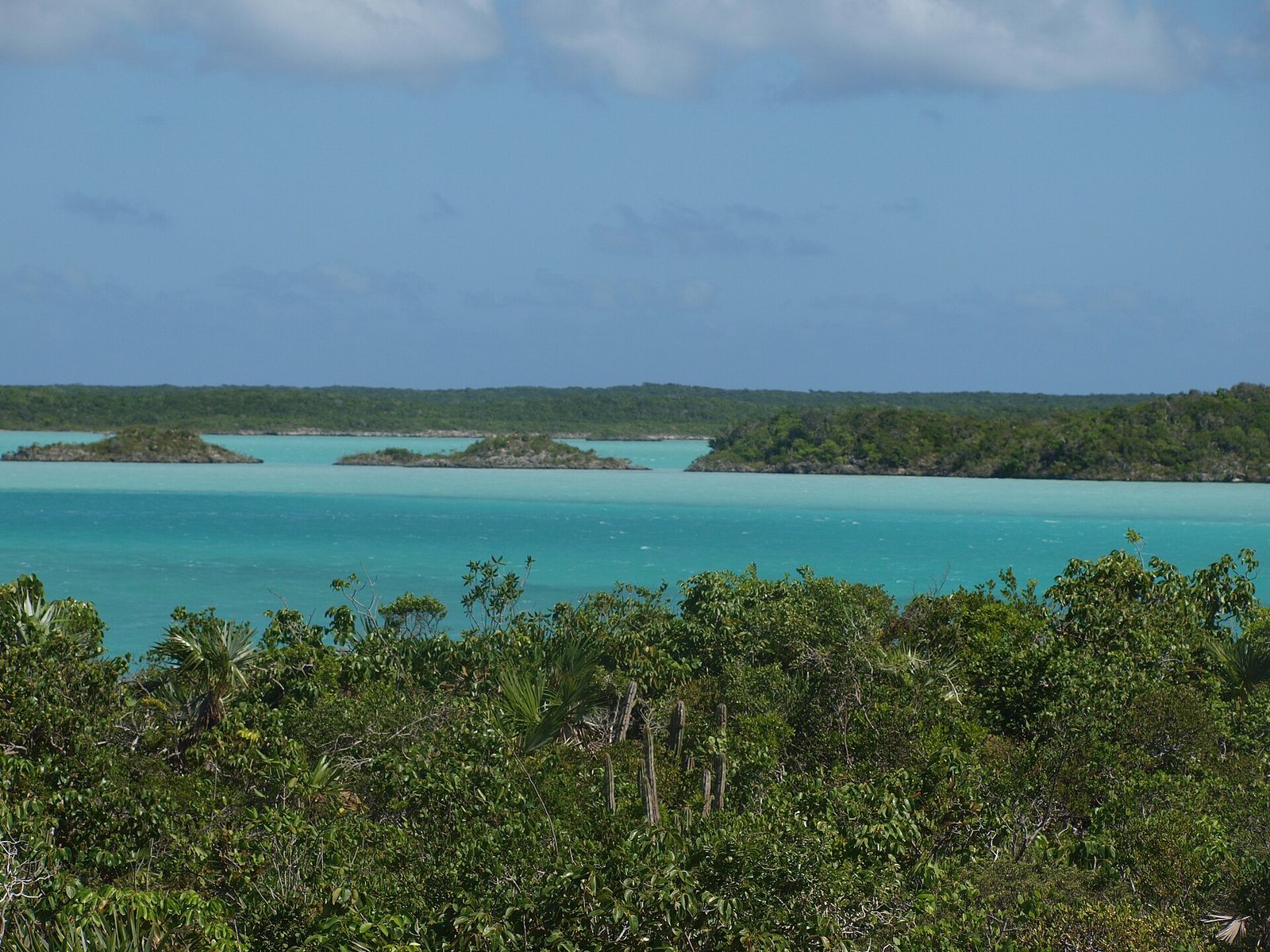
There are quieter corners too. Chalk Sound National Park, in the southwest of Providenciales, is an almost enclosed lagoon of shallow, brilliant turquoise water, mostly under five feet deep, scattered with hundreds of small rocky islets. Kayaks and paddleboards are the way to see it, and Taylor Bay and Sapodilla Bay nearby are shallow and calm, with Taylor Bay a favorite for small children.
Humpback whales pass through in January, February, March and April. Grand Turk, the capital island, has its own small-town charm, with pastel-fronted streets in Cockburn Town, the national museum, a lighthouse and wild donkeys wandering past colonial facades.
Turks and Caicos is also an island group where plenty of visitors rent a whole house, which says a lot about who goes there. If you are reading this, you probably want a house too. The real question is which island gives your group the better week around it.
Passports, ID and arrival
Paperwork is the first real fork in the road, so settle it before anyone buys a ticket.
Turks and Caicos asks every visitor for a passport. For U.S., British and Canadian holders, the islands' Border Force says the passport must remain valid until the day you leave, and U.S. citizens appear on its list of visa-exempt nationalities. Visitors also need a valid onward or return ticket. Officers can grant up to 90 days, though the islands' visitor guide notes that 30 days is the usual grant, plenty for a villa week. Goods brought in duty-free are capped at $1,000 a person. Check every expiry date in the group early, so nobody is caught short a month before the trip.
St. Croix is simpler. Visit USVI, the territory's tourism department, says an American flying in from Puerto Rico or the States can leave the passport in a drawer at home. At the airport, travelers 18 and older show a passport card, a passport or a REAL ID license, and TSA asks nothing of travelers younger than 18 flying within the country. You land, collect your bags and head out to the car.
Flying home from St. Croix, everyone passes a quick agriculture screening and a customs check before boarding, so allow about two hours before departure and pack photocopies of the children's birth certificates. Purchases up to $1,600 per shopper come home duty-free.
Papers for the St. Croix trip
5 itemsYour ticks stay in this browser only.
Every ID detail sits on our USVI ID and customs page, and our no-passport Caribbean list runs island by island for anyone weighing other places.
Money, language, clocks and phones
Here the two islands feel most alike. Turks and Caicos uses the U.S. dollar as its official money, and cards are taken in most places. St. Croix runs on dollars too, with the banks and cash machines you already know. Nobody in the group has to change money or think about exchange rates on either trip.
Turks and Caicos lists English as its official language, and many people there also speak Haitian Creole and Spanish. On St. Croix, English is what you hear on the road signs, at the counter and on the radio, and the island's own food and music go by the name Crucian.
The clocks are a small difference that parents of young children notice. Turks and Caicos runs on Eastern time and springs forward in March, so it always matches New York. St. Croix never changes its clocks: it matches New York from March to November and runs one hour ahead through the winter. On a January week, that hour pushes sunrise and sunset later on the clock, which suits a late dinner on the terrace.
Phones are where St. Croix keeps things simplest. Verizon, for one, files the USVI under domestic roaming, along with Puerto Rico and the mainland, so most U.S. plans behave just as they do in New Jersey or Illinois. For Turks and Caicos, the islands' visitor guide says any modern phone will work once roaming is on, or with a local SIM card; look up your carrier's international rates before you go. With twelve phones in the party, one look at the plan is worth it.
Tipping on Turks and Caicos follows American habits. The visitor guide puts it at around 15 percent for waiters, drivers and housekeepers, close to what most mainland families leave anyway.
Health cover is the last item for older travelers. Medicare.gov includes the USVI in its definition of the U.S., and Original Medicare applies on St. Croix the way it does in Ohio. Medicare usually does not pay for care abroad, so travelers to Turks and Caicos should look into travel medical cover, and anyone with a Medicare Advantage plan should phone it before either trip.
Flat cays and a hilly island
From the air, Turks and Caicos is a string of low islands on the edge of wide, pale, shallow banks. Apart from a few tiny sandbar cays, the islands rest on soft limestone, and the land stays low: the highest points, Blue Mountain on Providenciales and Flamingo Hill on East Caicos, reach about 156 feet each. Most of the water over the Caicos Banks is shallow, which gives the sea its famous pale turquoise. Six major islands and three cays have residents, and Providenciales, where most visitors stay, holds the main airport and Grace Bay.
That landscape makes for easy, sunny beach days with very little rain. The islands lie south of the Bahamas chain, out in the Atlantic, and the plants there are mostly drought-tolerant scrub.
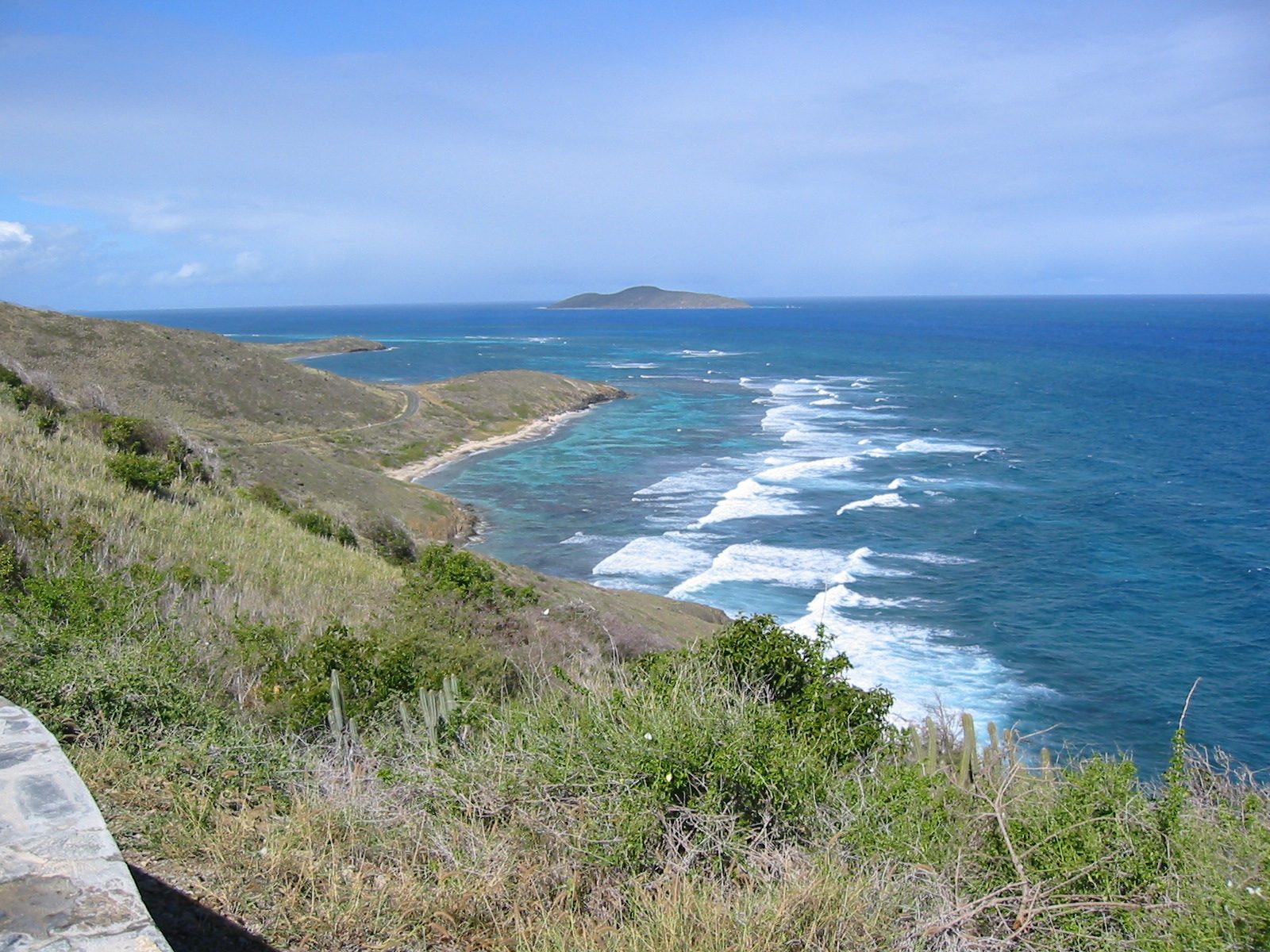
St. Croix has a different shape. It is one island, 84 square miles in area and roughly 22 miles end to end, climbing to Mount Eagle, around 1,165 feet, in the northwest. Those northwest hills catch about 50 inches of rainfall each year, enough for a forest of mahogany, kapok and other tall trees known locally as the rain forest. The East End, our end, is drier: low hills, sea grape, cactus on the headlands and coves ringed by reef. Between the two lie the old sugar estates, the airport, the rum distilleries and the road that links Christiansted with Frederiksted.
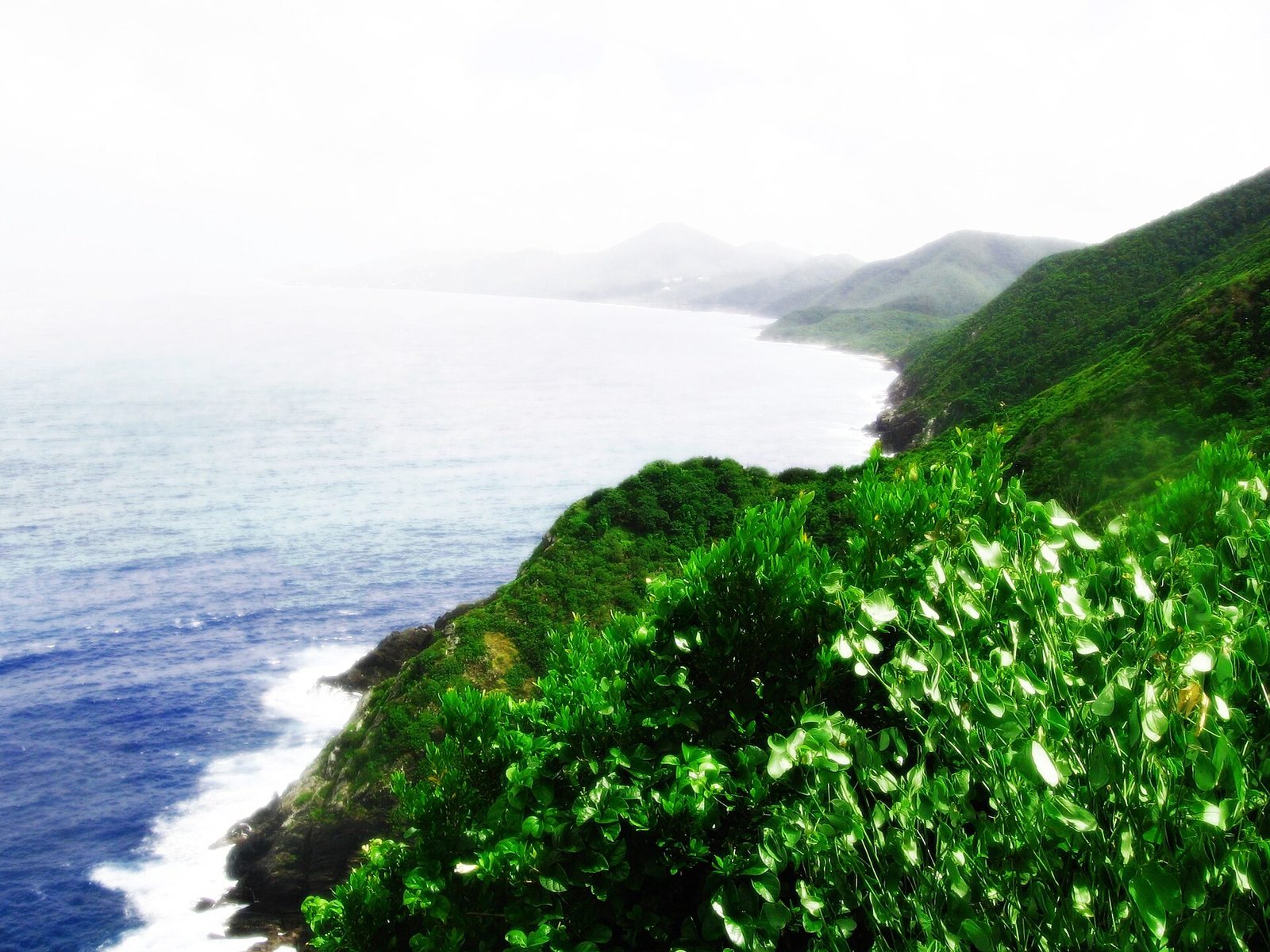
For a group, that difference shapes the week. On Turks and Caicos, the beach is the center of the trip. On St. Croix, the beach is where each day begins, and every drive across the island turns up something new: a fort, a distillery tour, a forest road, a seahorse under a pier.
To see where our house sits on the map, start with our introduction to the East End.
Visitors, cruise ships and neighbors
Turks and Caicos draws a great many happy travelers. The islands' government reports that in 2025 they welcomed nearly two million visitors, with stay-over guests approaching 640,000 and cruise passengers topping 1.3 million. Every cruise ship docks at one place, the Grand Turk Cruise Centre, so the cruise days unfold on Grand Turk, and house guests on Providenciales seldom cross paths with them. More than half of the country's residents live on Providenciales too.
St. Croix's numbers are smaller. In 2024 the territory's economists counted 186,400 air visitors arriving on St. Croix from the mainland. Ships docked at Frederiksted's pier 71 times in that year, bringing 169,228 passengers, which leaves most days without a ship at the pier. The 2020 census put the island's population at 41,004.
| Visitors in the latest full year | St. Croix, 2024 | Turks and Caicos, 2025 |
|---|---|---|
| Arriving by air | 186,400 from the U.S. mainland | Close to 640,000 stay-over guests |
| Cruise passengers | 169,228 | More than 1.3 million |
| Where ships dock | Frederiksted, 71 calls | The Grand Turk Cruise Centre |
For a house week, the result is an island with a daily life of its own: farms, markets and family-run restaurants that visitors slip into without fuss. Mornings on the reef feel unhurried, the road to dinner is quiet, and there is room to browse at the Saturday market.
If that ratio matters to your group, our ranking of quiet Caribbean islands lines islands up by visitors per resident.
Reefs and walls in Turks and Caicos
Turks and Caicos is one of the great dive destinations of the Atlantic, and the reason is geology. The islands stand on an underwater plateau that rises some 7,000 feet from the ocean floor. Near land, the bottom is flat sand at about 40 to 50 feet, and at the plateau's edge it falls away, often abruptly, into deep blue water. Divers call those edges the walls, and they bring dive groups back year after year.
From Providenciales, divers can reach about 70 miles of barrier reef and wall. The famous sites are at Northwest Point, inside a marine national park on Provo's west end; at West Caicos, whose sheltered west side usually gives excellent conditions; and at French Cay, where a shark sighting is close to a sure thing. Caribbean reef sharks and lemon sharks are the usual species, southern stingrays and spotted eagle rays are common, and manta rays turn up now and then.
Grand Turk has its own wall close to its west coast, inside Columbus Landfall National Park, and the common dive sites there are often just five minutes out by boat. The islands' visitor guide credits Grand Turk with some of the richest marine life per site in the country.
Snorkelers who prefer to stay near the sand have Grace Bay's Bight Reef, and boat trips run out to the barrier reef. In winter, the deep water off Providenciales sometimes brings humpback whales into view.
All of it is excellent. Anyone who has dived Turks and Caicos will feel at home on St. Croix, which has a wall of its own, a different reef system to learn and a national monument built around snorkeling.
Buck Island and the north shore wall
The reef day most visitors remember from St. Croix is Buck Island, and the boats leave close to our house. Buck Island is 176 acres of beach and dry woodland, set roughly 1.5 miles from St. Croix's northeast shore, and the monument around it spreads over 19,000 acres, mostly sea. John F. Kennedy created it in 1961, and since 2001 fishing and collecting have been banned across all of it. A barrier of elkhorn coral curls around much of Buck Island, sheltering a lagoon where a marked underwater trail, 12 feet at its deepest, leads snorkelers past fish that are used to company.
Opening hours run 7 am to 5 pm daily, and the park charges nothing to enter. Access is by an authorized boat, or your own with a park permit. Some boats sail 5.5 miles from Christiansted's wharf; others leave Green Cay Marina, ten minutes by car from The Cerulean. A full day usually means snorkeling the trail first, then an afternoon on Turtle Beach, at Buck Island's western tip. With twelve people, a private charter puts everyone on one boat on one schedule, and our concierge can make the booking. The guide to Buck Island's reef and trail explains the boats and the rules.
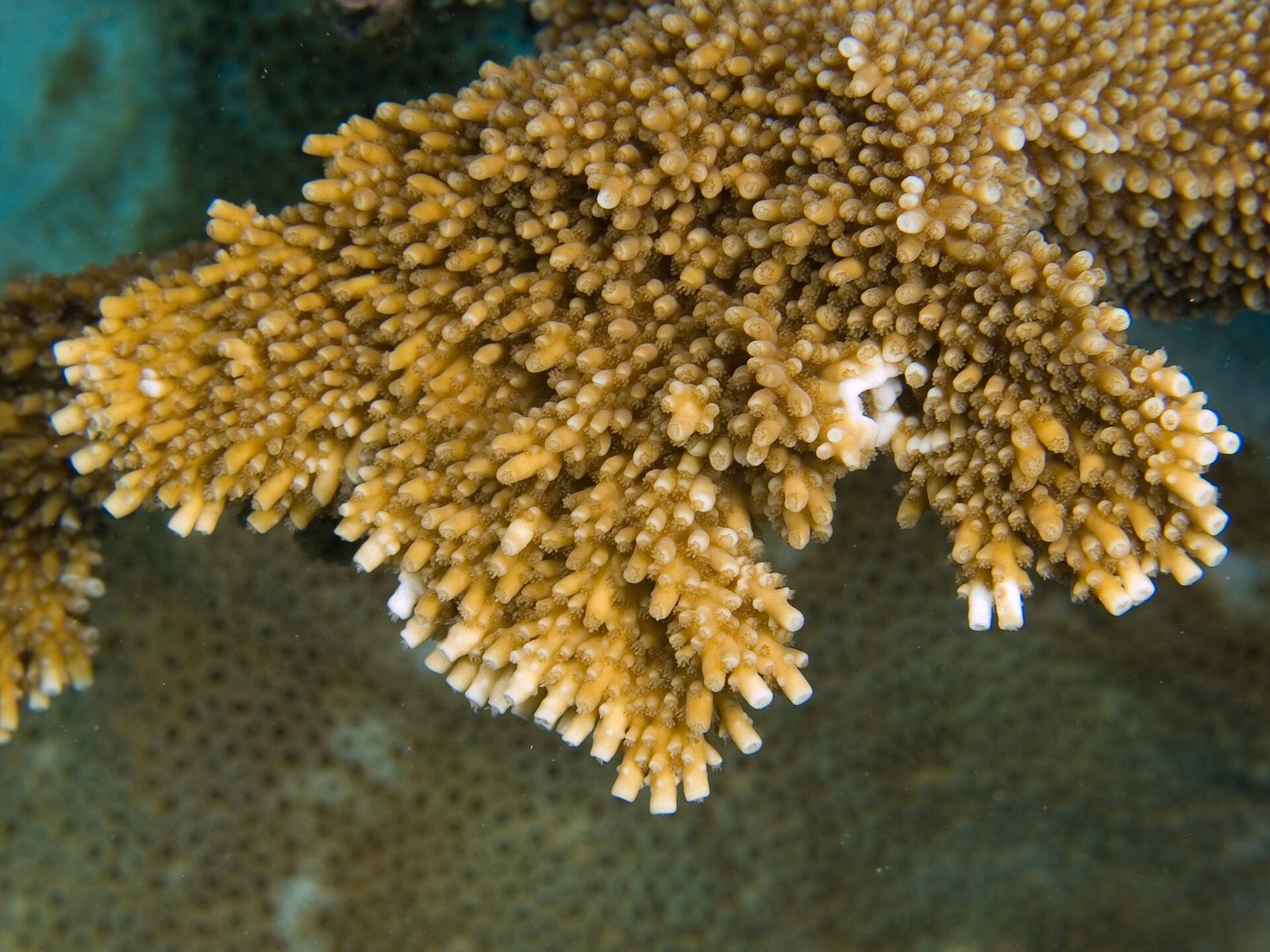
St. Croix's wall runs along the north shore, and Cane Bay, a drive of about 45 minutes from us, is the classic way in. There the reef runs seaward 100 to 200 yards before it tips, at roughly 40 feet, over a wall that falls past 1,000 meters. Divers wade in from the sand, fin out across the reef and drift above deep blue water close to shore. Nearby Salt River Canyon is a wall reached by boat. Over on the west end, divers know the Frederiksted pier as a famous macro dive, where seahorses, frogfish and octopus live in the pilings.
Dive shops in Christiansted and right at Cane Bay teach first-timers and run full certification courses. For the details, read our St. Croix wall dive guide and the Cane Bay beach and wall guide.
Winter water around St. Croix
A family that has swum off Grace Bay in winter knows the pleasure of a January sea. Here is how the water reads on our side of the map.
St. Croix sits near 17.7° north, and NOAA keeps a long-running gauge in Christiansted Harbor. Its averages come to 80.9°F for January and 80.3°F for February, and the late-summer peak is 86.6°F, in September. February's 80.3°F and September's 86.6°F sit only about six degrees apart.
For a winter group, water like that shows up in small, pleasant ways. Children stay in the shallows below the house until somebody calls lunch. Snorkelers drift along the Buck Island trail in a sun shirt and nothing more. And the habit so many of our guests pick up, a swim before breakfast, comes easily in January.
On land, the 1991 to 2020 NOAA normals at the island's airport put January's average afternoon high at 84.2°F, with nights falling to 71.2°F: warm afternoons, and evenings made for dinner outdoors. Our month-by-month weather page puts every month's highs, lows and sea temperature in one table.
A long-sleeved swim shirt and a broad hat per swimmer save a lot of sunscreen, and the territory's sunscreen law rules out oxybenzone, octinoxate and octocrylene, so choose a zinc oxide or titanium dioxide formula.
St. Croix beaches for Grace Bay fans
Grace Bay sets a high bar for a long walk on soft sand, and St. Croix answers it in several places around the island.
The longest is Sandy Point, out at the island's southwest corner: some two miles of beach within a national wildlife refuge set up in 1984, where leatherback turtles come ashore to nest. Film fans will recognize the sand from the closing scene of The Shawshank Redemption. Visitors are welcome 10 am to 4 pm on weekends, roughly September to March, and there is no charge. Pack an umbrella, water and a cooler, since there are no services on the sand, and allow about an hour on the road from our house.
The west coast is where the sun sets. North of Frederiksted, Rainbow Beach is the lively one, with lunch and a bar right on the sand. Dorsch Beach is the quiet one, Fort Frederik Beach in town is where children hunt for sea glass, and Butler Bay has a wreck to snorkel. Plan on 45 to 55 minutes each way, and pair them with a west end day that ends as the sun drops into open water.
Nearer home, Grapetree Beach suits a long walk along our end of the island. On the north shore, Chenay Bay offers calm, shallow water with seagrass close in, a favorite for small children, and the grass brings turtles. Cramer's Park has pavilions, grills and shade for twelve on a weekday, and Isaac Bay, reached on foot, has the best snorkeling from shore at our end of the island.
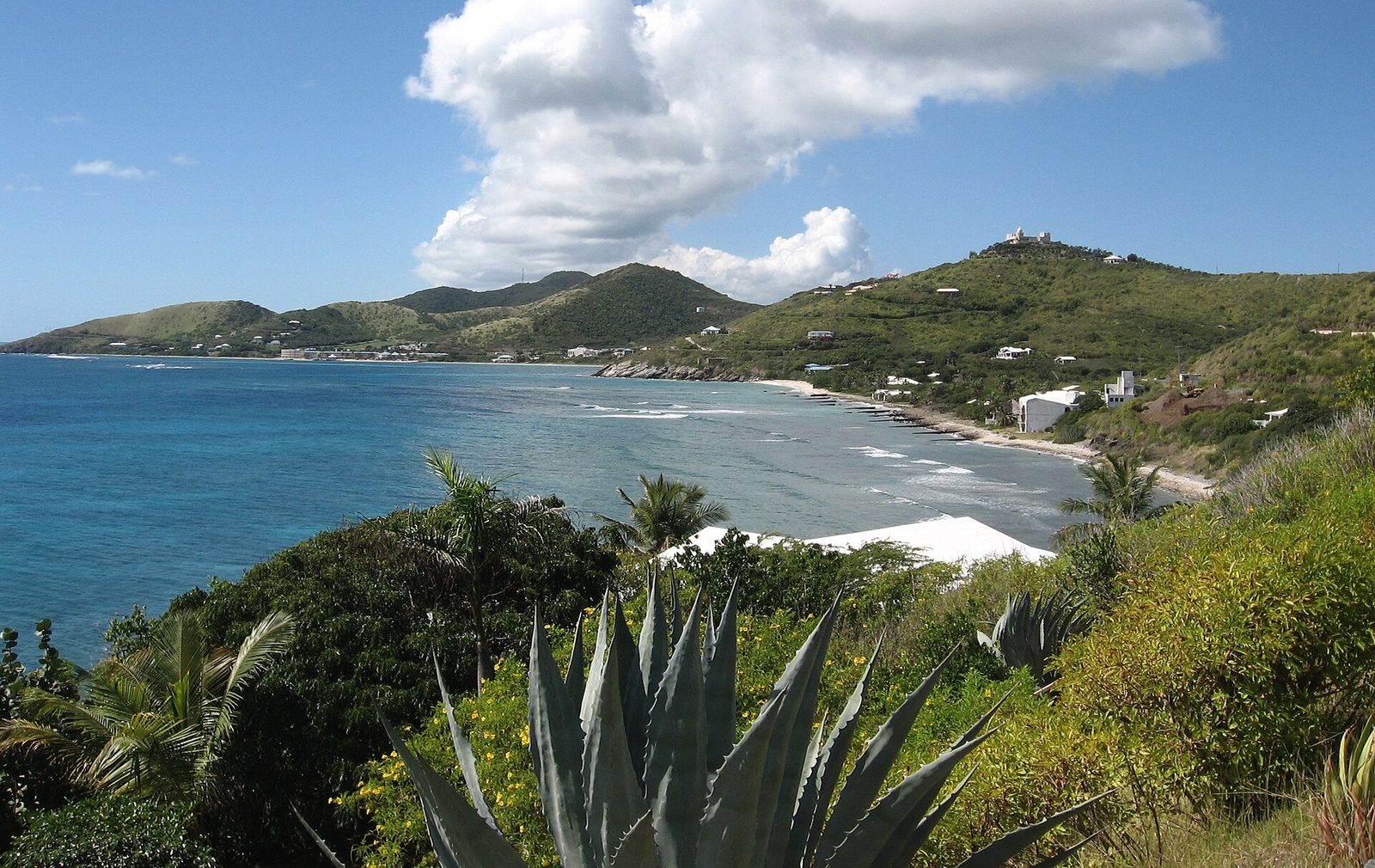
Then there is Turtle Beach on Buck Island, a white strand with shallow water and picnic tables that only boats can reach, and the reef-protected beach below our pool deck, which is the closest of all.
A Grace Bay fan will find St. Croix's sand spread around the island, each beach with its own character, and with a car it is easy to try three or four in a week. Our St. Croix beach finder sorts them by what each does best, and the sunset coast beaches page covers Rainbow, Dorsch and the rest.
A day in Christiansted
This is where St. Croix gives a house party the most to do away from the sand. Christiansted, a short drive west of us, dates from 1734, served as capital of the Danish colony, and still lines its waterfront with yellow and pink arcades from that time.
In the middle stands Fort Christiansvaern, raised from 1738 to 1749, its yellow walls turned toward the harbor, and it belongs to Christiansted National Historic Site, which the National Park Service runs. Kids head straight for the cannon on the ramparts, then the courtyard and the cells. Tickets cost $10 for visitors 16 and up, children under 16 go free, and a ticket stays valid for three days. The site also takes in the scale house, the old customs house and a Danish warehouse, each a short walk from the next.
Alexander Hamilton spent his boyhood here, clerking for a trading house by the water until he left for New York, and a marker in town tells the story. After the fort, stroll the boardwalk for pelicans, sailboats and the seaplane that lands in the harbor on its 25-minute run to and from St. Thomas. Lunch over the water is easy to find, and for dinner the town has the island's biggest choice of restaurants.
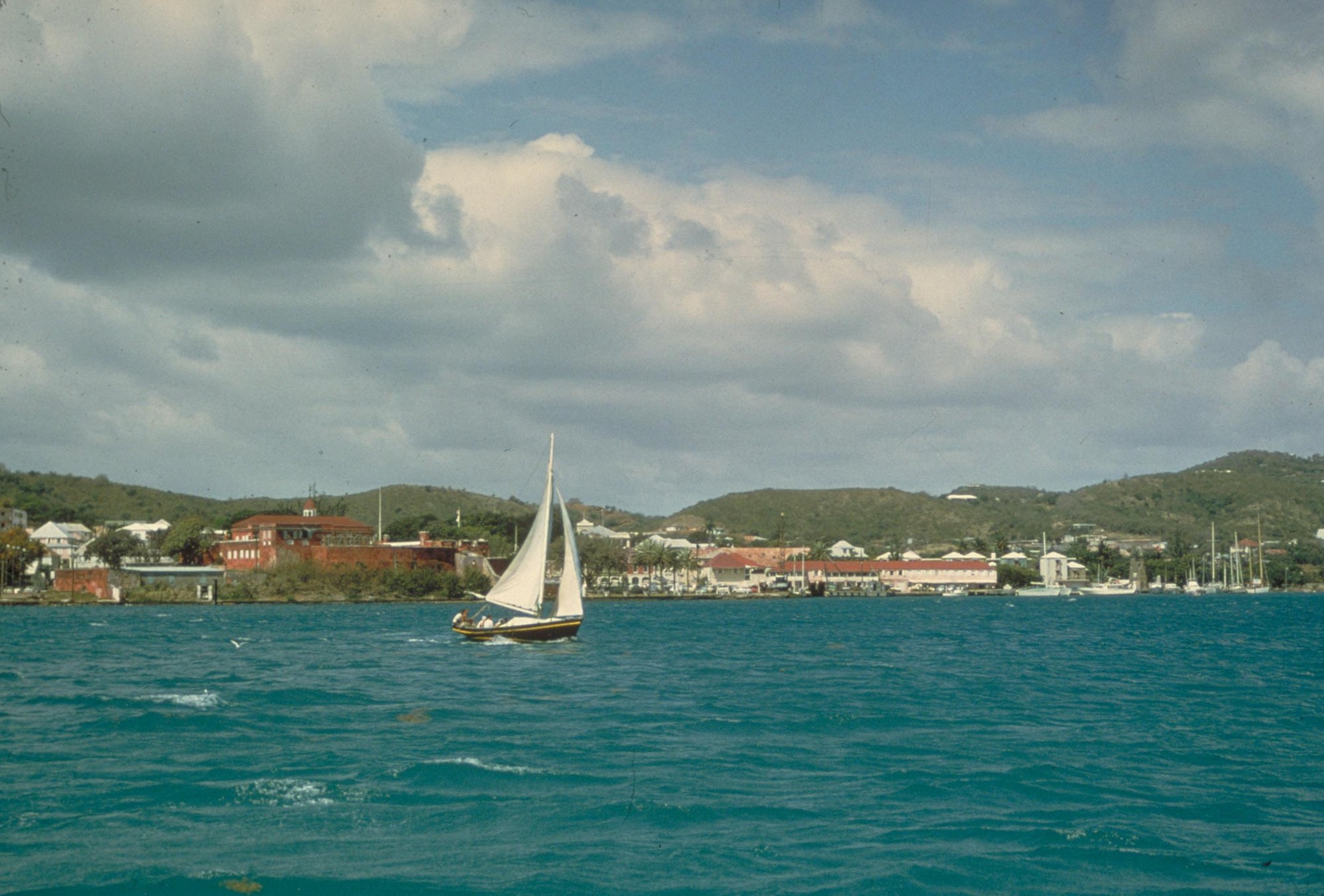
The town is the best place to feel how long the island's story runs. St. Croix's past spans seven flags, from Columbus's landing at Salt River in 1493 to the 1917 sale that made it American, and the Danish chapter, the longest, left the street plan, the forts and the sugar estates you still see. Our page on the seven flags over St. Croix walks through each one, and the Salt River landing story covers 1493.
Grand Turk's Cockburn Town has a lovely historic streetscape of its own, with its museum and lighthouse. On St. Croix, the old town sits about a quarter of an hour from our door, so a morning at the fort and a swim at home by mid-afternoon fit into one easy day.
Our walking guide to Christiansted goes block by block, with parking and places to eat.
Point Udall and our corner of the island
Our own corner of the island has plenty for the hours before lunch. Point Udall, ten minutes up the road, is as far east as you can stand in the United States. It carries Stewart Udall's name since 1969, and a big sundial, the Millennium Monument, was built there for the year 2000. Plenty of groups make sunrise there a ritual: up in the dark, a short drive, and the day's first light over the water.
Under the point, The Nature Conservancy has guarded 300 acres around Jack Bay and Isaac Bay since 1999: two beaches with no road to them. The trailhead is five minutes from our gate, and more than 400 kinds of fish live on the reefs off the bays. Of the two, Isaac Bay is the snorkeler's choice, with deeper water and fewer rocks. Carry water and something for shade, since the bays have no shops or stands.
For a family day with shade and tables, Cramer's Park has shallow water that is usually calm, plus grills under the sea grape. Teague Bay, where the St. Croix Yacht Club sits, faces Buck Island across the water, and nine relaxed holes of golf at The Reef Golf Course overlook the bay, a ten-minute drive away.
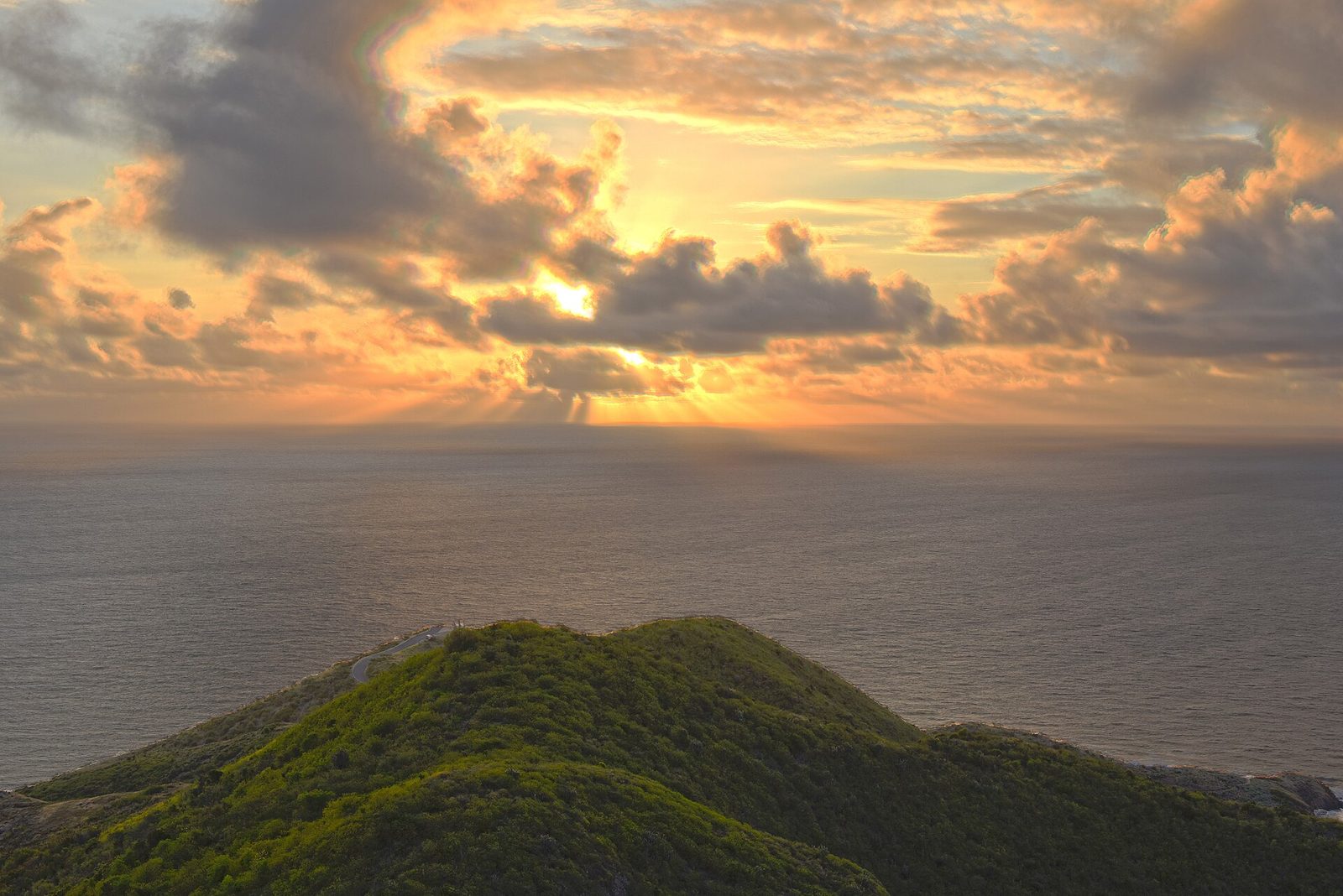
All the beaches at this end of the island lie within the boundaries of the East End Marine Park, a protected area of some 60 square miles, so the nearshore reefs are well cared for. Two simple rules help, and children pick them up fast: hands and feet off the coral, and every shell left where it lies.
Sunrise times for each season are in our Point Udall page, and the guide to East End coves walks through each bay in turn.
The west end, the rain forest and the rum
The west end fills a whole day with hill roads, history and rum. Start with the drive. Mahogany Road, Route 76, winds up through the northwest hills under tall trees, and fed by roughly 50 inches of yearly rain, these hills make up the island's green rain forest corner, cool and shaded after a week of sun. The Creque Dam, finished in 1926, sits off a side road, and Mount Eagle, the island's summit, rises above it all.
Next, history. The St. Croix Landmarks Society looks after Estate Whim, a restored sugar plantation on 12 acres outside Frederiksted, with its great house and a stone windmill. Adults pay about $10 and children 6 to 12 about $5; it opens Wednesdays to Saturdays plus days when a ship is in, roughly 10 to 3, so confirm the hours the day before you drive out.
Then rum, made right on the island. At the Cruzan distillery on Estate Diamond, the sugar mill on the grounds dates to 1760, and the Nelthropp family has been in charge since 1950; tours last about an hour and are booked online. Captain Morgan also distills its rum on St. Croix. The history and the booking details are in our story of Cruzan rum.
Finish in Frederiksted, the sunset town. Fort Frederik, red-walled and Danish, stands on the waterfront where, on July 3, 1848, every enslaved person in the colony was declared free. Next to it, the 1,526-foot pier draws divers and snorkelers looking for seahorses, and the beaches north of town look west across open water at day's end.
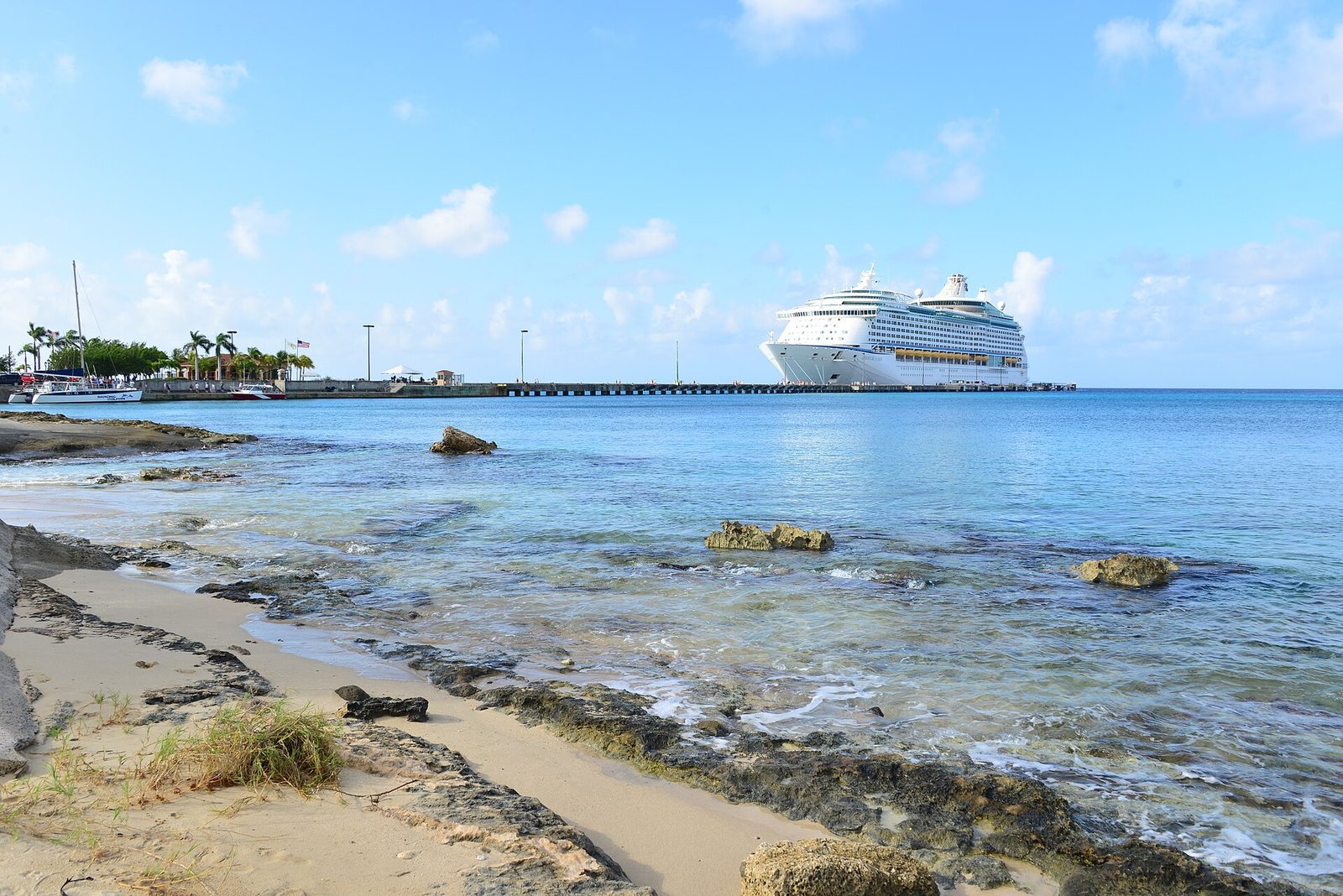
For the routes, see our Mahogany Road and rain forest drive, the Estate Whim and sugar history page and the snorkeler's guide to the Frederiksted pier.
Groceries and cooking for a group
A house week runs on its kitchen, so shopping earns a chapter of its own. Both islands make it easy.
On Providenciales, the islands' visitor guide lists a big supermarket on Leeward Highway, described as the largest in the country, a gourmet market in Grace Bay with prepared food, a downtown supermarket, a discount and wholesale store, and a small market and deli at a marina. Most food on Turks and Caicos comes straight from Florida, so many brands are familiar. Grocery stores sell alcohol, though not on Sundays, so pick up the weekend's wine on Saturday.
St. Croix shops much like a mainland town. There are two Plaza Extra stores, east and west; Pueblo and The Market at mid-island; Cost-U-Less for bulk buys, warehouse style; and, close to Christiansted, Seaside Market and Deli for bread, deli meats, cheese and wine. The island grows food as well. On Saturdays the Agriculture Fair Grounds hosts the territory's market, with produce, meat, fish, eggs, plants, jams and sauces, and a smaller Saturday market at Southgate Corner, near our house, opens at 9 with tropical fruit, vegetables, honey and eggs. Early birds get the best of it, so bring small bills and an empty cooler.
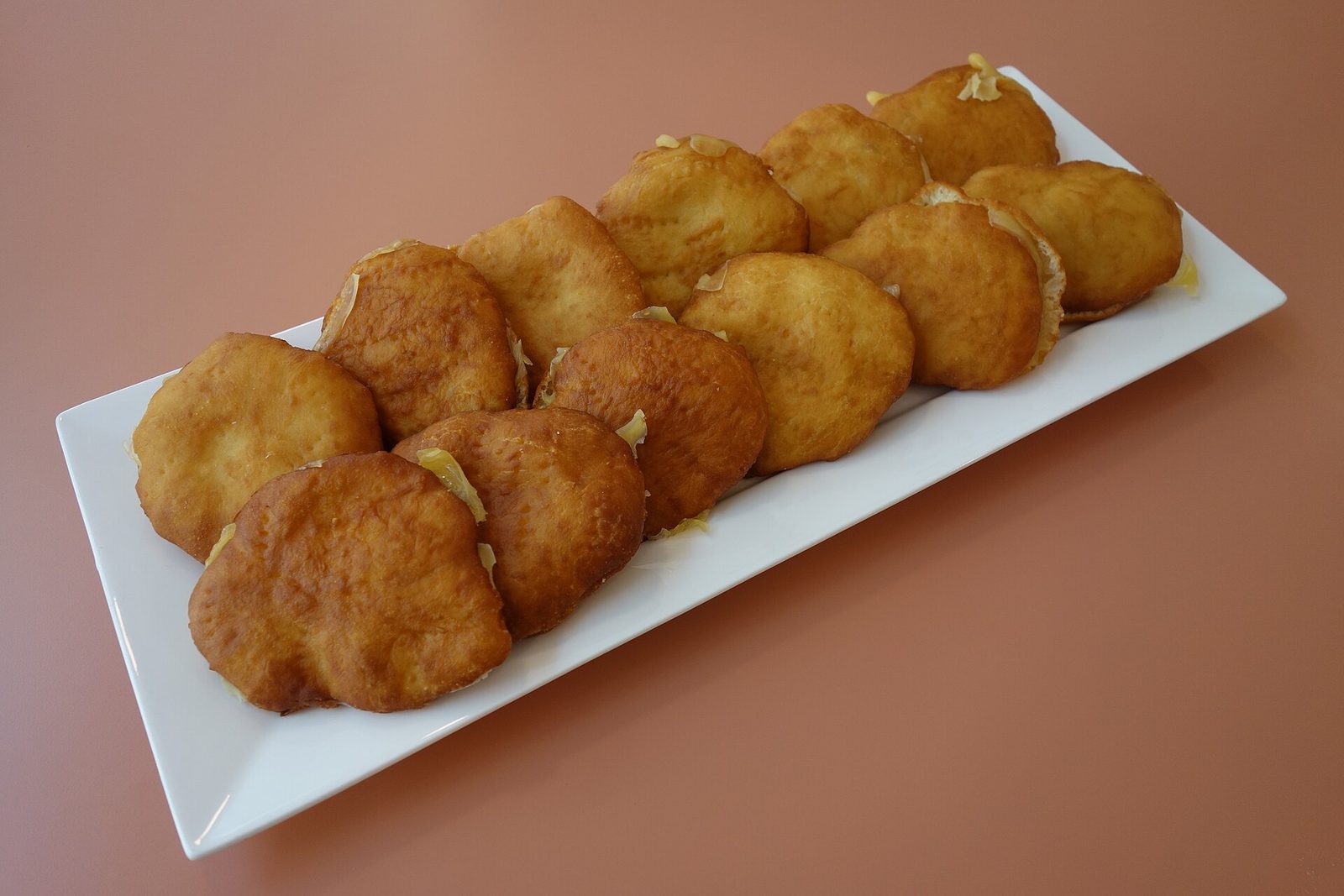
Then there is the island's own cooking. A Crucian table might hold kallaloo with fungi, hot johnny cakes, pates stuffed with beef, conch or saltfish, roti from a Christiansted counter, and sorrel or maubi to drink. La Reine Chicken Shack, also at mid-island, cooks chicken and ribs over coal and makes a fine first lunch on the drive in. Every dish is described in our Crucian food guide.
A small tip from guests who have done both kinds of trip: pack a folding cooler bag in a suitcase. It carries fish home from the market, keeps drinks cold on a Buck Island day and rides back to the house with ice for the evening. Two or three of them cover a group of twelve.
Simplest of all, send our concierge a shopping list before you fly, and the fridges are stocked before your bags come through the door. Every store, both markets and the provisioning service are covered in our post on shopping, markets and chefs, and the grocery store listings give addresses.
The kitchen and a private chef
Once the food is in the house, The Cerulean's kitchen takes it from there. The cook gets a long island to work on, a full-size cooking range, plus a dishwasher, a blender, an ice maker and the usual countertop gadgets; the farmhouse sink sits below a window over the sea. Cold storage comes in threes: the main fridge, a second full-size one over in the cottage, plus a poolside fridge for drinks, which is about right for twelve.
There are plates, glasses and cutlery for twelve and more, and dinner can be laid inside under the beams or outside on the deck. The deck's outdoor kitchen is built around a gas grill, so market fish, limes and a salad make a first-night dinner with almost no work.
When nobody wants to cook, our concierge can bring in a private chef for one big night or every night of the stay, cooking indoors or at the grill. Ask for Crucian dishes and the island's own flavors land on your plates. A bartender can be hired for a party night, and housekeepers can visit every day or once halfway through. Island chefs and caterers are listed in our chefs and catering listings.
Plenty of groups settle into a pattern: everyone eats breakfast at home, lunch happens wherever the outing ends, each household cooks a dinner in turn, a chef takes one or two nights, and one long dinner happens in Christiansted. That way the group shares a table almost every evening, and nobody spends the week at the stove.
Our house for a group of twelve
Turks and Caicos readers usually know they want a house already, so here is how ours works for a group.
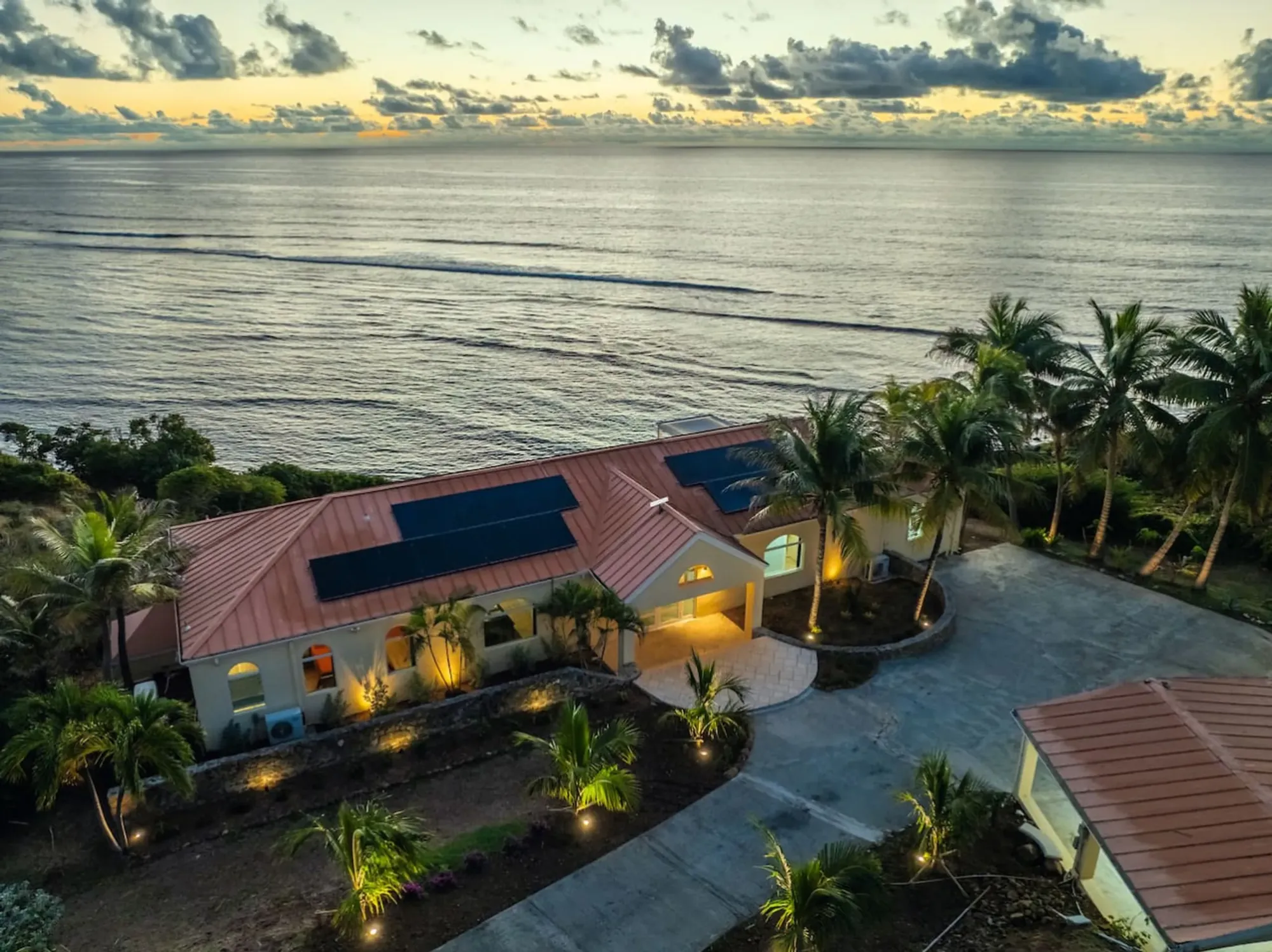
A gated private drive leads down to The Cerulean. Up in the main house, the four bedrooms lie beneath the beamed, vaulted roof; every one has a private bath, and three look straight out to sea. Kitchen, dining and living space flow together into one large room under the great room's wood-beamed ceiling, with an arched veranda on the water side. Across the garden, a separate guest cottage has the fifth bedroom and a loft bed. Count it up and you get five bedrooms, six beds, five baths and space for twelve.
Every room has air conditioning, plus ceiling fans. Wi-Fi is fast, the TVs are smart, and there is a sound system for the deck playlist. A washer and dryer keep beach towels moving, beds come made with fresh linens, and the house keeps a portable crib, baby gates and a high chair for the littlest guests. Parking inside the gate is free.
Rooms are easier to share out with a plan. Couples and parents tend to pick the main house. Grandparents often like the cottage, for the separate entrance and private kitchen, or a main-house room nearer the action. Teenagers and twenty-somethings tend to claim the loft. Use the planner below to sort rooms before anyone packs, and browse the house overview and room-by-room photos first.
The guest cottage
Groups mention the cottage more than any other part of the property, and it answers the question every organizer asks: how do two or three households share one house and still keep their own rhythm?
It is a little house in its own right, some twenty paces across the garden from the big house. Inside are its own kitchen, a sectional in the living room, one bedroom, laundry machines and a full bathroom, and from the living room a spiral stair rises to an open loft holding the sixth bed. It is never let to anyone else and comes with every stay, so the pool, the beach and both buildings stay private to your group.
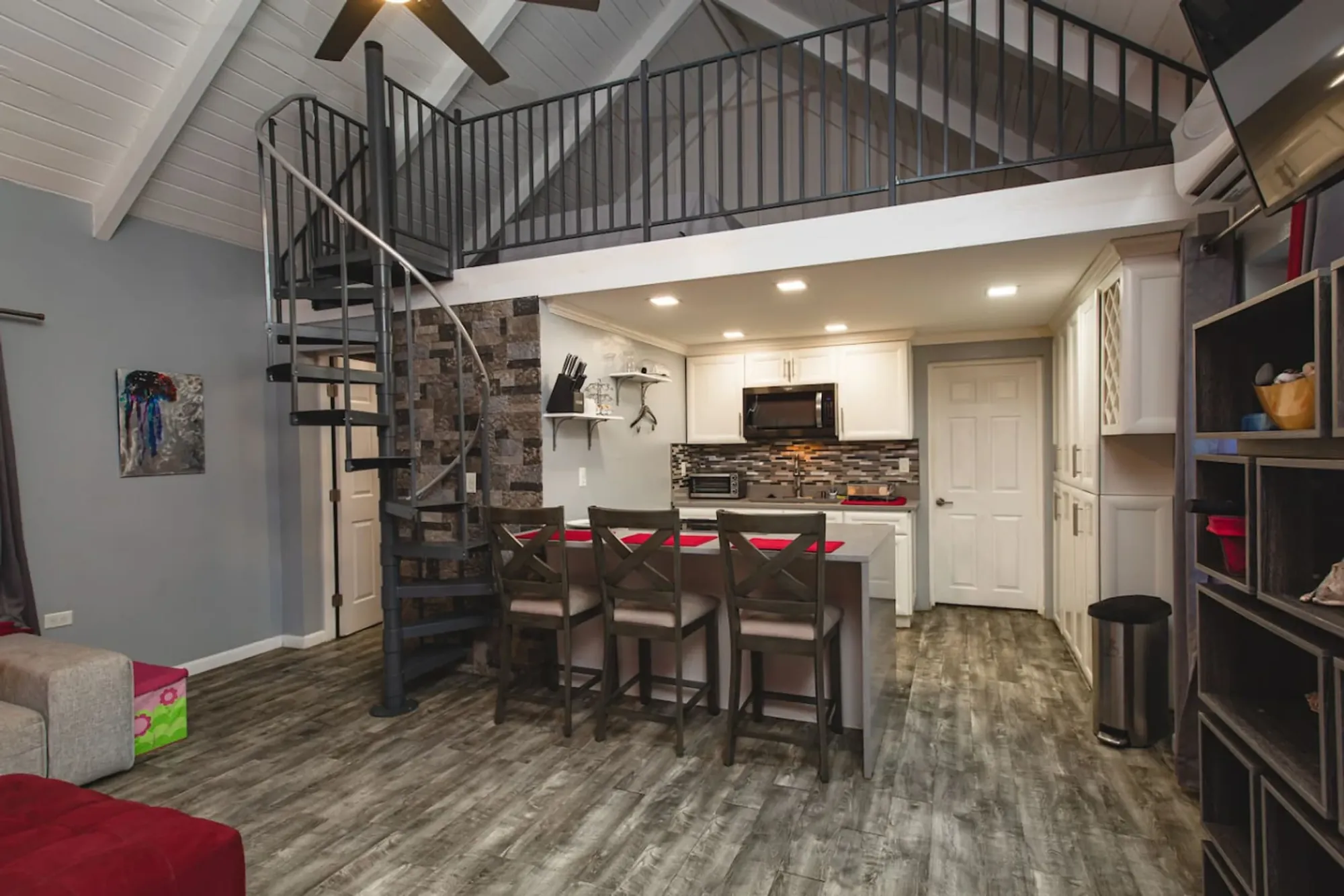
Here is how groups use it. Early risers brew coffee in the cottage without waking anyone in the main house. Parents keep the baby's naps quiet while the pool gets loud. A couple marking an anniversary in the middle of a family reunion gets an evening alone, a short walk from the rest. When two families share the trip, one household gets a living room and front door to itself, and the whole group still gathers at the big table for dinner.
See every room on the cottage photo page, and read our post on two families sharing one house for ideas on splitting rooms and costs.
Our beach and pool deck
Grace Bay's great gift is a long, calm beach. Ours is shorter and entirely the group's own. A few steps lead down from the pool deck to a private beach that opens straight onto the water, and the reef offshore keeps the shallows calm. Fish appear within a few feet of the shore, so even a small child in a mask watches them with no boat at all.
Facing east, the beach catches the sunrise, and a swim in the first light is a lovely way to start. Pelicans dive along the reef edge, and both green and hawksbill turtles graze the East End's reefs and seagrass through the year. If you have favorite masks and snorkels, pack them, and water shoes too if you like them for wading in; adult snorkel sets can be rented on the island.
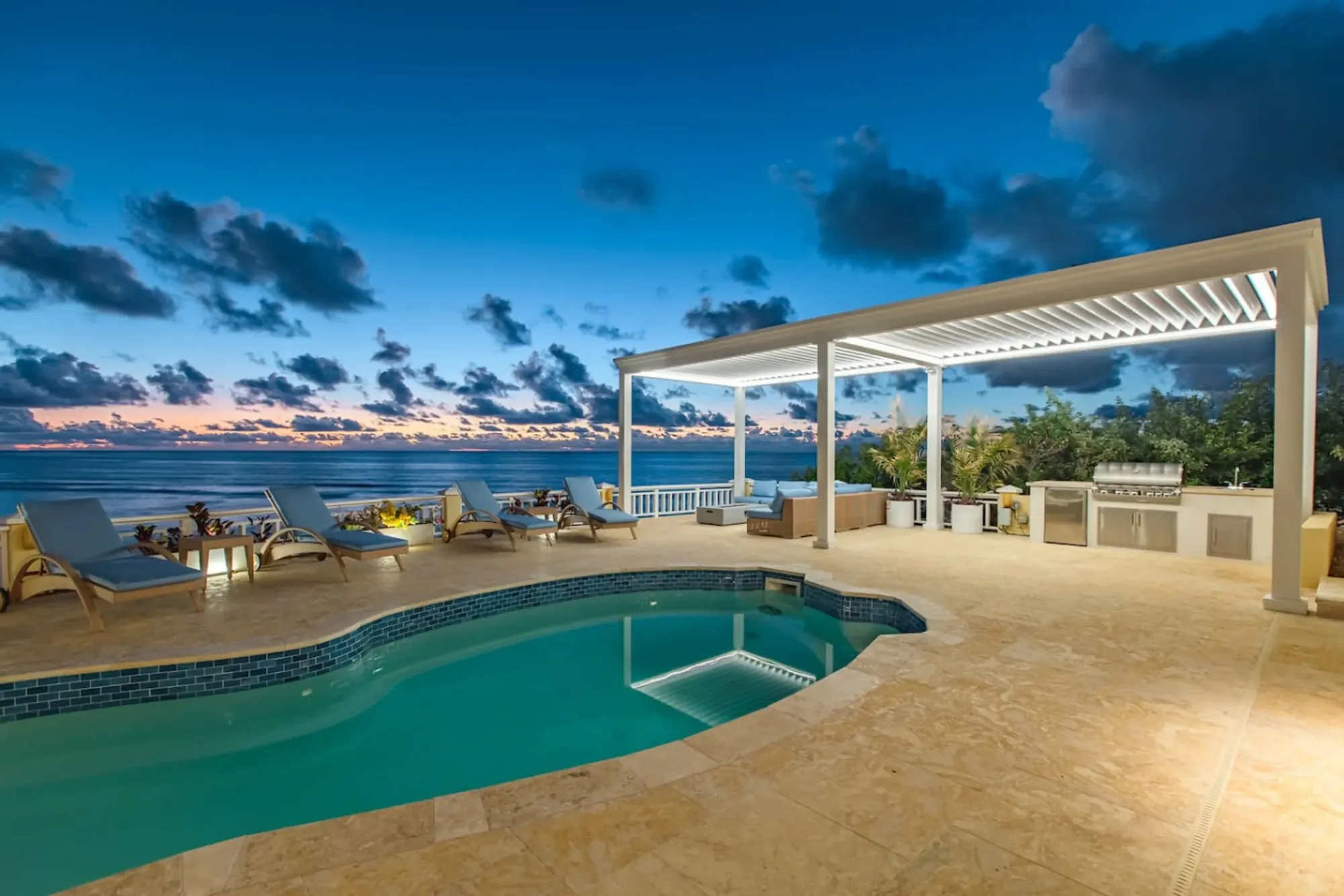
Up top, midday happens on the pool deck: a private pool set in a wide travertine deck, loungers, the pergola's shade, covered seats, the grill station, and a drinks fridge by the water. After dark the fire pit takes over, and the covered terrace's fire table sits beside a sea view.
For a group, a beach just below the steps changes the rhythm of the day. Toddlers dig while a parent reads nearby. Teenagers snorkel in pairs while grandparents keep an eye from the deck. Lunch and naps are only a few steps up. Both are photographed at every hour on our beach page and our pool deck page.
Flights to Providenciales and St. Croix
Providenciales has a wide choice of flights. American, United, Delta and JetBlue are among the airlines serving its airport, from New York, Washington, Miami, Boston, Chicago, Dallas, Philadelphia and Atlanta, and that reach is one of its real conveniences for a family leaving from a single city.
St. Croix's nonstops are built around Saturdays, which matches a house week that starts and ends on a Saturday. Here is the list for St. Croix's airport, Henry E. Rohlsen (STX), as we found it in November 2026; airlines shift schedules, so look again before you pay.
| Leaving from | Who flies and when | Time aloft |
|---|---|---|
| Miami | American year-round, with a pair of daily flights this winter | Roughly 3 hr |
| Charlotte | American on Saturdays from Nov 7, every day Dec 17 to Apr 5 | 3 hr 45 min or so |
| Atlanta | Delta on Saturdays from Nov 14, every day from Dec 19 | 3 hr 45 min or so |
| Newark | United on Saturdays, on sale through Sep 10, 2027 | 4 hr 15 min or so |
| Chicago O'Hare | American, winter Saturdays, first Dec 19 through Jan 2, and again Feb 13 onward | Close to 5 hr |
| San Juan | Cape Air several times daily, JetBlue every day from Nov 19 | Under an hour |
For families in New Jersey and around New York, the Newark flight is the easy one. This winter, United's Saturday jet is scheduled out of Newark at 9:03 in the morning and onto St. Croix at 2:20 in the afternoon, early enough for a late-afternoon swim, with the homeward flight at 3:25 island time. From St. Thomas, Cape Air crosses in about 25 minutes several times a day, and the Seaborne seaplane flies harbor to harbor in about the same.
Mind the clock when you plan the first afternoon. St. Croix keeps Atlantic time, which in winter is an hour later than New York, so that 2:20 landing comes after a little over four hours in the air. Set every phone to island time on landing, and the 4 pm check-in falls neatly after the drive east and a stop for ice.
Coming from different cities? The group can still arrive the same afternoon: cousins through Charlotte, grandparents by way of Miami, friends via Atlanta, all on the ground within a few hours on a Saturday. There is a page for each home city: New York, Chicago, Boston, Atlanta and Washington, and the full route list on flights to St. Croix.
From the airport to our gate is about 20 miles, or roughly 35 to 40 minutes behind the wheel. Land, collect the cars, pick up ice and drinks, and the first swim comes before sunset.
Driving on the left on both islands
Here the two islands are close cousins. On Turks and Caicos, cars keep left, most of them are left-hand drive because they come from the United States, there are no stoplights, and roundabouts keep things moving, with drivers giving way to traffic on the right. Leeward Highway, the main road on Providenciales, runs two lanes in each direction.
St. Croix keeps left as well, in the same left-hand-drive cars you drive at home. Limits stay gentle: 20 mph through town unless signs say otherwise, 35 mph is typical elsewhere, and the Melvin H. Evans Highway allows 55. Front-seat riders buckle up, and drivers keep phones out of their hands. The first hour feels new; by day two everyone in the car is calling out "stay left" without thinking.
The bigger difference is how much driving the week holds. Providenciales visitors often stay close to Grace Bay. On St. Croix, cars earn their keep because the island is worth crossing: Green Cay Marina in about ten minutes, Christiansted in fifteen to twenty, Cane Bay in about 45 and Frederiksted in about 50, each drive through hills and old estate country.
Ten or twelve people usually split between two cars or SUVs, or a van plus a car, so the early birds can slip off to Point Udall while everyone else sleeps in. Rental desks wait at the airport, and if your group lands on staggered flights, our concierge can book someone to meet you at arrivals and a rental for the whole week. Our guide to driving St. Croix covers road names and local habits, and the car hire listings name each rental company.
A week for a group at The Cerulean
Here is a relaxed week, Saturday to Saturday, for a group that likes one outing a day and long stretches at home.
- Day 1Land on a Saturday, direct or via San Juan, drive east, tour the house, first swim before dinner
- Day 2Point Udall for first light, snorkel the reef below the house, grill dinner at home
- Day 3Buck Island by morning charter from Green Cay Marina: the underwater trail, then Turtle Beach
- Day 4Christiansted: the fort in the morning, a harbor-side lunch, a grocery stop driving home
- Day 5Isaac Bay or Cramer's Park, then an afternoon in the pool
- Day 6The west end: Mahogany Road, Estate Whim or a distillery tour, sunset in Frederiksted
- Day 7Stay home: reef, pool, a chef cooks the farewell dinner, fire pit after dark
- Day 8Morning swim, out by 10 am, at the airport two hours before takeoff
Saturday is travel day. If you arranged provisioning, the groceries are already put away when you arrive, and our house managers lead each group in by car and show everyone around. The first evening belongs to the pool and an easy dinner outside.
Sunday stays local: Point Udall at dawn for whoever is awake, snorkel masks on at the house reef, and the pool after lunch. Monday is Buck Island, out early while the sea tends to be calmest and home by mid-afternoon for naps. Tuesday is town: the fort early while it is cool, lunch along the boardwalk, then the grocery run.
Wednesday is a free day for the group to split up. Hikers set off for Isaac Bay early; families with little ones claim a pavilion at Cramer's Park; a diver in the party books the Cane Bay wall. Thursday crosses the island: the forest road, a plantation or a rum tour, and sundown over the water in Frederiksted before driving back.
Friday is a home day: snorkeling off the steps, long hours by the pool, a massage on site if someone booked one, and the chef's farewell dinner. On the second Saturday, fit in a last swim, pack, check out by 10 am and reach the airport roughly two hours early to clear the agriculture and customs line.
Two families rarely want the same thing every day, and the island makes it easy to split up and meet again at dinner. One household can take the Cane Bay wall dive while the other spends the morning on the pier at Frederiksted looking for seahorses. Teenagers can hike down to Isaac Bay with a parent while the grandparents read under the pergola. The cottage gives one family a quiet base for naps, and dinner under the beams or out on the deck brings everyone back together when the grill is lit.
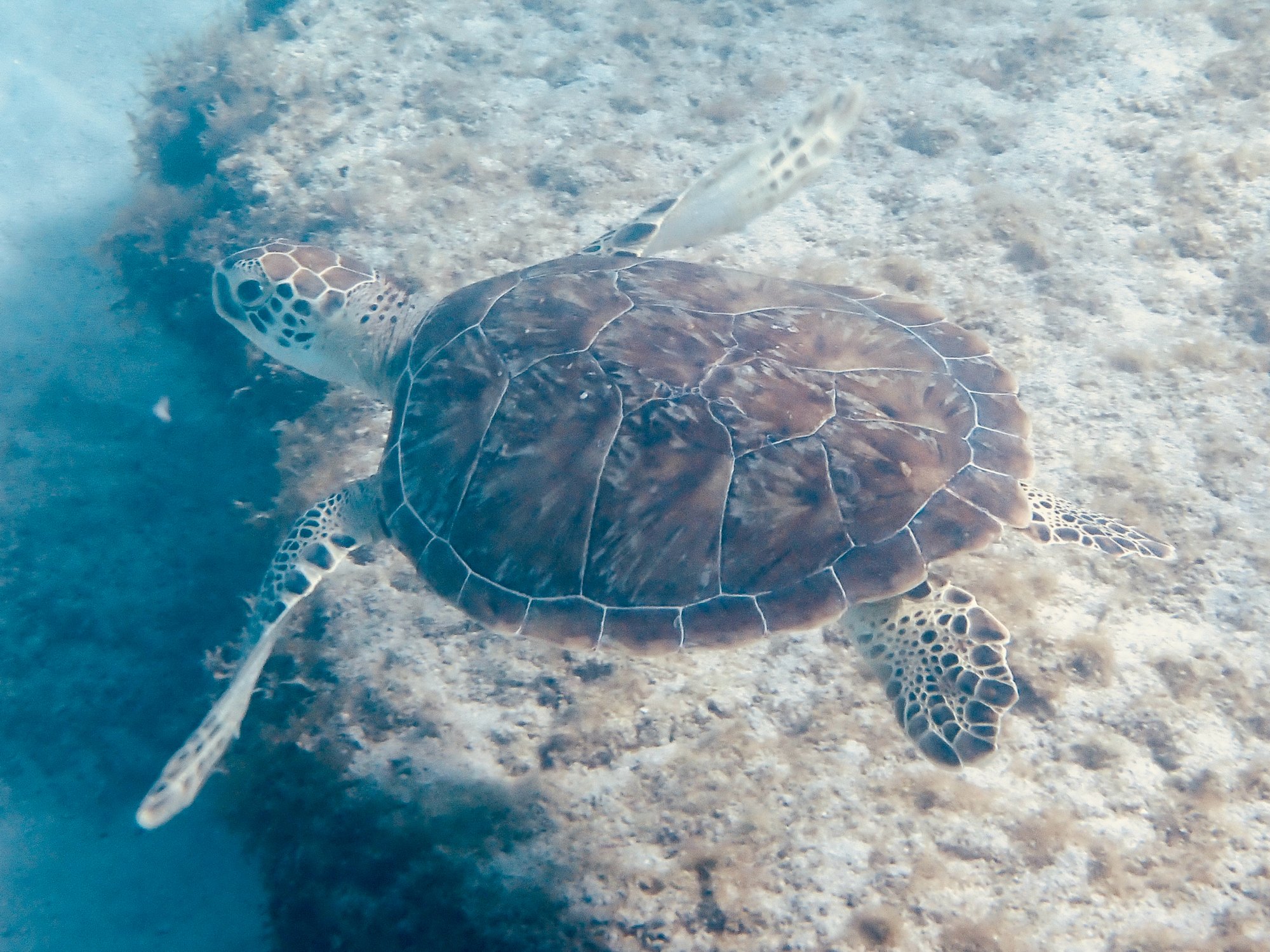
Turtles are part of the week too. Hawksbills nest on Buck Island's beaches, at Sandy Point leatherbacks nest in spring and early summer, greens use Jack and Isaac Bay later in the year, while greens and hawksbills feed along the East End reefs in every month. Watch from a respectful distance, keep beach lights off near nesting sand, and let the children count shells on the turtle rather than reach for it. The St. Croix turtle calendar has the seasons and the rules.
If the moon is dark during your week, add a night paddle at Salt River; the bay glows around every stroke, and our Salt River bioluminescent bay page shows how to choose the night.
Booking the villa
Sterling Point, a St. Croix company, manages The Cerulean, and its booking calendar shows live rates and the open weeks. You arrive from 4 pm and leave by 10 am, and there are just two house rules: no smoking and no pets. Celebrating a birthday, an anniversary or a reunion? Tell us when you book.
Most groups book Saturday to Saturday, since Saturday is when Newark's, Chicago's and Atlanta's flights run outside their daily stretches. Holiday weeks are spoken for first, so a group eyeing Thanksgiving, the two weeks around Christmas and New Year's, or spring break should lock in dates early. Those weeks have their own posts on Thanksgiving on the island and the Christmas holidays here.
Work through it in a set order. Lock in the house first; every other plan hangs on it. Then buy flights, then reserve the cars, then ask for the things that need notice: provisioning, a chef, the Buck Island charter and any restaurant table for twelve. Through our concierge team you can also request housekeeping, a bartender, boat days, massage, yoga and the airport pickup.
The group booking list
9 itemsYour ticks stay in this browser only.
Grace Bay earns every award it has won, and Turks and Caicos makes a wonderful beach trip. If your group would like to fly on the licenses already in their pockets, share one house over its own reef and find a new corner of the island each afternoon, St. Croix's eastern tip is ready for you. Look up your dates on The Cerulean's calendar.
Questions people ask
Is a passport required for Turks and Caicos?
Yes. Turks and Caicos is a British Overseas Territory, and every U.S. traveler, including babies, must carry a valid passport. The islands' Border Force asks that it stay valid until you leave, and Americans need no visa. Carry an onward or return ticket as well. Officers can grant up to 90 days, and a 30-day stay is the usual grant.
Does St. Croix require a passport?
Americans can skip it. A trip to St. Croix from the States or Puerto Rico stays inside U.S. borders, since the island sits within the USVI. Grown-ups clear the TSA line with a passport, a REAL ID license or any other ID that TSA takes, and nobody under 18 needs ID there. Before your flight home, plan on a brief customs and agriculture stop.
Is there a good alternative to Turks and Caicos?
If your family or group wants a villa and would rather skip passports, St. Croix is a strong one. Dollars, English and left-side driving carry over from Turks and Caicos, and St. Croix then adds hill country, two historic harbor towns, forts, rum distilleries and the Buck Island reef. The Cerulean takes twelve, with four bedrooms that have their own baths, a separate cottage and a private beach the reef keeps calm.
What currency does Turks and Caicos use?
Turks and Caicos uses the U.S. dollar as its official currency, and debit and credit cards are widely taken. On St. Croix it is dollars too, with the banks and ATMs you know from the mainland, so nobody in your group changes money for either trip. Tipping on Turks and Caicos follows American habits, around 15 percent for waiters and drivers.
Which side do cars keep to in Turks and Caicos and St. Croix?
The left, on both islands. Most cars on each are left-hand-drive American models, so the steering wheel sits where you expect it. Turks and Caicos keeps traffic moving with roundabouts instead of stoplights. St. Croix limits are 20 mph through towns, usually 35 elsewhere, and 55 on the main highway.
What is the water temperature in St. Croix in January?
Warm enough for a daily swim. NOAA's harbor gauge at Christiansted reads 80.9°F on average in January and a shade less, 80.3°F, in February, and the water peaks at 86.6°F in September. On land, January afternoons average 84.2°F at the airport and nights about 71°F, so dinner outdoors is comfortable all winter.
Is the diving in St. Croix as good as Turks and Caicos?
Both islands are wall-diving places. From Providenciales, divers reach about 70 miles of barrier reef and wall, and Northwest Point, West Caicos, French Cay and Grand Turk are the well-known sites. St. Croix's Cane Bay wall begins just past the shallows, so you can walk in from the beach, while under the Frederiksted pier seahorses and frogfish cling to the pilings.
What else is there on St. Croix besides beaches?
A lot. Christiansted has its yellow fort, Fort Christiansvaern, inside a national historic site, and Frederiksted has Fort Frederik and a long pier. Estate Whim shows a restored sugar plantation. Cruzan and Captain Morgan both distill rum on the island, Mahogany Road climbs through the rain forest hills, Point Udall marks the country's eastern edge, and Buck Island's underwater trail is a short sail away.
How do you fly to St. Croix?
Schedules published in November 2026 show nonstop jets all year from Miami, plus Charlotte and Atlanta, a Saturday flight out of Newark, and winter Saturdays from O'Hare. From San Juan, small Cape Air planes cross a few times daily, and JetBlue begins a daily run there on November 19, 2026. The hop over from St. Thomas takes about 25 minutes.
Sources
Every page here was read in November 2026. Flight times, entry rules and opening hours move, so re-read the official source before paying for anything that rests on it.
- Turks and Caicos Islands Border Force — Entry requirements
- Visit Turks and Caicos Islands (visittci.com) — Entry requirements, visas and passports
- Turks and Caicos Islands official tourism site — Plan your trip
- Turks and Caicos Islands official tourism site — Grand Turk
- GOV.UK — Turks and Caicos Islands travel advice (British Overseas Territory)
- visittci.com — Useful travel information (currency, language, time, phones, tipping)
- visittci.com — Driving in the Turks and Caicos
- visittci.com — Grace Bay Beach
- visittci.com — Chalk Sound National Park
- visittci.com — Scuba diving in the Turks and Caicos
- visittci.com — Diving on Providenciales
- visittci.com — Diving on Grand Turk
- visittci.com — Geology, ecology and climate
- visittci.com — Population of the Turks and Caicos
- visittci.com — Getting here and the Grand Turk cruise port
- visittci.com — Providenciales International Airport (PLS)
- visittci.com — Grocery stores on Providenciales
- Government of the Turks and Caicos Islands — Approved Estimates 2026-2027, Volume I (2025 visitor arrivals)
- USVI Office of Management and Budget — 2025 revenue estimating conference, Department of Tourism (St. Croix arrivals and cruise calls)
- U.S. Census Bureau — 2020 Census, U.S. Virgin Islands tables
- NOAA NCEI — Coastal Water Temperature Guide (Christiansted Harbor)
- NOAA NCEI — 1991-2020 monthly normals, Henry E. Rohlsen Airport
- National Park Service — Buck Island Reef National Monument, basic information
- National Park Service — Christiansted National Historic Site, fees
- Visit USVI — No passport required for U.S. citizens
- TSA — Acceptable identification at the checkpoint
- Verizon — Domestic roaming FAQs (U.S., Puerto Rico, USVI)
- Medicare.gov — Travel outside the U.S.