

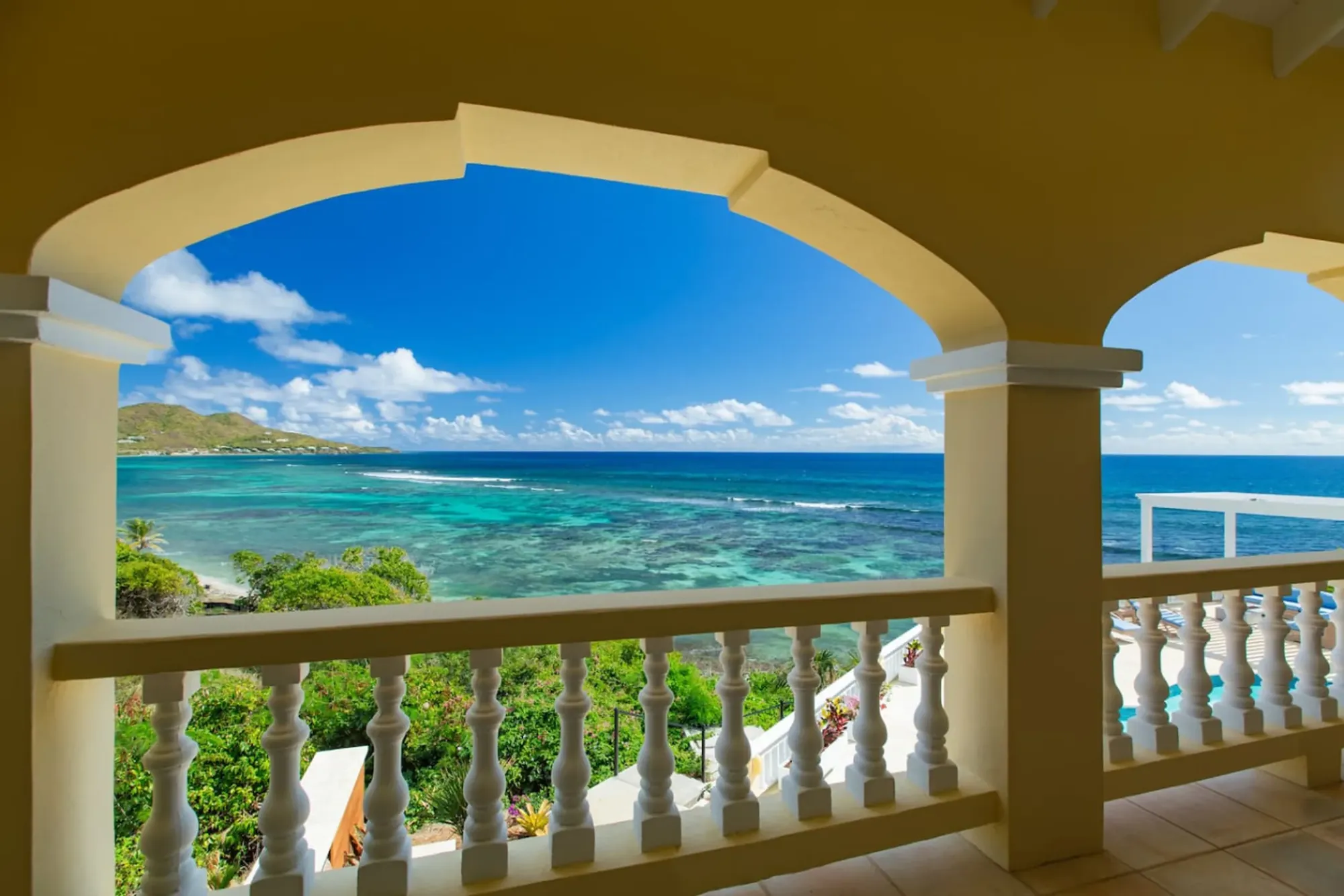
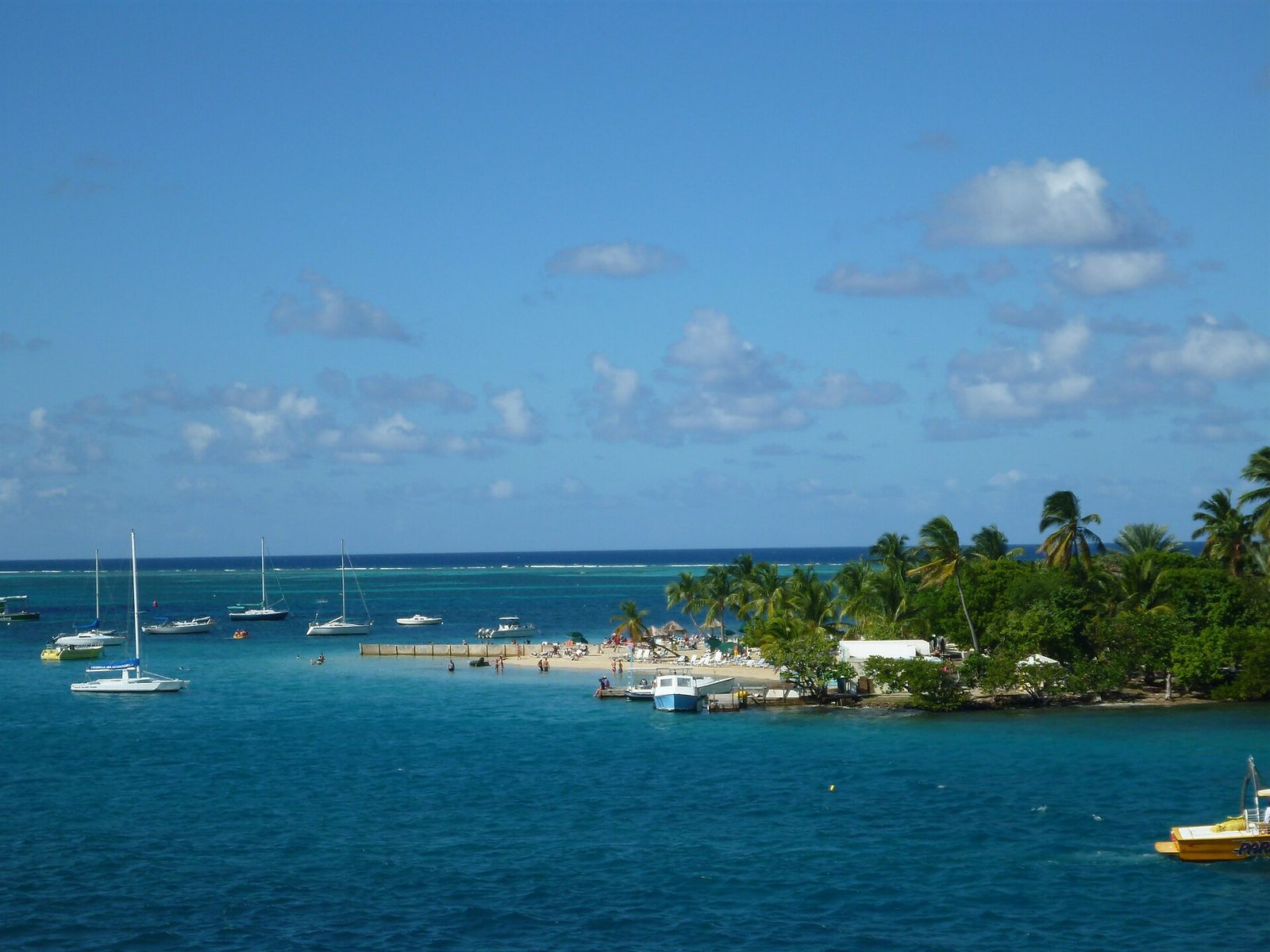
Protestant Cay and the ferry
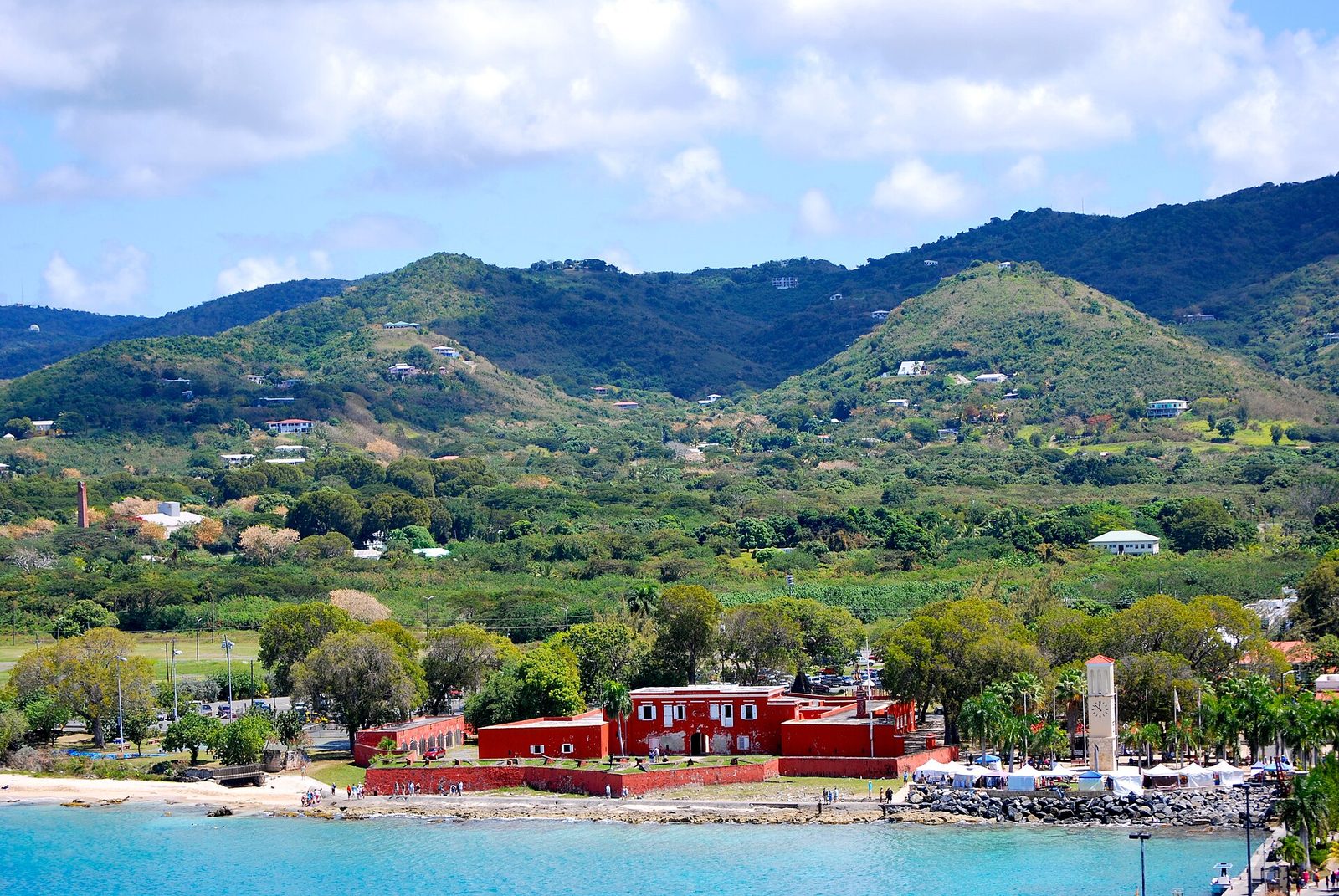
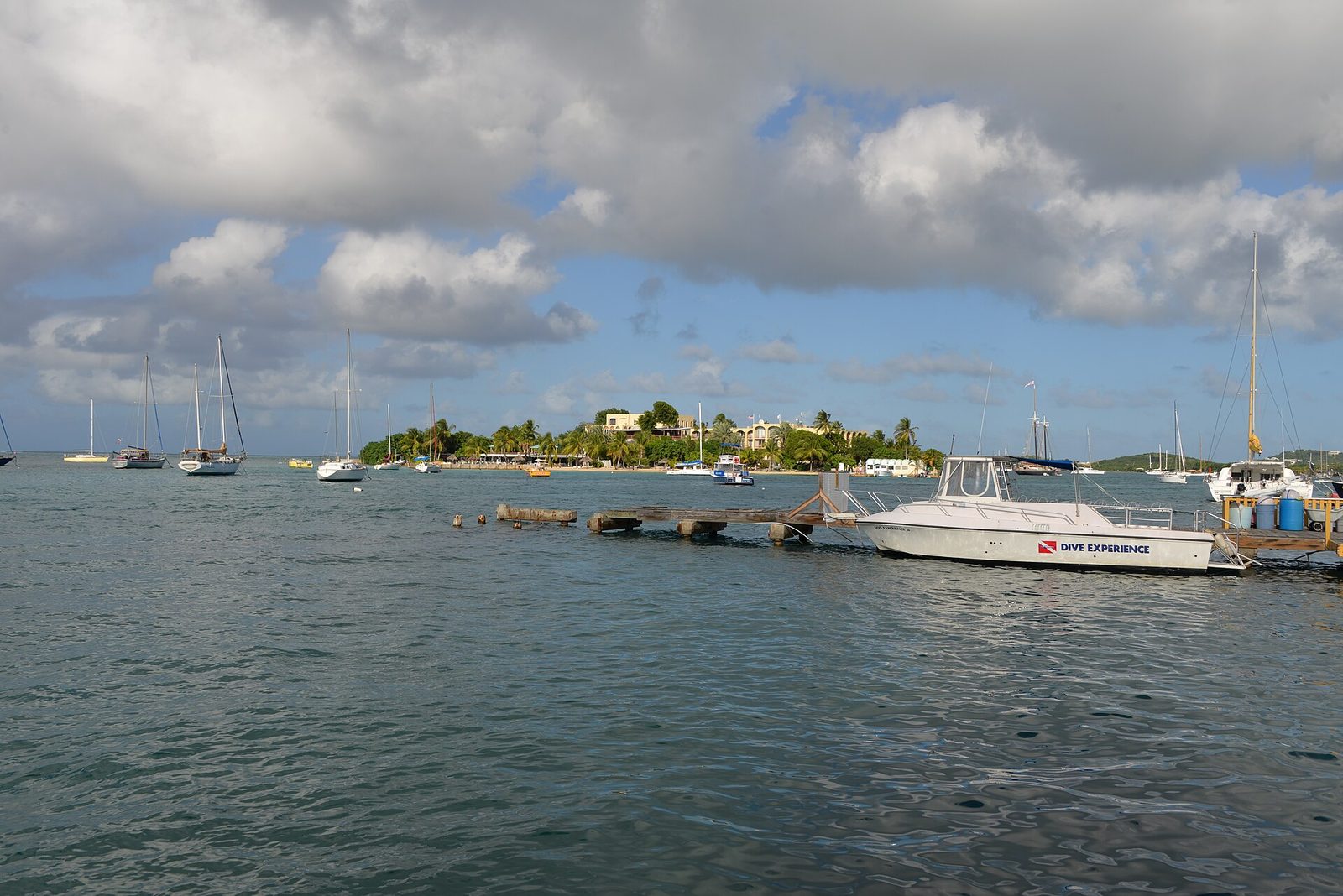
The small green island in the middle of the harbor is Protestant Cay, and the hotel on it — Hotel on the Cay — is reached by a little ferry from the waterfront by the fort. The crossing takes about two minutes. By the hotel's long-standing arrangement the ferry has run every ten minutes or so from early morning until around midnight, free for registered hotel guests and about $5 round trip for everyone else, and day visitors have used the cay's beach and watersports rentals for years. It is the view from every boardwalk table.
You should know the recent history before you plan a day around it. On January 10, 2025, the Virgin Islands Department of Health ordered the hotel to cease operations after two guests who had stayed there were diagnosed with Legionnaires' disease and Legionella was found in multiple water sources; the hotel replaced plumbing and remediated its water system, and on January 16, 2025, the Department cleared it to resume operations in all but one room, with periodic retesting to follow. That is the last hard news we have. As of 2026 the hotel appears to be operating normally, but confirm the ferry schedule and the day-visitor rules directly with the hotel before you promise the children a beach.
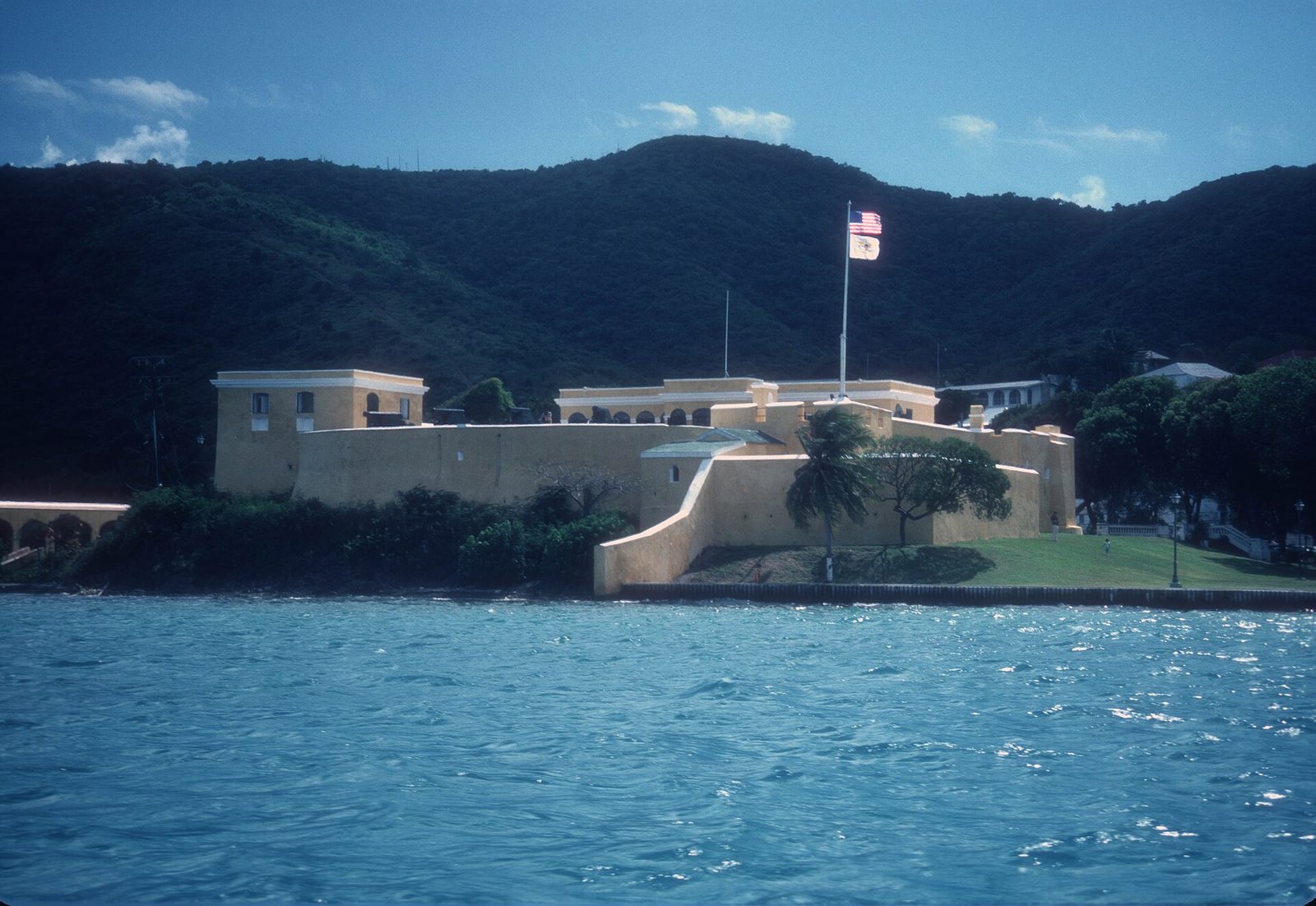
Assuming it is running, the cay makes a very good hour or two in the middle of a town day: ferry over, swim, ferry back, lunch on the boardwalk. It is not the beach we would send you to for snorkeling — the villa's own private beach and reef, and the East End bays, are far better for that — but for a swim between the fort and lunch it is unbeatable, because it is right there. For photographs, shoot the cay from the fort's ramparts in the morning with the light behind you.
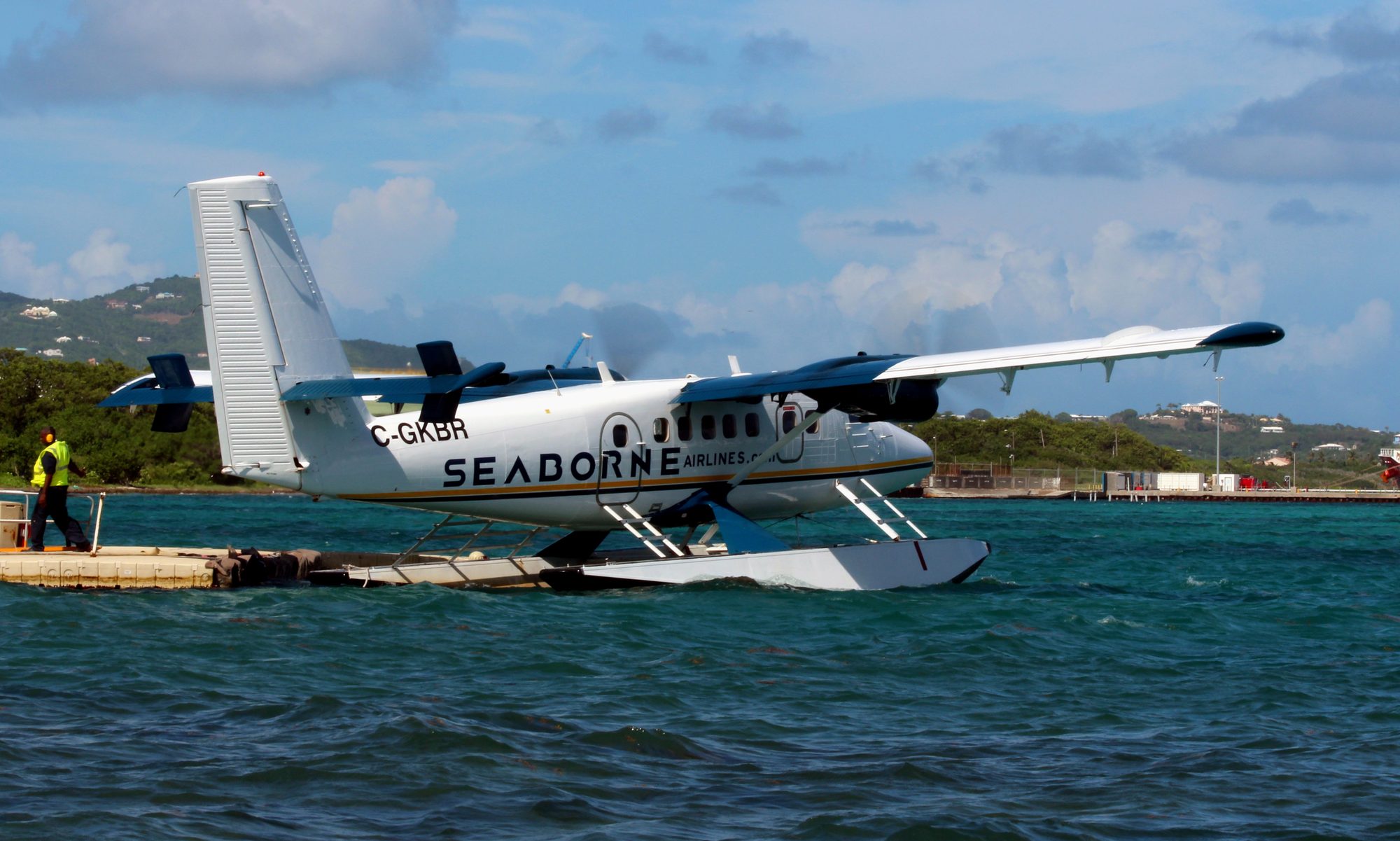
The seaplane
At the western end of the waterfront is one of the last things you would expect in a colonial harbor town: a working seaplane base. Seaborne Airlines flies from the Svend Aage Ovesen Jr. Seaport on the Christiansted harbor to the seaplane terminal in downtown Charlotte Amalie, St. Thomas — "25 minutes from downtown to downtown," in the airline's own phrase — with departures through the day. On St. Thomas the seaplane comes in beside the Blyden ferry terminal in the middle of Charlotte Amalie, so a day trip needs no taxi at either end.
For villa guests this is the practical way to see St. Thomas without touching the airport: drive in, park in the small free lot on Prince Street across from the terminal, fly over, and be back for dinner. Baggage limits on the seaplane are tighter than a jet's, so travel light, and check the current schedule and fares on the airline's site rather than trusting a printout. If you are choosing between islands rather than visiting both, our St. Croix vs. St. Thomas guide makes the case for staying put.
Even if you never board one, the seaplanes are part of the show. They come in over the reef, land in the harbor, and taxi to the ramp a few hundred feet from the boardwalk bars; children stand at the rail for it, and so do adults. Time a boardwalk lunch for a scheduled arrival and you get the whole sequence for the price of a sandwich.
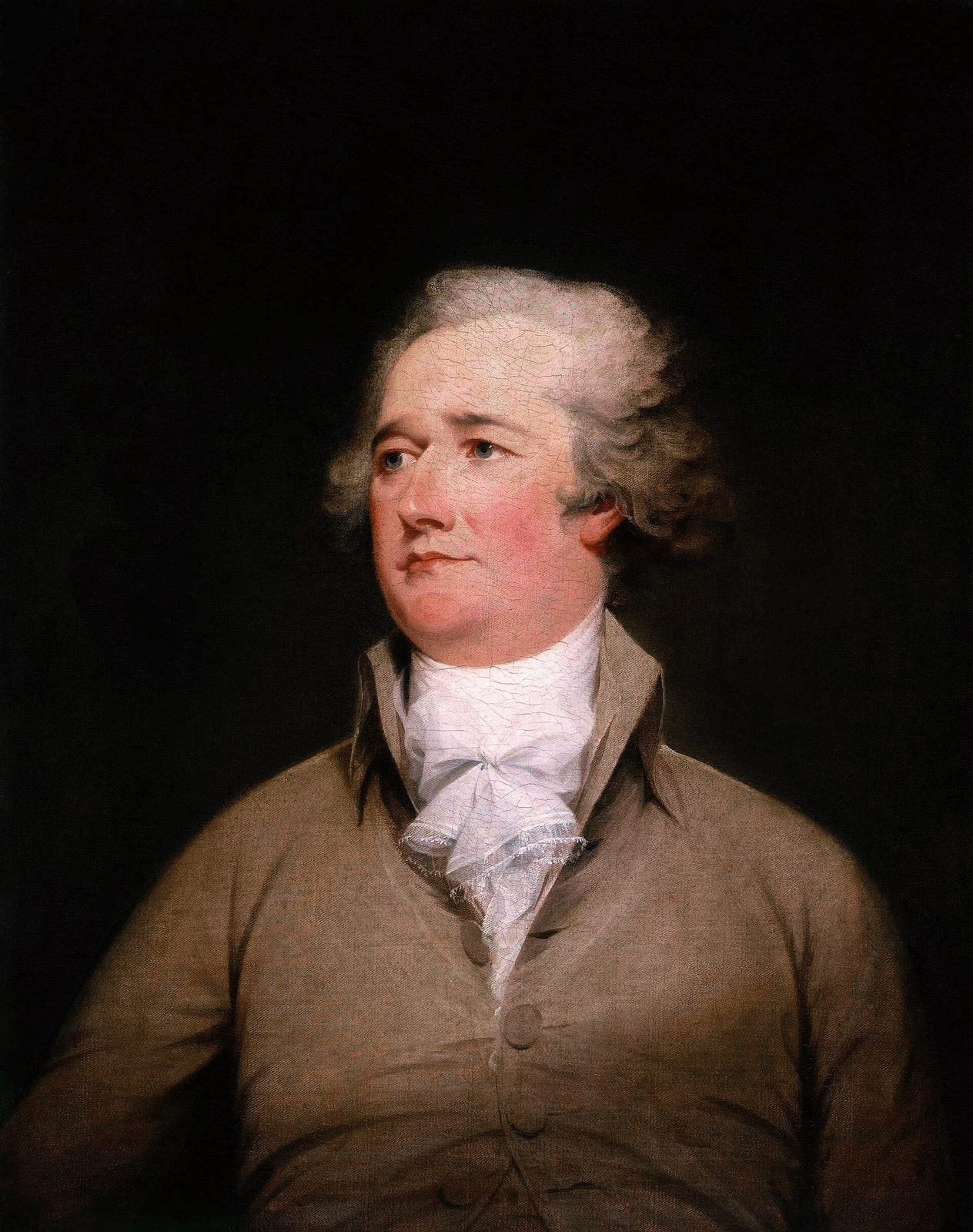
Hamilton's Christiansted, briefly
Alexander Hamilton grew up here — really here, on these blocks — and the town does not make much fuss about it, which is part of its charm. He arrived on St. Croix as a boy in the 1760s and clerked in the Beekman & Cruger counting house on King Street; his mother Rachel Faucette had been jailed in Fort Christiansvaern in 1750 for refusing to live with her husband; and it was his letter describing the hurricane of August 1772, printed in the Royal Danish-American Gazette, that persuaded island patrons to raise the money that sent him to America. Every one of those places is within four blocks of the fort.
We keep the whole story — the counting house, the hurricane letter, the fund, and what is left to see — in a separate guide, Alexander Hamilton's St. Croix, and we will not repeat it here. For the purposes of a town walk, know three things: the fort's cell block is the Rachel Faucette site; King Street is the Beekman & Cruger street; and the church-and-warehouse corner at Church and Company Streets is the town he would have known as a teenager, since both buildings predate him. Walk it with that in mind and the arcades stop being scenery.
The one caution: do not go looking for a marked "Hamilton house." Christiansted was rebuilt, patched and repainted for two hundred years after he left, and the plaques are few. If the subject is why you came, read the Hamilton guide first, then walk King Street with it open on your phone.
Where to eat and drink, verified for 2026
Christiansted has the densest run of restaurants on the island, and also the most churn — which is why every place below was checked against a live source in August 2026, and why the closed ones are named so you do not go looking for them. Book dinner in winter, and any night for a table of eight or more. Several kitchens close on Sunday or Monday, and a few take a late-summer vacation.
For a proper dinner, the anchor is Savant, at 4C Hospital Street a few steps from the fort: an upscale bistro serving what its own site calls "an eclectic mix of Caribbean, Asian, & Mexican fusion," open Monday to Saturday from 5:30 to 9:30 pm, closed Sundays, a fixture since 1998, and "reservations highly recommended" — believe that. Galangal, at 17 Church Street, is the French-Asian restaurant with the serious wine list; it takes a late-summer break (in August 2026 it was closed for vacation with a September 9 reopening), so check before you drive in.
Rum Runners, on the waterfront where Queen Cross Street meets the boardwalk, does steaks and seafood at the water's edge for breakfast, lunch and dinner and says it has been there since 2000. The Bombay Club, downstairs in a Danish townhouse at 5A King Street, has been a St. Croix tradition since 1982 — lunch and dinner, air-conditioned, daily specials of lobster, steaks and fish.
On the boardwalk, casual and on the water: Brew STX, the open-air restaurant, bar and microbrewery known for its mango lager and live music several nights a week (and, by the local listings, crab races on Mondays); The Mill Boardwalk Bar, for brick-oven pizza on the harbor; and Shupe's on the Boardwalk, the burger-and-beer bar with build-your-own fresh-ground burgers and truffle-parmesan fries. For breakfast and lunch, Toast Diner is the small, funky side-street diner and Frescos Kitchen and Pub House does homemade breakfast and lunch a couple of blocks from the water. Un Amore, on the outskirts of town, is the Italian restaurant — pasta, pizza, fresh mozzarella — when the group wants a change.
Now the closed list, because older guides and even current maps still show them. Zion Modern Kitchen no longer opens for regular dining and operates only for private events. Too Chez is closing permanently on September 12. Harvey's, the beloved local-food institution, is permanently closed. And a Christiansted business can change hands between our check and your trip, so the villa's restaurant directory is kept current and the concierge will confirm and book. If you want the island's own food traditions rather than the fusion tables, start with our Crucian food guide.
| Place | Where | Meal | Notes |
|---|---|---|---|
| Savant | 4C Hospital Street | Dinner | Mon–Sat 5:30–9:30 pm, closed Sun, book ahead |
| Galangal | 17 Church Street | Dinner | French-Asian, wine list, late-summer vacation — check |
| Rum Runners | Waterfront at Queen Cross Street | Breakfast, lunch, dinner | Steaks and seafood on the boardwalk |
| The Bombay Club | 5A King Street | Lunch and dinner | Danish townhouse, since 1982 |
| Brew STX | Boardwalk | Lunch, dinner, drinks | Microbrewery, live music |
| The Mill Boardwalk Bar | Boardwalk | Lunch and dinner | Brick-oven pizza |
| Shupe's on the Boardwalk | Boardwalk | Lunch, dinner, drinks | Fresh-ground burgers |
| Toast Diner | Side street downtown | Breakfast and lunch | Small and funky |
| Frescos Kitchen and Pub House | Two blocks from the water | Breakfast and lunch | Homemade, casual |
| Zion Modern Kitchen | Downtown | Closed to walk-ins | Private events only — do not go |
Shopping, the arcades and the Apothecary Hall
Christiansted's arcades are its signature and its shopping street at once. Under the colonnades of King Street and Company Street are the jewelers, galleries and rum shops that make the town walkable at noon and give a rainy hour somewhere to go; the boardwalk end of things adds studios and galleries with paintings, photography, glass and crafts. If you plan to buy anything worth declaring, read our duty-free guide first — the U.S. Virgin Islands allowance is generous, and the rules on liquor and jewelry are worth knowing before you are standing at a counter.
The one shop you should visit that sells nothing is the Apothecary Hall Museum, at the corner of Company and Queen Cross Streets. It is a Danish colonial pharmacy, established in 1820 — by the Landmarks Society's account, by a Danish pharmacist sent to prepare medicines for the Christiansted garrison — and in service for more than 140 years, restored and opened as a museum by the St. Croix Landmarks Society, and it claims a real distinction: the only Danish pharmacy museum in the Western Hemisphere still in its original building. The rooms are furnished as a working 19th-century pharmacy — the drawers, the jars, the counter — and it takes fifteen minutes. The Society posts it as open Monday to Saturday, roughly 10 to 4, with free admission; hours change, so check before you build a morning around it. The Society's main museum is Estate Whim on the west end.
For daily needs the town proper is thin — it is a historic district, not a shopping center — and the answer is Gallows Bay, the harbor-side neighborhood just east of the fort on the way back to the East End, which the local guides point to for shopping, dining and day-to-day needs. Provisioning for the villa is a separate errand: Seaside Market and Deli at Estate Mt. Welcome, on the Christiansted side of the island, is the gourmet market with the bakery, deli, wine and cheese, and the full list of supermarkets is in our groceries and provisioning directory. Do that run on the way home, not on the way in, so the cold things stay cold.
A walking route with real street names
The whole historic core fits inside a loop of about a mile, flat except for the gentle climb from the water to Company Street. Give it two hours with the fort, one without. Start at the fort because the parking is there and it opens at 8:30, before the shops; finish on the boardwalk because that is where lunch is. The route runs the buildings in the order the Danes built and used them, which is the order that makes sense of them.
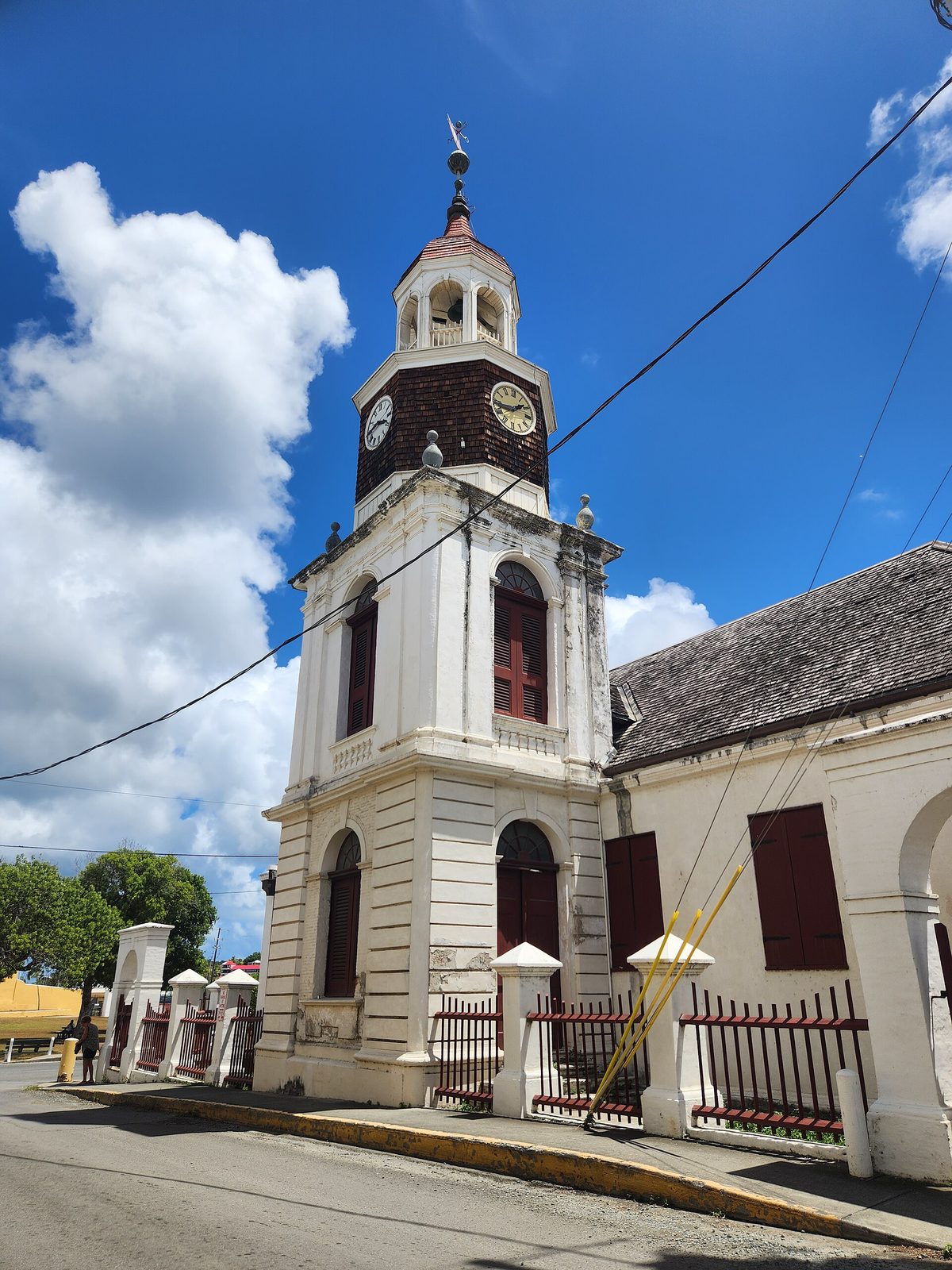
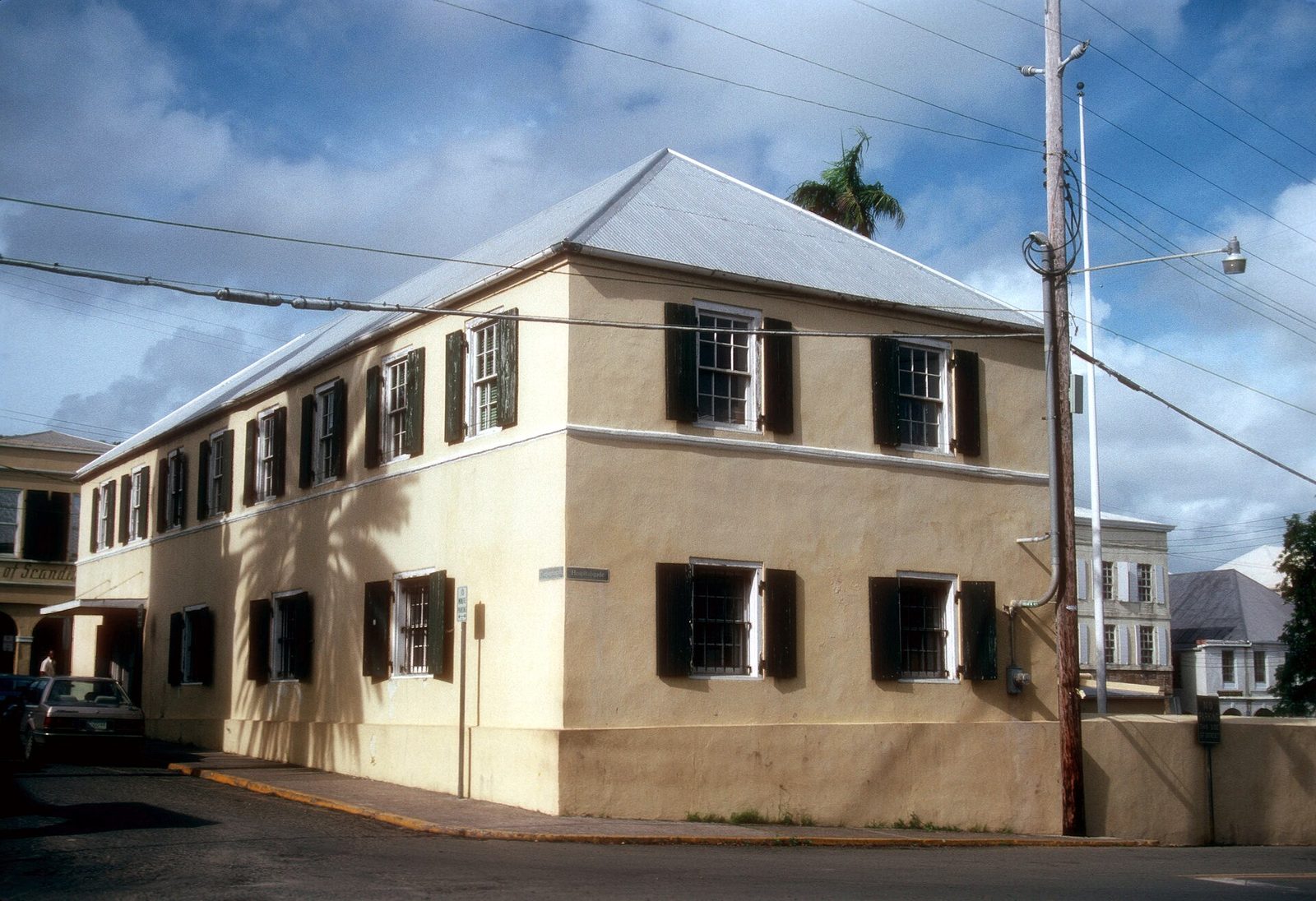
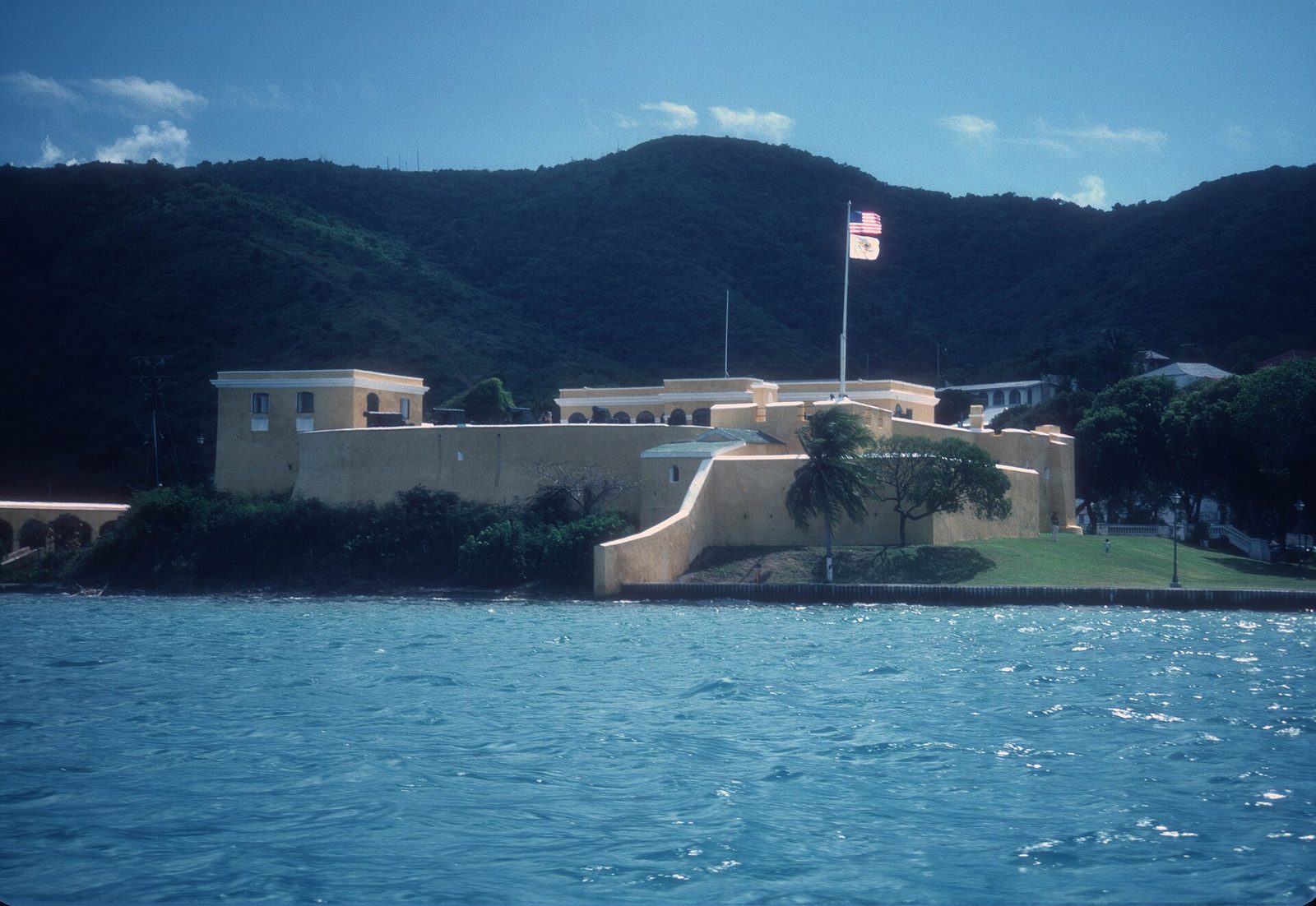
From the fort, the Scale House and the Custom House are right there on the wharf; you cannot miss them, and you should stand on the wharf edge for a minute to see what the fort was guarding — the harbor, the cay, the gap in the reef. Church Street runs up from the wharf: one block brings you to Company Street and the corner that holds both the 1749 Danish West India and Guinea Company Warehouse and the 1753 Steeple Building. It is the corner where the slave auctions and the Sunday services happened a few steps from each other, and it is worth a slow minute.
Turn west along Company Street under the arcades. This is the quieter of the two main streets, and it is where the Apothecary Hall Museum is. Then drop a block down to King Street and walk to Government House; read it from across the street as described above, and go in if the doors are open.
From there King Street — under more arcades, past the jewelers and galleries and the block Hamilton clerked on — leads to King's Alley, the passage down to the boardwalk; take it. Finish by walking the boardwalk in whichever direction your car is: back toward the fort and King's Wharf if you parked at the NPS lot, or on along the water past the bars toward the seaplane ramp if you left the car on Prince Street.
Wear real shoes rather than flip-flops — the old sidewalks are uneven and the fort's ramparts are stone — carry water, and do it before eleven if you can. In the heat of the afternoon the arcades still work, but the fort's courtyard and the open wharf do not. If it rains, the loop still works: the arcades cover most of King and Company Streets, and the fort's rooms and the museum are indoors.
The one-hour loop
- Park at the NPS lot beside Fort Christiansvaern off Hospital Street (two-hour limit, out by 4:30 pm) or the government lot at King Cross and Strand Streets.
- Tour the fort first — the ramparts, the courtyard rooms and the cells — while it is cool and quiet.
- Walk the wharf: the Scale House and the Custom House, with the harbor and Protestant Cay in front of you.
- Go up Church Street one block to Company Street for the 1749 Company Warehouse and the 1753 Steeple Building.
- Follow Company Street west under the arcades to the Apothecary Hall Museum at Queen Cross Street, then drop down to King Street for Government House.
- Walk King Street under the arcades to King's Alley and cut down to the boardwalk.
- Finish on the boardwalk — lunch at Rum Runners, Brew STX, The Mill or Shupe's — and watch for a seaplane landing.
Parking, driving in, and when to come
Parking is the one thing that goes wrong on a Christiansted day, so here is the whole picture from the local guides and the National Park Service. The government parking lot near the corner of King Cross Street and Strand Street charges about $1 an hour or a maximum of $5 a day and is open daily from about 7:30 am to 6 pm — the default for a lunch or shopping visit. The National Park Service lot beside the fort is limited to two hours and must be cleared by 4:30 pm; the NPS says cars left there will be towed at the owner's expense, and it means it.
A small free lot sits across the street from the Seaborne seaplane terminal on Prince Street at the west end of town — the best choice for a boardwalk evening or a seaplane day. Never park at a curb painted red or yellow, and blue is handicapped only. The government lot's day ends at 6 pm, so for dinner rely on street parking (the local guides note some downtown street spots are free after 6 pm) or the Prince Street lot.
Driving in from the East End, Route 82 — the East End Road — brings you into the eastern side of town past Gallows Bay, close to the fort; that is a 15-to-20-minute run from The Cerulean, on the left the whole way in a left-hand-drive American car, which our driving guide explains before you have to. The town's streets are narrow, some are one-way, and the arcades come right to the curb, so park once and walk.
When to come is a matter of hours more than months. Mornings are best for the fort and the shops; the welcome center and bookstore are posted as Monday to Wednesday, 9 to 4, so early in the week gets you a ranger conversation. Sundays are quiet in a way that can surprise: Savant is closed, some shops do not open, and the boardwalk is the liveliest thing going.
Four times a year the town closes its streets for Jump Up — typically February, May, July and November — with vendors, music and mocko jumbies; if your dates hit one, come in for it and expect the parking to be harder. December and early January bring the Crucian Christmas Festival. And winter dinner tables book up, so reserve before you leave home.
Christiansted with kids and with a group of twelve
For children this is the best history stop on the island, and the reason is simple: they are allowed to climb. The fort's ramparts, cannon, courtyard rooms and cells are all open, admission is free for anyone under 16, and the whole thing takes an hour, which is the correct length for a fort. Follow it with the two-minute ferry to Protestant Cay for a swim (once you have confirmed it is running), or a boardwalk lunch timed for a seaplane landing, and you have a morning no one has to be talked into. Our St. Croix with kids guide has the rest of the family plan.
A group of twelve is a different logistics problem, and Christiansted is where a villa group most often gets it wrong by trying to move as one. Split into two cars and two agendas — the history contingent to the fort at opening, the shoppers and coffee people to King Street an hour later — and reconvene on the boardwalk for lunch. For dinner, book. Savant, Rum Runners and The Bombay Club are the natural calls for a big table, and all of them will want notice for twelve; the villa concierge will make the calls and can arrange transportation so nobody has to be the sober one on the way home. Our groups guide covers the rest.
Two small things with children in tow. The old sidewalks under the arcades are uneven and step up and down between buildings, so strollers are workable but not smooth; a carrier is easier for the youngest. And the wharf edge and boardwalk have water on one side and no continuous railing in every stretch, so the toddler rule is hand-holding on the water side.
Mistakes to avoid
Most Christiansted mistakes are timing mistakes. Arriving at the fort at 4 pm and finding it closes at 4:30. Leaving the car in the NPS lot for a long lunch and finding it gone at 4:35. Planning a Sunday dinner at Savant. Coming on a Thursday for the welcome center's ranger and bookstore, which are posted for Monday to Wednesday. Expecting Government House to be open for a tour on a working weekday. Driving in at 1 pm in August and trying to beat the heat. Every one of those is fixed by the same habit: mornings for the buildings, evenings for the boardwalk, and a check of current hours the night before.
The second class of mistake is trusting an old list. Zion Modern Kitchen still appears on maps and in older guides and is not open for regular dining; Too Chez was slated to close; Harvey's is gone; the Steeple Building is viewed from outside; and the Hotel on the Cay's ferry and beach rules should be confirmed rather than assumed after the January 2025 closure. Restaurant churn here is real, which is why this guide names its sources and dates. When in doubt, ask the concierge to phone.
The third is treating the town as a box to tick. Christiansted rewards repetition — a fort morning early in the week, a provisioning run mid-week, one proper dinner and a boardwalk sunset — far more than a single exhausting afternoon. It is 15 to 20 minutes from the villa. Use that. And do not confuse it with Frederiksted: the cruise pier, the free art museum and the emancipation fort are on the west end, about 45 minutes away, and our Frederiksted guide covers them.
Nearby pairings
Christiansted sits at the hub of St. Croix's north side, so it pairs naturally with almost everything. The obvious pairing is Buck Island: three of the authorized boats leave from the boardwalk, and a morning half-day trip returns you to town in time for lunch and the fort, which is as good a full day as the island offers. On the way back east to the villa, The Shoys — the calm crescent reached through the Estate Shoys gate by The Buccaneer — is a short detour and a proper swim; the beach directory has the access notes.
West of town, Salt River is about twenty minutes along the north shore: the bay where Columbus's fleet anchored in November 1493 (our Salt River guide) by day, and the bioluminescent bay by kayak after dark, which stacks well onto a Christiansted dinner if you book the late tour and eat early. Mid-island, Sion Farm Distillery pours the breadfruit vodka on weekday afternoons and is close to the supermarkets, so a provisioning run and a tasting share a car. Further west again, Cane Bay and the wall are a north-shore morning of their own.
The one pairing to avoid is the greedy one — Christiansted plus Frederiksted plus a distillery in a single day. The two towns are about 45 minutes apart and each deserves its own day; the villa on the East End puts Christiansted, not Frederiksted, on your doorstep. Save the west for a dedicated sunset run.
Doing it from The Cerulean
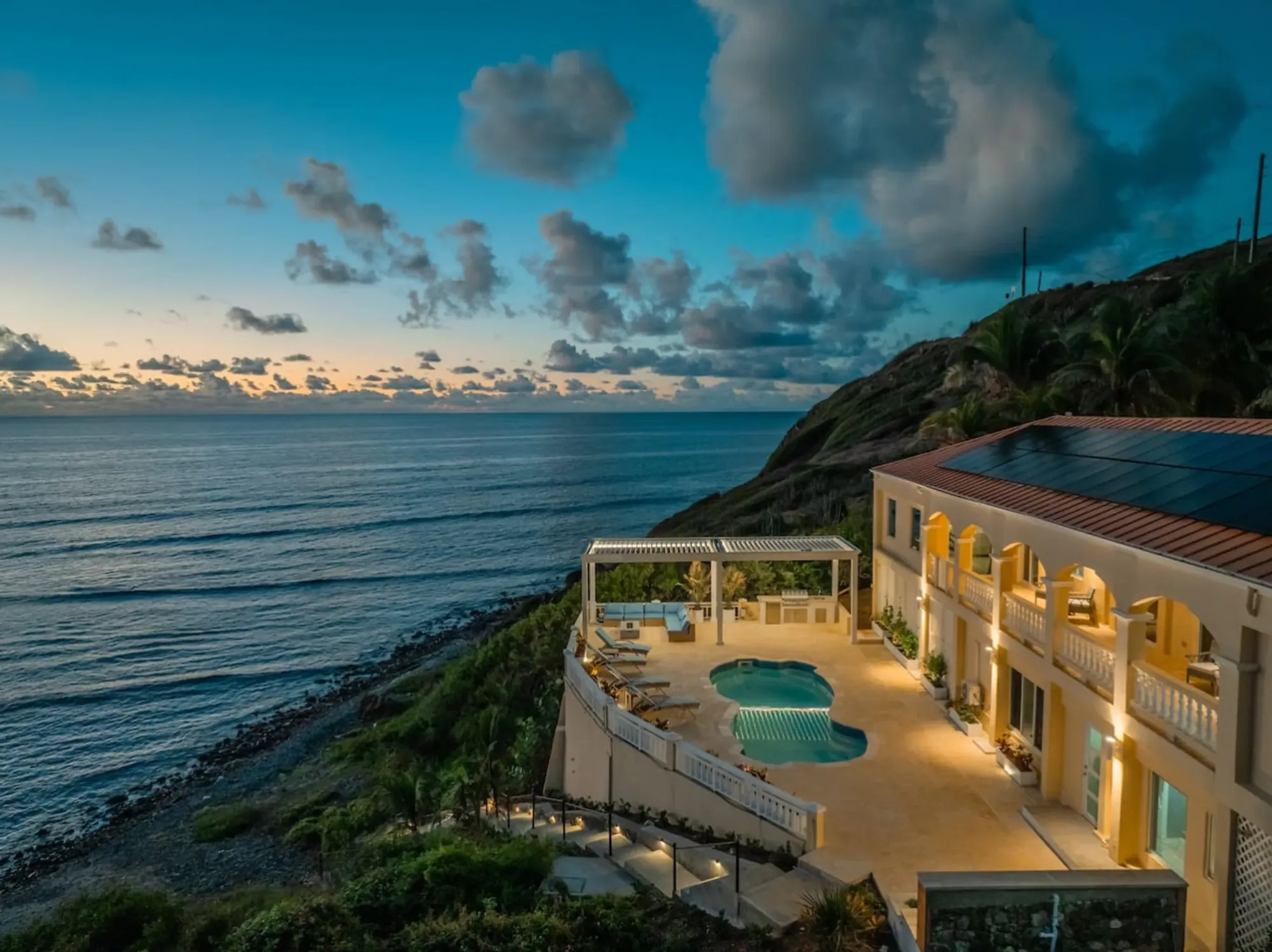
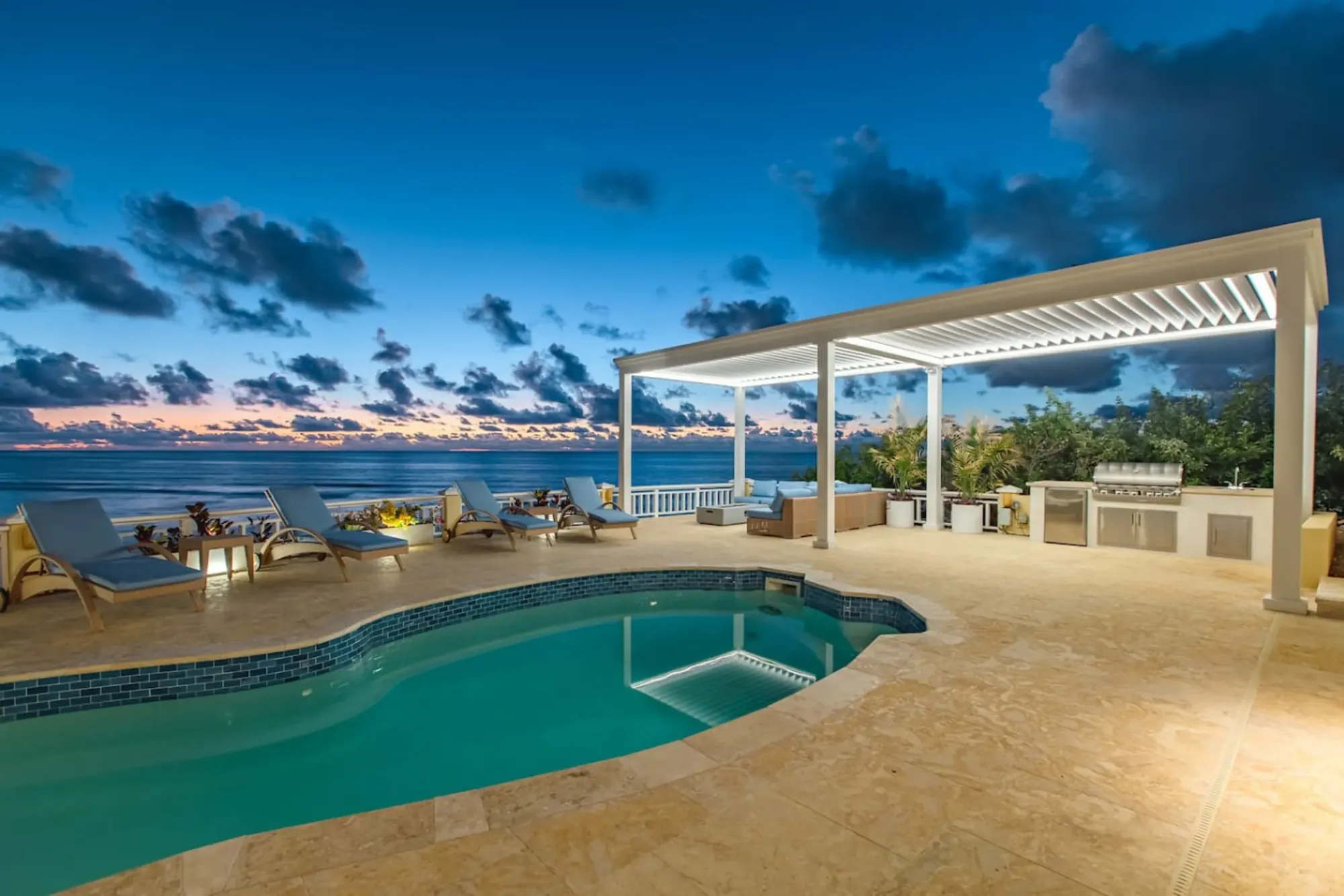
The Cerulean sits on St. Croix's East End, about 15 to 20 minutes from Christiansted by Route 82, and that distance is the whole reason the town works so well for a villa week. Close enough that a fort morning, a lunch or a dinner is a casual decision; far enough that you come home to a private beach, a pool above the sea, and a sunrise coast with no town noise at all. The pattern that works: one fort-and-shopping morning early in the stay, a provisioning run mid-week on the way back from something else, and one proper dinner out — Savant, Galangal when it is open, Rum Runners on the water, or the Bombay Club — booked before you fly.
The concierge is the tool for the town's moving parts: dinner reservations for a large table, a Buck Island boat off the boardwalk, transportation for a dinner night, a phone call to confirm the Protestant Cay ferry or the Government House doors, and a Seaborne seaplane day to St. Thomas if the group wants one. Everything in this guide can be arranged from the villa's kitchen table the night before.
And use the mornings. The fort opens at 8:30; the East End sunrise comes around six, give or take the season; there is time for coffee on the veranda, a swim off the beach and the drive in before the town is fully awake. You will walk the wharf with almost no one else on it, climb the ramparts in cool air, and be on the boardwalk for an early lunch while most visitors are still finding parking. Then home, pool, and the boats heading out to Buck Island in the distance. That is Christiansted done from the East End, and it is the best way to do it.