Come home from St. Croix and U.S. Customs lets you bring back $1,600 in goods per person free of duty — double the $800 that applies to almost everywhere else on earth — plus five liters of liquor if at least one of them is Virgin Islands rum. And there is no sales tax on the island to begin with. Those three facts are the whole reason "duty-free" is a word people use about the Virgin Islands. This guide reads the actual regulation, then walks the St. Croix shops that are open in 2026, and ends with how to get six bottles of rum home in one piece.
St. Croix is American soil, but it sits outside the U.S. customs territory. That is a technical distinction with a practical result: goods you buy here and carry to the mainland are treated as imports, which is why you fill out a customs declaration on the way home from a domestic-feeling trip, and it is why Congress wrote the islands a better deal than the rest of the world gets. Federal law gives returning residents an exemption from duty on things bought abroad, and for the U.S. insular possessions — the Virgin Islands, Guam, American Samoa and the Northern Marianas — the exemption is set at twice the standard figure.
The regulation is 19 CFR 148.33. It allows articles acquired abroad up to a fair retail value of "$800, and provided that the articles accompany the returning resident," or "$1,600 in the case of a direct or indirect arrival from American Samoa, Guam, the Commonwealth of the Northern Mariana Islands, or the Virgin Islands." "Direct or indirect" matters: you can fly St. Croix to Miami to Chicago, or spend a night in San Juan on the way, and the $1,600 still applies. What you cannot do is treat a Caribbean cruise as a Virgin Islands trip — the same sentence limits the amount acquired outside the islands, which the next section covers.
Two more things fall out of the wording. The exemption belongs to "returning residents," meaning people who live in the United States; it is not a rule about citizenship, and the no-passport guide covers who needs what document to fly. And it is per person, including children. A child does not get an alcohol allowance, but a child's $1,600 for goods is real, which is where the family math in this guide comes from.
St. Thomas is the famous version of this — the cruise-port shopping streets people picture when they hear "duty-free Virgin Islands," covered in our St. Croix vs. St. Thomas comparison. St. Croix has a quieter version — a few blocks of one-owner jewelers, galleries and rum — and the honest opinion of this guide is that the quiet version is the better one, because what is worth buying here is what is made here.
$1,600Exemption
$800Elsewhere
5Alcohol liters
1,000Cigarettes
100Cigars
30Reset days
The exemption, line by line
Start with the two figures. Your allowance from the USVI is $1,600 in fair retail value, and within it "not more than $800 of which may have been acquired elsewhere." So a trip that mixes St. Croix with, say, St. Maarten still gets $1,600 total, but only $800 of it can be St. Maarten purchases. Anything over the exemption is dutiable, at a flat rate covered below.
The 30-day rule is the one people forget. Under 19 CFR 148.36, the exemption "will not be granted to a returning resident who has taken advantage of such exemption within the 30-day period immediately preceding his return to the United States." The regulation counts the period by excluding the day you arrive and counting back thirty days. If you did a duty-free run somewhere in the month before your St. Croix week, you fall back to the smaller allowance CBP's site describes for frequent travelers, and the five-liter rum arrangement goes with it.
The 48-hour rule, by contrast, does not apply here. Ordinarily the exemption is denied unless you have been out of the country at least 48 hours, but 148.35 states that the $1,600 exemption for a resident "directly or indirectly from the Virgin Islands of the United States may be allowed without regard to the length of time such person has remained outside the territorial limits of the United States." A long weekend qualifies. So does a day.
Families may pool. Section 148.34 lets members of a family who travel together group their exemptions on one declaration, and it defines family generously: people who "are related by blood, marriage, domestic relationship, or adoption," who "lived together in one household at their last permanent residence," and who "intend to live in one household after their arrival in the United States." Domestic relationship includes foster children, stepchildren, half-siblings, legal wards and "two adults who are in a committed relationship" — but not roommates. A group exemption cannot include a member not entitled to it in their own right, and a minor's share does not extend to alcohol.
Three smaller points from the same section. Gifts you bring home to give away count as personal use and fit inside the exemption. Articles "intended for sale or acquired on commission" do not. And an unused portion of one trip's exemption does not carry over to the next — spend it or lose it, which on St. Croix is not a hardship.
Five liters: what the alcohol rule actually says
The general rule for returning residents is one liter of alcohol inside the exemption. The Virgin Islands rule, in the regulation's own words, is "not more than 5 liters of alcoholic beverages, not more than 1 liter of which was acquired elsewhere than in such locations and not more than 4 liters of which were produced elsewhere than in such locations." Read it slowly, because both halves bite: at least four of your five liters must have been bought in the islands, and at least one of the five must have been made in the islands. CBP's plain-English version says the same thing — up to five liters as long as at least four were purchased in the insular possession and at least one is a product of it.
The Virgin Islands Port Authority's traveler FAQ names the qualifying products most people reach for: "a 5th liter duty-free if it is a product made in the U.S. Virgin Islands (Captain Morgan and Cruzan Rum)." Both are distilled on St. Croix — Cruzan at Estate Diamond on the west end, Captain Morgan at the Diageo plant mid-island — and Mutiny Island Vodka from Sion Farm is a St. Croix product too. Keep the receipt that shows where you bought each bottle; the "acquired in" test is proven by paper.
A liter is not a bottle, and the arithmetic favors you. Standard spirits come in 750-milliliter bottles, so six of them total 4.5 liters — under the five-liter line — and a seventh puts you over. Some island websites describe the allowance as "five bottles, or six if one is local"; the regulation and CBP say five liters, so plan in liters and count what is printed on the label. If a shop sells liter bottles, five of those is exactly the limit.
You must be 21. Section 148.33 makes no alcohol allowance for anyone under that age, and a family group cannot lend a child's exemption to a bottle. If you bring more than the allowance, the extra bottles do not get confiscated; they get taxed. Per CBP, additional bottles from an insular possession are subject to a flat duty of 1.5 percent plus federal excise tax — small money, not a penalty — so a group taking home a case is over the line on paper but not by much in dollars. Declare it and pay it; it is routine.
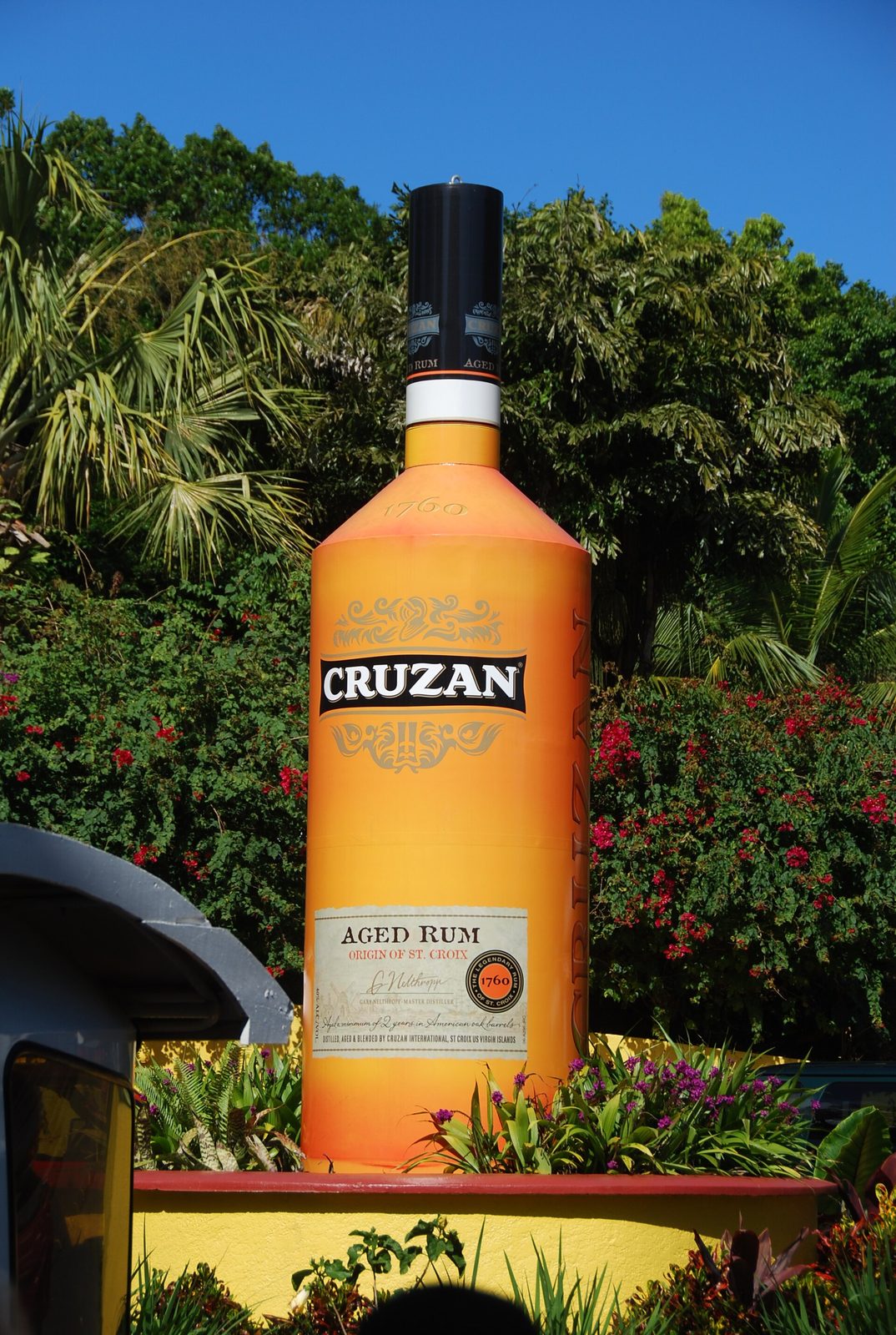
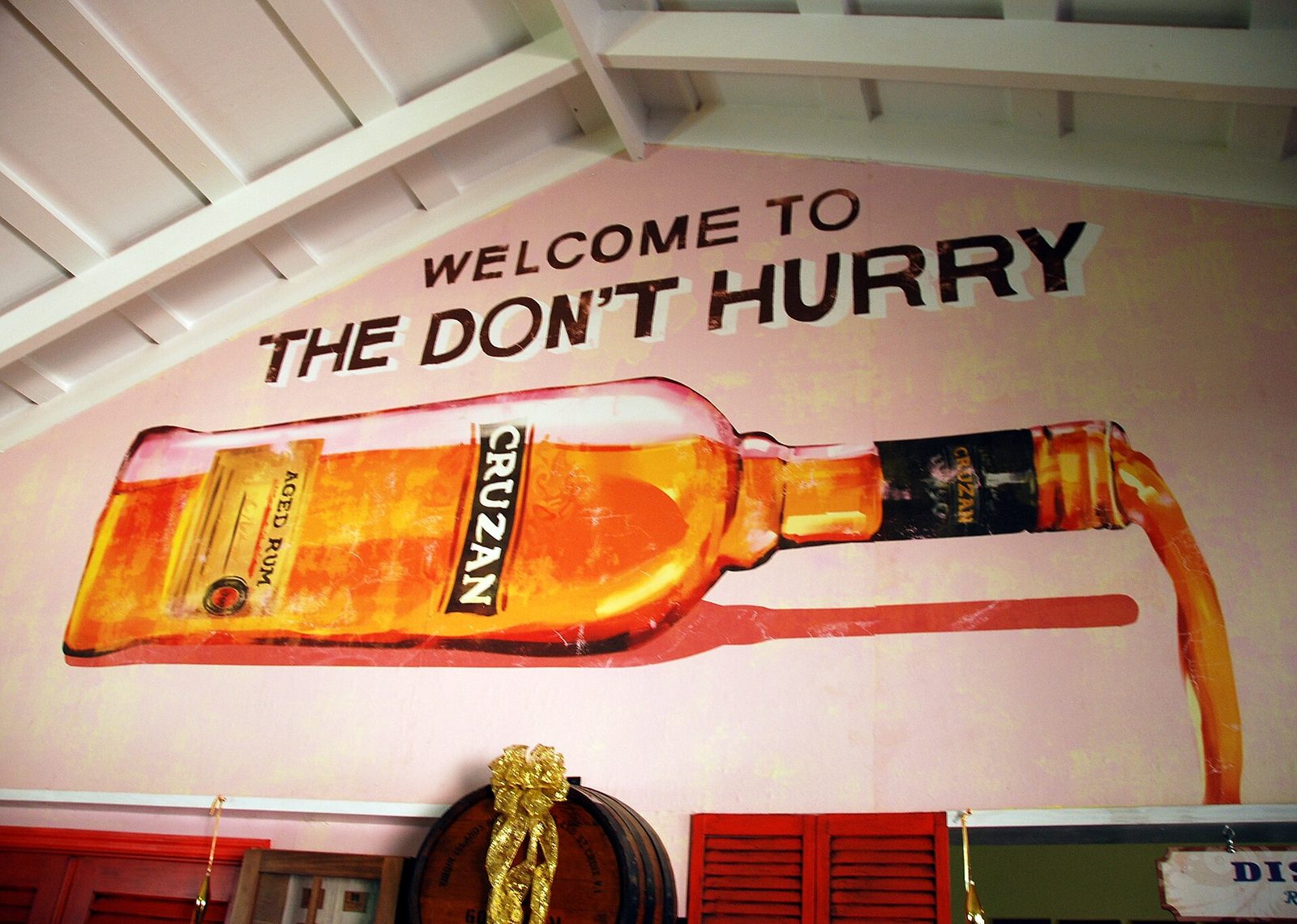
Cruzan is distilled at Estate Diamond on St. Croix's west end — the bottle that satisfies the "produced in the Virgin Islands" half of the five-liter rule.Photo: CaptJayRuffins (CC BY-SA 4.0)
Tobacco, and what happens past the line
The tobacco numbers are generous by mainland standards. From the Virgin Islands the cigarette limit "is 1,000, not more than 200 of which shall have been acquired elsewhere than in such locations," plus 100 cigars, and the cigars cannot be of Cuban origin. The Port Authority puts it as adults 21 and over may bring "up to 100 cigars (not of Cuban origin) and up to 5 cartons, or 1,000 cigarettes, duty-free, per person." Carry it in your own bag under your own name; a carton bought for a friend still counts against yours.
Now the part that makes people relax: what happens if you go over $1,600. You do not pay the tariff schedule line by line. Under 19 CFR 148.101, the next $1,000 of fair retail value in personal-use goods or gifts is charged a flat rate, and the regulation's own worked examples put that rate at 1.5 percent for Virgin Islands acquisitions versus 3 percent for, say, a European trip. A $1,000 watch over the line costs $15 in duty. Beyond the flat-rate band, ordinary duty rates apply to whatever remains, and by that point you are talking about serious jewelry, not souvenirs.
The Port Authority adds a note about goods you do not carry: "An additional $1,000 worth of goods may be mailed dutiable at a flat rate of 1.5% percent." Mailing rules have their own paperwork and change; if you are thinking of shipping a case of rum rather than checking it, ask the shop what they actually do and read CBP's page on unaccompanied purchases before you rely on it. In practice, almost everyone carries their rum home in a suitcase, and the last sections of this guide are about how.
What to keep: every receipt, in one envelope, with the store name and location legible, and a mental tally of retail value per person. The declaration asks for a total; you will be glad you can produce one without turning out your bag on the floor of a departure hall.
No sales tax — what that means and what it doesn't
"There are no sales taxes in the USVI." That is the plain statement, and it holds: the price on the tag in a Christiansted shop is what you pay at the register. Visitors from states with 8 or 9 percent sales tax notice it immediately, and it is the reason a $210 bracelet costs $210. Combine it with the customs exemption and a St. Croix purchase escapes tax on the way out and duty on the way in.
What it does not mean is that the territory is untaxed. The government funds itself with a gross receipts tax that businesses pay on their sales — sources put the rate at 4 or 5 percent depending on the year they were written — with excise taxes on goods brought into the islands (usvi.net cites 4 percent on most goods and more on cigarettes), and with its own customs duty, up to 6 percent, on foreign goods entering the territory. Those costs are baked into shelf prices rather than added at checkout, which is why the tag is the whole story.
So "duty-free" on St. Croix means two separate things, and it helps to keep them apart. First, the islands sit outside U.S. customs territory and levy their own low duty on imports, which is the usual explanation for how perfume, watches and jewelry became the trade of the old arcades in both towns. Second, U.S. Customs waives its duty on the first $1,600 you carry home. The first fact makes some imported goods cheaper on the shelf; the second makes everything you buy cheaper on the return. Neither guarantees a bargain on a branded item you could buy at your own mall — check your phone before you buy a watch, and treat the shops that sell island-made things as the sure bet.
One practical corollary: because there is no sales tax to refund, there is no VAT-style refund desk at the airport, no forms to stamp, no envelope to mail. The whole benefit is captured at the register and on the customs form. Bring your receipts and that is the entire administration.
The Cerulean
Plan it from the villa.
Five bedrooms, a private swimmable beach, and all of this within a day trip.
Ask anyone who has done a St. Croix week what they carried home and you get the same short list. Rum, in quantity — Cruzan and Captain Morgan by the box, and increasingly a bottle of Mutiny Island Vodka, the breadfruit spirit from Sion Farm. A hook bracelet, or one of the knot and clasp bracelets from the other two Christiansted metalsmiths. A small piece of local art; GoToStCroix's own duty-free article recommends "8" x 10" sized pieces of local art, and rum" as gifts, which is exactly the right scale for a suitcase. Books by Caribbean authors from the independent bookstore in Gallows Bay. Hot sauce, jam and, in December, guavaberry from a market table.
The perfume trade survives here too. GoToStCroix's shop-local guide lists Bougainvillea at 41 King Street for the "largest perfume selection on island," alongside boutiques that go back decades — Violette Boutique has been in the historic district since 1962. Whether a given bottle beats a mainland department-store price on the day is something to check on your phone; the exemption helps, but the shelf price is the shelf price.
What to skip: anything you can buy at home for the same money. Electronics are not a Virgin Islands specialty, mass souvenirs are printed elsewhere, and "duty-free" on a branded item is only a saving if the sticker is actually lower. The advantage on St. Croix is concentrated in island-priced and island-made goods, and the table below is that list, with the honest caveat that prices move and you should read the tag, not this page.
A note on the two towns. Christiansted is where the jewelers, galleries and bookstore live, and it works any weekday. Frederiksted's shopping is tied to the cruise calendar: on a ship day the waterfront fills with vendor tables; on a quiet day it is a walk, a museum and a beach. Plan Christiansted for a shop morning and Frederiksted for a distillery-and-pier day, and you will not stand on an empty street wondering where the market went.
What to buy
Where
Rough price (check the tag)
Why it makes sense
Cruzan rum, standard aged bottles
Cruzan visitor center gift shop, Pueblo and Plaza Extra supermarkets
Less than stateside — Single Barrel averages about $32 on the mainland per Wine-Searcher
Made on St. Croix, so it satisfies the produced-in-the-USVI test
Captain Morgan
Captain Morgan Visitor Center gift shop, supermarkets
Supermarket pricing — check the shelf
Also a USVI product for the five-liter rule
Mutiny Island Vodka
Sion Farm Distillery tasting room, island liquor shelves
Ask at the tasting room
Distilled from breadfruit on St. Croix — a bottle nobody at home has seen
St. Croix hook bracelet
Sonya Ltd., Company Street, Christiansted
About $105 for a 5-mm sterling, roughly $190–$265 in silver and 14k, per the store's site
The original since 1964, with no sales tax on top
Knot and clasp bracelets
Crucian Gold (1112 Strand St) and ib designs (2108 Company St)
Varies with metal — ask
Two more Christiansted makers with their own designs
Local art, prints, ceramics
Many Hands Gallery at Pan Am Pavilion, Frederiksted vendors on ship days
Priced per artist
Small pieces travel flat and count only as value on the form
Books by Caribbean authors
Undercover Books, 5030 Anchor Way, Gallows Bay
Cover price
Local titles you will not find at home
Guavaberry, hot sauce, jam
La Reine farmers' market on Saturdays, gift shops
Small-bottle prices
Guavaberry is the islands' Christmas drink, and bottled foods pass USDA more easily than fresh
The hook bracelet and Christiansted's three jewelers
The St. Croix hook — some people say Crucian hook — is a band bracelet closed by a horseshoe-shaped clasp, and it started at Sonya Ltd. Sonya Hough and her husband David opened the shop in 1964, first as part of a family business called The Corner Store, and the shop celebrated sixty years in 2024. It stands on Company Street across from the Steeple Building. The custom that sells the bracelet is described on the shop's own pages and repeated all over the island: "If the hook is worn opening towards your heart, it symbolizes that your heart is taken. On the other hand, if the hook is worn opening away from your heart, it symbolizes that your heart is still available to find true love." Sonya Hough has retired and sold the business to two long-time St. Croix residents; the store keeps making the original in gold and silver, along with rings, earrings, pendants, anklets and cuff links, and it took the design to Paris Fashion Week in 2023.
Prices, as of this writing on the store's website: a 5-millimeter sterling hook is about $105, and the silver-and-14-karat versions run roughly $190 for 4 millimeters to $265 for 8. There is no sales tax on top, and if the total for your group stays under the exemptions, no duty either. Imitations exist; the shop's line is "often imitated, never duplicated," and the way to be sure is to buy at the source.
Two blocks of walking cover the other two makers. ib designs, at 2108 Company Street, was founded in 1996 by Whealan Massicott, a metalsmith originally from Dominica, and Kris Massicott; they "took a leap of faith and opened their doors on Company Street" in 1999 and are still in the original retail space with a team of more than a dozen, working in recycled and responsibly sourced metals. Their clasp bracelet is the piece visitors photograph. Crucian Gold, at 1112 Strand Street, began in the 1970s when Brian Bishop, who grew up sailing and diving here, started "tying sailing knots in precious metals" as a hobby and sold his first pieces from a mahogany box; his family — Nathan and Therese are named on the shop's story page — now runs the studio, Monday through Saturday from 10 to 5, and the Crucian Knot collection is the signature.
Which to buy is taste. Sonya's is the original hook and the one with the story attached; ib designs and Crucian Gold each have a design of their own and a workshop in town. All three are within a few minutes' walk of the boardwalk, all three work in precious metals, and Sonya's staff will tell you which way to wear it. If you are buying a hook for someone at home, decide in advance which direction it should face — the shop may ask.
1964Sonya Hough and her husband David open Sonya Ltd. in Christiansted, home of the original St. Croix hook bracelet
1970sBrian Bishop starts tying sailing knots in precious metals — the beginning of Crucian Gold
1996Whealan and Kris Massicott found ib designs
1999ib designs opens its Company Street storefront, where it still is
2019Sion Farm Distillery opens in the former Island Dairies plant, making Mutiny Island Vodka from breadfruit
2022Mutiny takes gold at the San Francisco World Spirits Competition
2023Sonya Ltd. shows the hook bracelet at Paris Fashion Week
2024Sonya Ltd. marks sixty years
Rum by the case
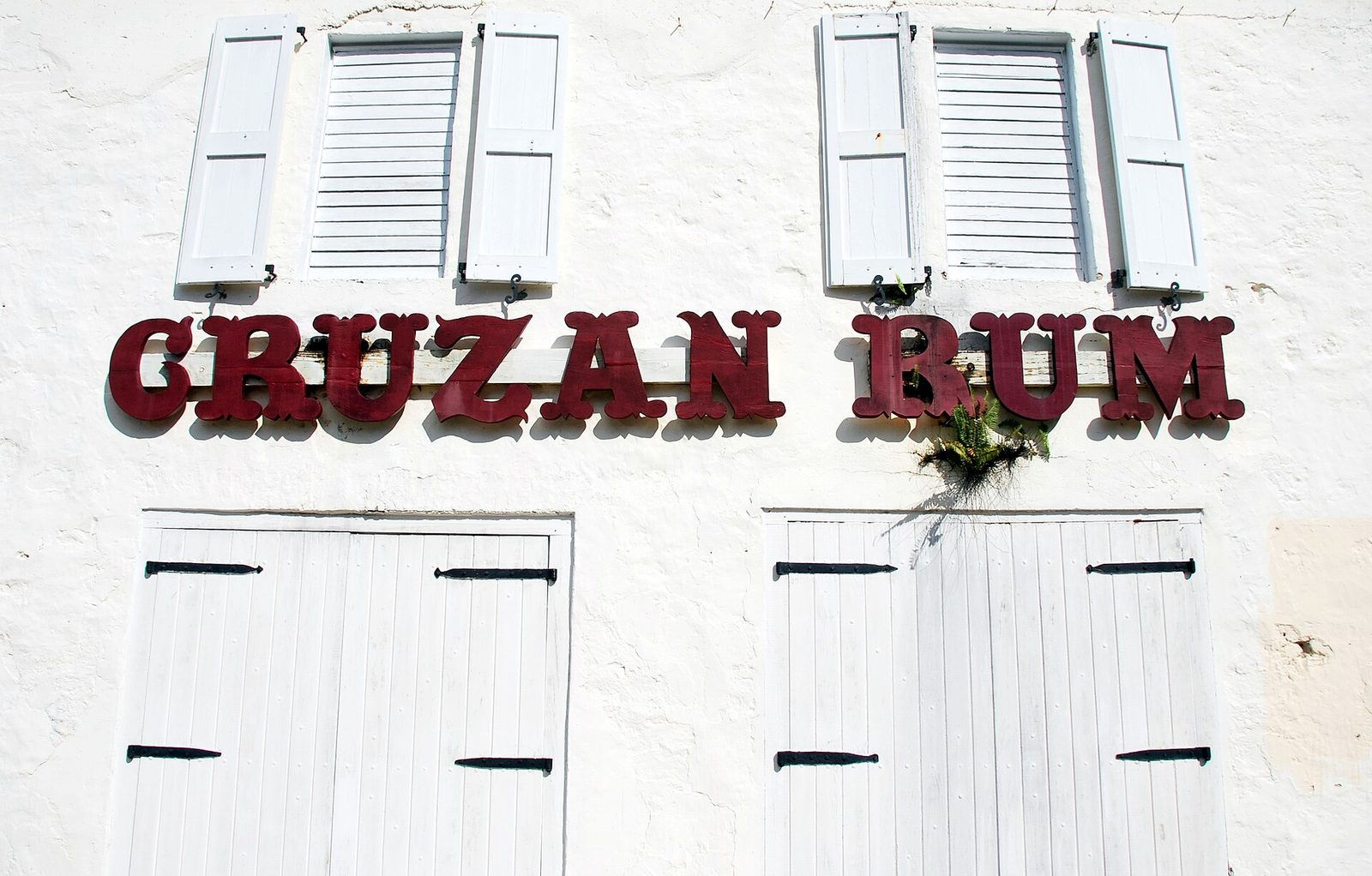
Rum is where the customs math is most obviously in your favor, and St. Croix has three distillery doors where you can buy spirits at the source. Cruzan Rum's distillery is at Estate Diamond on the west end, near Frederiksted; guided tours with tastings run on weekdays at 12:00, 1:30 and 3:00 by reservation through the official site, and you do not need a tour to shop — walk into the visitor center's gift shop. GoToStCroix notes the useful part: staff "will wrap up your bottles of rum and pack them into a sturdy, cardboard carrying box with a handle." Our Cruzan rum guide tells the Nelthropp family history and the tour in full, so this guide sticks to buying.
The Captain Morgan Visitor Center, at Estate Annaberg and Shannon Grove off the Melvin Evans Highway mid-island, is open Monday to Friday, 10 to 4, with a gift shop and booked tastings (indoor tastings at 1 pm); it is closed on weekends. Sion Farm Distillery, in the old Island Dairies plant mid-island, opened in August 2019 and makes Mutiny Island Vodka — distilled from breadfruit, a gold medalist at San Francisco in 2022 — with a tasting-room bar and free tours Monday to Friday, 11 to 5. Its story is in the breadfruit vodka guide, and all three are in our distilleries directory with current hours. Note the weekday pattern: none of the three is a Saturday errand.
You do not have to drive to a distillery to buy the rum. Pueblo's two St. Croix supermarkets have a local reputation for low liquor and beer prices, and Plaza Extra East, which the territory's consumer-affairs department measured as the cheapest family grocery basket on the island, carries Cruzan, Single Barrel included. For scale, Wine-Searcher's mainland average for Cruzan Single Barrel is about $32 a bottle; island shelf prices are typically lower, but the honest instruction is to compare on the day, because a "distillery price" is not always the lowest one on the island. Buy the standard bottles at the supermarket during the week's provisioning run and save the visitor-center trip for the special editions and the box.
One bottle cannot fly. Cruzan 151 is 75.5 percent alcohol, and the FAA forbids beverages over 70 percent — 140 proof — in checked and carry-on baggage alike, naming 151-proof rum specifically. Enjoy it here. Everything else in the Cruzan and Captain Morgan lineup sits comfortably in the 24-to-70-percent band the FAA allows in checked luggage in unopened retail packaging, up to five liters per passenger — which, not by coincidence, matches the customs figure.
Many Hands Gallery, at 1102 Strand Street in the Pan Am Pavilion, has been showing local arts and crafts of the Virgin Islands for more than 38 years — paintings, ceramics, prints and ornaments from island makers — and reviewers keep mentioning the owner, Bob, and his stories. Pan Am Pavilion itself is a small shopping plaza downtown with eateries and shops; tenants change, so treat any list as a snapshot. Mitchell Larsen Studio, glassmaking and photography since 1992, is on GoToStCroix's shop-local list, and Purple Papaya — self-described "#1 Souvenir Gift Shop" — is the stop if you need a dozen easy gifts at once. Frederiksted's answer is the Caribbean Museum Center for the Arts at 10 Strand Street, free to enter, open Tuesday to Saturday 9 to 4, with shows that rotate every six to eight weeks.
Undercover Books & Gifts is the island's independent bookstore, in Gallows Bay just east of downtown Christiansted at 5030 Anchor Way, open around 10 to 5. It stocks books by Caribbean authors for adults and children, coffee-table books on the islands and some locally made jewelry. A book is the best souvenir for a reader and the easiest thing on this page to pack, and Gallows Bay is on the way back to the East End, so it fits at the end of a town morning.
For things to eat, the La Reine farmers' market runs Saturday mornings mid-island. In November and December the tables carry guavaberries — VInow's write-up calls guavaberry the Christmas drink of the territory, a liqueur of the small tart fruit steeped in rum with sugar and spice, sold seasonally at markets, roadside stands and festival events, and hard to find outside the Caribbean. Off-season, bottled hot sauces, jams and seasonings from market tables and gift shops are the food gifts that travel; the Crucian food guide explains what is in them, and our Christmas festival guide covers the season guavaberry belongs to.
Two free souvenirs. Frederiksted Beach in town is known for sea glass along with its sunsets, and beachcombers do walk it with a pocket open. And the boardwalk in Christiansted costs nothing to sit on. Neither goes on the customs form.
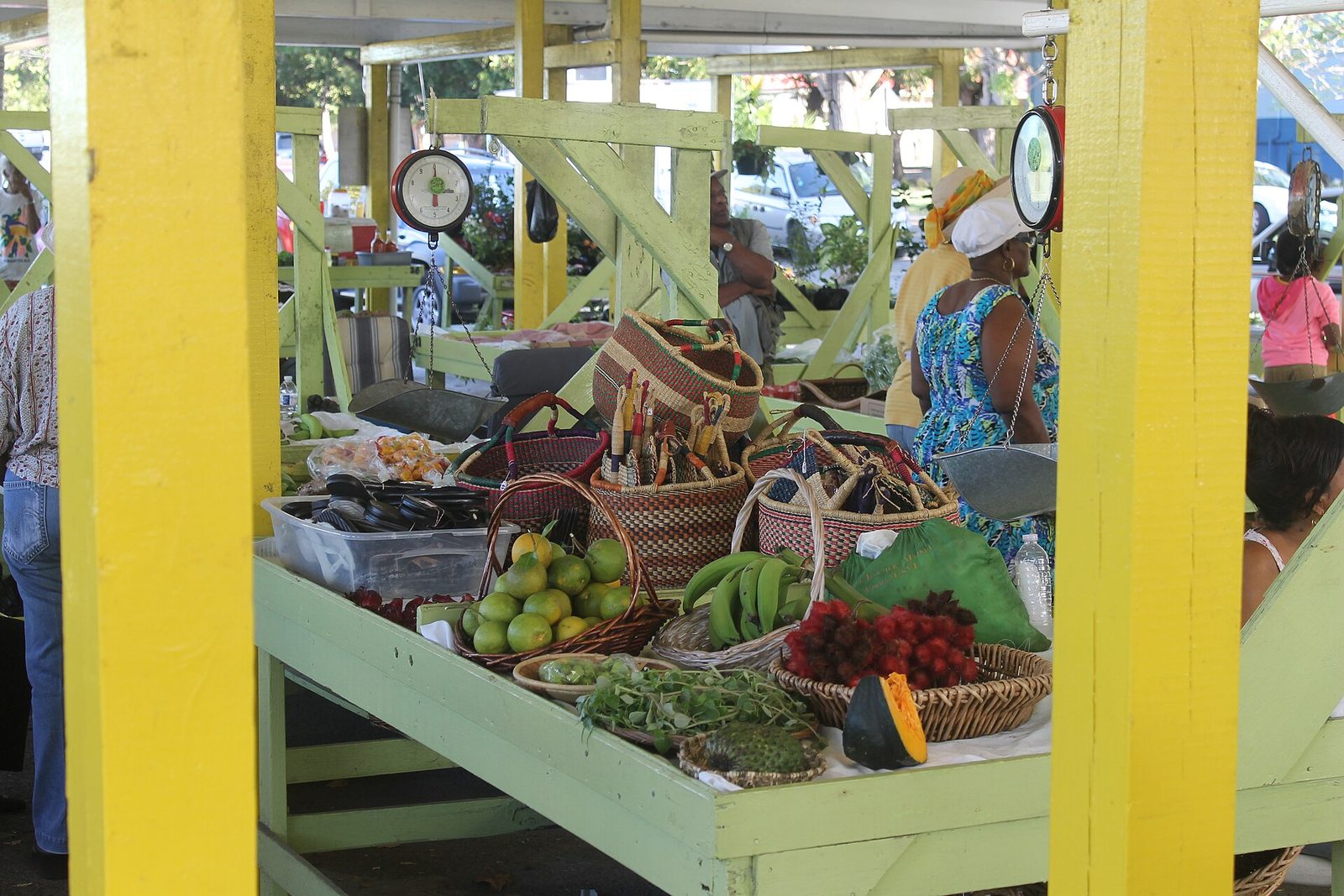
A Saturday market table on St. Croix: seasonal fruit, hot sauces and jams — the bottled goods travel, the fresh fruit mostly stays for the USDA inspector.Photo: Connie Ma (CC BY-SA 2.0)
A shopping morning in Christiansted
Christiansted is laid out on a grid, and the shopping district is small enough to walk end to end in a few hours: King Street, Company Street and Strand Street running parallel to the harbor, with the boardwalk along the water and the yellow walls of Fort Christiansvaern at the eastern end. The Christiansted guide maps the town street by street; for shopping, the short version is that the three jewelers, Many Hands, the perfume shops and most of the boutiques sit within about four blocks of one another. Undercover Books is the outlier in Gallows Bay, five minutes by car.
Hours are shop-by-shop, and the pattern is roughly 10 to 5 on weekdays — Crucian Gold publishes Monday to Saturday 10 to 5, Undercover Books 10 to 5 — with Sundays and holidays unreliable. If a particular purchase matters, call the day before; small shops on an island keep small-shop hours, and a "closed today" sign is not unusual. Cards are widely accepted; some market tables prefer cash. Parking is mostly on the street; a mid-morning arrival on a weekday is the easy version.
A workable order: start at the fort end, take Company Street for Sonya's and ib designs — they are steps apart — then Strand Street for Crucian Gold and Many Hands at Pan Am Pavilion, come out on the boardwalk for lunch, then drive to Gallows Bay for the bookstore on the way home. Add the National Park Service's welcome center and bookstore at Christiansted National Historic Site if it is a Monday, Tuesday or Wednesday — the NPS lists it open those days 9 to 4 — for the historical titles the commercial shops do not carry.
The town's evening event, Jump Up, puts vendors and music on the streets a few times a year; if your week lands on one, the shopping and the party are the same walk. Otherwise, mornings are the time, and our journal's morning in Christiansted is the unhurried version of the same route.
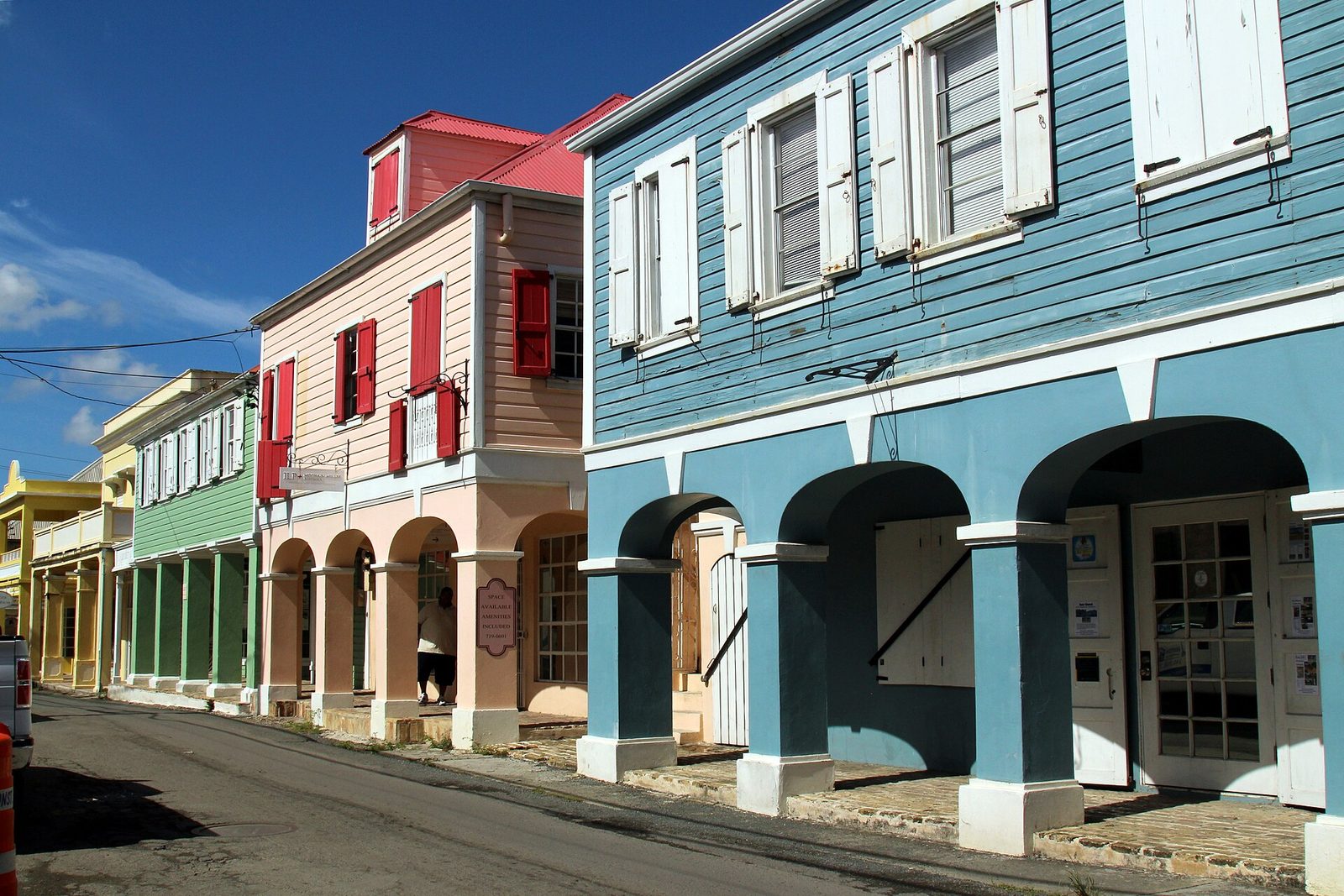
Christiansted's shopping district is a small grid of Danish-era streets — King, Company and Strand — a few blocks from the harbor boardwalk.Photo: CaptJayRuffins (CC BY-SA 4.0)
Frederiksted on a ship day
Frederiksted's shopping is a different animal, and it runs on the cruise calendar. When a ship is tied up at the Ann E. Abramson Pier, the waterfront and the streets near it fill with vendor tables — jewelry, bags, crafts and souvenirs, the usual port mix with some genuinely local work in it — and the town is busy from mid-morning until the ship's all-aboard. On a day with no ship, the vendors are not there, and the town is a quiet walk between the fort, the museum and the water. Both versions are worth doing; just know which one you are driving into.
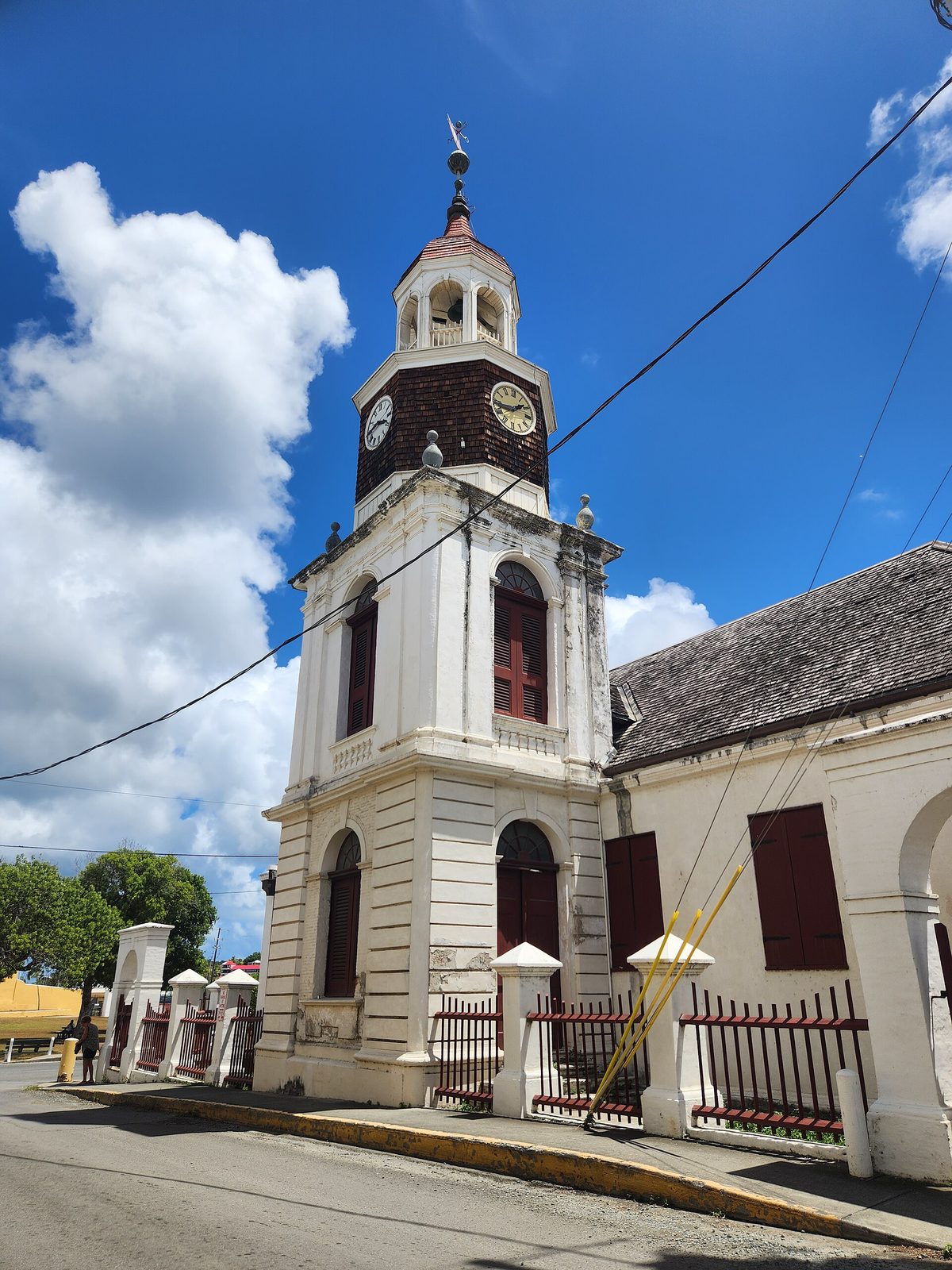
The permanent addresses do not depend on the ship. The Caribbean Museum Center for the Arts on Strand Street is the best gallery stop on the west end and it is free. Fort Frederik, the fort at the water where emancipation was proclaimed in 1848, has a museum open weekdays and Saturday afternoons; our emancipation guide is the history. Polly's at the Pier does coffee and lunch, and the Frederiksted guide handles the rest of the town, pier included.
The way to make Frederiksted a shopping day rather than a detour is to pair it. The Cruzan distillery is minutes away at Estate Diamond, so a weekday plan of a 12:00 or 1:30 tour, the visitor-center gift shop with its carry boxes, then an hour in town and a swim at Rainbow Beach or Frederiksted Beach — sea glass, remember — is a full west-end day from the East End. Check the port schedule; a ship day gives you the vendors and takes away the empty beach, and you may prefer either.
What Frederiksted does not have is the concentration of makers Christiansted has. If the hook bracelet is the point of the trip, buy it in Christiansted from the people who make it. If a painting or a market table is the point, Frederiksted on a ship day is where the tables are.
Frederiksted's waterfront: on cruise-ship days the streets by the pier fill with vendor tables; on other days the town is a quiet walk between the fort and the water.Photo: Mrgiarc (CC BY-SA 3.0)
The airport, the USDA table and the customs desk
Henry E. Rohlsen Airport is small. There is a gift shop and a newsstand in the terminal and a place to get a drink; the published guides disagree about whether anything there is a proper duty-free counter, and one St. Croix guide flatly says there is none. The honest instruction is not to plan around the airport at all — buy in town, at the distilleries or at the supermarket, box it and check it. If the terminal shop has a bottle you forgot, that is a bonus, not a plan.
What the airport certainly has is the USDA table. Because federal plant-quarantine rules treat the islands separately from the mainland, the U.S. Department of Agriculture inspects baggage before flights to the mainland, and its instruction is direct: "You must present all food, plants, and other agricultural items to the USDA inspector at the airport before you leave Puerto Rico or the U.S. Virgin Islands." Fresh fruit and vegetables are prohibited except those on the allowed list, and the same goes for plants. APHIS's list of allowed produce includes avocado, banana, papaya, coconut, pineapple, plantain and breadfruit; among the items it stops are fresh pigeon peas, sweet potatoes, sugarcane, plants in soil and fresh cotton. Roasted or green coffee beans are allowed without limit, cut flowers are permitted, and "commercially canned and thoroughly cooked foods are generally permitted," which is where bottled hot sauce and jam sit. When in doubt, present it; the inspector decides in seconds.
The customs part also happens on the St. Croix side. Because the islands sit outside the customs territory, you make your declaration before your mainland flight rather than after landing, and the setup at the airport — where the CBP officers are, whether the form is paper or on a screen — has changed over the years and can change again. Follow the signs, arrive with your receipts in one place and your per-person totals ready, and it takes minutes. If you connect through San Juan or Miami you do not do it twice.
Our getting-here page covers the flights themselves and how early to arrive; add fifteen minutes to whatever you would allow at a mainland airport for the USDA line on a busy departure day, and more on a Saturday in high season when several mainland flights leave close together.
Henry E. Rohlsen Airport is a small terminal: departing passengers for the mainland pass the USDA agricultural inspection and make their customs declaration here, before the flight.Photo: Lars Schmidt (CC BY-SA 3.0)
Getting the rum home in one piece
Liquids over 3.4 ounces do not go through security in a carry-on, so every bottle you buy on St. Croix flies in checked luggage — the one exception being anything you might buy past security at the airport, and this guide has already told you not to count on that. The FAA's rule for the checked bag is specific: alcoholic beverages between 24 and 70 percent alcohol by volume are allowed "in unopened retail packagings," limited to five liters per passenger; under 24 percent (wine, most liqueurs) is not restricted; over 70 percent is forbidden. Keep the seals intact and the labels legible, because "unopened retail packaging" is the test if a bag is opened.
Packing is the whole art. The Cruzan visitor center's cardboard carrying box is the best container on the island — it is built for exactly this — and a bottle in that box inside a hard-sided suitcase, surrounded by clothes, arrives intact. Without the box, wrap each bottle in a beach towel or a wetsuit top and stand it upright in the middle of the case, never against the shell. Zip each one into a gallon bag first so a break costs you a shirt, not a suitcase. Six full bottles is somewhere around fifteen to twenty pounds of glass and liquid before the box; weigh the case at the villa on the bathroom scale, because a 50-pound limit arrives sooner than people expect after a week of buying.
Split the bottles across the group's bags for two reasons: weight, and the fact that the FAA's five liters is per passenger, as is the customs allowance. Each adult's five liters travels in that adult's bag under that adult's name, with the receipts in that adult's envelope. It sounds fussy. It takes five minutes the night before, and it means no conversation at any counter.
Bringing rum home
Buy at least four of your five liters on St. Croix, and make sure at least one is a Virgin Islands product — Cruzan, Captain Morgan or Mutiny — with receipts showing the store.
Leave the 151 on the island: over 70 percent alcohol cannot fly in any bag.
Ask for the distillery carry box, or wrap each sealed bottle in cloth inside a zip bag and pack it upright in the middle of a hard case.
Split bottles so no adult carries more than five liters, and weigh each case at the villa.
At the St. Croix airport, present any food or plants to the USDA inspector, then make your customs declaration with your per-person totals ready.
Keep receipts together until you are home
anything over the allowance is charged a flat 1.5 percent plus federal excise, paid on the spot.
Mistakes people make
Forgetting the 30-day clock is the expensive one, because it takes the whole $1,600 and the five liters with it; count back from your return date before you buy the case. Buying Cruzan 151 for the flight is the sad one — it stays behind at the security line or in the bag check — so drink it here. Putting a mango in the carry-on wastes ten minutes at the USDA table; the allowed list is short and the inspector does not negotiate. Assuming the airport will have rum, hook bracelets and a duty-free counter is how people fly home with none of them.
Two paperwork errors. Letting the receipts scatter across six pockets, so that the per-person total on the declaration is a guess — keep one envelope per adult. And treating a child's $1,600 as a way to carry more liquor: it is not; a minor's exemption covers goods only, and the officers know the regulation better than the forum post you read. On the shopping side, the classic mistake is buying a branded item you could have bought at home because the shop said "duty-free," without checking the price. Duty-free is a customs status, not a discount.
And one planning error: doing the town on Sunday. Small shops keep small-shop hours, the distilleries are weekday operations, and Frederiksted's vendors come with the ships. Read the calendar first, then the map. If a specific bracelet or bottle is the point of the trip, call the day before; the phone numbers are on the shops' own sites, and an island shopkeeper would rather tell you they are closed than have you find the sign.
Shopping with kids and a big group
The customs regulation is written for families, and it rewards them. A household of two adults and two children returning from St. Croix has four exemptions of $1,600 to group on a single declaration — $6,400 of goods before any duty — plus ten liters of qualifying rum between the two adults. The children's shares cover the bracelets, the art and the books; the alcohol lives on the adults' lines. Cousins, in-laws and friends in the same villa are separate households on paper, so each household keeps its own envelope of receipts and files its own form; the groups guide has the rest of the logistics for a party of twelve.
With children in the shops, Christiansted works well: the walk is short and flat, the boardwalk is at the end of it, and Many Hands and Undercover Books both have things a nine-year-old wants to hold. A sterling hook is the piece to consider for a teenager, and the story that goes with it — which way the hook faces — is the kind of thing that gets repeated at school. The kids guide covers the beaches and the days between; on the shopping day, keep it to a morning and end with lunch on the water.
For a group, the efficient plan is a division of labor: one car does the supermarket and rum run early in the week (it doubles as provisioning), a west-end car does the distillery and Frederiksted on a weekday, and everyone does the Christiansted morning together near the end, when people know what they want and how much exemption they have left. Ask the villa's concierge to arrange the first grocery load before you land, and the rum shopping becomes a top-up rather than an errand.
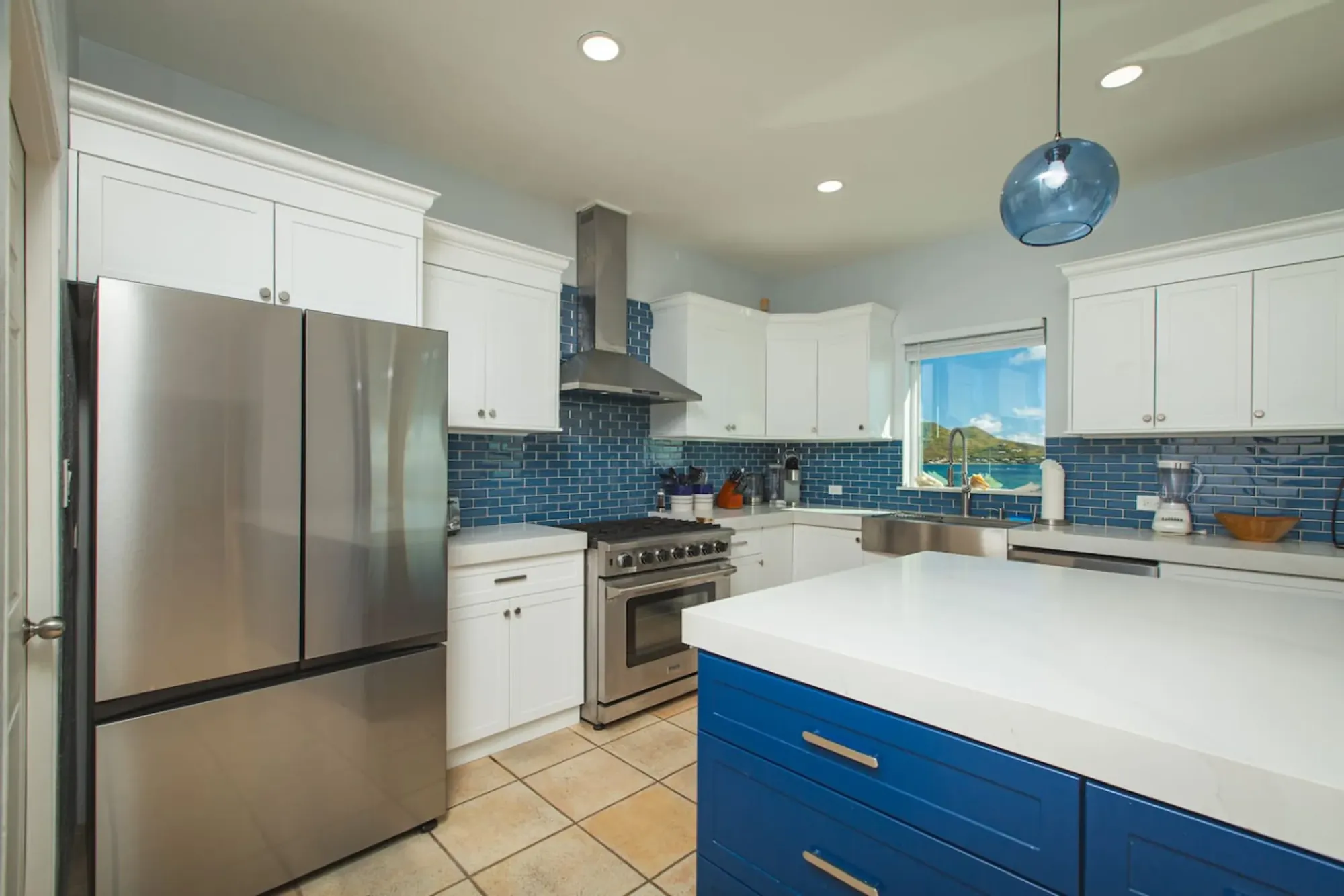
The chef's kitchen at The Cerulean, with its sea-view window — where the week's provisioning lands before any of it turns into souvenirs.Photo: The Cerulean
Questions people ask
How much can I bring back from the U.S. Virgin Islands duty-free?
U.S. residents returning directly or indirectly from the U.S. Virgin Islands may bring back $1,600 in goods per person free of duty, per 19 CFR 148.33 — double the $800 that applies to most other countries. Children get the same $1,600 for goods. If your trip mixed the USVI with other Caribbean countries, no more than $800 of the $1,600 may have been acquired outside the USVI. Keep receipts; the exemption is claimed on your customs declaration.
How many bottles of rum can I bring home from St. Croix?
The regulation allows up to five liters of alcoholic beverages inside the $1,600 exemption if you are 21 or older, provided not more than one liter was acquired outside the USVI and not more than four liters were produced outside the USVI — so at least four bought here and at least one made here, which is how Cruzan and Captain Morgan earn a place in every suitcase. Six standard 750-ml bottles total 4.5 liters, under the line. Extra bottles pay a flat 1.5 percent duty plus federal excise tax.
Is there sales tax in the U.S. Virgin Islands?
No. There is no general sales tax in the USVI, so the shelf price is the price you pay at the register. The territory raises revenue instead through a gross receipts tax that businesses pay on their sales, excise taxes on goods brought into the islands, and its own customs duty on foreign goods entering the territory — all built into prices rather than added at checkout. There is no refund desk at the airport because there is nothing to refund; the saving is at the register.
Do I have to be gone 48 hours to use the $1,600 exemption?
Not for the Virgin Islands. The general rule denies the exemption unless you have been outside the United States at least 48 hours, but 19 CFR 148.35 says the $1,600 exemption for arrivals from the Virgin Islands may be allowed without regard to how long you were away. The catch that does apply is the 30-day rule: you cannot claim it again if you used it within the 30 days before you return.
Can my family combine our exemptions?
Yes. Under 19 CFR 148.34, members of a family who live in one household and travel together may group their exemptions on a joint declaration, so a family of four returning from St. Croix has $6,400 to work with between them. Family means related by blood, marriage, domestic relationship or adoption, sharing a household before and after the trip. Children's exemptions cover goods, not alcohol; a child's share cannot be used for liquor.
What is a Crucian hook bracelet and which way does it face?
A band bracelet closed by a horseshoe-shaped hook, first made by Sonya Hough at Sonya Ltd. in Christiansted, which opened in 1964. The custom the shop describes: worn with the hook opening toward your heart it says your heart is taken; opening away from your heart, it says you are still available. Sonya Ltd. is on Company Street across from the Steeple Building; ib designs and Crucian Gold, both a short walk away, make their own clasp and knot bracelets.
Is there a duty-free shop at the St. Croix airport?
Do not plan on it. Henry E. Rohlsen is a small terminal — a gift shop and a newsstand — and published sources disagree about whether anything there is a proper duty-free counter. Buy your rum at the distilleries or a supermarket in town, box it, and put it in checked luggage. What you will find at the airport for certain is the USDA agricultural inspection table, where fresh fruit and plants get checked before mainland flights.
Can I take Cruzan 151 home on the plane?
No. FAA rules forbid alcoholic beverages over 70 percent alcohol by volume — 140 proof — in both checked and carry-on baggage, and 151-proof rum is named as an example. Everything else in the standard Cruzan and Captain Morgan lineup sits between 24 and 70 percent, which the FAA allows in checked bags in unopened retail packaging up to five liters per passenger. Drink the 151 on island; fly home with the aged rums.
Can I bring mangoes or other fruit home from St. Croix?
Only what USDA lists as allowed. Travelers leaving the USVI for the mainland must present all food, plants and agricultural items to the USDA inspector at the airport; fresh fruit and vegetables are prohibited except those on the allowed list, which includes avocado, banana, papaya, coconut, pineapple, plantain and breadfruit. Fresh pigeon peas, sweet potatoes, sugarcane and plants in soil are among the items stopped. Roasted coffee and commercially canned or cooked foods are generally fine.
Doing it from The Cerulean
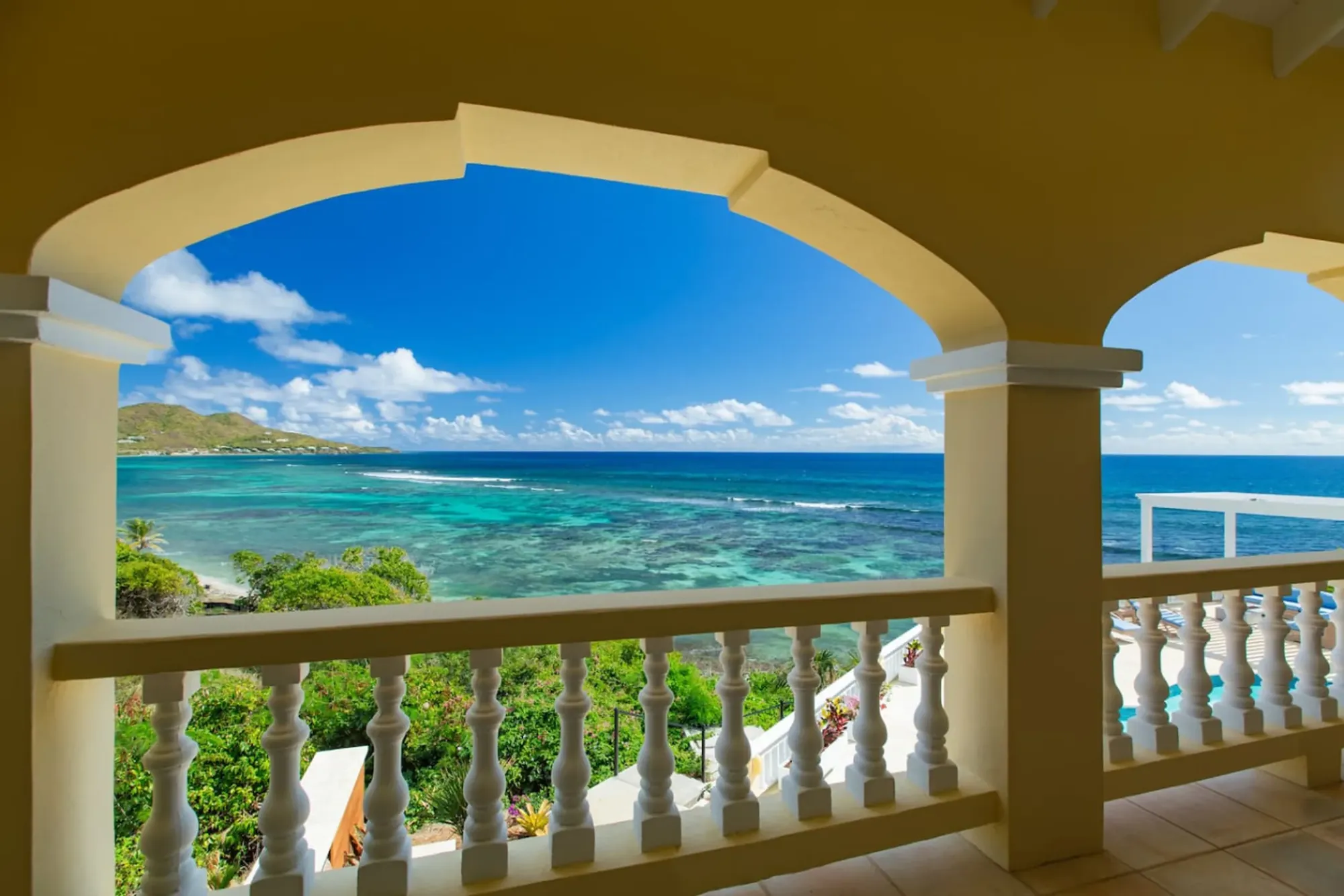
The villa sits on the East End, about 15 to 20 minutes from Christiansted by car, and that drive is the spine of the shopping week. Everything in the Christiansted section — the three jewelers, Many Hands, the perfume shops, the boardwalk, and Undercover Books in Gallows Bay on the way home — is one morning from your door, and the driving guide covers the left-side habit for whoever is at the wheel. The west end is farther: Frederiksted, the Cruzan distillery and Rainbow Beach are on the far side of the island, roughly 45 minutes to an hour, so they belong to a full weekday out.
A sequence that works: land, and let the concierge have the kitchen stocked before you arrive — that first grocery run is where the standard Cruzan bottles come from, at supermarket prices, and the provisioning directory lists Seaside Market, Pueblo and Plaza Extra. Mid-week, take the west-end day: a 12:00 or 1:30 Cruzan tour, the carry box from the gift shop, an hour in Frederiksted, a swim. Near the end, do the Christiansted morning for the bracelets, the art and the books, when everyone knows what they want. And on the last night, pack the bottles the way the steps above describe, on the kitchen island where there is room to lay everything out and count.
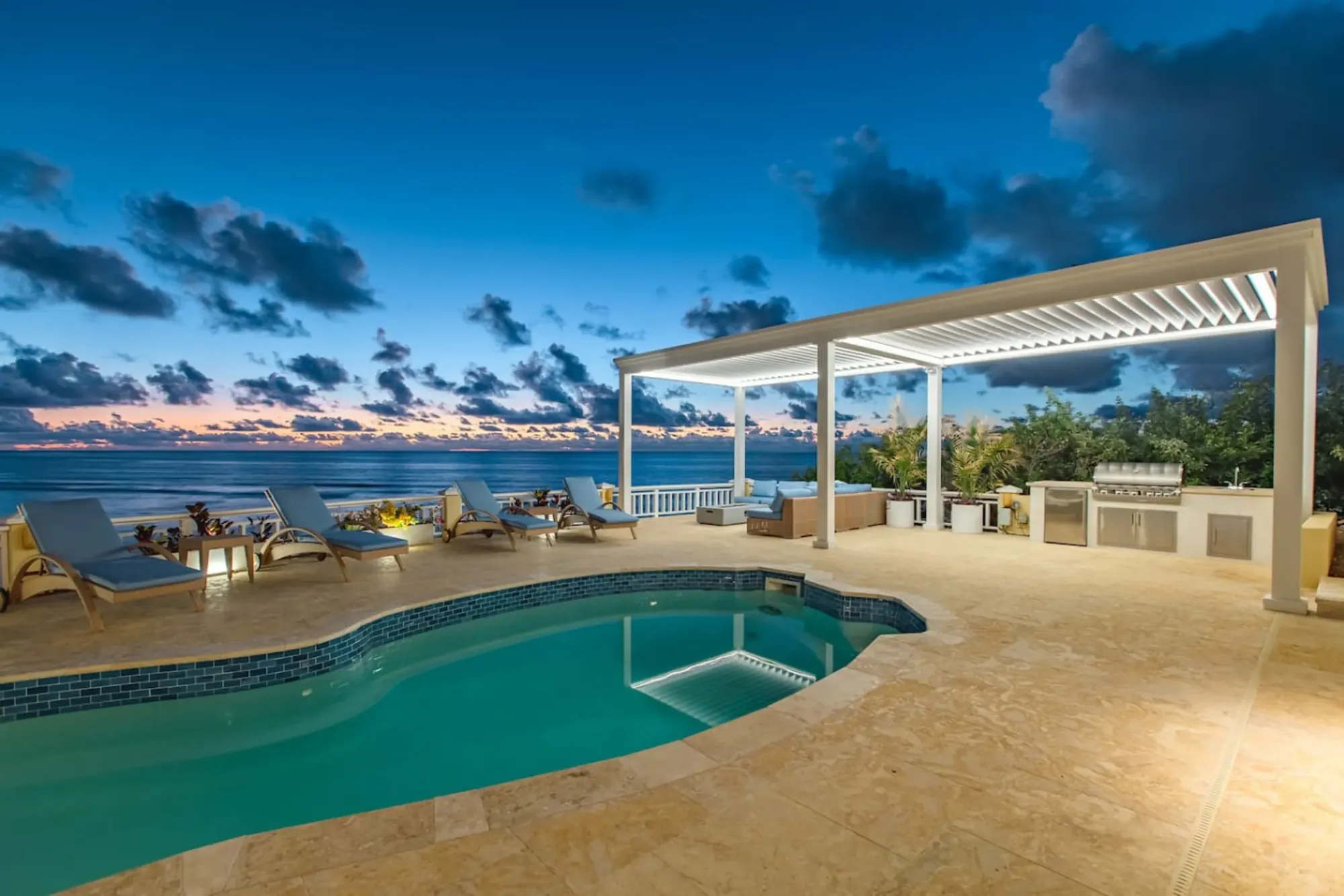
The villa's welcome, arranged on request, includes keepsakes from local artists, which is a small way of saying that the island-made things in this guide are the point of shopping here. Buy the rum because the customs code practically asks you to; buy the hook bracelet because it is the one object that means St. Croix and nowhere else. And keep the receipts in the envelope. The exemption is generous, the paperwork is minutes, and the sunrise from the pool deck the next morning is free.
The Cerulean
Twelve of you, one private beach.
The Cerulean sleeps twelve on St. Croix's quiet East End — check your dates.