

How Cruzan is made
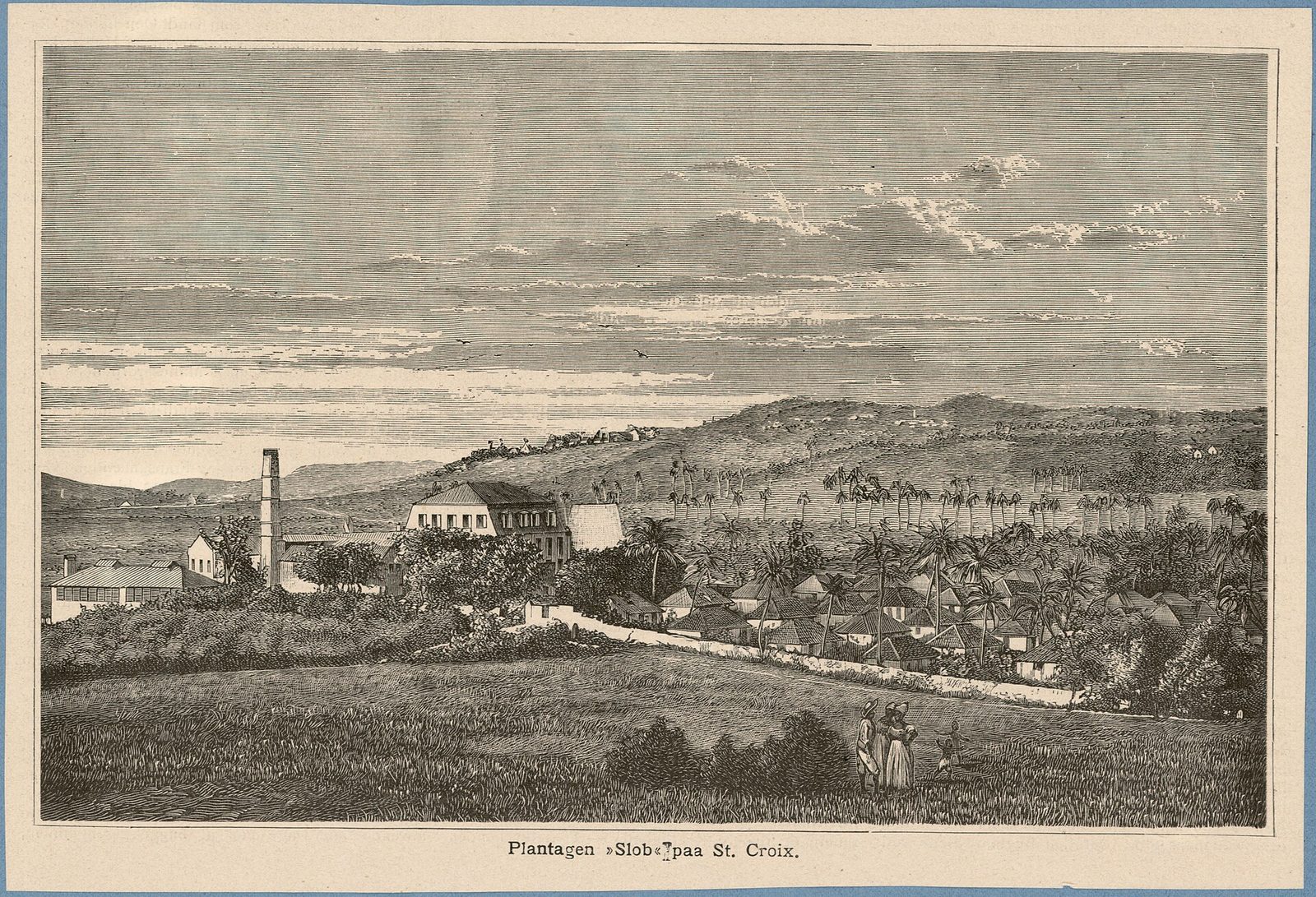
The tour is a walking tour of the process, so it helps to know the process before you go. It begins with molasses, the thick brown by-product of sugar refining. St. Croix has not grown commercial cane since 1966, so the molasses comes in from off-island and reaches the distillery by tanker truck; the storage tanks are one of the first things you see. Molasses is diluted with water, yeast is added, and the wash ferments for a few days until the sugars have become alcohol. The smell of a working fermentation is sweet, sour and a little bready, and it is part of the ticket.
The wash then goes to the stills. Cruzan describes "a unique five-column distillation process": the spirit passes through a series of tall continuous columns, each pass stripping out more of the heavier compounds (the fusel oils and congeners that give pot-still rums their weight), so what comes off the last column is very clean, high-proof spirit. The company markets this as the world's "cleanest" rum and has long claimed it is easier on the drinker the next morning; take the second claim with salt, the first is simply what five columns do. It is why unaged Cruzan tastes so mild and why the aged rums taste of barrel more than of funk.
The spirit is cut to strength, with rainwater the company has long said, and goes into barrel. The barrels are once-used charred American white oak from Jim Beam. Aging runs, per the distillery, "anywhere between one and twelve years": the aged light and dark rums spend roughly one to four years in wood (yes, the "light" is aged too; it comes to the bottle clear), the premium and single-barrel rums longer. Cruzan Single Barrel is a blend of aged rums that then goes back into freshly charred new oak for about six to nine months, which is where its vanilla and toast come from.
Then it leaves. Most of the range is shipped to be bottled at a sister facility off-island, and only about 15 percent of production is sold in the Virgin Islands. The bottle you buy at the distillery shop is the same liquid you get in Cleveland; what is different here is the price, the tasting bar, and the fact that you can look at the columns that made it. Which brings us to the climate.
Tropical aging and the angel's share
Every barrel of spirit loses some of itself to the air through the wood; the trade calls the loss the angel's share. In Scotland it runs around 2 percent a year. In the Caribbean it is about 6 to 12 percent a year, and anyone who has stood in a St. Croix warehouse in August will believe the top of that range. Heat drives spirit into and out of the wood faster, so a barrel here gives up its color, its vanilla and its tannin in a fraction of the time it would take in a cool cellar, and it gives up a lot more of its volume doing it.
Two consequences follow. First, tropical years are not temperate years: a rum that spent five years in wood on St. Croix has taken on roughly what a whisky takes in a decade or more somewhere cold, which is why Cruzan's one-to-twelve-year range produces rums that taste older than their numbers. Second, long aging here is expensive in a way it is not in Kentucky, because a twelve-year barrel has lost most of its contents to the sky. That is why the single barrel costs what it costs, and why the everyday rums are blends of younger barrels.
Notice too what the labels say. Cruzan's everyday bottles say "aged" without a number, and the company gives ranges rather than age statements: one to four years for the aged light and dark, one to twelve across the range. That is honest labeling for a blended rum, and it means "aged" on a Cruzan label tells you the rum has been in wood, not for how long. If a guide gives you a number, ask whether it is the youngest barrel in the blend or the average. Then, at the bar, taste the aged light and the aged dark side by side, and the single barrel after them; the jump from the second to the third is the angel's share being paid.
The bottles: what to look for
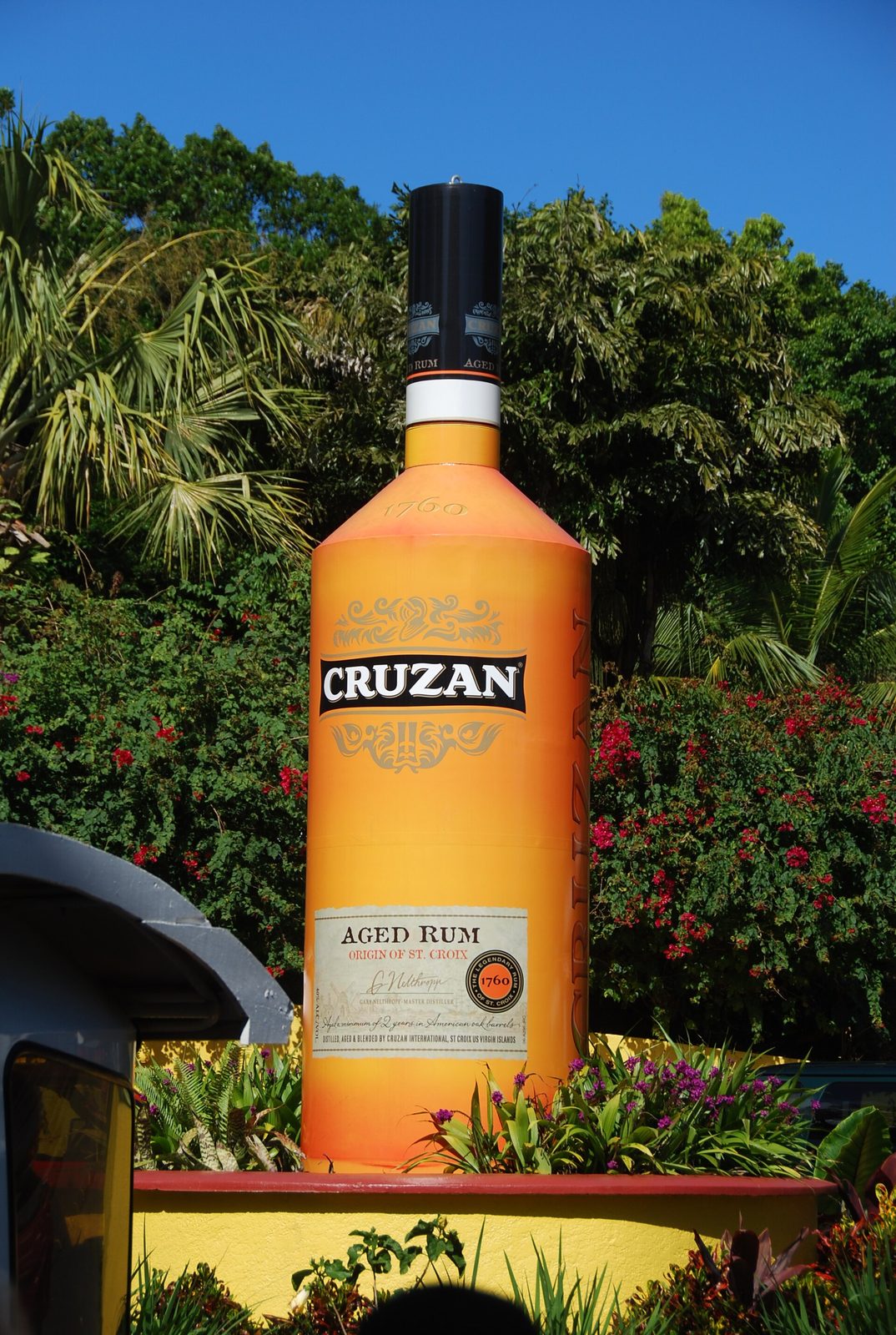
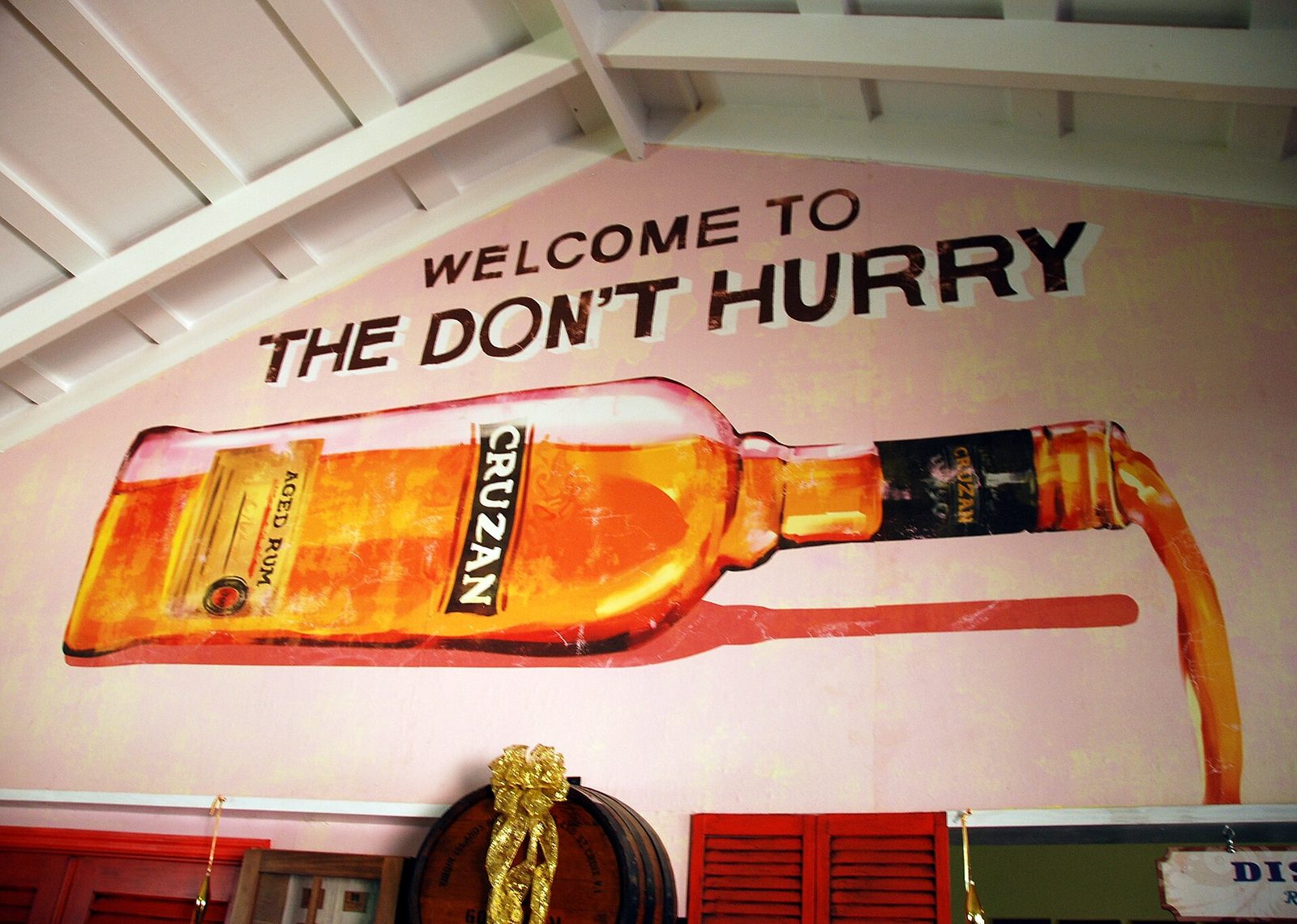
The range is bigger than most people expect, and the tasting bar lets you try four of anything, so it pays to arrive with a plan. At the base are the aged light and aged dark rums, one to four years in bourbon barrels; the light comes to the bottle clear and is the well rum of the island, the dark carries more barrel and molasses. Above them sits a premium line that includes the Estate Diamond light and dark bottlings, and, at the top, Cruzan Single Barrel: a blend of aged rums finished six to nine months in freshly charred new oak. Single Barrel took "World's Best Rum" at the San Francisco World Spirits Competition in 2000 and again in 2010, and the Beverage Testing Institute scored it 96 out of 100 in 2009. It is the one to buy if you buy one.
Then the odd corners. Cruzan 151 is the overproof, 75.5 percent alcohol, with a silver medal at the 2011 San Francisco competition and a gold from the Beverage Testing Institute in 2002; treat it as a cocktail float and a flambé, not a pour. Cruzan 9 is the spiced rum, and the company lists nine spices: allspice, vanilla, pepper, ginger, mace, clove, nutmeg, cinnamon and juniper berry. Hurricane Proof is a 137-proof rum whose sales have sent a dollar a bottle to Hurricane Maria relief projects. And there is the flavored line, bottled at 27.5 percent alcohol: raspberry, guava, strawberry, banana and more, with watermelon added in 2019. Cruzan claims to have invented the flavored-rum category, and whatever you think of flavored rum, it pays a good share of the bills at Diamond.
How to think about them at the bar: the flavored rums are for the mixed drinks the tasting includes; the aged light and dark are for the daiquiri and the punch you will make at the villa; the single barrel is for the glass on the terrace after dinner. Skip the 151 unless you have a specific tiki drink in mind. Buying to carry home, one single barrel and one aged dark covers most people.
| Bottle | What it is | How to use it |
|---|---|---|
| Aged Light | One to four years in bourbon barrels, bottled clear | Daiquiris, punch, the everyday pour |
| Aged Dark | One to four years, more barrel and molasses | Rum and cola, planter's punch |
| Estate Diamond light and dark | The premium line, named for the estate | Neat, or a simple highball |
| Single Barrel | Aged blend finished 6–9 months in new charred oak (SF World Spirits best rum, 2000 and 2010) | Neat, one big cube |
| Cruzan 9 | Spiced with nine listed spices | Ginger beer and lime |
| 151 | Overproof, 75.5 percent alcohol | Floats and tiki drinks, sparingly |
| Flavored line (27.5 percent) | Fruit flavors, watermelon added 2019 | The bar's mixed drinks |
| Hurricane Proof | 137 proof, a dollar a bottle to Maria relief | Cocktails, small pours |
The distillery tour, as it stands in 2026
The tour closed in 2020 with everything else and stayed closed for four years while the company did major maintenance on the plant and rebuilt the visitor center. It came back on Monday, March 11, 2024 (the St. Croix Source headline: "Cruzan Rum Distillery Reopens After a Four-Year Closure") and has run since. If an older blog tells you the tour is a walk-in affair, that is the pre-2020 world. The rules are stricter now and the experience is better.
The rules, from the distillery's own visitor page as of August 2026. Reservations are required and are made online at cruzanrum.com; the page says no walk-ins are accepted. Opening hours are listed as Monday through Saturday, 9:30 to 4, closed Sundays and on New Year's Day, Good Friday, Easter, Thanksgiving and the day after, and Christmas Day. Island sources publish the tour slots as 12:00, 1:30 and 3:00 on weekdays, and the booking calendar is the only thing that tells you which slots exist in your week, so treat that as the truth and everything printed here as a guide. The tour lasts about an hour, walking tour and sampling included. A VIP tour with more depth exists; you arrange it by phone at (340) 692-4466.
Price, per the 2024 reopening coverage: about $25 for adults, $10 for children ages 4 to 17, and $15 for adults with a local ID. Confirm on the booking page. The price includes the tasting at the end: up to four samples of any Cruzan rum plus your choice of two mixed drinks from the bar menu. Children get juice or soft drinks in their place. The alcoholic pours are for guests 18 and over, which is the legal drinking age in the U.S. Virgin Islands; nobody needs to be 21 here, and the bar can still ask for ID.
Wear closed-toe shoes; the page says no heels, slippers or bare feet, because this is a full walking tour over uneven ground with some stairs, and it is not fully wheelchair accessible (call ahead for accommodations). The gift shop in the visitor center keeps its own listed hours, Monday through Friday 11 to 4. The distillery limits group size, so a party bigger than a family should book early, and in winter, when cruise ships call at Frederiksted, earlier still.
Booking the Cruzan tour
- Pick a weekday and a slot, then book it on the online calendar at cruzanrum.com/tours-and-experiences. Walk-ins are not accepted.
- Book at least a week ahead in winter, and put your driver's name on the list too. Everyone drinks at the end.
- Have IDs ready for anyone under about 30. The pours are for 18 and over, and children get juice.
- Wear closed-toe shoes and light clothes. The walk covers uneven ground and stairs.
- Give yourself about an hour on site plus shop time, then eat lunch in Frederiksted, ten minutes west.
What the tour is like
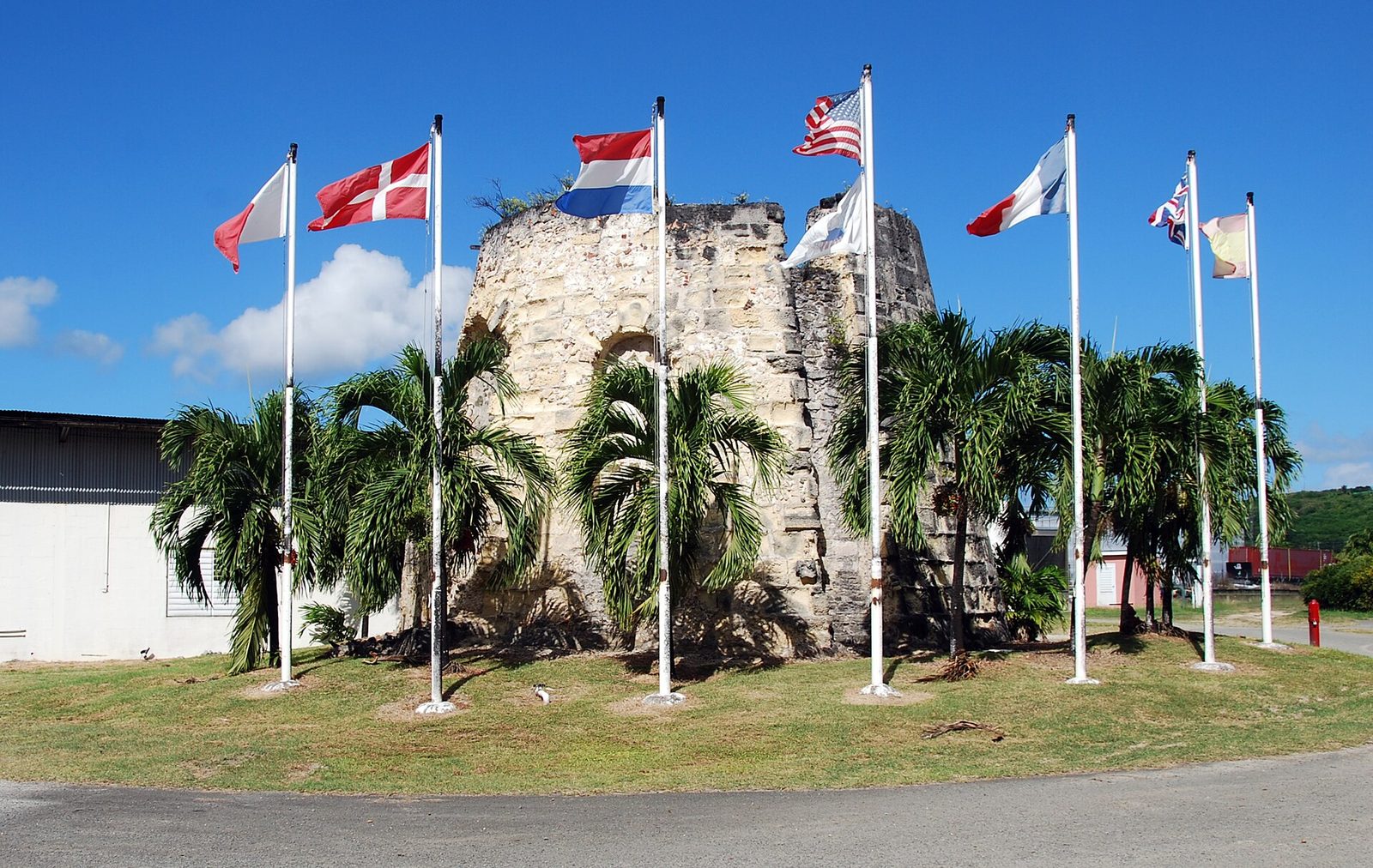
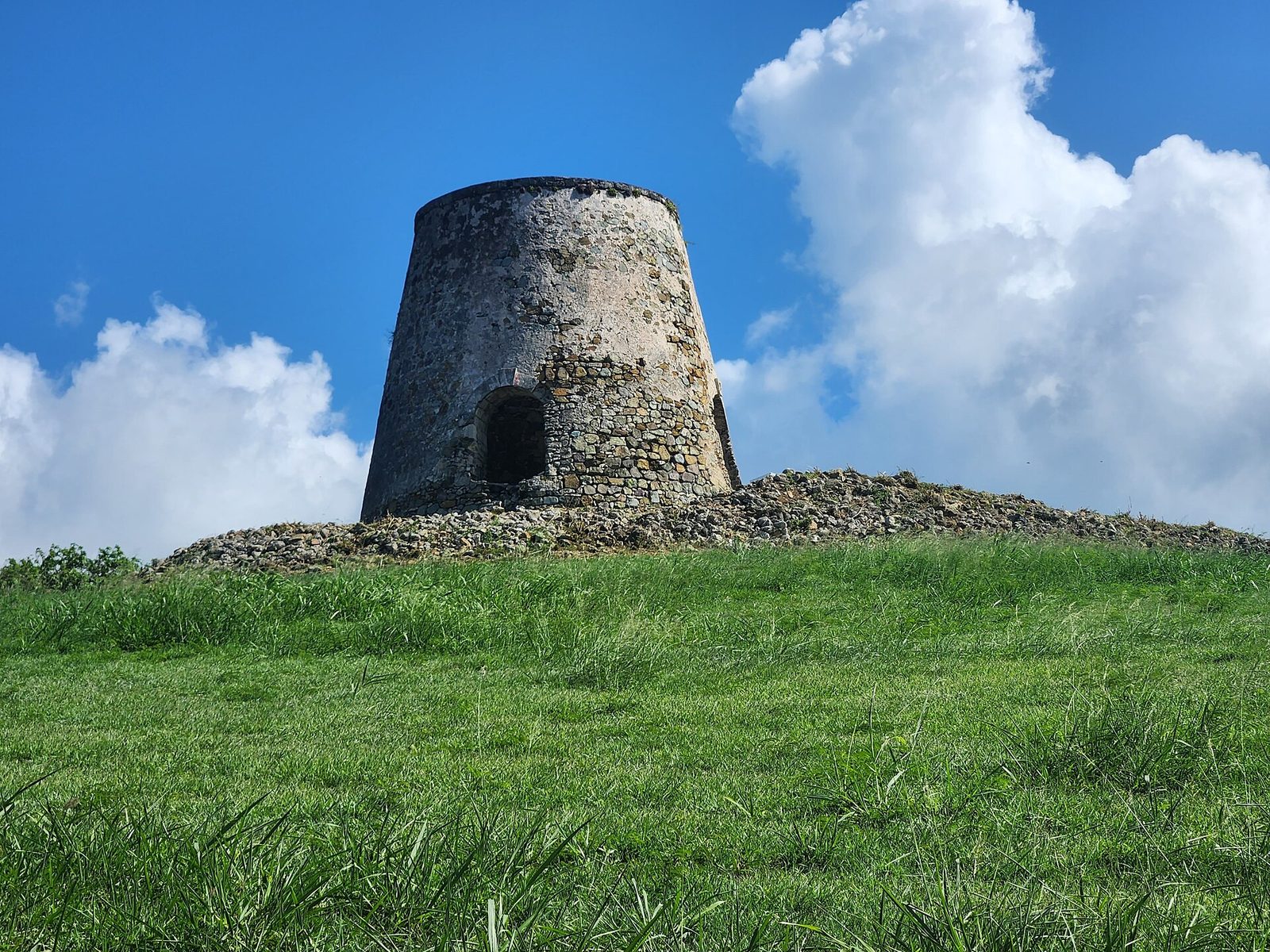
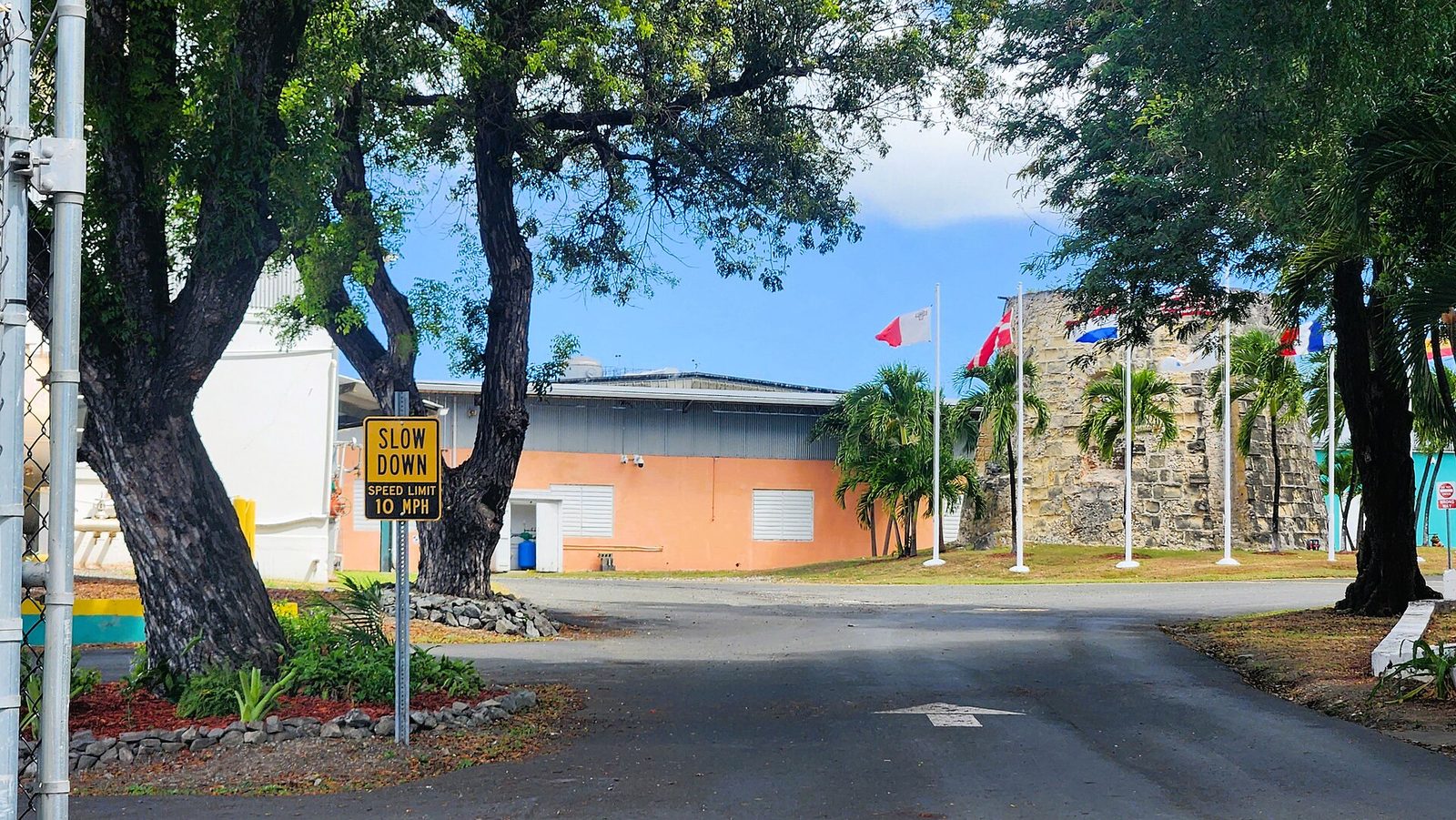
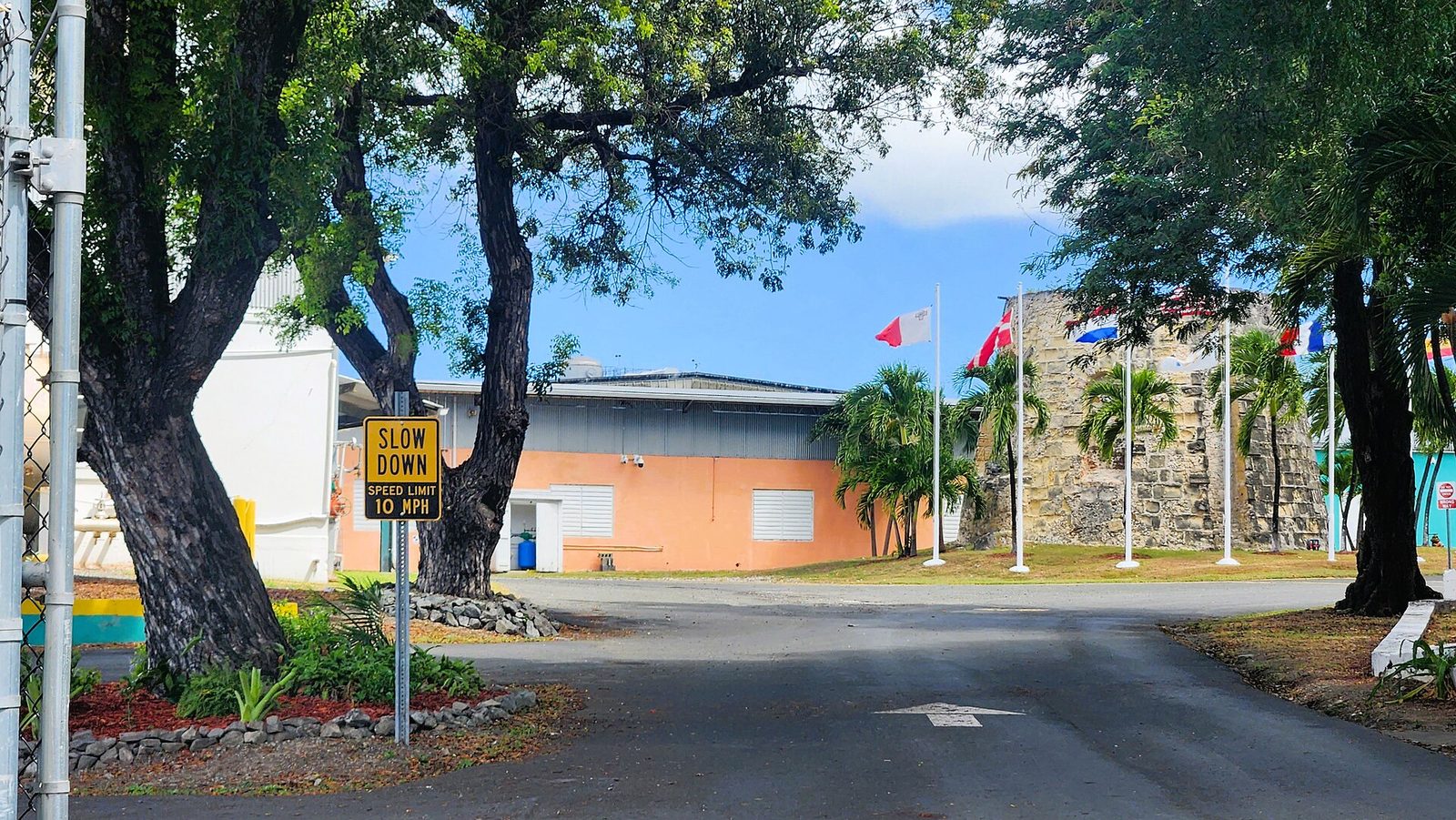
You park by the visitor center, under the old mill tower and the seven flags, and check in for your slot. The guide walks you through the process in the order the rum takes it: the molasses storage tanks, the fermentation, the columns, and the aging warehouses where the barrels sit in the heat paying their share to the air. It is a working plant, not a theme park. Trucks move, the mash house has a smell, and the guides talk about the plant as people who work in it. Between stops you get the history: 1760, 1934, the switch to columns, the Nelthropps, the storms and the rebuildings.
The finish is the sampling bar, and it is generous: four samples of anything on the back bar plus two mixed drinks from the menu, which is more than enough to understand the range and considerably more than enough for whoever is driving. This is where the plan from the section above pays off. Taste the aged light against the aged dark, then a single barrel; use your two mixed drinks on whatever the bar is making that day. Then the shop, which stocks the bottles you just tasted, glasses, clothing and the branded odds and ends.
What it is not: a colonial-era exhibit. If you want the plantation story with its full weight, Estate Whim is a few minutes up Centerline Road and does that job. Diamond is about how the rum is made now, told with pride and a little marketing, and it is one of the best hours on the west end.
Captain Morgan at Estate Annaberg: the other distillery
There is a second, much bigger rum plant on St. Croix, and most visitors never see it. In 2008 Diageo, the owner of Captain Morgan since 2001, announced it would move production of the brand's rum for the U.S. market from Puerto Rico to a new distillery on St. Croix, under a 30-year agreement with the territory signed that July. The plant, at Estate Annaberg and Shannon Grove off the Melvin Evans Highway, held its grand opening on November 23, 2010. Diageo's release put its capacity at 20 million proof gallons a year, said construction had brought about $139 million into the community, and promised more than 60 full-time jobs, 80 percent of them for Virgin Islands residents. It is an industrial distillery, and it does not do the kind of walk-through Cruzan does.
What it does have is a visitor center, announced at the opening and built afterward. The Captain Morgan Visitor Center is open Monday through Friday, 10 to 4, and closed weekends; the one-hour experience is a history overview of the rum industry, a film, a "tasting tavern" with fresh-juiced cocktails, and a retail store, with indoor tastings listed at 1 pm on weekdays. Nothing we could find describes a walk through the production floor, so go for the tasting and the shop, not for stills. In 2026 the center's website carried a notice that "a smoother way to book your distillery experience is on the way," so the booking method may have changed by the time you read this; call (340) 713-5654 before you drive out.
How to think about the two: Cruzan is a working historic site with a family in it, and its tour is the better hour. Captain Morgan is a modern plant with a visitor experience attached, a fair stop if you are passing on the highway with an afternoon to fill. For a third, the Sion Farm Distillery makes the world's first breadfruit vodka mid-island with free weekday tours, and Prosperity Farm Distillery bills itself as the island's only farm-to-bottle operation, making gin and amaro from fresh cane juice.
| Distillery | Where | Days (confirm) | What you get |
|---|---|---|---|
| Cruzan Rum Distillery | 3A Estate Diamond, near Frederiksted | Mon–Sat 9:30–4 listed, weekday tour slots, book online | Guided walking tour of a working plant, 4 samples + 2 mixed drinks, shop |
| Captain Morgan Visitor Center | Estate Annaberg and Shannon Grove, off Melvin Evans Hwy | Mon–Fri 10–4, closed weekends | One-hour visitor-center experience: history, film, tasting tavern, shop |
| Sion Farm Distillery (Mutiny vodka) | Sion Farm, mid-island | Mon–Fri 11–5, free tours listed | Breadfruit vodka tasting room and tour |
| Prosperity Farm Distillery | Farm setting, check current listings for the address | Check current hours | Short farm-to-bottle tasting tour, cane-juice gin and amaro |
Why rum matters to the USVI economy: the cover-over, briefly
You cannot understand why two of the largest rum plants under the American flag sit on one small island without one piece of tax law. The federal government charges an excise tax of $13.50 on every proof gallon of rum made in or imported into the United States. Under a program that dates to 1917 for Puerto Rico and to the 1954 Revised Organic Act for the Virgin Islands, most of that money is "covered over," that is, paid back, to the treasury of the territory where the rum was made. The permanent rate is $10.50 per proof gallon; Congress has repeatedly extended a temporary top-up to $13.25. The Congressional Research Service put the USVI's take at more than $133.5 million in fiscal 2011, with no federal restriction on how the territory spends it.
That stream is what the territory used to bring Diageo to St. Croix. The 2008 agreement financed the Captain Morgan plant with bond issues backed by cover-over revenue, including $250 million for construction, and gave the company exemptions on property, excise, gross receipts and income taxes, with debt service rising to about $20.6 million a year through 2038. Cruzan's owner, then Fortune Brands, got a parallel arrangement: direct subsidies of about $21.3 million in fiscal 2009 (roughly 18.5 percent of the USVI's cover-over revenue that year) for rum promotion, marketing and a molasses subsidy fund, plus a $39.2 million bond issue in December 2009. Puerto Rico's producers cried foul, and a lawsuit and a decade of congressional bills followed.
Why this matters to a visitor holding a tasting glass: the rum in it is not just heritage. It is a line item in the territory's budget and the reason both distilleries are here, are modern, and are still hiring. It also explains why the plants are protected the way a Kentucky county protects a bourbon distillery, and why, on St. Croix, rum is spoken of as infrastructure.
A tasting primer
Rum rewards a little method, and the sampling bar at Diamond is a good place to learn it because the pours are small and the range is in front of you. Hold the glass by the base, not the bowl; warm rum throws alcohol at your nose and hides everything else. Look first: an aged light is clear, an aged dark is amber, a single barrel deeper again, and color tells you about wood and time (and sometimes about added caramel; ask). Then nose it with your mouth slightly open, from a few inches away, before you bring it close. Molasses, vanilla, banana, brown sugar and a little oak are the honest notes in a column-still rum; if all you get is heat, back off and try again.
Taste small. Let the first sip coat your mouth and swallow it without judging; the second sip is the one you taste. Then, on the aged rums, add a drop or two of water: it opens the spirit and knocks the alcohol down so the barrel notes come forward. Compare in pairs, light against dark, dark against single barrel, and you will understand the aging section above better than any paragraph can teach it. On the tour, four samples is exactly enough for that sequence plus one wild card from the flavored line.
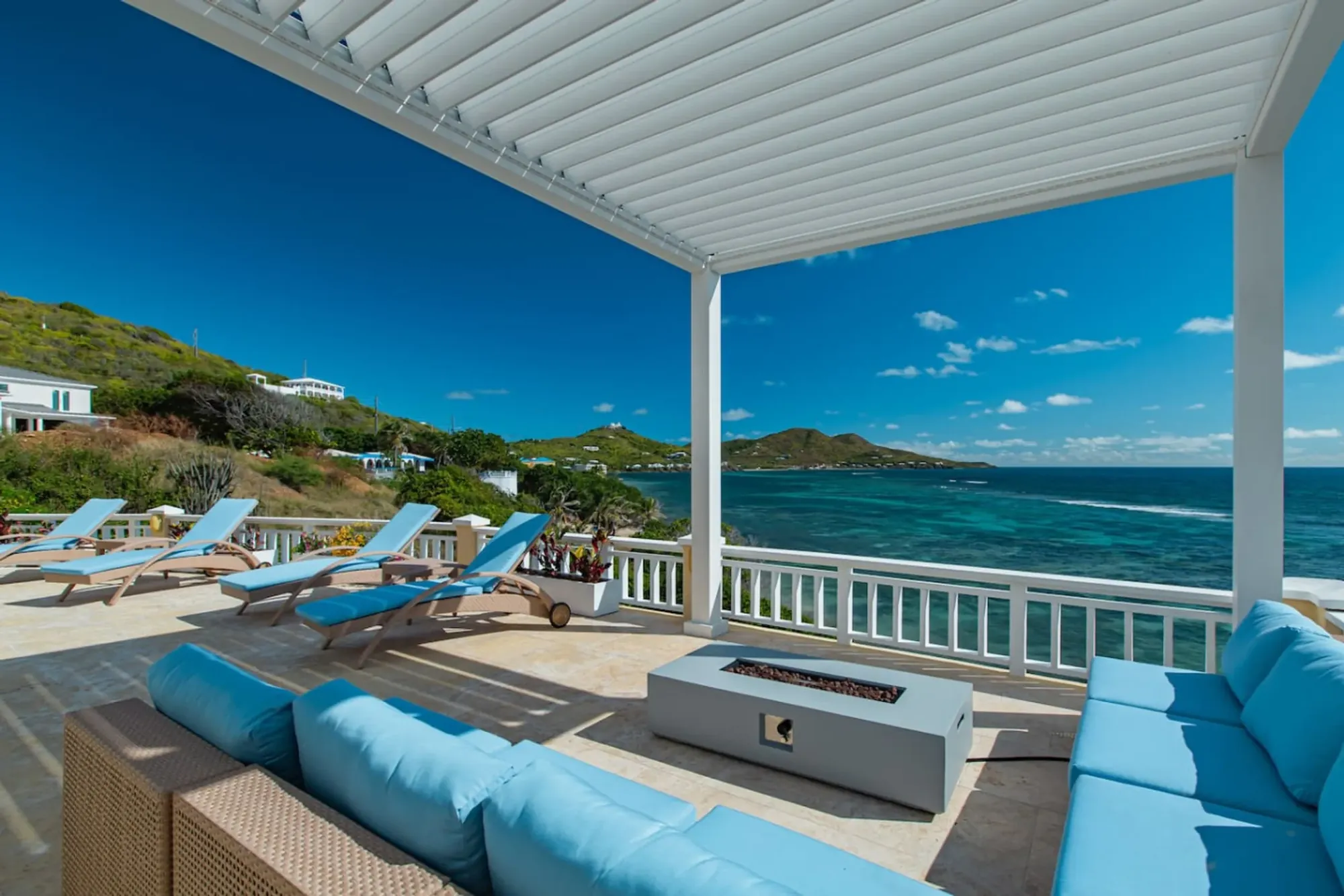
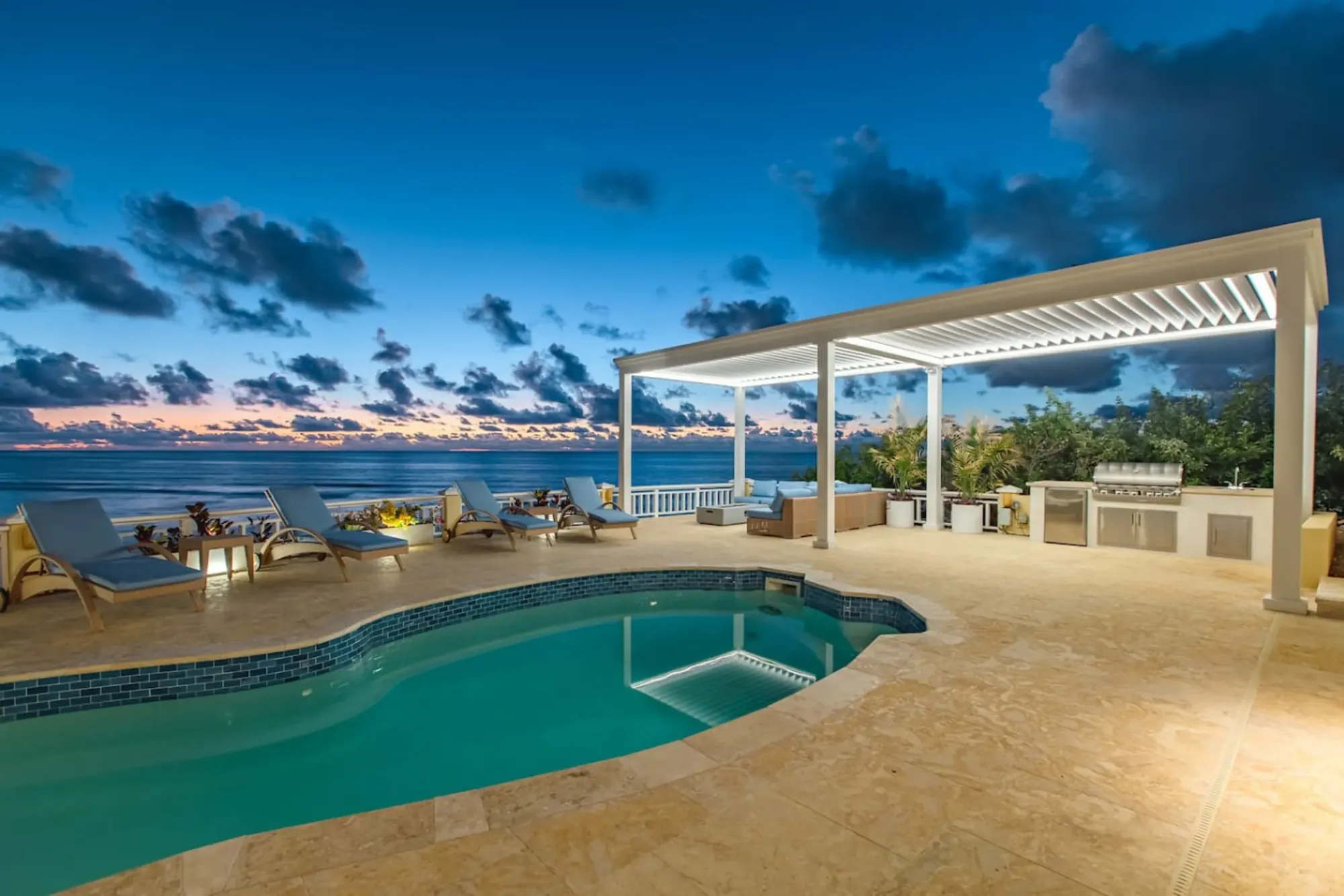
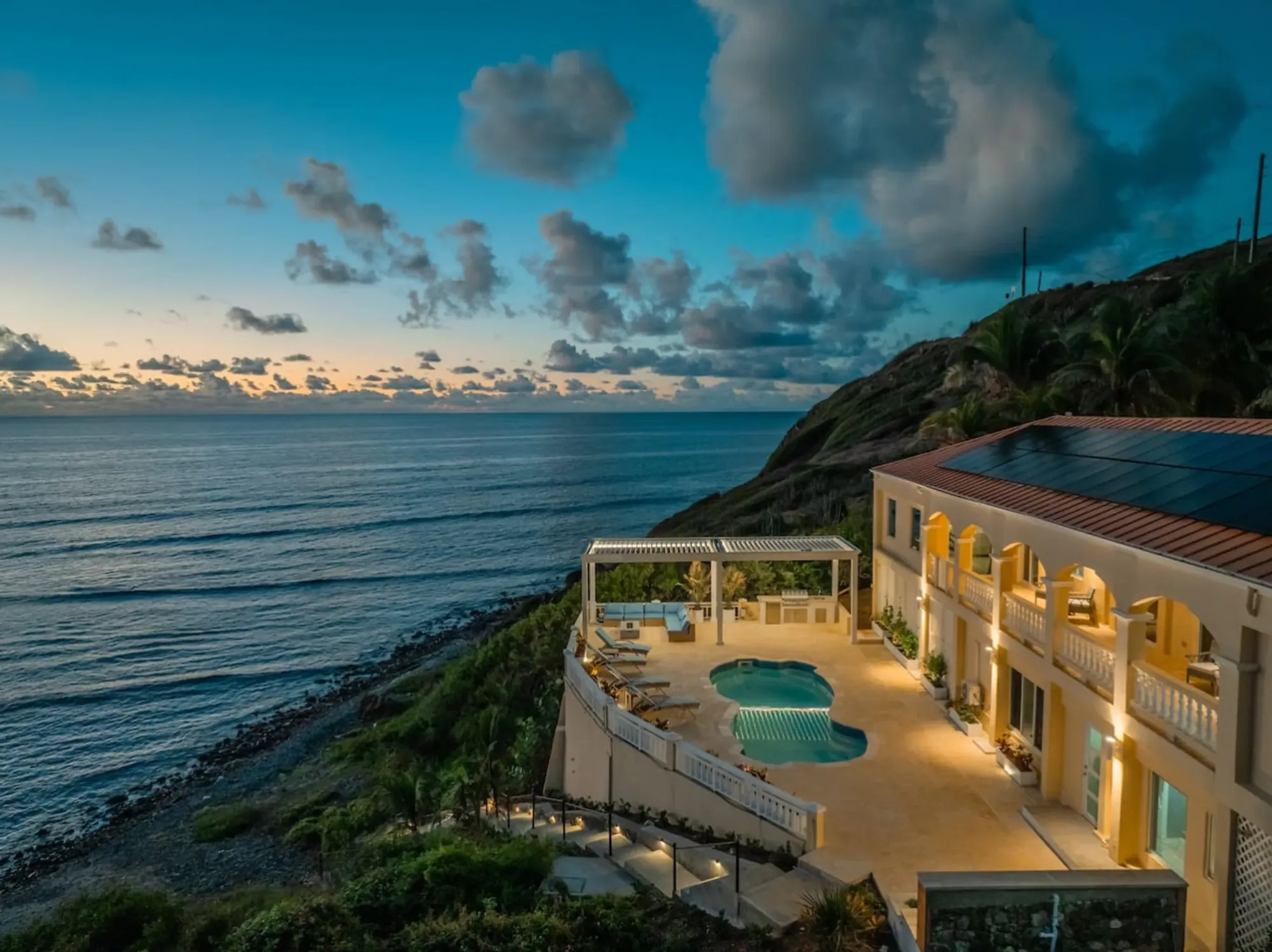
The house pour on St. Croix, and the villa's, is the simplest thing possible: Cruzan Single Barrel, one big cube, on the pool deck as the light goes. Everything else in this guide is context for that glass.
How to taste a rum
- Look: clear, amber or deep amber tells you about wood and time.
- Nose from a few inches with your mouth slightly open, then closer. Molasses, vanilla, brown sugar and oak are the honest notes.
- Sip small. Swallow the first without judging and taste the second.
- Add a drop of water to the aged rums and nose again.
- Compare in pairs: aged light against aged dark, then dark against single barrel.
Rum cocktails, the honest version
We will give you only recipes we can stand behind, which means classics rather than anything we could pretend is a secret island formula. The bar at Diamond will make you whatever it is making that week; we could not verify a fixed recipe for the drink some visitors call the "Cruzan Confusion," so ask the bartender and photograph the answer. What follows is what a good bar anywhere in the Caribbean would recognize.
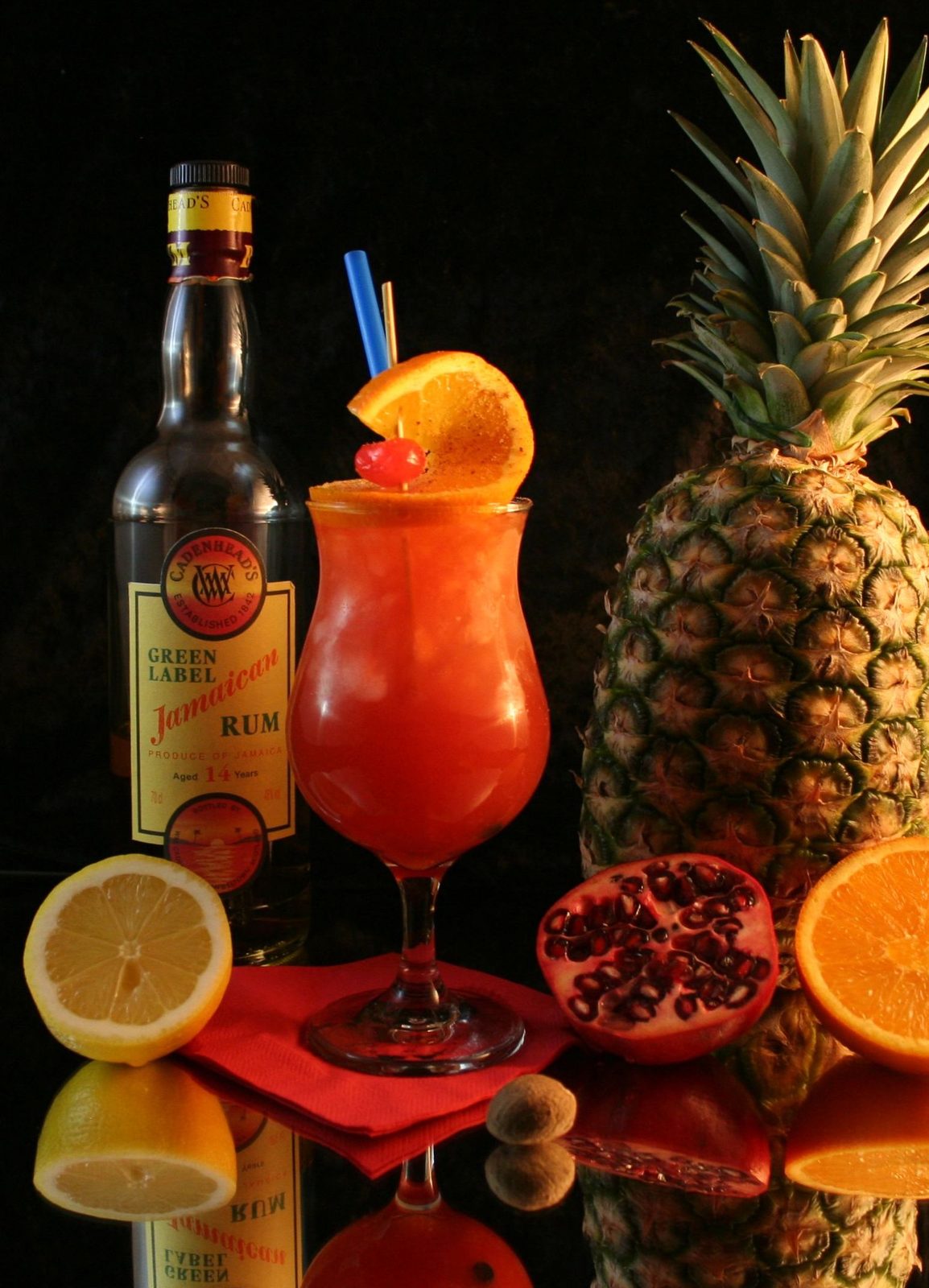
The daiquiri is the test of a light rum, and Cruzan's aged light passes it. Two ounces of rum, one ounce of fresh lime juice, three-quarters of an ounce of simple syrup, shaken hard with ice and strained; no blender, no strawberries. Adjust the syrup to your limes. The rum punch follows the old planters' rhyme, one of sour, two of sweet, three of strong, four of weak: one part lime, two parts sugar syrup or a sweet juice, three parts rum (the aged dark here), four parts water, ice or more juice, with a grating of nutmeg on top; make it in a pitcher for the group. And the island's simplest drink is dark rum with a squeeze of lime, either on ice or with cola, which is how much of the island drinks it and needs no name.
Two rules for making them at the villa. Use fresh limes, which the island's markets and supermarkets have; bottled juice ruins rum drinks faster than cheap rum does. And keep the single barrel out of the shaker; it costs what it costs because of what it lost to the air, and it belongs in a glass by itself. Our Crucian food guide covers what to cook alongside; a pot of kallaloo and a pitcher of punch is a whole evening.
Buying it: the shop, the island and the five-liter rule
The distillery gift shop, in the visitor center, keeps its own listed hours (Monday through Friday, 11 to 4), and it stocks the full range at island prices along with glasses and clothing. Away from Diamond, supermarkets and liquor stores across the island sell Cruzan at island prices, and the liquor stores will box bottles for the flight if you ask. If you want the single barrel or the Estate Diamond bottlings, buy them where you taste them, at the source, and let the everyday rum come from the supermarket run.
The reason to buy here at all is a rule in the U.S. customs code that our duty-free guide explains in full: returning from the U.S. Virgin Islands your personal exemption is $1,600 per person, double the standard, and you may bring back up to five liters of alcohol within it provided at least one liter is a product of the USVI. Cruzan is a product of the USVI; so is Mutiny vodka from Sion Farm. The code is, in effect, an invitation to carry home the island's own rum, and family members traveling together can generally pool exemptions.
The practical part: bottles go in checked bags, wrapped in clothes or in the boxes the stores will give you; keep receipts together for the simple declaration on the way home; and weigh the suitcase before the airport, because five liters of rum weighs about ten pounds before you count the glass. Buy the last bottles on your final west-end afternoon and keep them in the villa's kitchen, not a hot car, until you pack.
Driving, parking and the designated driver
You drive on the left on St. Croix, in a car with the steering wheel on the left, and our driving guide covers the habits that make that easy. From Christiansted the run to Diamond is roughly 30 to 35 minutes by the Melvin Evans Highway across the middle of the island; from the East End, where The Cerulean sits, figure 45 to 50 minutes each way, more if you hit Christiansted at school-run time. Estate Diamond sits a few minutes east of Frederiksted; your phone will take you to 3A Estate Diamond, Frederiksted 00840, and you park at the visitor center. Arrive fifteen minutes before your slot; the tours run on a schedule and yours will not wait.
The one non-negotiable is the driver. The tasting is four samples and two mixed drinks per person, on top of whatever the sun has done to you, and the road home is most of an hour of left-side driving. Name the driver at breakfast, before anyone has an opinion, and make it up to them at the villa that evening. The alternatives are a taxi that waits or comes back for you, or one of the guided island tours that stop at the distillery as part of a Frederiksted day. Car rentals are in our directory if you have not booked one.
Two more notes. The tour is on your feet for most of an hour in a hot climate, so water in the car, a hat and closed shoes; and four rums on an empty stomach at one in the afternoon is a mistake people make every day, so eat first or plan lunch in Frederiksted directly after. Rum days are west-end days; do not try to bolt a north-shore afternoon onto one.
A west-end rum day: what to pair it with
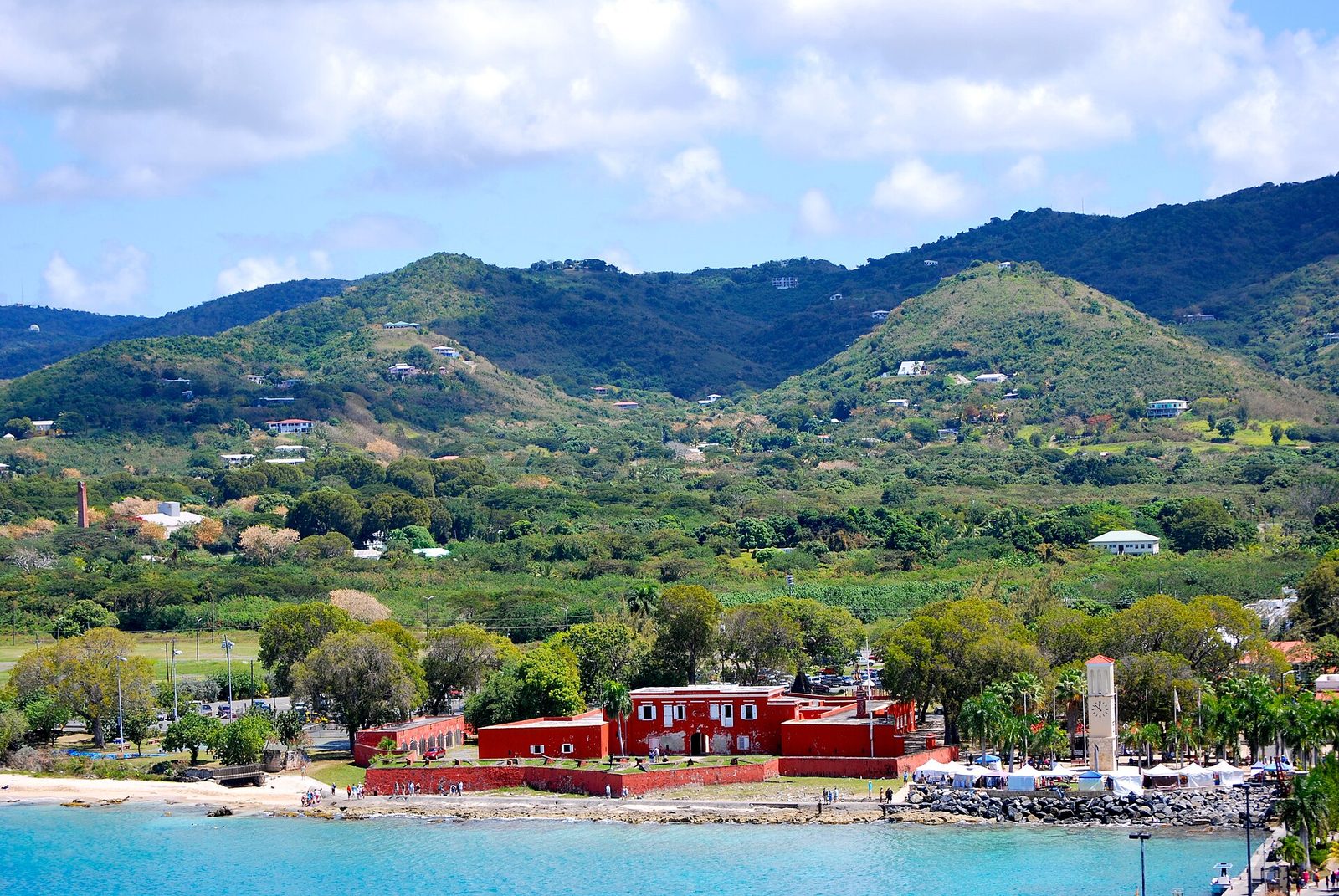
The distillery is best as the middle of a day rather than a trip of its own, and the west end makes the pairing easy. Start at Estate Whim on Centerline Road, a few minutes away, for the sugar works that explain where the molasses came from and who was made to make it (check its days; it has been closed early in the week). Take a noon or 1:30 tour at Diamond. Then drive the ten minutes into Frederiksted for a late lunch on the waterfront and the fort where emancipation was proclaimed in 1848, and end on one of the west-end beaches for the sunset, which is the one thing the East End cannot offer you.
If your group prefers spirits to history: Cruzan at noon, the Sion Farm Distillery on the drive back mid-island for the breadfruit vodka, and dinner in Christiansted. Fit Captain Morgan's visitor center in only with a whole extra afternoon; three tastings in a day is not a plan, it is a problem for the driver. And on a rainy day, when the beaches are off, the distilleries are among the few things on the island that are better under a roof.
What not to pair: a Buck Island boat morning and a Diamond afternoon. They sit at opposite ends of the island; you will spend the day driving and enjoy neither. Keep rum for the west and the reef for the East End, where the villa is.