St. Croix runs east to west, so it has a sunrise coast and a sunset coast. The Cerulean sits on the sunrise side. The sunset side is the west end: a run of calm, sandy, leeward beaches on either side of Frederiksted, where the water is usually flat, the snorkeling is easy, the beach bar is open, and the sun goes down into the sea instead of behind a hill. This guide walks that coast from Ham's Bay to Sandy Point, says which beach is for what, and tells you how to do it from the East End in a day.
The island's shape decides everything about its beaches. St. Croix is a long, thin island lying roughly east to west, and the trade winds arrive from the east. That makes the East End, where the villa is, the side that takes the wind and the morning sun, and it makes the west end the lee: the coast the wind has already crossed the island to reach. Wind that has crossed twenty-odd miles of hills arrives tired. The sea off Frederiksted is, most days, as calm as St. Croix gets, which is why the west end is where the island puts its cruise pier, its easiest snorkeling, and its family swimming.
The same geometry does the sunsets. Only the west-facing shore watches the sun meet the water; from the East End it drops behind the island's ridge, which is fine light but not the same event. In mid-August the sun sets around 6:45 pm on St. Croix. It sets earlier through the winter and a little later in June, so look up the day's time before you leave the villa and work backward from it. The color runs gold, then amber, then pink over the sea, and it goes fast this close to the equator; ten minutes after the sun is down, the show is mostly over.
None of this makes one coast better than the other. Guests at the villa wake to sunrise over the water and a private beach with a reef in front of it; one review calls it a "super private location, incredible sunrises." The west end is the counterpart, not the competition. The honest way to plan a week is to give the mornings to the East End, drive west once or twice for the afternoon and the sunset, and come home in the dark to the fire pit. Everything below is built around that shape.
The drive is the price. Frederiksted is about 45 to 55 minutes from the East End, and there is no shortcut across the water. Treat the west end as a day trip with a sunset built into it, not a quick beach stop, and it pays.
The coast, north to south
Frederiksted is the hinge. From the town's waterfront, Route 63 runs north along the shore, and every beach on that road sits between the asphalt and the water, close enough that you park on the verge and walk in. Going north from town you pass Rainbow Beach almost immediately, then Sprat Hall Beach at about a mile and a half, then Butler Bay at roughly two and three-quarter miles, and finally, where the road bends up toward Ham's Bluff, Ham's Bay in the island's northwest corner. Past that the coast turns rough and roadless.
In town itself is Fort Frederik Beach, sometimes just called Frederiksted Beach: the sand beside the red fort and the pier, with restrooms, picnic tables and Strand Street's bars a block behind it. South of town the shore road becomes Veterans Shore Drive, and along it, past the fish market, comes Dorsch Beach with the Sand Castle on the Beach hotel on it. Keep going south and west and you reach the island's southwest tip, Sandy Point, which is a national wildlife refuge with its own rules and its own guide.
What matters for planning is how tight this is. Everything from Butler Bay to Dorsch lies within about four miles of the pier. You can drop the car in town, walk to the fort beach, drive five minutes north to Rainbow for lunch, ten minutes to Sprat Hall for a quieter swim, and be back on Fort Frederik Beach with sea glass in your pocket for sunset. Only Ham's Bay and Sandy Point take you meaningfully out of that loop.
A word on names before we go beach by beach. Locals and websites use "Frederiksted Beach" and "Fort Frederik Beach" for the same sand; "Sandcastle Beach" and "Dorsch Beach" overlap; "Cowboy Beach" is a newer nickname for Sprat Hall. If a taxi driver or a bartender uses one you do not recognize, it is almost certainly one of these.
7Beaches on this coast
About 1.5 milesSprat Hall from town
About 2.7 milesButler Bay from town
About 6:45 pmSunset in mid-August
45–55 minVilla to Frederiksted
Rainbow Beach
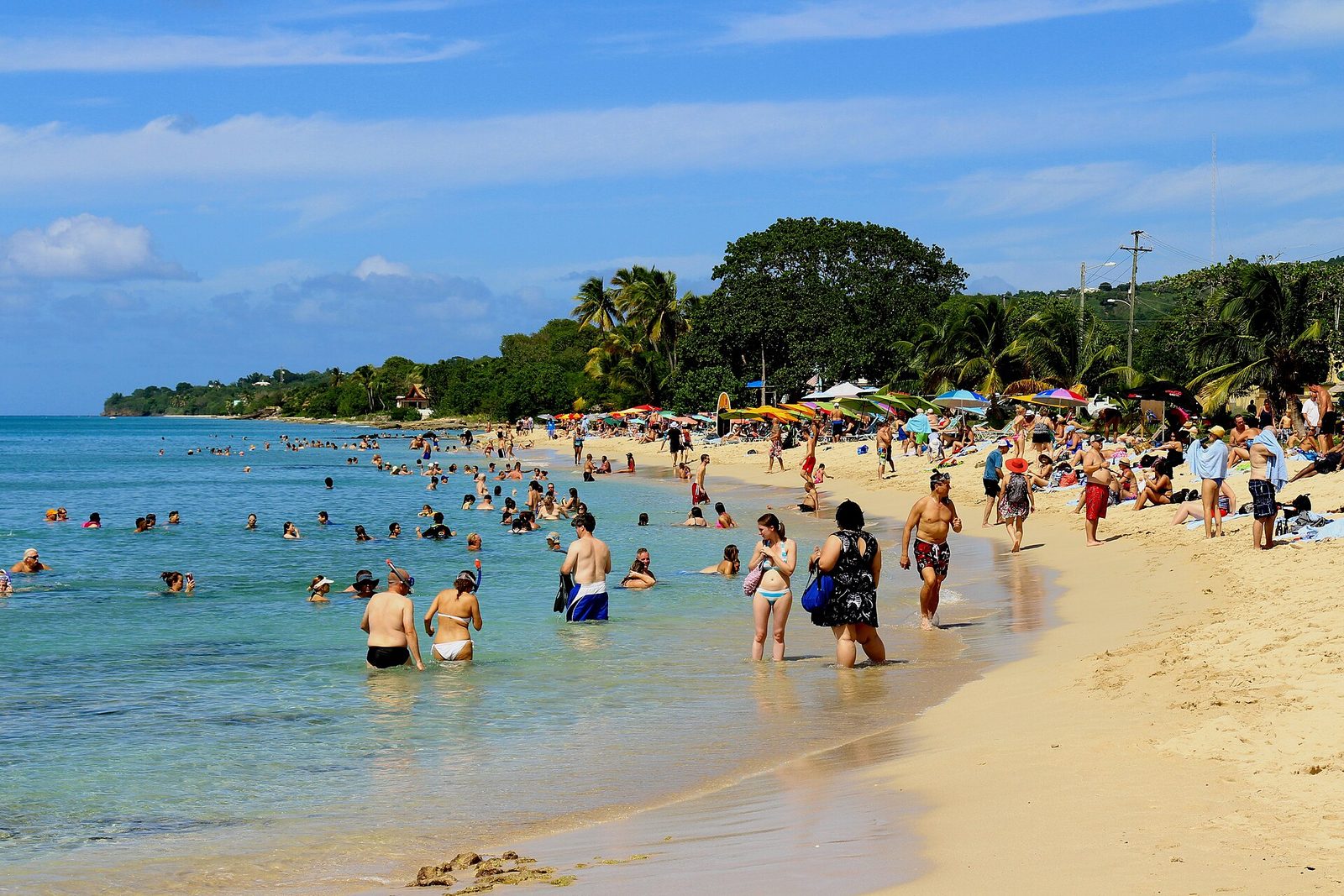
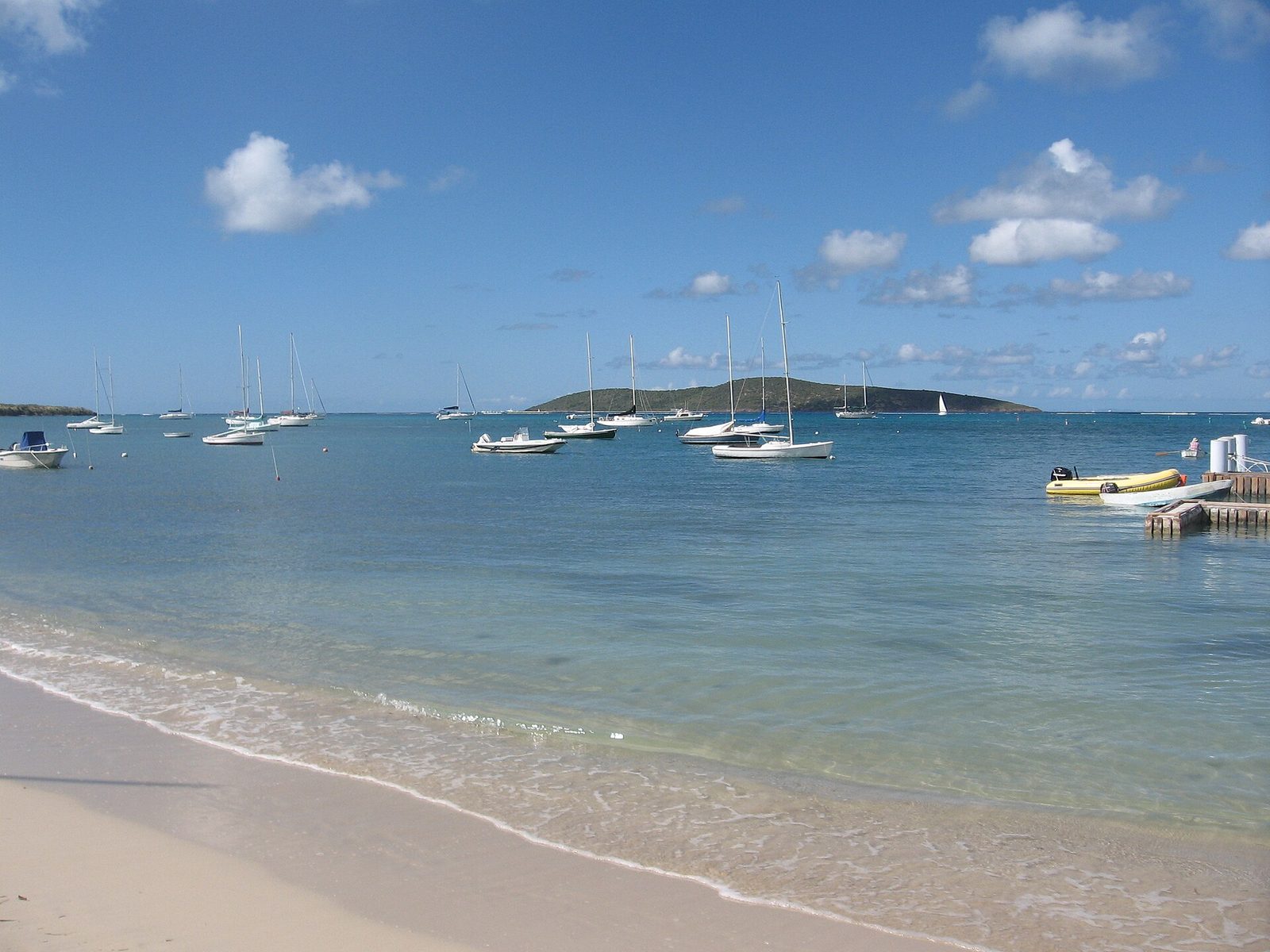
Rainbow Beach is the west end's headline: white sand just north of Frederiksted, calm water good for swimming, kayaking and paddling, and the coast's best-known beach bar sitting right on the sand. If the East End's beaches are about privacy, this is the beach for the day you want the island turned up: music from the bar, jet skis buzzing off the swim area, families under rented umbrellas, and a crowd that grows through the afternoon toward sunset.
The water is the reason it works. Rainbow faces west into the lee, so the sea here is usually flat and clear, with a sandy entry that suits kids and non-swimmers and a modest reef off the beach with enough fish to justify a mask. Nobody flies to St. Croix to snorkel Rainbow Beach, but as a first swim for a nervous snorkeler, or a place to hand a child a mask for the first time, it is exactly right. The serious snorkeling on this coast is a short drive away, at the pier and at Sprat Hall, and we cover both below.
The setup is simple. The bar sits right off Route 63 and has restrooms and a rinse, and West End Water Sports rents lounge chairs and umbrellas by the day so you do not have to bring furniture across the island. It is a beach you can arrive at with nothing and be comfortable in five minutes, which is a rare thing on St. Croix, where most beaches are bring-everything affairs. That convenience is what draws the cruise-ship crowd on ship days, so read the section on that before you pick your day.
The right way to do Rainbow from the villa is the late shift. Leave the East End after lunch, arrive around 2 or 3 pm when the ship crowd is thinning, take a swim, book a table, and stay for the sunset. You get the beach at its best hours and the drive out at its most beautiful, and you are back at the villa around 8.
Rhythms and West End Water Sports
Rhythms at Rainbow Beach is the bar and grill on the sand, and it is the reason "Rainbow Beach" and "beach bar" mean the same thing on St. Croix. As of August 2026 it posts hours of 11 am to 7 pm every day, serves food, tropical cocktails and frozen drinks, keeps a live-performance calendar on its site, and asks parties of eight or more to call. It also posted a renovation closure for September 4 to 11, worth checking against your dates. It has been there for decades, by its own account. Verify hours before you drive; beach bars change them.
The atmosphere is what you would guess and better than you would fear: toes-in-the-sand tables, a covered bar, music in the afternoon, and a crowd that is a mix of visitors and Crucians who have made a Sunday of it. It is not a fine-dining stop and does not pretend to be. Go for lunch or an early dinner (the kitchen closes with the bar at 7), drink something cold, and let the sun do the rest.
West End Water Sports runs the rental hub on the same sand and works with the bar; Rhythms points visitors to it for jet skis, ATV tours, chairs and umbrellas. Its own site, updated for 2026, lists jet ski tours and rentals, ATV and side-by-side tours, stand-up paddleboards, kayaks, snorkel gear, and lounge chair and umbrella rentals, plus a combined "Surf & Turf" package. Prices are not posted online, so book ahead and ask; the reservation system is on the site. It is the west end's rental hub, which is why we list it in the villa watersports directory.
Two practical notes. The jet skis launch from the same beach people swim from, so keep small children close to shore and inside the swim area. And if you want a guided ride rather than an hour of solo throttle, the guided tours are the version guests tend to rave about, and they book out on busy days.
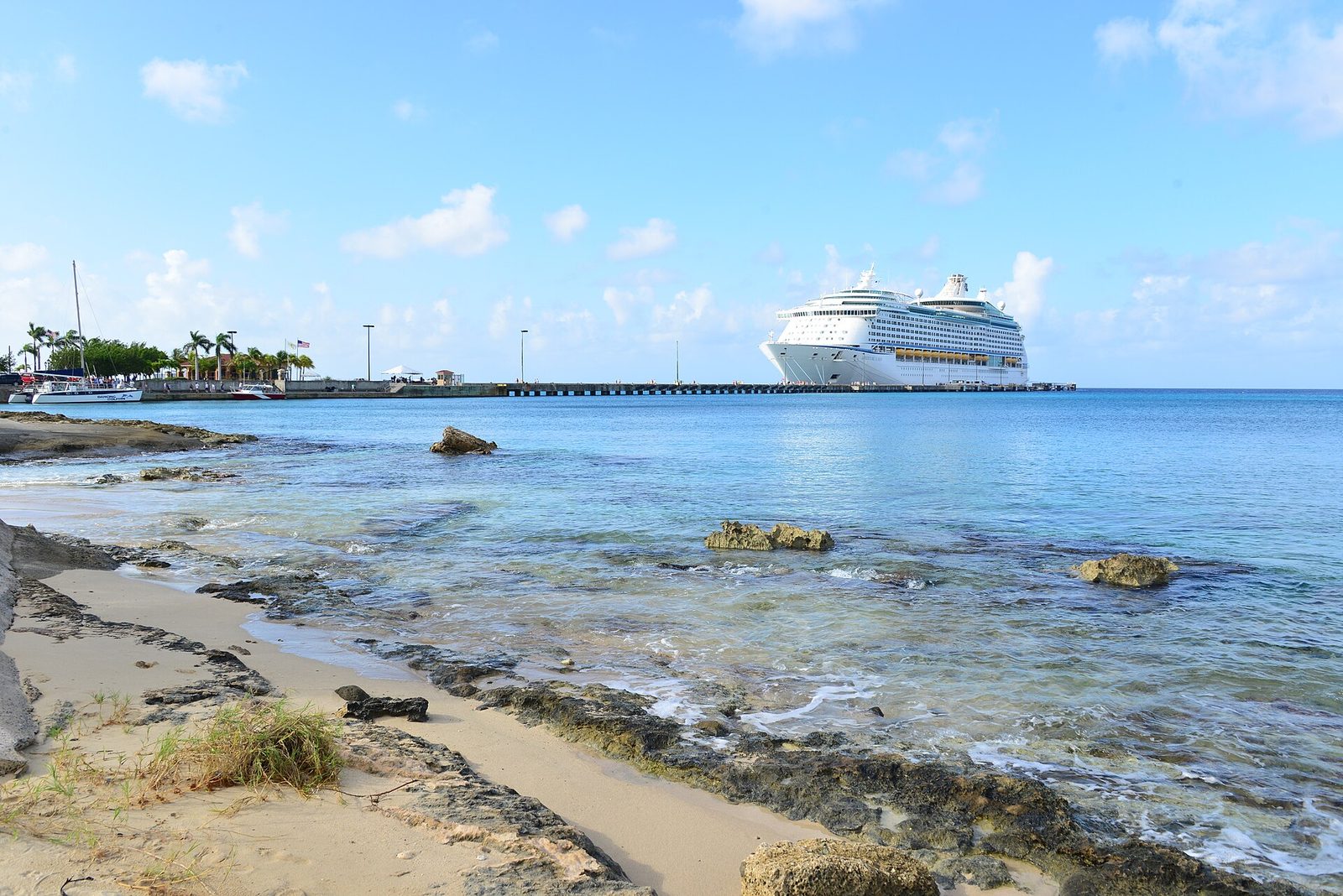
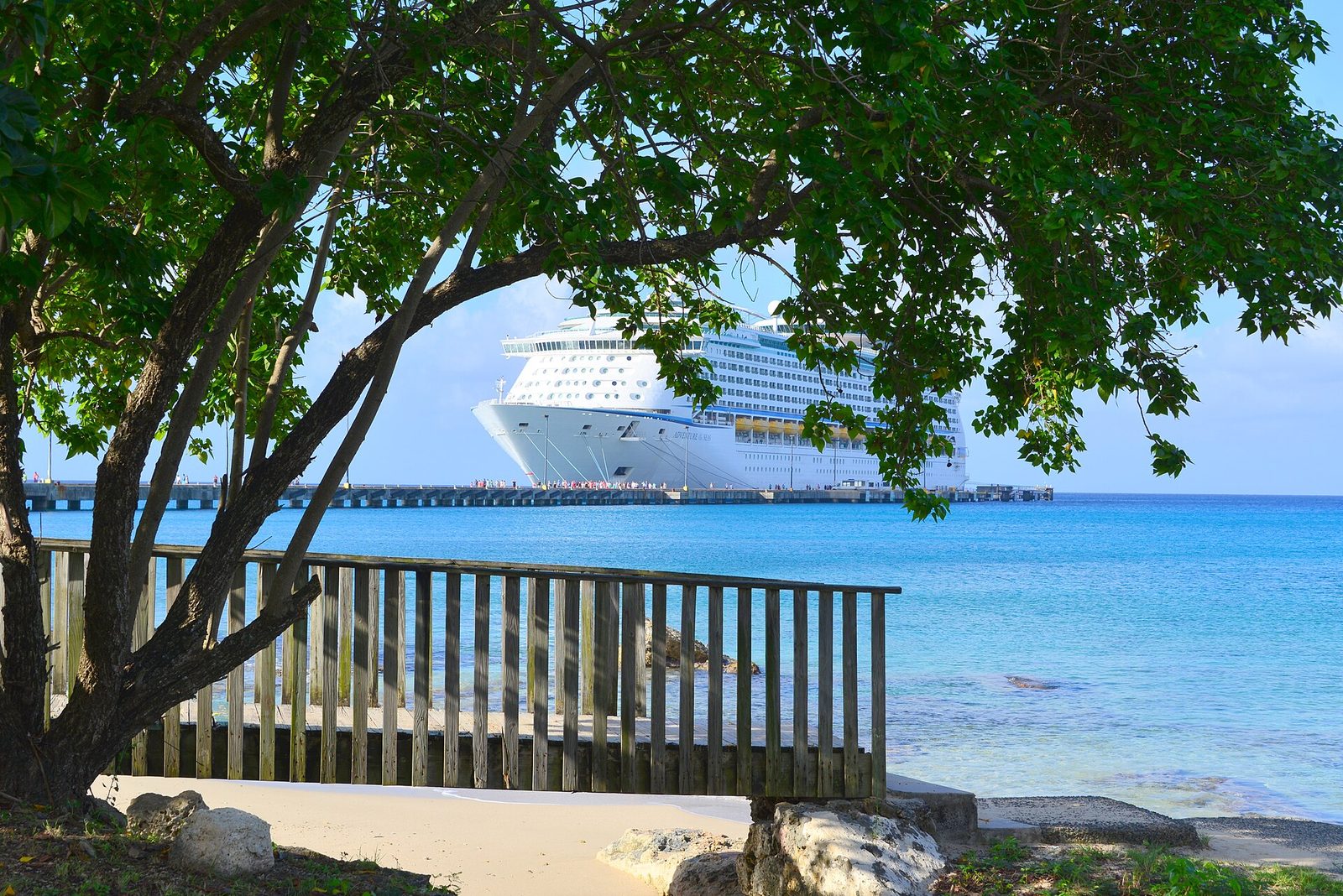
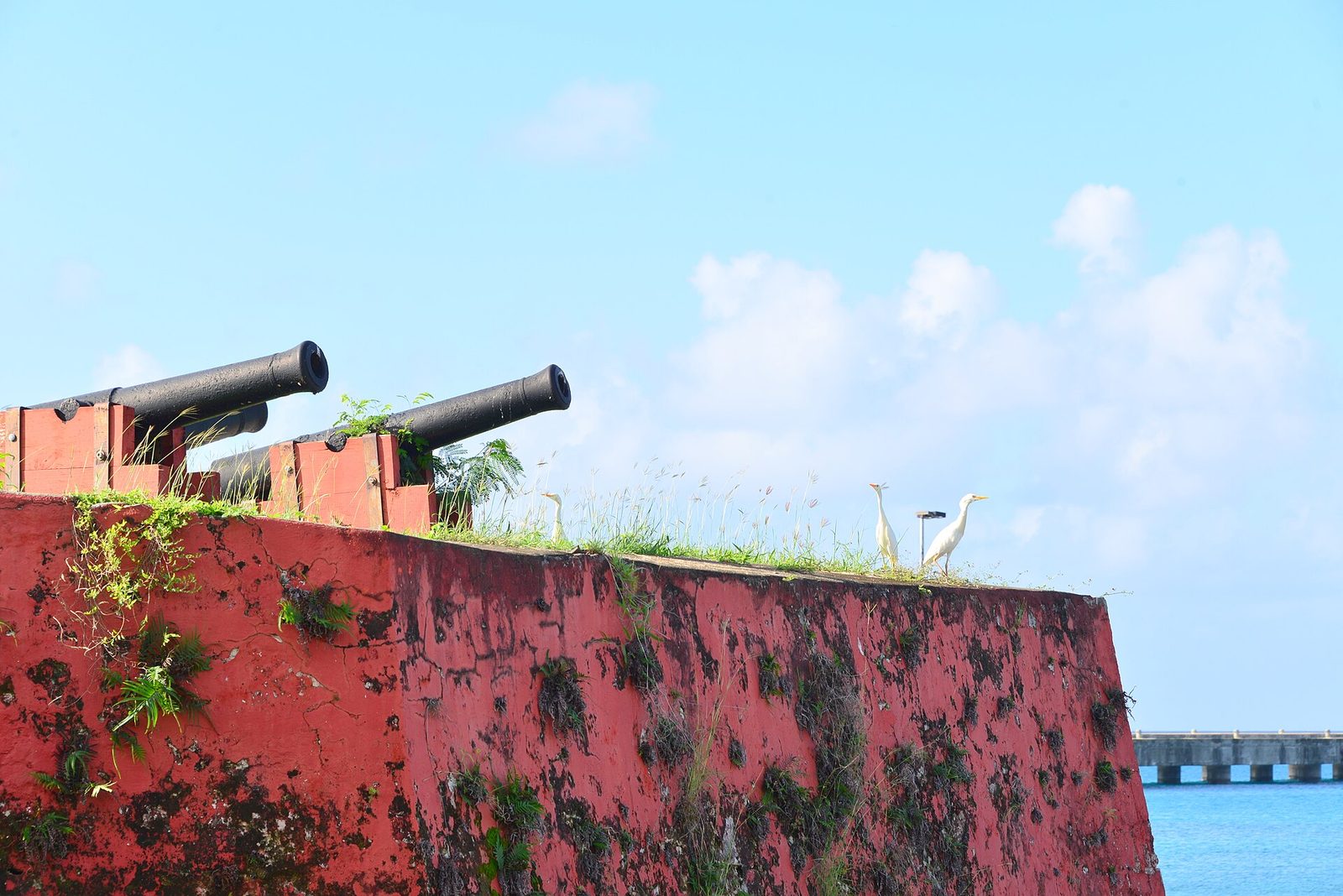
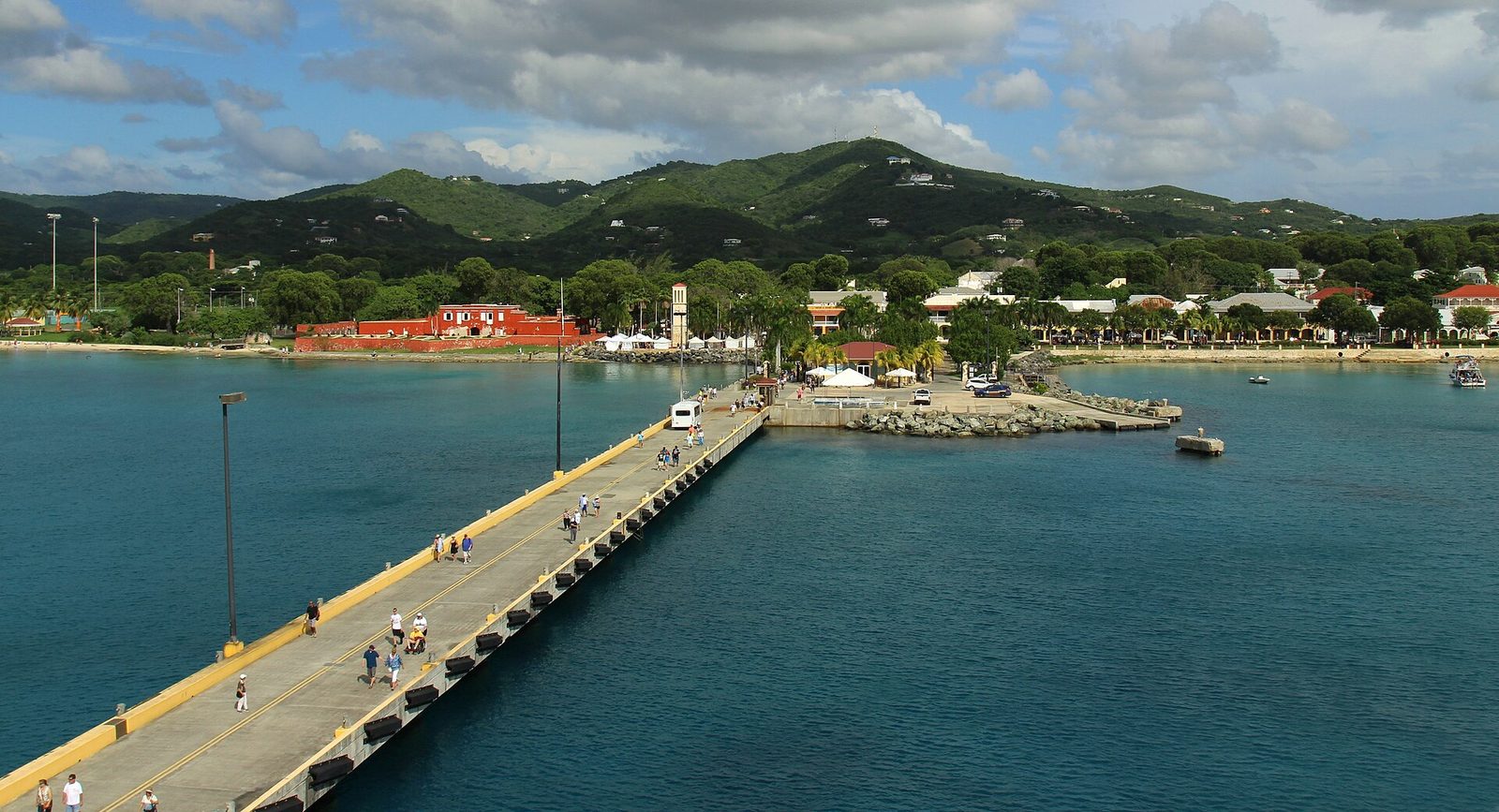
Frederiksted's own beach starts beside the fort. Fort Frederik, the deep-red Danish fort built between 1752 and 1760, sits on the waterfront a few steps from the pier, and the sand runs from its walls along the shore. This is the most easily accessible beach from the cruise ship pier: no drive, no trail, just walk off Strand Street onto the sand. It has public restrooms and picnic tables, and the town's bars and cafés are a block behind you, so it doubles as the beach you use between other errands in Frederiksted.
The water is calm here as it is everywhere on this coast, and the swimming is easy, but the thing people come for is the sea glass. Fort Frederik Beach is the best-known sea-glass beach on St. Croix, with a wide range of sea-glass colors. The usual explanation is the harbor's long working life, generations of bottles tumbled smooth by the sea. Walk the tide line slowly at the water's edge, take a few pieces, and leave the rest for the next family.
This is also the beach with the town's history standing on it. On July 3, 1848, some eight thousand enslaved people marched on this fort and Governor-General Peter von Scholten proclaimed emancipation from its walls; the town calls itself Freedom City for that reason. The fort is a museum now, and it deserves an hour before or after your swim. We tell the whole story in the emancipation guide, and the town itself, Strand Street, the free art museum, where to eat, is in the Frederiksted guide.
For sunset, the fort beach is the underrated choice. The pier points west, the water is flat, and you can stand on the sand or sit at a waterfront bar and watch it go down without a drive afterward except the one home. On cruise days it fills by late morning and empties by mid-afternoon; on other days you may share it with pelicans and a few local families.
Frederiksted's waterfront: Fort Frederik, the pier and the town beach sit within a few minutes' walk of each other.Photo: Андрей Бобровский (CC BY 3.0)
The pier next door
You cannot write about Frederiksted's beach without the pier, but we have written about the pier at length elsewhere, so here is only what a beach day needs to know. The long pier is the island's cruise dock and, underneath, one of the Caribbean's best-known macro dive sites: pilings crusted with sponge and coral, seahorses, frogfish, octopus at night. Snorkelers slip in from the shore beside it on calm days and work the outer pilings for free. The west-end dive shops we have checked run it as a shore dive and a night dive; they are in the scuba directory.
What that means for your beach afternoon is that the fort beach is the only west end beach where the swimming and the island's best snorkeling share a shoreline. Bring the mask even if you came for sea glass. On ship days the water by the pier is at its busiest, so if you want the pilings to yourself, pick a day with no ship, and ask at a dive shop about conditions before you go in.
The full account, what is down there, how to snorkel it, which shops run it, is the Frederiksted Pier guide. Read that if the pier is your reason for coming west, and treat this guide as the beaches around it.
The Cerulean
Plan it from the villa.
Five bedrooms, a private swimmable beach, and all of this within a day trip.
Ten minutes south of the pier the volume drops to nothing. Dorsch Beach lies along Veterans Shore Drive, south of Frederiksted, past the fish market, and it is the quiet counterpart to Rainbow: extra soft white sand with plenty of shade under palm and sea grape trees, calm water over a sandy bottom, and, on weekdays, hardly anyone. It is a favorite with locals on weekends and holidays. Come Tuesday and you may have a hundred yards of shade to yourself.
There is nothing on the beach itself, no bar, no restrooms, no rentals, and you park on the roadside. What there is instead is Sand Castle on the Beach, a small hotel on the sand that sells day passes covering chairs, umbrellas, restrooms, a bar and a freshwater pool, and runs the Beach Side Café, an open-air terrace restaurant open to non-guests. As of 2026 the café posts lunch from about 11 am to 2:45 pm, dinner from about 4:30 to 8 pm, and weekend brunch seatings between 10 am and 2:30 pm, walk-ins welcome. Confirm before you count on it, and expect set menus on the big holidays.
Snorkeling here is limited: the bottom is sand, with not much to see except around the small rocky patches. That is the point of Dorsch. It is a swimming and lying-down beach, the one for the day after Buck Island when everyone's arms are tired. The water is calm enough for small children and for the grandparent who does not swim, and the shade means you can stay through the middle of the day without frying.
The view is Frederiksted at its best: the pier in the middle distance and, at day's end, the sun going down over open sea. The Beach Side Café bar faces it, so a Dorsch afternoon can end with dinner on the terrace and no second drive. Of all the west end sunset seats, this is the one we would give a couple who wanted quiet.
Beach
Best for
Water and snorkeling
Facilities
Who is there
Rainbow Beach
The social day, watersports, sunset with a drink
Calm, modest reef off the sand
Rhythms bar and grill, rentals, chairs, restrooms
The coast's busiest beach
Fort Frederik Beach
Town errands, sea glass, a swim
Calm, pier pilings a short walk away
Public restrooms, picnic tables, bars a block back
Full on cruise days, quiet otherwise
Dorsch Beach
Shade, easy swimming, a quiet sunset dinner
Calm sandy bottom, little to see except rocky patches
Sand Castle day pass, Beach Side Café
Locals on weekends, few people on weekdays
Sprat Hall Beach
A long walk, snorkeling over rocks
Calm, rocky entry, better snorkeling
None, roadside parking
Usually a handful, sometimes horses
Butler Bay
The wreck swim, for strong swimmers
Rocky beach, wreck about 20 minutes out
None
Divers and a few snorkelers
Ham's Bay
The look and the lighthouse hike
Wild shoreline, not a planned swim
None
Almost nobody
Sandy Point
Two miles of empty sand, weekends Sep–Mar
Open sea, no shade
None, refuge rules apply
Quiet by regulation
Sprat Hall Beach, the horses' beach
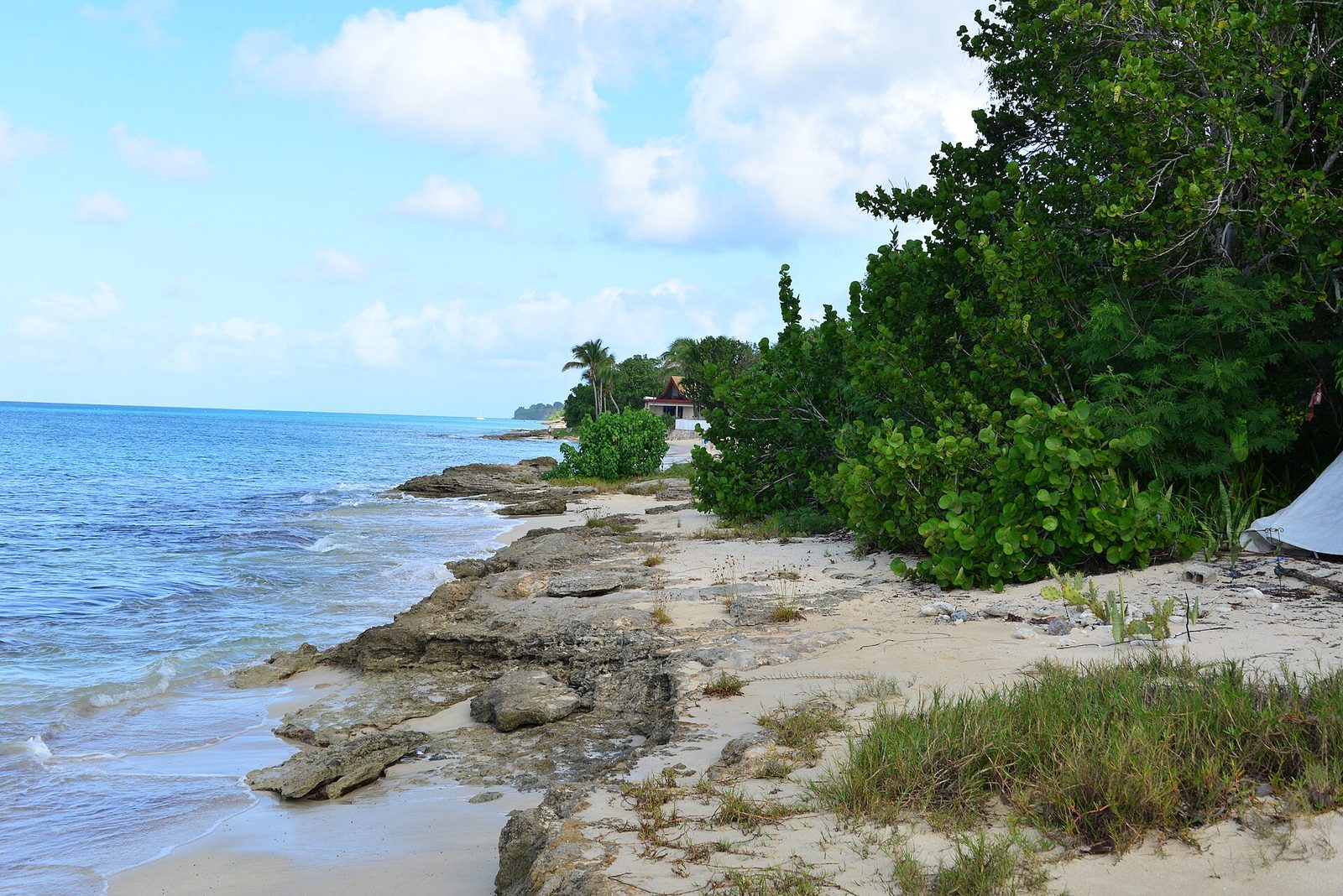
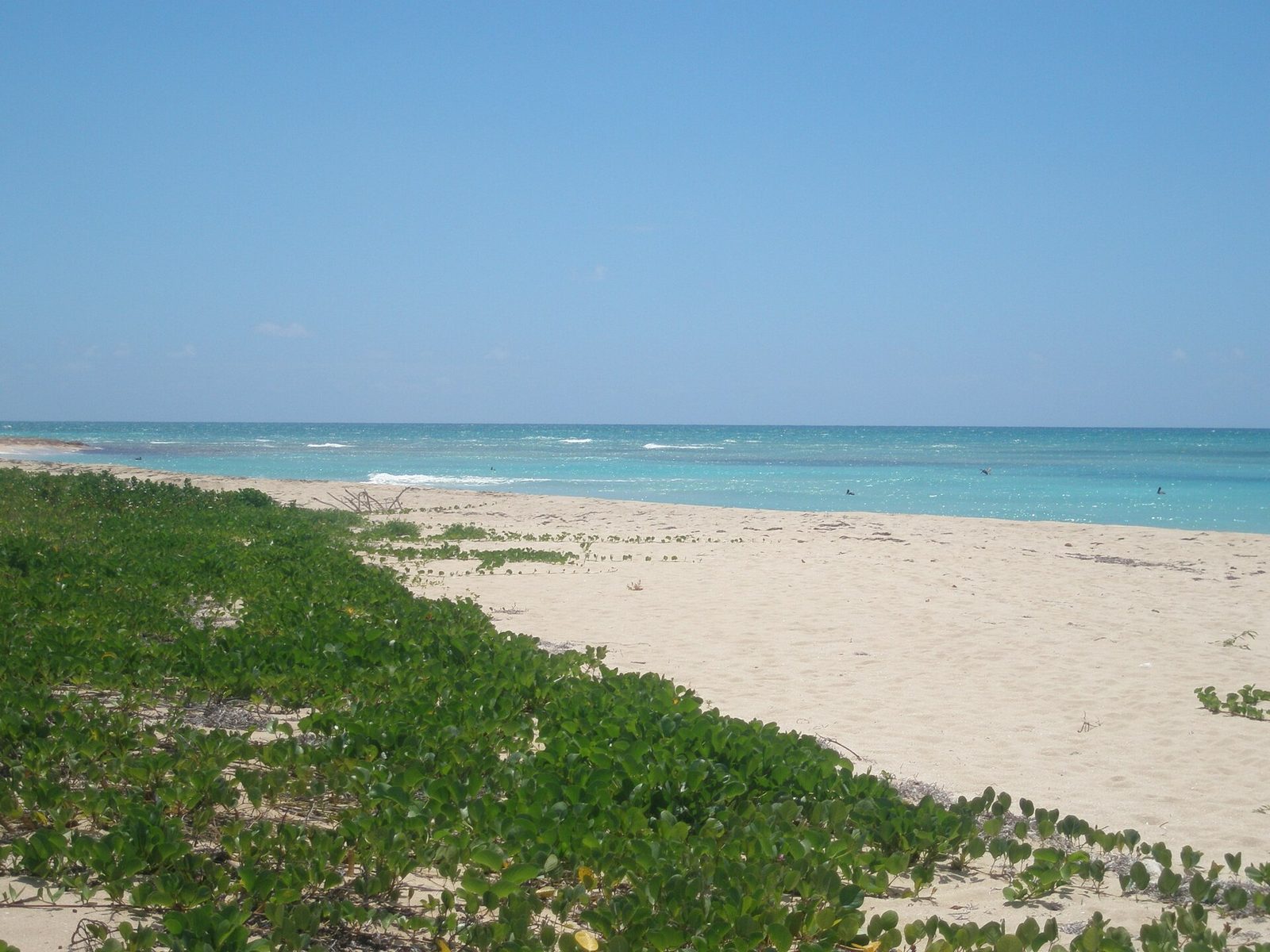
About a mile and a half north of Frederiksted on Route 63, across the road from the old Sprat Hall plantation, is the beach that most visitors drive straight past on the way to Rainbow. Sprat Hall Beach is a long stretch of white sand, north of Rainbow and south of Butler Bay, with no facilities at all: no bar, no restrooms, no rentals. You park on the side of the road, carry in what you need, and do not leave anything worth stealing in the car. That is the whole arrangement, and it keeps the crowds small.
The trade for the emptiness is a rockier shoreline. The beach here is a bit rocky, but that combined with the calm water makes for good snorkeling, and that matches what snorkelers report. The rocks are habitat: more fish than Rainbow's open sand, sea life around the stones, and clear water because nothing stirs it up. Wear water shoes for the entry, pick a calm morning, and treat it as the west end's easy-access snorkel that is not the pier.
The nickname is recent. Sprat Hall has come to be called "Cowboy Beach" because Cruzan Cowgirls, the family-run horseback outfit based on the west end whose horses are all rescues, brings them down to the sand for beach time. If you are there at the right hour you will share the beach with a string of horses, which is a better show than any bar. If you would rather be on one of the horses, the outfit runs rides of roughly an hour and a half to two hours; check its current schedule, since rides book by the day.
Who is it for? Anyone in your group who found Rainbow too loud and Dorsch too sleepy. A long walk on empty sand, a real snorkel over rocks, and, if you time it, horses. Bring shade; there is little, and the afternoon sun on this coast is direct.
The island's north and northwest coast, the shore that runs from Frederiksted's beaches up toward Ham's Bluff and around to Cane Bay.Photo: Андрей Бобровский (CC BY 3.0)
Butler Bay and the wrecks
Butler Bay is about two and three-quarter miles north of Frederiksted on the same road, and it is a different proposition from everything south of it. The beach is small and rocky rather than sandy, there is nothing on it, and its fame is offshore. This is St. Croix's wreck cluster: in shallow water, the trawler Suffolk Maid, the tug Northwind and the oil barge Virgin Islander, along with the Aegir underwater habitat and a set of old Hess Oil trucks; in deeper water, the freighter Rosaomaira, also written Rosa Maria, and the tug Coakley Bay. The Frederiksted dive shops run these as boat and shore dives.
What makes Butler Bay a beach entry in this guide is that a strong swimmer can reach a wreck with a mask and fins. Two buoys mark the way, the second is attached to the sunken ship, and it takes about twenty minutes to snorkel out. Twenty minutes each way over open water is a real swim. It is not for children, weak swimmers, or a choppy day, and you should not do it alone. On a flat morning with a buddy, it is one of the more remarkable things you can do on this island for free.
The ground rules are the ones for every rocky beach: water shoes for the entry, because the shore is stones, not sand; a look at the sea before you commit; and a hard rule about turning back if anyone tires. The wrecks are dive sites shared with the shops, so look, do not touch, and do not hang on the structure. If a dive boat is on the site, give it room.
If the swim is beyond your group but the wrecks are the draw, the shops will take you as a diver or, on some boats, as a snorkeler on the surface. Ask; the west end shops are small and flexible.
Snorkeling out to the Butler Bay wreck
Go on a flat morning with a buddy. This is a swim for strong swimmers only.
Wear water shoes: the beach is rocks, not sand.
Find the first buoy from shore and swim to it. The second buoy is tied to the wreck.
Budget about twenty minutes each way and turn back the moment anyone tires.
Look, do not touch: the wrecks are dive sites shared with the shops.
Ham's Bay and the road's end
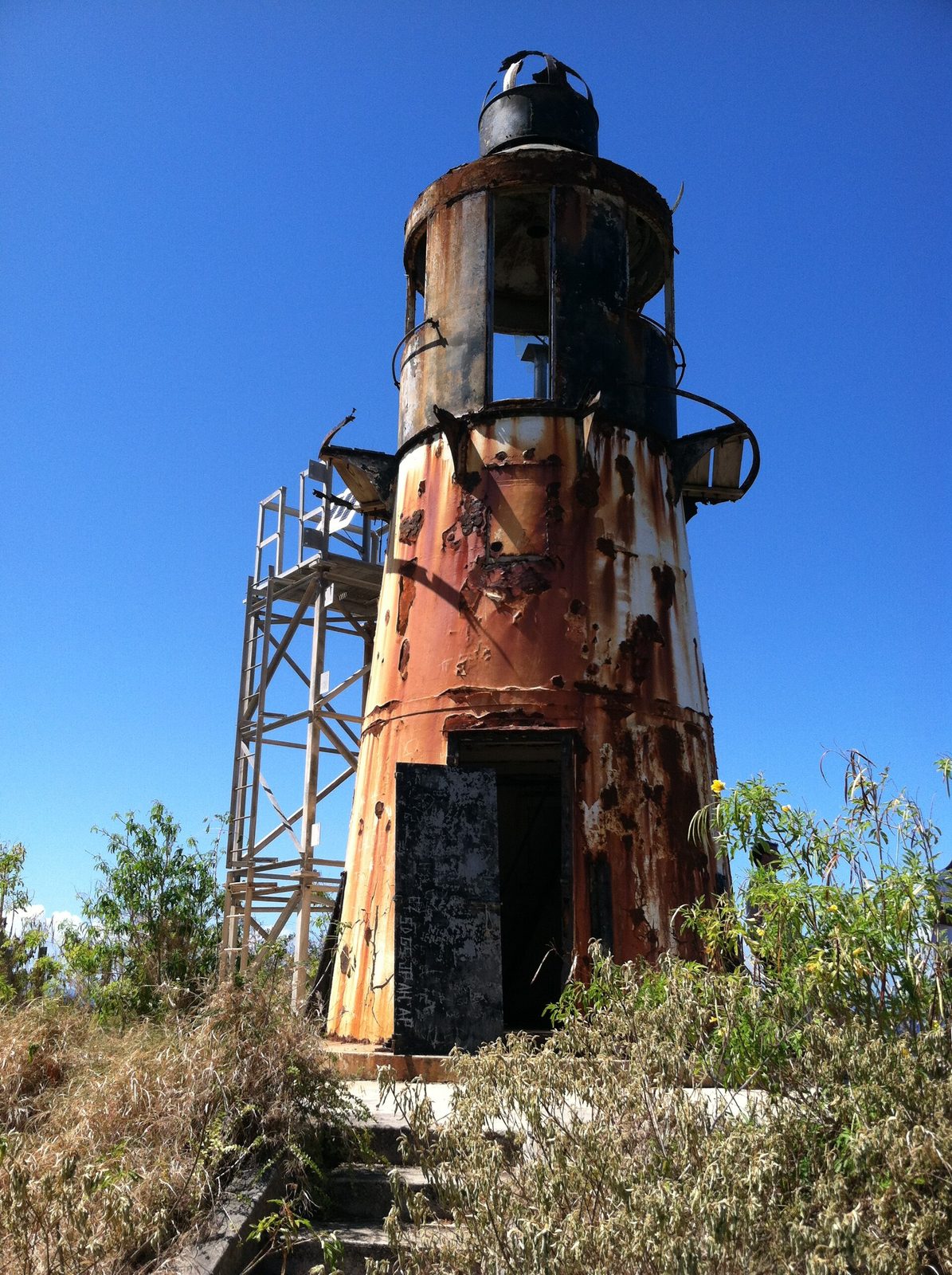
Keep going north on Route 63, which is Hams Bluff Road up here, and the beaches run out. In the island's extreme northwest corner is Ham's Bay, a wild and remote shoreline where few things grow. It is not a beach in the Rainbow sense. It is the place the west coast stops being gentle: rough shore, hills straight behind it, hardly a house, and above it the bluff with the Danish lighthouse on top. We would not drive a family here for a swim. We would drive them here for the look, and for the walk.
The walk is Ham's Bluff. A steady, mostly shaded climb of about thirty minutes takes you to the cast-iron lighthouse the Danes built in 1913 to 1915, on a bluff roughly 360 feet above the water, with the west coast laid out south of you and open sea north. Behind the bluff is Maroon Ridge, where enslaved people who had escaped the plantations lived out of reach of the Danes; that history is the reason to know the name. Both are in the Ham's Bluff and Maroon Ridge guide, with the trailhead and what to wear.
The bay was drawn before it was photographed: a depiction of Hams Bay by Frederik von Scholten dates from November 1833, fifteen years before emancipation was proclaimed at the fort a few miles south. Stand at the water and the scene still holds; almost nothing has been built.
Practicalities: no facilities, no shade at the shore, a road that narrows as it climbs. Come in the morning if you plan the hike, so the heat is behind you by noon and the sunset is still ahead of you back at Rainbow or Dorsch. It is about fifteen minutes back to Frederiksted.
The Danish-built Ham's Bluff lighthouse (1913–15) stands on the island's northwest corner above Ham's Bay.Photo: Eoghanacht (CC0)
Sandy Point, briefly, and its rules
South and west of Frederiksted, at the island's southwest tip, is the beach everyone has seen even if they have not been: Sandy Point, the two-mile stretch of empty white sand where the last shot of a famous prison film was made. It is on this coast, it faces the sunset, and it belongs in any list of west end beaches. It also has rules that catch visitors every week, so here they are before anything else.
Sandy Point is a National Wildlife Refuge run by the U.S. Fish and Wildlife Service, and it is the largest leatherback sea turtle nesting site in the United States. Because of that, it is open to the public only on Saturdays and Sundays, from 10 am to 4 pm, and it is closed entirely from April 1 through August 31 for the nesting season. Admission is free. It is undeveloped, with no facilities and none of the beach-bar life of Rainbow; you go for the sand, the light and the space. Drive out on a Wednesday in July and you will meet a locked gate.
That is all this guide will say about it, because Sandy Point deserves and has its own: the Sandy Point guide covers the film, the turtles, the refuge and how to do the day. If your dates fall between September and March and include a weekend, read it and go. If they do not, spend that day at Dorsch instead; the leatherbacks are the reason the gate is locked, and the story is worth knowing.
Snorkeling the calm side
The north shore has the wall and Buck Island has the trail, but the west end has the easiest water, and that is not a small thing. Because the coast is in the lee, entries are gentle, visibility is usually good, and there is rarely the surge that makes beginners miserable on the windward side. If someone in your group is learning, or is a nervous swimmer, or is eight years old, this is the coast to teach them on.
Ranked for what is under the water, the pier comes first by a distance: the pilings are a vertical reef and the seahorses are real. Sprat Hall is second, for the fish around its rocks. Butler Bay is its own category, a wreck for strong swimmers, and Rainbow's modest reef off the sand is a fine first swim. Dorsch is for swimming, not looking. Cane Bay's wall and the East End's reefs are different days; the East End beaches guide covers the water in front of the villa, where you can snorkel off the sand before breakfast without a car.
Gear is easy. West End Water Sports rents snorkel sets at Rainbow, and if you own a mask and fins they are worth the suitcase space, because you will use them here and off the villa's own beach. Wear a rash guard and a hat instead of relying on lotion, and if you do use sunscreen, make it a mineral one; the territory restricts the reef-harming chemical kinds, and the reef here is the reason you came. Take nothing home from the water except sea glass, which was trash to begin with.
One caution that applies to every beach on this list: calm is a tendency, not a promise. On the days a swell reaches this coast the pier and the rocky beaches turn unpleasant fast, and Butler Bay becomes off-limits. Look at the water before anyone puts a mask on, and if it is breaking on the rocks, make it a Rainbow day.
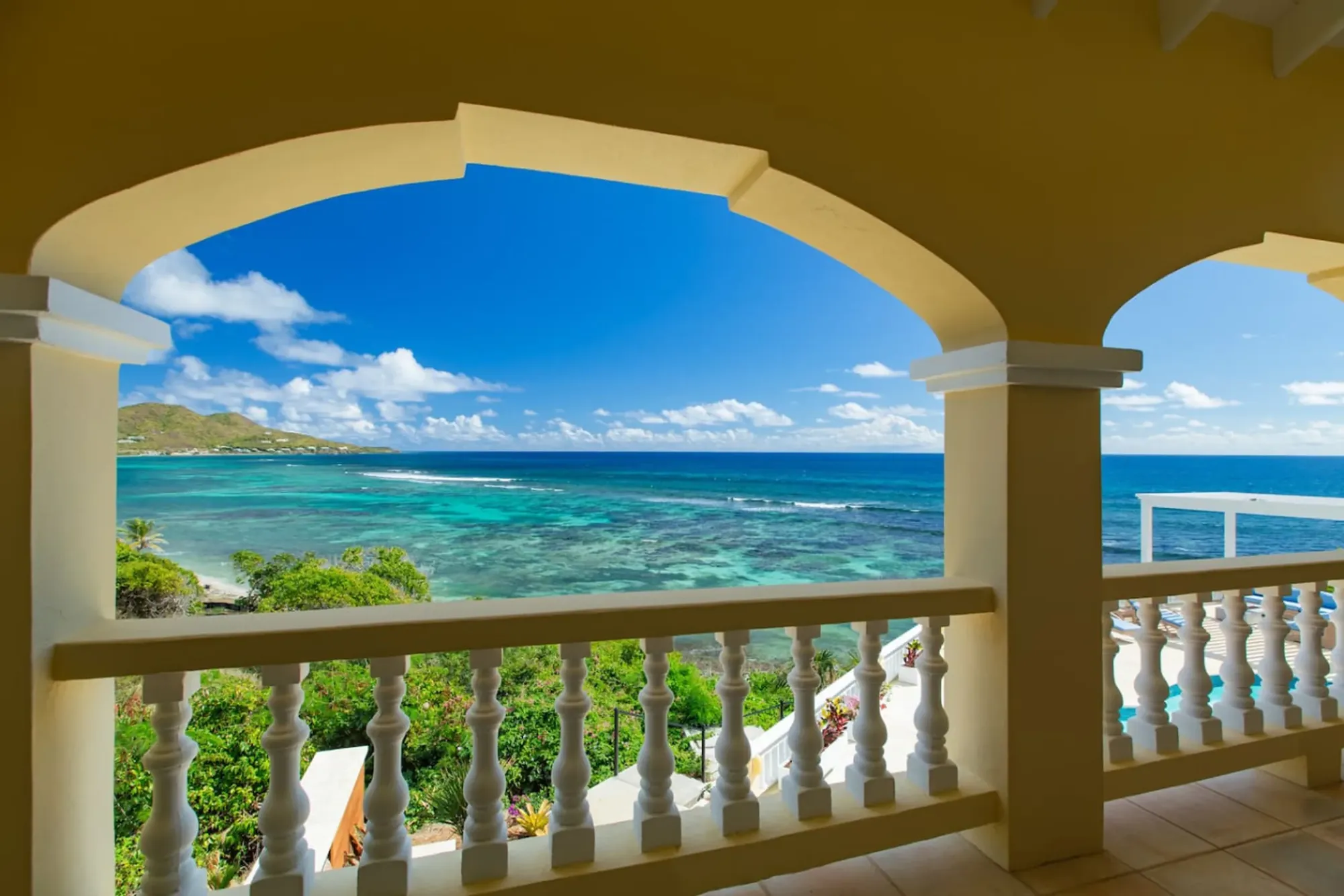
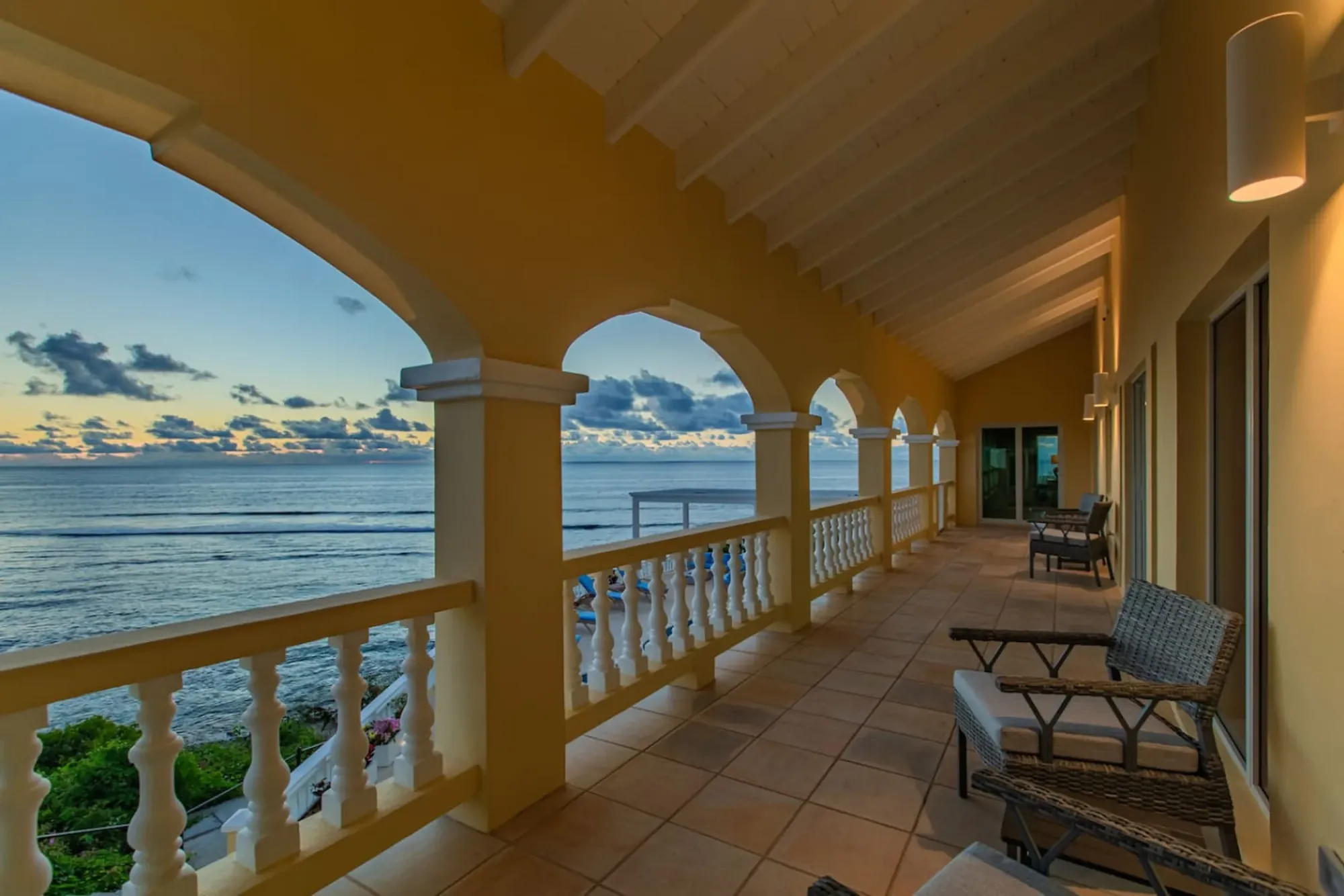
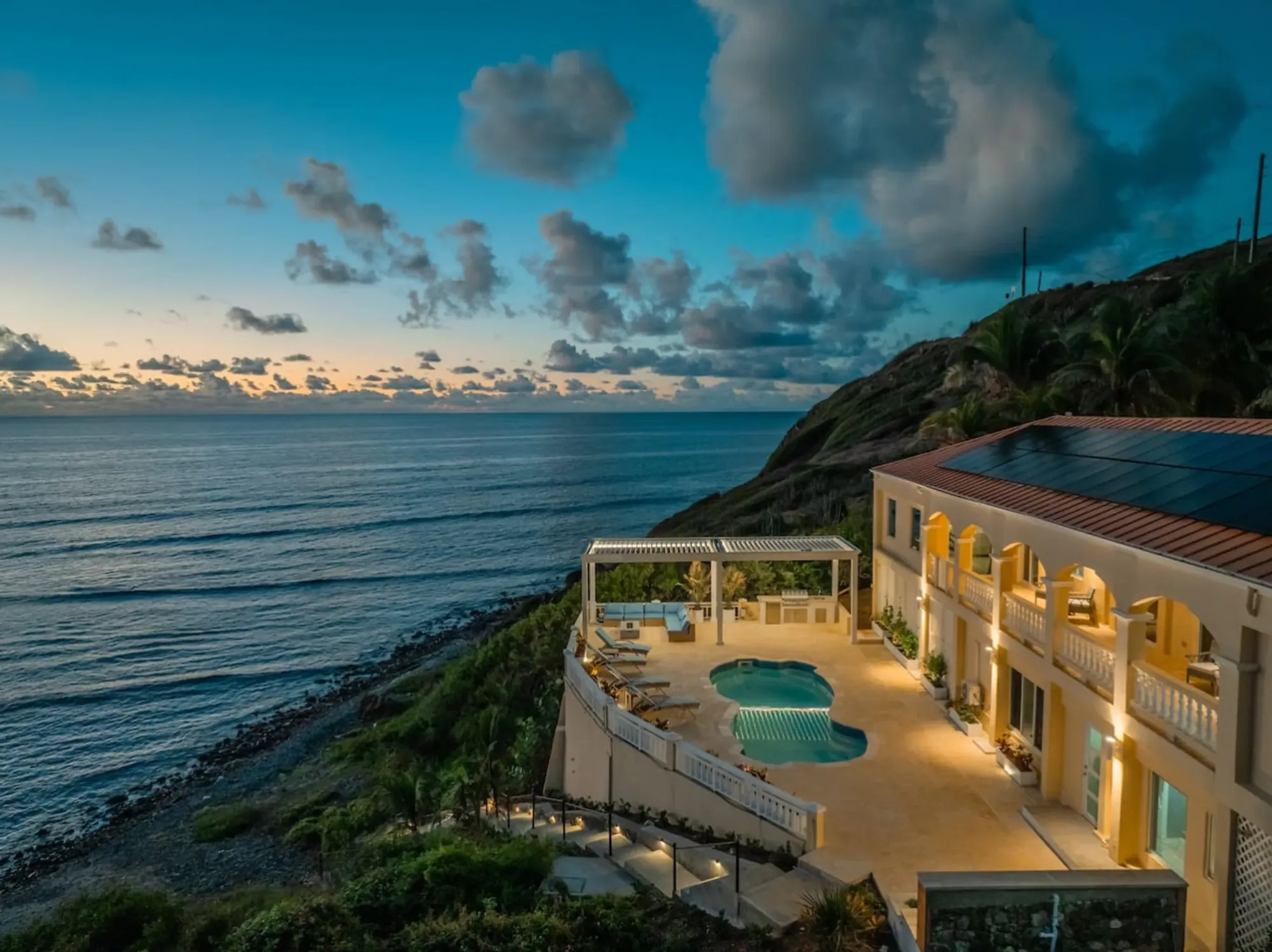
The villa's veranda faces east: sunrise is the house's daily show, which is exactly why the west end's sunset is worth the drive.Photo: The Cerulean
Sunset, done properly
The one thing every west end evening needs is a decision about where you will be standing when the sun touches the water, because there is a choice and it is not obvious. Here are the seats we would actually pick, and who each is for.
The social seat is the sand at Rainbow, with a drink from Rhythms and its music behind you. The bar closes at 7, so in the winter months, when the sun is down well before that, you can watch and still eat; in June and July, when sunset runs later, plan on the bar wrapping up around the same time. The quiet seat is the terrace bar at the Beach Side Café on Dorsch, where dinner runs to about 8 pm and the pier is your foreground. The town seat is Fort Frederik Beach itself, free, with the pier pointing at the drop, and the waterfront bars a block back.
Two of those bars matter. Louie & Nacho's Beach Bar on Strand Street, tacos and burgers over the water beside the pier, has been going since late 2017 and posts long daily hours; and The Fred, the adults-only beachfront hotel at 605 Strand Street, has a pool bar that has become the town's sunset-drink fixture. The Fred sells day passes to non-guests, but note the policy, 21 to book and 18 to accompany, before you walk in with a family. Both are in the bars directory, along with Polly's at the Pier, the coffee and lunch place at 3 Strand Street where you start a day that begins west.
Whatever seat you choose, work backward from the day's sunset time and be in it twenty minutes early. Then, when the color has gone from amber to pink to gray, finish your drink and get on the road while there is still some light. The drive home is the last section of this guide, and it is easier begun at dusk than at full dark.
Cruise-ship days and how to read them
Frederiksted's pier is St. Croix's cruise dock, and on the days a ship is tied up, the west end changes shape for about six hours. Passengers walk off the pier onto Strand Street and Fort Frederik Beach, taxis and tour vans run them to Rainbow Beach and back, food trucks and vendors set up on the waterfront, and Rhythms and West End Water Sports have their busiest hours between late morning and mid-afternoon. Then the ship's all-aboard comes, the strip exhales, and by late afternoon the town and the beaches are back to their usual quiet.
This is neither a disaster nor a secret; it is a schedule, and you can plan around it. Ship calls are published in advance and the villa's concierge can tell you which days of your week have a ship in Frederiksted. If you want the lively version of Rainbow, a ship day at noon delivers it. If you want the empty version of anything, choose a day with no ship, or simply arrive after 3 pm on a ship day, when the beach is emptying and the light is beginning to turn.
The beaches north and south of the loop barely register a ship. Sprat Hall and Butler Bay are too far and too bare for a shore excursion; Dorsch is a local beach on any day; Ham's Bay is out of the question. So a simple rule: on ship days, go north or south of town in the middle of the day and come back to Rainbow or the fort beach for the evening. On no-ship days, do whatever you like, in whatever order.
With kids, and with a group of twelve
The villa sleeps twelve, and a west end day with twelve people is a logistics problem before it is a beach problem, so here is how we would run it. Two cars, not one; the concierge can sort a second vehicle if you arrived with one. Leave after an early lunch at the villa so nobody is hungry on arrival. Make Rainbow the base, because it is the only beach on this coast that can seat and feed twelve without anyone bringing a cooler, and call Rhythms in the morning, since it asks parties of eight or more to phone ahead.
Then split. The snorkelers and strong swimmers take a car ten minutes north to Sprat Hall, or, if the sea is flat and they are up to it, to Butler Bay for the wreck. The small children, the grandparents and whoever wants a rented chair and a frozen drink stay on Rainbow's sand, where the water is calm and shallow at the edge and the restrooms are twenty steps away. Everyone reconvenes at the bar by 5 for the sunset. It is the same pattern that works for the whole island with a big family: one anchor with facilities, and short spokes from it.
With very small children, Dorsch may beat Rainbow as the anchor: more shade, softer sand, no jet skis, and the Sand Castle day pass buys a pool and a restroom. Bring a pop-up shade anyway; the afternoon sun on the west coast is direct and there are more palms than there are shady spots at 2 pm. Water shoes for anyone going to Sprat Hall or Butler Bay. And a headlamp or two in the car for the drive home, because someone will have left a sandal on the beach and you will be looking for it in the dark.
“super private location, incredible sunrises”
Suzanne Temple, villa guest, March 2026
Mistakes to avoid
Most west end disappointments come from five avoidable errors, and all of them are easy to dodge. The first is driving to Sandy Point on the wrong day: it is weekends only, 10 am to 4 pm, and closed altogether from April 1 through August 31. The gate is real. The second is arriving at Rainbow at noon on a cruise-ship day expecting solitude, or arriving at 6:30 pm expecting dinner; the bar posts 11 am to 7 pm, and the crowd peaks in the middle of the day.
The third is underestimating the drive. Forty-five to fifty-five minutes each way from the East End means a west end afternoon costs about two hours in the car, and the roads are slower than the map suggests, with left-side driving, roundabouts and stretches of unlit two-lane. Give the day to it. The fourth is bringing nothing to the bare beaches. Sprat Hall, Butler Bay and Ham's Bay have no shade, no water and no restrooms; the group that arrives with a mask and a towel and no water bottle leaves early.
The fifth is the one that hurts: leaving valuables in a parked car on the roadside at the northern beaches. Every guide to Sprat Hall says the same thing, and so do we. Take the phone and the wallet to the sand, or leave them locked out of sight at the villa. This is a low-crime coast in the daytime, but a rental car with a bag on the seat is an invitation anywhere in the world.
The drive from the East End
From the villa, the west end is a cross-island drive of about 45 to 55 minutes. You leave the East End on Route 82 toward Christiansted, skirt the town, and then have a choice: the faster Route 66, the Melvin Evans Highway, which runs across the south-central island and delivers you toward Frederiksted; or Route 70, Centerline Road, the older, slower spine through the middle of the island with Estate Whim on it and the botanical garden and the Cruzan distillery a short way off it. Take 66 out if you want the beach sooner and 70 back to see the interior at golden hour.
Two rules make the drive easy. You drive on the left in the U.S. Virgin Islands, in ordinary American cars, at island speed; our driving guide walks through the roundabouts and the etiquette, and it is worth ten minutes before your first outing. And fill the tank in Christiansted or along the highway before you head west; once you turn north on Route 63 past Rainbow Beach there are no facilities of any kind.
Once you reach Frederiksted the geography is simple: the waterfront and Strand Street run along the sea, Route 63 heads north to Rainbow, Sprat Hall, Butler Bay and Ham's Bay, and Veterans Shore Drive heads south to Dorsch and, much farther, Sandy Point. Rainbow Beach is roughly a mile north of the pier; Butler Bay under three; Ham's Bay a further stretch beyond that as the road climbs. Nothing on this coast requires four-wheel drive to reach the sand.
The drive home is the part people forget to plan. If you stay for sunset, you leave Frederiksted around 7 and reach the East End close to 8, most of it in the dark, on roads without streetlights and with the occasional unlit vehicle, pedestrian or animal. Go slowly, take the highway rather than Centerline after dark, and let the fire pit be the reward. Or eat dinner in town, let the road empty, and drive back at 9.
Questions people ask
Which St. Croix beach is best for sunset?
Any beach on the west coast, because St. Croix runs east to west and only the Frederiksted side faces the sea at sunset. Rainbow Beach is the social choice, with Rhythms bar and grill on the sand; Dorsch Beach and Fort Frederik Beach are quieter and free. In mid-August the sun sets around 6:45 pm; it sets earlier in winter and a little later in June, so check the day's time before you leave the East End.
Is Rhythms at Rainbow Beach still open in 2026?
Yes. As of August 2026 the bar posts hours of 11 am to 7 pm every day, with a live-music calendar and frozen drinks, and it asks parties of eight or more to call ahead. It also posted a short renovation closure for September 4 to 11, so if your dates fall in early September, check the site or call before you drive across. Hours and closures change; treat these as a starting point.
Can you snorkel at the west end beaches?
Yes, and it is the easiest snorkeling on the island because the west coast is the lee side and the water is usually calm. Rainbow Beach has a modest reef off the sand, Sprat Hall's rocky patches hold more life, the Frederiksted pier pilings are famous for seahorses, and strong swimmers can reach a shipwreck off Butler Bay. Dorsch is mostly sand, so it is a swimming beach rather than a snorkeling one.
How far is Frederiksted from the East End of St. Croix?
Plan on about 45 to 55 minutes of driving from the East End, longer in traffic or if you take the slower Centerline Road through the middle of the island. You drive on the left in the U.S. Virgin Islands. Leave with daylight to spare, and if you stay for sunset, expect to drive home in the dark on roads with few streetlights.
Which west end beach is best for kids?
Dorsch Beach or Rainbow Beach. Both have calm water over sand, and Rainbow adds food, restrooms at the bar, chair and umbrella rentals and a lifeline of frozen drinks for the adults. Dorsch is quieter and shadier, with a day pass at Sand Castle on the Beach for a pool and restrooms. Skip Butler Bay and Ham's Bay with small children; the entries are rocky and there are no facilities.
Is Sandy Point open?
Only on weekends, and only part of the year. The U.S. Fish and Wildlife Service opens the refuge Saturdays and Sundays from 10 am to 4 pm and closes it entirely from April 1 through August 31 for sea turtle nesting. It is free. Do not plan a Sandy Point day for a weekday or a summer date; you will find a locked gate. Our Sandy Point guide covers the rules and the film history.
Do cruise ships affect the west end beaches?
Yes, on the days a ship is tied up at the Frederiksted pier. Fort Frederik Beach, the Strand Street bars and Rainbow Beach are noticeably busier from late morning to mid-afternoon, then empty out as passengers return to the ship. Dorsch, Sprat Hall and Butler Bay barely notice. If you want the quiet version, go on a day with no ship, or arrive after 3 pm and stay for sunset.
Where can I rent snorkel gear or a jet ski on the west end?
West End Water Sports, on the sand at Rainbow Beach next to Rhythms. As of 2026 it lists jet ski tours and rentals, ATV and side-by-side tours, stand-up paddleboards, kayaks, snorkel gear, and lounge chair and umbrella rentals, with online booking. Prices are not posted on the site, so ask when you reserve. If you own a mask and fins, pack them; the west end's easiest snorkeling needs nothing more, and the villa's concierge can book guided snorkel trips if you want a boat.
Doing the west end from The Cerulean
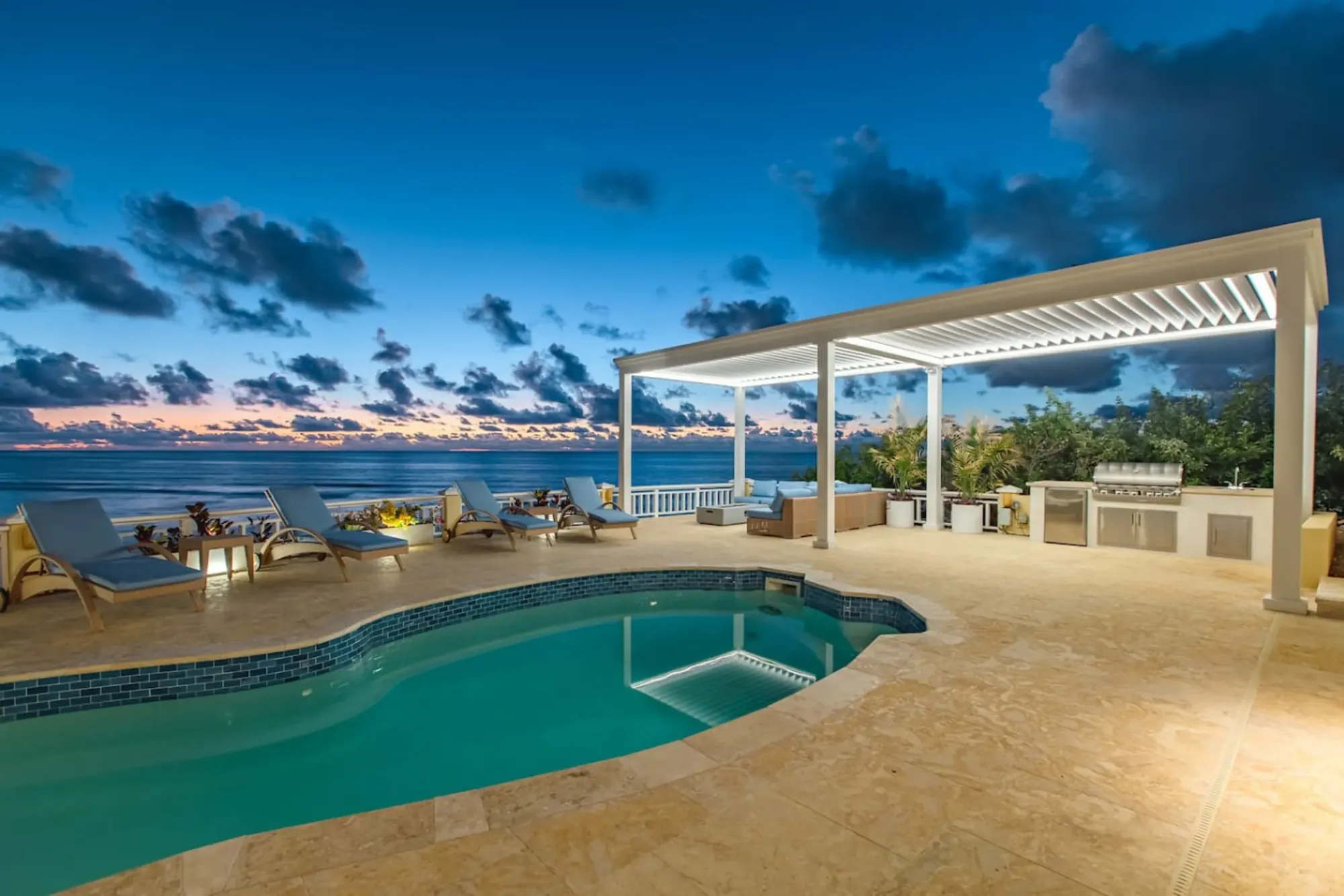
The villa is on the wrong coast for sunsets, and that is the point of it. It faces east, over a private beach with a reef in front, and its private beach is where the mornings happen: sunrise from the veranda, a snorkel off the beach before breakfast, the pool by ten. Give the west end its own day, or two in a long week, and go over there for the things the East End does not have: a beach bar on the sand, a wreck to swim to, sea glass, a town with a fort on its beach, and the sun going down into the sea.
The version we would book for a first week runs like this. Morning at the villa, then leave around 1 pm with two cars, towels and masks, and a table at Rhythms called in for 5. Drive Route 66 west, drop the non-swimmers at Rainbow, send the snorkelers on to Sprat Hall or, on a flat day, Butler Bay. Reconvene at Rainbow by 4:30 and watch the sun go from the sand. Be in the cars by 7 with some light left, home by 8, with a chef booked through the concierge so dinner is on the table when the gate opens. If your dates include a September-to-March weekend, swap in a Sandy Point morning.
The concierge can also book the pieces that need booking: West End Water Sports for jet ski tours, a dive shop for the pier or the Butler Bay wrecks, a car if you need a second one, Cruzan Cowgirls if someone in the group would rather ride the beach than walk it. On cruise-ship days it can tell you which they are. And if you want the sunset without the drive, a Frederiksted sunset sail puts you on the water for it and hands you back to your car at the pier.
What you come home to is the other half of the arrangement: an east-facing house that will hand you the sun again at about six the next morning, from the veranda, over your own beach. West for sunset, east for sunrise. It is a good way to spend an island.
The Cerulean
Twelve of you, one private beach.
The Cerulean sleeps twelve on St. Croix's quiet East End — check your dates.