

1977, 1979, 1984: how the refuge came to be
People were on this point long before turtles were counted on it. Inside the refuge is the Aklis site, a four-acre prehistoric shell midden on the coast dated to around the year 400, with evidence of occupation for more than two centuries — pottery, stone-tool fragments and human remains have come out of it. It was listed on the National Register of Historic Places in 1976 and it is slowly eroding into the sea, which is one reason the refuge later bought the land it sits on. The mailing address of the refuge, Estate Whim, is a reminder of the next chapter: this corner of the island was sugar country, and the restored plantation at Estate Whim, a few minutes up the road, tells that story better than a beach can.
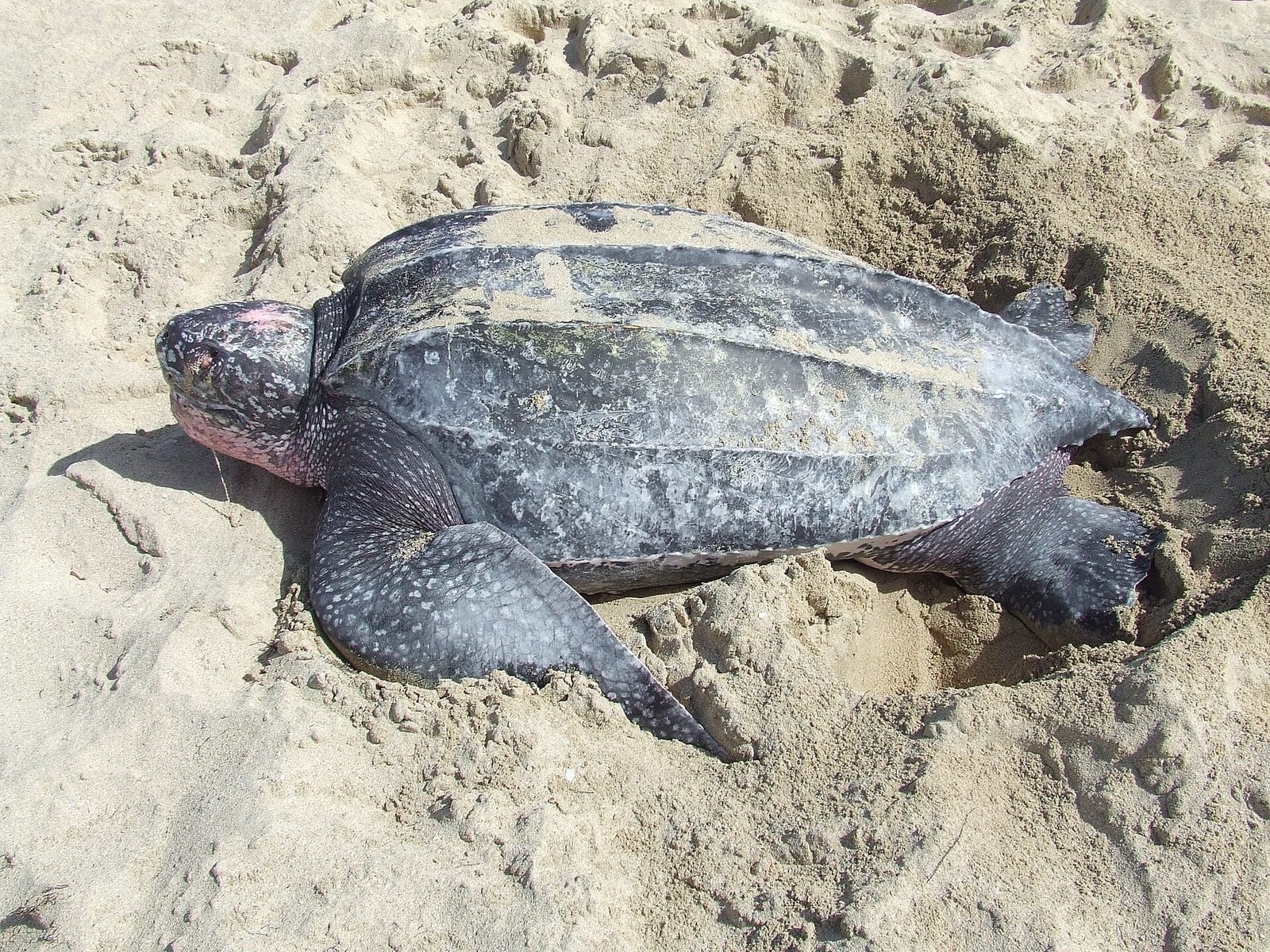
The turtle story starts in 1977, when intensive research and conservation work began on the beach — the beginning of the tagging program that continues today. Two years later, on March 23, 1979, the National Marine Fisheries Service published a final rule designating the waters adjacent to Sandy Point Beach as critical habitat for the leatherback, protecting the sea the turtles use for courting, breeding and getting to and from the sand; every federal agency has since been required to make sure nothing it funds or permits degrades those waters. The beach itself was still private land.
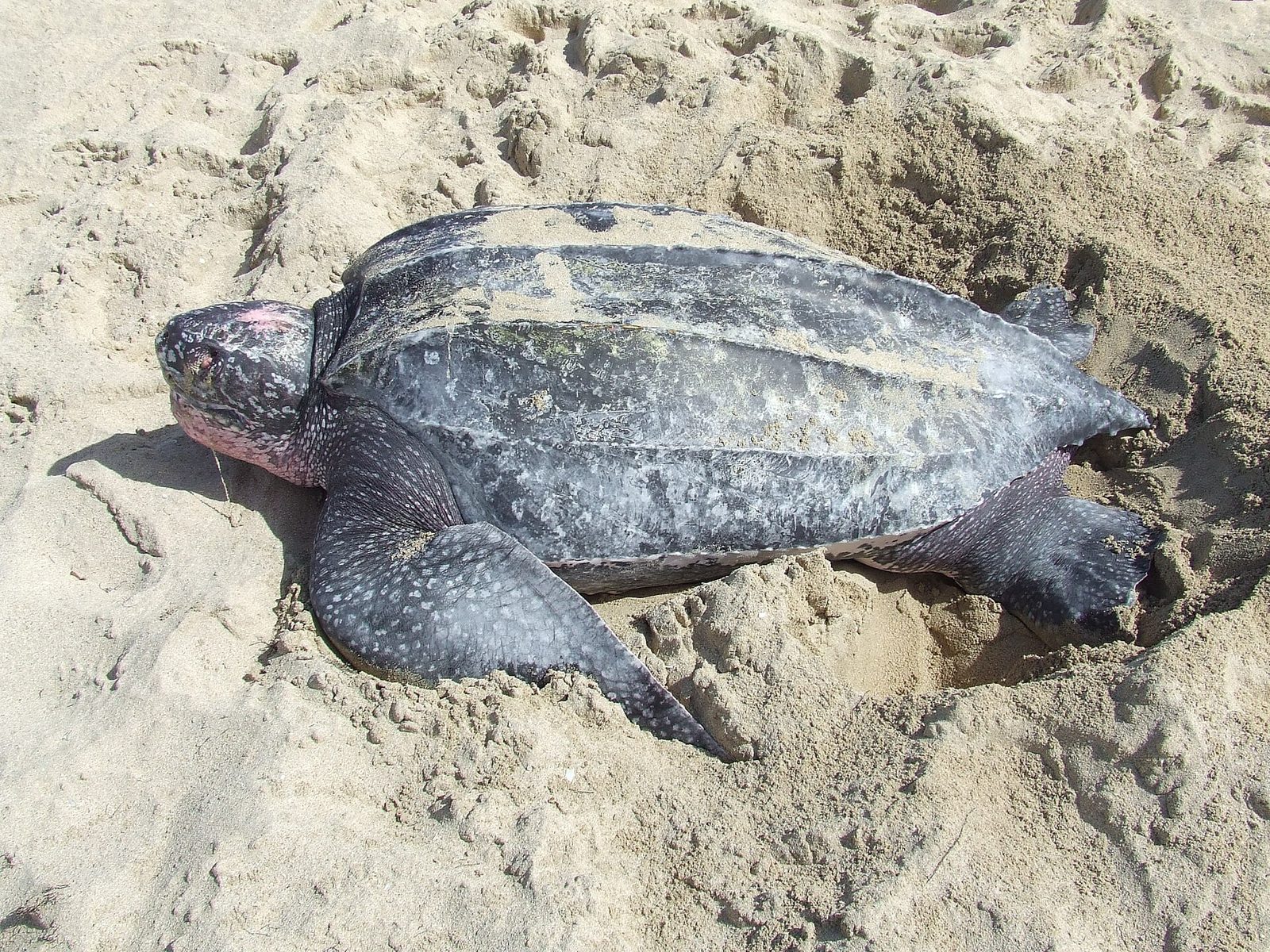
That changed in 1984. The Fish and Wildlife Service established Sandy Point National Wildlife Refuge that year with 340 acres purchased from the West Indies Investment Company, for the stated purpose of protecting nesting habitat of endangered leatherback sea turtles. A further 43 acres were acquired later to conserve the Aklis archaeological site and the endangered Vahl's boxwood, bringing the total to the 383 acres the refuge quotes today. It is managed within the Fish and Wildlife Service's Caribbean Islands complex, with the office at Plot #359 Estate Whim.
Then, in the summer of 1993, a film crew spent a short time on federal turtle habitat pretending it was Mexico, and the beach acquired a second identity. The two have coexisted ever since, on the refuge's terms: the film made the beach famous, and the refuge's rules are why it still looks like the film.
- c. AD 400People live at the Aklis site on the point, leaving a shell midden that lasts 200-plus years
- 1976The Aklis site is listed on the National Register of Historic Places
- 1977Intensive sea turtle research and tagging begin on the beach
- March 23, 1979NOAA Fisheries designates the waters off Sandy Point as leatherback critical habitat
- 1984Sandy Point National Wildlife Refuge is established on 340 acres bought from the West Indies Investment Company
- Summer 1993The final scene of The Shawshank Redemption is filmed on the beach
- September 23, 1994The film is released and earns about $16 million in its first run
- 2001Nesting reaches nearly ten times the 1982 level, more than 200 females a year
- 202515 leatherback nests and 2,672 green turtle nests are counted at Sandy Point
The West End Salt Pond and the birds
Behind the beach, where most visitors never look, is the other half of the refuge: the West End Salt Pond, ringed by mangroves, with dry scrub and low woodland between it and the sand. It is why the bird list here runs past 100 species — the figure the refuge and every local source quote — and why the road in is worth driving slowly with the windows down. Salt ponds concentrate food and shelter in a dry landscape, and on an island where most of the coast has been built on, an unbuilt pond behind an unbuilt beach is rare.
The species that turn up in local accounts include brown pelicans, black-necked stilts and yellow warblers, and least terns, which nest right on the open sand and are another reason people are kept off the beach for most of the year. We have not birded it ourselves and will not pad the list; the point is that the refuge is managed for the pond and the scrub as much as for the sand, and a pair of binoculars in the car turns the drive to the parking area into a second outing. Serious birders can compare notes with our wildlife guide, which covers the island's other ponds and the East End's own birds.
One small detail tells you how seriously the darkness is taken here. A visitor in February 2024 noted that the streetlamps along the access road carry red bulbs — the wavelength that does not disorient nesting turtles and hatchlings — and that the rule about staking nothing into the ground was posted for the whole refuge, not just the beach. The refuge is a place where the lighting has been thought about. Extend the courtesy: no flash photography toward the vegetation line, no wandering into the scrub, and no driving off the road.
The pond also does something for the beach visitor without a bird book: it explains the mosquitoes. Mangrove ponds breed them, and on a still afternoon they can find you the moment you leave the wind at the water's edge. Bring repellent, stay by the sea, and you will be fine.
What you can and cannot do
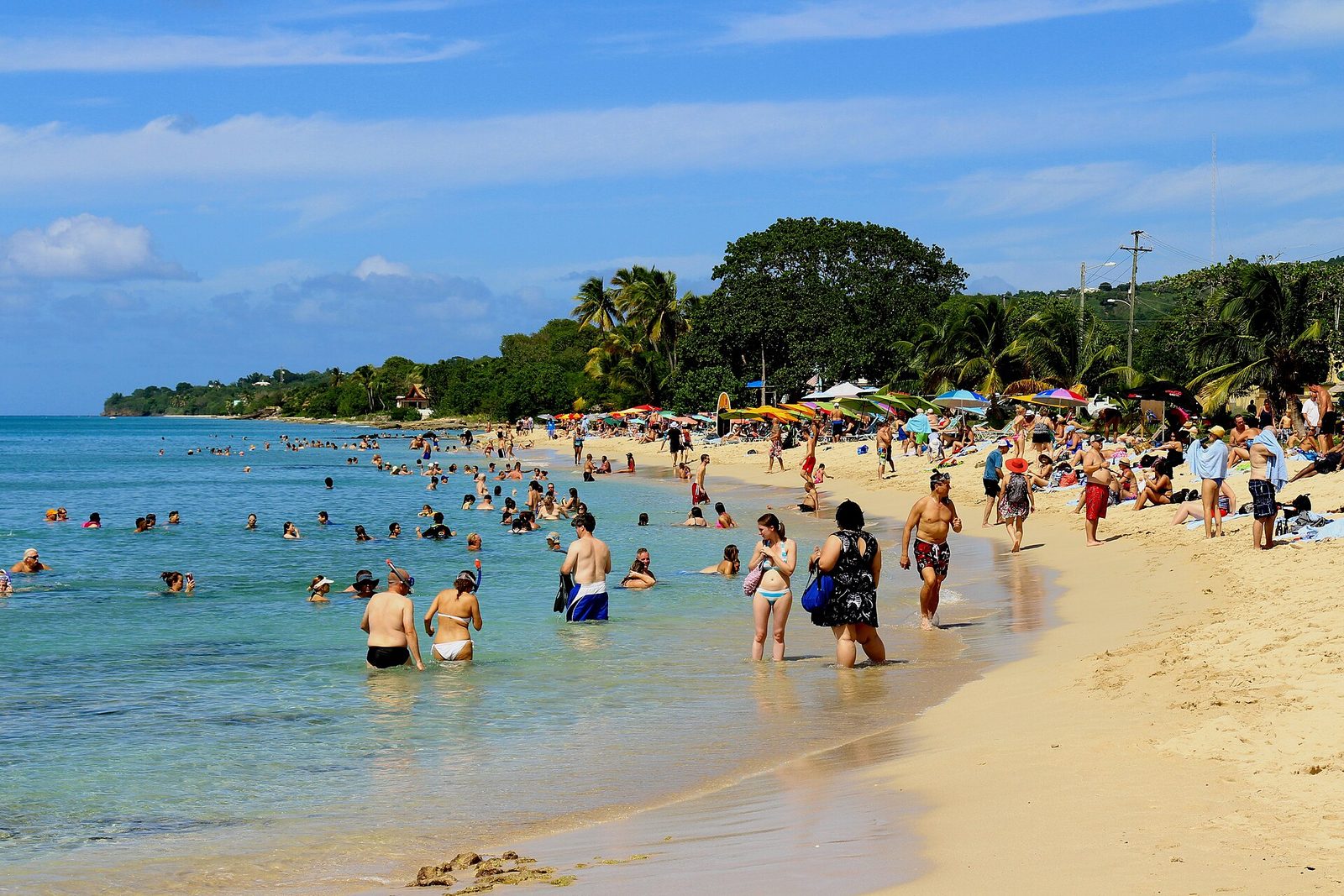
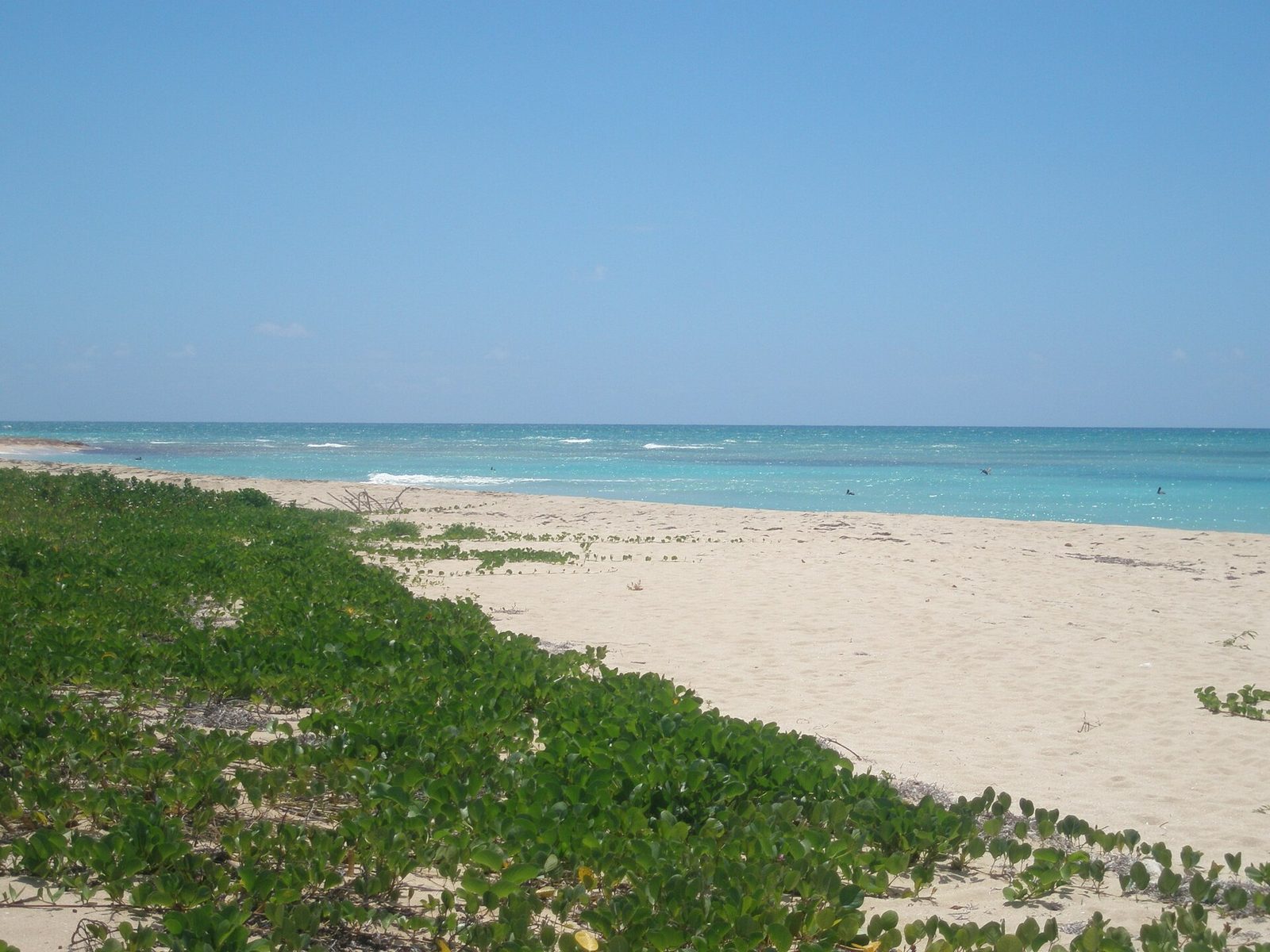
You can walk. That is the headline activity and it is a good one: two miles of firm wet sand at the water's edge, so flat that a mile passes without your noticing, with the sea on one side and nothing on the other. Most visitors go a fair way along the west-facing beach and turn back; the energetic round the point onto the south-facing shore, which is longer, hotter and emptier still. Two miles out is two miles back, at noon, with no shade, so decide your turnaround before you leave the car and carry water for the whole loop.
You can swim, on the right day. The absence of a reef means the swell arrives straight from the open sea and the bottom drops off close in, so on a calm winter day it is a wide, clear, deep-blue swimming beach and on a rough day it is not a swimming beach at all. There is no lifeguard, and do not count on your phone. Swim in front of your gear, stay where you can stand, and keep children within arm's reach. Snorkeling is not why anyone comes: the water is sand and blue, not coral, and for reef you want the East End or the Frederiksted pier.
You can sit, under a canopy you have anchored with buckets of sand rather than pegs; you can picnic, if you carry every scrap out; you can photograph anything you like from the beach. That is roughly the list. You cannot stake anything into the sand. You cannot drive onto the sand. You cannot collect shells, sand, driftwood, or plants — this is a federal refuge, the general refuge regulations apply, and the rules here are enforced. Treat dogs, drones, fires, glass, alcohol and camping as prohibited unless the entrance board says otherwise, and treat every mound or dip at the back of the beach as a nest.
The rules are strict, but nobody who reads this will find them hard. Walk on the wet sand, leave everything as you found it, be out by 4. In return you get the emptiest big beach in the U.S. Virgin Islands and, if you have chosen your day well, no more than a few dozen other people on the whole two miles.
Getting there from the East End
Sandy Point is as far from The Cerulean as you can drive on St. Croix and still be on St. Croix — the villa sits on the sunrise side at the East End, the refuge is on the sunset side at the far southwest corner. Allow about an hour. The route is easy: pick up the Melvin H. Evans Highway (Route 66), the island's four-lane, and follow it west past the airport turnoff to its western end. The refuge entrance is where the highway runs out; the refuge office and a first parking area sit near it, and from there a road continues through the refuge — a fairly long drive — to the main parking area a short walk from the beach. Locals also come in from Frederiksted, which is about ten minutes away.
You need a car; there is no bus and no tour that drops you here on a schedule that matches a six-hour weekend window. Book one for the whole stay — our car rental directory covers the island's agencies — and read driving on St. Croix before your first morning, mainly for the left-hand-side rule and the roundabouts. Route 66 is the fastest road on the island; keep to the posted limit anyway, because you have all day and the gate will not open early.
The gate opens at 10. There is no advantage to arriving at 9, and some awkwardness in idling on the shoulder, so aim to arrive at 10:15 or so, having stopped in Frederiksted for coffee and the last real restroom. Leave the villa around 8:45 or 9. On the way home, if it is a Sunday and you have the energy, the road through Frederiksted and back along Centerline Road (Route 70) is a change of scenery from the highway, and it passes Estate Whim.
Navigate to the refuge entrance at the end of Route 66, not to a pin on the beach, and treat 4 pm as a hard close — it is.
The Sandy Point Saturday, from the villa
- Check the refuge's page or Facebook the night before for a closure notice, and confirm it is a weekend outside nesting season.
- Pack water (a gallon for two people), a canopy and buckets, mineral sunscreen, hats, repellent, snacks, a trash bag.
- Leave The Cerulean around 8:45 and take Route 66 west to its end, about an hour.
- Coffee and restroom in Frederiksted, then in the gate at 10:15 and through to the beach parking.
- Walk, swim if calm, sit in your shade, and be back at the car by 3:45 with everything you brought.
- Lunch or a late lunch in Frederiksted, then Rainbow Beach or the pier for the sunset, then home the same road.
Timing it: months, weekends and holidays
The calendar decides everything at Sandy Point, so here it is month by month. From roughly the first weekend of September through the end of March, the refuge opens on Saturdays and Sundays, 10 to 4, holidays included, and the office closes on federal holidays. From April through August it is closed to the public every day, whatever the weather and however far you have come. The season's edges have been described differently by different sources — April 1 to August 31 in most local listings, "roughly mid-April to August" on the refuge's own page — so if you are on island in the first half of April or the last week of August, phone (340) 773-4554 or check the refuge's Facebook page before you drive.
Within the open months, the choice is about weather, and the West End is generous. December through March is dry-season high season across St. Croix, with the Christmas winds blowing from the north and east; the southwest corner is on the island's lee, and the west-facing beaches, Sandy Point among them, are usually the calmest water on the island in those months. That makes January and February the sweet spot: open weekends, calm water, cooler mornings, and a lower sun by 3 pm. Late September and October are hotter and wetter and squarely inside hurricane season, though the beach is open — read our hurricane season guide for what that actually means for a trip.
The trade-off is people. High-season weekends bring more islanders and more visitors to the one beach that is only open on weekends, so a Saturday in February is as busy as Sandy Point ever gets — which is still not busy by any mainland measure. If solitude is the point, take a Sunday in November or early December, arrive at the gate's opening, and walk a mile past the last umbrella. Our best time to visit guide has the island-wide picture; the table below is the Sandy Point version.
| Month | Refuge status | Notes for a visit |
|---|---|---|
| January | Open Sat–Sun 10–4 | Calm lee-side water, high season, best all-round month |
| February | Open Sat–Sun 10–4 | Same as January, and the busiest Sandy Point gets |
| March | Open Sat–Sun 10–4 | Last month before closure, leatherback season already under way offshore |
| April | Closed for nesting | Turtle Watch evenings for residents run this month |
| May | Closed for nesting | First hatchlings from about mid-month |
| June | Closed for nesting | Nesting and hatching under way, hurricane season begins June 1 |
| July | Closed for nesting | Closed, hot and humid |
| August | Closed for nesting | Closed, peak of hurricane season begins |
| September | Reopens first weekend | Hot, wet and quiet — check storm forecasts |
| October | Open Sat–Sun 10–4 | Hurricane-season peak, few visitors |
| November | Open Sat–Sun 10–4 | Drying out, quiet weekends |
| December | Open Sat–Sun 10–4 | Christmas winds start, open on holiday weekends |
Turtle Watch, and how a visitor can (and cannot) see nesting
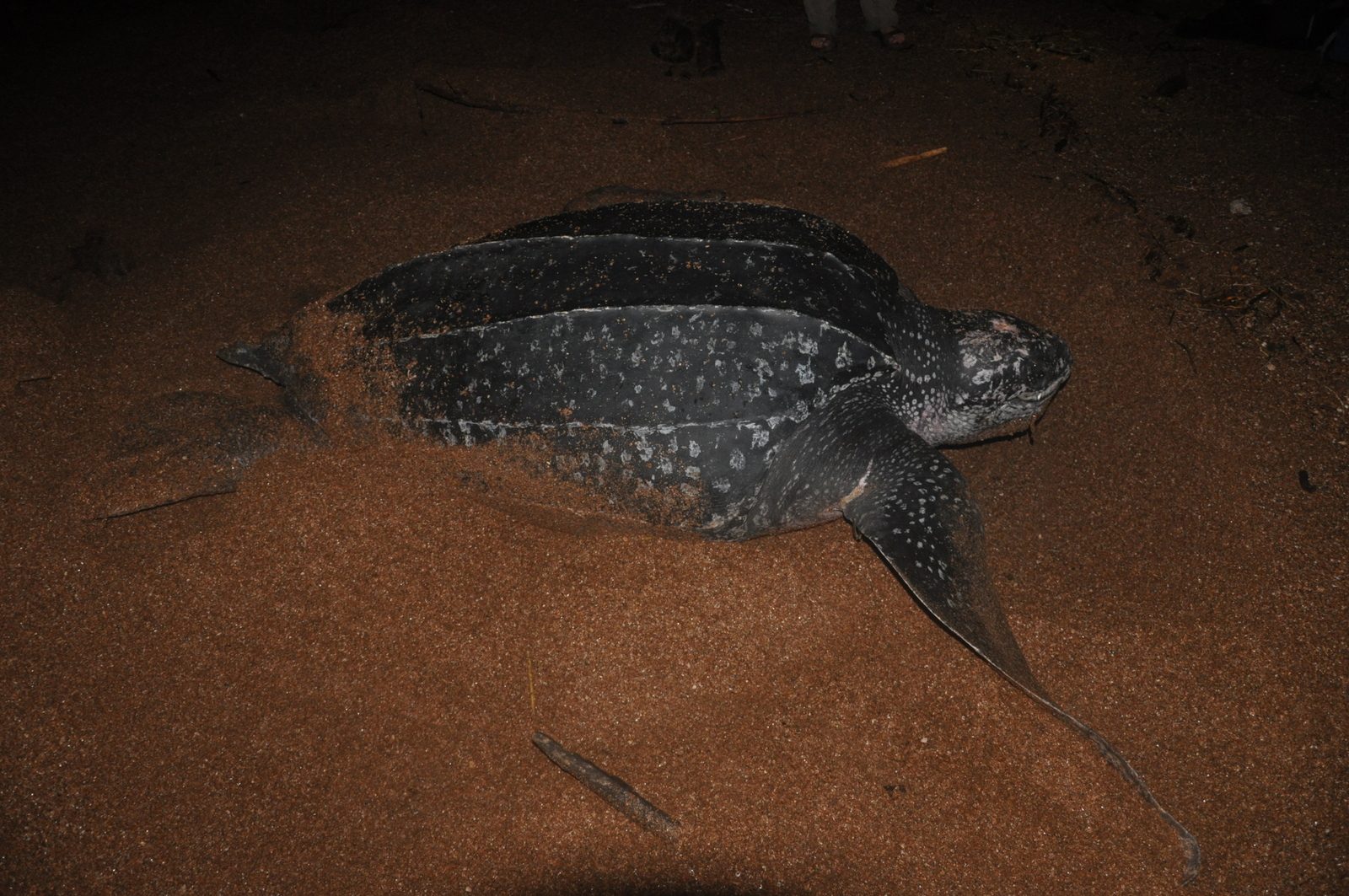
The Fish and Wildlife Service's visit-us page describes guided sea turtle nesting and hatching observation at Sandy Point, and it is real — but read the fine print before you build a trip around it. The program is Turtle Watch, run by The St. Croix Sea Turtle Project, which is sponsored by The Ocean Foundation in cooperation with the Fish and Wildlife Service and has been running at the refuge since at least 1997. As the project describes it, evenings are held on Friday or Saturday nights in April: a presentation in the education pavilion, then a move to the beach to see the refuge at night, a talk on leatherback biology, and the research team at work. Groups of about 12 to 15 are combined into evenings of around 30 people, requests go by email to sandypoint.turtlewatch@gmail.com with three business days for a reply, and it is described as a free program for St. Croix residents, with donations welcome. The 2026 season was listed as completely full.
So the short answer for a visitor is: probably not, and certainly not on short notice. The program is built for islanders and school groups, it runs in the one month most vacationers are not here, and it fills. If it matters to you, write to the project well ahead of an April stay, ask politely whether visitors can be accommodated, and have a plan B. Do not, under any circumstances, go to the beach at night in season on your own; the gate is locked, it is federal land closed for the protection of an endangered species, and a flashlight on that sand can cost a nest.
There are better ways to be part of it. The project takes volunteers for its patrols — recruitment for the 2027 season is open on its site — and runs adopt-a-turtle and hatchling-adoption programs that fund beach patrols, a better souvenir than a shell you are not allowed to take. It also posts live tracks of satellite-tagged turtles; four hawksbills tagged in October 2025 were being followed as of this writing. And if you find a sick, injured or stranded turtle anywhere on St. Croix, the Sea Turtle Assistance and Rescue network (STAR), a partnership that includes the Fish and Wildlife Service, the National Park Service and the territory's planning department, runs a 24-hour hotline, listed as 340-690-0474 as of 2026.
The turtles you will realistically see on a St. Croix holiday are greens and hawksbills, in the water, on the reefs — on the East End's reefs and preserve bays a few minutes from the villa, and on the Buck Island trips. That, and not a night on Sandy Point, is the plan to make: read the sea turtle guide for where and how.
“To protect nesting habitat of endangered leatherback sea turtles.”
U.S. Fish and Wildlife Service, on why Sandy Point National Wildlife Refuge exists
With kids and with a group
Children like Sandy Point for the reason adults do — there is more empty sand than they have ever seen — and they struggle with it for the reason adults do too: no shade, no bathroom, no snack bar, and a sun that is straight overhead for the whole open window. The fix is to treat it as a two-hour outing inside a longer West End day, not the day itself. Restroom stop in Frederiksted on the way in. Canopy up within ten minutes of arriving, buckets filled, water within reach. A walk along the water's edge as far as the smallest legs go, then back to the shade, a swim if the sea is flat, and out before anyone melts. Explain the rules before you park: no digging deep, no poking sticks in the back of the beach, no shells in pockets. Kids take the "this beach belongs to the turtles" idea to heart faster than adults do.
For swimming with small children, the East End's calm, reef-sheltered coves are the better bet on most days, and the villa's own beach best of all; our St. Croix with kids guide ranks the island's beaches on exactly that. Sandy Point's water is open and drops off — fine for confident swimmers on a calm day, wrong for toddlers on a rough one. Keep them at the edge and hold hands.
A group of twelve — the villa sleeps that many — needs a little logistics. Two cars, so the beach faction and the Frederiksted-lunch faction can split at noon without argument. Two canopies and six buckets. A cooler per car, and a trash bag per canopy, because everything comes back out. Agree a turnaround time for the walkers before anyone sets off, and a meeting point on the beach, since the sand is wide enough to lose each other on. If the group spans generations, the grandparents may be happiest with an hour on the sand and an early table in Frederiksted; nobody has to do the whole two miles for the day to count.
And keep the film in proportion: take the photo, then let the beach be a beach.
Mistakes to avoid
Most Sandy Point disappointments are self-inflicted, and all of them are avoidable. In rough order of frequency: driving out on a weekday, or in nesting season, and meeting the gate. Arriving at 3:30. Navigating to a pin on the beach instead of the refuge entrance at the end of Route 66 and ending up on a private road with no way through. Bringing one bottle of water for two people and a two-mile walk. Bringing an umbrella with a pole and being told to take it down. Bringing the dog. Expecting a boat, a bar, a plaque, or a palm tree from the film, none of which exist.
Then the ones that hurt the refuge. Taking a shell, a handful of sand, a piece of driftwood — the general refuge regulations forbid it, and here every scrap of the beach is either turtle habitat or bird habitat. Walking up into the vegetation line for shade or a photo, which is where nests and ground-nesting birds are. Digging a deep hole for fun and leaving it; a hatchling that falls in cannot climb out. Flying a drone over the beach or the salt pond, which puts a loud, hovering object over nesting birds and gets you a conversation with a federal officer. Leaving trash, which the tide takes and the turtles eat.
And the quiet ones. Under-estimating the sun: there is no shade, the sand is white, and 10 to 4 is the harshest six hours of the day, so a rash guard and a hat beat any amount of sunscreen. Over-estimating the swimming: it is a walking beach with a swim in it, not the other way around. Skipping the check the night before, when a phone call to the office is the difference between a beach and a locked gate.
Pairing it with the rest of the West End
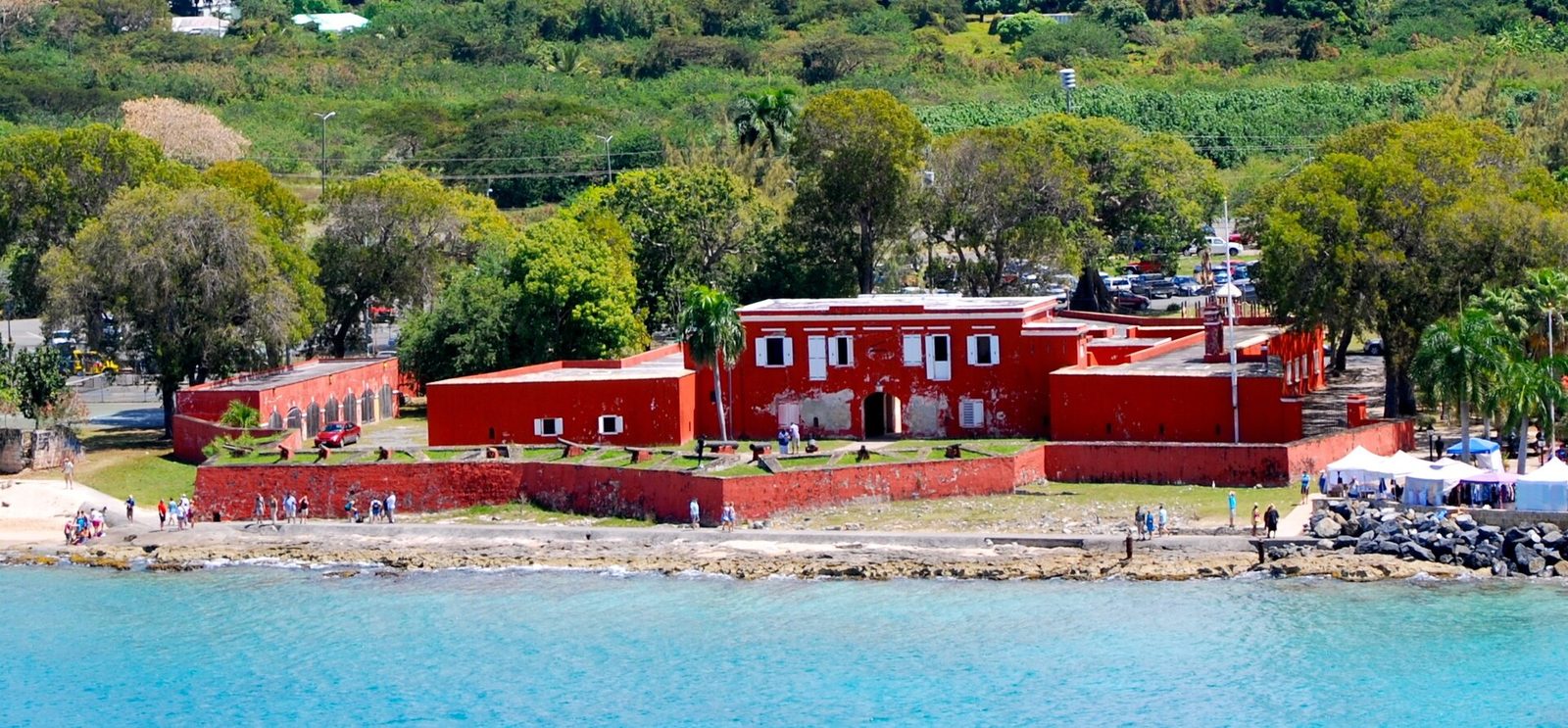
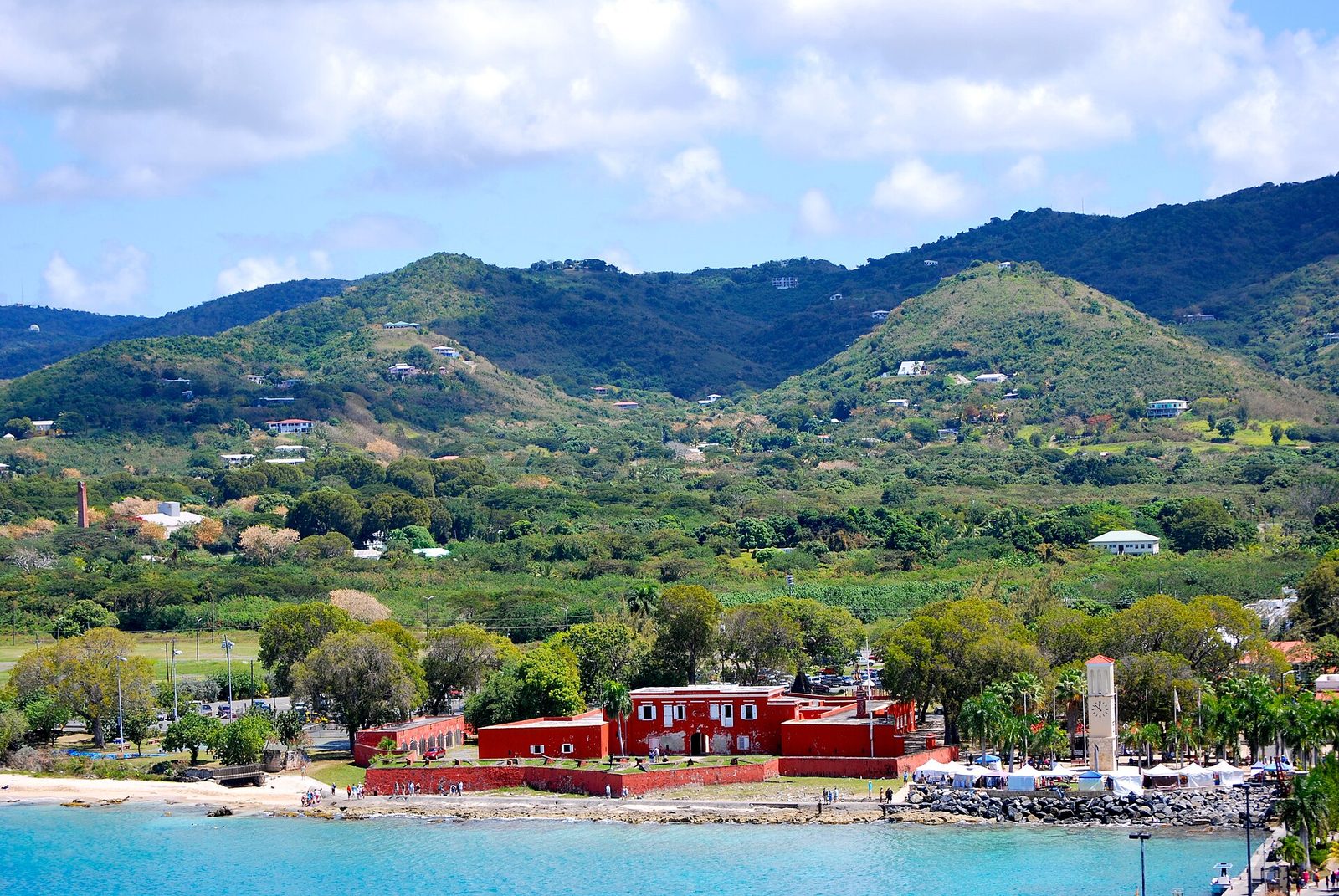
Sandy Point sits at the far end of the island's quiet, historic side, and the drive is long enough that you should make a day of the corner. The natural pairing is Frederiksted, ten minutes away: the second town, with its waterfront of Danish-era buildings, Fort Frederik — where the 1848 emancipation of the enslaved was proclaimed, a story we tell in the Fort Frederik guide — and, on non-cruise days, an easy lunch and the only public restrooms for miles. On cruise-ship days the town is busy until mid-afternoon; check the schedule and time your lunch for after the beach.
The town's pier is the West End's other headline: by day a cruise berth and a shore-entry snorkel among the pilings, at night the island's famous macro dive, and either way a good hour if you have brought a mask — details in the pier guide. North of town, Rainbow Beach has the things Sandy Point deliberately lacks — a beach bar, rentals, restrooms, calm water and a sunset view straight down the beach — and it is where most Sandy Point mornings end. The full run of west-side beaches, and which suits which mood, is in our West End beaches guide.
Two more stops earn their place. Estate Whim, on Centerline Road a few minutes from Frederiksted, is the island's restored sugar plantation museum and shares its name with the refuge's mailing address; if you have children who need to run and adults who want the history, it fits between beach and lunch. And on the drive home along Route 66, Leatherback Brewing Company — St. Croix's first craft brewery, in the industrial park near the airport, with a tasting room open daily as of 2026 — is named for the very turtle you have spent the day not seeing, and it makes a fair last stop before the East End. Rum is the other West End specialty; the distillery tours are covered in the Cruzan rum guide.
It is the longest single outing we recommend from the East End and, in the open season, one of the best.