St. Croix guides · Nature & outdoors28 min readUpdated Aug 2026
Leatherbacks hatching at Sandy Point, iguanas on the wall, a mongoose across the drive, an endemic lizard exiled to four cays, and the pelicans that work the reef in front of the villa.
The question guests ask us most is about the turtles: when the leatherbacks nest and hatch at Sandy Point, and whether they can see it. So that comes first. After that, St. Croix is not a safari. It is a dry, windy island of reptiles and birds, where the only native land mammals are bats and almost everything else with fur arrived on a ship. That sounds like a warning; it is actually the point. The wildlife here is small, close and easy to meet: a green iguana on a warm wall, a mongoose crossing the drive at noon, brown pelicans hitting the water off the reef in front of the villa, hermit crabs on the path after dark, and, on the offshore cays, one of the rarest lizards under the U.S. flag. This is what lives here, what does not, and where to look.
Sea turtle hatching at Sandy Point
Sandy Point National Wildlife Refuge, the two-mile beach on the island's southwest tip, is the largest leatherback nesting site in the United States. It runs on a calendar. Leatherbacks come ashore to nest from about March into July, the first hatchlings dig out from mid-May, and nests keep hatching through the summer. To protect them, the refuge is closed to the public from April 1 to August 31, so there is no wandering onto the beach at night to look on your own.
The way to see it is through the St. Croix Sea Turtle Project. Its Turtle Watch runs on Friday and Saturday nights in April: a guided night on the beach with the researchers, booked ahead through seaturtlecensus.com, and the season's places go early. In June and July the project runs daytime Turtle Tracks and Shells walks and evening Sunset Watch sessions instead, which is hatchling season. Outside nesting season the refuge is open Saturdays and Sundays, 10 to 4, from September through March, admission free, and it is about an hour's drive from the villa.
Closer to home, the turtles you are likeliest to meet are in the water: green turtles grazing the seagrass of the East End's bays and hawksbills working the reef in front of the villa, best found from a mask on a calm morning. The Nature Conservancy's Jack and Isaac Bay preserve, five minutes away, holds the island's largest green and hawksbill nesting populations, July to December. Our sea turtles guide has the whole story, species by species, with the rules that keep them coming back.
What lives here, and what does not
Start with the honest shape of the place. The U.S. Virgin Islands have exactly one kind of native land mammal, and it flies: the bats, six or seven species depending on which list you read. Everything else on four legs came with people. Feral hogs and dogs are thought to have arrived with the islands' first settlers before Columbus; the Danes and the planters brought donkeys, goats, horses, cats and rats; white-tailed deer were released for hunting in the late 1700s; and the small Indian mongoose was let loose in the 1880s to eat rats in the cane. It ate a good deal else, and that is the through-line of this guide.
What St. Croix has in abundance is reptiles and birds. The green iguana is the animal you will notice first, because it is big and does not care that you are there. Smaller lizards are everywhere: the St. Croix anole on trunks and fences, tiny dwarf geckos in the leaf litter, house geckos on the walls at night. The territory's snakes are non-venomous and you are unlikely to see one. Frogs call after rain. And birds: the territory's list runs to 267 species as of 2022, though 176 of those are rare or accidental visitors and 18 were introduced; the everyday cast on the East End is more like two dozen species.
Offshore is where the numbers get large. More than 500 fish species have been recorded in the territory's waters, three sea turtle species nest and feed here, humpback whales pass in winter, and eight dolphin species have been recorded around the islands. The reef in front of the villa is a working piece of that system, which is why a mask and snorkel is the best piece of wildlife equipment you can pack.
Bats onlyNative land mammals
267Bird species recorded (USVI)
About 2,000Ground lizards left
500+Fish species recorded
1880sMongoose arrived
Here is the whole cast on one card, so the rest of the guide has somewhere to hang. "Native" means the animal reached St. Croix without human help; "introduced" means it was carried in, deliberately or as a stowaway. The "where" column is written for a guest on the East End; the "when" column gives you the best odds, not a promise. Wild animals do not read tables.
Animal
Native or introduced
Where to look
When
Green iguana
Unsettled — likely an old arrival, not pet-trade
Sunny walls, trees over water, roadsides island-wide
Late morning sun, year-round
Small Indian mongoose
Introduced, 1880s
Road verges, scrub, any driveway
Daytime, year-round
St. Croix ground lizard
Native, found nowhere else
Buck Island (Turtle Beach), Protestant Cay
Sunny hours, year-round
White-tailed deer
Introduced, late 1700s
Edges where pasture meets scrub, East End back roads
Dawn and dusk
Brown pelican
Native
Every bay, and the reef in front of the villa
Mornings, year-round
Magnificent frigatebird
Native
High over the coast and the cays
Year-round
Bananaquit and the two hummingbirds
Native
Any flowering shrub, the villa's garden path
All day, year-round
Least tern and salt-pond birds
Native
Great Pond, Sandy Point's pond, Green Cay
Terns nest in the warm months, migrants arrive in winter
Sea turtles (green, hawksbill, leatherback)
Native
East End reefs and seagrass, Sandy Point for leatherbacks
In the water year-round, nesting spring to fall
Humpback whale
Native, migratory
Offshore, from a boat or a high point
Roughly February to April
Land hermit crab (soldier crab)
Native
Paths, tree roots, beach edges
Night, after rain, and August spawning nights
Bats
Native — the only native land mammals
Dusk over the pool, the beach and fruit trees
Dusk, year-round
Frogs (red-eyed coqui, Cuban treefrog)
Native / introduced
Wet corners of the garden, cisterns
Night, after rain
One thing the table cannot show: the native list is thinner than it was. The St. Croix ground lizard used to live on the main island and does not now, and the reason is a few lines up in the same table. The next three sections are that story.
Green iguanas, the lizard on the wall
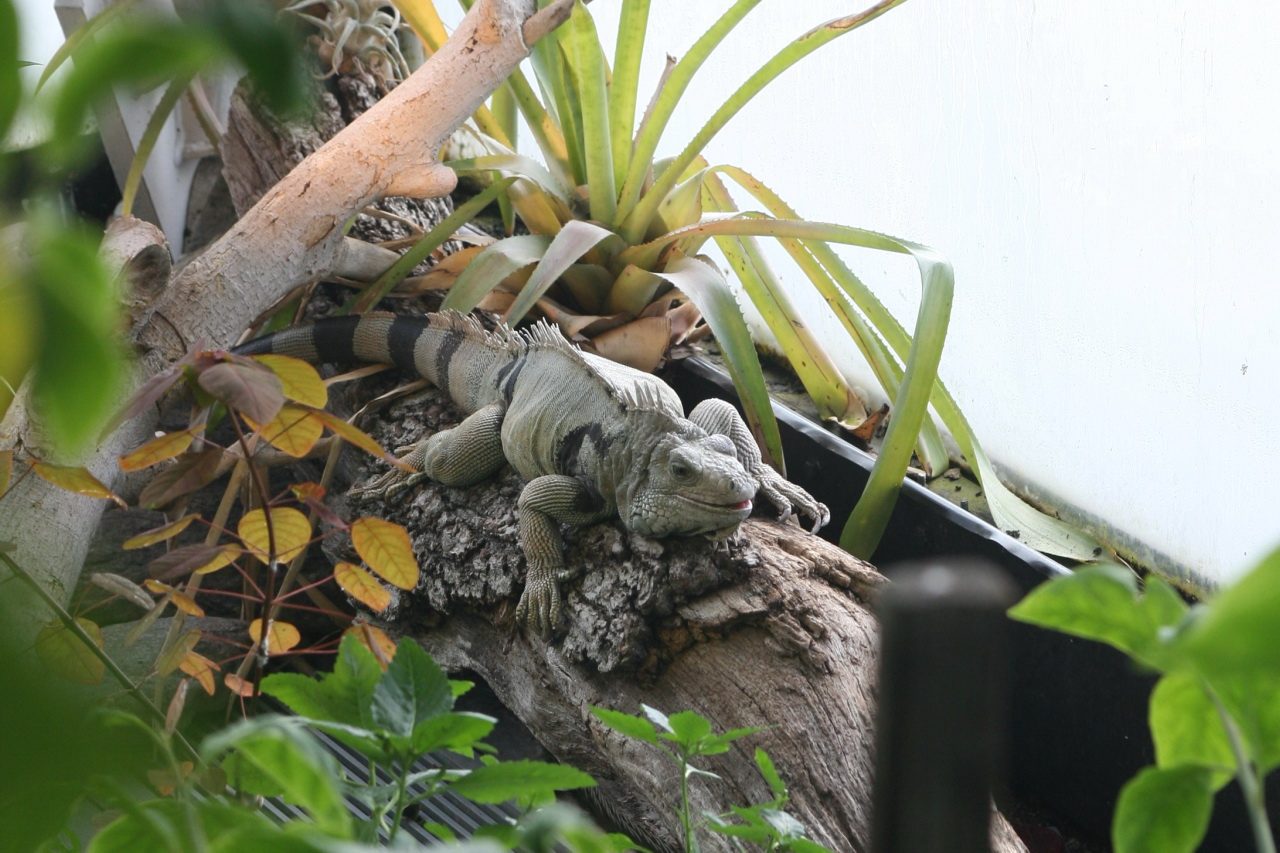
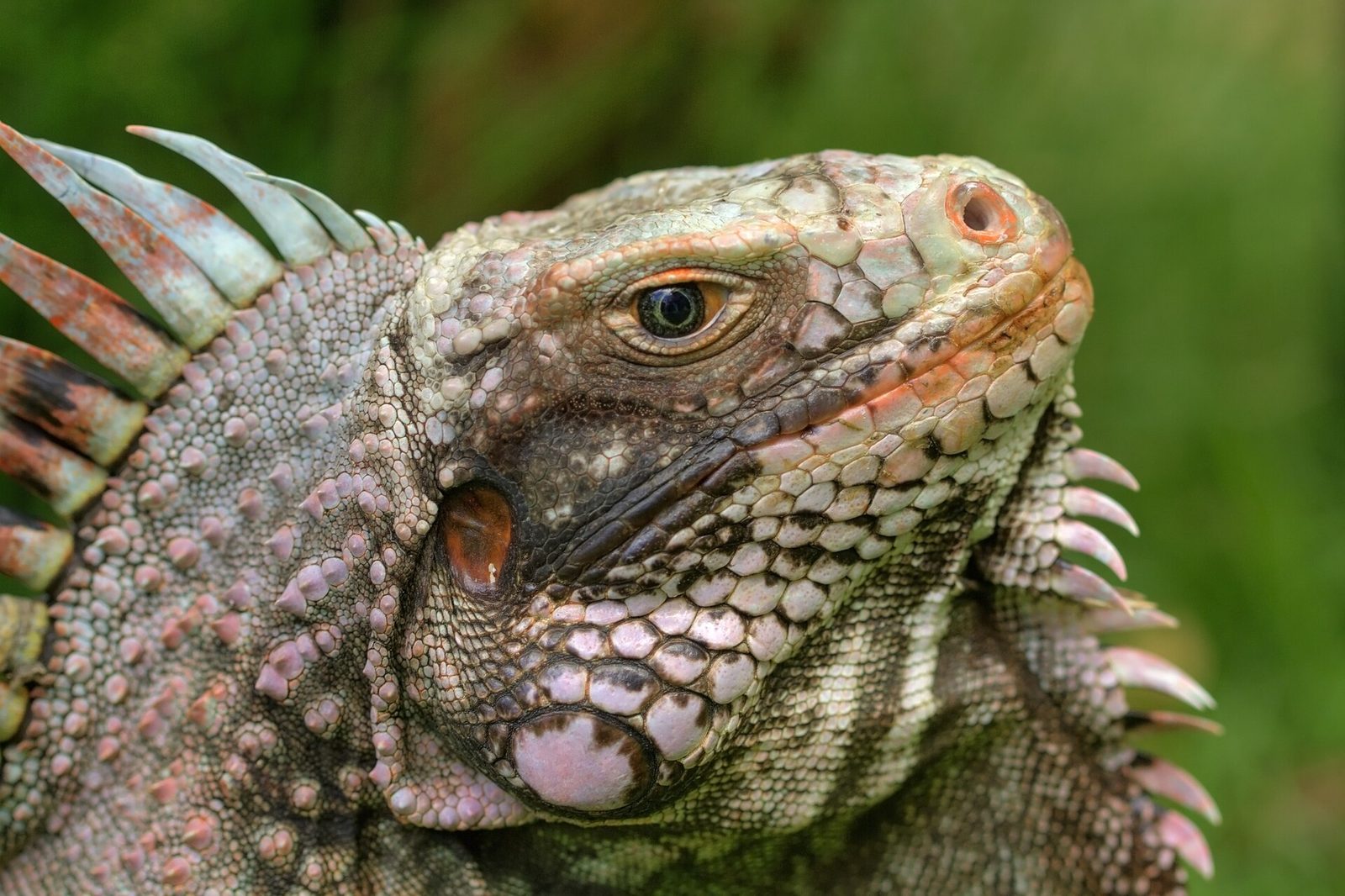
The green iguana (Iguana iguana) is one of the largest land lizards in the Americas, and a big adult on St. Croix can run five feet or more, most of it tail. You will see them draped along branches over water, flattened on sun-warmed walls in the late morning, and crossing roads at their own pace. They eat leaves, flowers and fruit, and they swim well; startle one on a branch above water and it may simply drop in and paddle off.
Native or not? This is the one animal in the guide where the honest answer is "unsettled." Across much of the Caribbean, green iguanas are a plain invasive, descended from pet-trade stock; the 2021 study in Biological Invasions traced most sampled populations to Colombia and El Salvador, two countries with industrial-scale iguana farms. But the same study found that haplotypes seen only in the U.S. Virgin Islands and on Vieques are closely linked to iguanas native to Saba and Montserrat in the Lesser Antilles, a clade not reported in the pet trade, and the authors wrote that introduction by indigenous people or by natural dispersal cannot be disregarded. Not quite indigenous, not quite invasive, and that is where the matter rests.
What matters for you is behavior. Iguanas are not aggressive, but a cornered adult will whip its tail and can bite, and the claws that let it climb a tamarind will open your arm if you try to hold one. Do not feed them: fed iguanas lose their caution and gather where the food is, in exactly the places you want to sit. The federal 2025 status review of the St. Croix ground lizard looked at whether iguanas were preying on the endangered lizard on Protestant Cay and found no reliable evidence of it. They are, mostly, a large peaceful lizard that eats hibiscus.
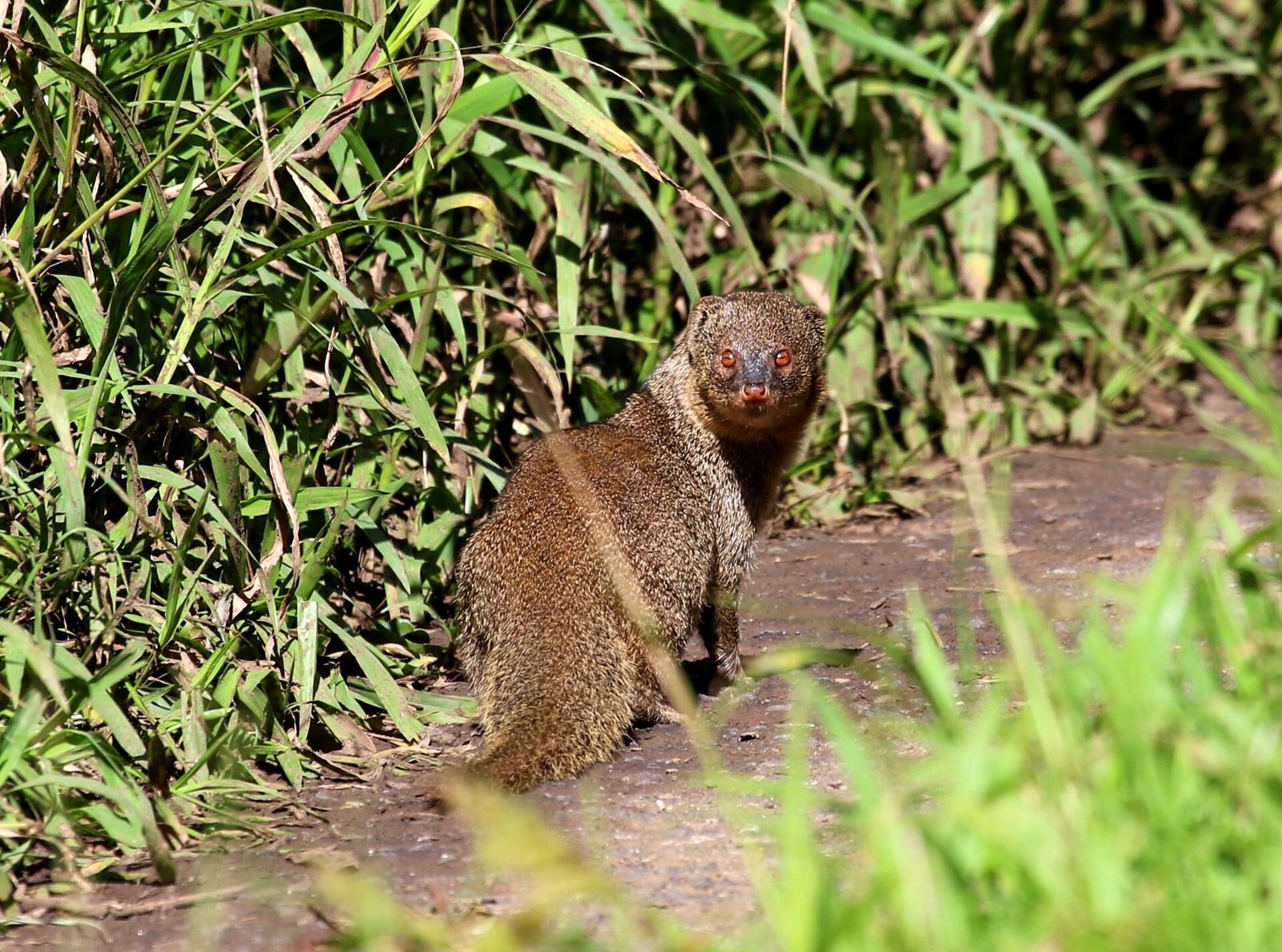
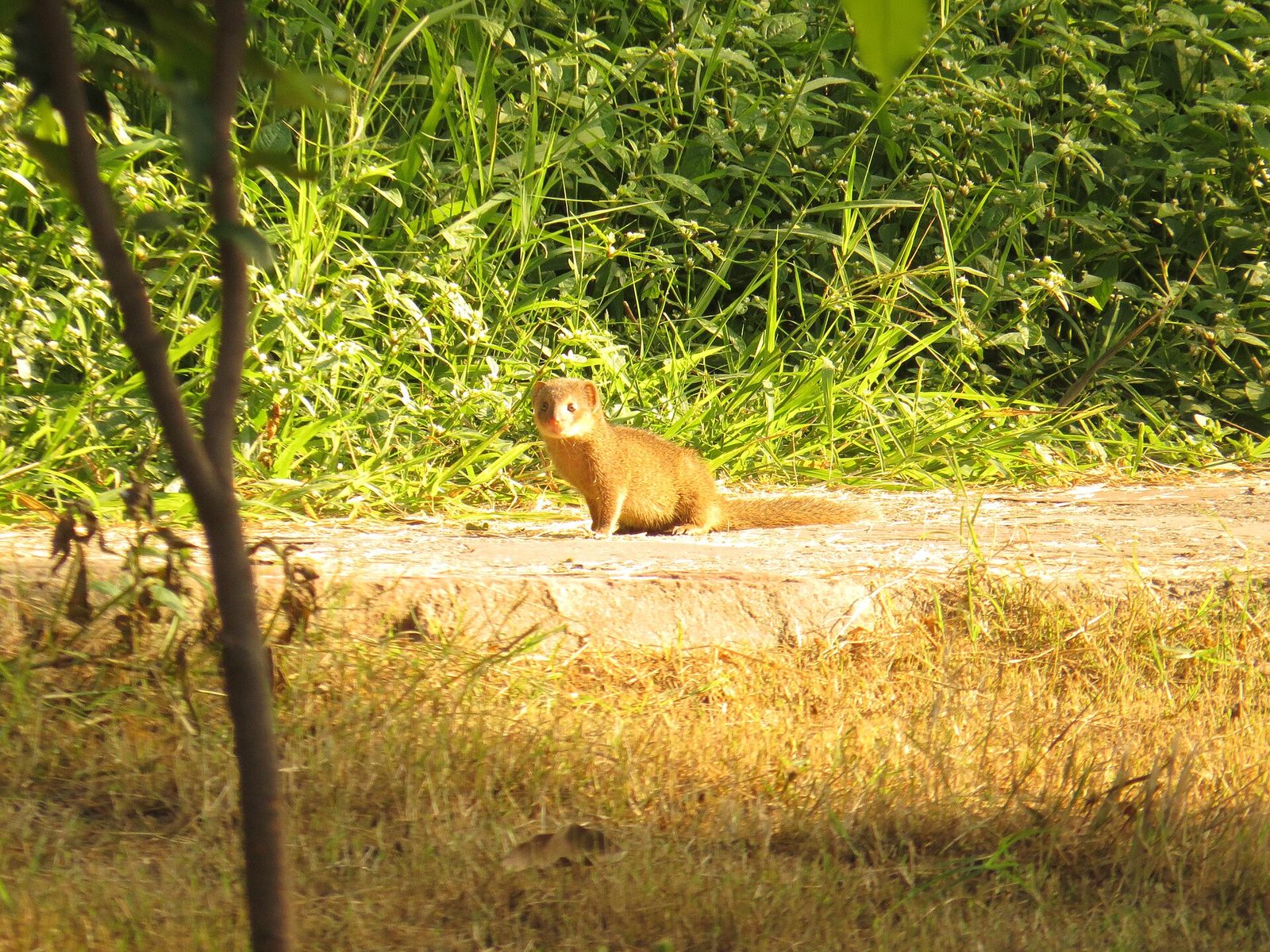
The small Indian mongoose is a long, low, brown animal the size of a slim cat, with a tapered tail and a quick trot. Its scientific name has been shuffled (it is now Urva auropunctata), but its story on the sugar islands is consistent. In 1872, nine mongooses were shipped from India to Jamaica to control the black and brown rats that were ruining the cane; they had bred within months. From the 1870s on, planters carried them through the Greater Antilles, and they reached St. Croix in the 1880s — local histories give 1884, from India by way of Jamaica.
The idea failed in a way that has become a textbook case. Rats are nocturnal and climb; the mongoose is diurnal and does not. The two barely met, the rats moved up into the trees, and the mongoose turned to what was easy: eggs, chicks, ground-nesting birds, lizards, insects, and the eggs and hatchlings of sea turtles. On the U.S. Virgin Islands its density has been put at about two animals per acre. On Buck Island the National Park Service believes mongoose arrived around 1912; the park later removed them along with the rats, and that removal is the reason the ground lizard could go back.
The cost is easiest to see in one animal. The St. Croix ground lizard, an endemic that once lived across the main island, was gone from it by the late 1960s; the Fish and Wildlife Service names the mongoose, with habitat loss, as the cause. When biologists surveyed the mainland in 2023 for possible reintroduction sites, mongoose, rats and cats turned up at every one of them. As a guest: watch, do not feed, do not touch. The mongoose is a rabies vector in Puerto Rico, and while it is no threat to you on a path, it is not a pet either. You will see it most often at midday crossing the drive, or hunting along a road verge in a quick, purposeful line. It has been on St. Croix for about 140 years and is not going anywhere; the interesting question is what the island manages to protect from it.
The small Indian mongoose: diurnal, quick, and shipped around the sugar islands from 1872 to eat rats that were asleep while it hunted.Photo: Auratus Nicole (CC BY-SA 3.0)
The St. Croix ground lizard, exiled to the cays
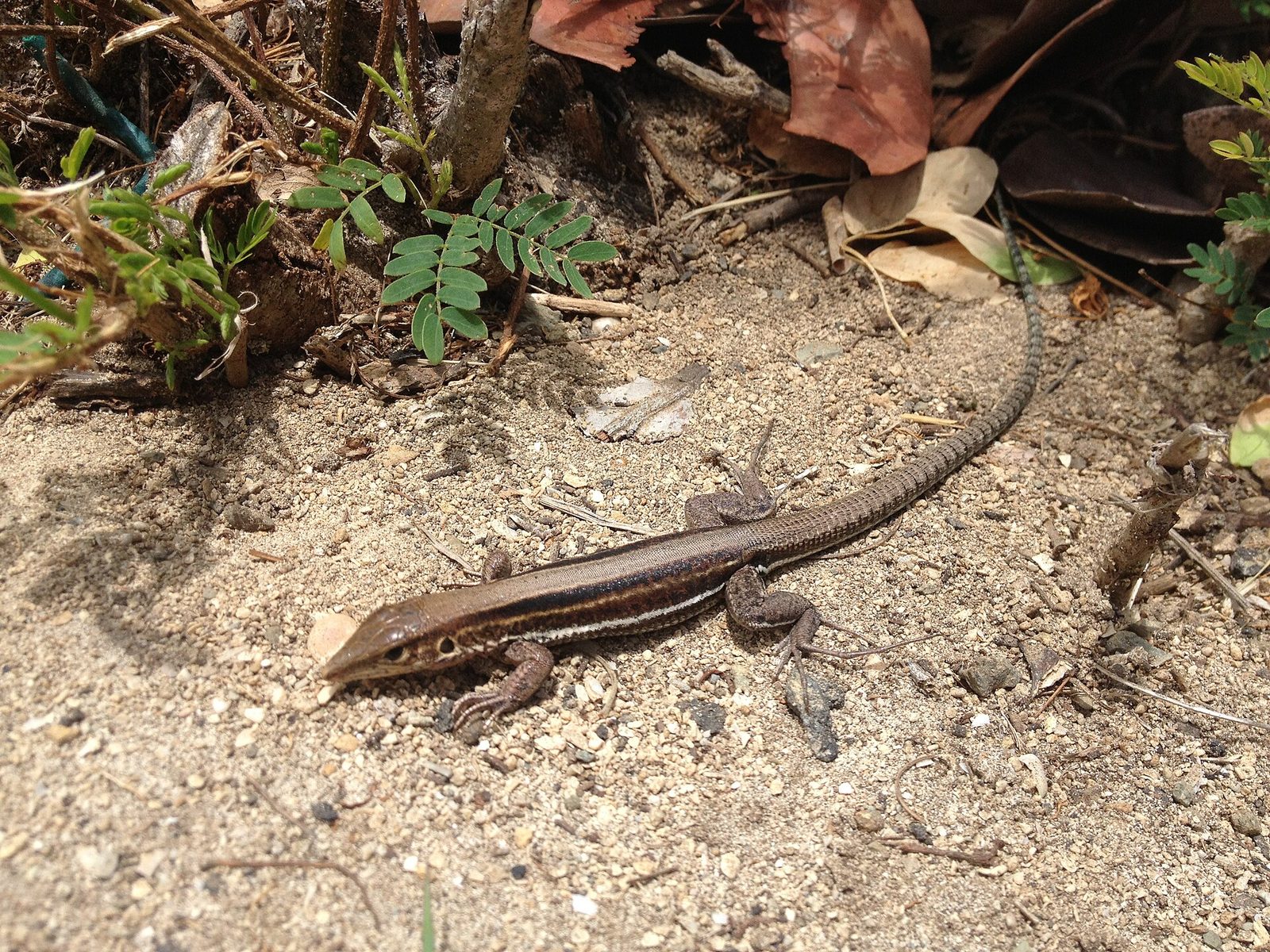
The St. Croix ground lizard — Pholidoscelis polops, still listed by the federal government under its old name Ameiva polops — is a small, quick, striped lizard, adults 50 to 90 millimeters from snout to vent, patterned in light brown, dark brown and white with a bright blue tail on the young. It eats berries, moths, ants, amphipods and small hermit crabs. It lives nowhere on Earth but St. Croix's offshore cays, and it has been on the federal endangered list since 1977.
The exile happened in stages. After the mongoose arrived, the lizard vanished from the main island; the Fish and Wildlife Service dates its extirpation there to the late 1960s. It hung on where the mongoose never reached: Protestant Cay, the 3-acre hotel island in Christiansted harbor, and Green Cay, a 14-acre uninhabited islet less than 500 meters off the northeast shore, which became a national wildlife refuge in 1977 for this one species and is closed to the public. In 1990, ten lizards from Protestant Cay were moved to Ruth Cay, an 18-acre man-made island off the south-central coast. And in 2008, after rats and mongoose were cleared from Buck Island, 57 lizards from Green Cay were moved there — the story we tell in full in the Buck Island guide. By 2013 Buck Island held an estimated 1,473, and biologists expected it could eventually support 8,000 or more.
The June 2025 federal status review puts the species at roughly 2,000 animals across the four cays, most of them on Buck Island, the only population known for certain to be growing and the only one free of introduced predators. Protestant and Green cays each hold fewer than 200; Ruth Cay fewer than 300; rats remain on Protestant and Ruth. The review recommended no change: still endangered. It also recorded a first. In February 2022, 26 lizards were moved from Buck Island back to the main island — 13 to Sandy Point National Wildlife Refuge and 13 to the University of the Virgin Islands wetlands — inside anti-predator enclosures opened that June. A juvenile was found in one of the Sandy Point pens: the first recorded birth of the species on St. Croix proper since the 1960s. Whether those animals persist is not yet known.
Where you can actually see one: two places. On a Buck Island day, watch the sand around your bag at Turtle Beach; the lizards are curious and will come to look. Or take the two-minute ferry from the Christiansted waterfront to Protestant Cay, the hotel island, and walk its edges — confirm the day-visitor arrangement with the hotel first. Green Cay you will only see from the water. Whichever you manage: photograph, do not touch, do not feed. You are looking at a world population smaller than a high school football crowd.
1872Nine mongooses shipped from India to Jamaica to eat cane rats
1880sMongoose reaches St. Croix (1884 by most local accounts)
late 1960sSt. Croix ground lizard gone from the main island
1977Ground lizard listed endangered, and Green Cay National Wildlife Refuge created for it
1990Ten lizards moved from Protestant Cay to man-made Ruth Cay
2003St. Croix East End Marine Park established, Green Cay around to Great Pond Bay
200857 lizards moved from Green Cay to a predator-free Buck Island
202226 lizards returned to the main island at Sandy Point and the UVI wetlands — first birth there since the 1960s
2025Federal review: about 2,000 lizards on four cays, still endangered
White-tailed deer at the edge of the scrub
People do not expect deer on a Caribbean island, and then one steps out of the roadside brush at dusk on the road to Point Udall and stops the car. White-tailed deer were introduced to all three U.S. Virgin Islands for recreational hunting in the late 1700s, in the Danish era. Recreational hunting is no longer permitted in the territory, and the herds have grown to the point where the Department of Planning and Natural Resources issues culling permits to properties being significantly damaged. They are, in the territory's own classification, an invasive species — and also, after more than two centuries, simply part of the island.
The territory's invasive-species office lists the reasons plainly: deer eat native seeds and browse or trample seedlings, which slows the forest's ability to regenerate; heavy browsing opens ground to erosion; they damage small farmers' crops; and they cause vehicle collisions. None of that changes the fact that a doe and fawn in the East End's dry forest at first light is one of the better sights the island offers.
Where to look: the office's own phrase is "edge habitats, where fields and forest meet." On the East End that means the scrub along the ridge roads, the margins of pasture and old cane ground, and the shoulders of the back roads in the last light. They are most active at dawn and dusk and are the reason the driving guide tells you to slow down on the East End after sunset — a deer on a dark curve is a real hazard, and they do not look before crossing. An early drive toward Point Udall for sunrise, headlights on and speed down, gives you a fair chance of one. Take the picture from the car and let it go.
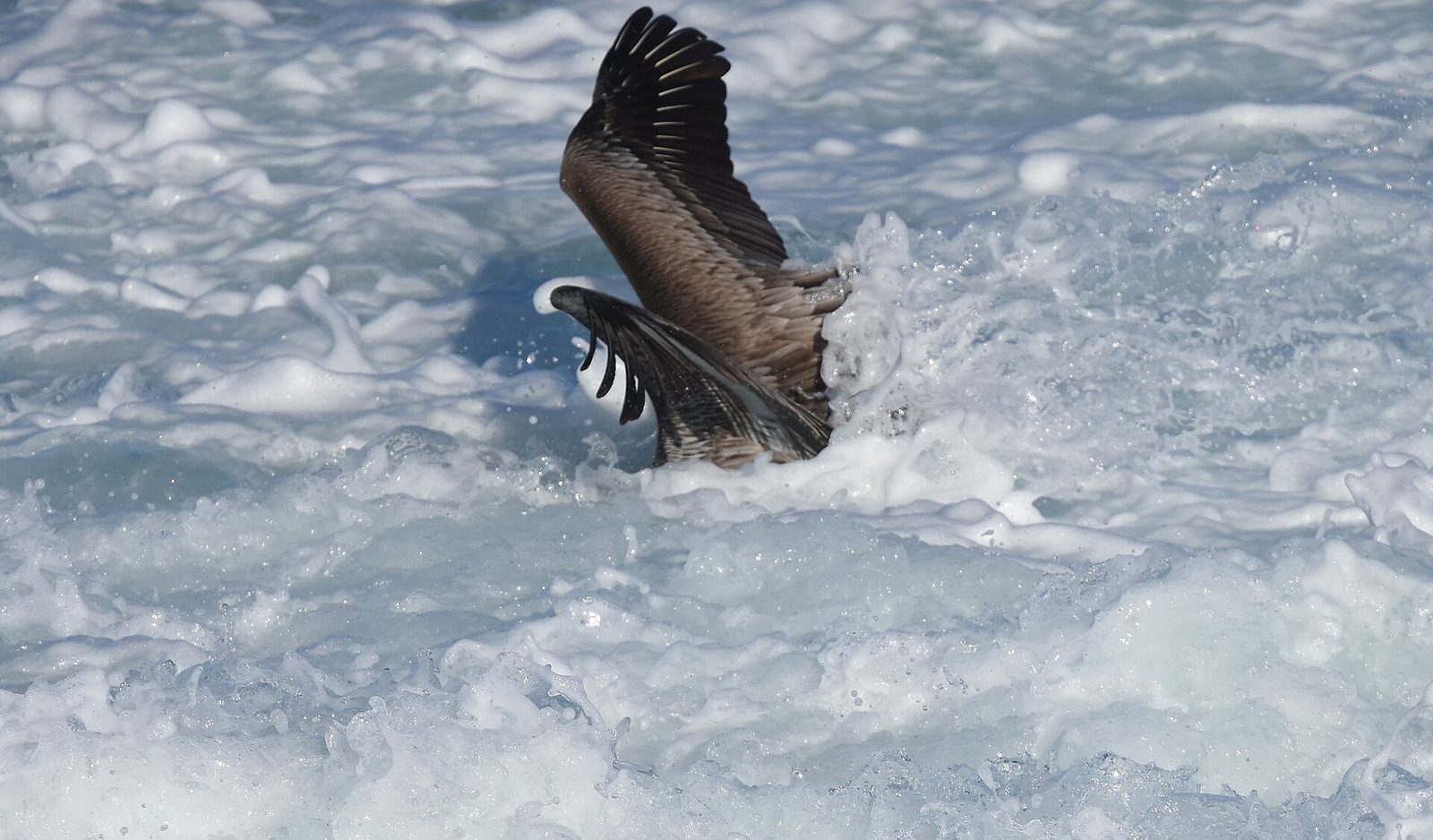
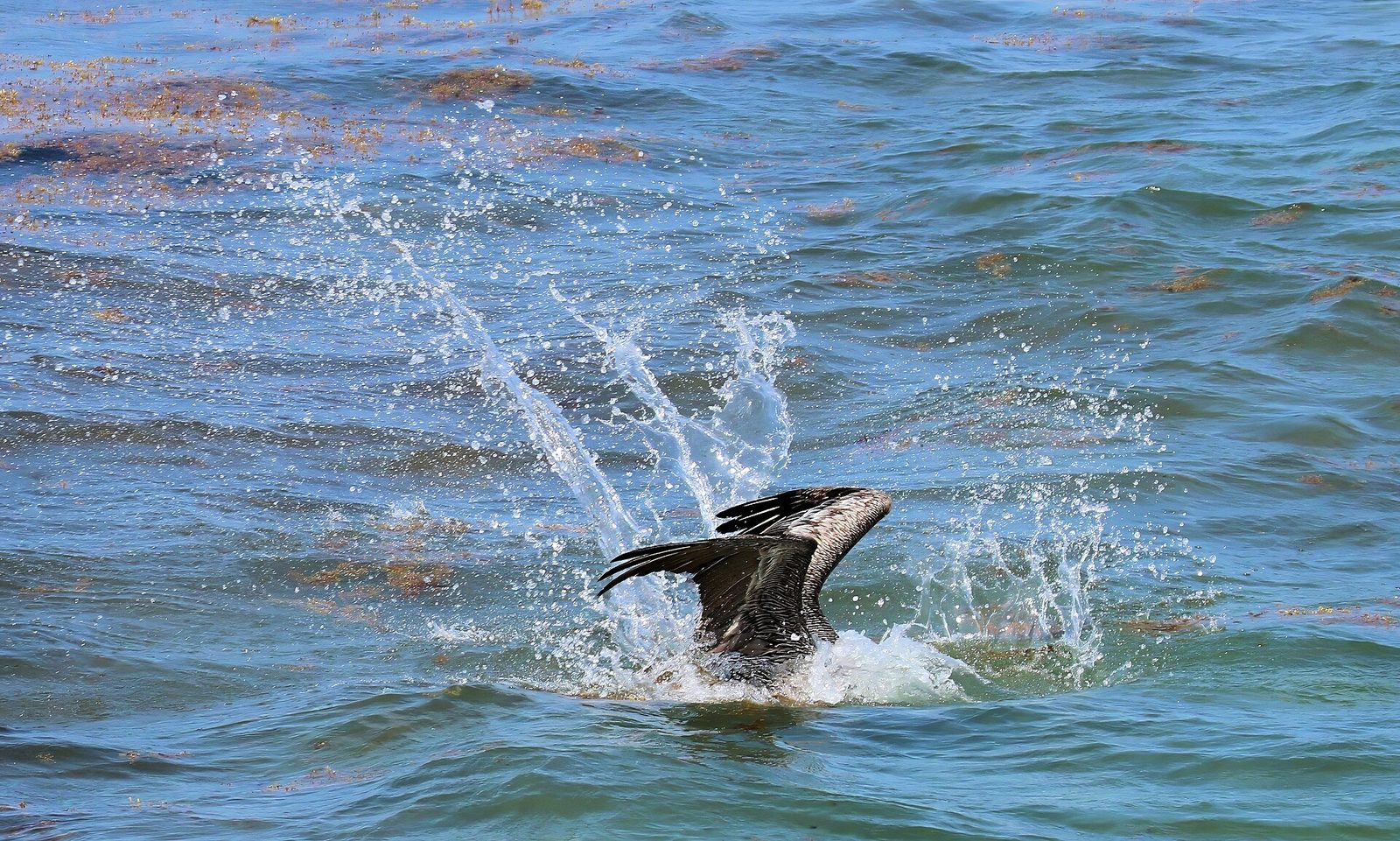
The brown pelican is the bird you will watch most, because it performs. It flies low along the reef line in a slow file, climbs, folds, and drops into the water with a splash you can hear from the veranda, then sits up and swallows. Off the villa's beach the show runs most mornings, and it is the same bird the National Park Service lists among the protected species of Buck Island, where pelicans nest and roost on the cays.
Above the pelicans, higher and stiller, is the magnificent frigatebird — an enormous black bird with a forked tail and long angled wings that hangs on the wind for hours and almost never flaps. Frigatebirds do not land on the water; they take flying fish from the surface and food from other birds, and you will see them riding the trade wind along the coast. Brown boobies pass offshore, royal terns and laughing gulls work the harbors and beaches, and ospreys hunt the bays. Green Cay, the little refuge islet off the northeast shore, is a nesting and roosting place for brown pelicans, laughing gulls, least terns and royal terns.
The least tern deserves a word of its own. It is small, pale and quick, and it nests on open sand and salt-pond edges, which makes it exactly the kind of bird a mongoose or a beach-walker can ruin a season for. There is a breeding colony at Great Pond on the southeast shore, and the National Park Service lists it as a threatened bird at Buck Island. If you find a stretch of sand or dry pond edge with small terns diving at your head, they have eggs there; back off the way you came. The everyday water birds finish the list: yellow-crowned night-herons on the rocks at dusk, green herons at the pond edge, cattle egrets in the pasture, snowy and great egrets in the salt ponds. None of these need a guide. They need you on the beach at seven in the morning with a coffee.
A brown pelican: the coast's most watchable bird, which fishes by folding its wings and dropping into the water from a height.Photo: ImagePerson (CC BY 4.0)
The Cerulean
Plan it from the villa.
Five bedrooms, a private swimmable beach, and all of this within a day trip.
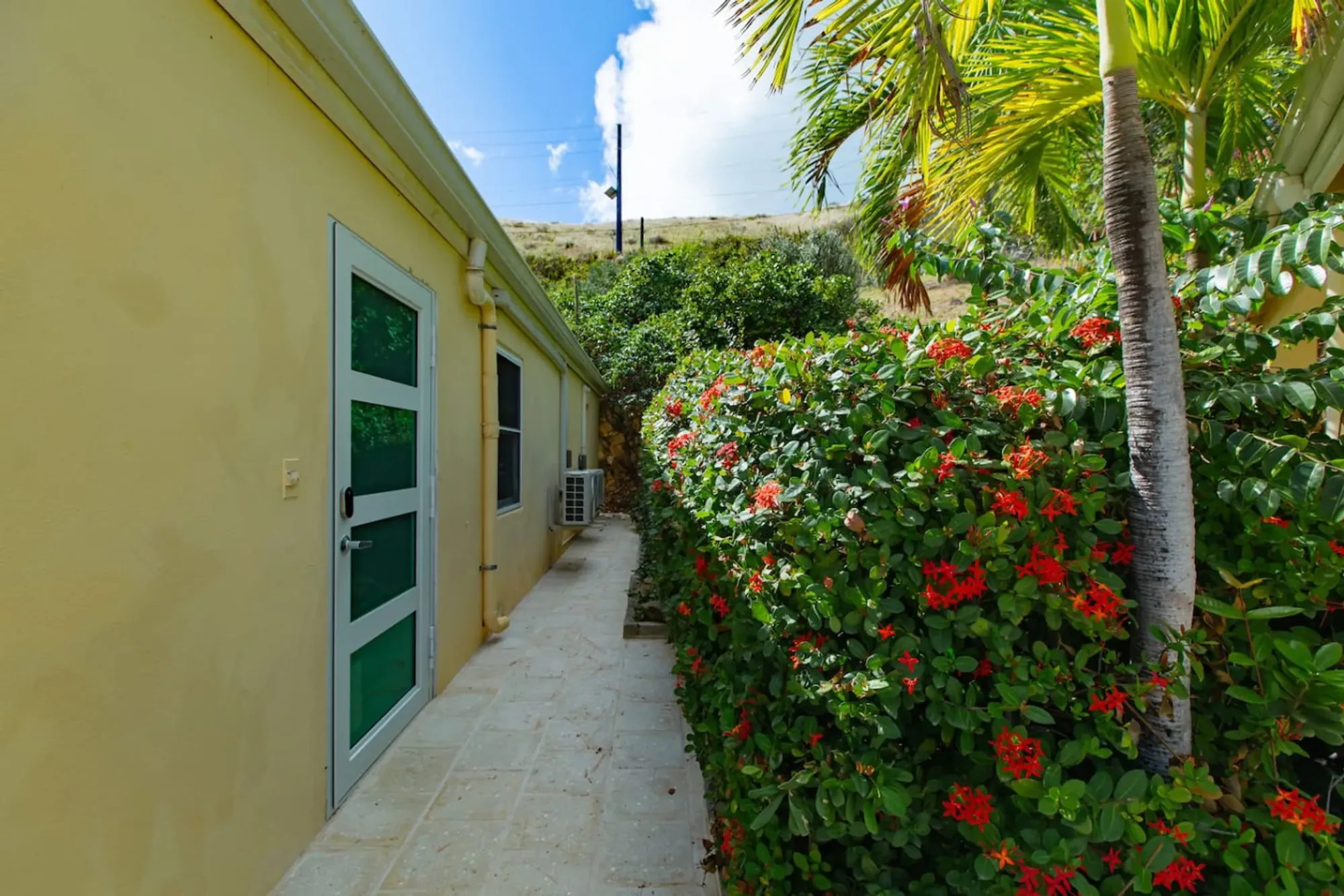
The bananaquit is the official bird of the U.S. Virgin Islands and the one you will meet first — a small, quick, yellow-breasted bird with a white eyebrow stripe and a curved bill, working every flowering shrub in the garden and, if you leave a bowl of sugar out, the sugar. On the villa's garden path and in the plantings by the veranda, expect a bananaquit inside the first ten minutes of the first morning.
The two hummingbirds are the next prize. The green-throated carib is the larger, dark with a green throat that flashes when the light hits it right; the Antillean crested hummingbird is tiny, with a small pointed crest that shows metallic green on the male. Both are regional Caribbean birds, both are listed among the species that make Great Pond an Important Bird Area and Green Cay a refuge worth its name, and both feed on the hibiscus and other flowering shrubs planted around East End houses. Sit still near a flowering bush in the first hour after sunrise and they will come to within arm's length.
The pearly-eyed thrasher is the garden's bully: a big brown-and-cream bird with a pale eye and a heavy bill that will take fruit off a table and let you know it has done so. The gray kingbird sits on wires and bare branches and sallies out for insects, calling loudly at dawn. Zenaida doves walk the ground under the trees; common ground doves, smaller and rustier, scatter from the road edge; white-crowned and scaly-naped pigeons keep to the taller trees and the ridges. The smooth-billed ani, a floppy black bird with a parrot's bill that moves in noisy gangs through the scrub, is worth learning by sound: a rising, complaining whistle. Fill in the rest over the week — black-faced grassquits, yellow warblers in the mangroves, the Caribbean elaenia in the dry forest, an American kestrel on a wire, a red-tailed hawk over the ridge — and in winter the North American migrants that make the territory's list so long.
The garden path between the cottage and the main house — bananaquit and hummingbird territory in the first hour of light.Photo: The Cerulean
The salt ponds and the cays: Great Pond, Sandy Point, Green Cay
If you want to see birds in numbers rather than one at a time, go to water that is not the sea. Great Pond, on the southeast shore, is a 50-hectare saline lagoon ringed with black mangroves, and the lagoon and its wetland edge, about 64 hectares in all, is recognized as an Important Bird Area by BirdLife International. It holds a breeding colony of least terns and supports white-crowned pigeons, green-throated caribs, Antillean crested hummingbirds and Caribbean elaenias. When the water drops, wide mudflats appear, and that is when the wading birds come. It is not a park with a visitor center; it is a pond by the south-shore road, roughly ten to fifteen minutes' drive west of the villa, where the marine park's boundary ends at Great Pond Bay. Bring binoculars, stay on the road edge, and go early.
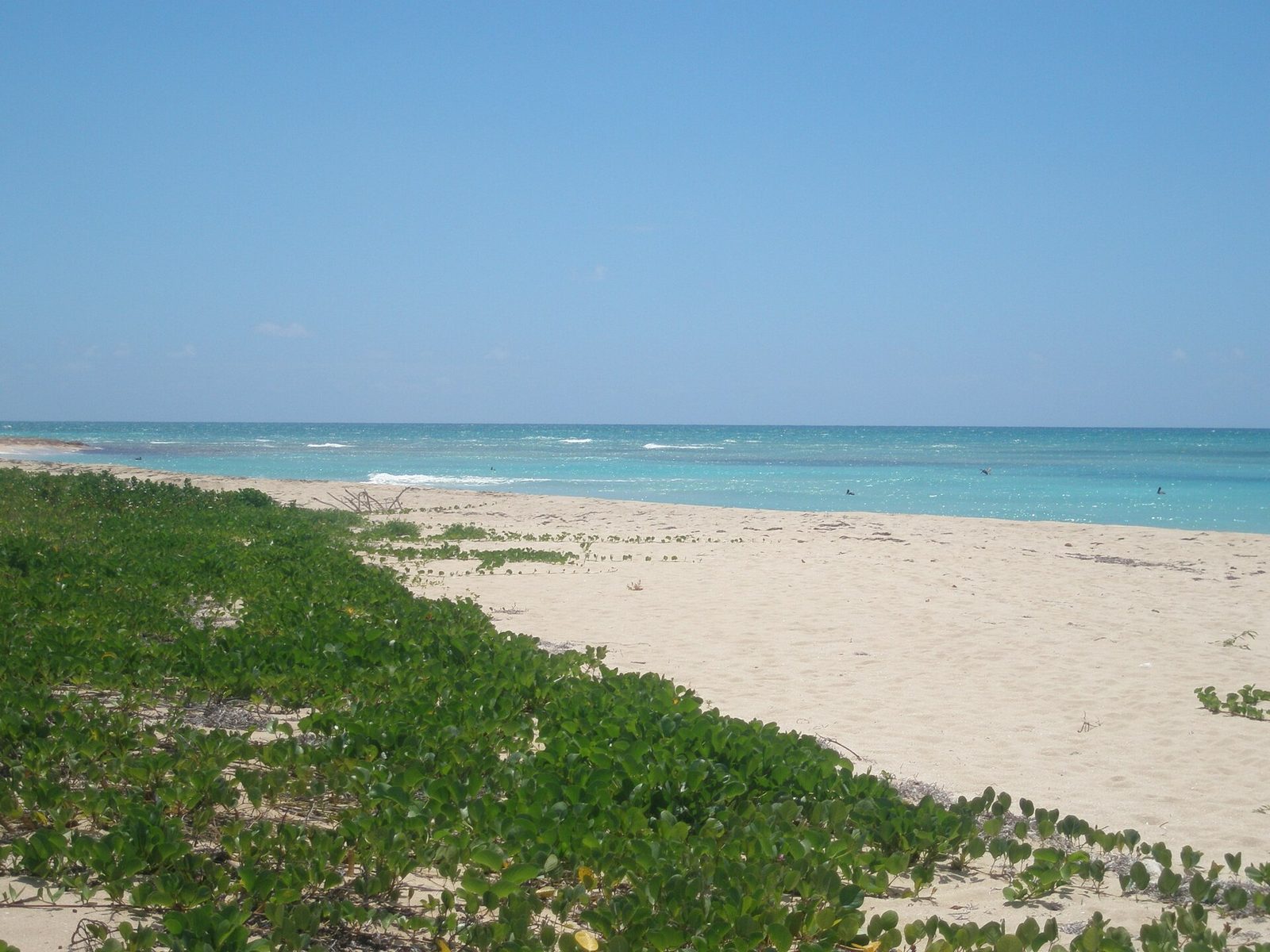
Sandy Point National Wildlife Refuge, at the far southwest tip of the island, is the other pond — and the two-mile beach beside it, which is why most people go. The refuge reports more than 100 bird species, among them brown pelicans, black-necked stilts and yellow warblers, and the salt pond behind the beach draws the same wading and dabbling birds as Great Pond, including the white-cheeked pintail, the native duck the National Park Service lists at Buck Island under its old name, the Bahama duck. Two rules govern any visit: weekends only, 10 am to 4 pm, and closed entirely from April 1 through August 31 for leatherback nesting. It is also where 13 St. Croix ground lizards were released in 2022. Our Sandy Point guide has the whole beach.
Green Cay you cannot land on — it is a closed national wildlife refuge, 14 acres, a National Natural Landmark since 1980 and an Important Bird Area in its own right — but you can look at it from the shore by the marina, and any Buck Island boat out of the East End passes it. Brown pelicans, laughing gulls, least terns and royal terns use it; American coots, the two hummingbirds and pearly-eyed thrashers live on it. For what is being seen this week, eBird's St. Croix hotspot pages are the live record.
Hermit crabs and the night shift
Walk the paths at the villa after dark with a flashlight and the ground moves. Those are land hermit crabs — the Caribbean hermit crab, Coenobita clypeatus, called the soldier crab here and the purple pincher in the pet trade — and there are a great many of them on the East End. They are native across the West Indies, they live entirely on land as adults, and they can be found a considerable distance inland, hiding by day under the roots of large trees and in the leaf litter under sea grape, then coming out at night and after rain to scavenge fallen fruit, plant scraps, carrion and dung.
The shell on its back is borrowed, and the borrowing is the whole drama of a hermit crab's life. As it grows it must find a bigger empty shell — the West Indian top snail's is the favorite — and it will fight for a good one. Which is why the one thing this guide asks of you is not to take shells home from the beach: an empty shell is a house someone needs, and a shell that turns out to have legs was never empty. Confirmed lifespans run past 12 years, so the crab crossing your path may be older than your children.
The one seasonal event is a strange one. Female land hermit crabs must release their eggs into the sea, and they do it on certain nights, usually around August, when the crabs come down to the water in numbers. If you are here in late summer and see the roads and paths near the shore busy with crabs after dark, that is what is happening. Drive slowly, and step carefully. The rest of the night shift is quieter: bats overhead, frogs after rain, and the yellow-crowned night-heron working the rocks for crabs.
Sea turtles in the water, the short version
Three sea turtles nest and feed around St. Croix, and we have a whole sea turtles guide for them, so this is the summary. The leatherback — the largest turtle on Earth — is the Sandy Point story told at the top of this guide; the National Park Service reports 342 individual leatherbacks tagged there since 1981, with 18 to 55 females nesting in a year. Hawksbills nest on Buck Island, where the park has tagged about 200 nesting individuals since 1988 and counts 20 to 40 nesting females a season, and on the East End's wild beaches at Jack and Isaac Bay from roughly July through October. Green turtles graze the seagrass of the East End's bays and nest here in small numbers.
The turtle you are most likely to actually meet is a green or a hawksbill in the water, from a mask, off the villa's beach or on a Buck Island snorkel. Inside the St. Croix East End Marine Park the rule is 50 yards from turtles in the water, no touching, no chasing; on the nesting beaches at night the rule is no lights and no walking the tide line in season. Both matter more than they sound. A turtle that is followed leaves the reef; a female that meets a flashlight goes back to sea without nesting.
Turtles are also the animals that measure the island's other choices: the mongoose eats their eggs, the marine park and the refuges exist in large part for them, and the territory's mineral-sunscreen law is written for the reef they live on. Read the full guide before a Sandy Point trip or a Turtle Watch night, and bring the children.
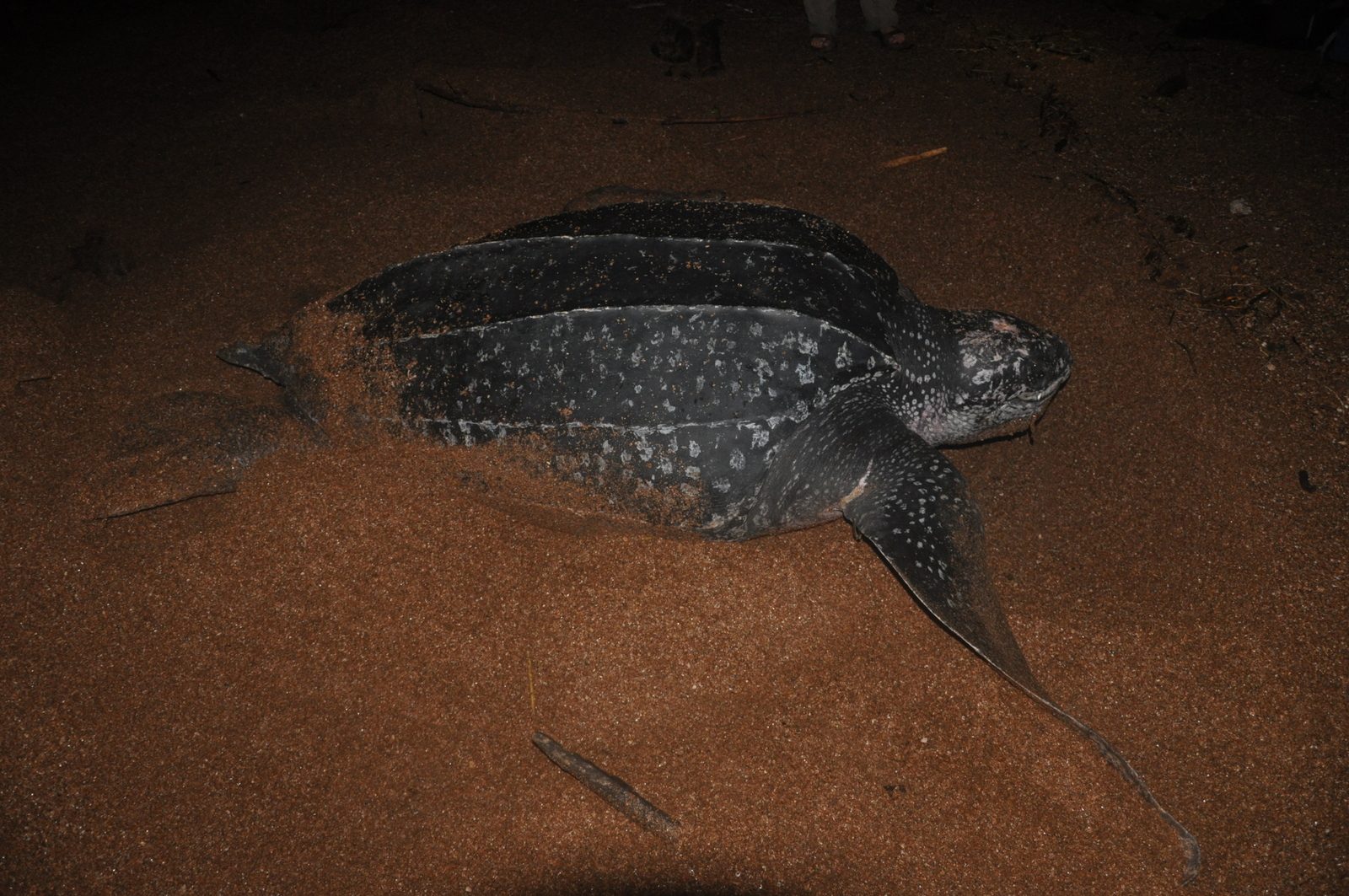
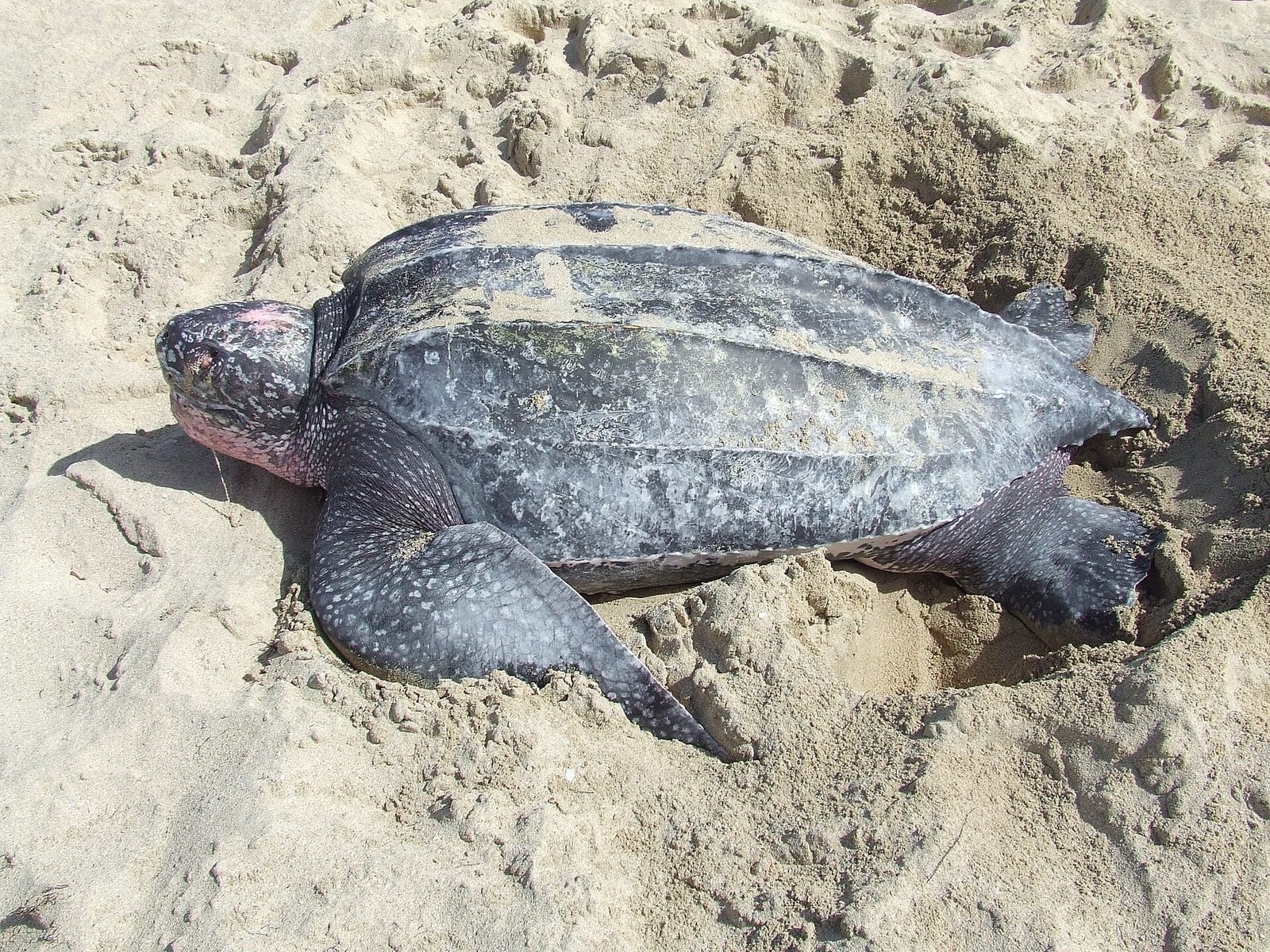
A leatherback returning to the sea after laying — the largest of the three turtles that nest in the territory, and an animal that spends its whole life at sea except for these hours.Photo: Marco Farouk Basir (CC BY-SA 3.0)
Humpbacks and dolphins offshore
Every winter, the North Atlantic's humpback whales — animals up to about 60 feet and 40 tons — leave feeding grounds that stretch from the Gulf of Maine to Norway and swim south to calve and mate in the warm water of the West Indies. NOAA Fisheries puts it plainly: two populations feed across the northern Atlantic in spring, summer and fall and migrate to the West Indies and Cape Verde for the winter. St. Croix sits on the eastern edge of that nursery, and the whales pass.
What that means for a guest is chance, not schedule. In the Virgin Islands the prime months are February and March, and whales have been spotted through April; the occasional pilot whale turns up in the fall, usually October or November. Most published sightings are off St. Thomas and St. John, and as of 2026 we could find no regular whale-watching operator based on St. Croix — the organized excursions run from St. Thomas. Your realistic options here are a boat charter willing to look, the crossing to Buck Island, or high ground facing open water on a calm morning: Point Udall, the East End ridge, or the villa's own veranda, which faces the sunrise over open sea. Watch for the blow — a low white puff that hangs — then the back and the small dorsal fin. The rule is federal and simple: observe all large whales from at least 100 yards, by sea or by land. Humpbacks here are protected under the Marine Mammal Protection Act; the West Indies population is not currently listed as endangered.
Dolphins are more common and less predictable. Eight species have been recorded around the U.S. Virgin Islands — bottlenose, Atlantic and pantropical spotted, spinner, striped, Clymene, rough-toothed and Risso's — and a pod riding the bow of a Buck Island catamaran is not rare, though nobody can promise it. Ask the crew; they know what has been seen that week.
The reef, briefly
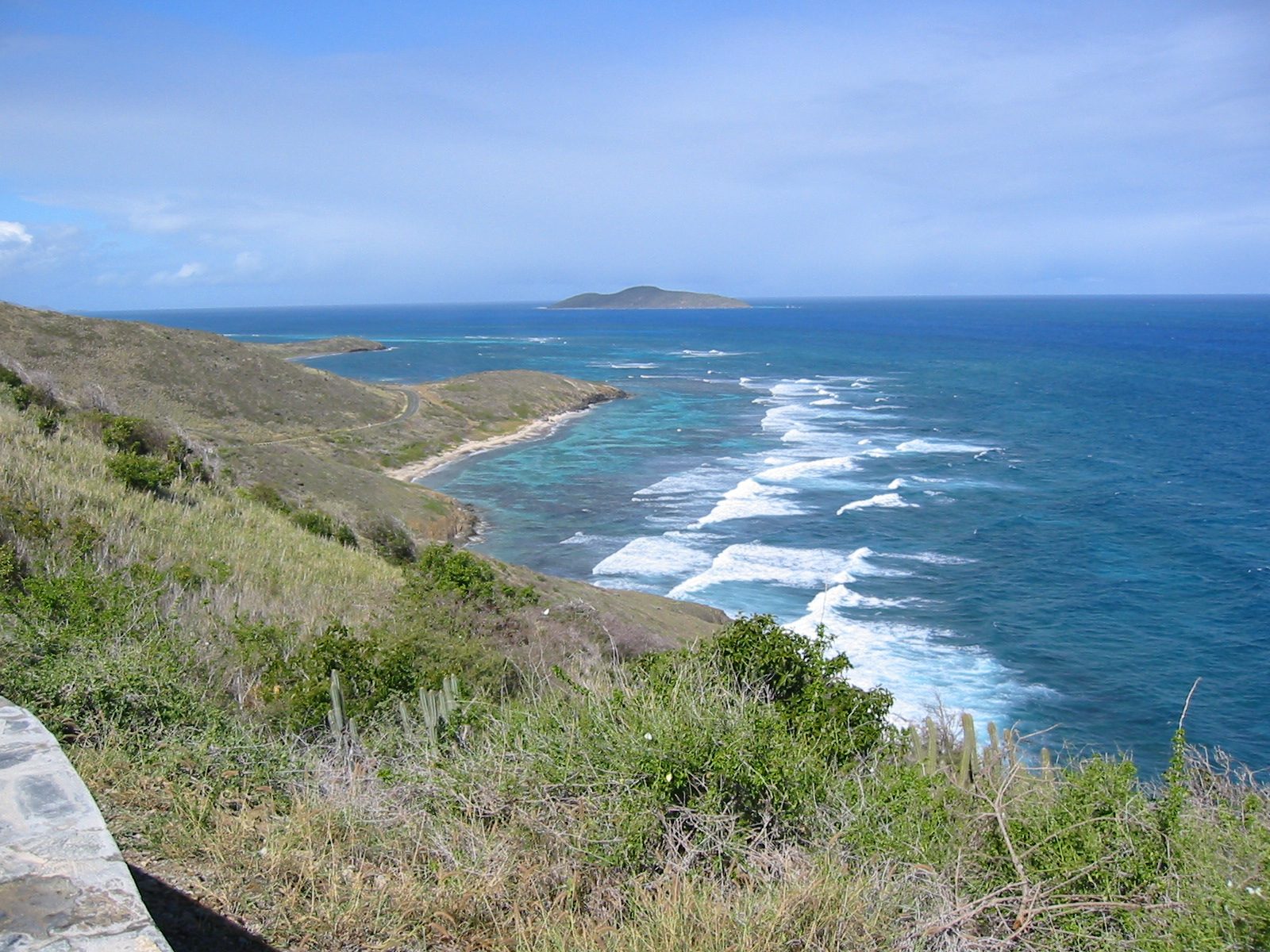
By any count, most of St. Croix's wildlife lives underwater. More than 500 fish species have been recorded in the territory's waters; the reefs are built by elkhorn, staghorn, brain, pillar, star and finger corals; and the whole eastern tip of the island, from Green Cay on the north shore around Point Udall to Great Pond Bay on the south, has been the St. Croix East End Marine Park since January 9, 2003 — about 60 square miles of water and 17 miles of shoreline, the territory's first marine protected area. It is zoned: no-take at Jack and Isaac and Grapetree, recreational stretches with hook-and-line shore fishing, and turtle-preserve waters off the wild beaches. The reef in front of the villa sits inside it.
What you see with a mask off the villa's beach is the everyday Caribbean reef, and it is enough: parrotfish grazing and crunching at the coral, snappers under the ledges, an angelfish if you are lucky, a barracuda hanging still in the blue, a green turtle rising to breathe, a ray lifting off the sand. Our journal has a plain account of snorkeling off the beach. For the bigger stuff, the island has two of the Caribbean's better dives: the north-shore wall for reef sharks and depth, and Frederiksted Pier for seahorses, frogfish and octopus among the pilings. And Buck Island, a no-take reserve since 2001, is where fish that are never fished have grown large and unafraid. The reef's own rules are short — do not stand on coral, touch it, chase anything or feed the fish, and wear mineral sunscreen or a rash guard, because the territory bans the chemical sunscreens that harm coral.
“pure perfection… amazing snorkeling off the reef… 5 min to Jack's & Isaac's”
Emily, guest review, April 2026
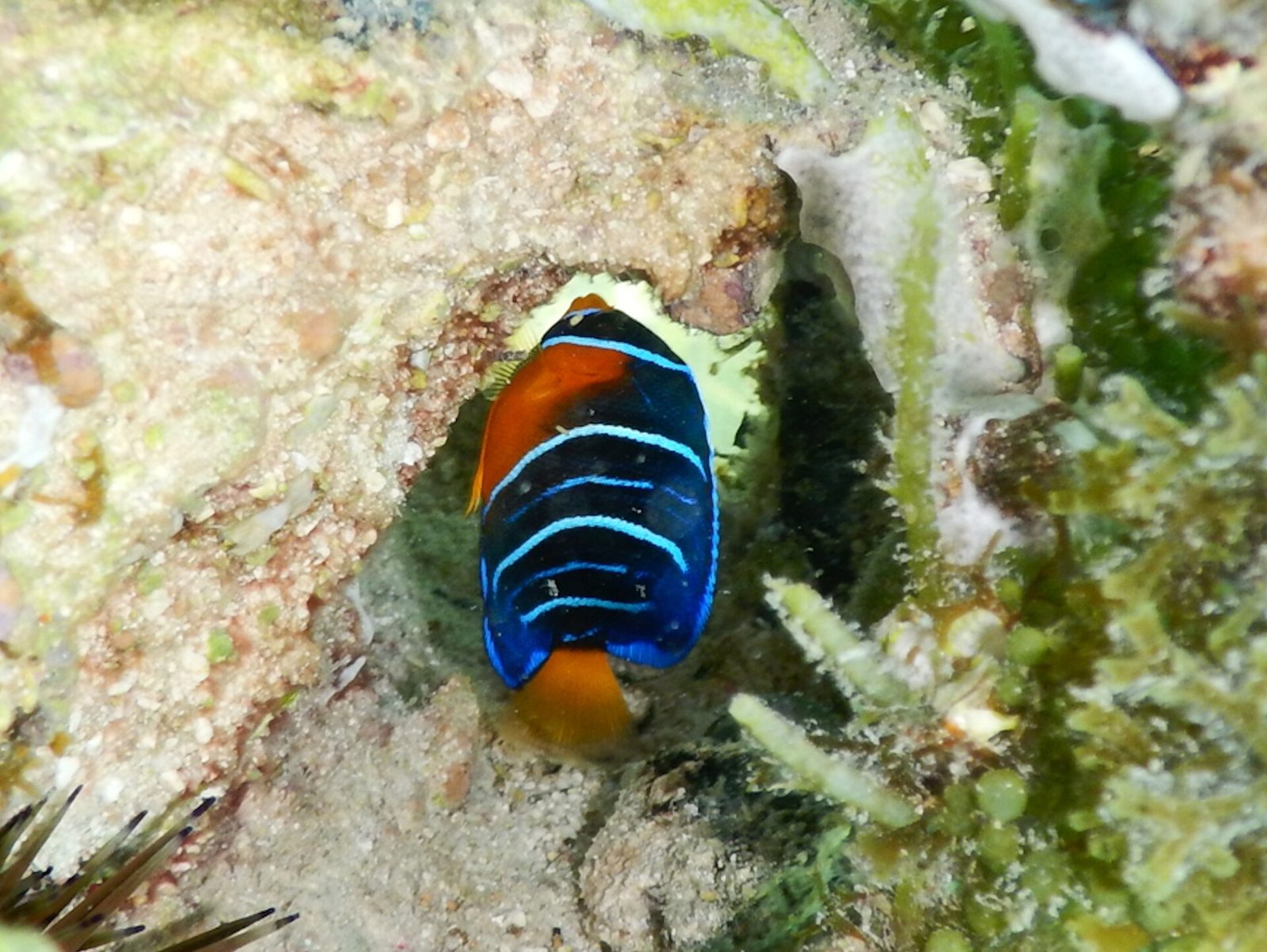
A queen angelfish, one of the showier reef fish of the Caribbean, and a good day's sighting on any shallow reef.Photo: Charlotte Kirchner (CC BY 4.0)
Bats at dusk, frogs after rain
The bats are the island's only native land mammals, and they are easy to see if you know to look up at the right minute. Stand on the pool deck at dusk and the first ones come out over the water and the trees — quick, small shapes taking insects on the wing. The lists for the territory give six or seven species depending on the source: the greater bulldog bat, also called the fishing bat, which takes small fish from the surface of calm water; the Antillean fruit-eating bat and the Jamaican fruit bat, which spread the seeds of the island's fruit trees; the red fig-eating bat; and the Brazilian free-tailed and velvety free-tailed bats, the fast, high fliers over the ridge. None is a threat to you.
The frogs are the sound of the island after dark, and St. Croix's chorus is its own. The red-eyed coqui (Eleutherodactylus antillensis) is native to the Virgin Islands and the most abundant frog across them, a small tree-and-shrub frog with an easily recognized call, singing from hidden places in the garden after rain. The whistling coqui of the drier islands — a single long whistle followed by clicks — is absent from St. Croix. The Virgin Islands mottled coqui (Eleutherodactylus lentus), an endangered frog found only in the Virgin Islands, has a soft clicking call and keeps to moist ground — hearing one is a matter of wet ground and luck. The white-lipped frog chirps a "pink-pink-pink" from crevices and under rocks near water.
Two of the loudest voices are introduced. The Cuban treefrog, established on St. Croix, has a croak that the islands' frog-count volunteers describe as a rusty gate; it is known to eat smaller frogs. The cane toad, brought in for pest control, gives a long shrill trill near ponds and streams — do not let a dog mouth one; its skin is toxic. And the Puerto Rican coqui — the famous two-note "ko-kee" — has been carried into the territory on landscaping plants and is displacing native frogs where it establishes. After an evening rain, take a flashlight into the wet corners of the garden; you will hear more than you see, and a phone recording of the chorus is a better souvenir than a photograph.
Mosquitoes, no-see-ums and the honest bug report
St. Croix has mosquitoes, and the one that matters is Aedes aegypti, a small black-and-white day-biter that breeds in any cup of standing water and carries dengue. The territory declared a dengue outbreak in August 2024 and it was still in effect into 2025, with cases recorded on St. Croix that year, and the CDC continues to flag the wider Americas as an area of ongoing dengue risk. Most visitors are never bitten badly and never get sick. But the sensible precautions are cheap: a repellent you will actually use, applied in the morning and again in the late afternoon; long sleeves at dusk if the wind has dropped; and no saucers of water left standing on the terrace. Check the current health advisory for the territory before you fly.
No-see-ums — sand flies, tiny biting midges — are the other complaint, and they are a beach and mangrove animal, worst on still evenings and after rain. You will not see them; you will feel a hot pinprick and find the welt later. The defense is the same repellent, and a wind.
The good news is geographic. The East End is the windward end of St. Croix; the trade wind keeps biting insects down, and the villa's veranda and pool deck face into it. On a normal breezy evening you will sit outside without a thought. It is the still, humid, wet-season evenings — August to October especially — that call for the long sleeves and the spray; our packing guide has the short list. What St. Croix does not have is worth saying too: no venomous snakes, and nothing on land bigger or more dangerous than a deer.
What not to touch
The manchineel is the one plant on this island that can actually hurt you. Hippomane mancinella grows on coastal beaches and in brackish ground among mangroves across the Caribbean; the National Park Service calls it "extremely toxic" and warns that all tissues of the plant are hazardous — the milky sap blisters skin, rain dripping off the leaves carries enough of it to burn, and the small green fruit that looks like a crabapple has earned the tree its Spanish name, manzanilla de la muerte, the little apple of death. On many islands the trees are marked with warning signs or red paint; on Buck Island the flat West Beach trail runs through a manchineel forest and the park tells you so. Do not shelter under one in a shower, do not handle the leaves or fruit, and do not burn its wood.
In the water, three things. Fire coral, the smooth yellow-brown growth on rocks and dead coral, stings on contact, like a nettle. Long-spined sea urchins wedge into crevices in the shallows and their brittle spines break off in a foot and stay there — painful, and a reason to wear reef shoes and look before you step. Jellyfish are around in the summer months; a rash guard covers most of what a jellyfish would touch. Touch nothing, and nothing will touch you.
On land, the animals to leave alone are the ones people are tempted to pet: the iguana with its tail and claws, the mongoose that carries rabies in Puerto Rico, the cane toad whose skin is toxic to dogs, the hermit crab that pinches hard if you pull at its shell. Every one of them, fed, becomes a problem for the next guest and for the birds and turtle nests around the villa. The single rule that covers all wildlife on St. Croix is the one your grandmother taught you about other people's things: look, do not touch.
Watching wildlife without doing harm
The island's wildlife rules are mostly common sense written down, and they are worth having in one place. Whales: 100 yards, by sea or land, under federal guidance. Sea turtles inside the East End Marine Park: 50 yards in the water, no touching, no chasing, and no lights or foot traffic on the nesting beaches at night in season. Sunscreen: mineral only — zinc oxide or titanium dioxide — because the territory bans the sale of sunscreens containing oxybenzone, octinoxate and octocrylene, and the reef is why. Feeding: none, of anything, ever. Shells: leave them, empty or not. Buck Island and the refuges: stay on the trails and off the closed islands — Green Cay is closed to the public, and Sandy Point is weekends only and shut from April through August.
Two habits do more good than any rule. The first is time of day: dawn and the last hour of light are when the animals move and when you are least likely to be in their way. The second is stillness. Walk and you see iguanas and mongoose; sit near a flowering bush, a pond edge or a reef for fifteen quiet minutes and you see hummingbirds, herons and turtles. If you find an animal in trouble — a stranded turtle, an injured pelican, a nesting turtle being disturbed — do not handle it. The territory's Division of Fish and Wildlife is the agency, the concierge can find the right number quickly, and the sea turtles guide has the turtle-specific instructions.
The island's real conservation work is the unglamorous kind — trapping predators around a turtle beach, keeping rats off a three-acre cay, ferrying lizards in boxes to an island where they can breed — and it is going well enough that a species extinct on the main island since the 1960s has, since 2022, been born there again. Visiting quietly and feeding nothing is the small part a guest can play.
Questions people ask
Are there dangerous animals on St. Croix?
Not in the way people mean. There are no large predators, and the territory's few snakes are non-venomous and rarely seen. The things that actually hurt visitors are small: the manchineel tree on some beaches (toxic sap and fruit), long-spined sea urchins and fire coral on the reef, jellyfish in the summer months, and day-biting mosquitoes. Do not handle a mongoose, and do not feed anything. Watch your feet on the reef and you will be fine.
Are green iguanas native to St. Croix?
Nobody can say for certain. A 2021 genetic study in the journal Biological Invasions found that iguanas across much of the Caribbean descend from pet-trade stock, but the U.S. Virgin Islands and Vieques carry a lineage related to iguanas native to Saba and Montserrat, one not reported in the pet trade, so an arrival by pre-Columbian people or by natural dispersal cannot be ruled out. Locally they are treated as neither fully native nor simply invasive.
Where can I see a St. Croix ground lizard?
Only on the offshore cays where it survives: Buck Island Reef National Monument, where about 1,500 lived by 2013 and the population is still growing, and Protestant Cay, the small hotel island in Christiansted harbor. Green Cay National Wildlife Refuge is closed to the public, and Ruth Cay is a man-made islet with no visitor access. On Buck Island, watch the sand around your bag at Turtle Beach — the lizards are curious. Look, photograph, never touch or feed.
Will I see whales from St. Croix?
Possibly, with luck and a calm morning. Humpbacks winter in the West Indies to mate and calve, and in the Virgin Islands the prime months are February and March, with sightings through April. St. Croix has no regular whale-watching operator that we could find as of 2026, so your best chances are from a boat charter or a high point facing open water on a flat day. Federal guidance is to stay at least 100 yards from any large whale, by sea or land.
Is the coqui frog on St. Croix?
Yes, one of them. The red-eyed coqui, native to the Virgin Islands and the most abundant frog across them, calls at night from trees and shrubs. The whistling coqui of the other islands is absent from St. Croix. The invasive Cuban treefrog, whose croak sounds like a rusty gate, is established on St. Croix, and the famous Puerto Rican coqui has been carried into the territory on landscaping plants. After rain, the garden is loud.
How bad are the mosquitoes and no-see-ums?
Manageable, but real. The Aedes aegypti mosquito bites by day and carries dengue; the territory declared a dengue outbreak in August 2024 and St. Croix recorded cases into 2025, so bring repellent and use it, especially at dawn and dusk and after rain. No-see-ums are tiny biting midges of sand and mangrove edges, worst on still evenings. The steady trade wind on the East End keeps both down. Check current health advisories before you travel.
Can I feed the iguanas or the mongoose?
Please do not. Fed iguanas lose their caution, gather in numbers, and end up on tables and in trouble; a big one defends itself with a whip of the tail. The mongoose is a rabies vector in Puerto Rico and an animal you should never handle anywhere. Feeding either changes their behavior and pulls predators toward nesting birds and turtle nests. Watch, photograph, and let them go about their day.
Can I see sea turtles from the villa?
You have a fair chance. Green turtles graze seagrass in the East End's bays and hawksbills work the reefs, and the reef sits right in front of the villa's beach. Inside the St. Croix East End Marine Park the rule is to stay 50 yards from turtles in the water: no touching, no chasing. Leatherbacks are a different trip — they nest at Sandy Point on the far west end, and the refuge closes April 1 to August 31 for the season. Our sea turtles guide has the full story.
When is the best time of year for wildlife on St. Croix?
Any month works for reptiles, birds and the reef, so choose by what you most want. February to April is whale season offshore. Leatherback nesting runs through the spring and summer, and hawksbill and green nesting on the East End's wild beaches runs roughly July through October. Around August the land hermit crabs march to the sea on certain nights to release their eggs. Winter adds North American migrant birds to the salt ponds.
Are there really deer on St. Croix?
Yes. White-tailed deer were introduced to all three U.S. Virgin Islands for recreational hunting in the late 1700s, hunting is no longer permitted, and the herds have grown. On St. Croix you meet them at the edges where field meets scrub, usually at dawn or dusk, and they are a real hazard on the East End roads in poor light. Drive slowly at those hours.
Doing it from The Cerulean
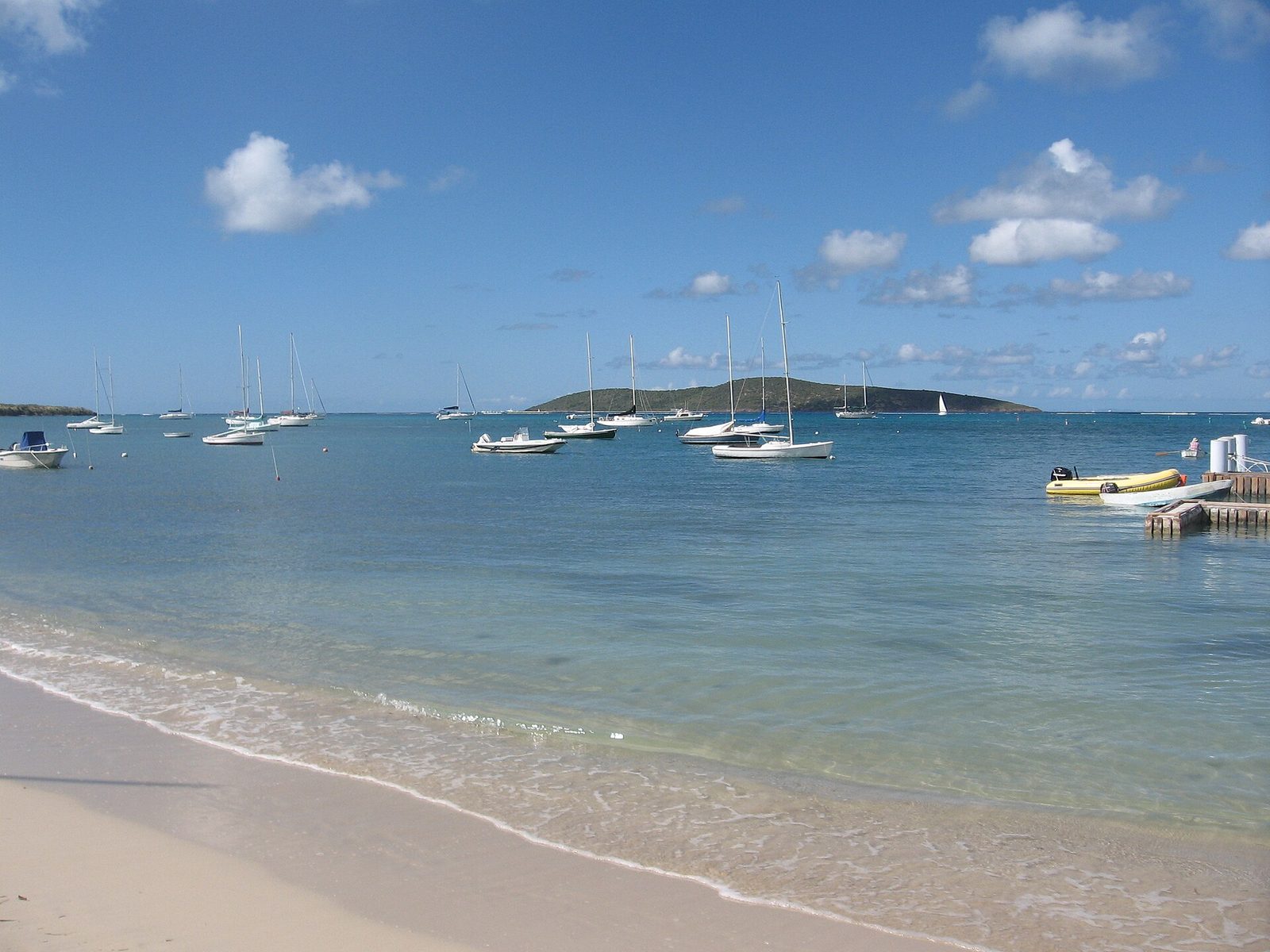
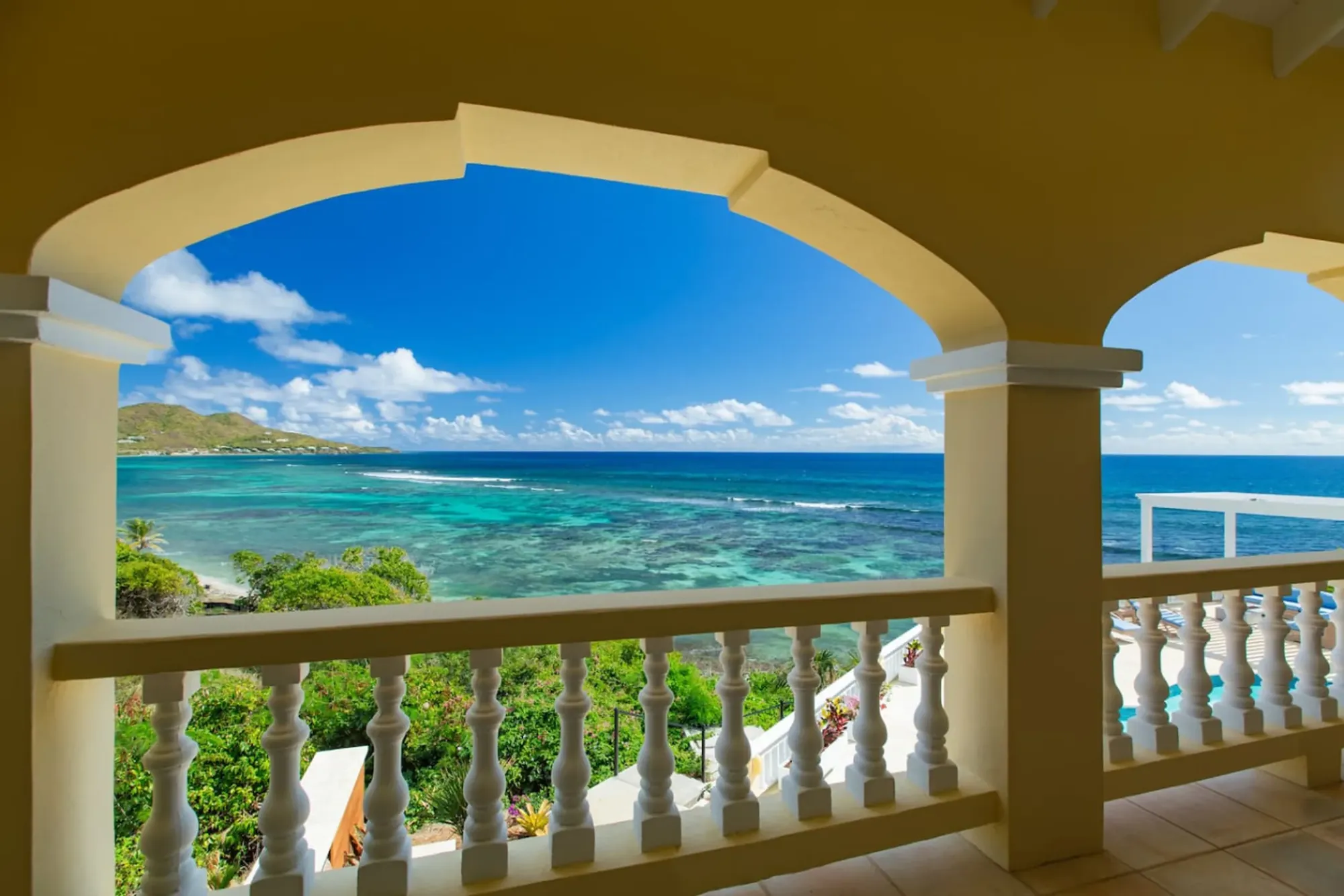
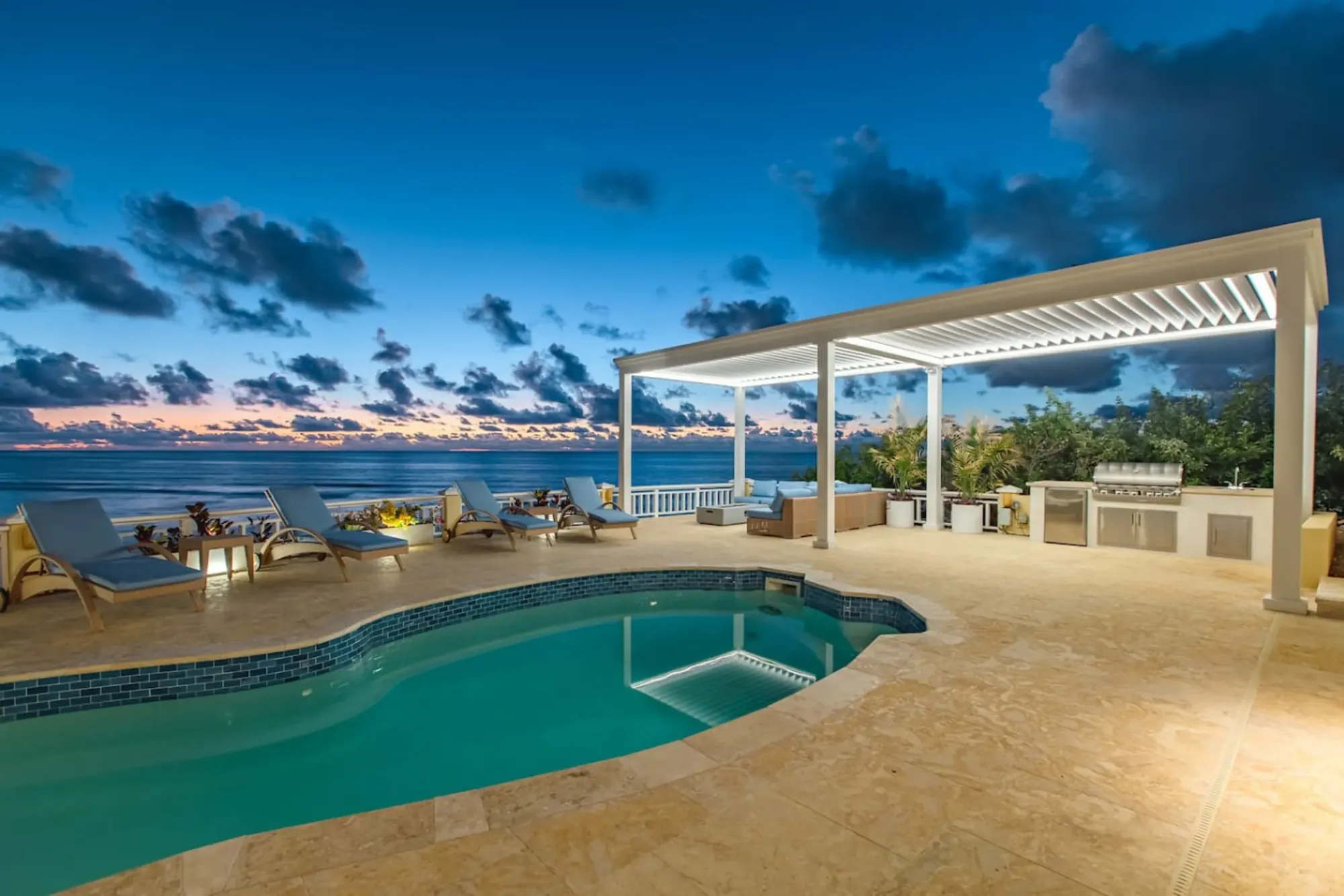
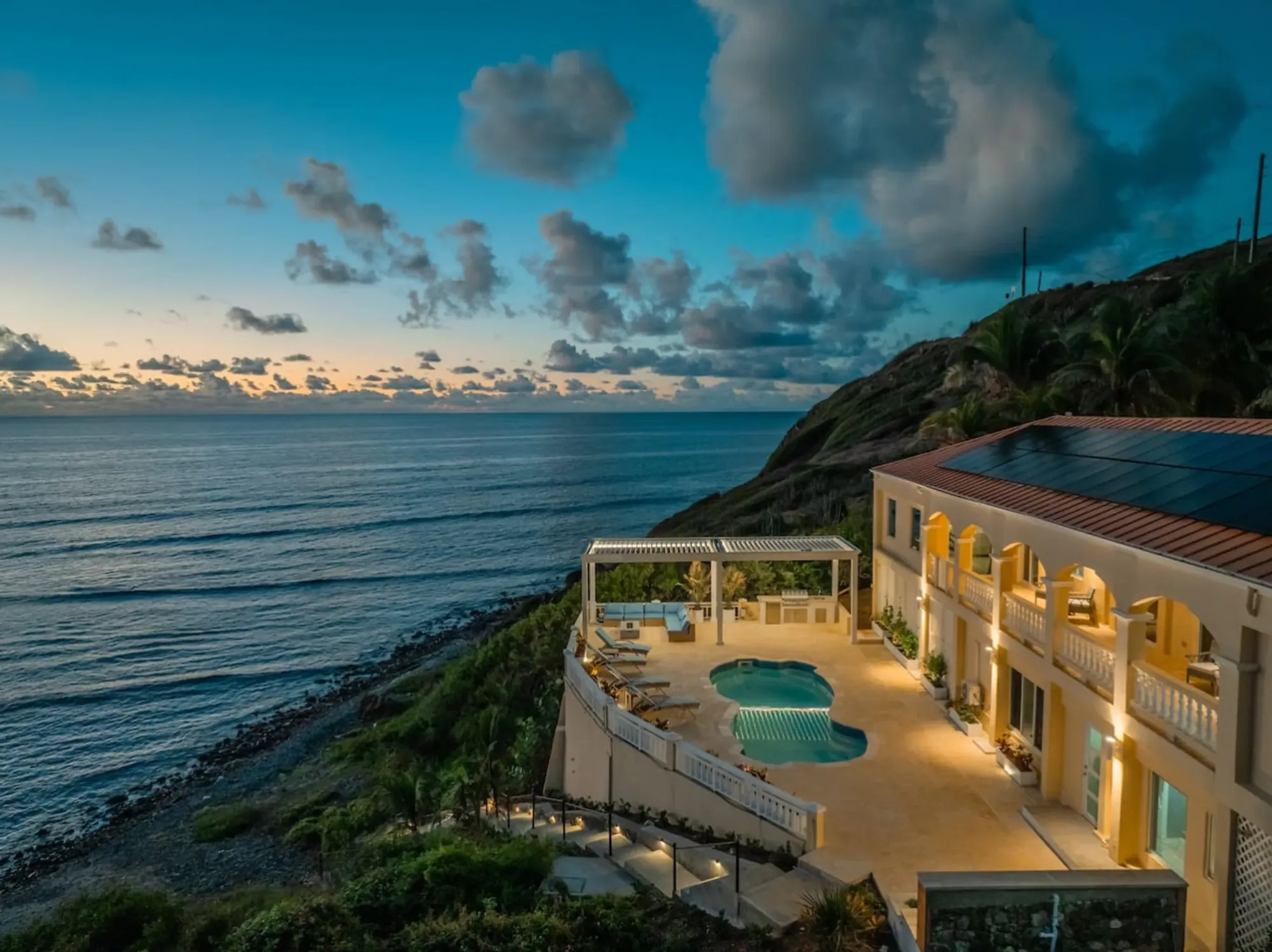
The villa is on the East End's southeast shore, facing the sunrise, with a reef directly in front of its private beach and dry scrub hills behind — which is to say, it sits inside the habitat this guide has been describing. A wildlife day here needs no itinerary. First light on the arched veranda with coffee: pelicans working the reef line, frigatebirds high over the point, bananaquits and hummingbirds in the plantings within arm's length. Mid-morning, the iguanas are up on the warm walls and branches; a mongoose will cross the drive sooner or later. A snorkel off the beach before lunch is where the turtles are, if they are anywhere. Dusk on the pool deck for the bats and the first frog after a shower, and a flashlight walk for the hermit crabs before bed — a full field day without leaving the property.
The short drives: Point Udall for sunrise and the ridge roads for deer, minutes away — headlights on and slowly; the East End ridge hikes for the dry-forest birds and the view over the marine park; Great Pond, ten to fifteen minutes west along the south shore, for terns, stilts and herons on the mudflats; the trail to Jack and Isaac Bay, five minutes to the trailhead, with the lights-out rules in mind in nesting season. The Buck Island boats out of the East End marinas pass Green Cay on the way to the only place you can walk among St. Croix ground lizards. Christiansted, about fifteen to twenty minutes, adds Protestant Cay's lizards by two-minute ferry — and the north-shore rainforest, the wet, green other half of the island, is the day trip for a different set of birds and trees.
The far trips are two: Sandy Point, roughly an hour west, on a weekend outside the April-to-August closure, for the salt-pond birds and the two-mile beach; and, in season, a Turtle Watch night for a leatherback, which the sea turtles guide explains how to book. For whales, February through April, ask the concierge which charter captains are willing to look; we know of no scheduled whale boat on St. Croix, and a calm morning matters more than the operator. What to pack for all of it: reef shoes, a rash guard, mineral sunscreen, repellent, a small pair of binoculars, and a red-light headlamp for the beach at night. What to leave: shells, food for the animals, and the idea that wildlife is somewhere else. On this end of the island it is on the wall by the pool, in the tree over the drive, and diving into the sea in front of the breakfast table.
The arched veranda faces the bay and the reef in front of the villa — the best seat on the East End for pelicans at first light.Photo: The Cerulean
The Cerulean
Twelve of you, one private beach.
The Cerulean sleeps twelve on St. Croix's quiet East End — check your dates.