

Hydrolab: when scientists lived on the wall
From 1977 to 1985, the apex of Salt River Canyon was home to the only scientific saturation-diving habitat in the world. Hydrolab was NOAA's first undersea laboratory: a small steel chamber, built in 1966 for about $60,000 and used as a research station from 1970, that let four aquanauts live on the sea floor for up to two weeks at a time. It spent the early and mid-1970s in the Bahamas, where it ran roughly 100 missions, and in 1977 it was set down at 50 feet at the head of the canyon whose walls divers now moor on. Some 80 missions ran here over the next eight years.
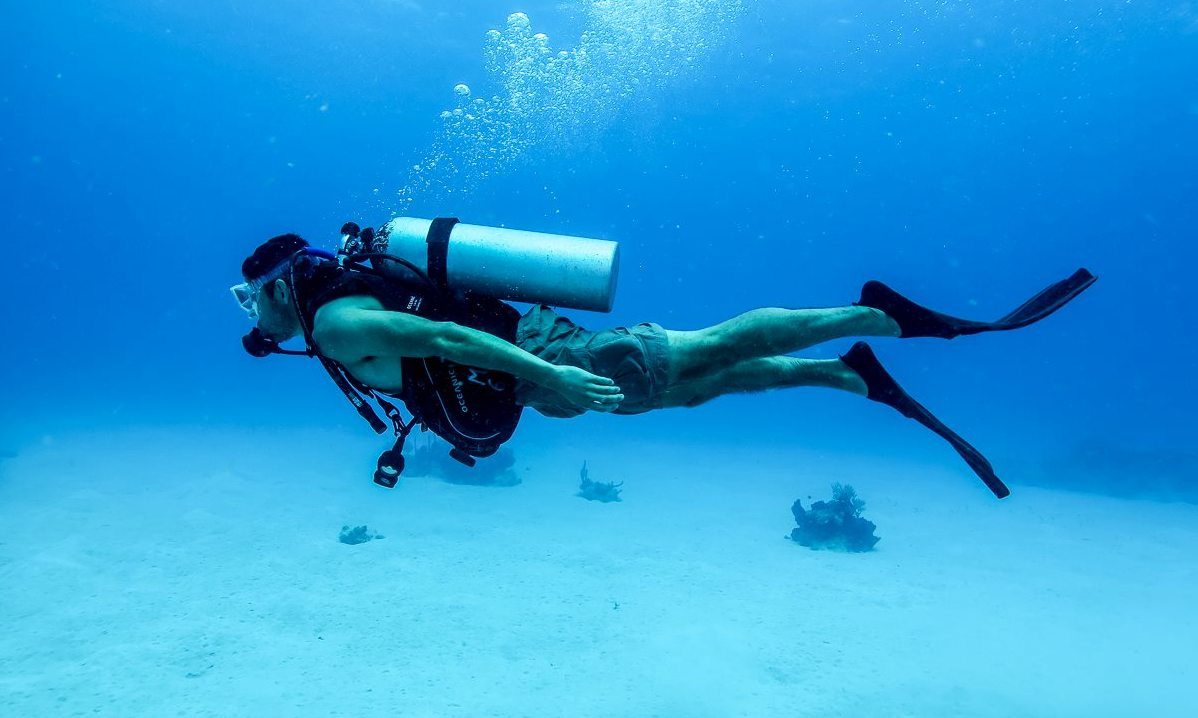
The reason to live under water is bottom time. A diver breathing from the surface has minutes at depth before decompression rules send them up; a diver who stays saturated at habitat pressure can work all day. B. Nyden, writing for NOAA's National Undersea Research Program from the West Indies Laboratory, put it in numbers: at 95 feet, a scientist working out of Hydrolab could spend up to six hours in the water at a time, and teams of four could stay down for two weeks. Proposals were accepted in fisheries, marine pollution, sea-floor processes and ocean services such as diving medicine.
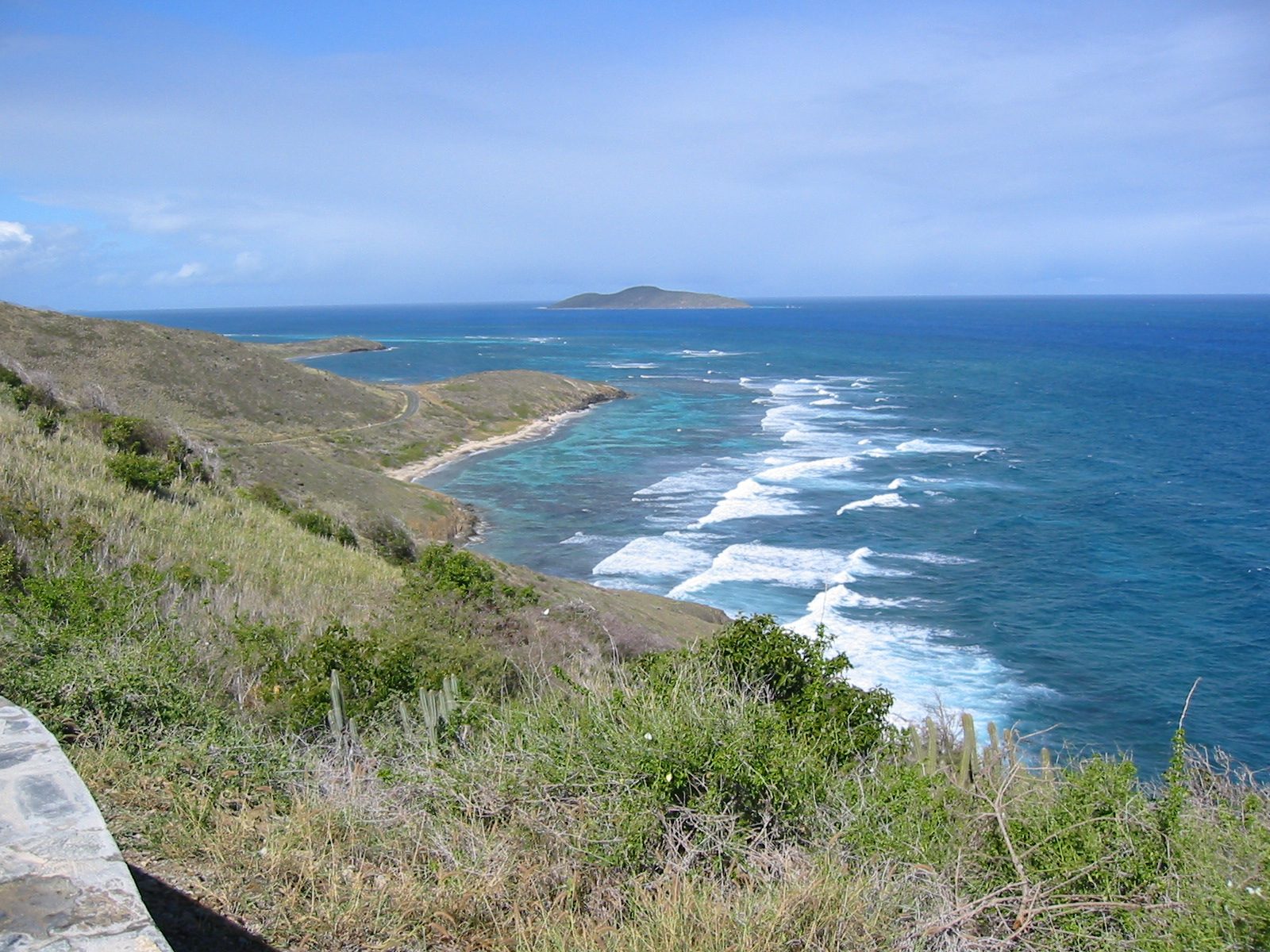
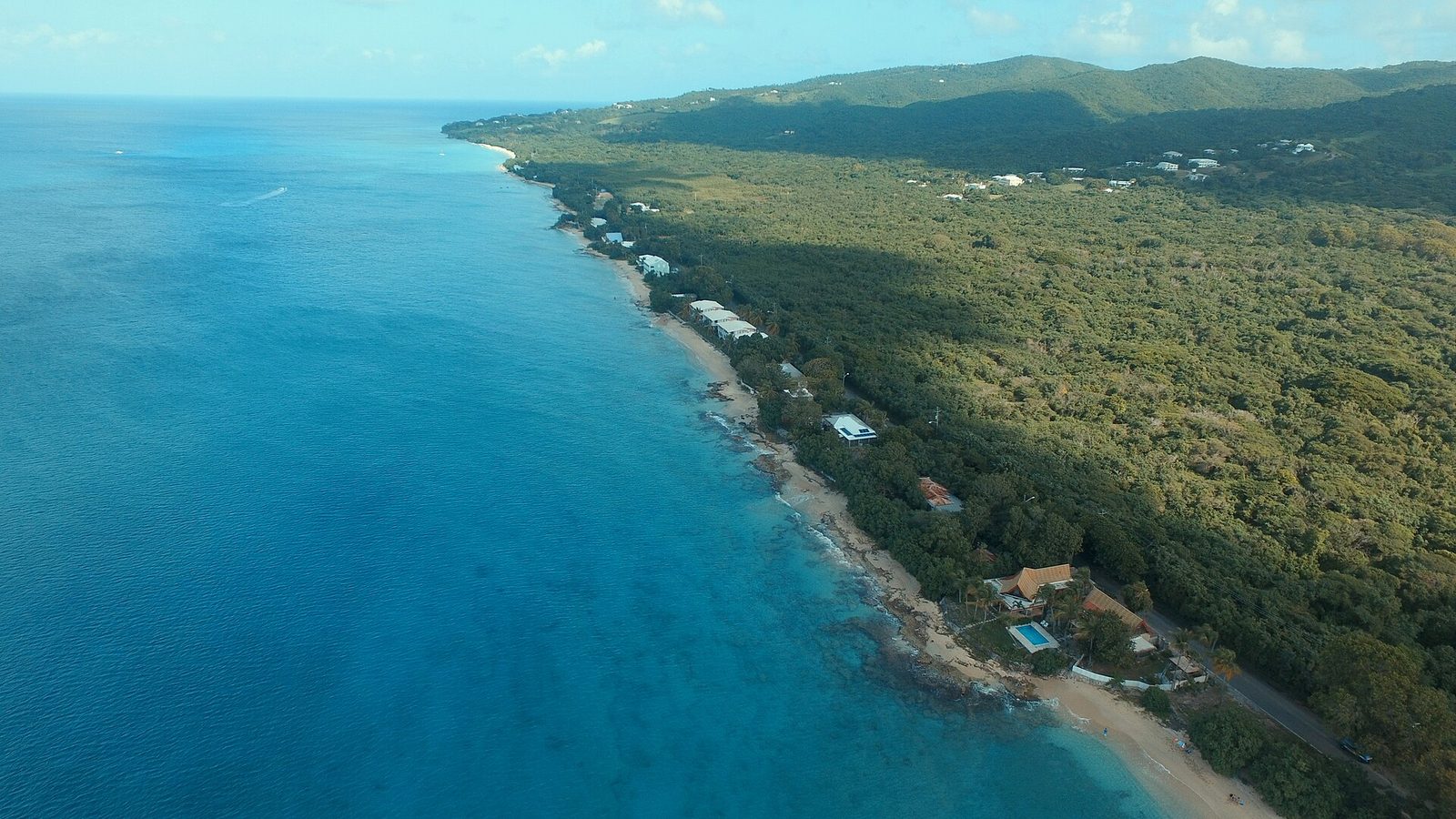
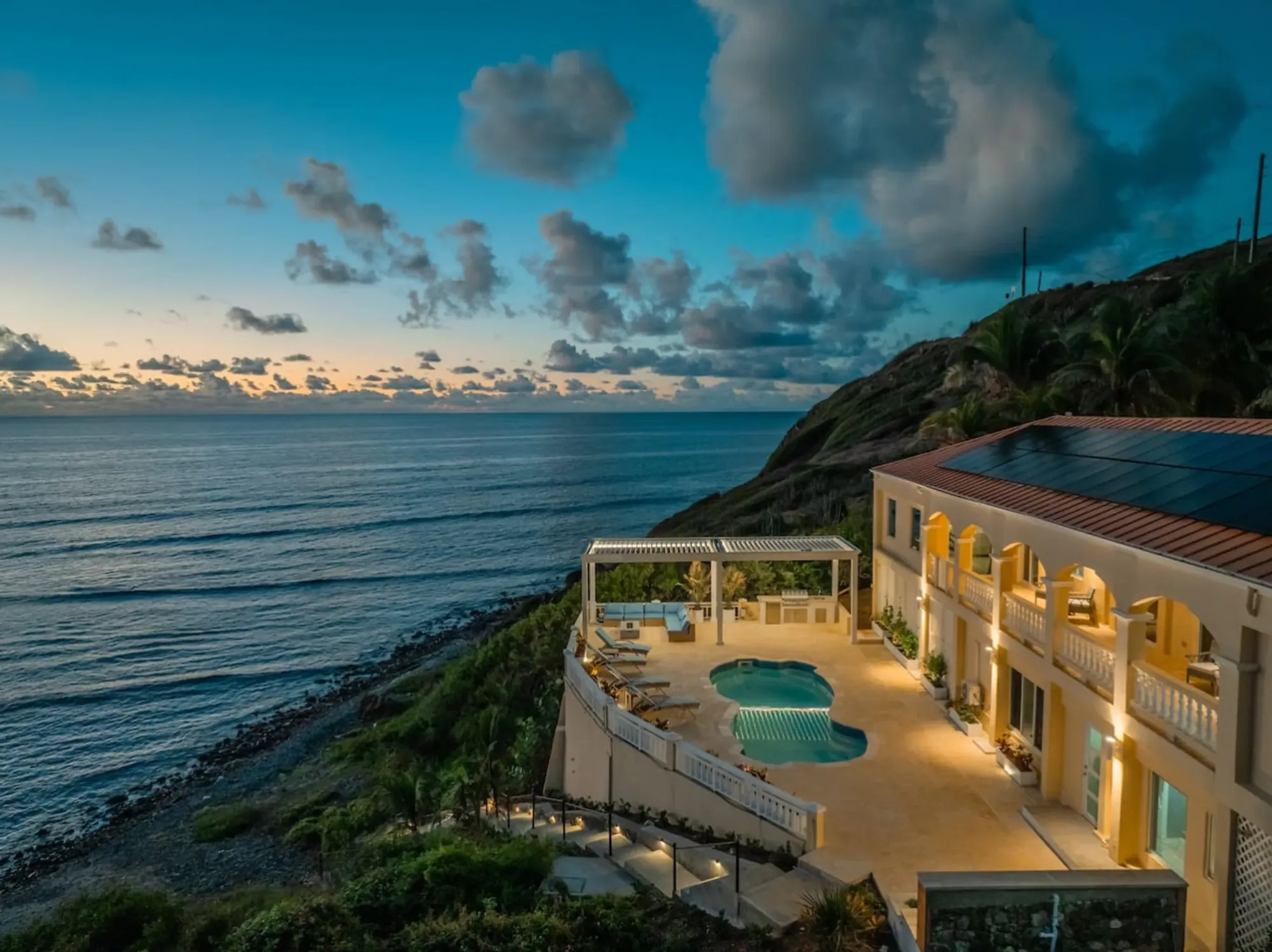
The program was based, of all places, on the East End. Nyden's address on the paper is the West Indies Laboratory, Teague Bay, Christiansted, the field station whose scientists, Dennis Hubbard among them, wrote much of what we know about the north-shore reefs and the wall. So the same coast that hosts The Cerulean is where the science of the wall was run from. Salt River Canyon, Nyden noted, offered both soft and hard bottom to study, a practical reason to put a habitat there rather than against the sheer face at Cane Bay.
NOAA's heritage page counts more than 700 scientists over about 180 missions across the habitat's whole life; Dr. William Fife spent 28 days in saturation running physiology experiments on researchers including Sylvia Earle. Hydrolab was decommissioned in 1985 and went to the Smithsonian's National Museum of Natural History, and later to NOAA headquarters in Silver Spring, Maryland. Nyden's abstract, written while it was still down there, already looked past it: the program was about to put a new, larger, mobile habitat into service to replace it.
“Hydrolab is the world's only scientific saturation diving habitat.”
B. Nyden, NOAA National Undersea Research Program, West Indies Laboratory, Teague Bay, St. Croix
Aquarius, Hurricane Hugo, and where the lineage went
That new habitat was Aquarius. It was built in Victoria, Texas, in 1986, designed by Perry Submarine Builders of Florida, and originally named the George F. Bond after the Navy physician who pioneered saturation diving. NOAA put it to work in Salt River Canyon, where Hydrolab had sat, in the late 1980s. Then, in 1989, Hurricane Hugo crossed St. Croix. Aquarius went to Wilmington, North Carolina, for repairs and refurbishment, and in 1993 it was redeployed in the Florida Keys, where it still sits 62 feet down. The University of North Carolina Wilmington operated it until 2013; Florida International University took ownership in October 2014 and runs missions of four scientists and two technicians averaging ten days.
So the lineage that began in the Bahamas and matured in Salt River Canyon is alive, just not here. That is worth knowing when you dive the West Wall: you are diving the place where undersea living was worked out for the American research program, the same canyon apex, the same walls the aquanauts worked along for up to six hours at a stretch. The exact spot where the habitat sat is not marked, and we will not invent one; ask your boat crew what they know, and take a long look down the canyon from the mooring.
If the habitats interest you, two things are within reach on St. Croix. One is the Aegir, the retired habitat among the shallow wrecks at Butler Bay, which the west-end boats dive in recreational depths. The other is the canyon itself, dived knowing what happened there, with Hubbard's shelf-edge transects from those years still the best description of what you are swimming over. Neither needs a museum ticket. Both need a calm morning and a boat.
- 1966Hydrolab built, for about $60,000
- 1970Hydrolab begins service as a research station, first in the Bahamas
- 1977Hydrolab moved to the apex of Salt River Canyon, St. Croix, at 50 feet
- 1977–1985About 80 missions run from the West Indies Laboratory at Teague Bay
- 1985Hydrolab decommissioned and sent to the Smithsonian
- 1986Aquarius built in Victoria, Texas, to replace it
- 1989Hurricane Hugo hits St. Croix and Aquarius is pulled for repairs
- 1993Aquarius redeployed in the Florida Keys, where FIU runs it today
The Christiansted and north-shore shops open in 2026
Names have moved on St. Croix, so here is the list as of August 2026, checked against each shop's own site or current listings, starting in Christiansted because it is closest to the East End. Blue Salt Divers is the dive center on the boardwalk at 1000 King Street, Suite 6, and the continuation of Dive Experience, the island's oldest dive operation, founded in 1983 by Michelle Pugh of the Women Divers Hall of Fame. It runs the Lil' Salty on morning and afternoon two-tank boat dives, night dives, lionfish hunts and shore dives, and teaches PADI from Discover Scuba through Divemaster with specialties including Deep, Wreck and Nitrox. Phone 340-773-3307.
St. Croix Ultimate Bluewater Adventures, which everyone calls SCUBA, opened in July 1998 and now runs two shops. The Christiansted store is at 1104 Strand Street, Suite 109 (its site suggests 81 Queen Cross Street for your phone's map), open daily from 7:30 am to 6 pm, until 5 on Sundays; the Frederiksted store is open 8:30 to 5. It runs two custom dive boats to the walls, reefs, wrecks and pier, night dives, and Buck Island, and teaches Discover Scuba, PADI Open Water, Advanced, ReActivate and Divemaster. Its site listed certified-diver boat dives at about $155 when we checked. Phone 340-773-5994.
On the north shore proper there are two names, and they can confuse. Sweet Bottom Dive Center is the shop across the road from Cane Bay beach, with a second base at the Carambola resort next door: guided shore dives daily in small groups, boat dives several times a week, night dives at the pier or the Davis Bay wall, Discover Scuba and Open Water, nitrox fills, rentals; PADI 5 Star, phone 340-773-3483. Cane Bay Dive Shop, the older name, keeps its storefront at 2 Strand Street in Frederiksted these days (open seven days, 8 to 5) and launches the Ibis from Salt River, but still guides shore dives at Cane Bay and the pier and boat dives to the wall and the wrecks; PADI 5 Star IDC, phone 340-772-0715. Book ahead and confirm the meeting point.
The canyon's home shop has been Anchor Dive Center at Salt River Marina, the only dive operation based inside the national park, running three boats mainly in and around the park. It appears in current listings and in our directory research from this month, but its website did not answer when we checked, so confirm it by phone rather than planning a week around it. If it is running, it is the closest boat to the Salt River walls, about 30 to 35 minutes from the villa.
The Frederiksted shops, and a name that changed
The west end has three verified operators, and one of them has a new name. The small-group shop at 202 Custom House Street, a hundred steps from the pier, was N2theBlue Scuba Diving for years, and that is the name most guidebooks and old reviews still carry. It now trades as Nep2une Scuba Diving, at the same address, with the same format: guided groups capped at six, small boats, shore dives at the pier and boat dives to the west-end wrecks and reefs, open 8 to 5, phone 340-227-1915. Its training is through SSI and SDI/TDI rather than PADI, and it offers a Try Dive at the pier for the uncertified to about 40 feet. One warning: the old web address, n2theblue.com, no longer serves the dive business. Use n2scubadiving.com.
SCUBA's Frederiksted store, above, gives the west end a second boat operation, and Cane Bay Dive Shop's storefront on Strand Street is a third door you can walk into. Crucian Adventure Divers, also in Frederiksted, is in our directory as a guided-dive and instruction operator working the pier, the wrecks and the west-end reefs; we have not re-checked its schedule this month, so treat it as a call-first option. By our count, Frederiksted has as many dive shopfronts as the rest of the island combined, which tells you where the calm water is.
Two housekeeping notes from our research file, so nobody drives to a door that is not there. Dive Experience is now Blue Salt Divers, on the Christiansted boardwalk. ScubaWest, the historic west-end shop, no longer appears in any current operator listing, and we do not list it. If a listing elsewhere names a shop not in this guide or in the directory, check its site for a 2026 date before you rely on it. St. Croix's dive scene is small enough that the shops know each other; any of them will tell you who is running, and small groups are the island norm.
Setting up a St. Croix dive day
- Decide which coast the weather favors that morning: north shore for the walls, west end for the pier and wrecks.
- Call or book online with a shop on that coast a day or two ahead, and say your certification level and how many dives you have logged.
- Bring your certification card and a logbook if you have one, and fill in the shop's medical questionnaire truthfully.
- Eat lightly, skip the alcohol the night before, and drink water on the drive over.
- Arrive at the shop or meeting point 30 to 45 minutes before departure to fit gear.
- Agree a maximum depth and turn pressure with your buddy and the guide before you go in.
- Log the dive, rinse the gear, and check tomorrow's forecast before you leave the shop.
Not certified yet? Discover Scuba, referrals and getting your card here
You do not need a certification to breathe under water on St. Croix; you need an instructor. Blue Salt Divers, SCUBA and Sweet Bottom all list PADI Discover Scuba Diving, the one-day introduction that pairs a briefing and confined-water practice with a shallow guided dive, and Nep2une runs its Try Dive at the Frederiksted Pier to about 40 feet. The pier is where most of these happen, for good reason: it is calm and shallow, and it is full of the small animals that make a first dive feel real. None of these experiences make you a diver. They tell you whether you want to become one.
If you already know you do, the shops teach Open Water certification on island, and St. Croix is a kind place to learn: warm water, short boat rides, a shallow training site with a lot to look at. Ask each shop how many days its course runs, because it varies with the student and the sea. The faster route is a referral: do the classroom and pool sessions at home and bring the paperwork, so your St. Croix days go to the open-water dives. Blue Salt, SCUBA and Sweet Bottom teach PADI; Nep2une teaches SSI and SDI/TDI, which are widely recognized and can usually be cross-referred, so ask before you assume.
For divers who already hold a card, two more options earn their keep here. Advanced Open Water, which Blue Salt, SCUBA and others teach, includes a deep dive and a navigation dive in the PADI system and is a sensible thing to complete on a wall island; Blue Salt's specialty list adds Deep Diver, Wreck, Night and Nitrox. And if it has been years since your last dive, SCUBA lists PADI ReActivate, the refresher that gets you comfortable in a pool before the wall reminds you that you forgot how to clear a mask. Children: the agencies set minimum ages for junior programs and the shops enforce them, so ask when you book; the family section further down has the rest.
What you might see, and what you might not
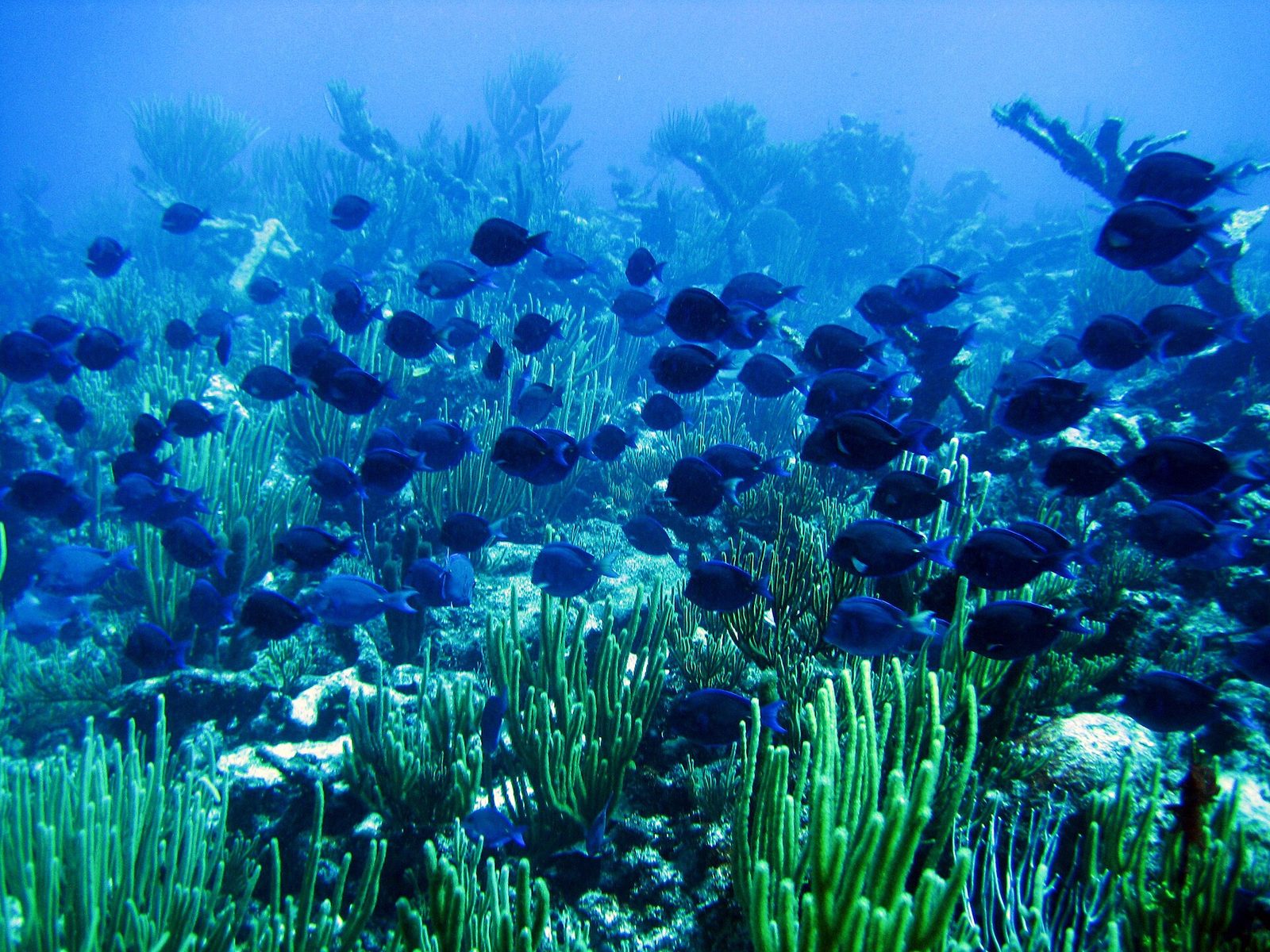
Every dive-site page in the Caribbean lists sharks. Here is what the St. Croix walls actually hold. The Salt River regulars are black durgon, creole wrasse, squirrelfish, jacks, groupers, permit, barracuda, snapper and grunts, with turtles, eagle rays and dolphins frequent; blacktip reef sharks are on the East Wall list, hammerheads occasionally, and humpback whales in the February to March migration. On a typical two-tank morning you will very likely see a turtle, a barracuda off the mooring line, angelfish and parrotfish on the pinnacles, and the wall going blue. You may see a shark. You will probably not see a whale, though people do.
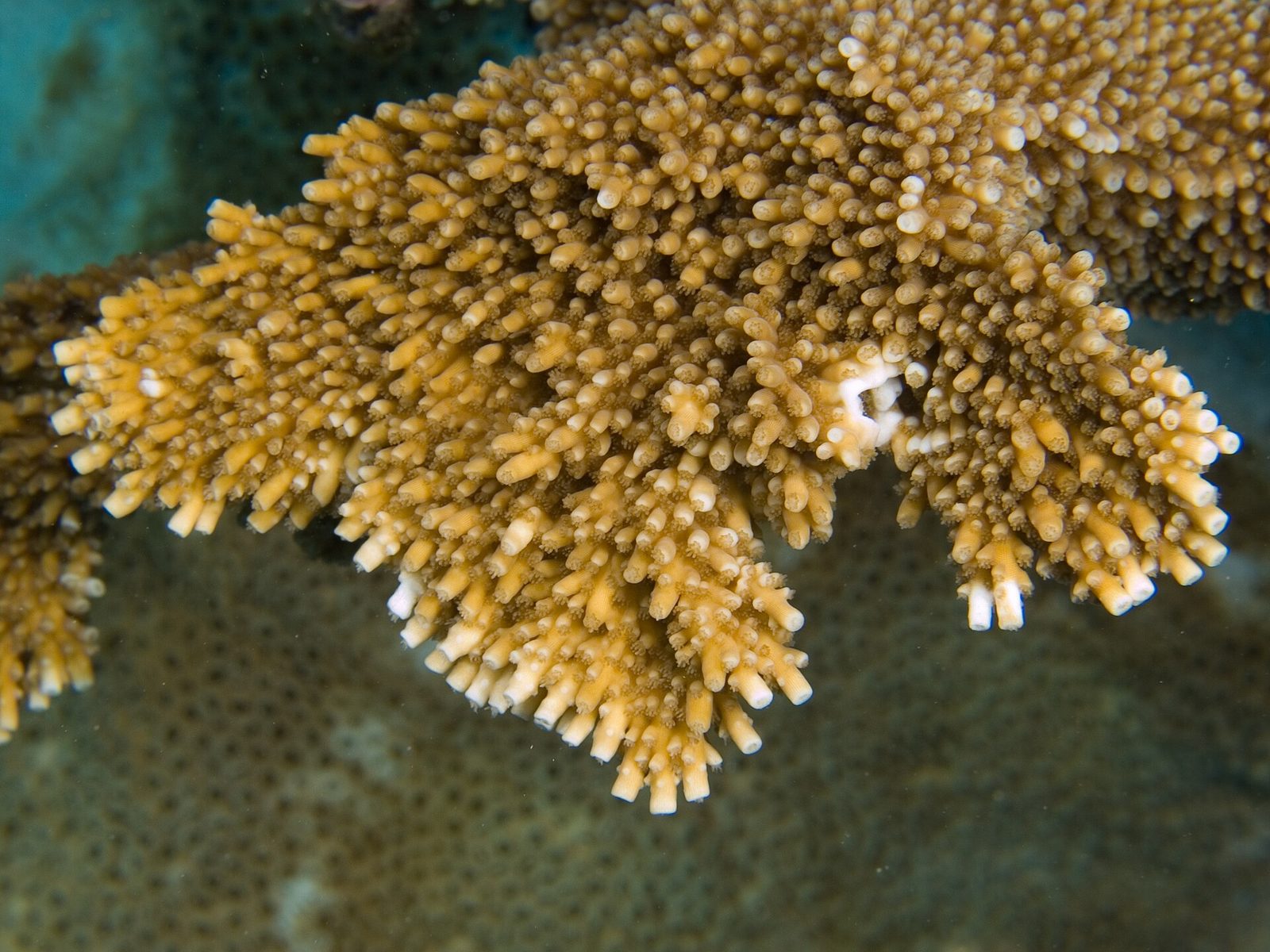
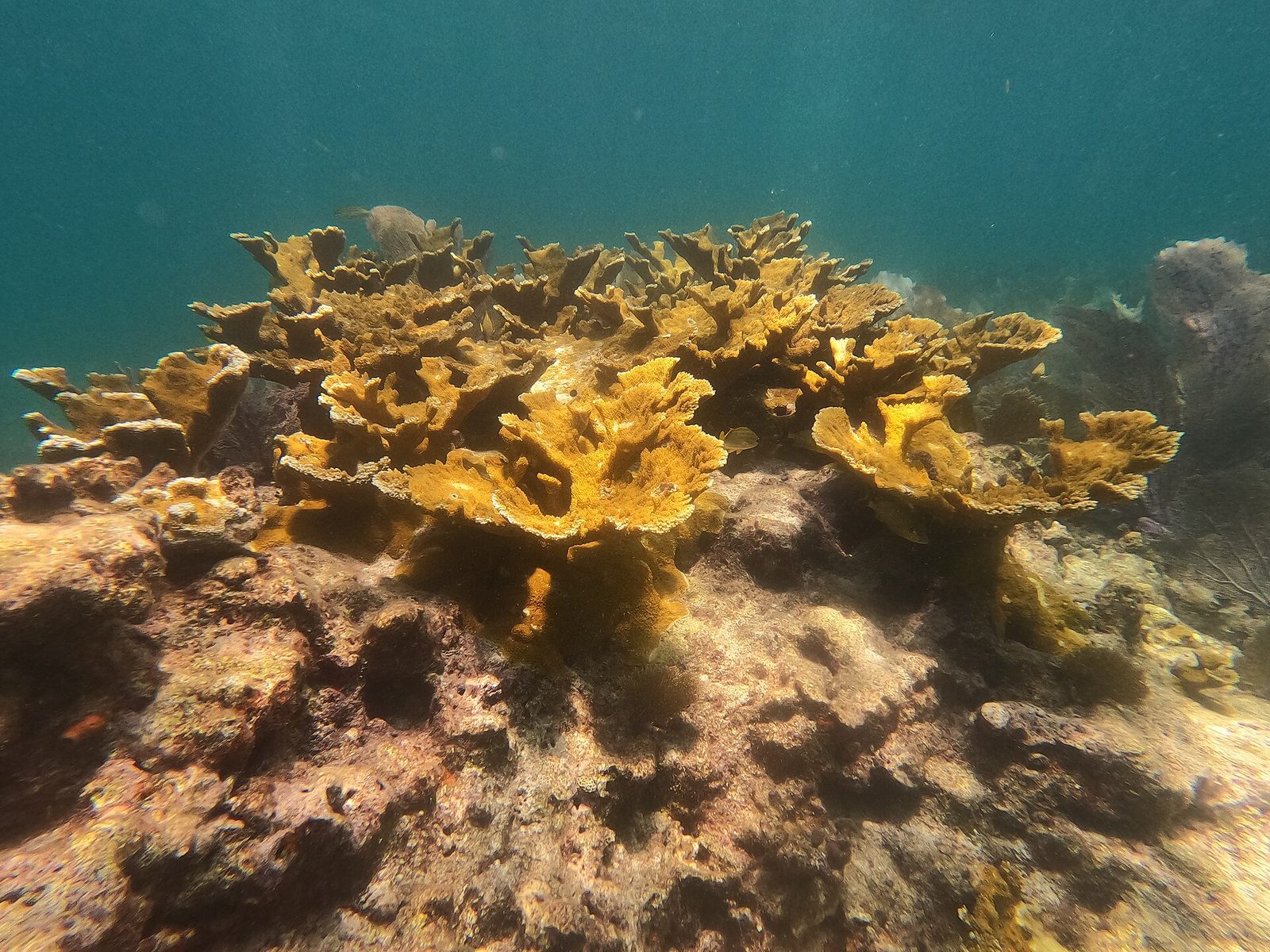
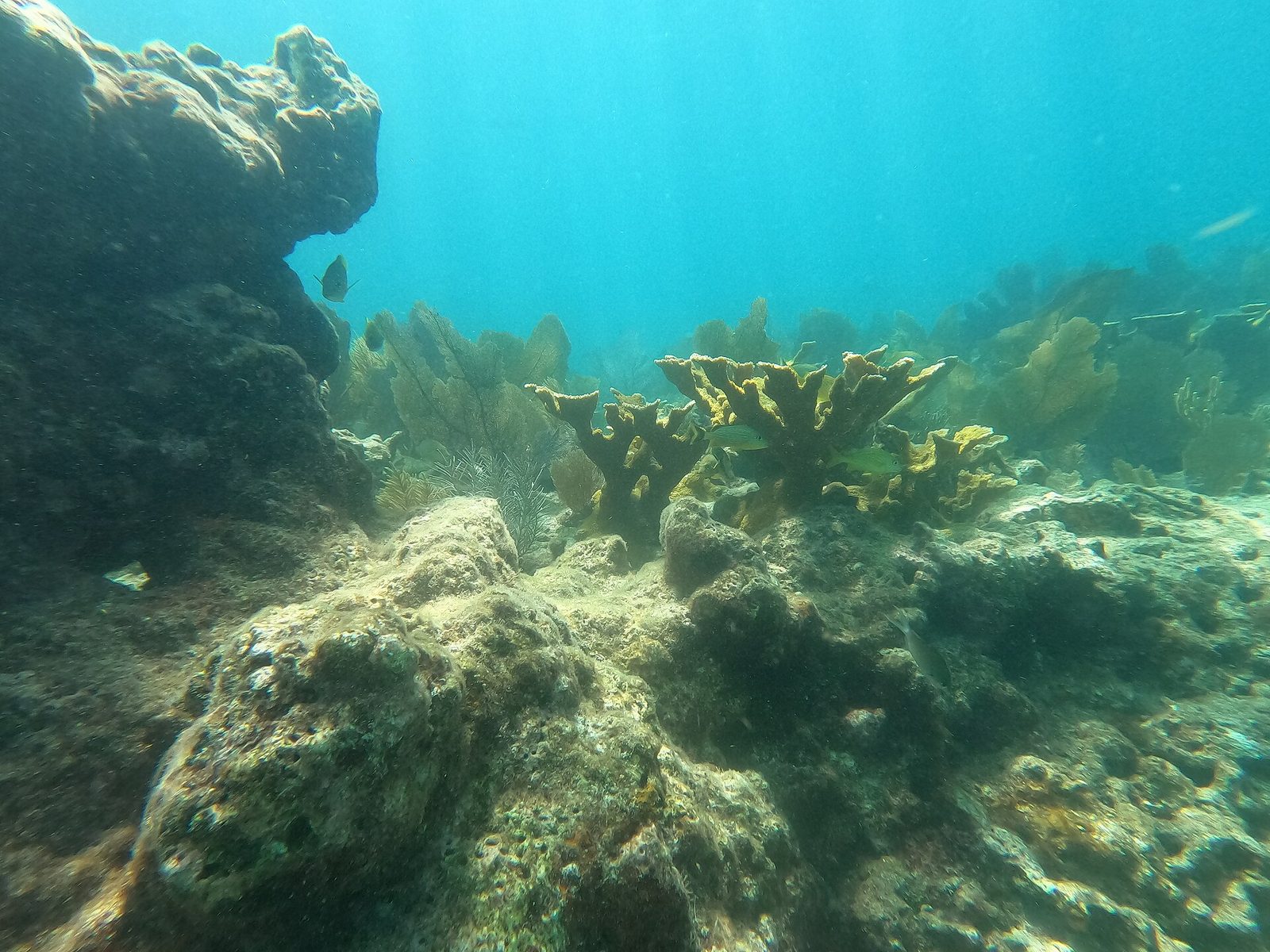
The wall itself is the reliable spectacle, and it changes with depth in a way you can watch. Down to about 60 or 70 feet it is a coral wall: star and brain corals on the pinnacle tops, plate-like lettuce corals below, sponges everywhere. Below that, per Hubbard's transects, the stony corals thin and the face belongs to gorgonians, black coral and the orange sclerosponges he recorded from around 200 feet, well past where you should be. Purple tube sponges, deep-water gorgonians and black coral saplings are found on the Salt River walls. Look into the overhangs for lobster and eels, out into the blue for jacks and eagle rays, and up on the way back for the barracuda.
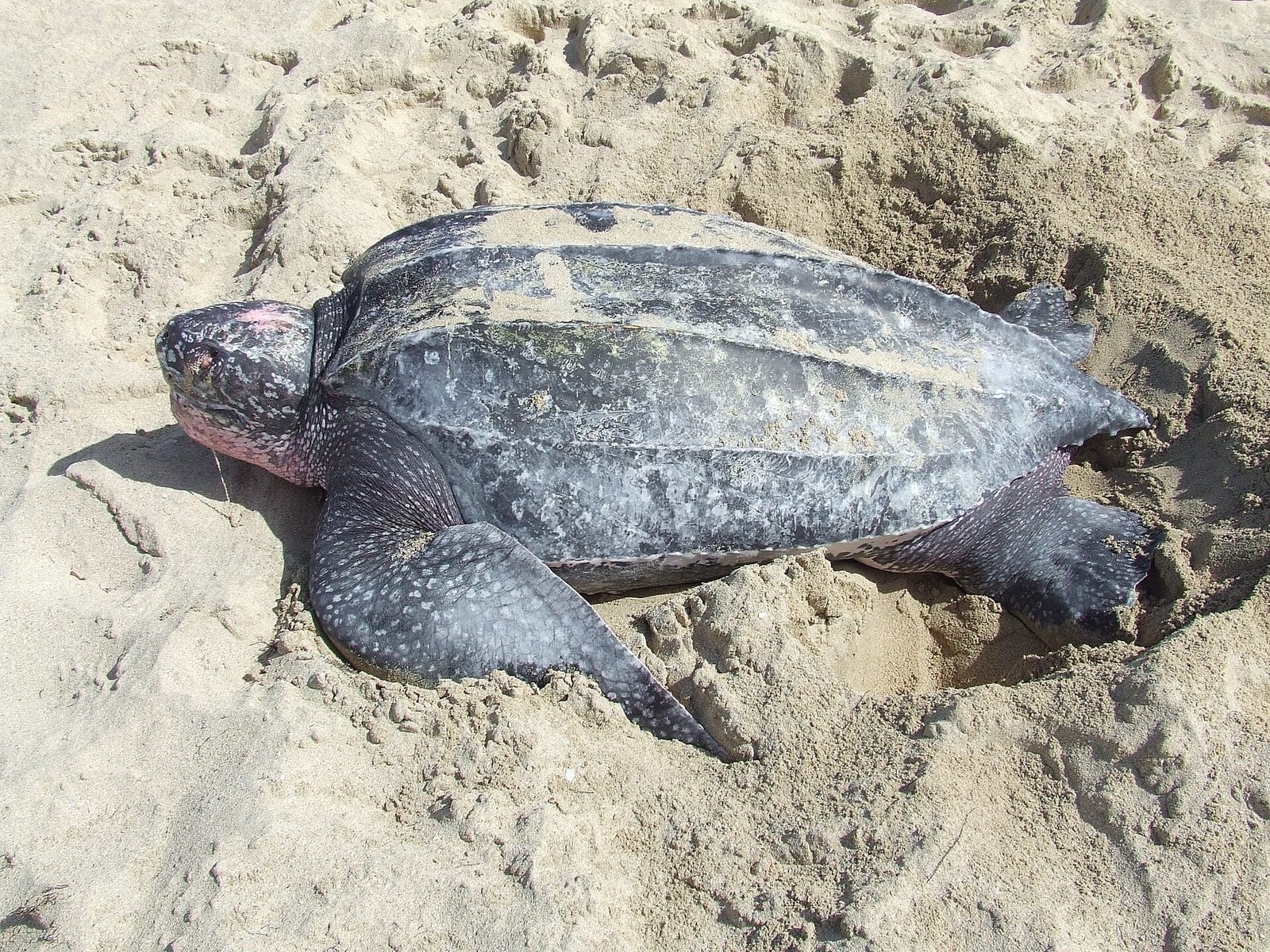
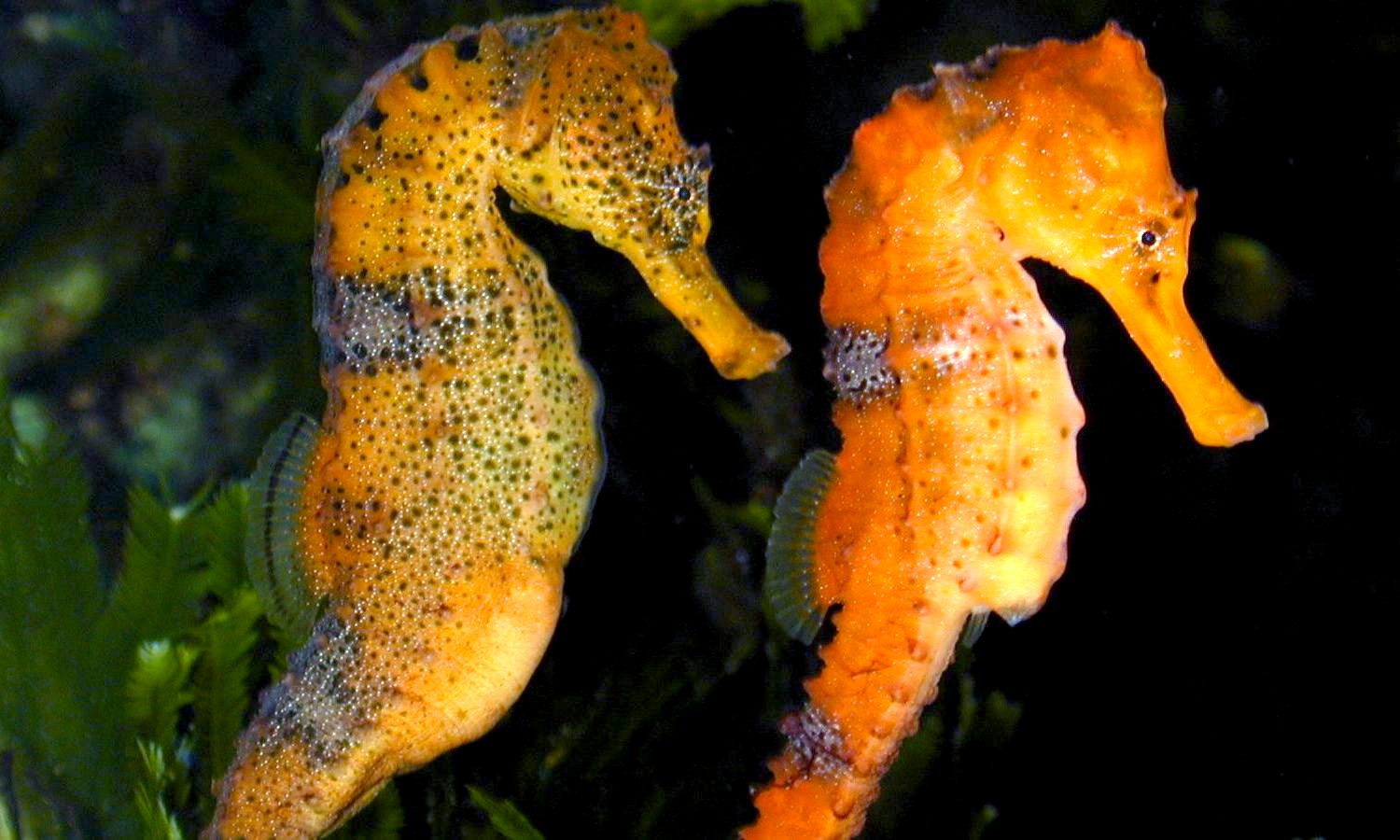
Turtles are the animal most people want, and they show up often enough that we wrote a separate guide to telling a hawksbill from a green. Lionfish, the invasive Indo-Pacific species, are common enough that Blue Salt runs dedicated lionfish hunts; if your guide carries a short spear, that is probably why. Seahorses and frogfish live at the pier, not on the wall. Do not expect macro on a wall dive or a wall on a pier dive.
The honest caveats. Visibility is not Bonaire: 20 to 60 feet at Cane Bay depending on season and runoff, 60 to 80 at Salt River, occasionally 100. Coral cover is modest by the standards of old photographs, about 30 percent near the break in Hubbard's transects and dropping with depth; the structure is in the pinnacles and the wall rather than the flats. And nothing is guaranteed. A dive with no shark and no whale, on which you watched a turtle graze for four minutes at the lip of a drop that ends four kilometers down, is still a very good dive.