

The CeruleanSt. Croix · U.S. Virgin Islands
Salt river

Salt River's Bio Bay: Night Kayaks, Moon Math & the Mangroves

One of the world's few year-round bioluminescent bays, the moon math that makes or breaks the night, and the three boats worth booking.

Photo: Kborer (Public domain)

Salt River Bay is a mangrove-lined inlet on St. Croix's north shore, about 35 minutes from the villa, and on a dark night the water in its back lagoon lights up when you touch it. The glow is alive — a dense population of a single dinoflagellate, Pyrodinium bahamense — and this is one of only a handful of bays anywhere where it performs all year. This guide covers what glows, how bright it actually is, why the moon decides your night, the three kayak operators we verified for 2026, and the park around all of it.

Where it is on St. CroixChristianstedFrederikstedPoint UdallThe CeruleanSalt River Bay National Historical Park and Ecological Preserve
Where it is. Island outline © OpenStreetMap contributors (ODbL).

What Salt River Bay actually is

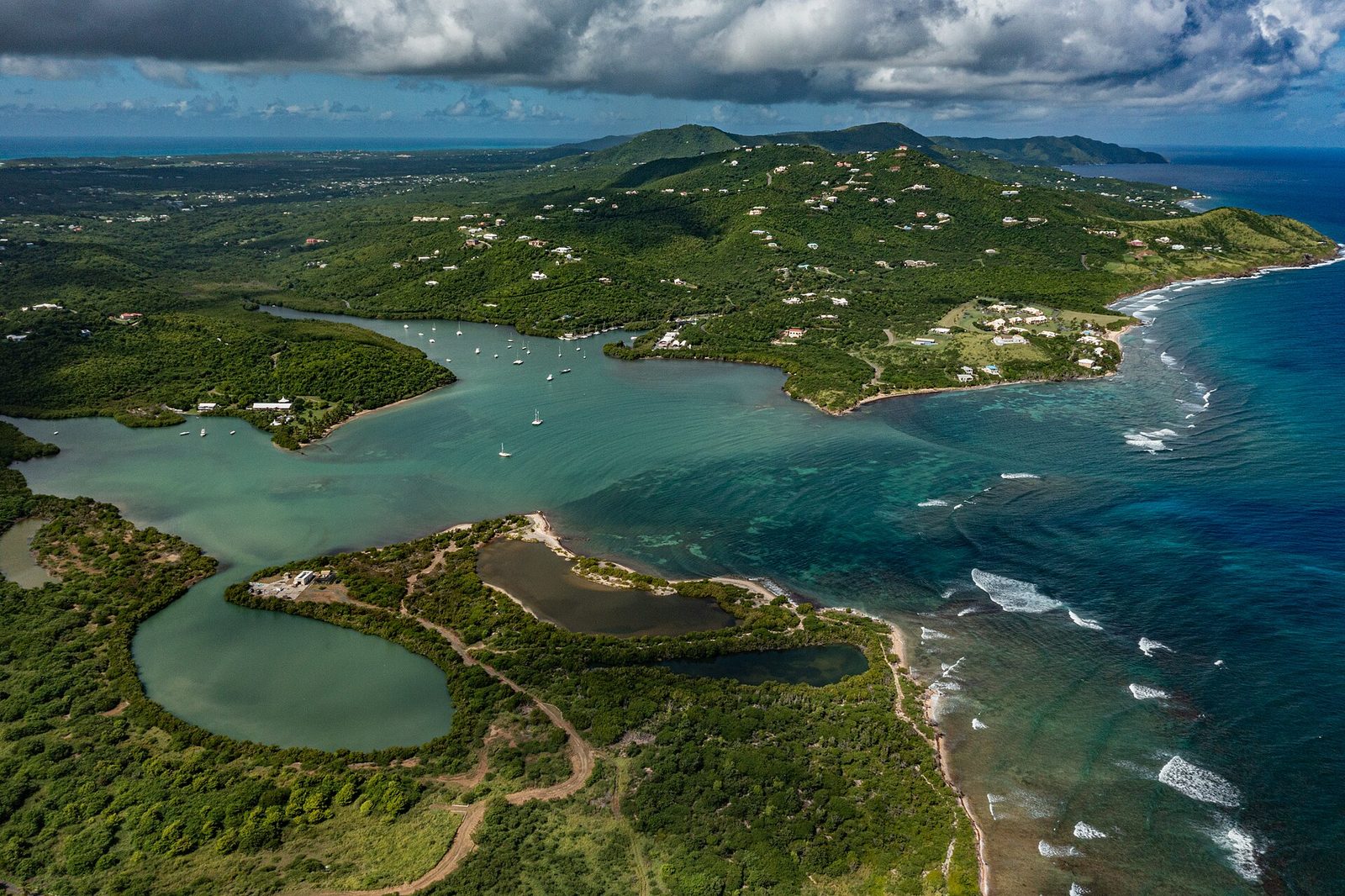
Salt River Bay is a north-facing inlet about five miles west of Christiansted by the National Park Service's own measure — fifteen minutes along North Shore Road. It has a reef across its mouth, an outer bay, and inner arms lined with red mangroves that narrow into shallow lagoons. Behind the lagoons the land rises into the Salt River watershed, which gives the bay its name and, in a hard rain, its mud. It is not a beach destination in the usual sense; it is an estuary, and the reasons to come are on the water and under it.

Almost all of it is inside Salt River Bay National Historical Park and Ecological Preserve, which Congress created on February 24, 1992. The park's own material gives its size as 1,015 acres, and it is run under a cooperative arrangement between the National Park Service and the Government of the Virgin Islands — the "Ecological Preserve" in the name is not decoration.

It is a small park by federal standards and a quiet one: the NPS counted 12,126 visitors in 2025, against roughly 40,000 for Buck Island. There is no entrance fee, no gate, and — since Hurricane Maria in 2017 — no open visitor center, so most people meet the park the way this guide describes: at a marina dock, at dusk, holding a paddle.

The park's mission is written in its name. The "historical" half is the archaeology of two thousand years of settlement and the one documented spot where Columbus's men came ashore on what is now U.S. soil, on November 14, 1493 — read our Columbus at Salt River guide for that story, because we won't retell it here. The "ecological" half is the estuary itself: the NPS describes it as holding "some of the largest remaining mangrove forests in the Virgin Islands," together with coral reefs and a submarine canyon that falls away just outside the mouth toward 500 feet.

And then there is the lagoon. Tucked into the mangroves on the bay's east side is a small basin the scientific papers call Mangrove Lagoon — under four meters deep and about 3.8 hectares, roughly nine acres — where the water is thick enough with one species of plankton that it lights up when you disturb it. That is the bio bay. It is why three kayak outfits keep their boats at Salt River Marina, and it is what most of this guide is about.

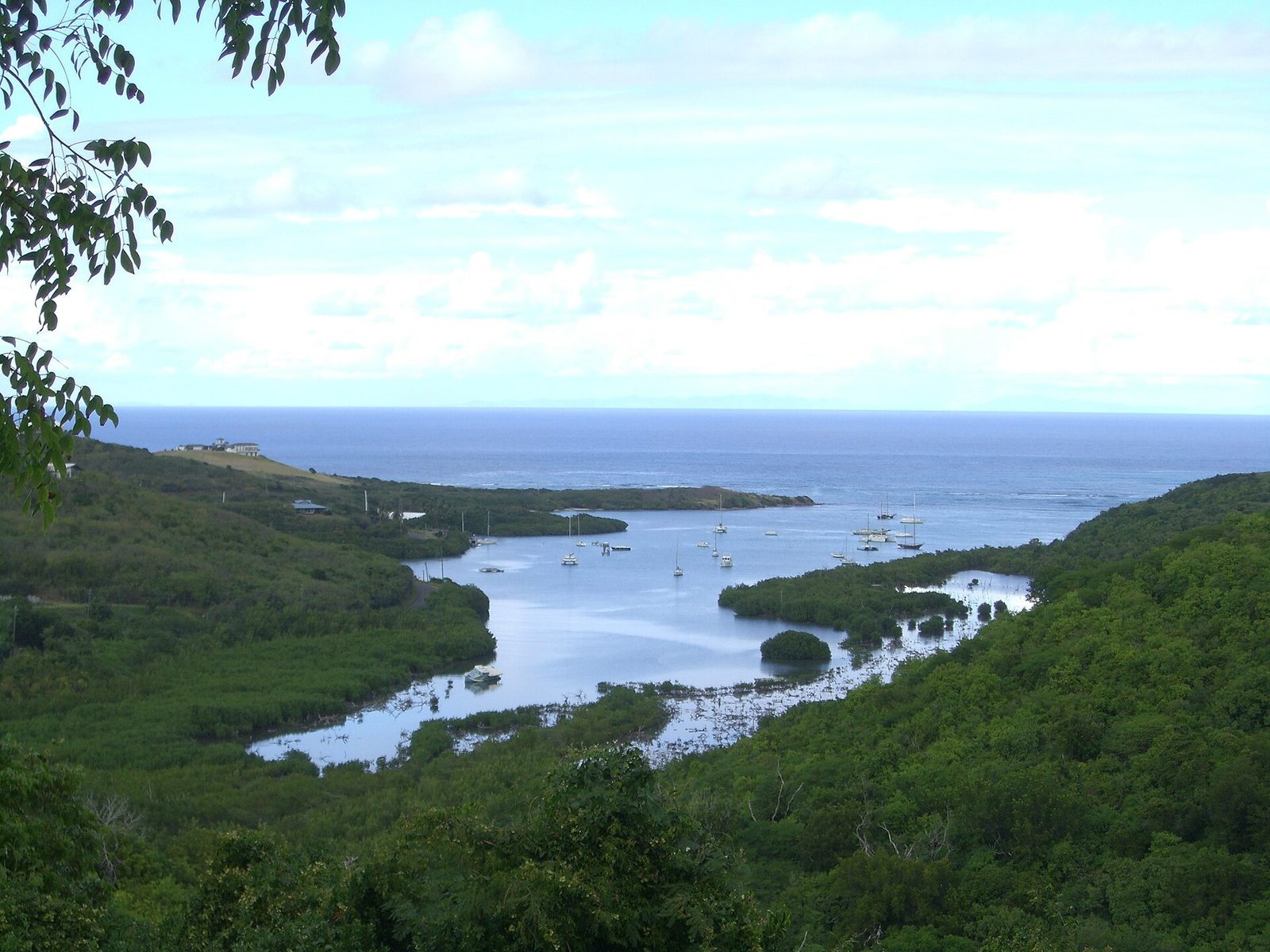
09.07.2024 - NPS Kayak DRONE 05
Salt River Bay from the ridge: red mangroves ring the inner bay and a reef guards the mouth. Photo: Alchematics (CC BY-SA 4.0)

What is glowing, exactly

The light comes from Pyrodinium bahamense, a single-celled dinoflagellate — a plankton organism that photosynthesizes like a plant by day and can swim, after a fashion, with two whip-like flagella. Each cell is invisible to the eye. Each one carries the chemistry to make a flash of blue-green light, and it fires when the water around it is sheared: by a fish, by rain, by a paddle blade, by your fingers.

The flash is a startle response — the working theory is that a burst of light draws bigger predators to whatever is grazing on the plankton, and startles the grazer into letting go. Multiply one flash by the billions of cells in a dense bloom and the water itself seems to switch on wherever it moves.

Pyrodinium is the same organism behind the famous bays of Puerto Rico. The research on Salt River calls it "the source organism for other Caribbean bioluminescent bays" and finds that brightness in the lagoon tracks its abundance closely.

It is not the only glowing thing in the water, though. The park's species list also includes ctenophores — comb jellies, which light up neon green like a glow stick when a guide gently lifts one — and a fireworm, Odontosyllis phosphorea, that puts on its own occasional show. On a good night you see the dinoflagellates as sparks and streaks; a comb jelly is a single, larger, slower pulse in a guide's cupped hands.

Two things about the biology matter for your evening. First, the cells need darkness to be seen, not to glow — they flash in daylight too, you just cannot perceive it — which is why the moon section below is the most important part of this guide. Second, the population lives in the lagoon, not the open bay, because the lagoon suits it: warm, shallow, slow to flush, and fed by mangrove leaf litter. Researchers working the lagoon around 2013 reported that the easiest way to make the dinoflagellates grow in a sample was simply to add mangrove leaves to it. The mangroves are not scenery here. They are the kitchen.

One more honest note. The USGS-funded study of the lagoon (March 2015 to February 2016) records that Salt River Bay was on the territory's EPA-approved 2012 list of impaired waters — fecal coliform bacteria and turbidity, traced to land development, erosion, sedimentation, urban runoff and storm sewers. That is a watershed problem, not a reason to skip the tour, but it explains why the researchers keep measuring rainfall against the glow, and why the guides ask you to keep sunscreen and repellent out of the water.

Why a glowing bay is rare

Bioluminescent plankton are everywhere in the sea — the sparkle in a boat's wake on a dark night is the same chemistry. What is rare is a place where one species holds a dense, permanent population that lights up on demand. A 2013 University of South Carolina thesis on the lagoon puts the number at "only 14 documented systems worldwide," and Dr. Michael Latz of the Scripps Institution of Oceanography counts "only seven year-round lagoons known to exist in the Caribbean."

Salt River is one of them. So — a second, lesser-known one — is Altona Lagoon on the edge of Christiansted, the island's other bio bay. St. Croix, in other words, holds two entries on a very short global list.

The recipe, as far as the science can say, is a shallow basin with a narrow connection to the sea, so the water sits and the population is not flushed out; a rim of red mangroves whose leaf litter feeds the system; enough warmth and enough sun; and a bottom where the dinoflagellates can lay down cysts — dormant stages that seed the next bloom. The 2013 thesis found that the dinoflagellates in Mangrove Lagoon "are not nutrient limited, possibly because they are able to vertically migrate": they can move up into the light by day and down toward the nutrients at night, an advantage the other phytoplankton in the lagoon do not have.

Here is the detail that surprises people: the published phytoplankton research on the lagoon calls Mangrove Lagoon "a man-made lagoon." The basin the tours paddle into was dug, not carved by nature — the study says so plainly, though it does not dwell on when or why, and neither will we.

It hardly matters to the plankton. Given still water, mangroves and time, they moved in and stayed. What it does tell you is how narrow the margin is: change the flushing, the light or the runoff, and one of the world's fourteen documented systems can go dark. That is the argument for the ecological-preserve half of the park's name, and for treating your night on the water as a visit to something fragile.

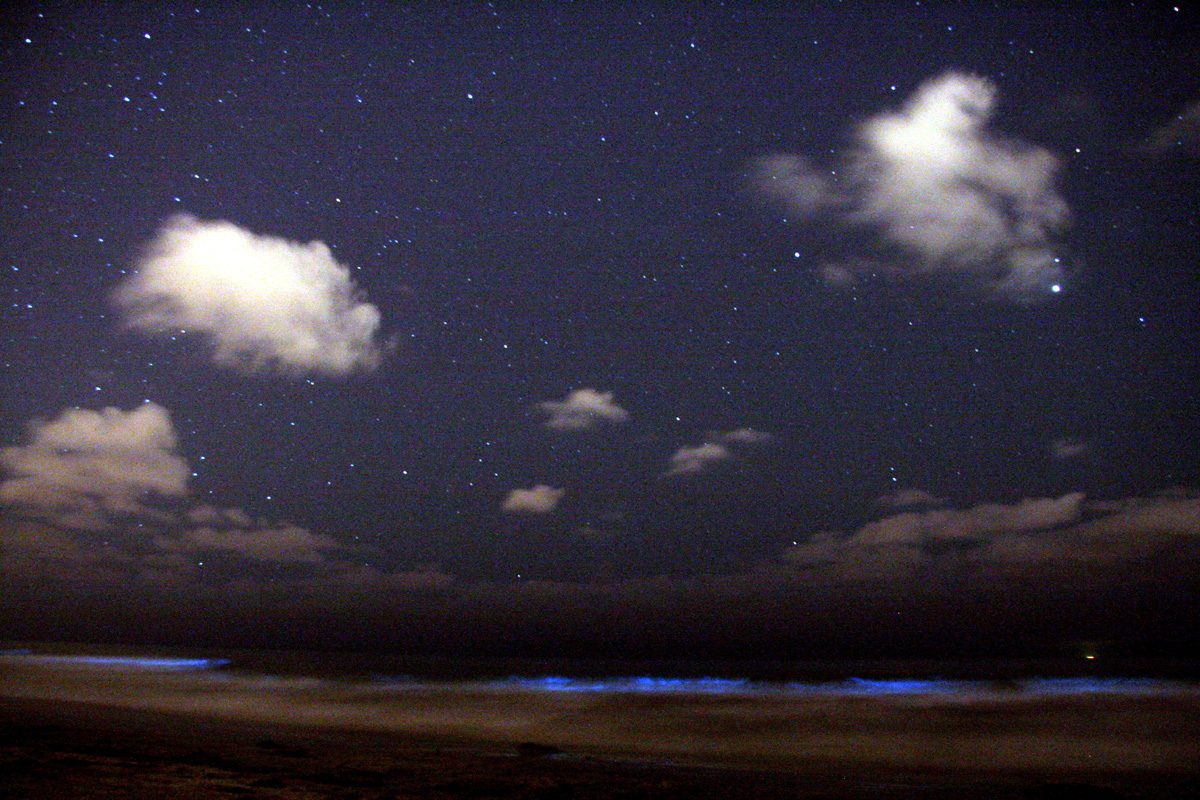
Dinoflagellate bioluminescence 3
Bioluminescent dinoflagellates flash when the water around them is disturbed — a paddle, a hull or a hand draws the light. Photo: Mike (CC BY-SA 2.0)

How bright the glow really gets

Set your expectations by the pictures you have seen and you will be disappointed; set them by what your eyes can do in the dark and you will be delighted. Almost every bioluminescence photograph online is a long exposure — seconds of accumulated light that no human eye ever sees.

What you actually see, on a good dark night at Salt River, is this: a paddle blade drawing a bright blue-green line that fades in a second; the hull leaving a glowing wake; a fish darting away in a streak of light; your hand under the surface, outlined in sparks. Guides pull up a scoop of water and it glitters. Rain, if it comes, turns the whole surface to static for a moment.

How does it compare with Vieques? Mosquito Bay on Vieques, Puerto Rico, is the one everyone has heard of; it holds a Guinness listing from 2006 as the brightest bioluminescent bay in the world. Salt River's lagoon is small — about nine acres, a few minutes to cross — and the honest range is wide. Citizen scientists supported by the St. Croix Environmental Association, whose fieldwork was presented at a 2014 Scripps (Latz Laboratory) symposium on the bay, recorded measurements on good nights "as bright as Mosquito Bay," which is a real result; the same work found the glow "varied on both weekly and monthly time scales."

So on a dark, calm night after a dry week, this can be as good as it gets in the Caribbean. On a bright-moon or churned-up night, it can be a faint fizz. Neither night is a lie.

Three things make it look brighter. Darkness first: give your eyes ten to fifteen minutes with no phone screen and no headlamp before you judge anything. Stillness second: the guides steer you into the quietest corner of the lagoon and ask you to sit for a minute — that is when the fish streaks show. Contact third: the glow lives where water moves, so it is your own hand and your own paddle that produce the show, which is why a clear kayak (next sections) is more than a gimmick. The moving water under your seat is the brightest thing there is.

And your camera? A modern phone in night mode, braced on the kayak, will sometimes catch a smear of blue around a paddle. Mostly it will not. Sea Thru's guides run trivia and ecology talk on the crossing partly to keep people looking with their eyes instead of their screens; take the hint. This is one of the few experiences left that is better in memory than in your camera roll.

1992Park established
1,015Acres
7Year-round bio bays in the Caribbean
3.8 hectaresBio lagoon size
Nearly 500 ftCanyon depth
12,126Visitors in 2025

The moon decides

If you take one thing from this guide, take this: the brightness of the moon matters more than the month, the operator or the boat. The dinoflagellates flash whatever the sky is doing; the question is whether your eyes can see a faint blue flash against the water, and moonlight washes it out the way streetlights wash out stars.

The operators know this better than anyone. BushTribe states the rule directly: it runs the bioluminescent trip "when the moon will be below the horizon during evening hours (for two weeks following the full moon), or when the moon is in its crescent phase." Virgin Kayak Tours lists a separate Sunset and Moonlight Tour "offered when the moon is too bright for biobay tour." Sea Thru sells an LED Moonlight version for the same reason.

The moon math is simple once you see it. A full moon rises at sunset and is up all night — nothing to be done about it. In the two weeks after full, the moon rises later every night, roughly 45 to 50 minutes later, so the early evening gets darker and darker until, at new moon, there is no moon at all. In the week after new, a thin crescent hangs low in the west at dusk and sets within a few hours; an evening launch is fine and a later one is better. The bad stretch is first quarter through full — a half-to-fat moon already high at nightfall.

Practically: look up the moon phase for your travel week before you book flights, if the bay is the point of the trip. If you cannot move the trip, book the darkest night the week gives you and, where an operator offers more than one departure, take the later one. On a full-moon week, do the moonlight paddle anyway — the mangroves at night are worth the drive, and comb jellies glow whatever the moon does — and keep the bio bay for the next visit. And trust the operators' calendars over your itinerary: they will tell you which nights are worth it, because a disappointed boat is bad for them too.

Moon phaseWhat the sky does after darkBio bay verdict
New moon, plus 3-4 nights either sideNo moon at all — the darkest sky of the monthBest — book these first
Waxing crescent (the week after new)A thin moon low in the west, setting a few hours after sunsetGood — the later the launch the better
First quarter to waxing gibbousA half-to-fat moon high at dusk, up until midnight or laterPoor for glow — operators switch to moonlight paddles
Full moon, plus 2-3 nights either sideRises around sunset and stays up all nightWorst — this is what the LED and moonlight tours are for
Waning gibbous to last quarter (the two weeks after full)Moonrise slides later each night, so early evening is darkGood and improving nightly — check the operator's calendar

Season, rain and weather

The bay glows all year — that is what "year-round" means — and all three operators run through the calendar, so there is no month to avoid on principle. What changes is the weather around it. Winter, roughly December through March, brings the trade winds at their strongest and the occasional swell along the north shore; the bay is sheltered and tours run, but the paddle across can be choppier and cooler than you expect, and you will want a light layer. Spring is dry and calm and the easiest season for the crossing. Summer is hot and still, which is comfortable on the water and less so waiting at the marina.

Rain is the variable the scientists care about. The USGS-supported study set out to correlate "daily rainfall, physical water quality parameters, nutrient loading and phytoplankton composition," because runoff from the watershed changes the water — its clarity, its salinity, its nutrients — and the glow with it.

Nobody hands out a monthly brightness chart and we will not invent one; the honest summary is that the researchers found the light varying week to week and month to month, that a big rain can muddy the lagoon for a while, and that a dry, settled spell is your friend. Hurricane season is June 1 to November 30 with its peak in August through October, and tours cancel for weather then; St. Croix's national parks closed briefly and reopened after Hurricane Erin passed in August 2025.

Bugs are the other seasonal truth. Mangroves at dusk mean mosquitoes and no-see-ums, worse in the wet months, and here is the catch: the local guidance is to avoid insect repellent, deodorant, perfumes or sunblock, as these can kill the bioluminescence. Wear long, light sleeves and pants instead, and ask your operator what they allow. Most of the paddle is out on open water anyway, where the breeze keeps the insects down; the lagoon minutes are the itchy ones. If you react badly to bites, tuck an antihistamine in the dry bag. For the month-by-month picture, read our best time to visit guide.

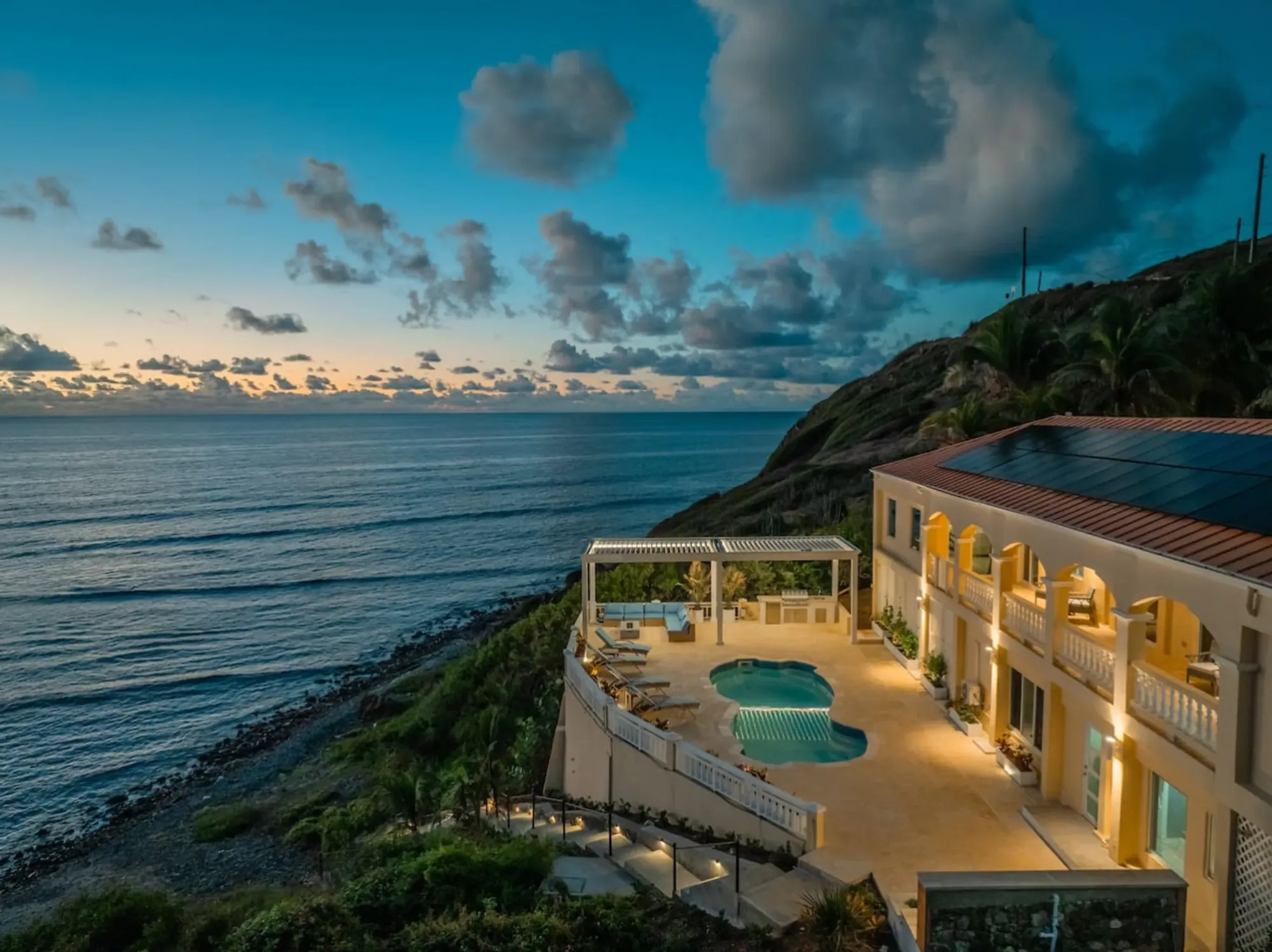
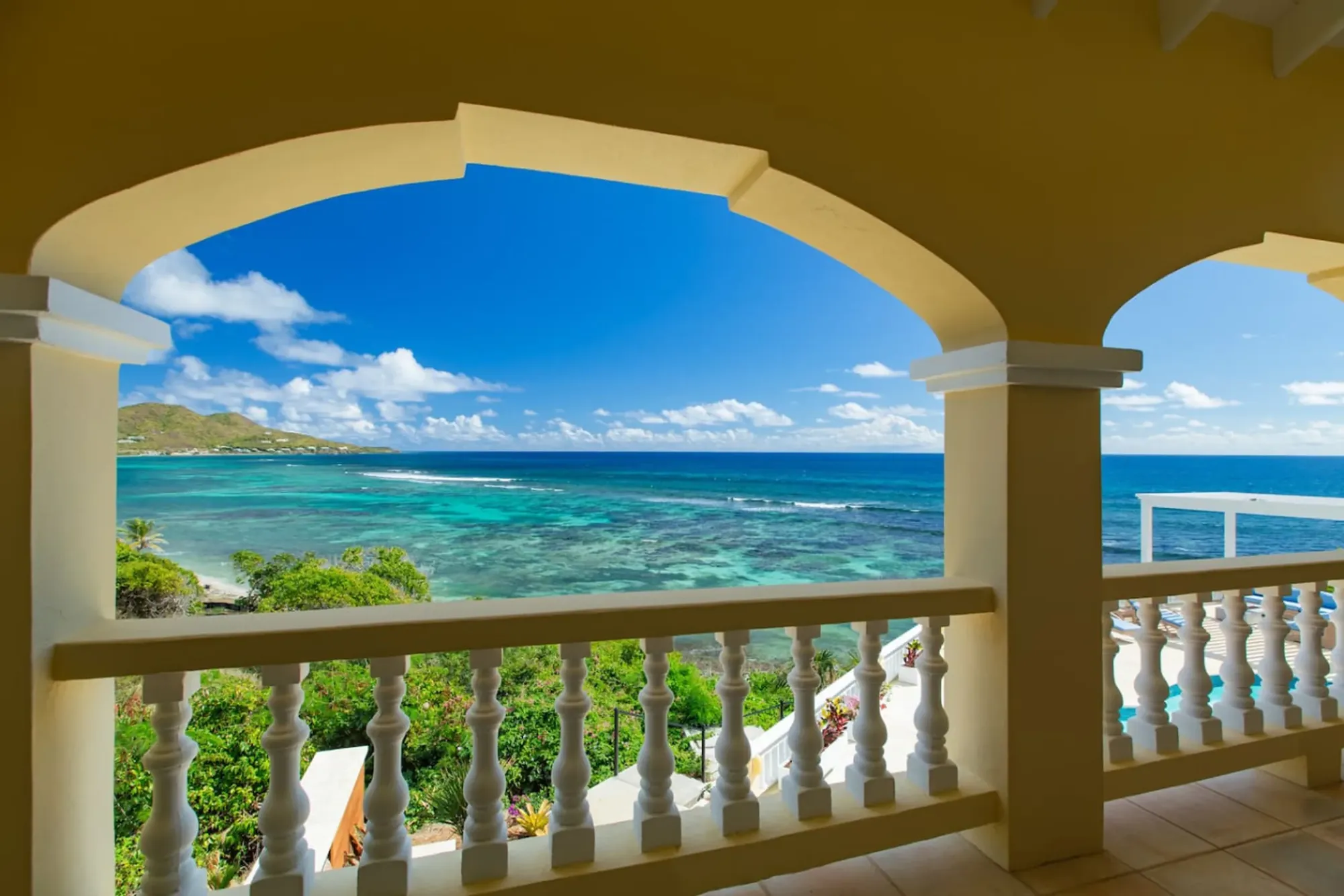
Turquoise bay framed by the villa's arched veranda
The Cerulean

Plan it from the villa.

Five bedrooms, a private swimmable beach, and all of this within a day trip.

Sleeps 12 · 4.90 ★ · rates by season

The three operators we verified for 2026

Three companies run the bay, and all three meet at Salt River Marina. We checked each one's own site this month; a fourth name that turns up in older articles, Caribbean Adventure Tours, has no live presence we could find, so it is not listed here. Prices below are what the operators publish as of August 2026 — treat them as "around," because they change, and expect to prepay online when you book.

Sea Thru Kayaks VI is the clear-kayak company. Its Bioluminescent Bay Kayak Tour is listed at about $55 a person, two hours, launching "at nightfall" from 9001 Salt River Marina, in fully transparent hulls the company calls "sea thru" kayaks — it says it runs "the largest fleet of see-through kayaks on the island." The minimum age is 8 for the night tours, with a 385-pound limit per kayak.

There is an LED Moonlight Tour (about $70) for bright-moon weeks, plus two daytime options at about $60: a Glass Bottom Kayak Tour of the bay and a National Park Kayak Tour, both from age 5. The office answers Monday to Saturday, 10 am to 4 pm, at (340) 208-1257, and bookings go through FareHarbor online.

Virgin Kayak Tours and Outfitters has been at it since 1998 and runs Hobie Mirage Drive kayaks — pedal-powered, "hands-free," which means no paddling skill is required and your hands are free to trail in the water where the glow is. The Bioluminescent Bay Tour is its "most popular tour"; the Sunset and Moonlight Tour is the substitute for bright nights; and there is a Daytime Historical and Ecological Tour, a SUP tour, and kayak and paddleboard rentals. It works "by appointment only" — call 1-833-BIOBAY1 or (340) 514-0062, or email info@virginkayaktours.com. Its site does not publish prices; ask when you call.

BushTribe Eco Adventures is the eco-outfitter that also guides the Annaly Bay tide-pool hike. Its Bioluminescent Kayak Trip is listed from about $50, two hours, starting at sunset from Salt River Marina, with clear-hull options; it launches before dark so you get the mangroves in the last light and the lagoon after. It also runs a Moonlight Night Kayaking trip on waxing-moon nights (from about $50) and a Morning Salt River Kayak (from about $50, three-plus hours, 8:30 am start), plus kayak and SUP rentals from Christiansted Harbor. Phone (340) 277-2503; email bushtribeusvi@gmail.com. Whichever you choose, ask about the moon for your date before you pay — every one of them will tell you straight.

OperatorThe boatsNight tour (as of 2026)DaytimeMeets at
Sea Thru Kayaks VIFully transparent kayaks — the island's largest see-through fleetBio Bay tour about $55, 2 hours, ages 8 and up, LED Moonlight version about $70Glass-bottom and sit-on-top park tours about $60, ages 5 and upSalt River Marina
Virgin Kayak Tours (since 1998)Hobie Mirage pedal-drive kayaks — hands-freeBio Bay tour, plus a Sunset and Moonlight tour when the moon is too bright, by appointmentHistorical and ecological paddle, SUP tour, rentalsSalt River Marina, North Shore Road
BushTribe Eco AdventuresSit-on-tops with clear-hull optionsBioluminescent kayak trip from about $50, 2 hours, starts at sunset, plus a moonlight paddle on waxing-moon nightsMorning Salt River kayak from about $50, 3-plus hours, 8:30 amSalt River Marina

Which boat to pick

The clear kayak is the one to book if the glow is why you came. In a transparent hull the brightest thing in the lagoon — the water sheared by your own boat — is directly under your knees, and you spend the lagoon minutes looking down through the floor rather than over the side. Children and anyone who has never seen bioluminescence get the most from it. The trade-off is that a clear kayak is a paddle kayak: two hours of easy paddling, most of it across sheltered water. Anyone reasonably able can do it, and the doubles let a stronger paddler carry a weaker one.

The pedal-drive Hobie is the one for people who do not want to paddle, or who want both hands free. Virgin Kayak's Mirage Drive boats move with a bicycle-style motion; you steer with a small hand control and can trail your fingers in the water the whole way. If someone in your party has shoulder trouble, is nervous about paddling in the dark, or simply wants to hold a hand under the surface for forty-five minutes, this is their boat. You lose the transparent floor; you gain comfort and control.

The sunset-into-dark trip is the one for people who want the whole arc. BushTribe's launch before sundown means you cross the bay with the light going amber over the mangroves, watch the herons and egrets settle into the trees, and reach the lagoon as the sky finishes going dark — the transition hour is its own reward, and by the time the glow starts your eyes are already adjusted. It is a good pick for a first visit and for anyone who wants to see the bay they are paddling.

Group size and age are the last filters. Sea Thru's night tours start at 8 years old and its day tours at 5; ask the others directly, since their pages do not state a minimum. A family of six or eight fits easily on any of them; a group of twelve — a full villa — should call ahead and may be split across two operators or two nights, which is not a bad outcome. Whoever you book, tell them who is nervous, who is strong, and who is small. They will seat you accordingly.

What the night is actually like

You arrive at the marina in the last hour of daylight, or in the dark if it is a later launch. Salt River Marina is small and working — a sportfishing charter runs from it, the kayak trailers live there, and the bay's dive shop is on Salt River too — and parking is informal; follow the operator's directions. Your confirmation email has the pin. Use it, because the turnoff from North Shore Road is easy to miss at night. There is a waiver, a life vest, a quick lesson if you need one, and a word about phones (dry bag, or leave them in the car — most people are happier without them).

Then you go out. The paddle from the marina to the lagoon is roughly three-quarters of a mile — Sea Thru's figure — across sheltered water, with the guide talking about the estuary as you go: the red mangroves and their prop roots, the birds settling into the trees, the history of the bay you are crossing. It takes twenty to thirty minutes at a chatty pace. Watch the water as the light goes; the first flickers off your paddle come well before the lagoon, and they are a promise.

The lagoon itself is entered through the mangroves, and inside it is very dark. Sea Thru puts the time in the glowing water at about forty-five minutes, and that feels right for all three: long enough to sit still, to trail a hand, to watch fish streak, to try the paddle-splash and the cupped-hand scoop, and for a guide to find a comb jelly if there is one about.

These are paddling tours, not swims — hands and paddles are the tools, and your guide will say what is allowed. It is quiet in there — people go quiet on their own — and the best moments are the still ones, when a fish moves that nobody was watching and the water lights up ten feet away.

Then you paddle back under whatever sky you drew, and it is usually the darkest, starriest half hour of your week. Back at the dock the guides help you out and you drive home slowly on an unlit road. Total: about two hours from waiver to car. If that sounds short, it is not; forty-five minutes in the glow is plenty, and the operators have the timing about right.

How the night runs

  1. Book the darkest date your week allows and note the launch time in the confirmation — it moves with sunset.
  2. Leave the East End about 90 minutes before launch, eat first, and drive North Shore Road in daylight if you can.
  3. Check in at Salt River Marina, sign the waiver, take a life vest and a dry-bag briefing.
  4. Paddle or pedal across the bay — roughly three-quarters of a mile — as the last light goes.
  5. Enter the mangrove lagoon, let your eyes adjust for ten minutes, then trail a hand and watch.
  6. Head back the way you came under a dark sky, and drive home slowly — the road is unlit.
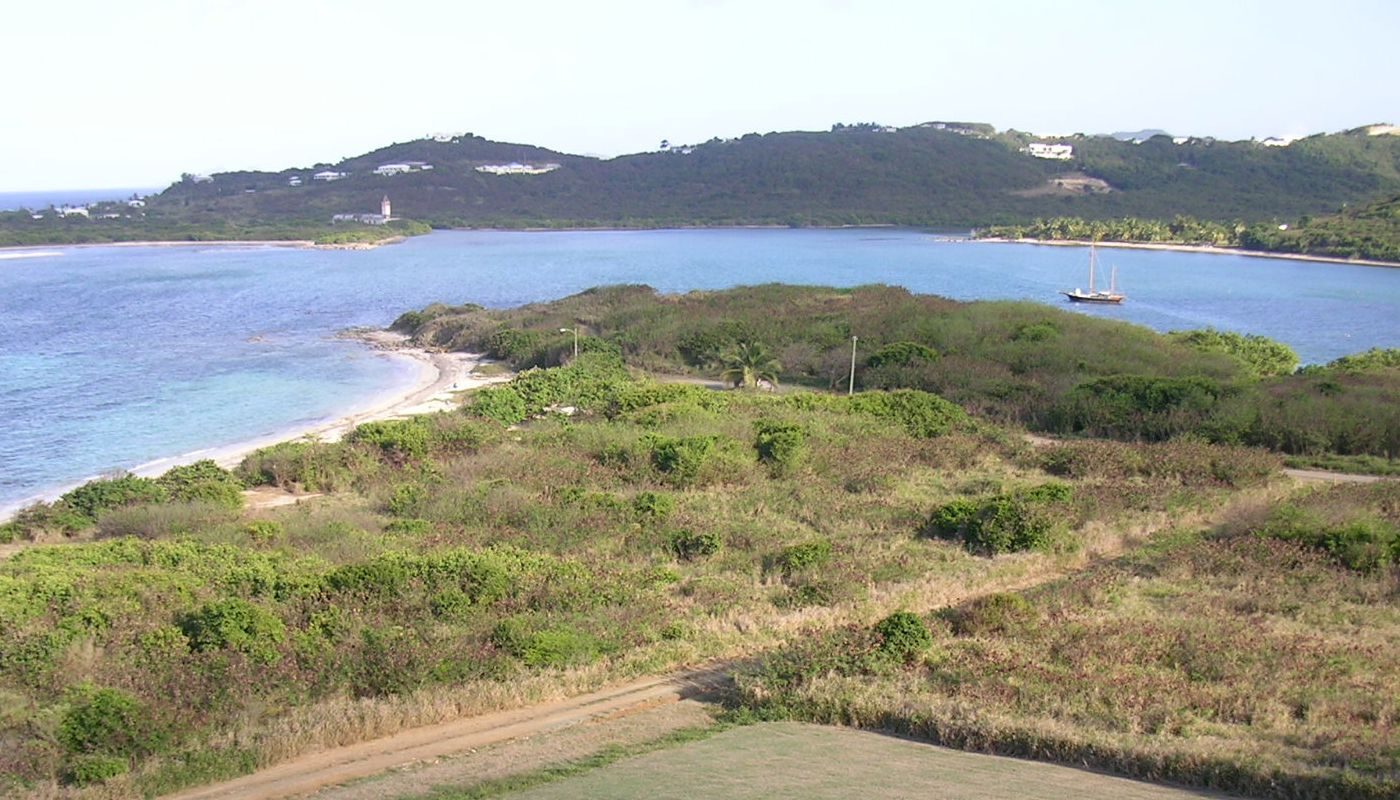
Salt-River-Bay-1
Photo: self (Public domain)
Salt-River-Bay-2
Photo: self (Public domain)
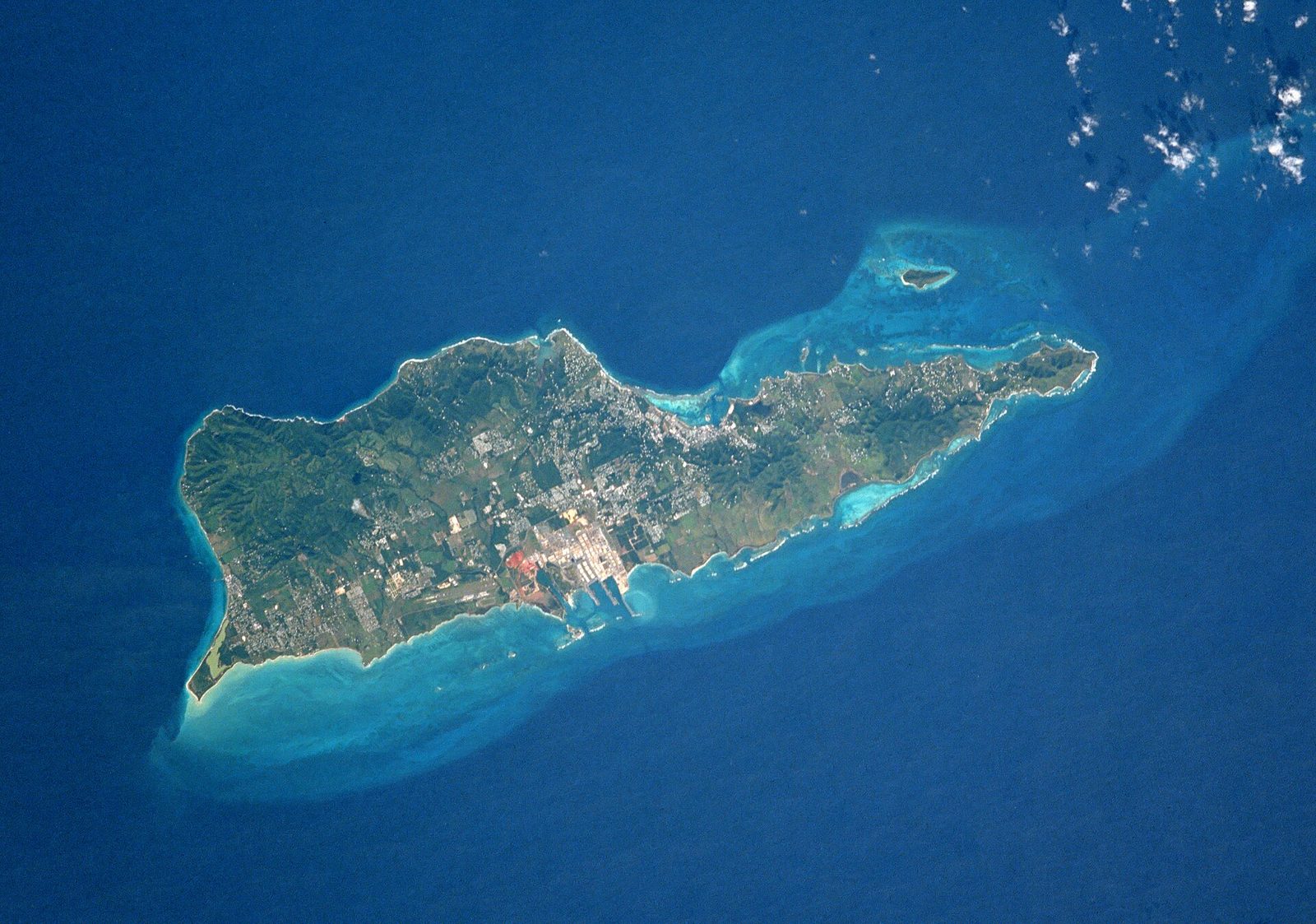
St Croix NASA
Photo: NASA (Public domain)

Daytime in the mangroves

The night is the headline, but the daytime bay is the better nature lesson, and all three operators run some version of it. Sea Thru's Glass Bottom Kayak Tour of Salt River Bay and its National Park Kayak Tour (about $60 each, ages 5 and up) go out in daylight over the shallows and along the mangrove edge; Virgin Kayak's Daytime Historical and Ecological Tour does the same in the pedal boats; BushTribe's Morning Salt River Kayak leaves at 8:30 am and runs three hours or more, which is long enough to get well up into the mangrove channels.

What you see is an estuary working. Red mangroves stand in the water on arching prop roots, and those roots are a nursery: juvenile fish hold in the shade where bigger predators cannot follow. The leaf litter that falls from them is what feeds the lagoon's plankton — the same leaves the researchers used to grow the dinoflagellates in the lab. Sea Thru's own list of what its guests meet is egrets, herons, pelicans, iguanas, sea turtles and rays; you will not get all six in one morning, but two or three is normal and the birds are near-certain. Bring polarized sunglasses. Through them the shallows are an aquarium.

The NPS phrasing is the one to remember: "some of the largest remaining mangrove forests in the Virgin Islands." Note the word remaining. Mangroves across the Caribbean have been cut, filled and dredged for a century, and the reason Salt River still has its forest is partly the accident of a small, awkward bay and partly, since 1992, the law. Paddling it in daylight is the way to understand what the night tour is really passing through — not a light show but a food web that happens to glow at one end.

Practical notes for the day paddle: go early (the wind picks up through the morning and the water is glassiest first thing), wear a hat and a rash guard rather than a lot of sunscreen — mineral only, and none where it will wash into the lagoon — and carry water. The morning tour pairs naturally with a late lunch on the north shore or a swim at Cane Bay a few miles west; our Cane Bay guide has the beach.

“some of the largest remaining mangrove forests in the Virgin Islands”

National Park Service, Salt River Bay NHP and Ecological Preserve

The park on land, and what is open

The land side of the park is modest and mostly closed, so know what you are getting before you drive out in daylight expecting a visitor center. The visitor contact station sits on the hilltop overlooking Columbus's Landing Site, and the NPS hours page is blunt: "Due to damage suffered from Hurricane Maria, the Salt River Bay NHP&EP Visitor Contact Station is closed."

The closure has been followed by budgetary cuts to the NPS, and the station is closed indefinitely. The station's exhibits on the ancient peoples of St. Croix and the Salt River watershed are therefore not on offer; the NPS points you to the visitor center at Fort Christiansvaern in Christiansted instead, which is where the rangers are.

What is open is outdoors, sunrise to sunset: the beach at Columbus's Landing, where the NPS says you can "sunbathe, swim, snorkel, and picnic"; the Well Tower off North Shore Road; and "the trails and associated sites on the east side of Salt River Bay." Admission is free. Do not count on facilities — this is a stop, not a day.

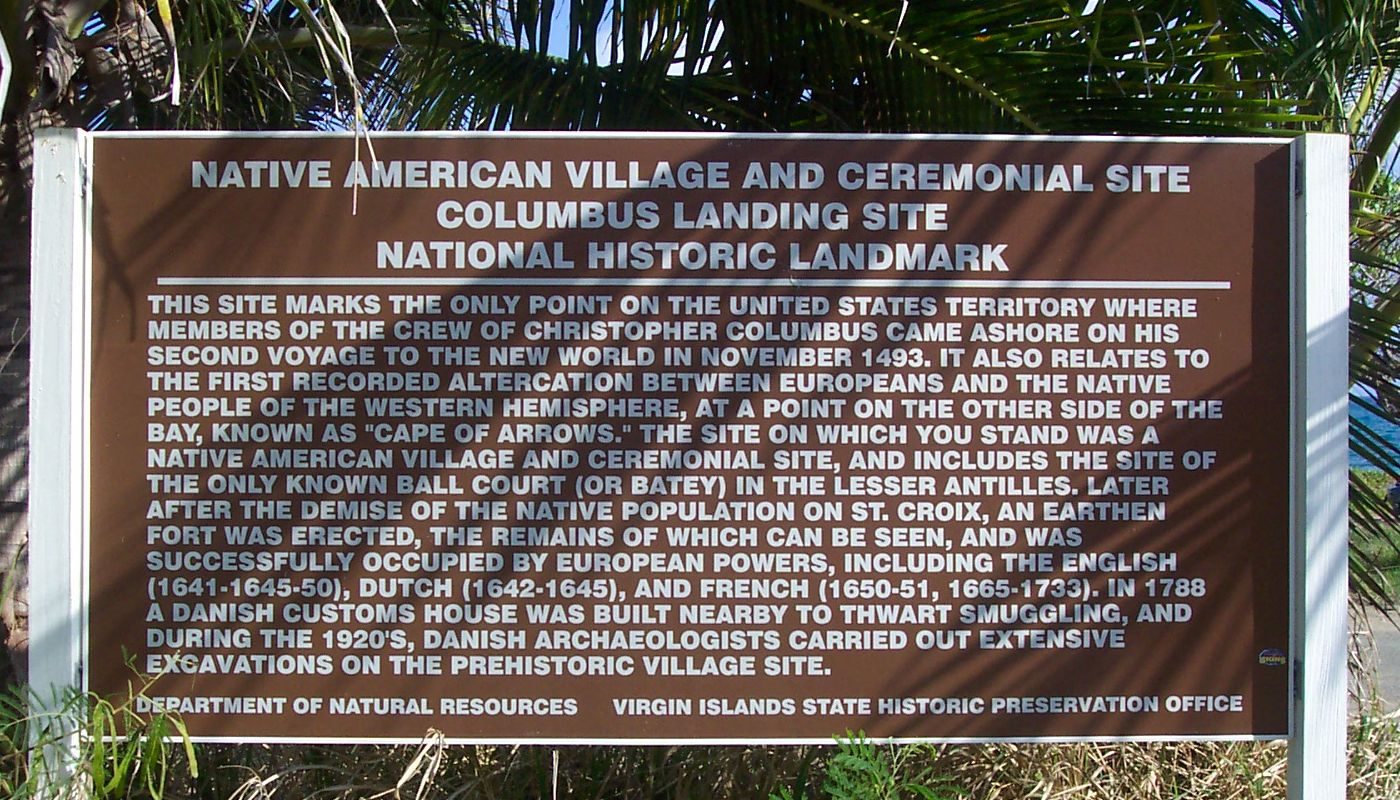
The archaeology is the reason to care: a Taíno village and the only ball court known in the U.S. Virgin Islands (some accounts say the Lesser Antilles), unearthed in 1923; the site of the 1493 skirmish at the Cape of the Arrows; and the low remains of Fort Salé, the only known structure to survive from this early colonial period. None of it is dramatic to look at. The story is in the Columbus guide, and reading it first is what turns a bare hillside into a place.

The park phone is (340) 773-1460, the mailing address is the Christiansted office at 2100 Church Street, and current alerts live at nps.gov/sari — check them the week you travel, since the 2025 hurricane closures showed how quickly a status can change. If a ranger program is running (they have been seasonal and thin since Maria), it will be listed there. Otherwise, treat the land as a fifteen-minute pilgrimage before or after your paddle, and let the water be the visit.

  1. 1300sA Taíno village and ceremonial ball court in use on the bay (settlement runs back further still)
  2. 1425The date usually given for the Carib (Kalinago) takeover of the village
  3. Nov 14, 1493Columbus sends a longboat ashore for water — the Cape of the Arrows fight
  4. 1923The ball court is unearthed, the only one known in the U.S. Virgin Islands
  5. Feb 24, 1992Congress creates Salt River Bay National Historical Park and Ecological Preserve
  6. 2013Park Service and university teams are sampling the glowing lagoon — a USC thesis counts 14 such bays worldwide
  7. Sept 2017Hurricane Maria damages the visitor contact station, which has stayed closed
  8. Aug 2025St. Croix's national parks reopen after Hurricane Erin

Under the bay: the canyon

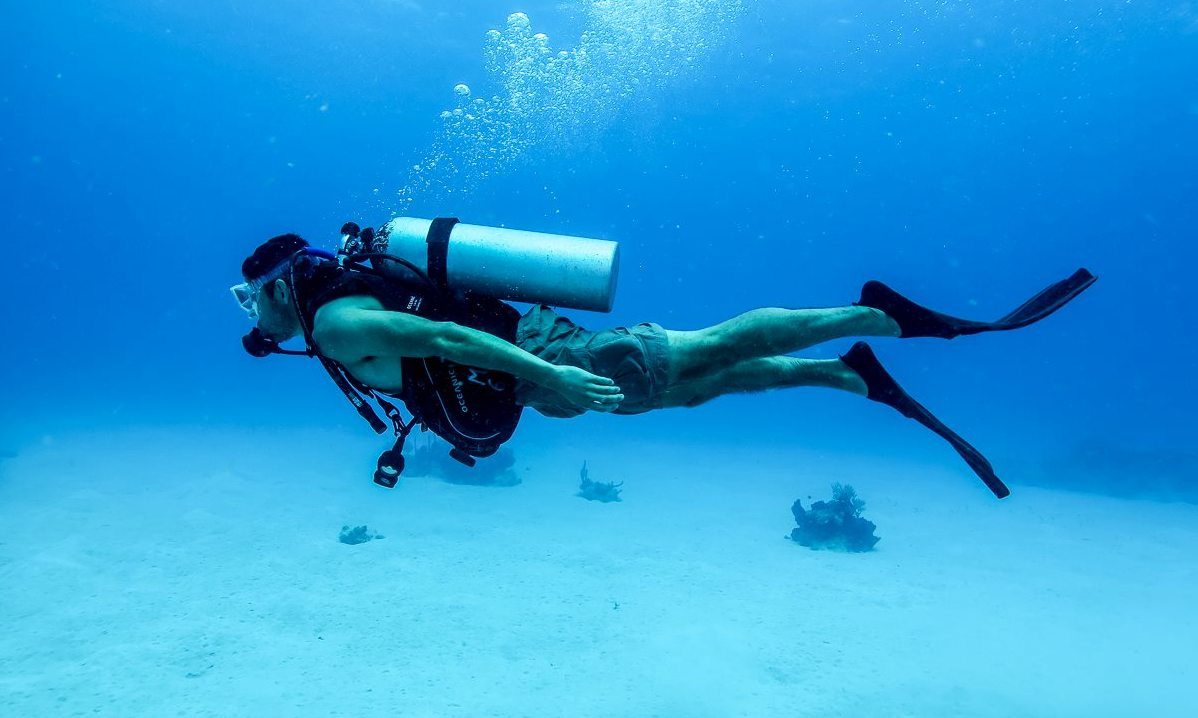
Just outside the mouth of the bay the seafloor drops into Salt River Canyon, a submarine cut whose walls fall toward 500 feet — recreational scuba limits, at 130 feet, are well into the shadows of the canyon walls. The canyon is inside the park: the NPS lists "mangroves, estuary, coral reefs, and submarine canyon" as the ecosystem it protects, so the protection runs from mangrove root to deep wall. This is where the east and west wall dives are, and it is a different guide — our wall diving guide covers the sites, the shops and the seasons, and we will not repeat it.

What matters for a bio-bay night is only this: the same shelter that makes the inner bay a plankton nursery makes the outer bay a launch point, and Anchor Dive Center — the one dive shop based inside the park — works the canyon walls from Salt River. If your group has divers, they can dive the canyon in the morning and paddle the lagoon that night from the same marina, which is about as efficient as a St. Croix day gets. The watersports directory keeps the kayak operators' current contacts, and the diving directory has the shops.

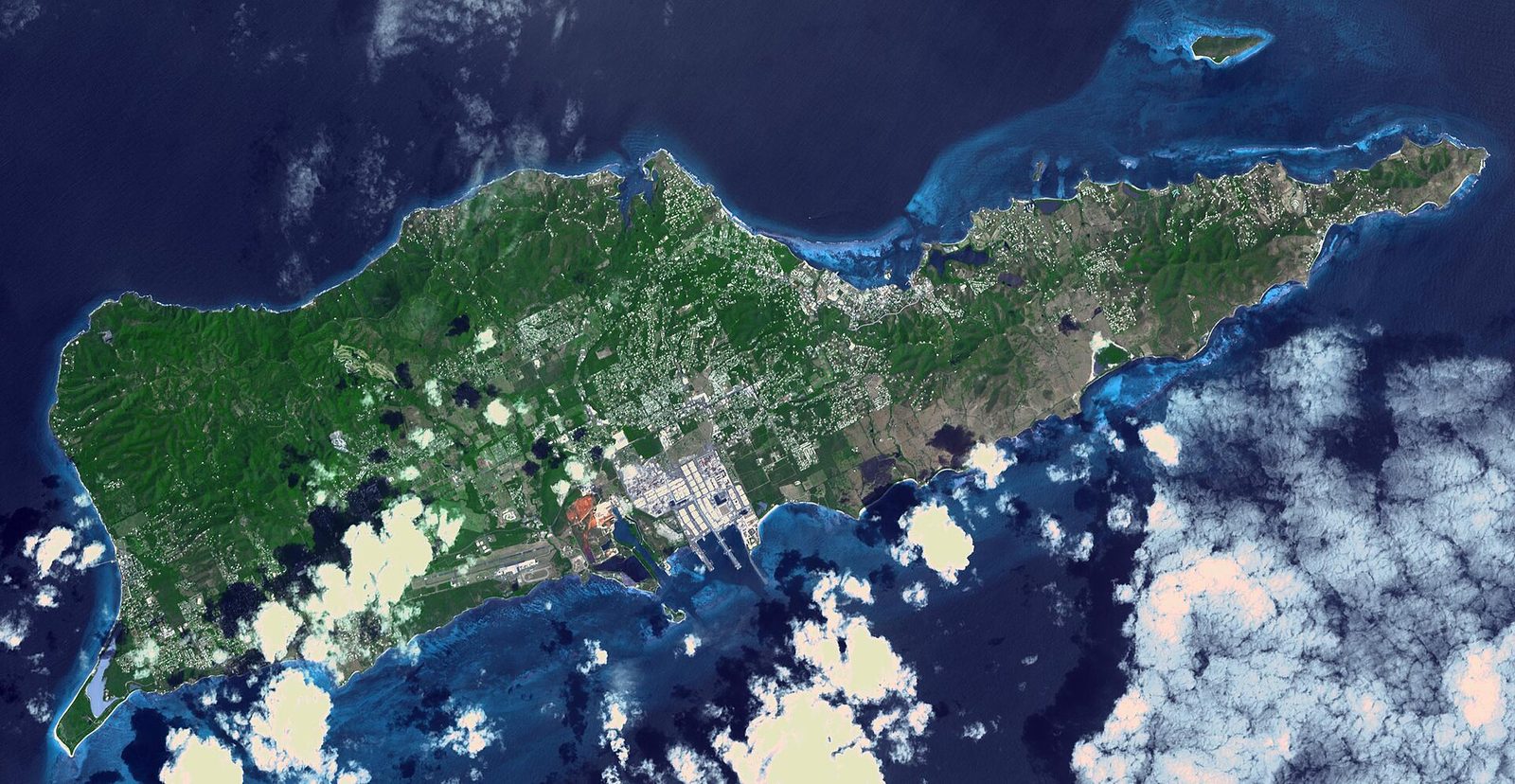
St Croix, US Virgin Islands (ASTER)
St. Croix's north shore in NOAA imagery — Salt River Bay is the deep, north-facing inlet west of Christiansted. Photo: NASA/METI/AIST/Japan Space Systems, and U.S./Japan ASTER Science Team (Public domain)

The marina, the drive and what to bring

All three operators meet at Salt River Marina, at 9001 Salt River off North Shore Road (Route 80). It is a working marina, not a resort one — a sportfishing charter runs from it and the kayak trailers live there — and you should not count on buying anything, so bring your own water. Get there fifteen minutes before your launch time; the tours leave with the light and late arrivals can miss the boat.

From Christiansted it is about fifteen minutes west. From the East End, plan on about 35 minutes in daylight and 40 at night, and read our driving guide if this is your first left-hand-side island: you drive on the left in the U.S. Virgin Islands, the road past town is unlit and winding, and the marina turnoff is easy to overshoot.

What to bring: a dry bag for the car key and, if you must, the phone (many people leave phones locked in the car and are happier for it); water shoes or sandals that can get wet, because you launch from a dock or ramp and your feet will get wet; a light long-sleeve layer for the paddle back in winter; a towel in the car.

What to leave: perfume, deodorant, bug spray and sunscreen, all of which the local guidance asks you to skip because they can kill the plankton; jewelry you would miss; anything you would hate to drop in the dark. Wear a hat if you are launching before sunset. Bring cash for a tip.

Eat first. The night tour runs about two hours from a nightfall launch, so it ends somewhere between eight and half past nine depending on the season, and North Shore Road is not where you find a late kitchen. The sensible plan is an early dinner in Christiansted on the way — our restaurant directory has the current list — or, better for a villa group, a real meal in the chef's kitchen before you leave and dessert on the terrace when you get back. Children do better on the water fed. So do adults.

Mistakes to avoid

Booking by convenience instead of by moon. It is the single most common way to have a flat night — the itinerary says Tuesday, Tuesday is two days after full moon, and the lagoon under a fat moon is a pale version of itself. Check the phase first; move the night if you can; take the later launch if you cannot.

Bringing the wrong chemistry. Bug spray on the skin, sunscreen from the afternoon, a spritz of perfume for a night out — all of it washes off your hands into water that is the whole reason you came. Shower before you go, wear sleeves instead of spray, and keep any sunscreen mineral and off your hands.

Judging it in the first two minutes. Your eyes take ten to fifteen minutes to adapt; the person who checks a phone in the lagoon resets the clock and then declares the glow "not that bright." Put the phone away at the dock and let the dark do its work.

Expecting the Vieques photographs. Covered above, but it bears repeating: what you see is real and it does not look like a long-exposure image. Come for streaks and sparks and a glowing hull under your seat, and you will not be disappointed.

Skipping the day paddle because you did the night. They are two different trips. The night is the glow; the morning is the estuary, the birds and the roots. If you have the time, do both — a morning paddle followed by lunch on the north shore, then the bio bay another night.

Under-dressing for the winter crossing, and driving home without a plan for the dark. December through March, wind on wet skin on the paddle back is cold, and a thin long-sleeve fixes it. Afterward, North Shore Road is unlit and you are on the left; take it slowly, and if two cars are going, keep the less confident driver behind the other.

With kids, with a group, on a date

Kids: the tour suits children who can sit in a boat for two hours and stay reasonably calm in the dark, and Sea Thru's minimum of 8 for the night trips is a fair guide to who that is (its day tours start at 5). Put a child in the front of a double with an adult behind, on the clear kayak if you can — for a child, water glowing under the floor is close to magic.

Talk through the dark bit before you go: it is very dark, and it is a lagoon, and nothing in it wants them. Bring a warm layer and a snack for the car. Our St. Croix with kids guide has the rest of the island's family plan.

Groups: a villa full of twelve is a bookable number for the bay, but call rather than click — an operator may cap a night's group, split you across boats and guides, or suggest two nights, and all three will talk you through the moon for your dates. This is a good one for the concierge to line up with your other days; the operators are used to villas coordinating one big night. Doubles seat pairs, so nobody has to be strong. The paddle back, under a dark sky with a group that has just gone quiet together, is the sort of thing people are still talking about at the airport.

Couples: it is a romantic outing — dark water, a shared boat, a hand trailing sparks. Book the pedal boat if you want your hands free, or the clear kayak if you want to look down together. Skip the perfume (see above). Time it for a dark-moon night with dinner after at the villa, and read our romantic St. Croix guide for the rest of the week.

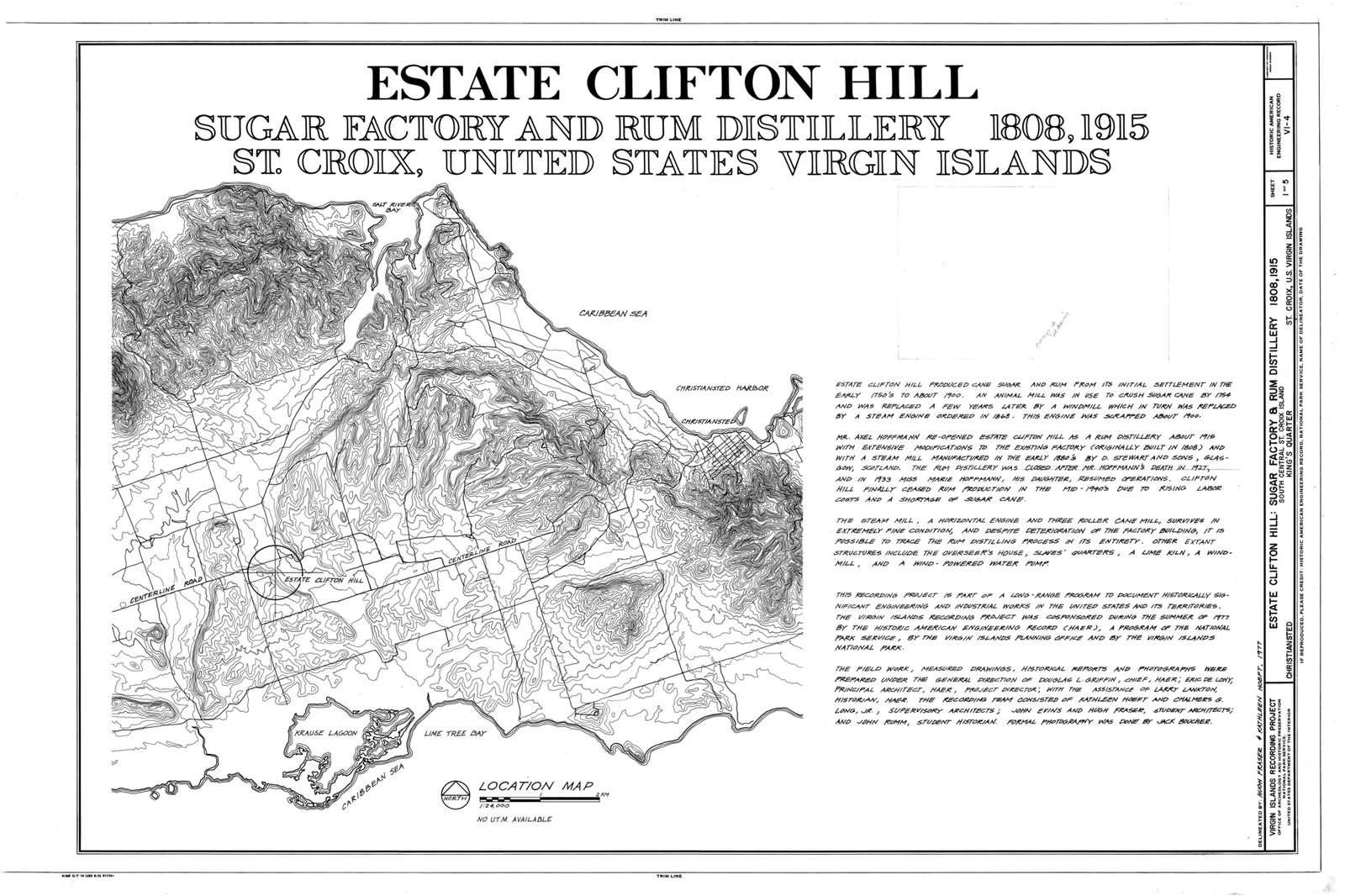
Estate Clifton Hill, Sugar Factory and Rum Distillery, Title Sheet - Estate Clifton Hill, Sugar Factory and Rum Distillery, South Central Street, Christiansted, St. HAER VI,1-KING,2-A- (sheet 1 of 5)
A historic map of St. Croix. Salt River Bay is the north-shore inlet west of Christiansted, and it was on the charts long before there was a park to name it. Photo: Fraser, Hugh (Public domain)
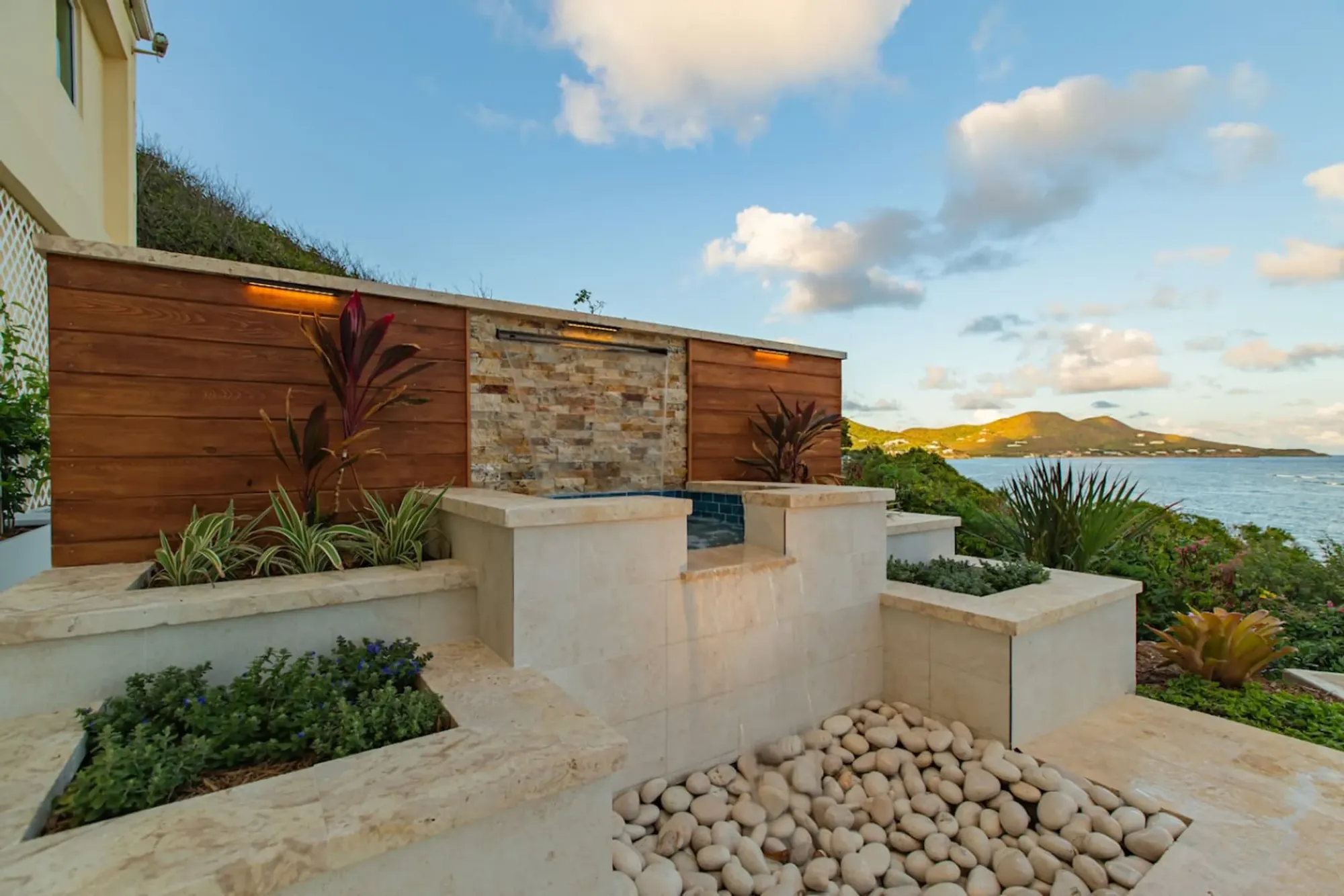
The fire pit terrace at The Cerulean — where a bio bay night usually ends, about forty minutes after you leave the marina.
The fire pit terrace at The Cerulean — where a bio bay night usually ends, about forty minutes after you leave the marina. Photo: The Cerulean

Questions people ask

Is the St. Croix bioluminescent bay worth doing?

Yes, on a dark night. Salt River's lagoon is one of only about fourteen documented bioluminescent bays in the world and one of seven in the Caribbean that glow year-round, and a two-hour guided kayak tour costs around $50 to $55 a person. The honest caveat is the moon: on a full-moon week the glow is faint, so book by moon phase, not by convenience, and go with the expectation of sparks and streaks around your paddle rather than a glowing lake.

What is the best moon phase for the Salt River bio bay?

The darkest sky you can get. New moon and the nights either side are best; the week after new moon works because the thin crescent sets a few hours after sunset; and the two weeks after full moon work because the moon rises later each night, leaving the early evening dark. BushTribe runs its bio trip only in those windows. First quarter through full moon is the poor stretch, when the operators switch to moonlight paddles instead.

How much does a bio bay kayak tour cost in St. Croix?

As of August 2026, Sea Thru Kayaks VI lists its clear-kayak Bioluminescent Bay tour at about $55 a person and its LED Moonlight tour at about $70; BushTribe lists its bioluminescent kayak trip from about $50; Virgin Kayak Tours does not publish prices online and books by appointment. Daytime park and glass-bottom paddles run around $60. All are roughly two hours. Prices change, so confirm when you book, and expect to pay online in advance.

How old do kids need to be for the bio bay tour?

Sea Thru Kayaks VI sets a minimum age of 8 for its night tours and 5 for its daytime tours, with a 385-pound limit per kayak. Virgin Kayak Tours and BushTribe do not state a minimum on their pages, so ask when you book. In practice a child who can sit calmly in a boat for two hours in the dark does well, especially in the front seat of a double with an adult behind and, ideally, in a clear kayak.

Can you swim in the bioluminescent bay at Salt River?

The tours are paddles, not swims: you sit in a kayak, trail your hands and paddle in the water, and the guides scoop water up to show you the glow. Ask your guide what is allowed. Whatever you do, keep sunscreen, insect repellent, deodorant and perfume off your skin before you go, because the local guidance is that they can kill the dinoflagellates that make the light. Wear long sleeves instead of spray.

Is the Salt River Bay visitor center open?

No. The visitor contact station on the hill above Columbus's Landing Site was damaged by Hurricane Maria in September 2017 and remains closed indefinitely, partly for budget reasons. The NPS directs visitors to the visitor center at Fort Christiansvaern in Christiansted instead. The park's beach, the Well Tower and the east-side trails stay open sunrise to sunset, with no entrance fee.

How far is Salt River Bay from Christiansted and from the East End?

The NPS puts the park about five miles from Christiansted National Historic Site, which is roughly fifteen minutes by car along North Shore Road. From a villa on the East End it is about 35 minutes in daylight and closer to 40 at night, since the road beyond town is unlit and winding. All three kayak operators meet at Salt River Marina, off North Shore Road; use the pin in your booking confirmation.

Is Salt River as bright as the bio bay in Vieques?

Sometimes. Mosquito Bay on Vieques, Puerto Rico, is the famous one and holds a Guinness listing as the brightest. Citizen-science measurements at Salt River around 2013 to 2014 recorded nights as bright as Mosquito Bay, but the same work found the glow varies week to week and month to month, and moonlight washes it out. So on a dark, calm night after a dry week it can match anything in the Caribbean; on a bright or churned-up night it is a faint fizz.

What else glows in the lagoon besides the plankton?

Comb jellies (ctenophores), which the local guides lift gently from the water and which light up green rather than the dinoflagellates' blue; and a fireworm, Odontosyllis phosphorea, that the park's species list includes and that puts on an occasional show of its own. The dinoflagellate Pyrodinium bahamense is still the main event: it is the same species behind the Puerto Rican bays and the one whose abundance the researchers link directly to brightness.

Doing it from The Cerulean

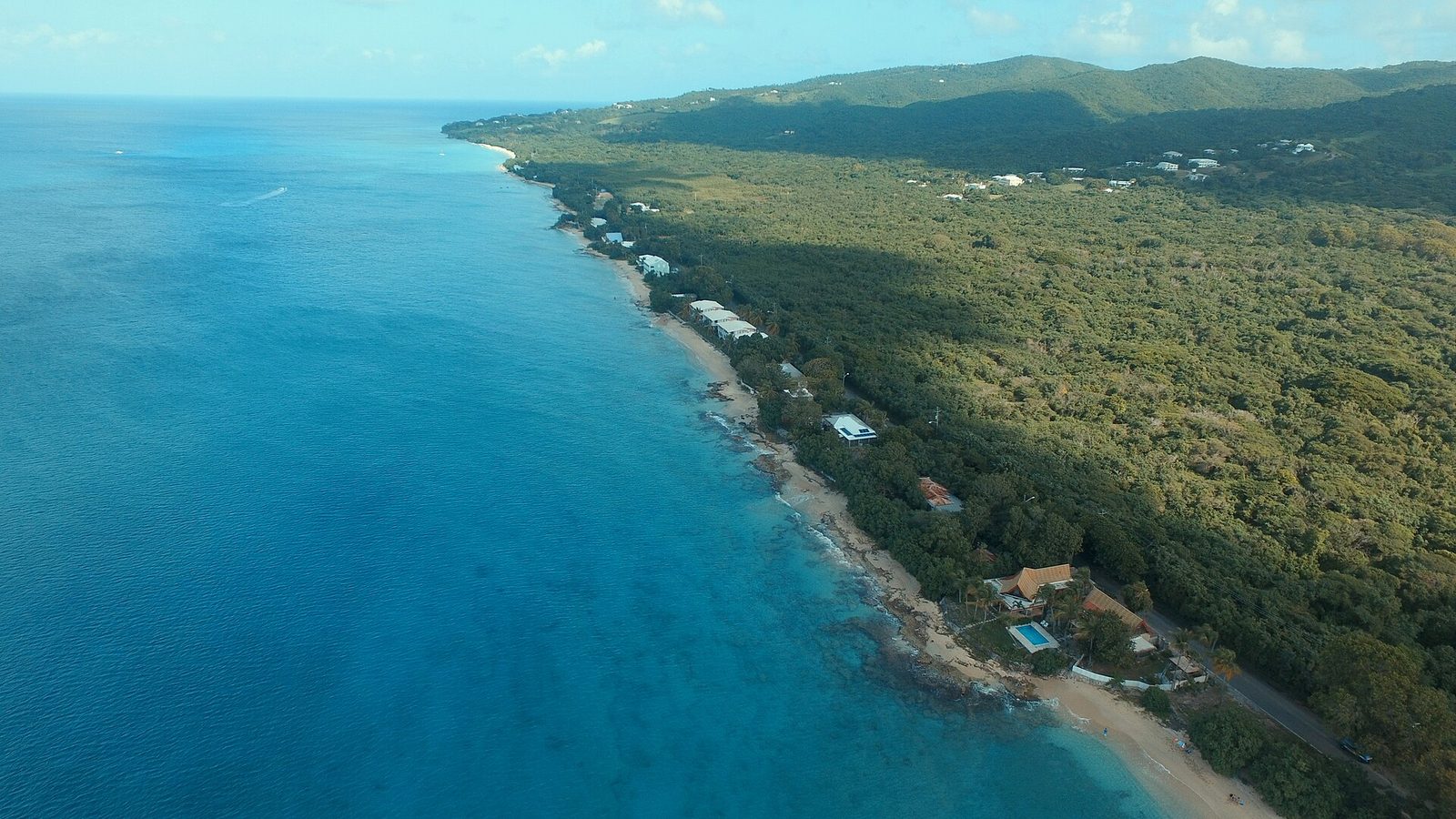
From the villa on the East End, Salt River is the far side of Christiansted: about 35 minutes in daylight by the north road, closer to 40 at night, which makes it a comfortable evening out rather than an expedition. Leave about an hour and a half before your launch time on the first night, so you are not finding the marina turnoff for the first time in the dark. Coming back, the road is quiet and you are at the gate by ten. Nobody needs to be up early the next morning — though the villa faces the sunrise, and after a night spent in the dark you may find you want to see it.

The rhythm that works: an easy day at the private beach and the pool, an early dinner in the chef's kitchen, everybody in the cars by half past six on a winter night or a little later in summer, the bay, and back to the fire pit by ten to talk about it. The concierge can book the tour, check the moon for your dates, and, if the group is twelve, sort out which operator can take you and whether it should be one night or two. Tell them the ages and who is nervous, and let them place you.

Pair the day: if divers are in the house, the canyon in the morning and the lagoon at night make one long, good day out of a single drive; if not, do the morning mangrove paddle one day and the bio bay another, with the Columbus site read up on in between. And if your week lands on a full moon, do the moonlight paddle anyway and put the bio bay at the top of the list for the next trip. The villa is not going anywhere, and neither, with care, is the glow.

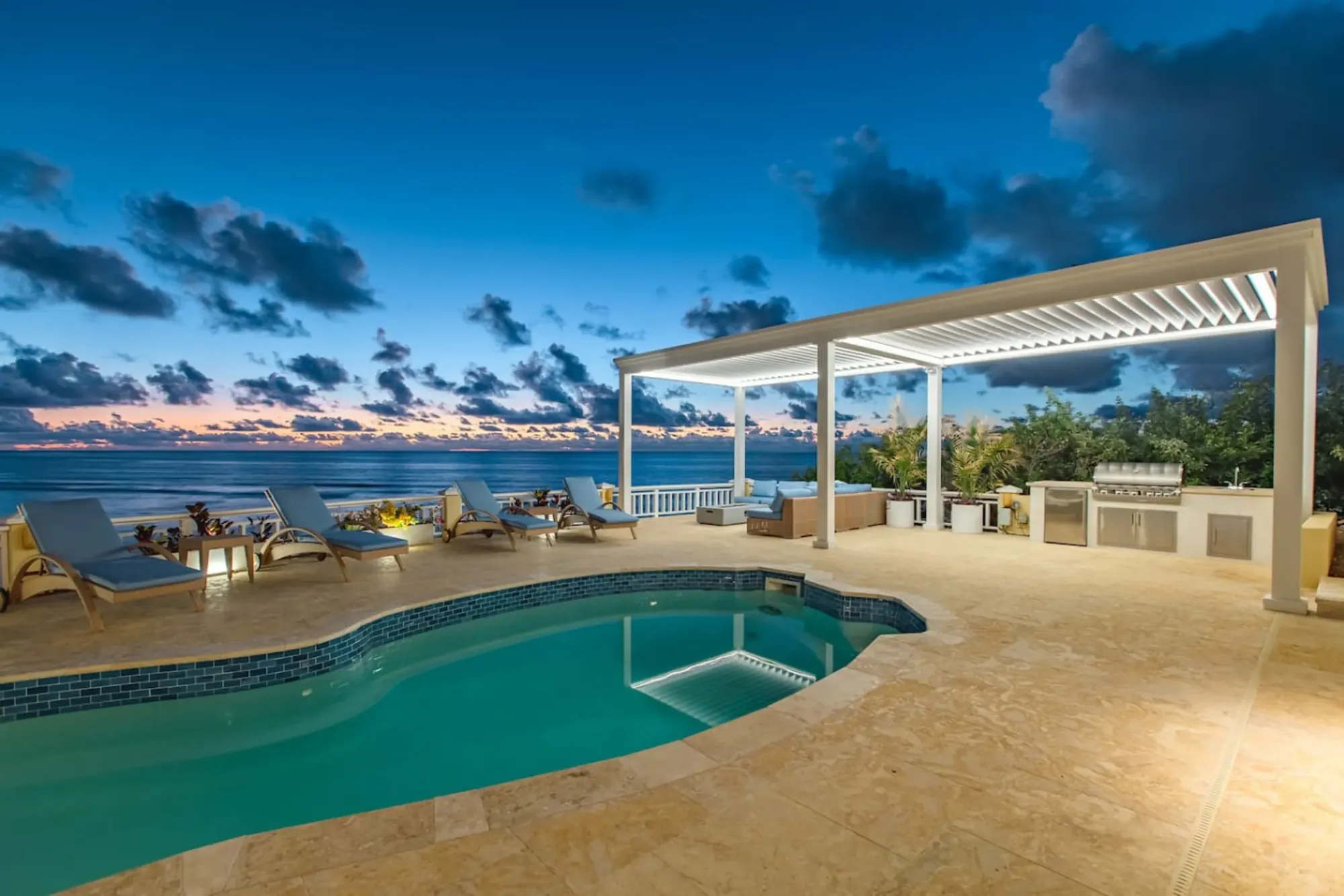
The Cerulean's pool at sunset above the sea
The Cerulean

Twelve of you, one private beach.

The Cerulean sleeps twelve on St. Croix's quiet East End — check your dates.

Sleeps 12 · 4.90 ★ · rates by season
Keep reading

Related guides.

The Cerulean villa at dawn above the sea
The Cerulean

Read it here. Live it from the villa.

Five bedrooms, a private beach, and all of this within a day trip.

Sleeps 12 · 4.90 ★ · rates by season