

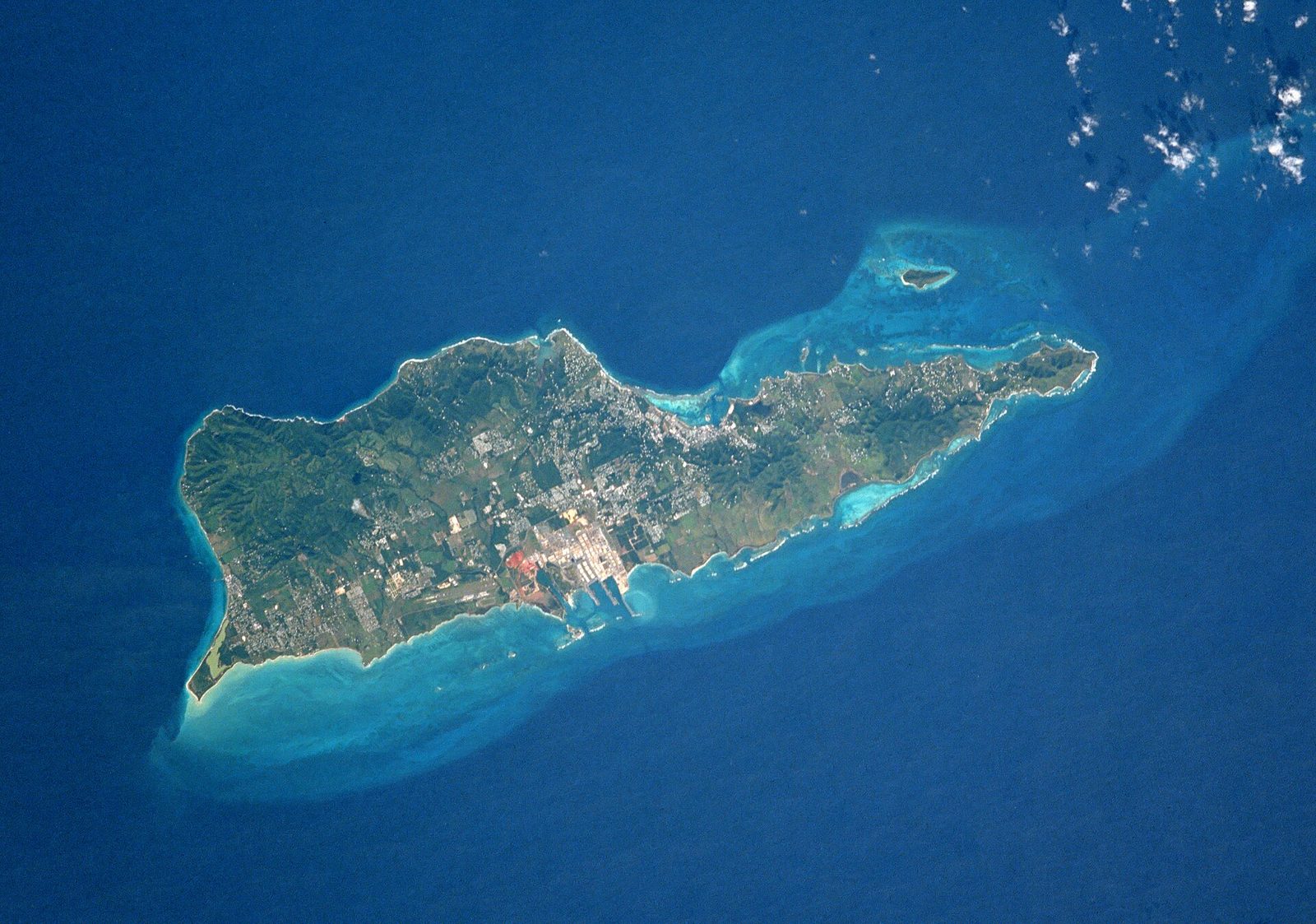
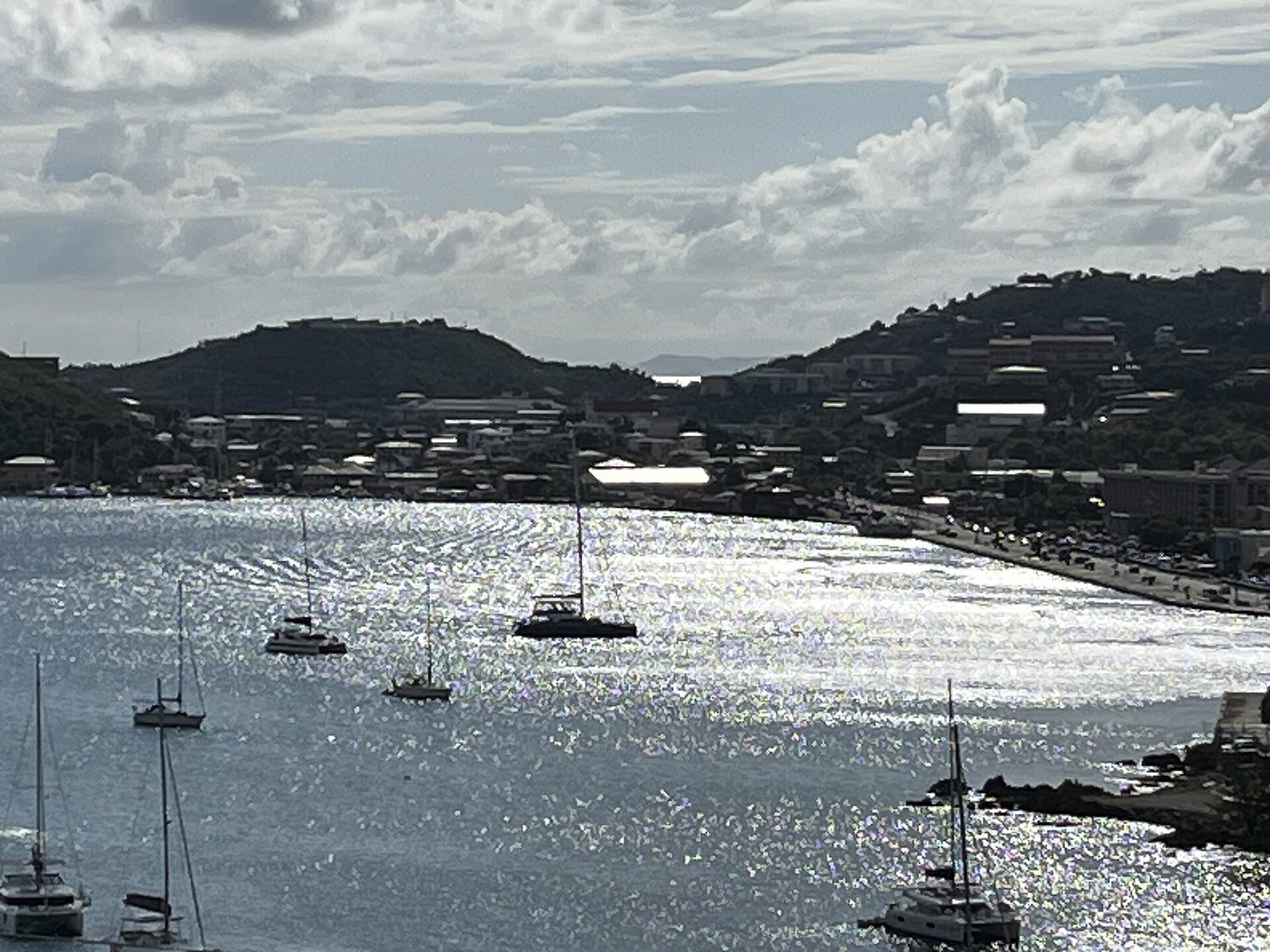
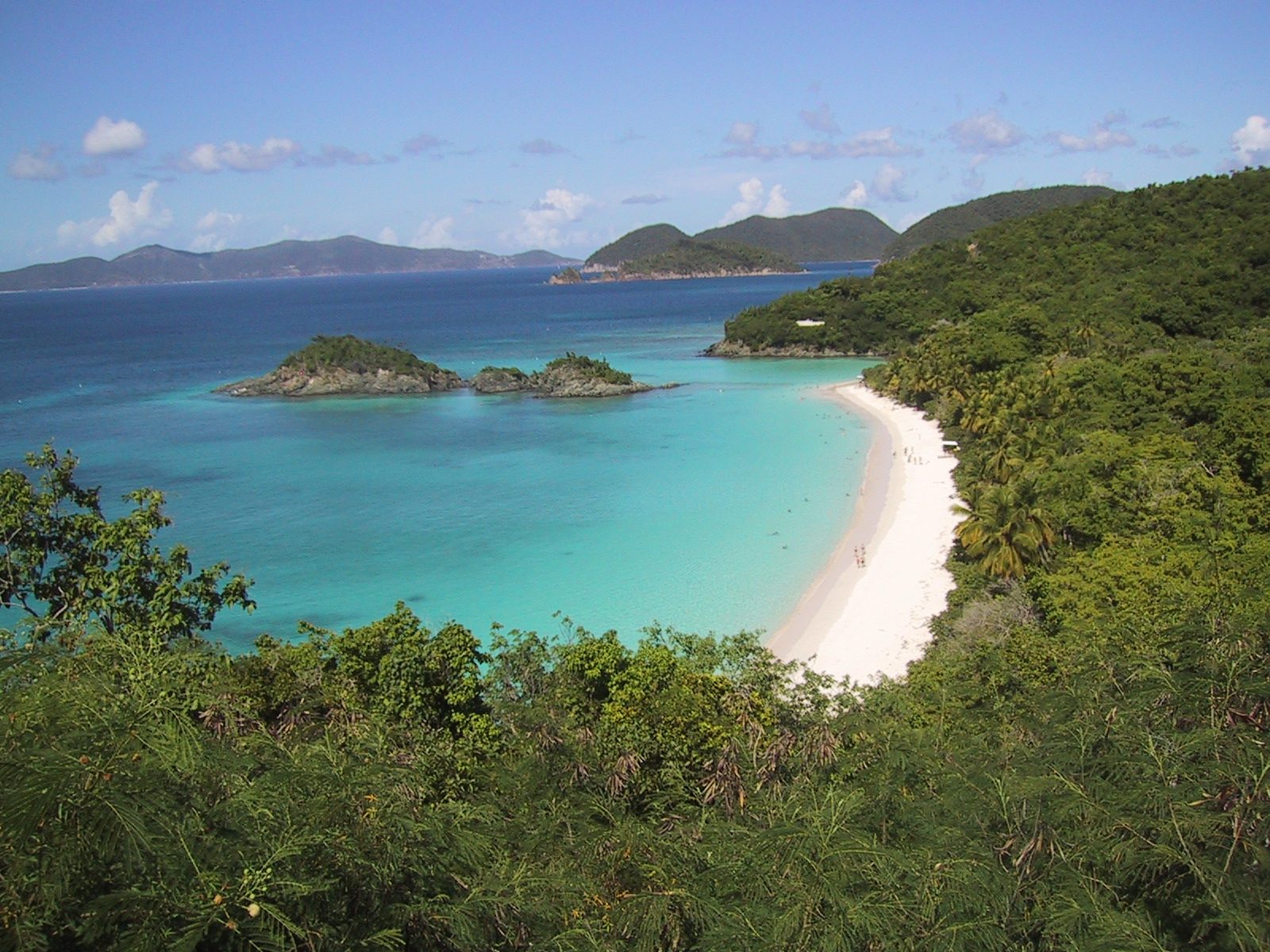
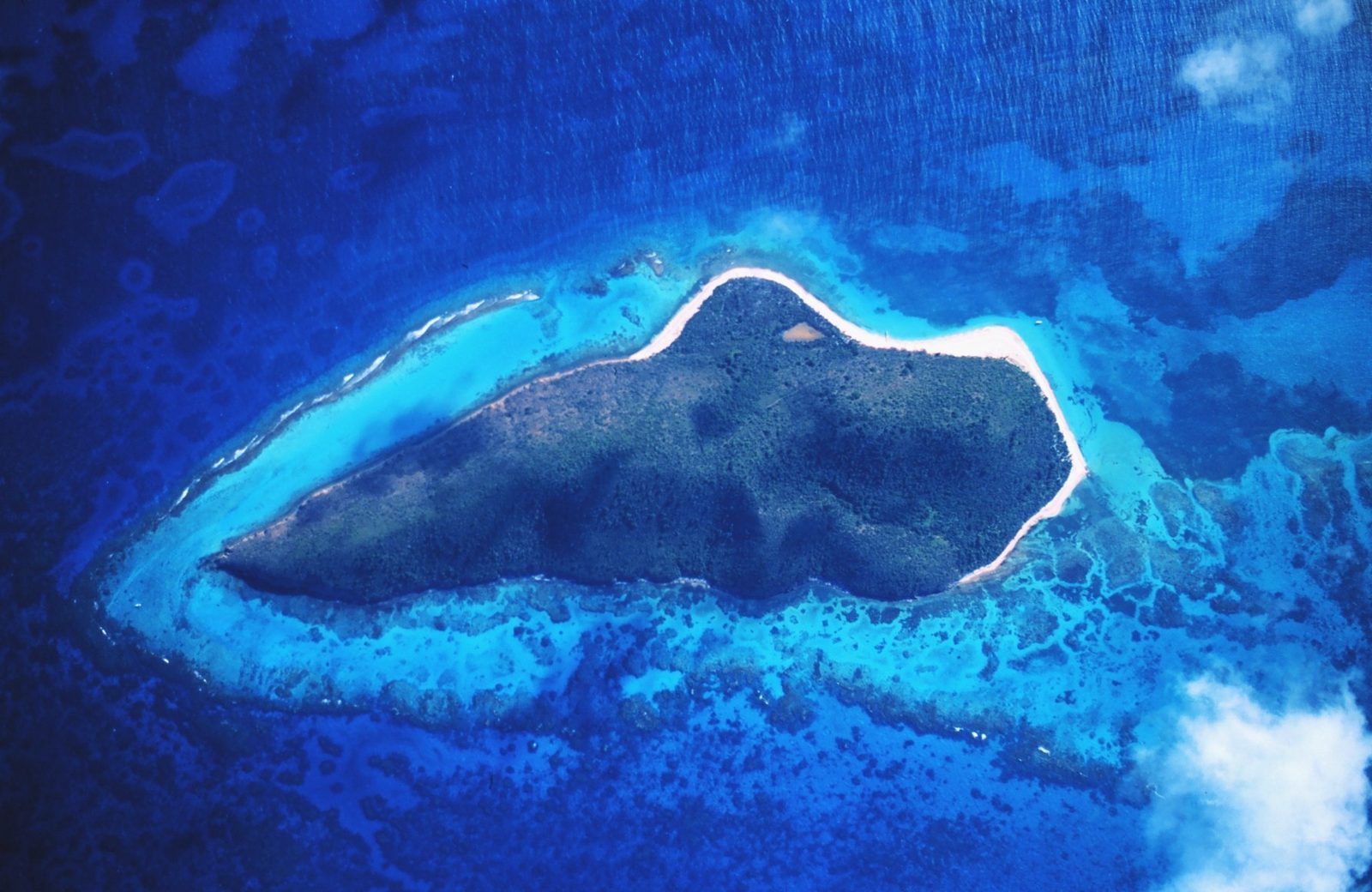
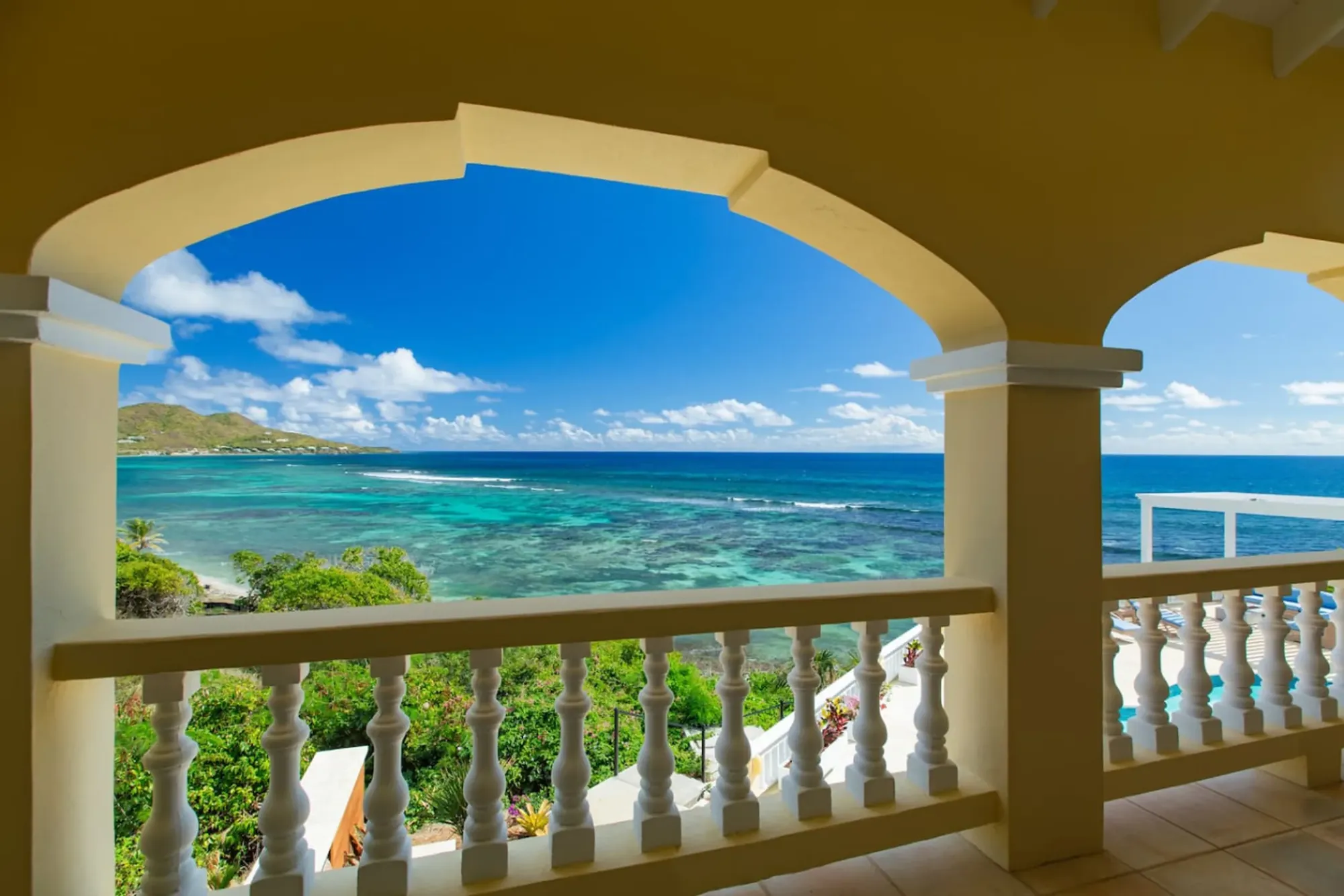
History and culture, island by island
All three islands were Danish for the better part of two centuries and American since April 1, 1917, when the United States took formal possession of the islands it had bought from Denmark. Their histories then diverge, and the divergence is a good guide to what each island feels like now.
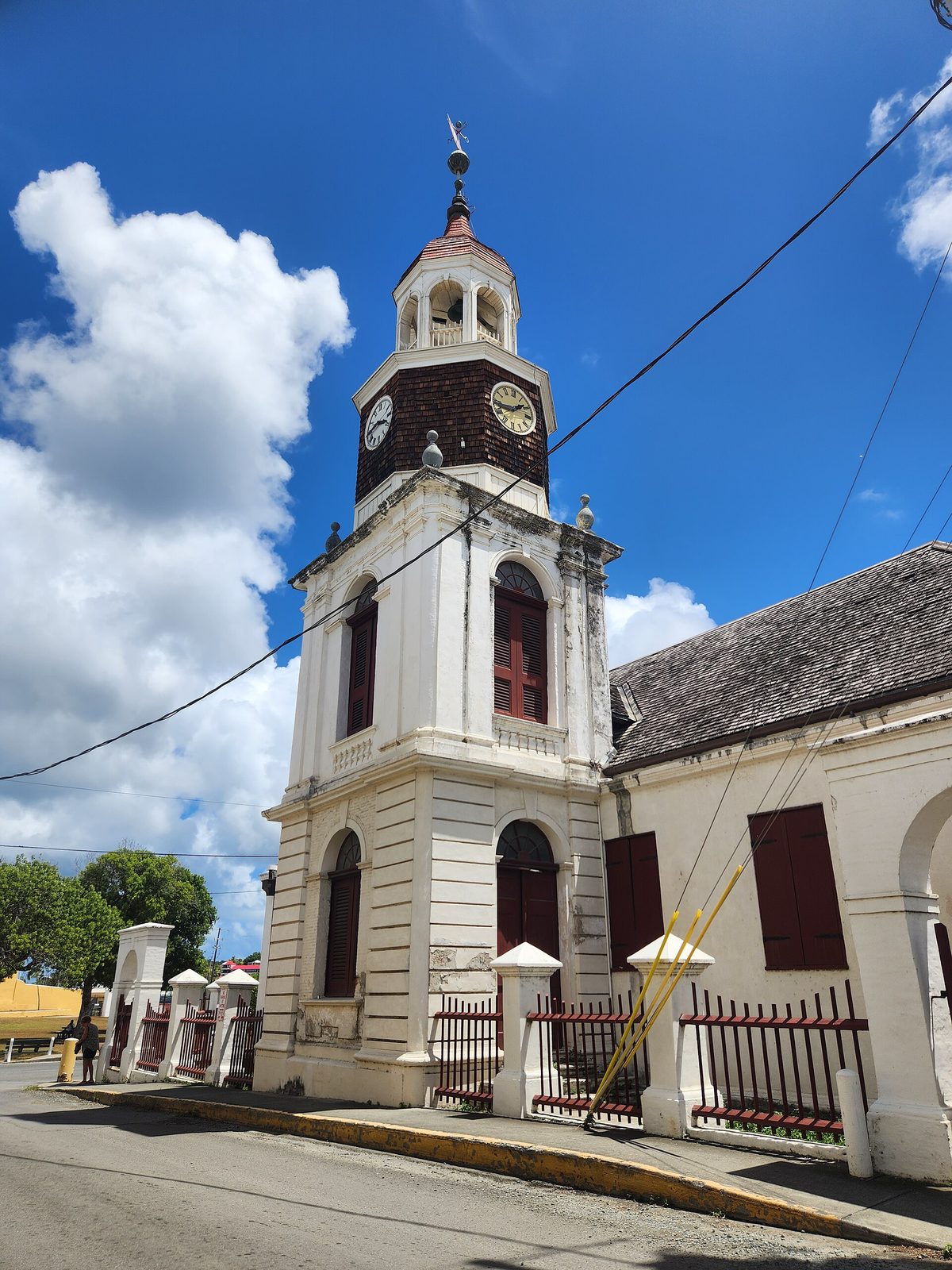
St. Thomas was always the harbor: Charlotte Amalie grew from a 1666 tavern settlement into the trading port of the Danish West Indies, and its old core still holds Fort Christian, the oldest standing structure in the Virgin Islands archipelago; the 17th-century tower called Blackbeard's Castle (Skytsborg to the Danes), a National Historic Landmark; the 99 Steps up the hill; and a synagogue that is the second oldest in the Western Hemisphere and the oldest under the U.S. flag. It is a maritime, mercantile history, and Main Street's jewelry stores are its direct descendants.
St. Croix was always the plantation. Columbus's fleet anchored at Salt River in November 1493, on the second voyage, the only place in what is now the United States his crews are known to have set foot. France sold the island to Denmark's West India Company in 1733, and under Danish rule Christiansted became the capital of the Danish West Indies and the island one of the richest sugar colonies in the region.
Alexander Hamilton clerked in Christiansted as a boy; the 1848 emancipation of the enslaved was won at Frederiksted; and the island passed through so many hands that the local shorthand is seven flags. The forts, the Scale House, the great house at Whim, the windmill towers across the hills: the landscape explains itself if you drive it slowly.
St. John was a plantation island too, and its ruins are the ones the National Park Service interprets: the Annaberg sugar works with a restored windmill, and the Reef Bay Trail, which drops through forest to Taíno rock carvings beside a pool below a waterfall. Then, in 1956, most of the island became a park, and its modern history is the history of that park, including the September 2017 hurricanes, Irma and Maria, after which the park reopened in December 2017 and has climbed back to 471,074 visitors in 2025 from 112,287 in 2018.
Living culture follows the same pattern. St. Croix's calendar runs on its own festivals: the Crucian Christmas Festival, Agrifest in February, the mocko jumbies and quelbe bands, Jump Up nights on the Christiansted boardwalk. St. Thomas has more of everything staged for a visitor and a proud, urban Virgin Islands culture underneath it; St. John's is small-town and park-shaped. If history is a reason you travel, St. Croix has the most of it per mile and two whole towns of it.
- 1493Columbus's fleet anchors at Salt River, St. Croix, on the second voyage
- 1666The Danes found Taphus, the future Charlotte Amalie, on St. Thomas
- 1691Taphus is renamed Charlotte Amalie for the queen of Christian V
- 1733Denmark's West India Company buys St. Croix from France
- 1848Emancipation is proclaimed at Frederiksted, St. Croix
- 1917The United States takes formal possession of all three islands on April 1
- 1946Arthur Fairchild gives Magens Bay to the people of St. Thomas and St. John
- 1956Virgin Islands National Park is established on St. John (August 2)
- 1961Buck Island Reef National Monument is proclaimed off St. Croix
- 2017Hurricanes Irma and Maria strike all three islands in September
Food and drink
St. Thomas eats out. It has the deepest restaurant list in the territory, from Frenchtown, the fishing quarter settled by families from Saint-Barthélemy, to the resort restaurants and the harbor-front bars. St. John's dining is concentrated in Cruz Bay and is much smaller; it is good, and it tends to close early. None of the three is a bargain to eat out on; food is shipped in and menus price accordingly.
St. Croix cooks. Its restaurant scene is real but thinner and more scattered, split between Christiansted's boardwalk and streets and Frederiksted's strand, with a few good places out east and mid-island; our restaurants directory lists the ones we have confirmed open in 2026, because turnover here is real.
What St. Croix has that the others do not is a food culture that grew out of farming: the Crucian kitchen of kallaloo, fungi, saltfish, johnnycakes and roast pork, the Saturday farm stands, the produce and livestock fair at Agrifest, and the island's two big rum makers, Cruzan and Captain Morgan, both distilling here. It is the island where a private chef will cook a Crucian meal in your kitchen with produce from the Saturday market.
That last point is the practical one for a group. Twelve people eating out twice a day on any of the three islands is a serious line in the budget, and on St. Thomas the temptation to do so is constant because the restaurants are right there. At a villa on St. Croix's East End the arithmetic flips: the chef's kitchen and the outdoor kitchen and grill are the default, the groceries directory tells you where the good stores and the fish are, and a chef from our private chefs directory covers the two or three nights you do not want to cook. Dinner out becomes an event, in Christiansted, fifteen to twenty minutes away, rather than a nightly obligation.
The verdict: for a couple who want a different restaurant every night, St. Thomas. For a group that would rather have one long table above the sea and go to town when it feels like it, St. Croix. Everywhere, check that a place is open before you drive there; guidebook lists here go stale in a season.
Nightlife and shopping
This is the section where we simply concede. St. Thomas has the most bars, the latest nights, and the only shopping district in the territory that deserves the word: Charlotte Amalie's Main Street and the alleys off it hold more than 400 shops, most of them selling jewelry, and the nightlife runs long after the sun sets. Both claims are true. Duty-free rules apply territory-wide, and the higher U.S. allowance for goods bought in the USVI is the same on St. Croix as on St. Thomas (our duty-free guide has the numbers), but the sheer density of watch, jewelry, liquor and camera stores is a St. Thomas thing, built for the cruise trade.
St. Croix's version is smaller and, to our taste, better. Christiansted's arcaded streets hold a few blocks of jewelry shops, galleries and boutiques rather than four hundred stores, and its nightlife is the boardwalk: a handful of bars on the harbor, live music some nights, and Jump Up, the street festival held four times a year that closes the old town to cars. Frederiksted's waterfront has bars that fill for sunset. Most of it is done by midnight, and on a weeknight earlier. If a late club is part of your holiday, St. Croix will disappoint you, and it is better to know that now than at 11 pm on a Tuesday in Christiansted.
St. John's Cruz Bay has a compact bar scene a few minutes' walk from the ferry, and it suits the island: a drink after a hike, dinner, an early night, because tomorrow is another beach. On both St. Croix and St. John, "nightlife" often means the sky. Away from Charlotte Amalie's lights, the stars over the East End of St. Croix are the entertainment after dinner, and the villa's fire pit terrace is where our guests end up.
What a stay costs, hedged
We will not quote nightly rates, because they swing by season, by property and by how far ahead you book, and any number we printed would be wrong by the time you read it. What we can describe is the structure of each island's lodging, which is what actually decides your budget.
St. Thomas has the most inventory at every level: large resorts, mid-range hotels, condos and villas, plus hotels at the island's East End near the Red Hook ferry to St. John. St. John's supply is the smallest of the three, mostly villas and a small number of resorts; the small supply and the park's fame set its prices, which is why it is often called the priciest of the three in high season.
St. Croix has fewer large resorts than St. Thomas and more of its beds in villas, small inns and condos, spread over a much bigger island. That structure tends to favor groups: a five-bedroom house sleeping twelve on its own beach, divided twelve ways, usually compares well against six resort rooms on either of the other islands, and it comes with a kitchen, a pool and a beach you do not share. Whether that holds for your dates is a matter of checking, hence "usually."
The rest of the budget behaves the same way on all three islands, with a few differences. Everyone rents a car on St. Croix, because the island is big and there is no useful public transport for visitors; on St. Thomas taxis cover a lot of trips, and on St. John many visitors rent a car for the park roads. Groceries cost more than at home everywhere in the territory. Beach fees are a St. Thomas and St. John line item (Magens Bay about $7, Trunk Bay about $5); St. Croix's public beaches are free.
And island-hopping is a real cost: the seaplane is priced like a short flight, and the ferry posted about $85 one way in summer 2026, so a family of five crossing and returning is a few hundred dollars either way. Build the crossing into the plan or skip it.
The summary: St. Thomas offers the widest range of prices. St. John is generally the priciest per night. St. Croix, for a group willing to cook and drive, tends to deliver the most house and the most privacy per dollar.
Airports and nonstops: where St. Thomas wins
Cyril E. King Airport (STT), two miles west of Charlotte Amalie, is the busiest airport in the U.S. Virgin Islands and one of the busiest in the eastern Caribbean, handling roughly 1.5 to 1.6 million passengers a year, on a single 7,000-foot runway.
As of August 2026 the nonstops run from Miami, Charlotte, Dallas/Fort Worth, New York JFK and Philadelphia on American (Chicago seasonally); Atlanta on Delta (Boston and JFK seasonally); Newark, Houston and Washington Dulles on United (Chicago seasonally); San Juan on JetBlue (Boston seasonally); Minneapolis on Sun Country seasonally; and the Cape Air island network. Airline maps change every season, so treat that as a snapshot; the shape of it is stable.
St. Croix's Henry E. Rohlsen Airport (STX) has fewer, and we would rather say so than have you find out. As of August 2026 the nonstop list is American from Miami daily year-round; American from Charlotte on seasonal Saturdays and daily from December 17, 2026; American from Chicago O'Hare on winter Saturdays from December 5; Delta from Atlanta on seasonal Saturdays and daily except Monday from December 19; and United from Newark on Saturdays beginning October 31, 2026, the first New York-area nonstop to the island in more than 30 years.
Everyone else connects once, through Miami, Charlotte or Atlanta, or flies JetBlue to San Juan and takes the short Cape Air hop. Our getting here page and the fly-from pages for New York and Charlotte keep the schedule current.
What that means in practice: from Miami, Charlotte or Atlanta the two islands are equally easy. From the Northeast, St. Thomas has daily nonstops and St. Croix has a Saturday one from Newark plus connections, which suits a Saturday-to-Saturday villa week and suits a random Tuesday less well. From Texas, Philadelphia, Washington, Florida's other airports and the upper Midwest, St. Thomas has a nonstop and St. Croix does not. The penalty for St. Croix is a connection of an hour or two, not a lost day, and it is one reason the island stays quiet.
| Mainland city | St. Thomas (STT) | St. Croix (STX) |
|---|---|---|
| Miami | American, year-round | American, daily year-round |
| Charlotte | American, year-round | American, seasonal Saturdays, daily from Dec 17, 2026 |
| Atlanta | Delta, year-round | Delta, seasonal Saturdays, daily except Monday from Dec 19, 2026 |
| Chicago O'Hare | American and United, seasonal | American, winter Saturdays from Dec 5, 2026 |
| New York area | United from Newark, American and Delta from JFK | United from Newark, Saturdays from Oct 31, 2026 |
| Dallas, Houston, Philadelphia, Washington, Boston, Orlando, Fort Lauderdale, Minneapolis | Nonstops on various carriers, some seasonal | No nonstop, connect through Miami, Charlotte, Atlanta or San Juan |
| San Juan | JetBlue and Cape Air | Cape Air hop, connecting from JetBlue's mainland flights |
| Between the two | Cape Air, about 25 minutes | Cape Air, about 25 minutes |
Getting between the islands: seaplane, ferry, Cape Air
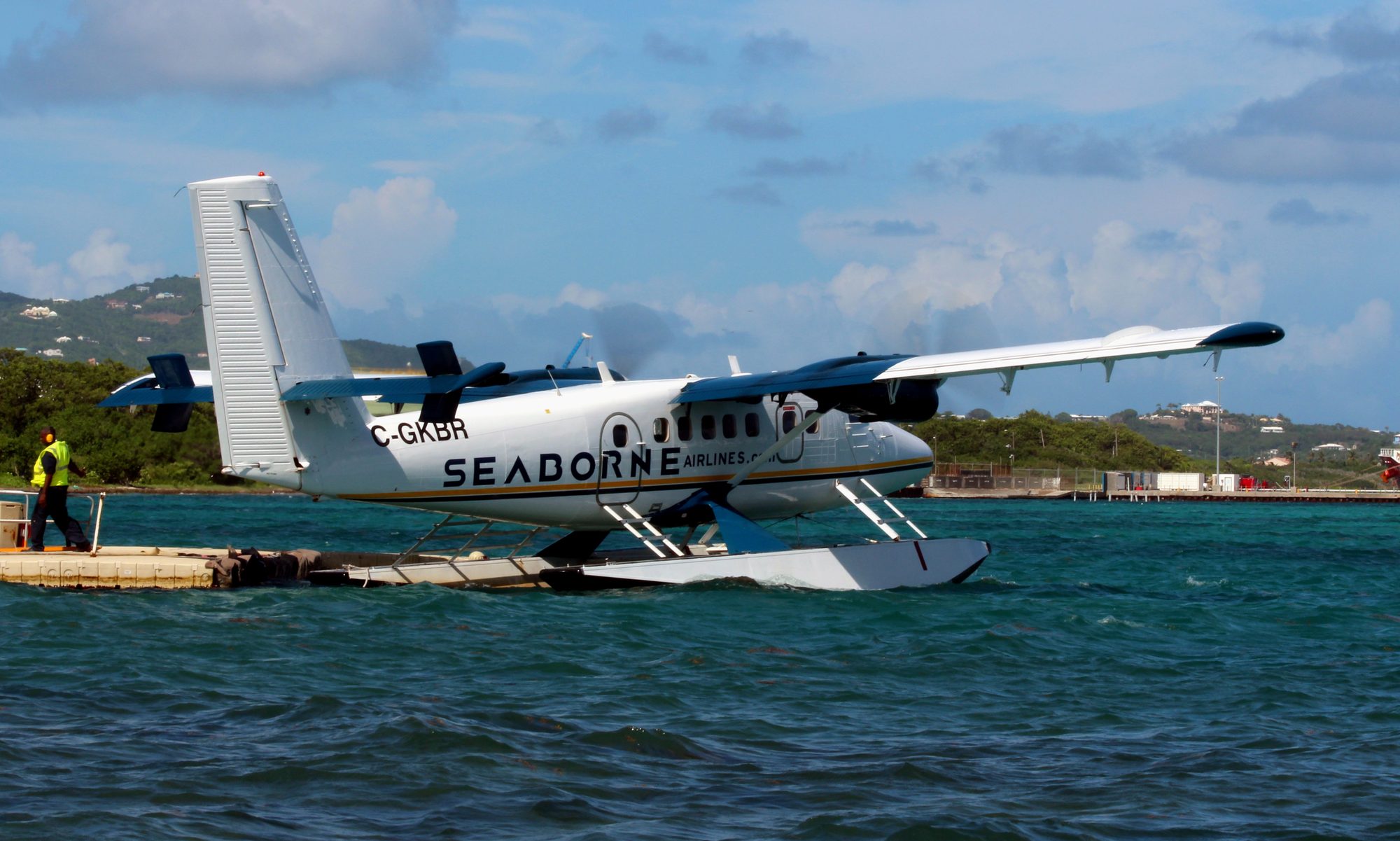
Three ways cross the 40 miles, and one of them is a small joy. Seaborne Airlines flies Twin Otter seaplanes from the Svend Aage Ovesen Jr. Seaport on Christiansted's harbor to the seaplane base on Charlotte Amalie's waterfront, "25 minutes from downtown to downtown" in the airline's phrase, with departures through the day. The plane is a 19-seat de Havilland Twin Otter on floats; you take off from the harbor, cross 40 miles of open sea, and land beside the Blyden ferry terminal in the middle of St. Thomas's capital, so a day trip needs no taxi at either end. Baggage limits are tighter than a jet's.
In November 2025 the airline announced the purchase of its first new Twin Otter, with a letter of intent for up to three more, its chief executive speaking of the fleet "as we continue rebuilding the airline"; as of 2026 the harbor-to-harbor service is running, and you should check the current timetable and fare on seaborneairlines.com rather than trust any printout, ours included.
The ferry is the QE IV, sailing from Gallows Bay in Christiansted to the Blyden terminal in Charlotte Amalie. As posted in August 2026 it runs six days a week, every day but Tuesday, leaving St. Croix at 8 am (arriving about 10:10) and leaving St. Thomas at 3 pm (arriving about 5:10), so a same-day return gives you roughly five hours on St. Thomas. The crossing is about two hours, depending on sea conditions.
The operator's site listed a one-way fare of about $85; older listings show $70 one way and $120 round trip, so confirm. Check-in closes 15 minutes before departure, no-shows are not refunded, and the Coast Guard requires ID or birth papers for every passenger including children. Look at qe4ferry.com the week you travel.
Cape Air flies the airport-to-airport hop between STX and STT in about 25 minutes, several times a day, on small aircraft. It is the option when you are connecting to a mainland flight at the other island's airport, or the seaplane is full. And once you are on St. Thomas, St. John is a 15-to-20-minute ferry from Red Hook to Cruz Bay, roughly hourly through the day, with adult one-way fares posted around $12 to $13 in 2026 and a summer off-season schedule with fewer sailings.
None of these crossings needs a passport; they are domestic hops, and the ID you flew in with is enough (the ferry's ID rule applies to children too). The British Virgin Islands are the exception, covered below.
A St. Thomas day trip from the villa
- Book the seaplane a few days ahead on seaborneairlines.com: the first departure out and a late-afternoon return, and confirm the baggage limit.
- Leave the villa after sunrise
- Christiansted is 15 to 20 minutes, and the small free lot on Prince Street sits across from the seaplane terminal.
- Check in with the same ID you flew to St. Croix with, and carry a day bag only, with mineral sunscreen and a swimsuit under your clothes.
- Twenty-five minutes over the water and you land in Charlotte Amalie harbor, a short walk from Fort Christian, the 99 Steps, the synagogue and Main Street.
- Spend the morning downtown, then taxi to Magens Bay (about $7 to enter, lifeguards, rentals) or ride up to the overlooks for the harbor view, then lunch in town or Frenchtown.
- Be back at the seaplane base well before your return. The flight home lands you in Christiansted in time for dinner on the boardwalk or sunset on the East End.
Day-tripping from St. Croix, and where the passport line falls
You do not have to choose forever. A villa week on St. Croix with one day on St. Thomas is a common and sensible plan, and the seaplane is what makes it sensible: 25 minutes each way, downtown to downtown, an early flight out and a late one back, and a full day between them for the fort, the 99 Steps, the synagogue, Main Street and a swim at Magens Bay. The ferry version is cheaper and shorter: the QE IV's 8 am departure and 3 pm return give you about five hours in Charlotte Amalie, with two hours each way at sea.
St. John from St. Croix is possible and long. You fly or sail to Charlotte Amalie, take a taxi across St. Thomas to Red Hook, catch the roughly hourly ferry to Cruz Bay (about 15 to 20 minutes), and then a taxi to Trunk Bay or wherever you are headed, and you do all of it again in reverse in time for the last seaplane. Budget generously for the taxis and the waits.
It can be a very good day, but if St. John's park is a real reason for your trip, build in an overnight or, frankly, base yourselves on St. Thomas or St. John instead. We would rather lose a booking than have you spend a day of your holiday in transit.
Then there is the line on the water. St. Thomas, St. John and St. Croix are U.S. territory, and moving between them is domestic: the same ID you flew in with, no customs, no forms. Just east of St. John, the British Virgin Islands are a foreign country, and every visitor including children needs a valid passport for the ferry over and back, plus the entry formalities.
From St. Thomas or St. John a BVI day trip is routine for passport holders. From St. Croix it is not realistic in a day, because you would stack a seaplane, a taxi, an international ferry and two customs halls each way. Our no-passport guide has the document rules for every case, including non-citizens and the check on the way home.
Who each island suits
St. Thomas
First-time Caribbean travelers who want everything within reach; anyone whose trip depends on a specific nonstop or on a short break, because daily flights from the Northeast, Texas, Florida and the Mid-Atlantic make a long weekend workable; shoppers; people who loved a cruise stop and want a week of it; resort people; and travelers who want St. John and the BVI within an hour.
St. John
Hikers, snorkelers on foot, campers, and national-park people in general; couples who want a beach at the end of a trail and an early night; anyone whose idea of a good day is Trunk Bay at 8 am before the ferries fill it. It suits travelers who do not mind that the island is small and that everything, including you, arrives by boat. It suits large groups less well, because flat land, parking and big houses are all scarce, and every outing begins with the ferry.
St. Croix
Families and multi-generation groups who want one house rather than six rooms, with a kitchen, a pool and a beach that belongs to the house; divers, because of the wall; history people, because of the two towns, the forts, the estates and Salt River; repeat Caribbean visitors who are done with ports; anyone who wants a car and a big island to learn over a week or two; and travelers who would rather see the island's own life than a version of it staged at the pier.
It suits winter travelers well now that Saturday nonstops from Newark, Chicago, Charlotte and Atlanta line up with a Saturday-to-Saturday week. It suits, least, the person who wants a late club and a nonstop from Houston.
The mixed group, which is most groups, has an answer too: base on St. Croix, where the house and the beach and the quiet are, and send the shoppers and the city-lovers to St. Thomas for a day on the seaplane. It is the plan our guests use most.
Mistakes to avoid
The first is geographic: booking St. Thomas "to see St. Croix," or the other way round, as if they were a bridge apart. They are 40 miles of sea apart. Each is a base in its own right, and a day trip is a day trip, not a commute. Related: landing at the wrong airport. Flights sell to "the Virgin Islands," and STT and STX are two different islands; if you are staying on St. Croix, fly into STX, or plan on purpose to arrive at STT and take Cape Air or the seaplane across.
The second is assuming the ferry. The QE IV was sailing six days a week as of summer 2026, but not on Tuesdays, and inter-island ferry service here has stopped and restarted before. Check the operator's site the week you travel, arrive 30 minutes early, and bring ID for every child. If your plans cannot bend, book the seaplane instead. Third: do not expect St. Croix to be St. Thomas after dark; its bars are good and few, and its towns are quiet by midnight.
Fourth, on St. Thomas and St. John, check the cruise calendar before you commit a day to Magens Bay or Trunk Bay; both are at their best on a light-ship morning and at their worst around noon on a four-ship day. Fifth, on St. Croix, respect the driving: it is on the left, the limit is 35 mph, and the East End road takes longer than the map suggests, all of which our driving guide covers. Sixth, everywhere in the territory, pack mineral sunscreen; the USVI banned oxybenzone and other reef-harming ingredients in 2020, so bring a mineral bottle from home. And last: the passport. If the BVI is on your list, bring it.
Why the East End of St. Croix suits families and groups
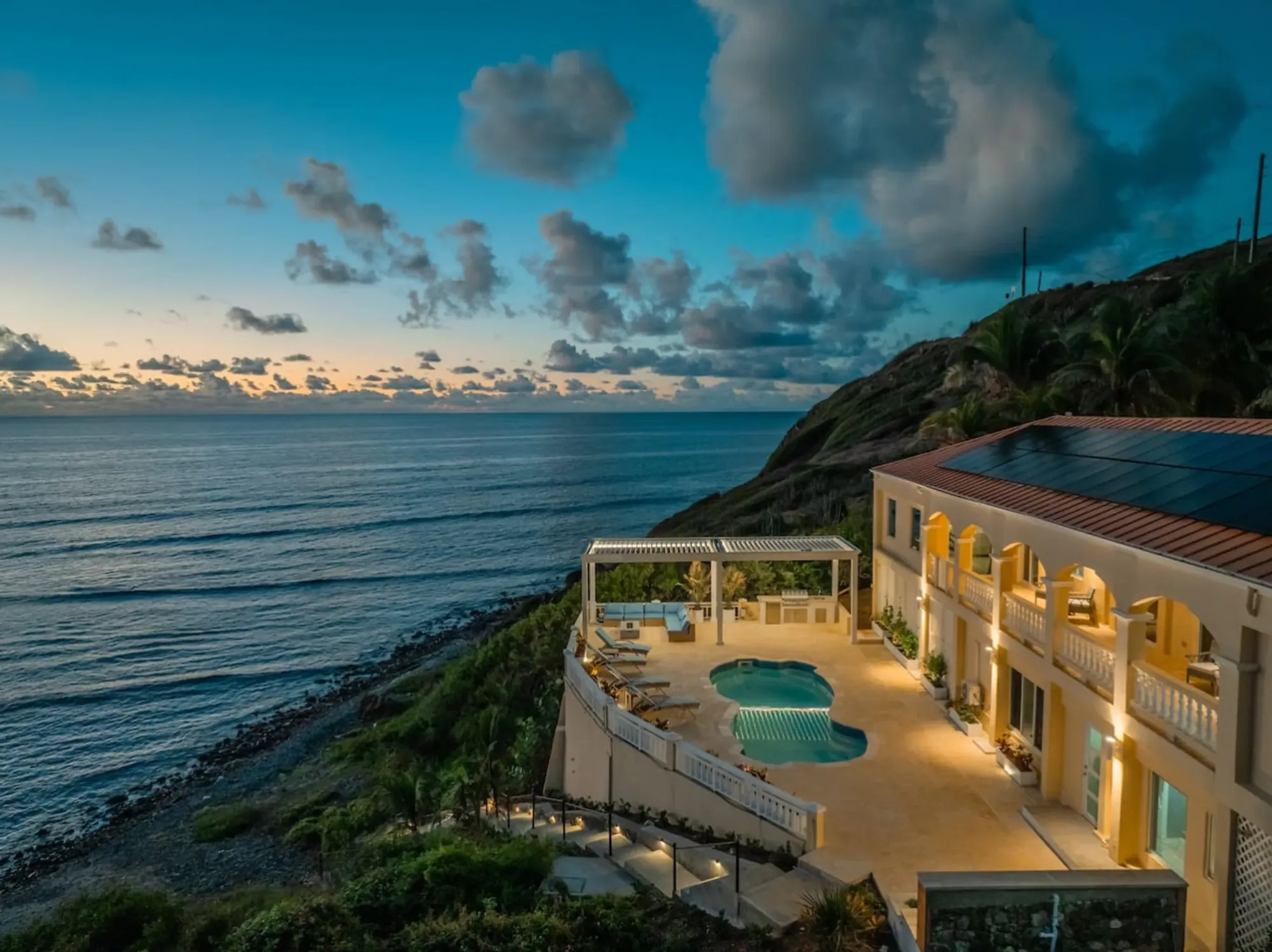
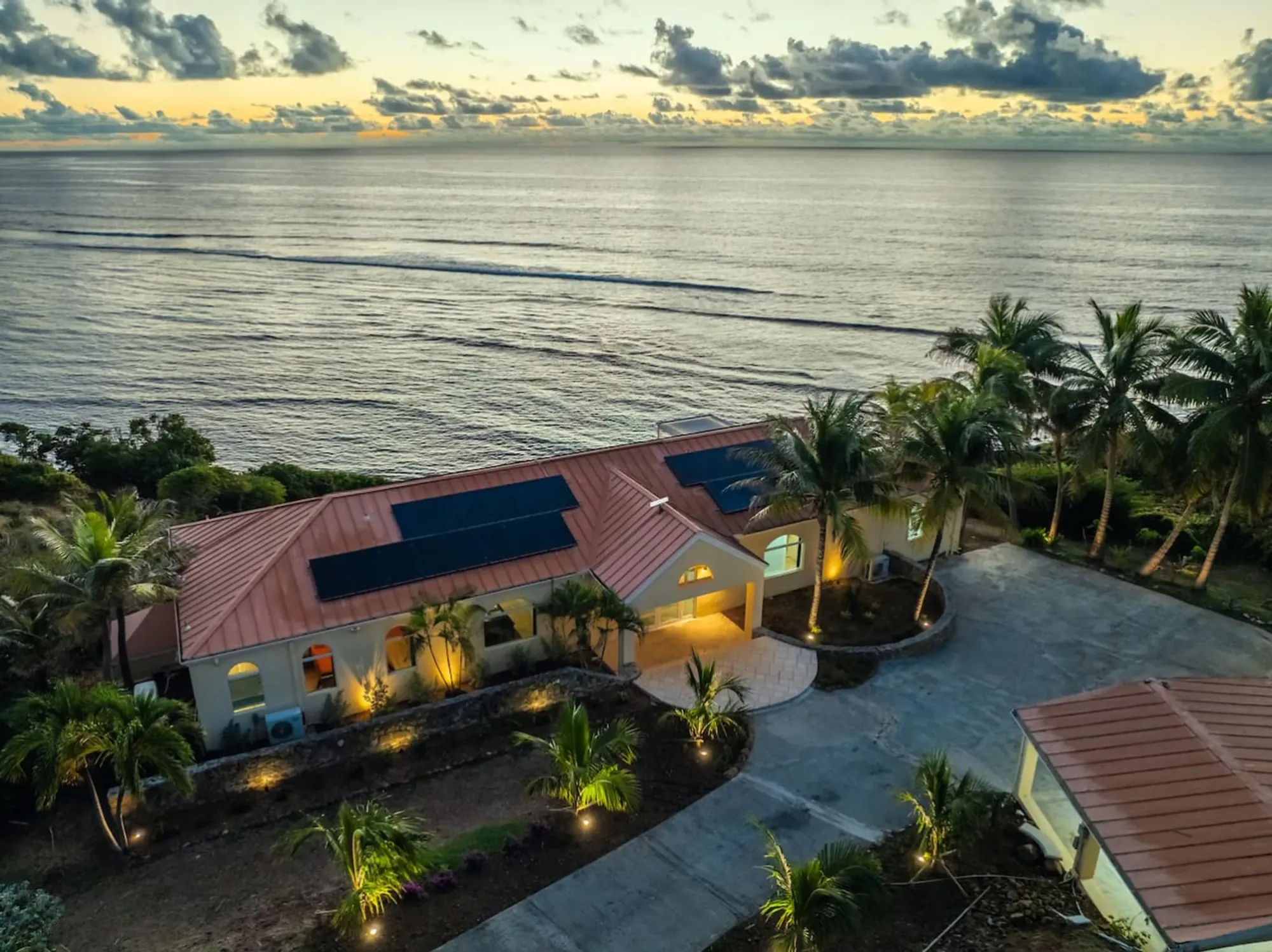
Everything above is general. This part is specific, because it is the reason we built this site. The Cerulean is a five-bedroom, five-bath house on the East End of St. Croix that sleeps twelve: four bedrooms in the main house and a separate guest cottage with a loft bed twenty steps away, which is the arrangement that lets grandparents, parents and teenagers share a holiday without sharing a wall.
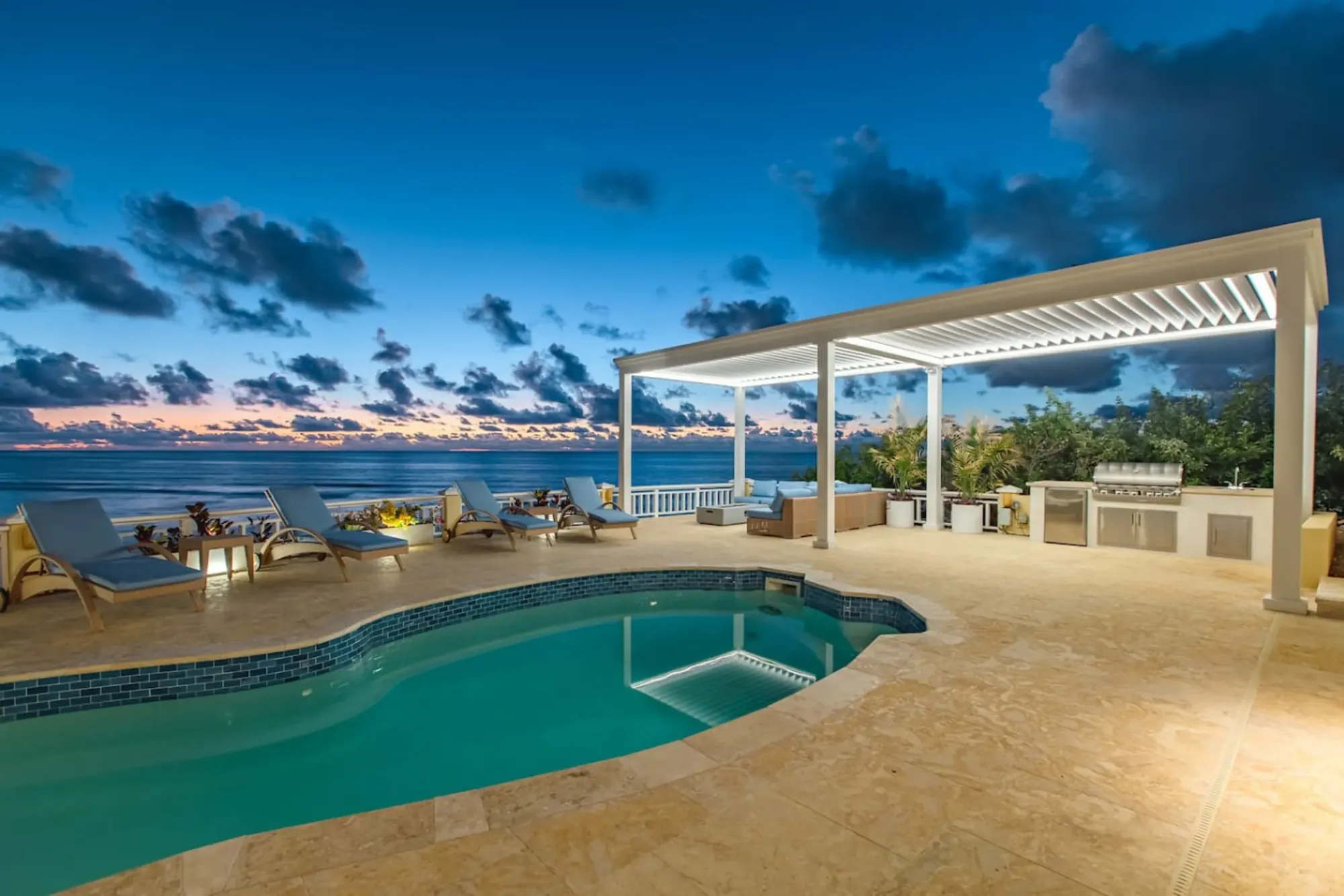
In front of it is a private beach with direct water access and a reef just offshore, and above the beach a pool and deck, an outdoor kitchen and grill, a fire pit terrace, and a chef's kitchen with a window on the sea. The drive is gated. The house faces sunrise.
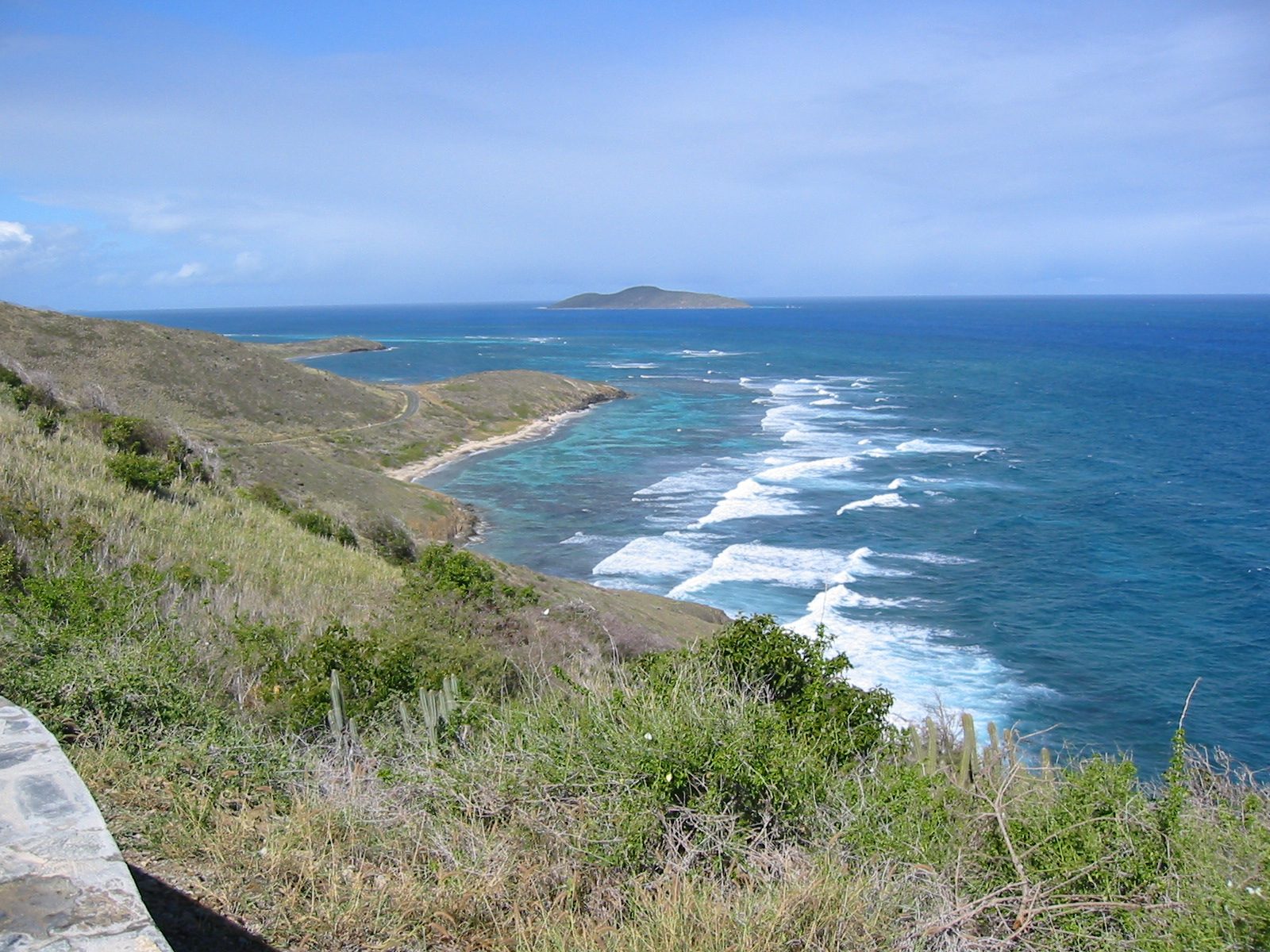
The East End is the quiet, sunny end of the island: low hills and sea grape on the ridges, a string of bays along both shores, Point Udall at the tip for sunrise, and the Jack's and Isaac's bay trail about five minutes from the villa's gate. Christiansted, with its fort, its restaurants and the seaplane, is roughly 15 to 20 minutes west; the airport is about half an hour, more with town traffic. Buck Island boats leave from the East End marinas as well as from town, so the closest departures are ours. It is quiet even by St. Croix's standard.
Set that against the alternatives plainly. A St. Thomas resort gives twelve people six rooms, a shared pool, a beach shared with the resort and, on ship days, with the buses, and a restaurant bill every night; in exchange it gives them daily nonstops and Main Street. A St. John villa gives them the park and a steep road to a ferry. The Cerulean gives them one long table, one beach, a snorkel before breakfast off the sand, and a seaplane 20 minutes away for the day they want a city. Our guests have said it more plainly than we can.
“great for multi-gen families”
Suzanne, villa guest, March 2026