

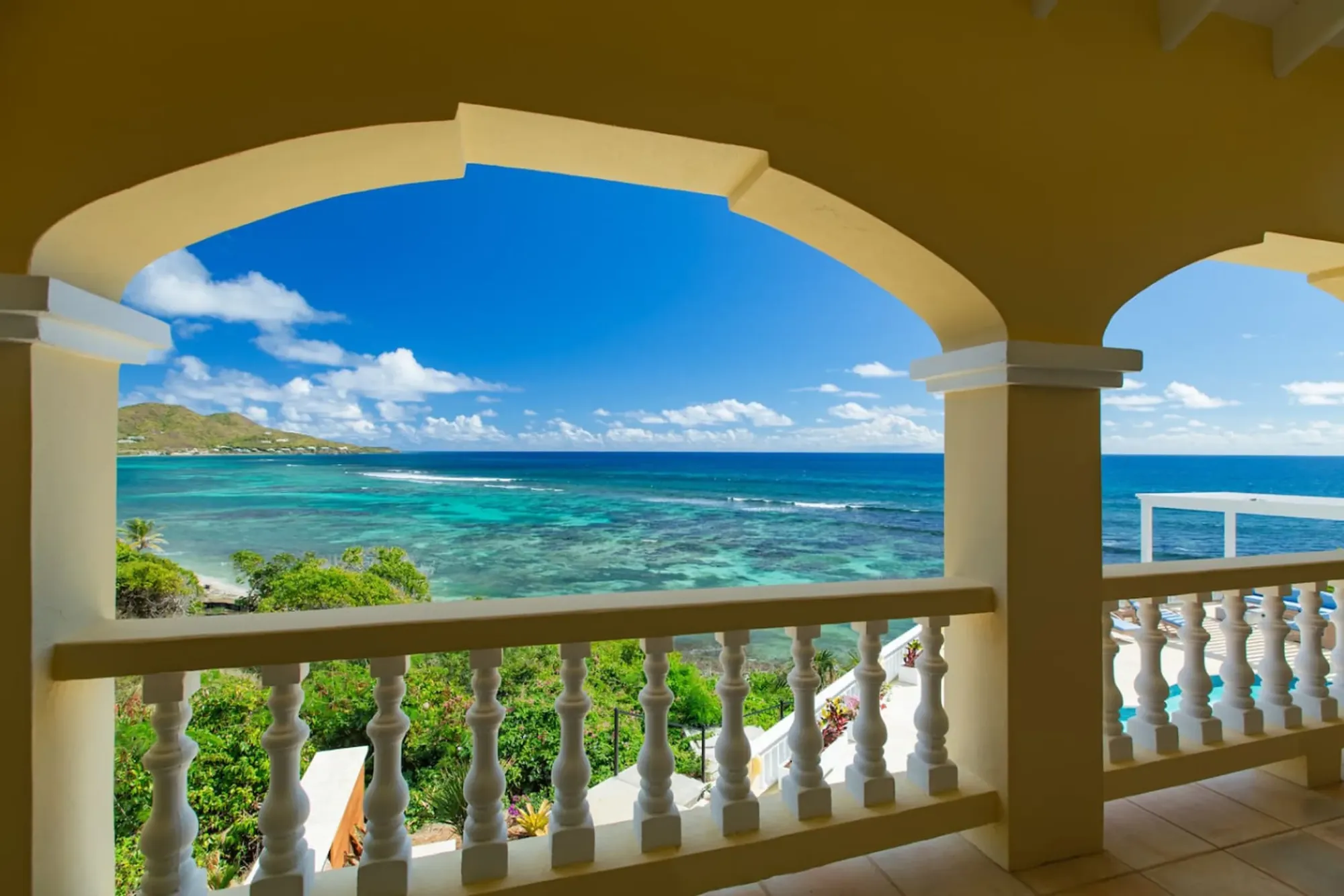
This guide is for travelers who have already done the big names: a cruise stop in St. Thomas, a week on Grace Bay, a resort on Aruba's Palm Beach, a family package in Punta Cana. Those islands are popular for good reasons. What many people want next is space: a beach with nobody else on it, a morning that starts with pelicans fishing the reef, a town small enough to learn in a day. This guide puts numbers on that feeling. It compares well-known islands by land area, residents, overnight visitors and cruise passengers, using each government's own counts for 2024, and then shows what an uncrowded week looks like on St. Croix. The short version: St. Croix is the largest of the U.S. Virgin Islands, 84 square miles with 41,004 residents at the 2020 census, and in 2024 it welcomed about 186,400 air visitors from the U.S. mainland and 71 cruise ship calls at its one cruise pier. U.S. citizens need no passport. Our base is The Cerulean, a five-bedroom oceanfront villa on the East End with its own beach and a separate guest cottage.
What makes an island feel uncrowded
Crowds are easy to feel and hard to compare, so this guide uses a few plain measures. The first is visitors for every resident. On an island where each resident sees a handful of visitors a year, the roads, beaches, grocery stores and restaurants are mostly shared with people who live there, and the island keeps its own hours. Where the ratio runs to thirty or forty, tourism sets the rhythm of the day, with big hotels, a busy harbor and plenty of choice at every hour.
The second measure is cruise traffic. A cruise passenger is a day visitor; the Cayman Islands Economics and Statistics Office notes that cruise ship passengers generally come ashore for less than a day. That is a fine way to see several islands in one trip, and it means a cruise island's busiest hours fall between late morning and mid-afternoon, around the harbor town and the nearest beach. An island with a ship or two a week feels different on an ordinary Tuesday from an island with six or nine.
The third is where visitors sleep. A row of tall hotels concentrates people on one strip of sand, with restaurants, bars and water sports built to serve them. Small hotels, condos and private houses spread the same number of people across many bays and many miles of shore.
Then there is size. The same number of visitors feels very different on an island of 30 square miles with one town than on an island nearly three times larger with two towns, a rain forest, farmland and a coast of separate bays. St. Croix is the second kind of island, and the chapters that follow show what that means on the ground, from the hike-in bays below Point Udall to the old Danish towns.
A note on the figures: governments count overnight visitors in slightly different ways. Most count every overnight visitor. The U.S. Virgin Islands Department of Tourism reports air arrivals from the continental United States island by island, and Puerto Rico's best-known figure counts every passenger arriving at San Juan's airport. The table in the next chapter labels each one, and those differences are small next to the gaps between the islands.
The islands side by side
Here are six well-known destinations, measured the same way. Land area and residents come from census offices and national statistics offices; the visitor counts are full-year 2024 figures from each island's tourism authority or statistics office. Read the St. Croix row first, then the island you know best.
| Island | Land area | Residents | Overnight visitors, 2024 | Cruise passengers, 2024 |
|---|---|---|---|---|
| St. Croix | 84 sq mi | 41,004 (2020 census) | About 186,400 by air from the U.S. mainland | 169,228 on 71 ship calls |
| St. Thomas and St. John | About 52 sq mi | 46,142 (2020 census) | About 722,300 by air from the U.S. mainland | 1,530,933 on 495 ship calls |
| Aruba | About 75 sq mi | 108,423 (end of 2024) | 1,421,616 | 897,273 on 347 ship calls |
| Cayman Islands | 102 sq mi, Grand Cayman 76 | 88,833 (end of 2024) | 437,842 | About 1.08 million on 356 ship calls |
| Turks and Caicos | 366 sq mi, all islands | 50,828 (2024 estimate) | 641,767 | 1,225,255 on 311 ship calls |
| Puerto Rico | 3,424 sq mi | About 3.22 million (2022 estimate) | 6.6 million passenger arrivals at San Juan's airport | More than 1.4 million at San Juan |
A few notes on the columns. The U.S. Virgin Islands figures for overnight visitors are air arrivals from the continental United States, which is how the territory's Department of Tourism reports them by island; that is most of the territory's air traffic, since the Bureau of Economic Research counted 902,425 air visitors to the whole territory in fiscal 2024. Puerto Rico's 6.6 million counts every passenger arriving at Luis Muñoz Marín International Airport, residents included, and Discover Puerto Rico also reported nearly 7.3 million hotel and rental room nights booked on the island that year.
The Cayman Islands are three islands, and Grand Cayman, at 76 square miles, is where 68,848 of the 71,105 residents lived at the 2021 census. The Turks and Caicos spread 366 square miles of land over many islands; at the 2012 census about three in four residents lived on Providenciales, the island of Grace Bay. Aruba's land area is the 193 square kilometers listed for the island's census regions. St. Thomas and St. John share an airport and a short ferry, so the territory counts them together.
The 2025 counts, where they have been published, tell the same story. Aruba welcomed 1,515,102 overnight visitors and 970,803 cruise passengers in 2025, and the Turks and Caicos counted 640,748 overnight visitors and 1,312,246 cruise passengers. The Bahamas and the Dominican Republic appear in the chapters on cruise ports and Punta Cana rather than in the table, since their counts are national or airport by airport.
Read across the St. Croix row and the pattern is clear: more land than Aruba or Grand Cayman, fewer residents than either, and a small share of their visitors. The next chapter turns those columns into a single number per island.
Visitors for every resident
Divide each island's visitors by its residents and the table becomes one number per island. Adding overnight visitors and cruise passengers for 2024, St. Croix comes to about 9 visitors for every resident. The Cayman Islands come to about 17, Aruba about 21, the Turks and Caicos about 37, and St. Thomas and St. John, counted together, about 49. Those are our own sums from the official figures in the table, rounded to the nearest whole visitor.
Split the two kinds of visitor apart and the picture gets more interesting. Counting overnight visitors only, St. Croix and the Cayman Islands sit close together, at about 4.5 and 4.9 per resident; Grand Cayman's busier harbor days come from its cruise port, which brings about 12 cruise passengers per resident a year, against about 4 on St. Croix. Aruba has about 13 overnight visitors per resident, the Turks and Caicos about 12.6, and St. Thomas and St. John about 15.7.
Land area adds another view. Aruba hosts its 1.42 million overnight visitors on about 75 square miles, roughly 19,000 a year for every square mile of island. St. Croix's 186,400 air visitors from the mainland, spread over 84 square miles, come to about 2,200 per square mile. Spread across the calendar, that is about 510 overnight arrivals and about 460 cruise passengers a day for the whole of St. Croix, against about 3,900 and 2,500 a day on Aruba and about 2,000 and 4,200 a day on St. Thomas and St. John.
Aruba's hotel row, Grand Cayman's harbor and Charlotte Amalie's shopping streets are built for their numbers, and they run smoothly at them. The ratio simply tells you which kind of week to expect. On St. Croix, most East End bays hold a handful of people on an ordinary weekday morning, and the island's markets, fairs and street parties are run first for the people who live there.
One more note: St. Croix's overnight figure counts mainland air arrivals only, so the island's full total is a little higher, and Puerto Rico's airport count includes residents, so it has no ratio here. Neither changes the order of the list.
Cruise ports and ship days
A cruise call is a well-practiced day on the busy islands. A ship arrives at breakfast, thousands of passengers get a day of shopping, beaches and tours, and the ship is gone by dinner, with taxi drivers, guides and shopkeepers busy all day in between. Charlotte Amalie on St. Thomas is one of the busiest of these harbors in the Caribbean, and it wears the role well: a handsome Danish town climbing green hills, with Main Street's shops a short walk from the docks.
The 2024 counts show the scale. St. Thomas welcomed 1,530,933 cruise passengers on 495 ship calls at its two piers, Crown Bay and the West Indian Company dock, which averages out to nine or ten ships a week across the year. The Cayman Islands counted 356 ship calls and about 1.08 million passengers, Aruba 347 calls and 897,273 passengers, and the Turks and Caicos 311 calls and 1,225,255 passengers. The Bahamas welcomed a record 11.22 million visitors in 2024; more than 1.7 million of them arrived by air, which leaves roughly 9.5 million arriving by sea.
St. Croix has one cruise berth, the Ann E. Abramson Marine Facility, the 1,526-foot pier at Frederiksted on the island's west end. In 2024 it took 71 ship calls and 169,228 passengers, an average of one or two ships a week. Christiansted, the larger town, has no cruise berth at all; its harbor holds the seaplane, the Buck Island boats and small craft.
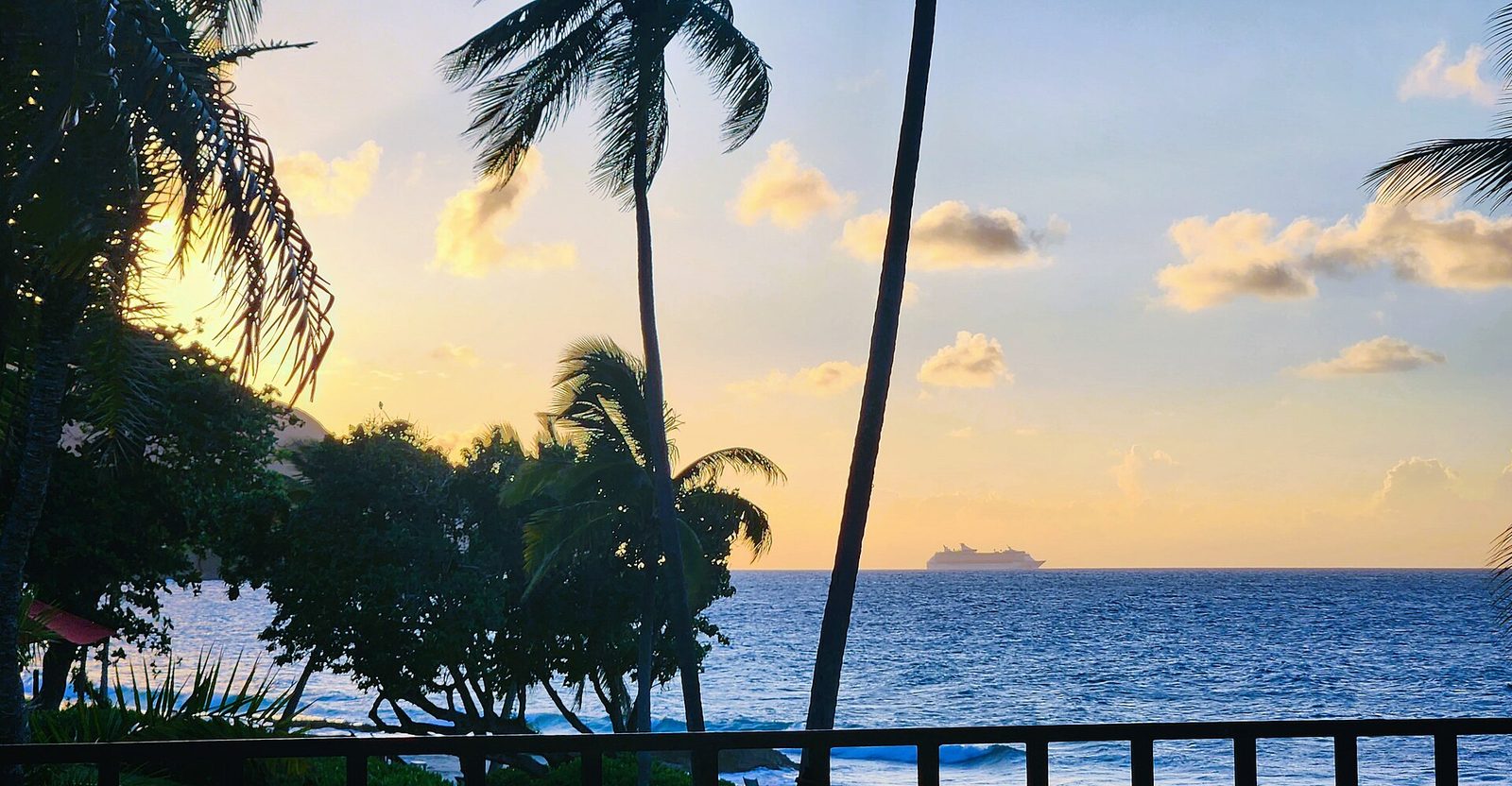
On a ship day Frederiksted turns into a lively little port. Strand Street, Fort Frederik, the town beach and Rainbow Beach fill with passengers, taxis and vendors from late morning to mid-afternoon, the fort opens for the ship, and by late afternoon the passengers are back aboard and the town is quiet again. For villa guests on the East End, about fifty minutes away, a ship day is easy to plan around, and the bustle on Strand Street can be fun in its own right.
The East End, the villa's corner of the island, sits at the far end of St. Croix from the pier, and a ship day there looks like any other morning, with pelicans fishing along the reef and the Buck Island boats heading out from Green Cay Marina. Our west end beaches guide covers Rainbow Beach and the Frederiksted waterfront for the day you head that way.
Hotel rows and city beaches
Some of the Caribbean's best-loved beaches are city beaches. In San Juan, Condado and Isla Verde run along the Atlantic with hotels right on the sand, restaurants and bars a few steps back, and the city's nightlife a short ride away. Aruba's Palm Beach is lined with resort hotels, their pools and restaurants side by side along the shore. For travelers who like everything within walking distance, a hotel row is an easy, cheerful way to spend a week.
The numbers behind those skylines are big. Discover Puerto Rico reported nearly 7.3 million room nights booked on the island in 2024, counting hotels and short-term rentals. The Cayman Islands had 8,323 rooms for visitors at the end of 2024, 2,805 of them in hotels and 5,518 in apartments and guest houses. St. Thomas and St. John, in the territory's 2024 count, had about 2,286 hotel and resort rooms, 600 villas, 1,022 timeshare units and about 4,579 short-term rentals listed on sites such as Airbnb and Vrbo, plus more than 250 charter yachts.
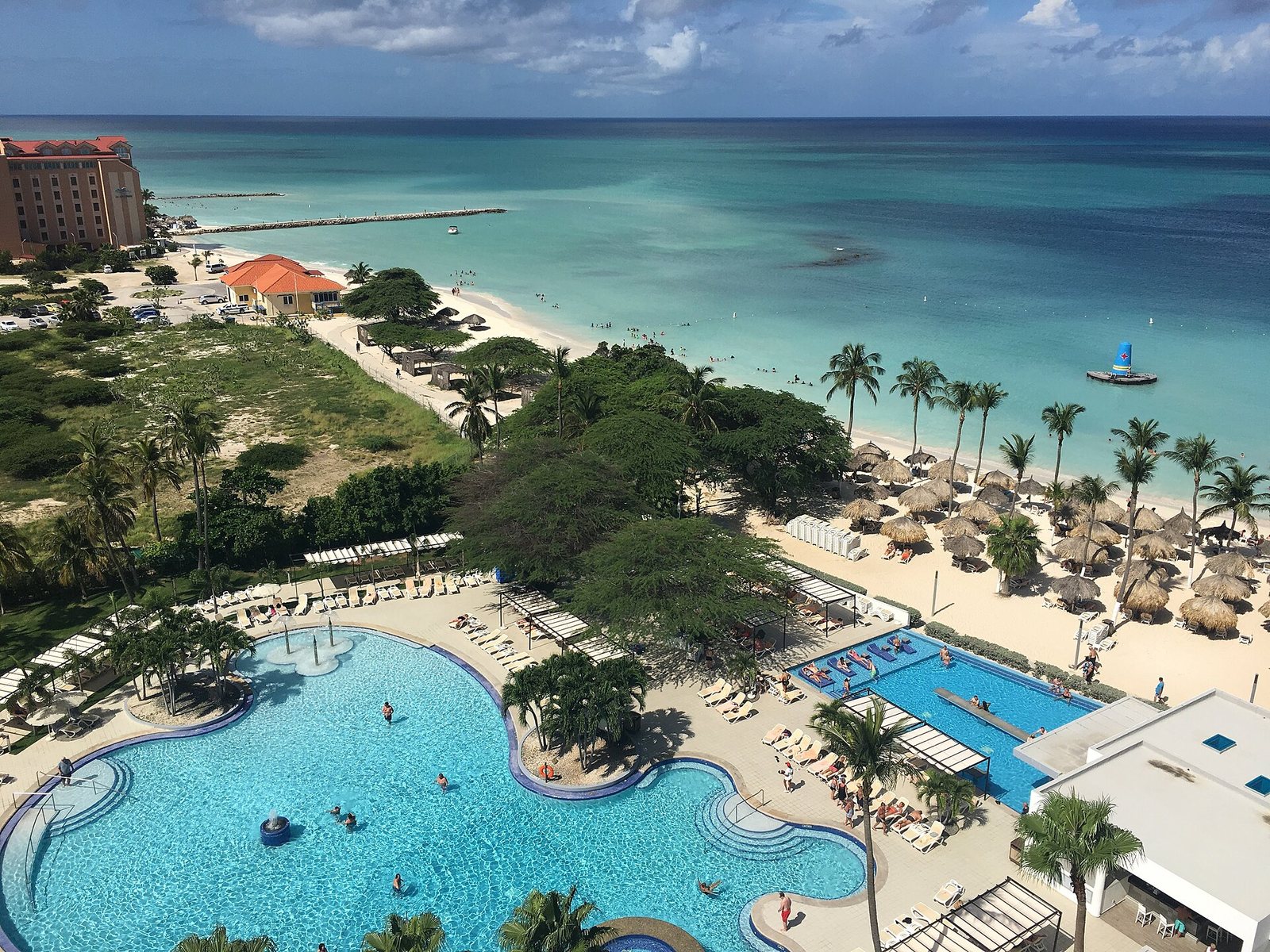
St. Croix's count is smaller and spread wider. The same 2024 tally found about 1,000 hotel and resort rooms on St. Croix, about 300 villas and about 1,190 short-term rentals, on an island more than two and a half times the size of St. Thomas. There is no row of towers on the sand. The island's beach resorts are spread around the coast, among them The Buccaneer just east of Christiansted, the Divi Carina Bay resort at Turner Hole on the south shore and Tamarind Reef beside Green Cay Marina, with small hotels in the old towns and private houses on their own bays.
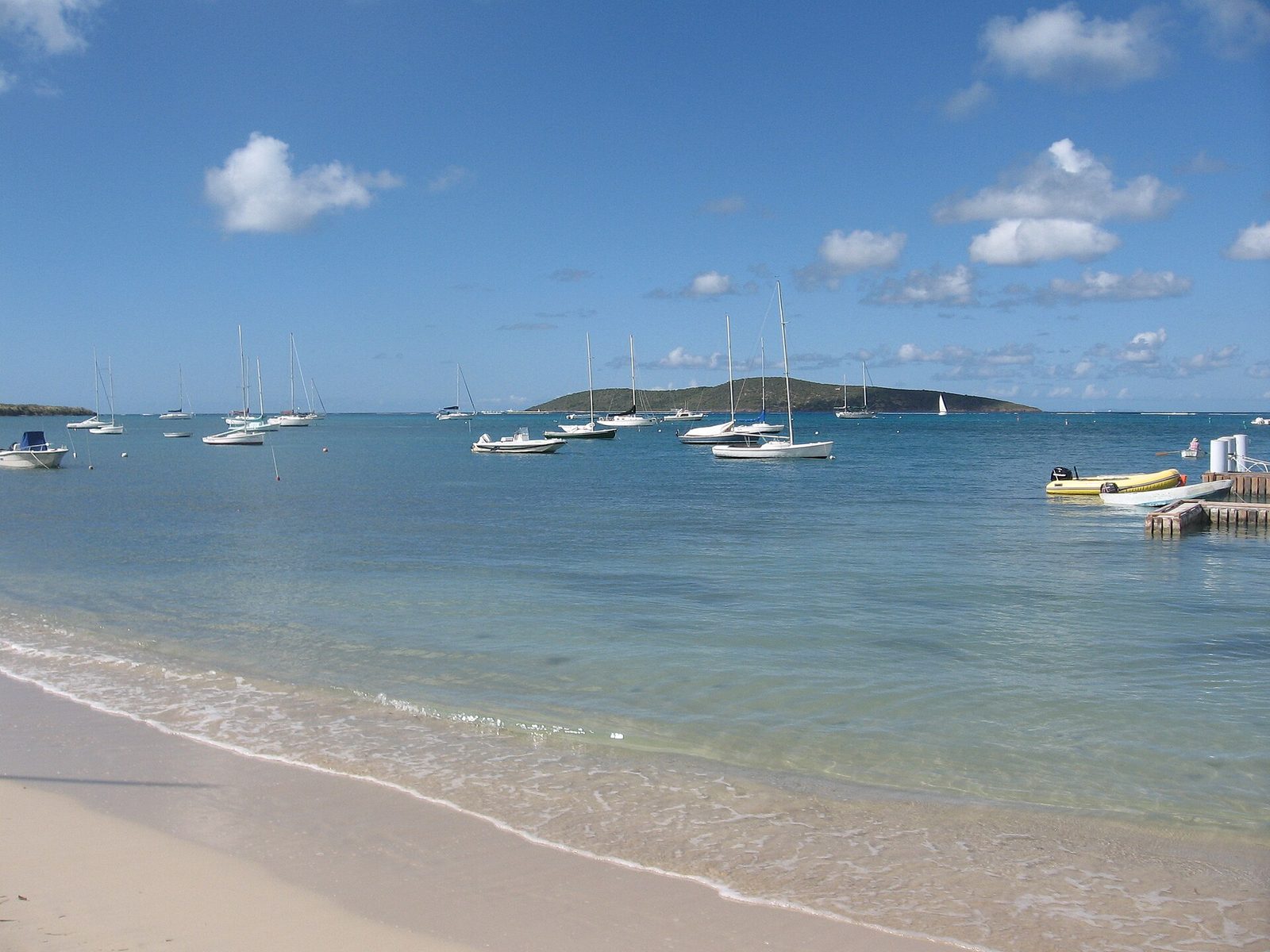
That changes the shape of a beach day. Instead of one long strip shared by the guests of several big hotels, the East End has a string of bays, most of them reached by a short drive and a gravel pull-off, with sea grape for shade and a reef keeping the water calm. Where there is a resort, as at The Buccaneer and Turner Hole, the sand below the high-tide line is public, and the next bay along often has nobody on it.
For a group, the house is the difference. Twelve people in a villa have their bedrooms, a kitchen, a pool and a beach under one roofline, and dinner is one long table on the deck. Our St. Croix vs. St. Thomas guide compares the two islands' lodging and day-to-day costs in more detail.
Grace Bay and Eagle Beach
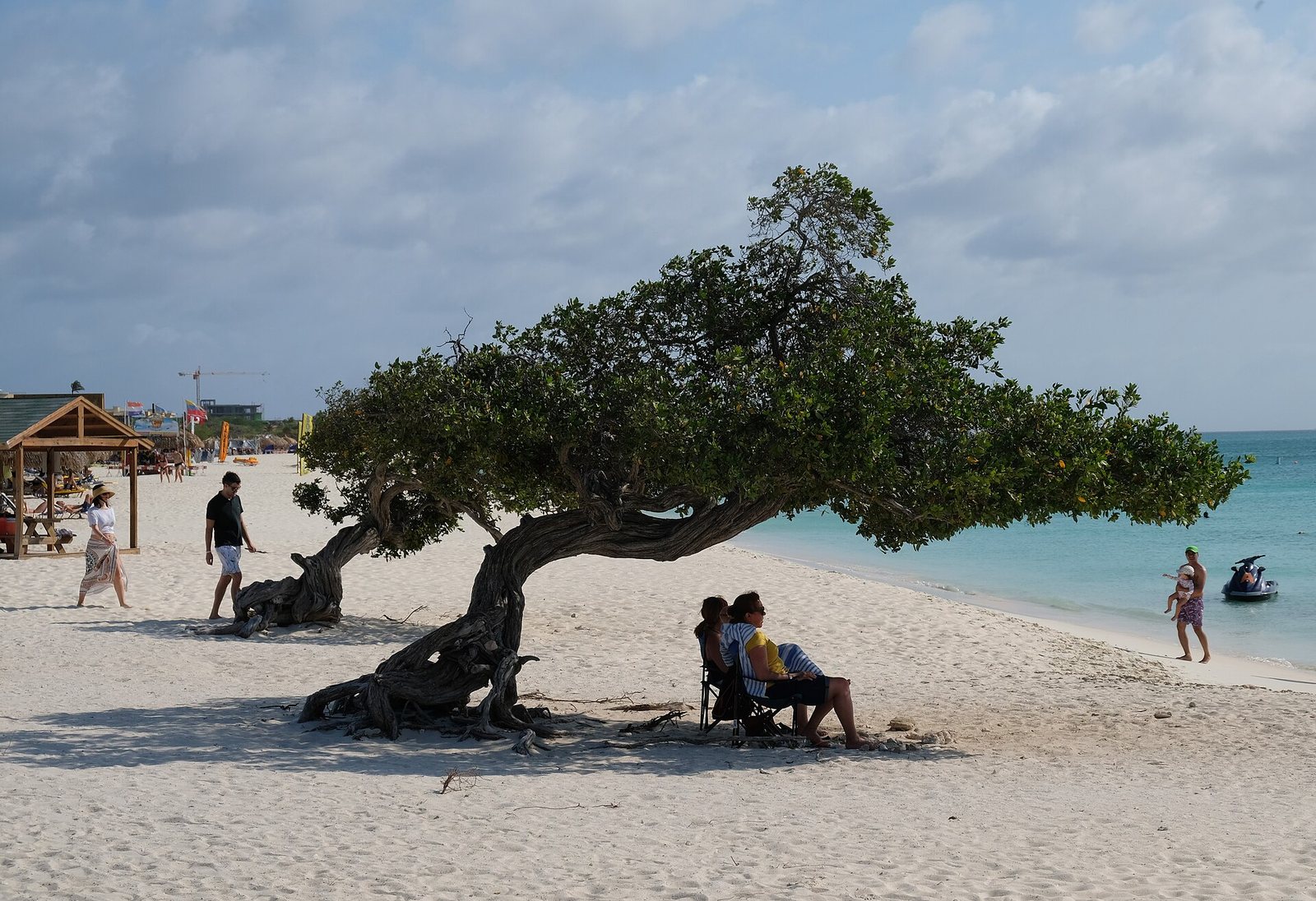
Grace Bay on Providenciales and Eagle Beach on Aruba are two of the most photographed beaches in the Caribbean, and they earn it: long, wide sand, pale water and easy swimming. On Eagle Beach, wind-shaped trees lean over the sand, and the beach is wide enough for a long walk at sunset.
Both islands have grown fast. Aruba welcomed 1,421,616 overnight visitors in 2024, 12.8 percent more than in 2023, and 1,515,102 in 2025. The Turks and Caicos counted 641,767 overnight visitors in 2024, up from 580,196 in 2023 and 486,739 in 2019. At the 2012 census about three in four Turks and Caicos residents lived on Providenciales, and Aruba's roughly 108,000 residents share an island of about 75 square miles with their 1.4 million overnight guests a year.
St. Croix's long beaches feel different because fewer people share them. Sandy Point, at the southwest tip, is the longest beach in the territory, a national wildlife refuge where leatherback turtles nest; it opens to visitors on weekends from September through March, and on those mornings it is a long walk of white sand with room for everyone. Cane Bay on the north shore has a coral wall a short swim from the beach. Grapetree, a few minutes from the villa, is a long, narrow ribbon of white sand backed by sea grape, calm behind its reef most days, and on a weekday you can walk until you have it to yourself. Rainbow Beach on the west end usually has flat water and easy swimming.
These beaches have no hotel row behind them, so bring water, shade and something to sit on, and the day is yours. Our Cane Bay guide covers the north shore, and the Sandy Point guide explains the refuge's weekend hours and rules.
Punta Cana's long resort coast
Punta Cana, on the eastern tip of the Dominican Republic, has made the all-inclusive week simple. The beaches are long and lined with palms, the resorts wrap meals, drinks and activities into one price, and flights arrive from the United States, Canada, Latin America and Europe.
The scale is the largest in this guide. The Central Bank of the Dominican Republic counted 8,535,701 non-resident air arrivals in 2024, 5.9 percent more than in 2023. Punta Cana's airport alone took 68.6 percent of the country's foreign visitors, 4,889,760 people. Spread across the year, that is about 13,400 foreign visitors landing at Punta Cana every day.
Set that beside St. Croix. The island welcomed about 186,400 air visitors from the U.S. mainland in all of 2024, about as many as Punta Cana's airport receives from abroad in two weeks. A villa on St. Croix's East End and a resort on the Bávaro coast are different kinds of trip, and both have their fans. The difference a group notices first is the beach: at the villa it is at the bottom of the steps, protected by the reef, and on most days the only people on it are your own.
Two practical differences matter for families. The Dominican Republic is a foreign country, so every U.S. traveler flying there needs a passport, children included, under the federal rules for air travel. St. Croix is U.S. territory and needs none. And a group of twelve at a resort means six or more rooms down different hallways; at the villa it means four en-suite bedrooms in the main house and a guest cottage twenty steps away, around one kitchen and one pool.
The food changes too. At a resort the buffet and the restaurants decide the menu. At a villa on St. Croix, the kitchen is yours: provisioned before you land if you like, cooked in by a private chef on the nights you want one, and filled from the island's farm stands and fish markets the rest of the week. Our guide to the Caribbean without a passport covers which islands U.S. citizens can reach on a REAL ID.
Puerto Rico, the big island next door
Puerto Rico is the Caribbean's big American island, and there is a great deal to love: Old San Juan's colonial streets and the fortress of El Morro, part of the San Juan National Historic Site, the rain forest of El Yunque National Forest, dinner in Condado, a day at Luquillo Beach and dancing in the bars of the old city.
It is also big. Puerto Rico has 3,424 square miles of land, about forty times the size of St. Croix, and about 3.22 million residents by the Census Bureau's estimate for 2022. Luis Muñoz Marín International Airport recorded more than 6.6 million passenger arrivals in 2024, 8 percent more than in 2023, and more than 1.4 million cruise passengers visited the San Juan cruise port. Discover Puerto Rico, the island's tourism marketing organization, called 2024 its fourth record-breaking year in a row.
Like the U.S. Virgin Islands, Puerto Rico is U.S. territory, so U.S. citizens need no passport, no currency exchange and no international phone plan. That makes the two islands an easy pair. A night or two in Old San Juan for the forts and the restaurants, then a short flight to St. Croix for a quiet week on the water, is a simple itinerary to build, and it gives a group the city and the island in one trip.
The hop is short. Cape Air flies several times a day from San Juan to St. Croix, JetBlue is scheduled to fly the route daily from November 19, 2026, and Fly The Whale flies several round trips a day from San Juan's Isla Grande airport, with flights of about 40 to 50 minutes. Book the hop on the same day as the long flight, so the whole journey is settled at once.
The two islands also share a clock. St. Croix keeps Atlantic Standard Time all year, the same as Puerto Rico, so the hop costs no time change at all. Our getting here page keeps the San Juan connections current.
The size and shape of St. Croix
St. Croix is the largest of the U.S. Virgin Islands, 84 square miles of land lying by itself about 40 miles south of St. Thomas. It runs east to west, about 22 miles long by the shortest measure and 27 or 28 by others, the difference being how you trace a crooked coast, and up to 7 miles wide. Mount Eagle, the high point, rises to 1,165 feet, but most of the island is rolling former cane land, with a green, forested northwest corner and a sunny, breezy East End of low hills, golden grass and sea grape that runs out to Point Udall.
On that land live 41,004 people, by the 2020 census, about 490 to the square mile. St. Thomas, next door, fits 42,261 people onto 32 square miles, about 1,320 to the square mile. The two towns are small: Christiansted counted 1,770 people within the town itself and Frederiksted 528. Most Crucians, as St. Croix's people call themselves, live in the estates and neighborhoods between the towns and around the coast.
Size spreads visitors out. The island's beaches, dive sites, restaurants and trails lie around a coast long enough that a single week cannot cover all of it, and each corner has its own character: the old harbor town of Christiansted, the north shore's wall dives at Cane Bay, the rain forest and the Mahogany Road in the northwest, Frederiksted's sunset waterfront, and the East End's quiet bays. Visitors who land on the same Saturday fan out across all of it.
The island also runs on its own calendar. Agrifest, the territory's agriculture and food fair, is expected on Presidents' Day weekend, February 13 to 15, 2027. Christiansted's Jump Up street party closes the old town to cars a few times a year for bands, vendors and mocko jumbies, the stilt dancers. These are local events first, and visitors are welcome guests at them.
Our East End overview covers the villa's corner of the island, and things to do on St. Croix covers every corner, with drive times from the villa.
The quiet coves of the East End
The East End is the sunrise side of St. Croix, and its bays are the ones guests reach from The Cerulean in five to twenty minutes. A barrier reef runs along much of this coast, so most of the beaches sit behind it in shallow, flat, often grassy water where turtles graze and conch move across the sand. The trade wind comes in off the open sea from the east, keeps the terraces cool and makes any reef-sheltered beach feel like a swimming pool by comparison.
The whole tip of the island lies inside the St. Croix East End Marine Park, created in 2003 as the territory's first marine protected area: about 60 square miles of water and 17 miles of shoreline, from the high-tide line out to three nautical miles. Its zones keep the bays quiet. Personal watercraft are allowed only in two short stretches, Grapetree, Jack Bay and Isaac Bay are no-take, and shells and coral stay where they are.
Each beach has a character of its own. Grapetree is the long ribbon of white sand under sea grape a few minutes east of the villa, calm behind its reef. The Shoys is a sheltered crescent near Christiansted, reached through a guard gate where you give your name and say you are going to the beach. Chenay Bay is shallow, grassy and shaded, the family bay. Teague Bay has the St. Croix Yacht Club and dinner on the sand at Duggan's Reef. Cramer's Park, the island's beach park, has pavilions, grills and restrooms, and on a weekday morning it is one of the calmest family beaches on the island.
Then there is the beach at the bottom of the villa's steps: private, with direct water access, shallow and protected by the reef, with snorkeling a few feet out. Water shoes make the short rocky stretch at the water's edge easy, and on most mornings the only people on the sand are your group.
Our East End beaches guide goes bay by bay, with parking, shade and the snorkeling at each, and the private beach page covers the villa's own.
Jack and Isaac Bay, with no road in
Below Point Udall, two white-sand bays sit inside the Jack and Isaac Bay Preserve, 300 acres of rolling hills that The Nature Conservancy has protected since 1999. There is no road to either beach. You walk in from a small parking lot on the south side of the road just before the Millennium Monument, about five minutes' drive from The Cerulean, on a trail that drops through upland forest and open hillside. You reach East End Bay first, then Isaac Bay, then Jack Bay farther west.
The walk is what keeps the sand empty, and the reward is some of the best shore snorkeling on the East End. Isaac Bay has deeper water and fewer rocks than Jack Bay, and the Conservancy counts at least 400 species of fish on these reefs: parrotfish, blue tangs, four-eyed butterflyfish and sergeant majors over elkhorn, staghorn and brain corals, with starfish and conch on the sand between.
These are also the island's most important turtle beaches. The Conservancy says the largest nesting populations of green and hawksbill turtles on St. Croix use these bays, and it monitors the nests from July to December. Since protection began, nesting green turtle females have risen from about eight to nearly 300, and poaching has fallen to less than 1 percent of nests. In the water, the marine park asks swimmers to keep 50 yards from any turtle; on the sand, give marked nests a wide berth and keep lights off the beach at night.
Many of the Caribbean's best-known beaches come with chairs for rent, a beach bar and a lifeguard stand, and those are good days out. Jack and Isaac Bay come with none of that, and often with nobody else on the sand. The bays stay quiet because the only way in is on foot, and a morning there is about as peaceful as St. Croix gets.
Our journal post on the hike to Jack and Isaac Bay walks the trail, and the East End hikes guide covers the ridge above it.
Point Udall at dawn
Point Udall is where the East End Road runs out, about ten minutes from the villa. The pavement climbs a sunny headland past a beach park and the white dish of a radio telescope and stops at a stone sundial with nothing east of it but water. This is the easternmost point of the United States by travel, and the place where a crowd gathered to greet the sunrise of January 1, 2000.
The sundial is the Millennium Monument, built for that New Year's morning; its line marks the compass bearing of the sunrise that day. The headland itself was named in 1968 or 1969 for Stewart Udall, Secretary of the Interior under Presidents Kennedy and Johnson. From the platform the coast falls away on three sides: Buck Island to the north, the ridge running west behind you, and the bays of the Jack and Isaac preserve below to the south.
The sun rises here at about 5:42 am in early June and about 6:52 am in mid-January, Atlantic Standard Time, and first light comes 20 to 25 minutes earlier, so arrive 30 to 45 minutes before sunrise. From roughly the September equinox to the March one, the sun reaches Point Udall before it reaches Maine, the easternmost of the fifty states, which makes the headland the place to greet a winter morning, New Year's Day included.
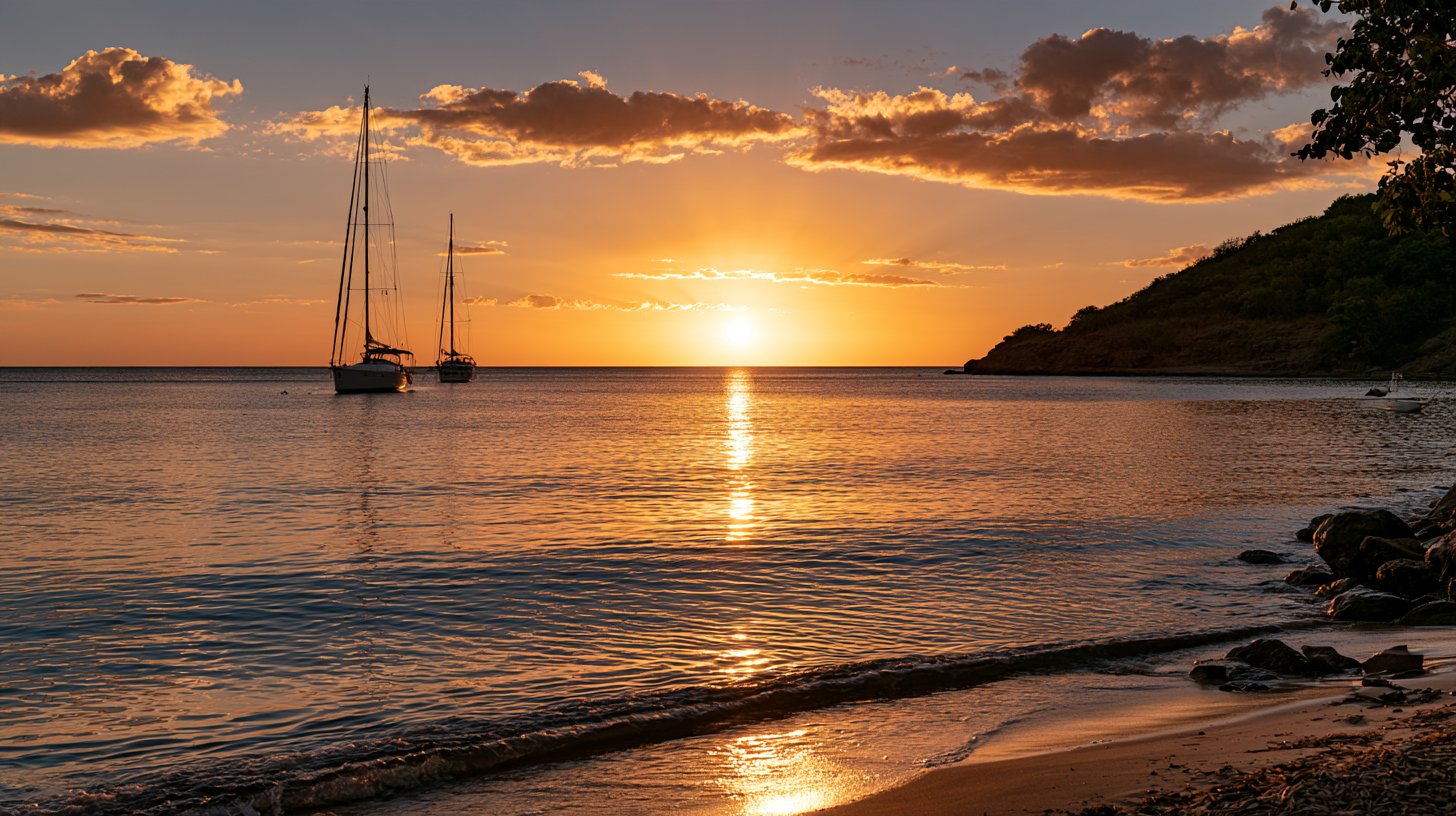
There is no gate, no fee and no staff, so bring water, a light layer for the breeze on the headland and real shoes if you walk down toward the point itself. You can also watch the same sunrise without leaving the house: The Cerulean faces east, and the first light comes straight off the sea onto the veranda.
“Great property with a super private location. The sunrises are incredible.”
Suzanne Temple, a guest in March 2026
Our Point Udall guide has the sunrise table by month and the story of the name, and the journal post on sunrise at Point Udall describes the morning itself.
Buck Island and the reefs
Every island in this guide has beautiful water, and St. Croix's reefs are a reason to choose it on their own. Buck Island Reef National Monument, a 176-acre island about a mile and a half off the northeast coast, was proclaimed by President Kennedy in 1961 and has been a no-take reserve since 2001. Its underwater snorkel trail runs through a shallow lagoon past elkhorn coral, and the National Park Service describes snorkelers being led through it in small groups from the concessioners' boats.
The closest departures leave from Green Cay Marina, about ten minutes from the villa, and from the St. Croix Yacht Club at Teague Bay, where one captain sails a locally built trimaran with six passengers at a time. The trade wind usually builds through the day, so the morning crossing is the smoothest, and a half day leaves the afternoon for the pool. The trip ends with time on Turtle Beach, the white sand at the island's west end.
The north shore adds a different kind of water. At Cane Bay the reef drops off into a deep wall a short swim from the beach, which makes it a shore dive rather than a charter, and Frederiksted's pier is a night dive people fly in for, with seahorses among the pilings. Salt River Bay, where Columbus's fleet anchored in 1493, has a bioluminescent bay that glows around the paddles of night kayakers on the darkest nights of the month.
Closer to home, the reef in front of The Cerulean is the week's daily snorkel: shallow, protected water a few feet off the beach, best in the first hour after sunrise, when the water is at its stillest and the reef fish are busy. Teach the children reef manners on the first morning: coral is an animal, nobody stands on it, and everything stays where it is.
“A gorgeous home right on the ocean, amazing snorkeling right in front of the house in the shallow water protected by the reef.”
Emily, a guest in April 2026
Our Buck Island guide covers the boats and the trail, the wall guide covers Cane Bay, and the bio bay guide explains how the moon picks the best nights.
Christiansted and Frederiksted
Old San Juan and Charlotte Amalie are grand old Caribbean ports, and both reward a day of walking. St. Croix's towns are smaller, and easy to know in a morning. Christiansted was the capital of the Danish West Indies, and its waterfront still looks the part: the yellow walls of Fort Christiansvaern, the old customs house and scale house, arcaded streets of Danish merchant buildings and a boardwalk along the harbor. The National Park Service runs the fort as part of Christiansted National Historic Site, established in 1952.
The town itself counted 1,770 people in the 2020 census, so one morning covers the fort, the boardwalk, the jewelers and galleries under the arcades and lunch on the water. Alexander Hamilton clerked here as a boy. Christiansted is fifteen to twenty minutes from the villa, close enough for dinner in town on any night of the week, and its harbor is where the seaplane lands from St. Thomas.
Frederiksted, on the west end, is smaller still: 528 people in the town, a Danish street grid laid out in 1751 and six or so blocks deep, and the red walls of Fort Frederik on the waterfront. It is where emancipation in the Danish West Indies was proclaimed on July 3, 1848, and it is the one town on St. Croix where the sun sets over open water. Strand Street's bars fill for sunset, and the pier is one of the island's best-known dives.
The island's own events fill both towns' streets: Jump Up nights in Christiansted, with mocko jumbies bending down to shake small hands; the July 3 commemorations at Fort Frederik; and the Crucian Christmas Festival over the holidays. Visitors are welcome at all of them.
For a group, the towns work best in short visits rather than long days: a fort morning, a provisioning run, a dinner out, a sunset in Frederiksted. Our Christiansted guide and Frederiksted guide walk each town block by block, and the Jump Up guide has the street-party dates.
A house of your own on the East End
On an island of small hotels and private houses, the way a group finds real space is a house of its own, and The Cerulean is that kind of house. It is a five-bedroom, five-bath oceanfront villa on the East End that sleeps twelve, on its own stretch of reef-protected shore, behind a gated drive.
The main house holds four bedrooms under a vaulted, beamed roofline, each with its own bathroom and three with direct ocean views, around open kitchen and living areas that make one big gathering space. Twenty steps away, the guest cottage is a small house of its own: its own front door, kitchen, living room, bedroom and full bath, and a spiral stair up to a loft with the villa's sixth bed. The cottage always comes with the booking and is never rented separately, so the whole property belongs to your group.
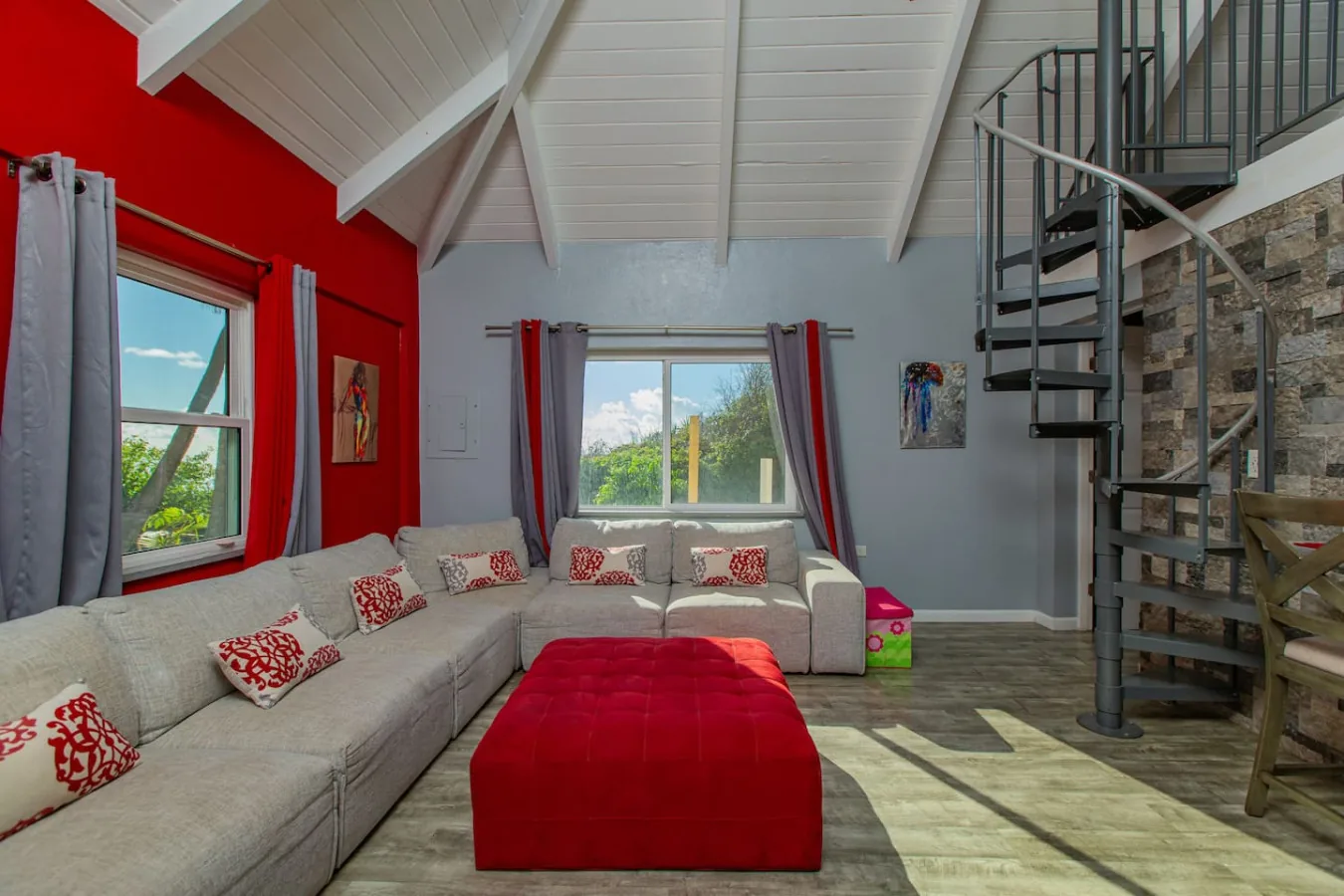
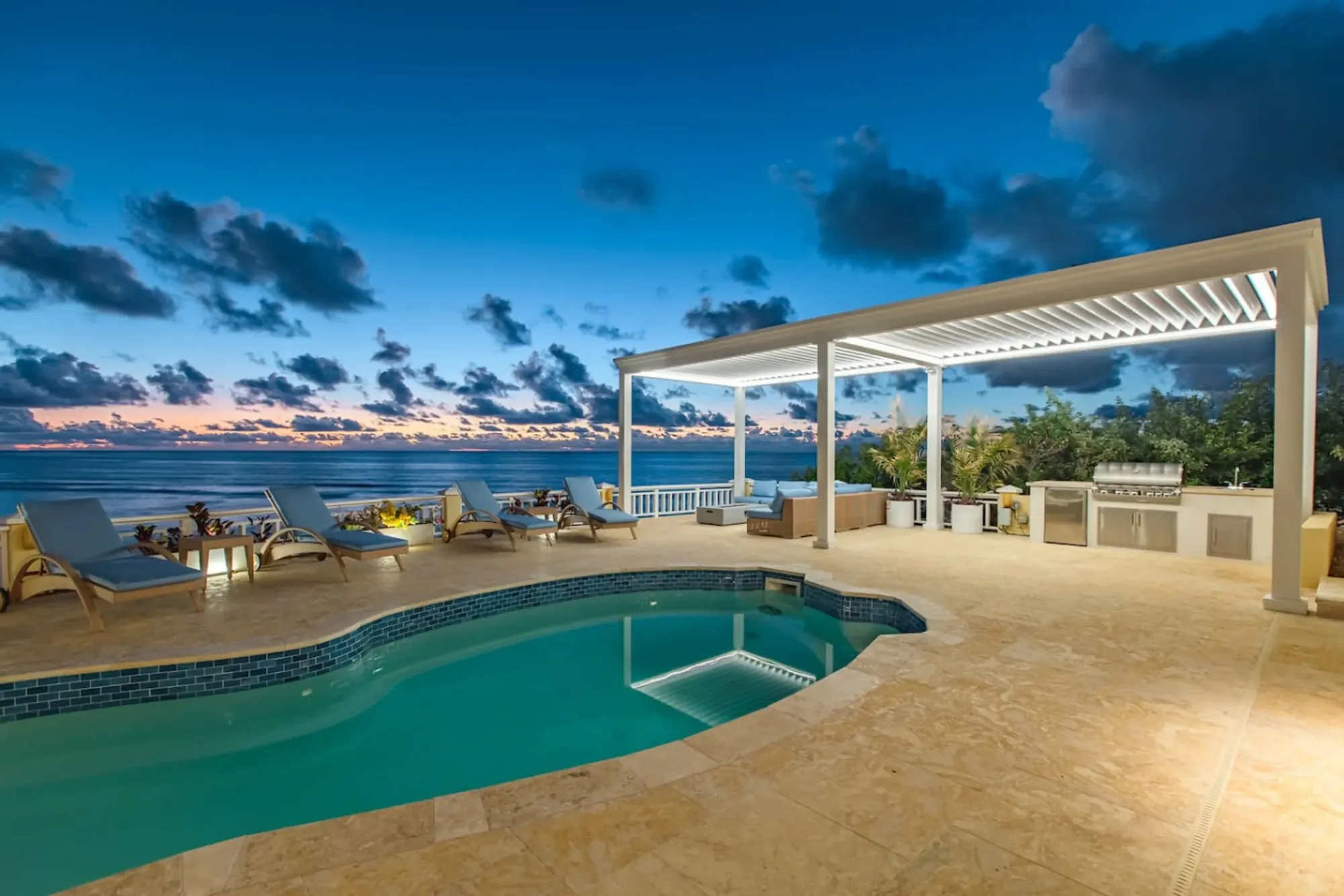
Outside, the pool and its large deck sit above the private beach, with sun loungers, a shaded pergola, covered seating, an outdoor kitchen with a gas grill, a drinks refrigerator by the pool and a fire-pit terrace for the evening. Every room in both buildings is air-conditioned. The chef's kitchen has a big island, a full-size range and a farmhouse sink under a window on the sea, and the concierge can arrange provisioning, a private chef, housekeeping, an airport pickup, boat days and in-villa massage.
“Four spacious bedrooms in the main house, plus a separate fifth suite. Ideal for groups or multi-generational families.”
Suzanne, a guest in March 2026
For a group, the cottage is the part that matters most. It suits early-rising grandparents who want a door and a kitchen of their own, or a young family that needs quiet for naps, and the loft up the spiral stair is the bed the kids argue over. Everyone shares the pool, the beach and the long table, and at the end of the evening the cottage crowd walks twenty steps home. See the guest cottage and the concierge services for the details.
Dollars, English and no passport
Part of what makes St. Croix restful is how little there is to arrange. The U.S. Virgin Islands are U.S. territory, and the territory's Department of Tourism states that U.S. citizens arriving from the mainland or Puerto Rico do not need a passport. The flight from Miami, Charlotte, Atlanta, Chicago or Newark is a domestic flight: adults board with a REAL ID or another TSA-accepted document, children under 18 flying with an adult need no ID of their own, and nobody checks a passport when you land.
The rest is just as familiar. English is the official language, and Spanish is also commonly spoken. The money is the U.S. dollar, most U.S. phone plans work, and the island keeps Atlantic Standard Time all year, the same clock as New York in summer and an hour ahead of it in winter.
Outside the U.S. Virgin Islands and Puerto Rico, every island in this guide is a foreign country. Aruba, the Cayman Islands, the Turks and Caicos, the Bahamas and the Dominican Republic all call for a valid passport for U.S. citizens arriving by air, and under the federal rules for air travel, children need their own. For a family of twelve that can mean a dozen passports to check and renew before the trip; for St. Croix it means a REAL ID for each adult.
One thing is different from home: on St. Croix you drive on the left, in ordinary American cars with the steering wheel on the left. Take the first drive slowly, in daylight, and it soon feels normal. Speeds are gentle, 20 mph in the towns, 35 on most roads and 55 on the Melvin H. Evans Highway, and a rental car is the way to get around, since the beaches and towns are spread along the whole island.
On the way home there is a short customs and agriculture check before boarding, and U.S. residents can bring back $1,600 of goods per person duty-free. Our no-passport guide covers the ID rules, the driving guide covers the roads, and the car rental directory lists the agencies at the airport.
Flights to St. Croix
St. Croix's nonstops are well timed for a villa week. As scheduled in October 2026, American flies from Miami twice a day and from Charlotte daily from December 17; Delta flies from Atlanta on Saturdays from November 14 and daily from December 19 to January 8; American flies from Chicago O'Hare on winter Saturdays; and United's Saturday nonstop from Newark begins October 31, 2026, the first New York-area nonstop to the island in more than thirty years.
The Saturday flights line up with a Saturday-to-Saturday week. St. Thomas and Punta Cana have more nonstops from more cities, and from anywhere else St. Croix is one easy connection: through Miami, Charlotte or Atlanta, or through San Juan with the 40-to-50-minute hop on Cape Air, JetBlue or Fly The Whale. From St. Thomas, Cape Air and Fly The Whale fly across in 20 to 25 minutes, and Seaborne's seaplane links the two harbors in about 25.
A group flying from several cities usually meets in one hub. Families from the Midwest can choose Charlotte, Atlanta or Chicago's winter Saturdays; the Northeast has the Newark Saturday, or a connection through Miami on any day. Put the earliest arrivals in charge of collecting the cars and the groceries.
Henry E. Rohlsen Airport sits on the south shore, about 20 miles and 35 to 40 minutes from the villa. Pick up the rental cars and drive east; the villa managers can guide your drive to the house and give you a full tour, so the first swim can happen before dinner.
Our getting here page keeps the routes current, and there are city pages for New York, Chicago, Atlanta, Charlotte and Miami.
Why St. Croix suits seasoned Caribbean travelers
A traveler who has seen many islands usually knows what the next one needs to offer. For a lot of people it comes down to space, water worth getting into, a place with its own life, and an easy trip, and St. Croix has each of them.
Space comes first. An island of 84 square miles with about 9 visitors per resident a year, one cruise pier on the far west end and no row of hotel towers on the sand leaves room in every direction: hike-in bays inside a nature preserve, the easternmost point of the country at dawn, and a beach at the bottom of the villa's steps.
Then the water. Buck Island's snorkel trail, the wall at Cane Bay, the pier dive at Frederiksted, the bioluminescent bay at Salt River, and the reef in front of the house add up to a week that can be spent mostly wet.
Then the island's own life. St. Croix has two Danish towns, a farming past that still shows in its estate ruins and windmill towers, and a food culture of kallaloo, fungi, saltfish, johnnycakes and pates. Cruzan and Captain Morgan both make rum here. Columbus's fleet anchored at Salt River in 1493 and his crews came ashore there, Alexander Hamilton grew up in Christiansted, and freedom was won at Frederiksted in 1848. Agrifest, Jump Up and the Christmas festival are the island's own celebrations.
And ease: a domestic flight, U.S. dollars, English, and no passport for anyone in the group.
“The beachfront area was perfect to sit and listen to the waves, and the house gave everyone their own space and bathrooms.”
Lisa Jeff, a guest in February 2026
Our Crucian food guide explains what to order, and the story of 1493 is in our guide to Columbus at Salt River.
An uncrowded week from the villa
Here is a loose Saturday-to-Saturday week built around the quiet places and the best hours to see them, with one outing a day and plenty of time at the house.
Saturday
Land in the afternoon, collect the cars and drive east, about 35 to 40 minutes. The villa managers meet you with a tour of the house. Swim off the villa's beach before dinner and eat on the deck as the light goes.
Sunday
Point Udall for sunrise, ten minutes away, then home for breakfast and the villa's reef with masks on while the water is still. The afternoon goes to the pool and the shaded pergola, and dinner comes off the grill.
Monday
The morning Buck Island boat from Green Cay Marina or Teague Bay: the snorkel trail, then Turtle Beach. Back by lunch, and the rest of the day at home.
Tuesday
Jack and Isaac Bay on foot, starting by eight with water and masks. Snorkel Isaac Bay, walk out by late morning, and spend a long, slow afternoon by the pool.
Wednesday
Christiansted in the morning: the fort, the boardwalk and lunch on the water. A swim at the Shoys on the way home, and groceries for the rest of the week.
Thursday
The west end. Check the ship schedule, and on a ship day head west in the afternoon. Estate Whim or the botanical garden, a swim at Rainbow Beach, and the sunset over the sea from Frederiksted's waterfront.
Friday
Cane Bay for a snorkel or a shore dive along the wall, or Grapetree with a book. A private chef for the last dinner, and the fire pit after dark.
Saturday
One last swim, pack, and check out by 10 am. Aim to reach the airport two hours or more before the flight, for the agriculture and customs check before boarding.
“Quiet house — all you hear is the surf and ocean breeze.”
Emily, a guest in April 2026
Planning a quiet week
Quiet on St. Croix is mostly a matter of timing, and the timing is easy. Go to the beaches early, when the water is flattest, the light is softest and the bays are emptiest. Go to Cramer's Park on a weekday, Sandy Point on a weekend morning between September and March, and Christiansted in the morning, while the fort is cool and quiet.
Every season has its quiet stretches. Fall brings quiet beaches, sea temperatures in the mid-80s and easy dinner reservations. December through February is the East End's drier season, with later sunrises at Point Udall and the full winter flight schedule. Summer brings warm water, long days and turtle hatchlings on the move. Our best time to visit guide compares the months.
For a group, quiet also means room. A house with its own beach, a cottage for the early risers and the nappers, and a kitchen big enough for everyone keeps the week calm even on the busiest island weekend. Our groups guide covers planning for a big party.
Planning a quiet St. Croix week
10 itemsYour ticks stay in this browser only.
Share the list with the group, send the provisioning order to the concierge, and the week is set before anyone packs.
Questions people ask
What are the least crowded Caribbean islands?
Among the well-known islands that are easy to reach from the United States, St. Croix is one of the quietest by the 2024 counts. Adding overnight visitors and cruise passengers, it had about 9 visitors for every resident, against about 17 in the Cayman Islands, 21 on Aruba, 37 in the Turks and Caicos and 49 on St. Thomas and St. John. It is also larger than Aruba or Grand Cayman, so visitors spread out.
Is St. Croix less touristy than St. Thomas?
By the numbers, yes. In 2024 St. Croix took 71 cruise ship calls and 169,228 cruise passengers at its one pier in Frederiksted, while St. Thomas took 495 calls and 1,530,933 passengers. St. Croix counted about 186,400 air visitors from the mainland, St. Thomas and St. John about 722,300. St. Croix is also the bigger island, 84 square miles against 32.
Do I need a passport to visit St. Croix?
Not if you are a U.S. citizen. The U.S. Virgin Islands are U.S. territory, so a flight from the mainland is domestic: adults board with a REAL ID or another TSA-accepted document, and children under 18 flying with an adult need no ID of their own. Aruba, the Cayman Islands, the Turks and Caicos, the Bahamas and the Dominican Republic all call for a passport.
How many cruise ships come to St. Croix?
In 2024, 71 ship calls brought 169,228 passengers to the Ann E. Abramson pier at Frederiksted, the island's only cruise berth, an average of one or two ships a week. Christiansted has no cruise berth. On a ship day Frederiksted is lively from late morning to mid-afternoon, and the East End, about fifty minutes away, is unchanged.
Where are the quietest beaches on St. Croix?
On the East End. Jack Bay and Isaac Bay sit inside a 300-acre Nature Conservancy preserve with no road in, so you walk to them. Grapetree is a long ribbon of white sand under sea grape, the Shoys is a sheltered crescent behind a guard gate, and Cramer's Park is calm on weekday mornings. The Cerulean's own beach is private, with reef-protected water at the bottom of the steps.
Is St. Croix a good alternative to Aruba or the Turks and Caicos?
For travelers who want space, yes. Aruba welcomed 1,421,616 overnight visitors in 2024 on about 75 square miles, and the Turks and Caicos 641,767, most of them on Providenciales. St. Croix counted about 186,400 mainland air visitors on 84 square miles. It adds Buck Island's snorkel trail, a wall dive from the beach at Cane Bay, two Danish towns, and travel with no passport for U.S. citizens.
How do you get to St. Croix?
Fly into Henry E. Rohlsen Airport (STX). As scheduled in October 2026, American flies from Miami twice a day and from Charlotte daily from December 17, Delta flies from Atlanta, American from Chicago O'Hare on winter Saturdays, and United from Newark on Saturdays from October 31, 2026. Cape Air, JetBlue and Fly The Whale connect from San Juan in about 40 to 50 minutes.
Can you combine Puerto Rico and St. Croix in one trip?
Yes, and it is easy. Both are U.S. territory, so U.S. citizens need no passport for either, and both keep Atlantic Standard Time. Spend a night or two in Old San Juan, then take the 40-to-50-minute flight to St. Croix on Cape Air, JetBlue or Fly The Whale. Book the short hop on the same day as the long flight, so the whole journey is settled at once.
Sources
Facts in this story were checked in October 2026 against the sources below. Event dates, flight schedules, prices and hours change, so confirm anything you plan around.
- Government of the U.S. Virgin Islands, Office of Management and Budget — Revenue Estimating Conference, March 2025 (Department of Tourism and Bureau of Economic Research presentations: 2024 air arrivals by island, cruise calls and passengers by pier, accommodations)
- U.S. Census Bureau — 2020 Census, U.S. Virgin Islands population by island and town (Table 1)
- U.S. Census Bureau — 2020 Census counts for the U.S. Virgin Islands (Oct 20, 2022)
- U.S. Census Bureau — Puerto Rico population estimate, July 1, 2022
- U.S. Census Bureau — 2020 Gazetteer files (Puerto Rico land area by municipio)
- Government of Aruba — Strong tourism in 2024
- Tourism Analytics — Aruba stopover and cruise arrivals, 2024 and 2025 (Aruba Tourism Authority data)
- City Population — Aruba census regions (Central Bureau of Statistics Aruba data)
- Parliament of the Cayman Islands — Statement by the Deputy Premier and Minister for Tourism on 2024 year-end tourism performance
- Cayman Islands Economics and Statistics Office — Compendium of Statistics 2024, tourism tables
- Cayman Islands Economics and Statistics Office — Compendium of Statistics 2024 (land area, population)
- Turks and Caicos Islands Statistics Department — Tourism statistics (stayover arrivals 1995-2025)
- Turks and Caicos Islands Statistics Department — Population statistics
- Cruise Industry News — Turks and Caicos cruise arrivals in 2024 (Jan 31, 2025)
- Bahamas Ministry of Tourism — The Bahamas welcomes more than 11 million visitors in 2024 (Feb 5, 2025)
- Banco Central de la República Dominicana — Informe del flujo turístico 2024
- Discover Puerto Rico — Record-breaking 2024 (Jan 29, 2025)
- Visit USVI — No passport required for U.S. visitors
- Visit USVI — Travel tips and FAQs (language, currency, driving, time zone)
- U.S. Customs and Border Protection — Western Hemisphere Travel Initiative
- The Nature Conservancy — Jack and Isaac Bay Preserve
- National Park Service — Buck Island Reef National Monument
- The Buccaneer — Nonstop flight schedule to St. Croix (updated Oct 7, 2026)