

The CeruleanSt. Croix · U.S. Virgin Islands
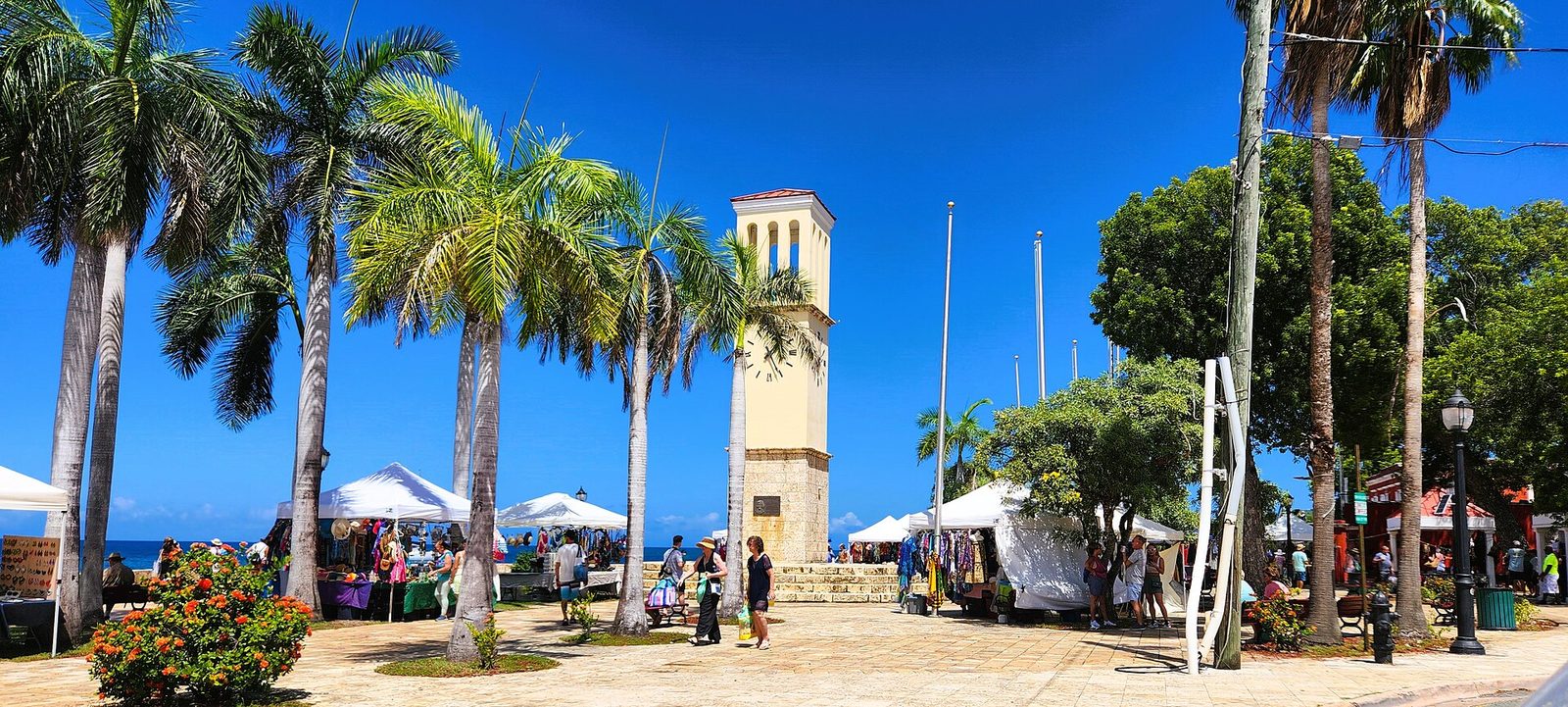
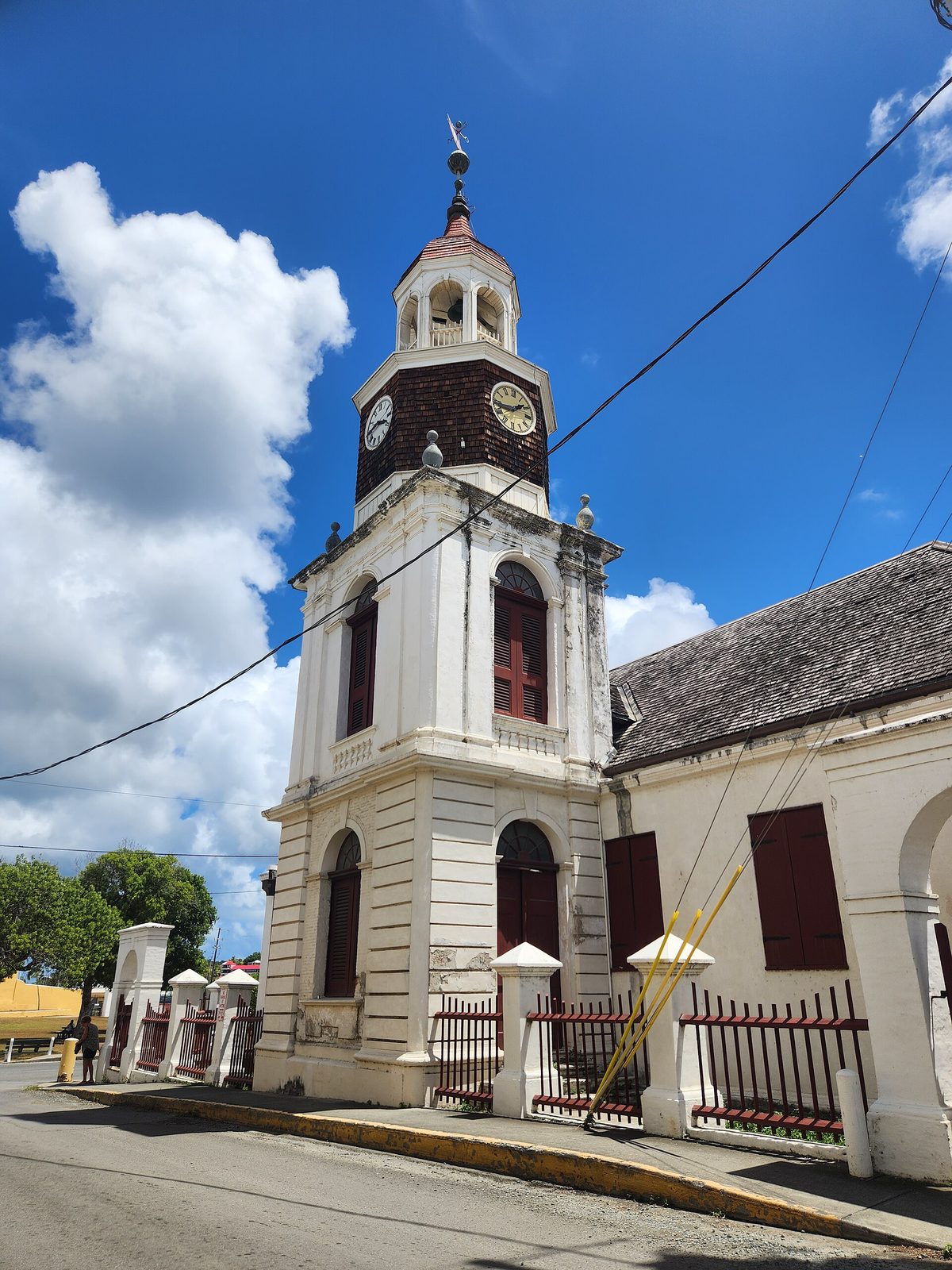
ClockTower20230926 110812(0)

Alexander Hamilton's St. Croix: The Clerk of Christiansted

The Christiansted years, told from the probate record, the counting-house letters and one hurricane — plus which plaques are real and which stories to skip.

Photo: CaptJayRuffins (CC BY-SA 4.0)

Alexander Hamilton spent roughly seven years on St. Croix, from about 1765 until the fall of 1772, and they are the least documented and most mythologized years of his life. This guide sticks to what the record shows: a Danish probate file, a handful of counting-house letters, a newspaper, and one hurricane. It tells you which streets in Christiansted are really his, which plaques mark real sites, and which stories to leave on the internet. Then it tells you how to walk it in a morning from the East End.

Where it is on St. CroixChristianstedFrederikstedPoint UdallThe Cerulean7 and 8 King Street, Christiansted
Where it is. Island outline © OpenStreetMap contributors (ODbL).

Why the St. Croix years matter

Hamilton was born on Nevis, a British island, and he died in New York, but the place that made him was Christiansted, the Danish capital of St. Croix. He arrived as a boy of eight or ten with his mother and older brother; he left as a teenager who had run a trading firm, buried his mother, watched her small property go to a half-brother in a Danish court, and written the piece of prose that got him off the island. The drive, the head for money, the impatience with people who could not keep books — all of it was formed here.

The reason this matters to a visitor is that Christiansted is still standing. The fort his mother was jailed in is a national historic site. King Street, where he clerked, and Company Street, where the store was, are the same streets on the same grid. The harbor he shipped from is the harbor with the boardwalk. You can walk the whole of Hamilton's Christiansted in an hour, and if you know what the record actually says you will get more out of it than the average tour.

The record itself is thin, and that is the point of this guide. Almost nothing Hamilton wrote before 1772 survives beyond a few business letters, two or three poems, and the hurricane letter; his mother's life comes to us mostly through her divorce papers and her probate file in the Danish archives; the addresses were reconstructed by historians from Danish tax and property rolls. Where a claim rests on that kind of document, we say so. Where it rests on a later family story, we say that too. Christiansted's own history is in our town guide, and the island's colonial sequence in the seven flags guide; this one stays with the boy on King Street.

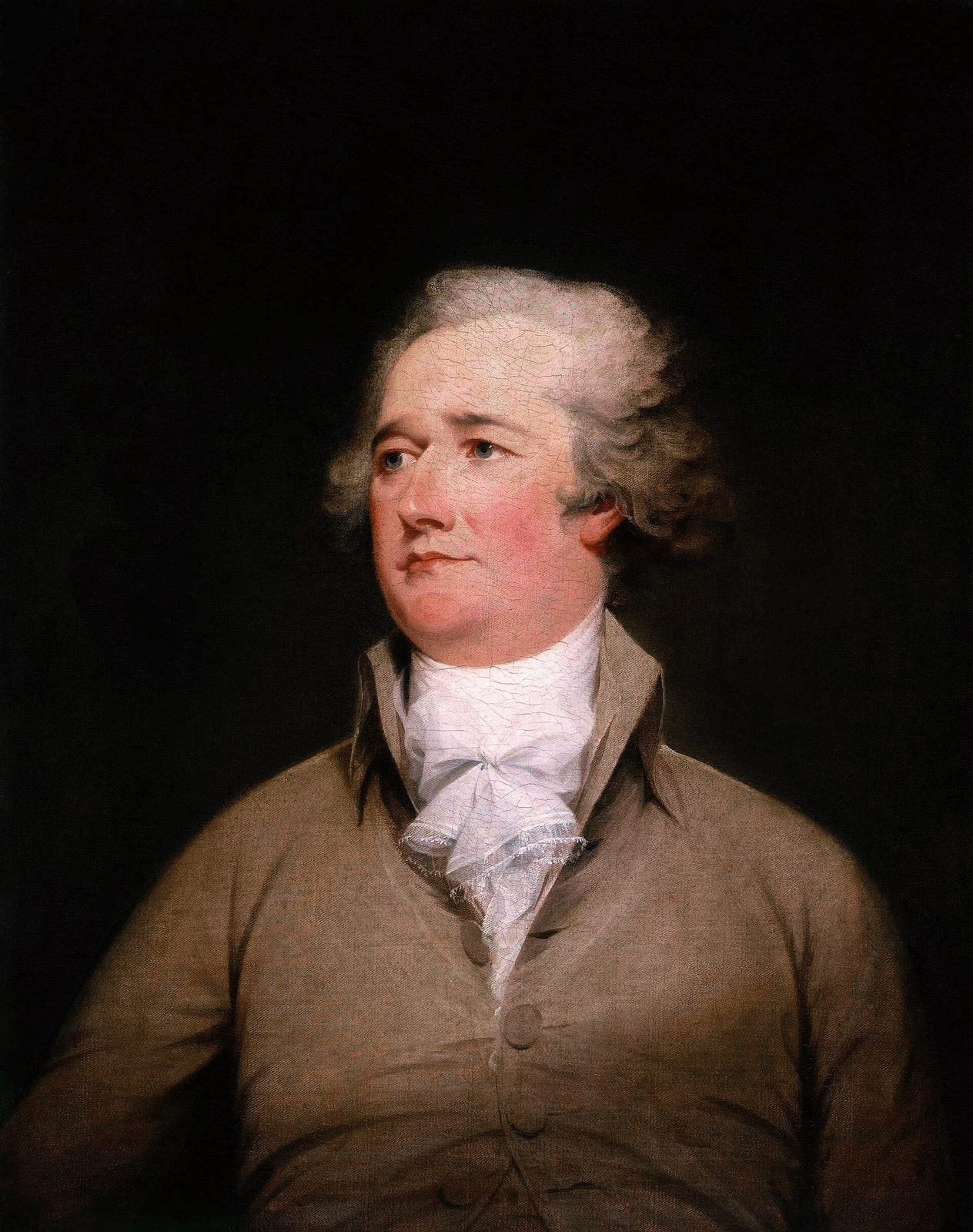
Alexander Hamilton
Hamilton left St. Croix as a teenager. Every portrait of him is later; in Christiansted the plaques on King Street and Company Street mark the streets he knew. Photo: John Trumbull (Public domain)

Two birth years, one boy

Start with the first thing nobody can settle. Hamilton was born on Nevis on January 11 — of 1757, if you take his own word for it, which he gave consistently all his life and which is carved on his tomb at Trinity Church in New York; or of 1755, if you take the word of a St. Croix probate clerk. When Hamilton's mother died in February 1768, the Danish probate court in Christiansted recorded her heirs, and the entry gives Alexander's age as thirteen. Thirteen in February 1768 means born in 1755, and it is a contemporary document, written by officials with no reason to lie about a child's age.

Historians have split on it for decades. Ron Chernow, in his 2004 biography, chose 1755 on the grounds that a contemporary record beats a later recollection, while acknowledging that most of the evidence from Hamilton's New York years points to 1757. Others keep 1757, on the strength of Hamilton's own consistent statements and the way his later contemporaries described his age. Most careful references now print "1755 or 1757" and stop. So does the National Park Service on St. Croix, though its Christiansted pages describe him starting work in 1766 "at the age of eleven," which quietly assumes 1755.

It changes how you picture every scene in this guide. On the 1757 date he arrived on St. Croix at eight, went to work at nine, lost his mother at eleven, ran a trading firm at fourteen and wrote the hurricane letter at fifteen. On the 1755 date add two years to each. When a plaque or a guide gives a single confident age, know that the number is a choice, not a fact.

1765Arrived on St. Croix
1766Started at the counting house
1768Mother died
1772The hurricane
8NPS walking-tour stops

Rachel Faucette's first St. Croix, 1745 to 1750

Hamilton's mother knew Christiansted before he did, and not happily. Rachel Faucette was born about 1729 on Nevis, the daughter of a French Huguenot planter and physician. In 1745, at about sixteen, she married Johann Michael Lavien, a considerably older man, on St. Croix, and bore him a son, Peter. The marriage failed. Around 1750 Lavien had Rachel jailed in Fort Christiansvaern — the National Park Service's own Hamilton tour lists the fort as the place she was imprisoned in 1750 — under Danish law that let a husband confine a wife accused of adultery. When she was released she left the island, her husband and her son, and went to St. Kitts.

On St. Kitts she met James Hamilton, a Scot, the fourth son of a laird from Ayrshire who had come out to the islands and not prospered. They moved to Nevis and lived as a couple; James Jr. and Alexander were born there. In 1759 Lavien obtained a divorce in the Danish court on St. Croix, and its terms were the ones that shaped Alexander's whole legal existence: Lavien was free to remarry, and Rachel was not. Her sons by James Hamilton were therefore, in the eyes of Danish law and everyone else's, born out of wedlock, and Peter Lavien remained her only legitimate heir. That single ruling explains what happened in the probate court nine years later.

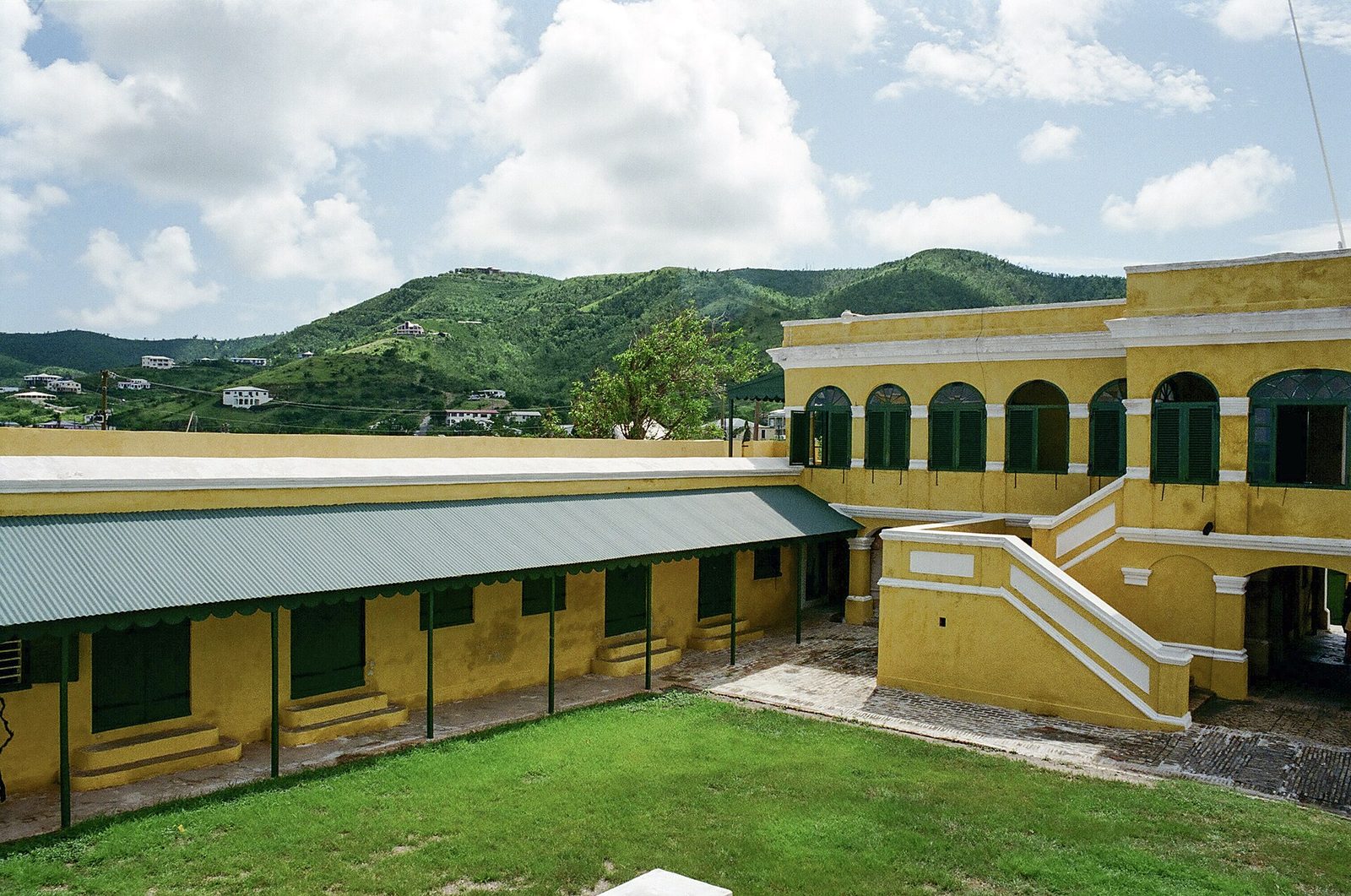
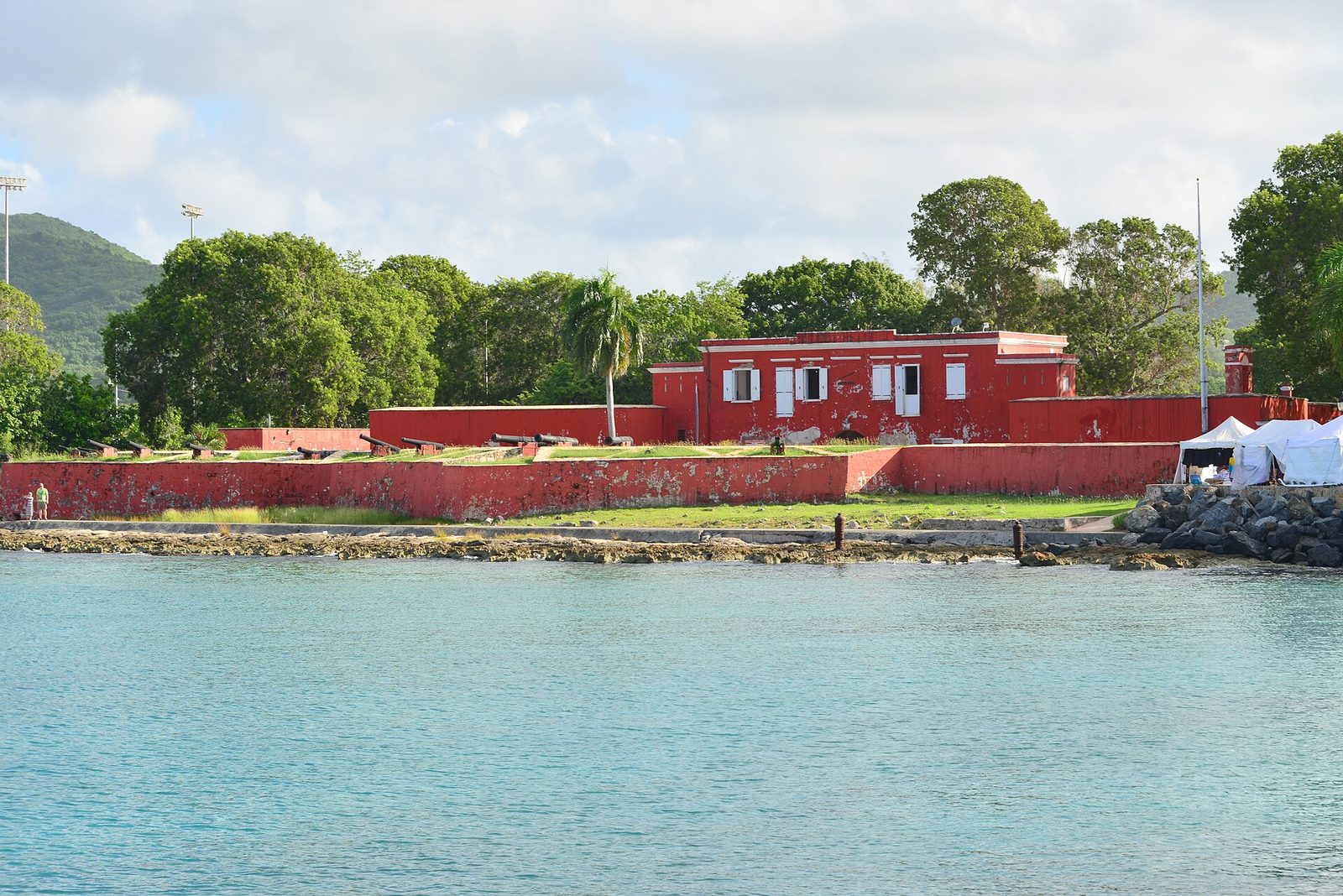
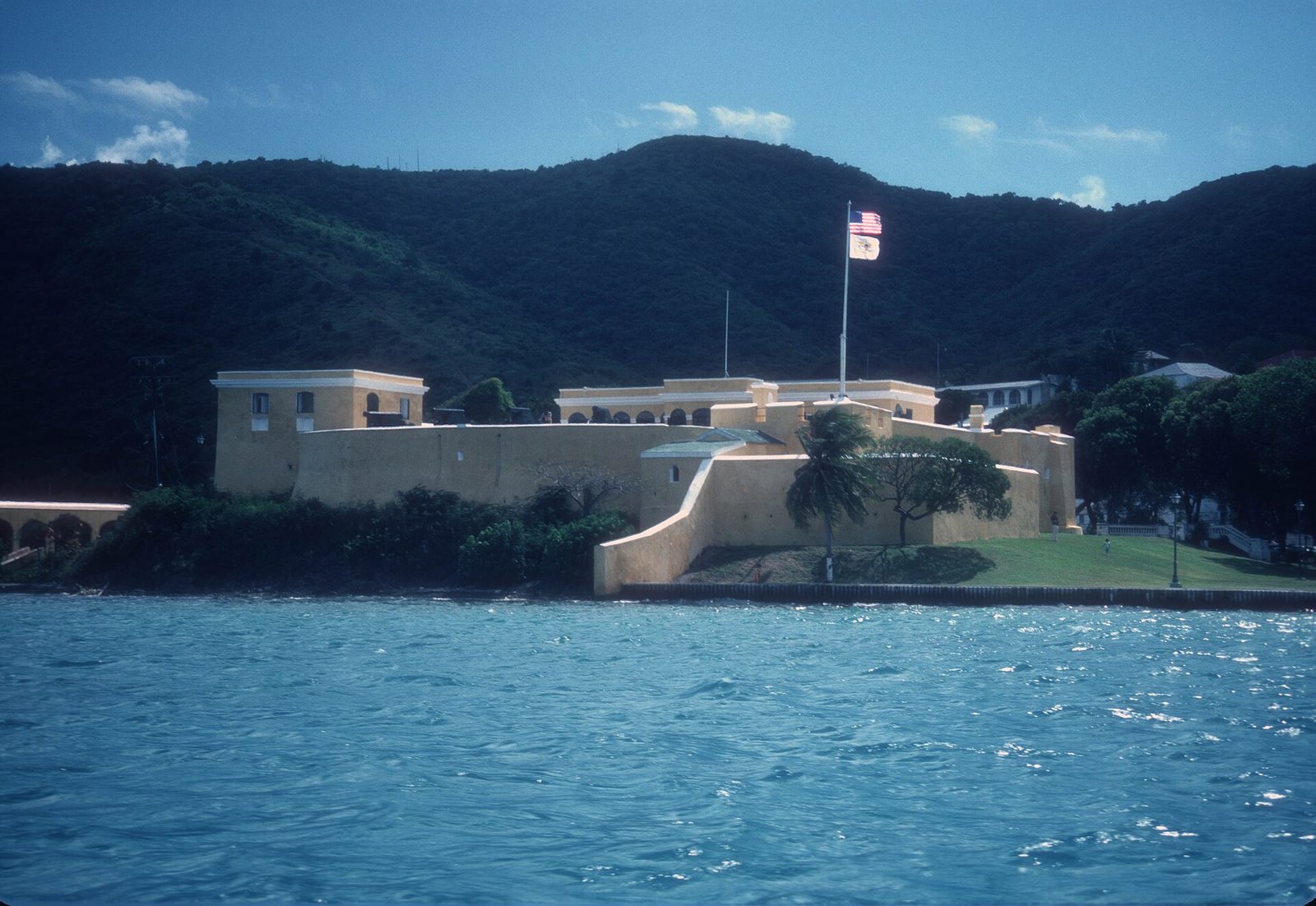
The fort you visit today is the same building. Fort Christiansvaern was begun in 1738 and completed in 1749 by the Danish West India and Guinea Company, and it is the yellow fort at the east end of the waterfront that anchors Christiansted National Historic Site. Its cells are open to visitors. This is the Hamilton site with the hardest paper trail on the island, and it is his mother's, not his.

CHRISTIANSTED NATIONAL HISTORIC SITE
Fort Christiansvaern on Christiansted's waterfront, begun in 1738 and finished by 1749; the NPS Hamilton tour lists it as the place Rachel Faucette was jailed in 1750. Photo: JERRYE & ROY KLOTZ MD (CC BY-SA 3.0)

Nevis to Christiansted, 1765

The family came to St. Croix in 1765. Chernow's account, which follows the Danish records, is that James Hamilton came on a merchant's business — collecting a debt for a St. Kitts trading house — and brought Rachel and the two boys with him. The National Park Service tour begins at the Christiansted wharf for exactly this reason: it is where the family would have landed, and the harbor in front of the fort is the one place in town you can be certain Hamilton stood. Whatever the business was, it did not hold him. In 1766 James Hamilton left St. Croix and his family, and Alexander never lived with his father again. The traditional explanation is that he left to spare Rachel a charge of bigamy; the biographers mostly read it more simply, as a failing man walking away.

Christiansted in 1765 was a Danish colonial capital at the height of the sugar economy: a planned town on a grid, with the fort at one end of the waterfront, the Company's warehouse and the Lutheran church behind it, and King Street and Company Street running parallel to the water a block or two inland. Danish was the language of government, but the merchants, planters and clerks were largely English-speaking, the trade ran to New York, the Dutch islands and Britain, and the labor was enslaved Africans. Hamilton grew up inside that machine and worked for a firm that profited from it, which is worth saying plainly.

The town's core buildings were already there. The Danish West India and Guinea Company Warehouse dates from 1749 and the Steeple Building, built as the Lutheran church, from 1753; the fort was finished. Government House on King Street was the seat of Danish government in his years, and the NPS uses it to show visitors the architecture of Hamilton's era. Walk from the wharf up to King Street and you cover the same ground a clerk's errand boy covered a dozen times a day.

The store on Company Street

With James Hamilton gone, Rachel did what a woman without a husband and without the right to remarry could do in a Danish port: she kept a shop. The National Park Service's tour places the family's store and residence at No. 34 Company Street, with a temporary move in 1767 to No. 23 Company Street. It was a small plantation-supply store — by the accounts drawn from the Danish records she sold provisions to the estates, salt fish, meat, flour, rice and the like — and she is said to have bought her stock from her landlord, a Christiansted merchant named Thomas Dipnall. The boys helped in the shop. That is where a nine- or eleven-year-old learned what a barrel of flour cost and what a planter would pay for it.

The store also had books. When the probate court inventoried Rachel's possessions in 1768, the list ran to a few pieces of household silver and a small library of thirty-four volumes, a large collection for a shopkeeper's rented rooms in a colonial town. Hamilton's ease with English poetry and the classical turns in the hurricane letter start on that shelf on Company Street. Nobody knows the titles.

Company Street today is a working street of galleries, arcades and small businesses, and it takes some imagination to see it as the family's street. Do not try to match house numbers to buildings: the NPS is explicit that neither No. 34 nor No. 23 survives as a structure, and the plaque on the street marks the story, not a doorway. Walk it anyway. It is one block from King Street, the counting house was a few minutes away, and the fort where his mother had been jailed sixteen years earlier stood at the end of the view. Everything in Hamilton's St. Croix happened within a quarter mile.

C20230924 121232
Christiansted's Danish grid: King Street and Company Street run parallel to the harbor a block or two inland, and every site on the NPS Hamilton tour is within a few minutes' walk of the wharf. Photo: CaptJayRuffins (CC BY-SA 4.0)

February 1768 and the probate record

In early 1768 both Rachel and Alexander fell ill with a fever, usually described as yellow fever. Alexander recovered. Rachel died on February 19, 1768, in her late thirties. She was buried at Estate Grange, the plantation outside Christiansted that belonged to her sister's family, the Lyttons, and St. John's Anglican Church on King Street recorded the burial in its register.

What happened next is the reason her story is documented at all. The Danish probate court sealed her rooms and inventoried the estate — the silver, the books, the stock, the debts owed and owing — and recorded her three sons: Peter Lavien, and James and Alexander Hamilton, the latter listed as thirteen. Then the Lavien side produced the 1759 divorce decree and claimed the whole estate for Peter as the only legitimate heir. The court agreed. James and Alexander, born outside a lawful marriage, received nothing. The document that says so, the Probate Court Transaction on the Estate of Rachel Lavien dated February 19, 1768, is the first item in the National Archives' published Hamilton Papers — a fair measure of where his recorded life begins.

The boys were placed with a cousin, Peter Lytton, and in July 1769 he killed himself. After that the brothers were separated for good. James Jr. was apprenticed to a carpenter. Alexander was taken in by Thomas Stevens, a merchant whose son Edward became his closest friend and later a physician; the NPS says the Stevens house was likely on King Street but that its exact location is not known. That is the true shape of the "orphan" story: not a boy on the street, but a boy passed from a dead mother to a dead guardian to a merchant's household, with a job already waiting a few doors away. It is a harder story than the sentimental version, and it is the one the record supports.

  1. 1745Rachel Faucette marries Johann Michael Lavien on St. Croix
  2. 1750Lavien has Rachel jailed in Fort Christiansvaern, and on release she leaves for St. Kitts
  3. 1755 or 1757Alexander born on Nevis, January 11
  4. 1759Lavien's Danish divorce — he may remarry, she may not
  5. 1765The family lands at Christiansted
  6. 1766James Hamilton leaves, and Alexander starts at Beekman and Cruger, 7–8 King Street
  7. Feb 19, 1768Rachel dies, and the probate court gives her estate to Peter Lavien
  8. July 1769Guardian Peter Lytton dies, and the brothers are separated
  9. Oct 1771–Mar 1772Hamilton runs the Cruger firm while Cruger is in New York
  10. Aug 31, 1772The hurricane strikes at night — letter dated Sept 6, printed Oct 3
  11. Oct 1772Hamilton lands in Boston and goes on to New York
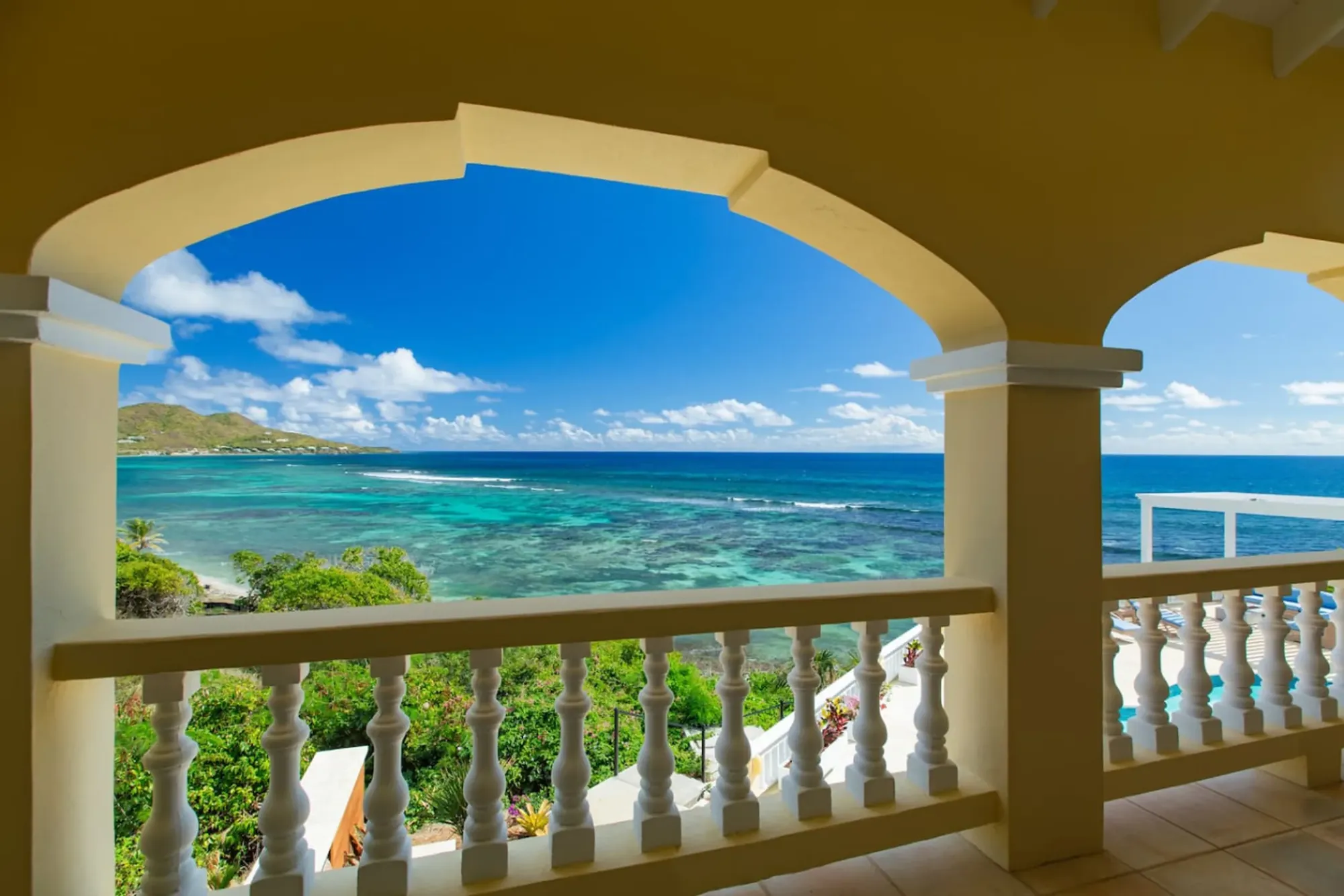
Turquoise bay framed by the villa's arched veranda
The Cerulean

Plan it from the villa.

Five bedrooms, a private swimmable beach, and all of this within a day trip.

Sleeps 12 · 4.90 ★ · rates by season

The counting house at 7 and 8 King Street

The center of Hamilton's St. Croix is a pair of house numbers. In 1766, the year his father left, Alexander went to work as a clerk for the import-export firm of David Beekman and Nicholas Cruger at Numbers 7 and 8 King Street. That is the National Park Service's statement, and it anchors every Hamilton walk. Beekman and Cruger came from prominent New York merchant families; the St. Croix house was the Caribbean end of a New York trade. It brought in what the sugar estates needed — flour, salt fish, mules — and shipped out sugar, molasses, rum and cotton. It also, in the plain words of the Discovering Hamilton research, imported enslaved people. Hamilton kept the books of that business too, and there is no honest way to write about the counting house without saying so.

What the job taught him is the part he chose to remember. The NPS records that Hamilton told his children his years with Cruger were "the most useful part of his education," and the phrase is fair. A clerk in a Danish port trading with New York, Curaçao and the British islands lived in several currencies at once; he priced cargoes, chased debts, wrote to captains and suppliers, and learned what a bill of exchange was worth. The Danish records show him witnessing legal documents for his employers as early as April and August 1767. He was doing the firm's paperwork, not sweeping its floor.

He also hated it, or said he did. The earliest personal letter of his that survives, to Edward Stevens on November 11, 1769 — Stevens had gone to New York for school — complains of "the grov'ling and condition of a Clerk or the like," and it ends with the line every biography quotes, the boy wishing for a war so that he might rise. It is on Founders Online, and it is a startling document from a child of twelve or fourteen: the ambition is fully formed, and so is the wish to get off the island.

The building is not the building. The NPS says Cruger's structure was replaced in the late 1700s and that the current one stands on or near the original site; a commemorative plaque marks it. Read the plaque, then look toward the harbor a short block or two north — the wharf was the other half of a clerk's day, and it has not moved.
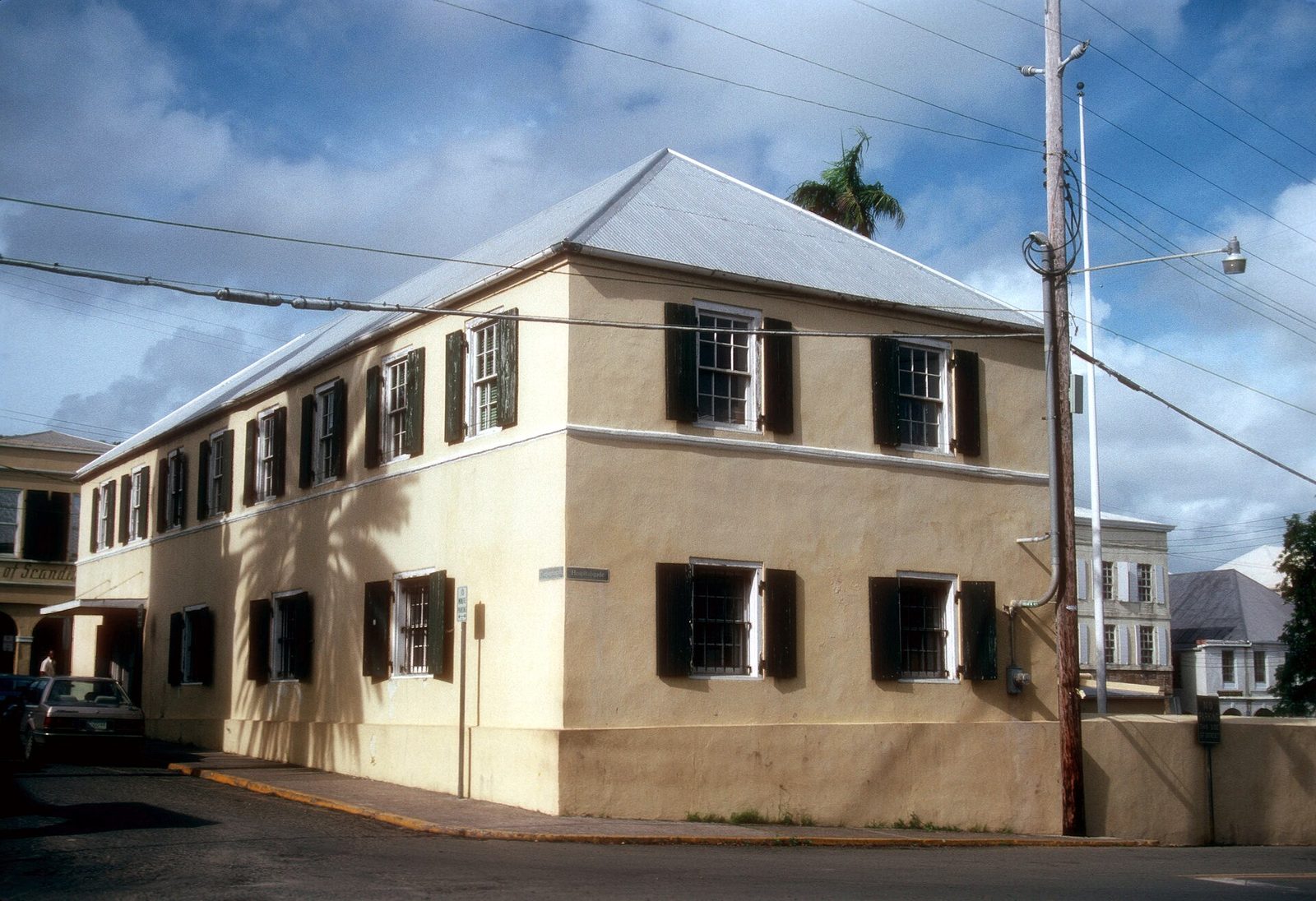
DANISH WEST INDIA & GUINEA COMPANY WAREHOUSE
The Danish public buildings of Christiansted National Historic Site; the NPS uses Government House on King Street to show visitors the architecture of Hamilton's era. Photo: JERRYE & ROY KLOTZ MD (CC BY-SA 3.0)

Five months in charge

By 1771 the St. Croix house was trading under Nicholas Cruger's name, and in October of that year Cruger sailed for New York for his health, leaving his business in the hands of his clerk. Cruger came back in March 1772. For those five months a teenager — fourteen or sixteen, depending on your birth year — ran a Caribbean trading house, and the letters he wrote in Cruger's name are the best evidence we have of who he was becoming. They are printed in the first volume of the Hamilton Papers, and Michael E. Newton's Discovering Hamilton site works through them in detail.

The picture they give is of a young man who was not intimidated. He wrote to Cruger in New York about the firm's sloop, the Thunderbolt — "a fine vessel indeed, but I fear not so swift as she ought to be" — and about the captain he thought was underperforming. He wrote to Cruger's brother Tileman on Curaçao about a shipment of mules that had arrived in wretched condition; rather than dump them at a loss, he put them out to pasture, let them recover, and sold them for more than he had first been offered. He pressed the firm's debtors and told captains what he expected of their next voyage. When Cruger returned he approved, and Hamilton kept the job.

It is easy to inflate this, and plenty of writers do. He was not the owner, he was not trading on his own account, and Cruger's absence was months, not years. But the substance is real and documented in Hamilton's own hand: the future Secretary of the Treasury learned credit, freight, exchange rates and the price of a mule in Christiansted, before he could shave. To see the trade he was running, walk the wharf at Christiansted National Historic Site, where the sugar left and the provisions arrived, then walk back up King Street with a different idea of what a clerk was.
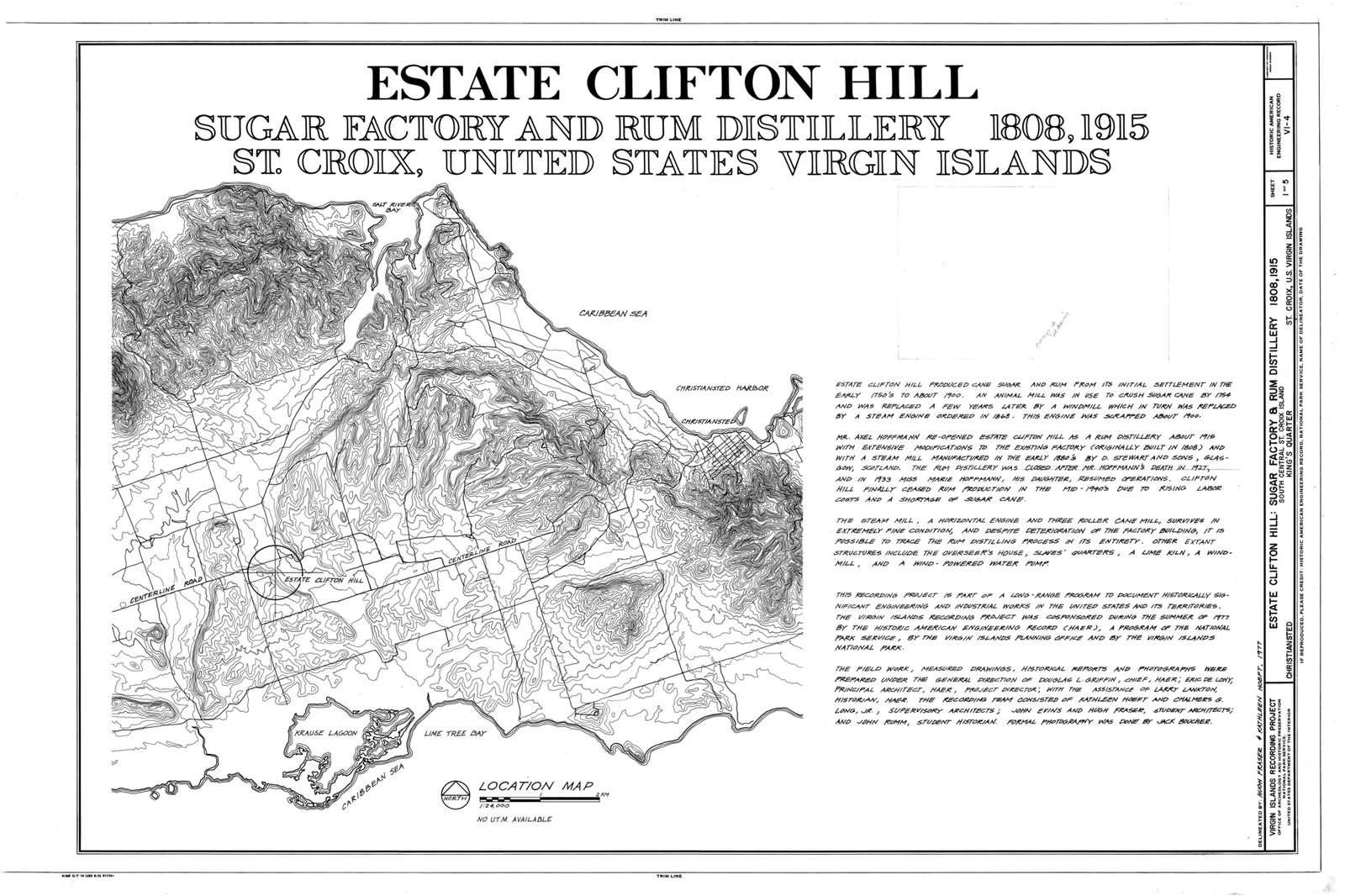
Estate Clifton Hill, Sugar Factory and Rum Distillery, Title Sheet - Estate Clifton Hill, Sugar Factory and Rum Distillery, South Central Street, Christiansted, St. HAER VI,1-KING,2-A- (sheet 1 of 5)
Danish-era maps of St. Croix show the estate grid the island's merchants served; the sugar those estates shipped and the provisions they bought were the counting house's whole business. Photo: Fraser, Hugh (Public domain)

Hugh Knox and the Royal Danish American Gazette

Two arrivals in Christiansted changed Hamilton's luck. The first was a newspaper. The Royal Danish American Gazette was an English-language paper printed in Christiansted for a Danish colony, and Hamilton wrote for it before anyone knew his name. On April 6, 1771, the Gazette printed a poem signed "A.H." that opens with a lover found in a meadow beside a brook — light verse, competently done, by a teenage clerk with a shelf of English poetry behind him. A second poem, a religious meditation printed on October 17, 1772, is often attributed to him too, though the editors of the Hamilton Papers note that it cannot be pinned to him with certainty. They matter mainly because they show he was already trying to be read.

The second arrival was a minister. Hugh Knox was a Presbyterian who came to St. Croix in 1772 to take the pulpit of the town's Presbyterian church at 13 Watergut, at the corner of Prince Street. He was also an apothecary and something of a journalist, and he filled in as editor of the Gazette when its regular editor was off the island. Knox recognized what he had in the clerk from King Street and pushed him toward a real education. It was Knox who got Hamilton's account of the hurricane into print, and by the Library of America's account it was Knox's sermon after the storm that Hamilton had just heard when he sat down to write.

Neither Knox's church nor the Gazette's office survives. The Presbyterian congregation sold the Watergut property in 1818 and the building was later demolished; the site is on the NPS walk because it is where Knox preached, not because there is anything to see. St. John's Anglican Church at 27 King Street is still there — established in 1760, it is the church where Rachel's burial was recorded, and it is a fair guess, no more, that her sons knew it. Its wooden building was destroyed in the 1772 hurricane and replaced in 1780, so the church you see is not the one they knew either. Christiansted keeps its sites and loses its buildings; that is the pattern of this whole story.
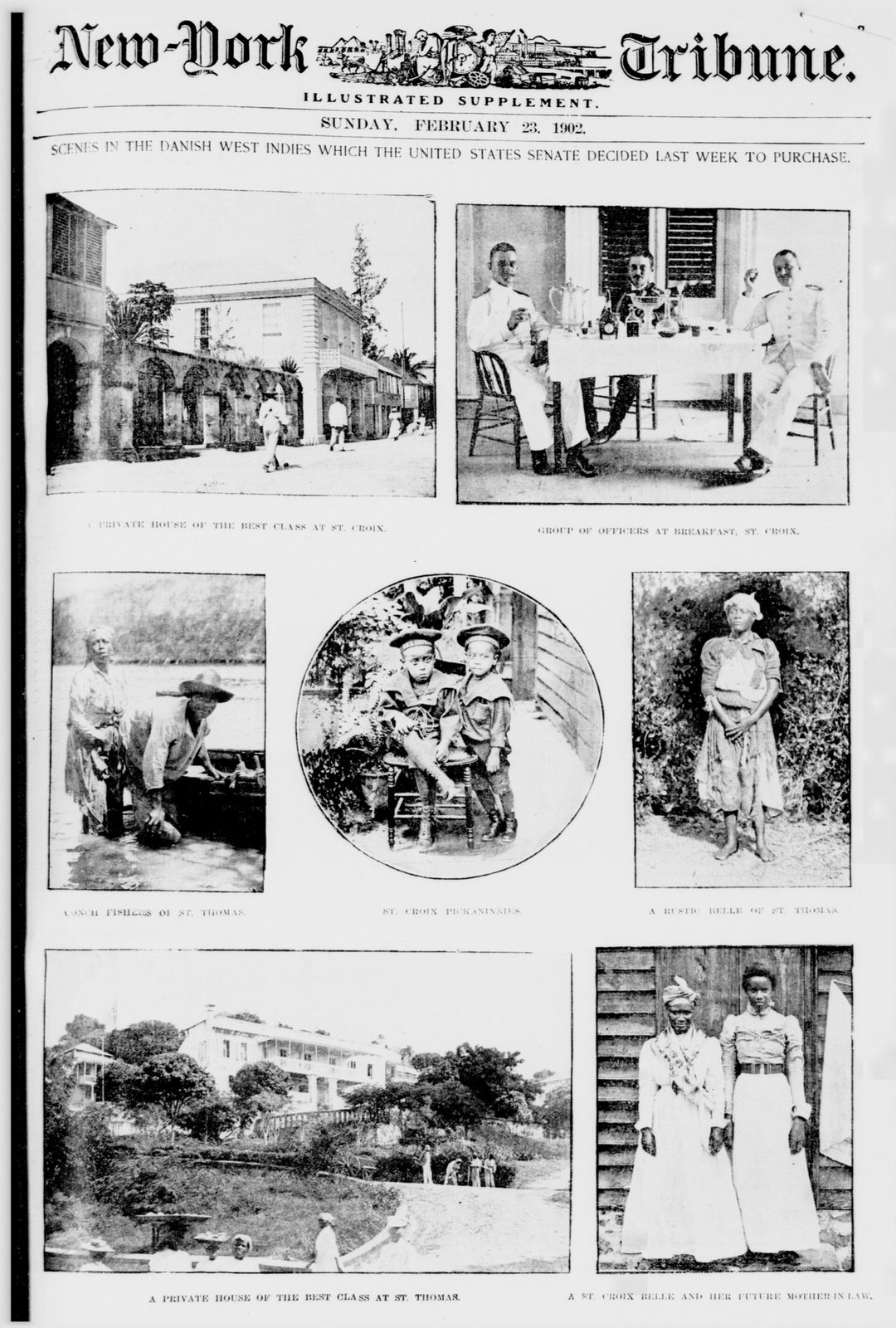
Scenes in the Danish West Indies which the United States Senate decided last week to purchase LOC 4231382350
Early nineteenth-century views of Christiansted, reproduced on the NPS markers, show the harbor, fort and wharf as they looked a generation after Hamilton left. Photo: The Library of Congress (No restrictions)

The night of August 31, 1772

The hurricane came on the last night of August. Hamilton's own account, written six days later, dates it precisely — it "happened here on the 31st ultimo at night" — and describes its shape: it began about dusk out of the north and blew violently until about ten o'clock; then came a sudden lull of about an hour; then the wind returned from the southwest with greater force and did not ease until nearly three in the morning. Anyone who has read about the eye of a hurricane will recognize the sequence. Some modern summaries give the date as August 30; the letter is the primary source, and we follow it. For the science of what he lived through, our hurricane season guide covers the modern record.

The damage was severe. The St. Croix Landmarks Society puts it at some 500 buildings destroyed or damaged on the island, and the NPS notes that the wooden St. John's Anglican Church on King Street was among the losses. The masonry fort and the Company's warehouse are still standing today; the wooden church is not, and that contrast tells you roughly what the storm did to a town built partly of timber. Hamilton, most likely living on King Street in the Stevens household, was in the middle of it.

What he wrote is the reason anyone remembers the storm. The letter is dated Saint Croix, September 6, 1772, and addressed "Honoured Sir" — to his father, whom he had not seen in six years. It is not a weather report. It is eighteenth-century sublime prose by a teenager who had been reading a great deal: the roaring of sea and wind, the lightning, the crash of houses, the shrieks of the injured, and then a long turn into a sermon on the smallness of man before God, addressed to himself as much as to anyone. The best-known sentence is also the shortest, and we quote it below. Two other things stand out: he thought to describe the lull, and he apologized at the end in case his father thought the description "more the effort of imagination" than a true picture. He was, on both counts, a writer already.

“It seemed as if a total dissolution of nature was taking place.”

Alexander Hamilton, letter of September 6, 1772, printed in the Royal Danish American Gazette on October 3, 1772

The letter, the subscription, and the ship north

The letter did not go straight into print. By the Library of America's account it circulated in Christiansted first, and it was Knox who arranged for the Gazette to publish it, on October 3, 1772, under a headnote explaining that it had been written the week after the hurricane "by a Youth of this Island, to his Father." Nobody on St. Croix needed the name filled in. The effect was practical: as the Landmarks Society puts it, the letter so impressed friends and others that they scraped together enough money to send him to school. The names usually given are Cruger and Knox, and Chernow argues that his cousin Ann Lytton Venton, who had money of her own from the Lytton side, contributed too. The accounts of the fund do not survive, so treat any list of donors as a reasoned guess.

Then he left, and he left fast. The old chronology, still printed on the NPS tour sheet and the Landmarks Society page, has him sailing in mid-summer 1773. The better evidence points to the autumn of 1772, within weeks of the letter appearing: he arrived by ship in Boston in October 1772, and Michael E. Newton found two vessels from St. Croix in the Boston newspapers that month — one under a Captain Hammett arriving October 18, one under Waters before October 22 — and concludes he was almost certainly aboard one of them. From Boston he went on to New York, then to an academy in Elizabethtown, New Jersey, and entered King's College, now Columbia, in the fall of 1773.

About the voyage itself the record is silent, and this is where a famous story lives. Later family tradition says he sailed on a ship called the Thunderbolt, that it caught fire at sea and that he helped fight the blaze for a day. There is no contemporary evidence for any of it. What is documented is that the Thunderbolt was one of the Cruger firm's own sloops — the vessel Hamilton had judged not swift enough a year earlier — so the name may be a real memory attached to an unprovable event. Tell it as a story; do not print it as fact. What is fact is that Alexander Hamilton sailed out of Christiansted harbor at fifteen or seventeen and never came back.
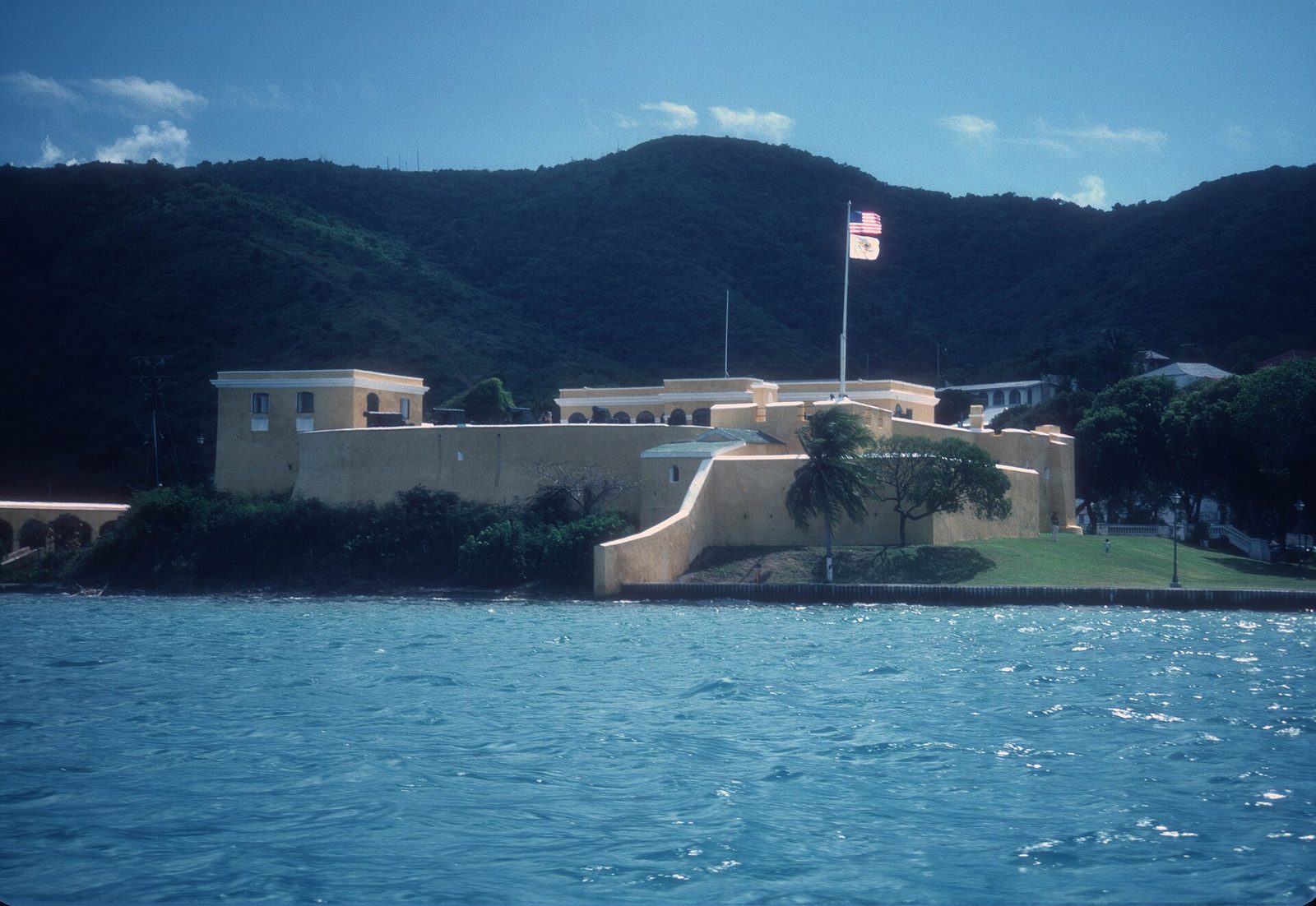
CHRISTIANSTED NATIONAL HISTORIC SITE
Photo: JERRYE & ROY KLOTZ MD (CC BY-SA 3.0)
Christiansted, St Croix 00820, USVI - panoramio (1)
Photo: Андрей Бобровский (CC BY 3.0)
East End, St Croix 00820, USVI - panoramio (1)
Photo: Андрей Бобровский (CC BY 3.0)

The Christiansted he would recognize

Christiansted National Historic Site is a seven-acre park on the waterfront with five historic structures, and it helps to sort them by date against Hamilton's years, 1765 to 1772. Three predate him and would have been part of his daily view: Fort Christiansvaern (1738, finished 1749), the Danish West India and Guinea Company Warehouse (1749) behind it, and the Steeple Building (1753), the Lutheran church of the Danish establishment. Government House, on King Street a few doors from the counting house, was the seat of the colony's government in his time. Two came later: the Danish Custom House on the wharf dates from 1844 and the Scale House, where sugar was weighed for export, from 1856. Both are worth seeing, and the Scale House is where the park hands out its Hamilton map, but he never saw them.

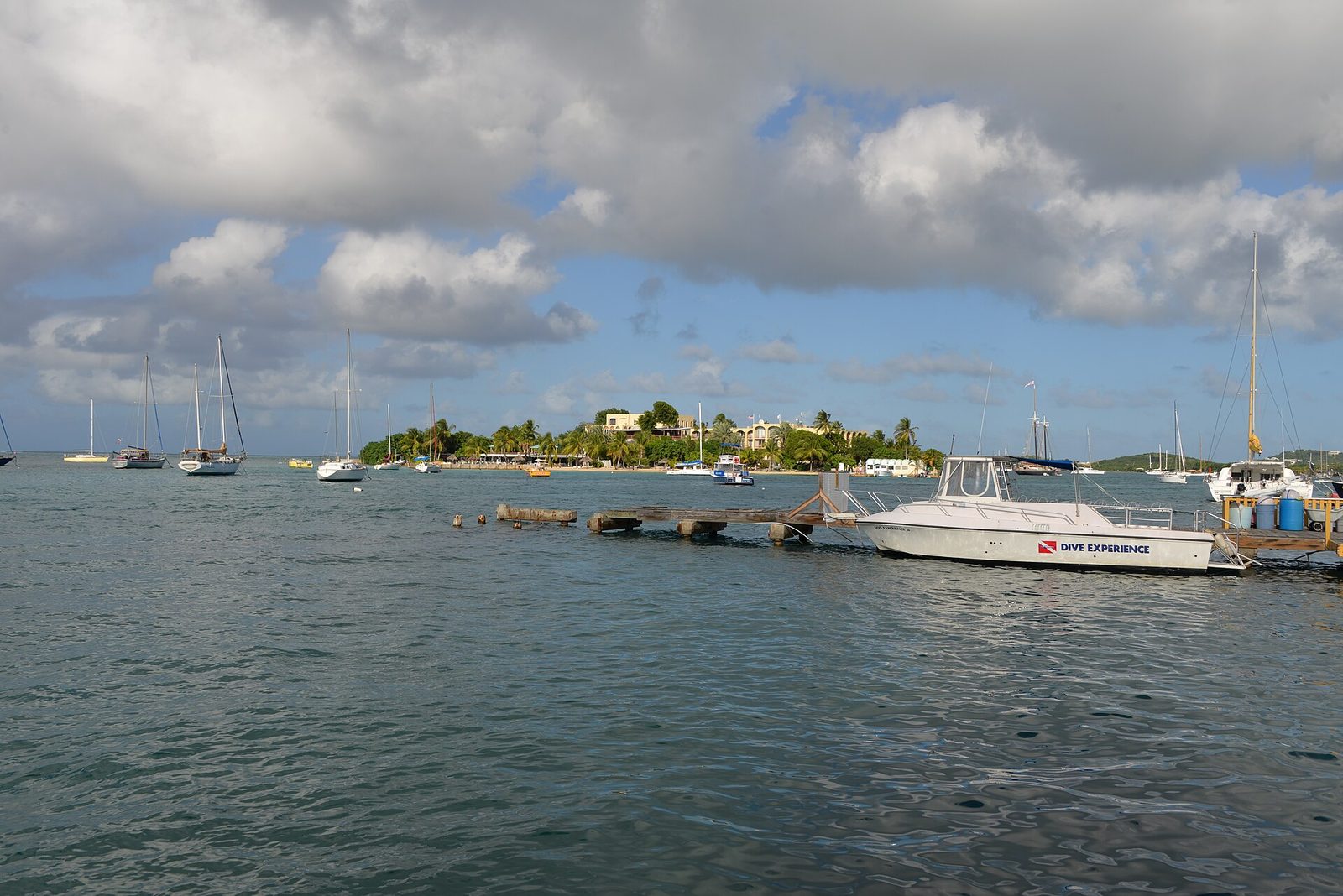
The wharf is the constant. Ships from New York and the islands loaded on this waterfront in the 1760s where the boardwalk bars and dive boats sit now, and the harbor entrance through the reef is the one every ship of the period threaded. Stand at the water's edge in front of the fort and you have the view Hamilton had on his first day and his last: Protestant Cay in front, the reef line beyond it, the town at your back. That is the honest Hamilton experience on St. Croix, and it costs nothing.

The fort is the other certain site, for his mother's sake, and it repays a visit on its own: the ramparts over the harbor, the powder magazine, the cells, and the NPS exhibits on the Danish colony and the enslaved people who built and served it. Hours and fees change; as of 2026 the fort has been opening daily around 8:30 to 4:30 with a small entry fee good for several days, but check nps.gov/chri before you go. The streets are free at all hours and best in the first two hours after sunrise. Our Christiansted guide covers the fort, the arcades and where to eat; this one is only about the boy.

Walking it today: the plaques and the tour

There are two ways to do this. The free way is the National Park Service's own self-guided walk, "Alexander Hamilton's Christiansted," a map and information sheet available at Fort Christiansvaern and the Scale House. It lists eight stops, all within a few blocks: the wharf, where the family arrived; the fort, for Rachel's 1750 imprisonment; No. 23 and No. 34 Company Street, the store and residence sites; St. John's Anglican Church at 27 King Street; the King Street block where Thomas Stevens lived; the former Presbyterian church site at 13 Watergut and Prince Street; and the firm of Nicholas Cruger at 7 and 8 King Street. With the sheet in hand it takes about an hour; with a stop for coffee it takes the morning, which is better.

The guided way is CHANT's A. Hamilton Walking Tour. CHANT — Crucian Heritage and Nature Tourism, a St. Croix nonprofit — offers a Hamilton walk that, as of 2026, meets at the Custom House on Tuesday mornings at 9:30, covers about two and a half hours of moderate walking, and costs about $35 per adult; it takes in St. John's, Company Street and the Beekman and Cruger site, and books online. Days, times and prices change, so confirm before you drive in. If a Tuesday does not fit, the villa's concierge can ask about private dates, and our cultural and historic directory lists the other guides working the town.

What you will actually find on the ground: a commemorative plaque at the counting-house site on King Street, which the NPS confirms; a plaque on Company Street for the family's street; the fort with its cells and exhibits; a working Anglican church at 27 King Street that postdates the family but stands where their church stood; and a great deal of handsome Danish colonial streetscape, which is the real exhibit. What you will not find is a Hamilton museum, a birthplace (that is on Nevis, a different island and country), or a statue. The town has been restrained about him, and after a decade of Hamilton mania the restraint is a relief.

Read the plaques critically: some were placed before the recent archival work, and where one gives a single birth year or a 1773 departure you now know why. The journal piece on a Christiansted morning covers what the rest of the walk looks like once you have finished with the eighteenth century.

A self-guided Hamilton hour

  1. Start at the wharf in front of the fort and get the NPS sheet at the fort or the Scale House.
  2. Walk into Fort Christiansvaern and find the cells — Rachel Faucette's site, 1750.
  3. Walk up to Company Street, two short blocks from the water, and follow it, reading the plaque (Nos. 34 and 23 no longer stand).
  4. Turn onto King Street for St. John's Anglican Church at No. 27, then Government House.
  5. Finish at 7 and 8 King Street, the Beekman and Cruger site, and read the plaque.
  6. Walk back down to the boardwalk and look at the harbor: this view is the one certain Hamilton view on the island.

The myths to leave alone

Hamilton attracts stories the way harbors attract boats, and St. Croix has its share. The building called Hamilton House at 56 and 57 King Street carries his name, not his record: it is an eighteenth-century building that has housed, over the years, a shop, a hotel, the Union Club, the Avis newspaper and the public library, and no source places the boy in it. The NPS says the location of the Stevens house is unknown and that neither Company Street address survives. There is no Hamilton house on St. Croix, full stop.

The ship and the fire: the Thunderbolt was a real Cruger sloop, but the story of Hamilton sailing north on it and fighting a fire for a day rests on later family tradition, not on any record. The departure date: 1773 is on older plaques and pages; the newspaper evidence says October 1772. The hurricane date: the letter says the night of August 31; some summaries say the 30th. The "penniless orphan who came from nothing": he was orphaned, and his mother's estate did go to his half-brother, but he was housed by a merchant family, employed by one of the leading firms in town, and published by a minister with a newspaper at his disposal. That is talent meeting connections, and it is more interesting than the myth.

A few smaller ones. Rachel's grave at Estate Grange is real, per the St. Croix Landmarks Society, but the estate is private property; and do not confuse it with the Grange in upper Manhattan, the house Hamilton built in 1802, now a National Park Service site. Any tour that promises the desk he worked at or the room he slept in is selling atmosphere. Any single age is a choice between two birth years. And no, he did not come back: after the fall of 1772 Hamilton never set foot on St. Croix again, however often the island now calls itself his home.

The rule that keeps you honest is simple. If a claim traces to the probate record, the Cruger letters, the Gazette, the Danish property rolls, or the NPS's own site list, take it. If it traces only to a later relative, a guidebook, or a musical, enjoy it and keep walking.

What you will hearWhat the record showsWhere it comes from
Hamilton was born in 1757Hamilton said 1757 — the 1768 probate record implies 1755Probate court transaction of Feb 19, 1768, and Hamilton's own statements
He lived in the Hamilton House on King StreetNo source places him there — the Stevens house location is unknownNPS, Alexander Hamilton's King Street
His mother's store still standsNos. 34 and 23 Company Street — neither building survivesNPS self-guided tour sheet
He sailed on the Thunderbolt and fought a fire at seaLater family tradition — the Thunderbolt was a real Cruger sloopHamilton to Cruger, Nov 1771, and no contemporary account of the voyage
He left St. Croix in 1773Boston papers list arrivals from St. Croix in Oct 1772Michael E. Newton
The hurricane struck August 30, 1772The letter says the 31st ultimo at nightHamilton's letter of Sept 6, 1772
The letter was written for publicationWritten to his father, passed around town, then printed by Knox on Oct 3Royal Danish American Gazette headnote

The musical, and what it did for the sites

Interest in Hamilton's St. Croix rose and fell with his reputation for two centuries, and then in 2015 a Broadway musical made him the most famous Founder in the country. The show spends a few minutes on the islands and gets the essentials in the right order — a mother who died, a clerk who read everything, a hurricane, a letter, a ship north — and it sent visitors to Christiansted looking for the streets in the lyrics. It is a musical, not a history, and this guide is not a review of it. What it did on St. Croix was practical: it gave the NPS's Hamilton map a steady audience, gave CHANT a tour to run on Tuesdays, and put a small local society and a national one to work.

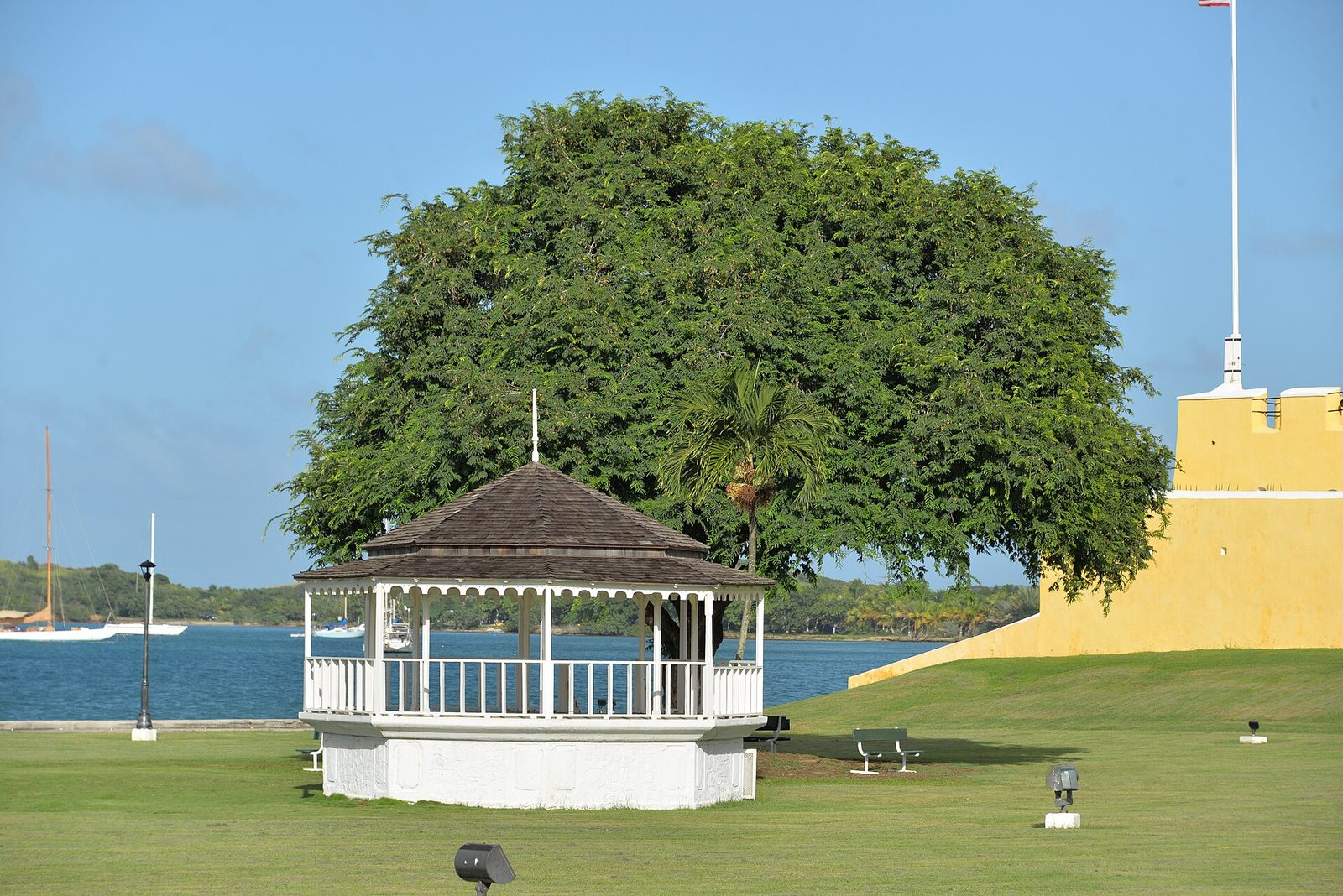
The local milestone came the same year. In June 2015, the 250th anniversary of Hamilton's arrival, a celebration was held at Christiansted National Historic Site, organized locally by Bob White of the Alexander Hamilton Society of St. Croix and David Goldstein, the park's chief of interpretation and education, with Rand Scholet, president of the New York-based Alexander Hamilton Awareness Society, joining by conference call from the park's gazebo. The AHA Society's online exhibit on his early life on Nevis, St. Eustatius and St. Croix is a fair short introduction before you come.

The ten-dollar bill is the other reason people arrive knowing his face. He is still on it. If you want to explain to a twelve-year-old why a Caribbean clerk is on American money, the King Street plaque is a better classroom than any theater: the man who designed the country's finances learned finance here, in a rented counting house, converting between the currencies of a Danish island and a New York firm. That is the connection, and it needs no soundtrack.

Where the record actually is

The sources this guide rests on are mostly free. Founders Online, the National Archives' searchable edition of the founding-era papers, publishes the Hamilton Papers from the beginning, and the beginning is St. Croix: the first document is the probate court transaction on Rachel Lavien's estate of February 19, 1768, and the first few dozen items are the letter to Edward Stevens of November 1769, the Gazette poems, the counting-house letters of 1771 and 1772, and the hurricane letter of September 6, 1772, with the editors' notes on how each survived. Wikisource carries a clean copy of the hurricane letter, and the Library of America reprinted it in 2017 with an introduction that includes the Gazette's headnote.

For the Danish side — the tax rolls, the divorce, the property records that put the store at No. 34 — the work was done in the archives in Copenhagen by earlier historians and refreshed in the last decade by Michael E. Newton, whose Discovering Hamilton site publishes the findings in readable form and whose book Alexander Hamilton: The Formative Years is the fullest treatment of these years in print. Ron Chernow's Alexander Hamilton (2004) remains the standard one-volume life and the source most guides quote; use it as the secondary source it is, and notice where it disagrees with the newer archival work on dates.

On the island, the National Park Service's "Alexander Hamilton's First Career" and "Alexander Hamilton's King Street" pages and the eight-stop walking sheet are the official account, and the St. Croix Landmarks Society keeps a short Hamilton page. None of them will tell you what he ate for breakfast; that is the honest limit of the record. For the wider colonial story his years sit inside — the Danish purchase of 1733, the sugar economy, the enslaved majority who built the town — go on to our seven flags guide, the Estate Whim guide, and the story of emancipation at Fort Frederik, which is where the town's history goes after Hamilton leaves it.

Questions people ask

Where exactly did Alexander Hamilton work in Christiansted?

At the import-export firm of David Beekman and Nicholas Cruger at Numbers 7 and 8 King Street, according to the National Park Service. He started there in 1766. The building Cruger used was replaced in the late 1700s, so the structure you see today stands on or near the site rather than being the original; a commemorative plaque marks it. It is a short walk from Fort Christiansvaern and the wharf.

Was Hamilton born in 1755 or 1757?

Both years have real evidence behind them. Hamilton himself always gave 1757, and that is the year on his tomb in New York. But the St. Croix probate record made after his mother's death in February 1768 gives his age as thirteen, which points to 1755. Ron Chernow's biography prefers 1755 because it is the contemporary document; other historians keep 1757. Honest guides say January 11, 1755 or 1757 and leave it there.

Can you visit Rachel Faucette's store or the house Hamilton lived in?

No. The NPS puts the family's store and residence at No. 34 Company Street, with a temporary move in 1767 to No. 23 Company Street, and states plainly that neither structure has survived. The house of Thomas Stevens on King Street, where Hamilton most likely lived after 1769, has no known location. You can walk the streets and read the plaques, but there is no Hamilton house to tour on St. Croix.

What did the hurricane letter actually say, and where can I read it?

It is a letter dated September 6, 1772, addressed to his father, describing the hurricane that struck St. Croix on the night of August 31. The Royal Danish American Gazette printed it on October 3, 1772, introduced as written by a youth of the island to his father. The full text is free on Founders Online (the National Archives' Hamilton Papers) and on Wikisource; the Library of America also reprints it with a short introduction.

When did Hamilton leave St. Croix?

The best current evidence says the fall of 1772, within weeks of the letter appearing: Boston newspapers record vessels arriving from St. Croix in mid and late October 1772, and Hamilton was in Boston that month before going on to New York. Older accounts, including the NPS walking-tour sheet, give 1773. The name of his ship is not documented; the story that it was the Thunderbolt and caught fire comes from later family tradition.

Is there a guided Hamilton tour on St. Croix?

Yes. CHANT (Crucian Heritage and Nature Tourism) runs an A. Hamilton Walking Tour that, as of 2026, meets at the Custom House in Christiansted on Tuesday mornings at 9:30, lasts about two and a half hours of moderate walking, and costs about $35 per adult; book ahead through their site. If the day does not fit, the National Park Service's free Alexander Hamilton's Christiansted map lists eight stops for a self-guided walk.

Where is Hamilton's mother buried?

At Estate Grange, the Lytton family plantation west of Christiansted, where the St. Croix Landmarks Society says her gravestone can still be seen; St. John's Anglican Church on King Street recorded her burial in 1768. Estate Grange is private property, not a park, so do not simply drive in. Ask the Landmarks Society or the concierge whether a visit can be arranged before you build a morning around it.

How far is Christiansted from The Cerulean, and how long does the Hamilton walk take?

The villa sits on the East End, roughly 15 to 20 minutes' drive from downtown Christiansted. The eight NPS stops are all within a few blocks of the wharf, so a self-guided walk takes about an hour at a slow pace, or two and a half hours on the CHANT tour. Go in the morning while the streets are shaded, then eat on the boardwalk; the whole outing fits comfortably before an afternoon at the villa's beach.

Doing it from The Cerulean

The villa is on the East End, and Christiansted is the near town: roughly 15 to 20 minutes on the East End road, an easy drive even on your first day, with parking on the waterfront and the side streets. For the Hamilton morning, leave after an early breakfast, be on the wharf by eight, and do the eight NPS stops while the arcades are in shade; the fort has been opening around 8:30 (check current hours), so finish there. On a Tuesday with CHANT's tour booked, be at the Custom House by 9:20 with water and a hat, and plan on lunch on the boardwalk when it lets out around noon. Either way you are back at the villa's beach by early afternoon. Our driving guide covers the left-hand-side rule and the East End road.

It pairs well with a family. Children who have seen the musical will recognize the story and can carry the NPS sheet; the fort's ramparts and cells hold a ten-year-old's attention better than any plaque; and the walk is short enough that nobody melts down. Give older teenagers the hurricane letter to read on the veranda the night before — it is a few pages, free online, and it lands differently on the island it describes. Then let them stand on the wharf and argue about the birth year.

The villa's own morning is the right frame for it. The house faces the sunrise over its own reef, and the drive into town runs along the north shore for much of the way, so you arrive at the harbor Hamilton sailed out of having watched the same sea for twenty minutes. Have the concierge confirm the CHANT day and the fort's hours, and ask about a visit to Estate Grange if the grave matters to you — it is private, a request and not a right. Then go, read the plaques, stand at the water, and come home to the pool. It is a good morning's history, and a true one.

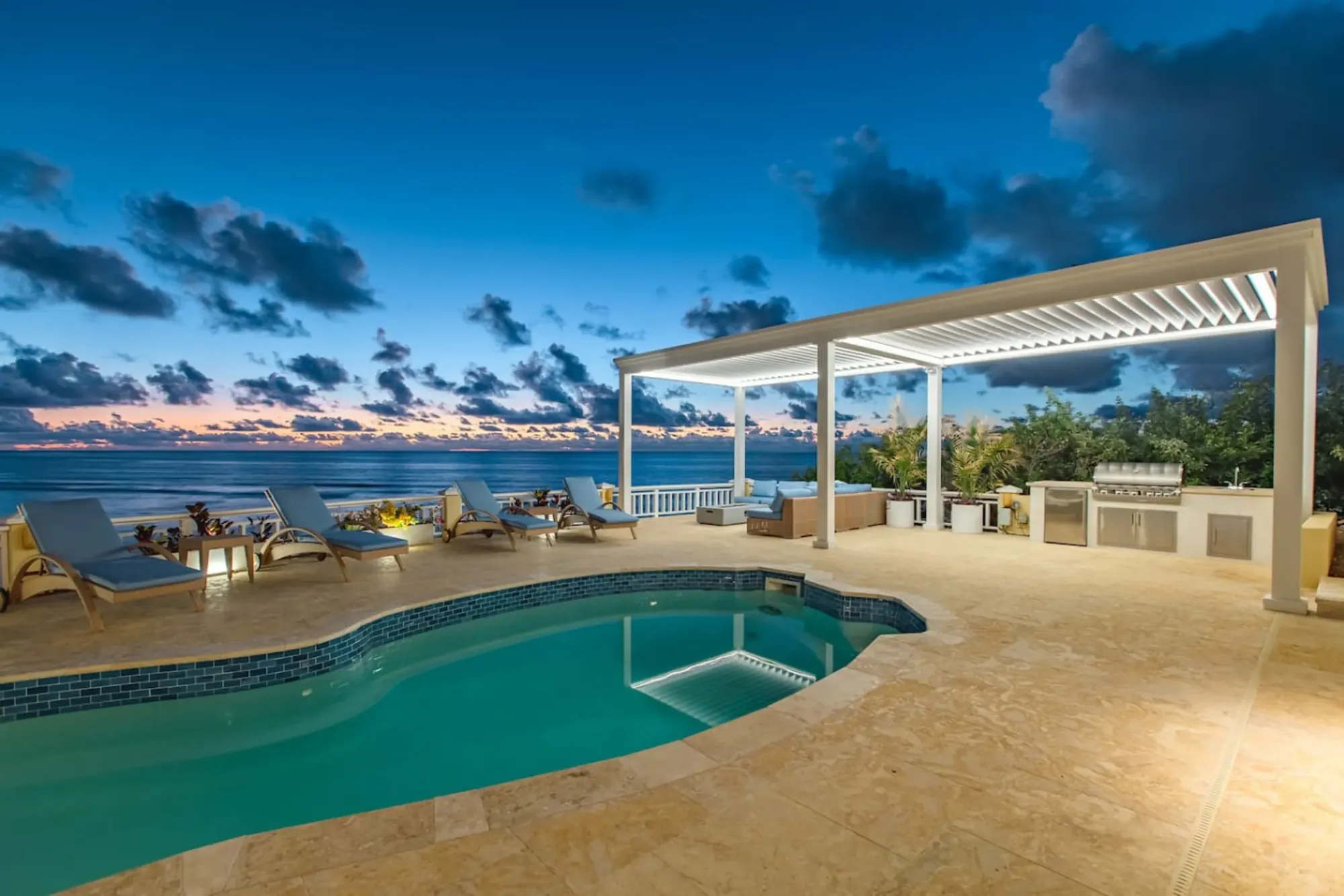
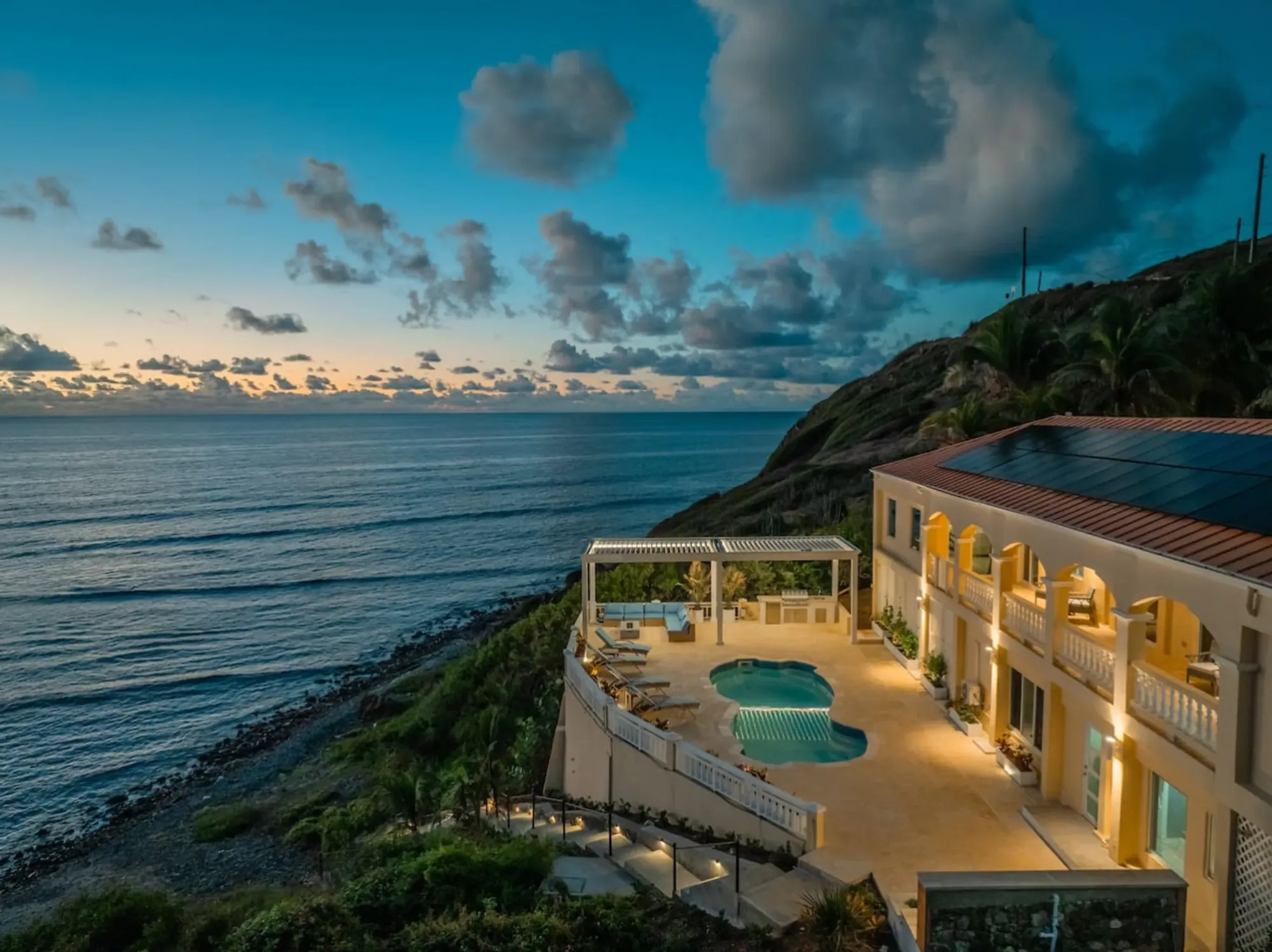
The arched veranda at The Cerulean looks east over the bay; Christiansted, and every site on the Hamilton walk, is a 15-to-20-minute drive from the gate.
The arched veranda at The Cerulean looks east over the bay; Christiansted, and every site on the Hamilton walk, is a 15-to-20-minute drive from the gate. Photo: The Cerulean
The Cerulean's pool at sunset above the sea
The Cerulean

Twelve of you, one private beach.

The Cerulean sleeps twelve on St. Croix's quiet East End — check your dates.

Sleeps 12 · 4.90 ★ · rates by season
Keep reading

Related guides.

The Cerulean villa at dawn above the sea
The Cerulean

Read it here. Live it from the villa.

Five bedrooms, a private beach, and all of this within a day trip.

Sleeps 12 · 4.90 ★ · rates by season