

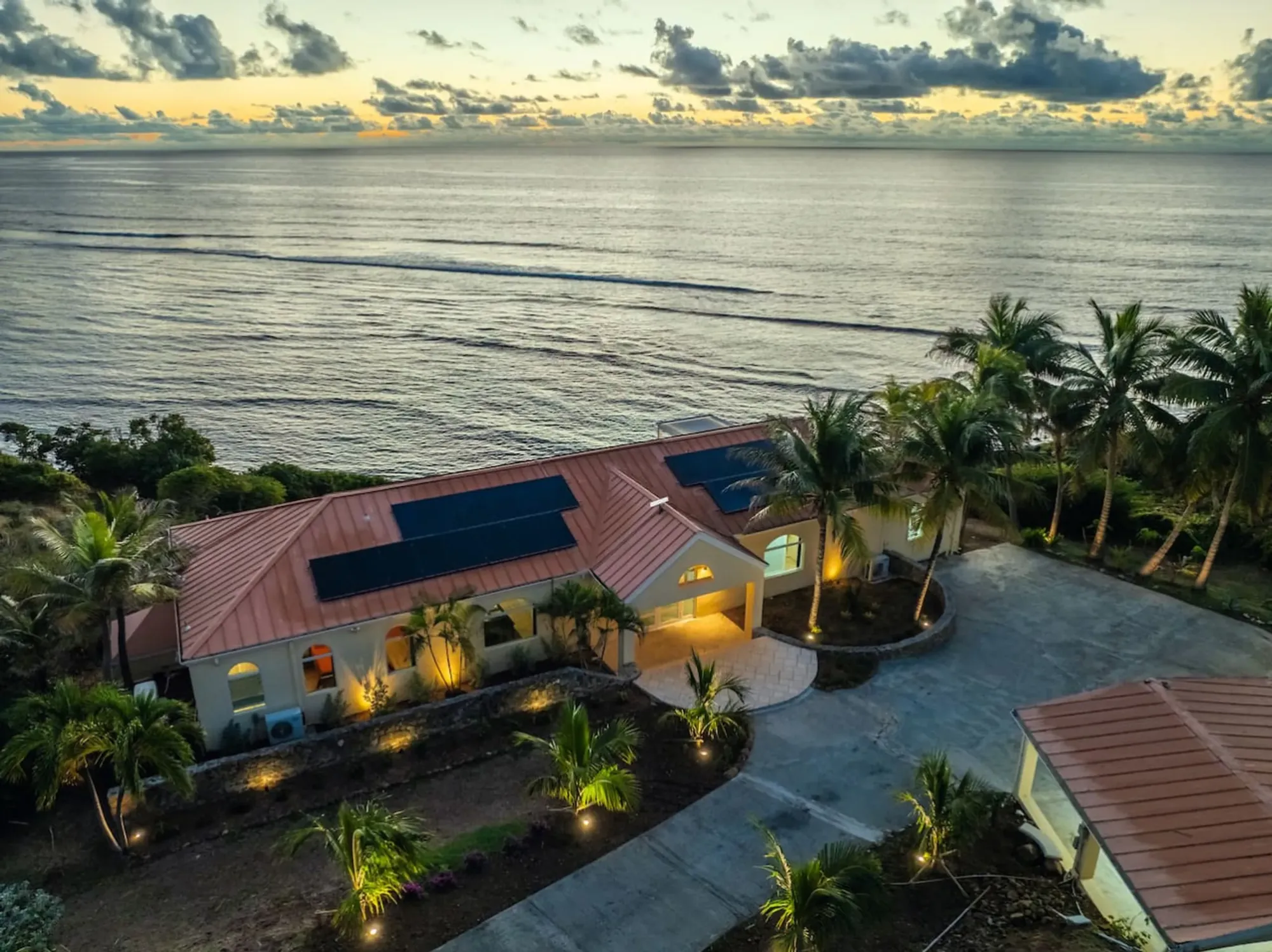
Two families under one roof is one of the easiest ways to take children on a big trip. The cousins or the school friends have each other from breakfast to bedtime, the grown-ups have company once the little ones are asleep, and one large house is shared two ways. What makes it work for a full week is a house that gives each family a door of its own. The Cerulean, a five-bedroom oceanfront villa on St. Croix's East End, is laid out that way: four bedrooms in the main house, each with its own bathroom, and a separate guest cottage about twenty steps away with its own front door, kitchen, living room, bedroom and full bath, plus a loft bed up a spiral stair. This guide covers the whole plan for two families sharing it: which family takes the cottage, who sleeps where, three fair ways to split the cost with worked percentages, a grocery kitty and a dinner rotation, two cars, quiet hours, days that split up and come back together, a house agreement and a sample week.
The main house and the cottage
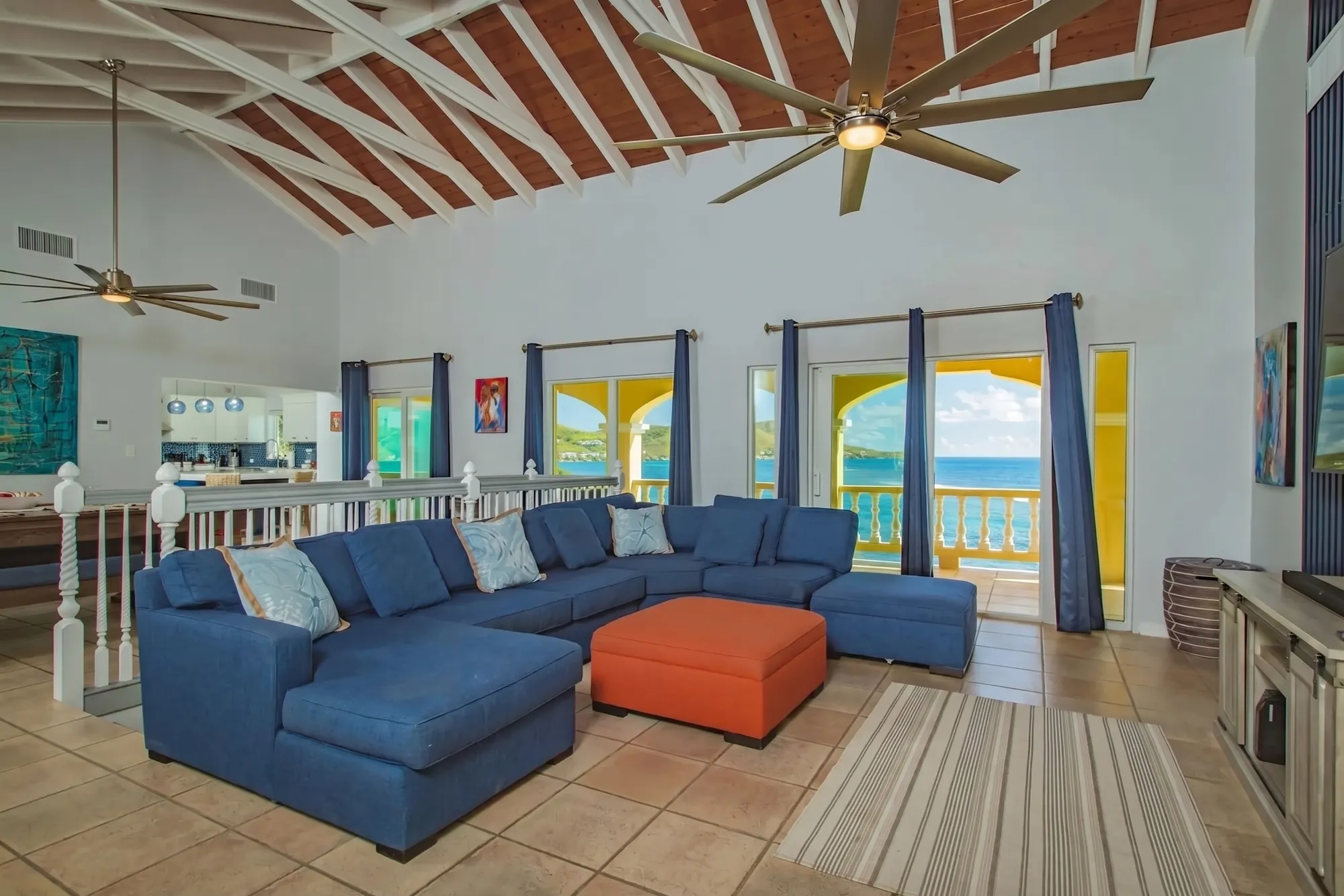
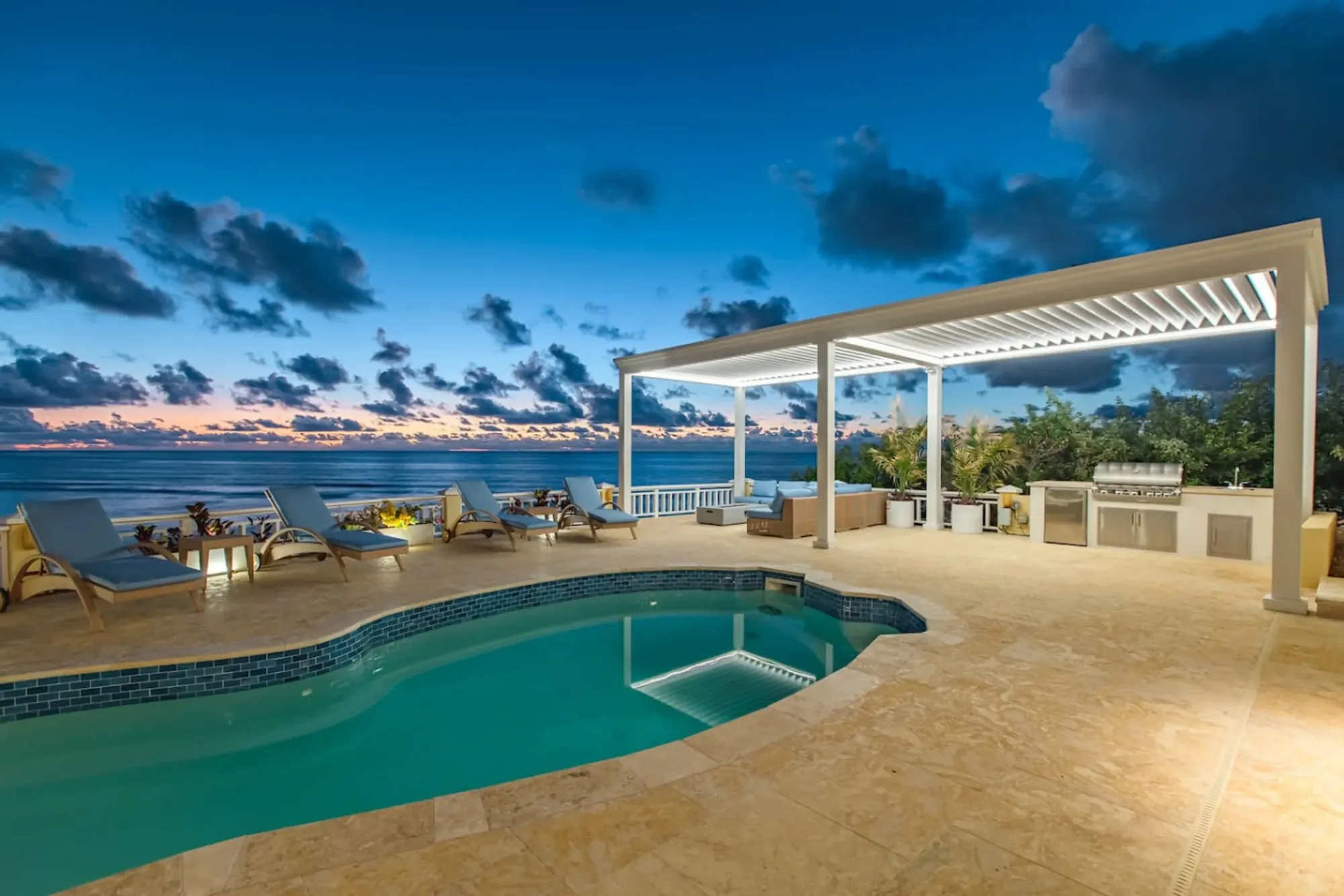
The main house is the shared center of the week. Its four bedrooms sit under a vaulted, beamed roofline, each with its own bathroom and three with direct ocean views. The en-suite baths range from a freestanding tub to a marble walk-in shower with its own window on the sea. The kitchen, living and dining areas open into one another, so one big room holds the cooks, the card players and the children back from the beach at the same time. Out the doors are the arched veranda, a covered terrace with a fire table, the pool deck with its pergola, the outdoor kitchen and, below it all, the private beach. Our bedrooms page has photographs of each room.
The guest cottage sits at the front of the property, along a garden path about twenty steps from the main house. It has its own front door, its own kitchen with a full-size refrigerator, a living room, a bedroom and a full bathroom. A spiral stair climbs from the living room to an open loft under the roof with the villa's sixth bed. The cottage bedroom has its own washer and dryer, which a family with small children will use every day. Like the rest of the villa, every room in the cottage is air-conditioned, and the guest cottage page walks through it room by room.
Add it up and the villa has five bedrooms, five bathrooms and six beds, and it sleeps twelve, two to a bed. For two families that means more room than people: a family of four and a family of five still leave a bed or a whole bedroom to spare. The amenity list also includes a high chair, a travel crib and baby gates, so a family with a baby can pack lighter.
Everything outdoors is shared. The pool, the deck, the beach, the grill and the fire pit belong to both families equally, and the cottage family walks over for meals, swims and evenings as often as it likes.
“Four spacious bedrooms in the main house, plus a separate fifth suite. Ideal for groups or multi-generational families.”
Suzanne, a guest in March 2026
Which family takes the cottage
The first decision shapes the rest: which family sleeps in the cottage. There is no wrong answer, and four questions settle it in one phone call.
Who has the youngest child? A baby or toddler who naps at noon and goes to bed at seven does best behind the cottage's front door, away from the pool deck, where the older children will be swimming. The parents get a kitchen for bottles and early cereal, a washer and dryer for the daily load, and a living room for the evening once the baby is down. Ask for the villa's travel crib to be set up in the cottage bedroom.
Who gets up earliest? Some families are at the coffee pot at six and some sleep until nine. The early family in the cottage can make breakfast without tiptoeing past anyone, and the late family in the main house wakes up when it wakes up.
Who has teenagers? The loft is the room teenagers ask for. It is up a spiral stair, which suits older children and adults better than toddlers, and it gives a teenager a bed apart from the younger children. A family with one teenager and one younger child can use the cottage bedroom and the loft and stay together under one roof.
Who wants a little more distance? A family that likes its own space at the end of the day gets it in the cottage without leaving the group.
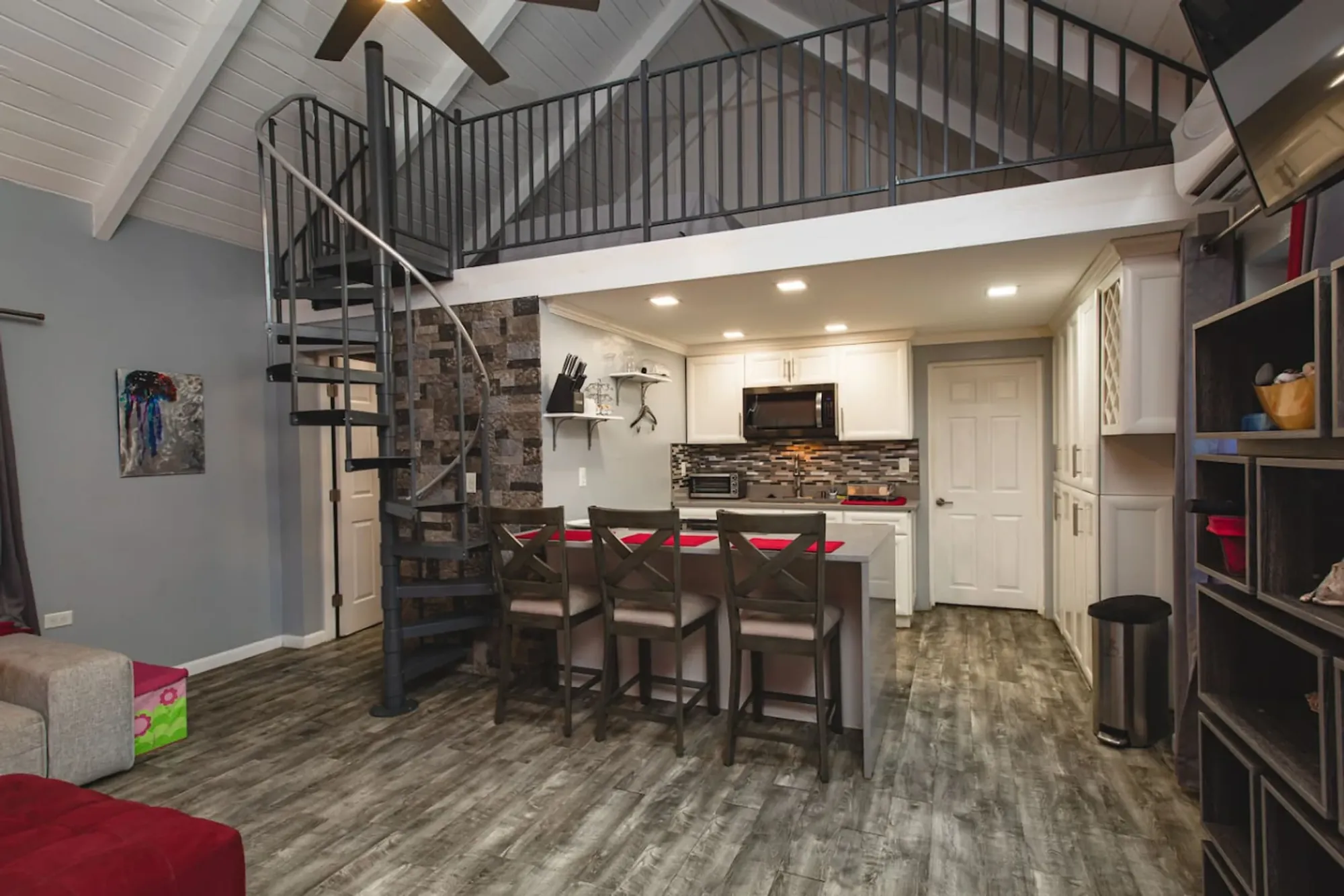
If both families want the cottage, swap halfway. On a Saturday-to-Saturday week, one family takes the cottage until Wednesday morning and the other takes it for the last three nights. The move takes half an hour, and the concierge can arrange mid-stay housekeeping on the swap day so both families start the second half fresh. If one family is bigger than the cottage, two of its children take a main-house bedroom, so the family has the cottage plus one room in the main house. The concierge can help with any of these plans if you share them when you book.
Sleeping plans for two families
Once the cottage is settled, the rest of the rooms fall into place. The villa has six beds across five bedrooms and the cottage loft, and it sleeps twelve, two to a bed. A two-family group of eight to ten people leaves room to spare. The table shows the plans that come up most often.
| Group | Main house | Guest cottage |
|---|---|---|
| Two families of four | Family A: parents in one bedroom, children in a second, two bedrooms spare | Family B: parents in the bedroom, children in the loft |
| A family of five and a family of four | Family A: parents in one bedroom, three children across two more, one bedroom spare | Family B: parents and a baby in the bedroom, the older child in the loft |
| Two families of six | Family A in three bedrooms, two of Family B's children in the fourth, next to their cousins | Family B: parents in the bedroom, its two oldest children in the loft |
| A family with grandparents along | Family A plus the grandparents in a bedroom of their own | Family B: parents in the bedroom, children in the loft |
Spare rooms are worth planning. With eight or nine people in the house, one or two bedrooms can sit empty, and they are useful empty: a nap room, a room for the teenager who wants a door, or a quiet place for a parent with a work call. A spare room can also go to the family with fewer rooms, which helps even out the split covered in the next chapters.
A few habits help. Put siblings together rather than cousins, at least for the first nights. Keep the youngest children close to their parents. Give the loft to an older child in the cottage family, since the spiral stair is easier at fourteen than at four. And decide before the trip, in the group chat, so nobody arrives tired and finds the room they hoped for already taken.
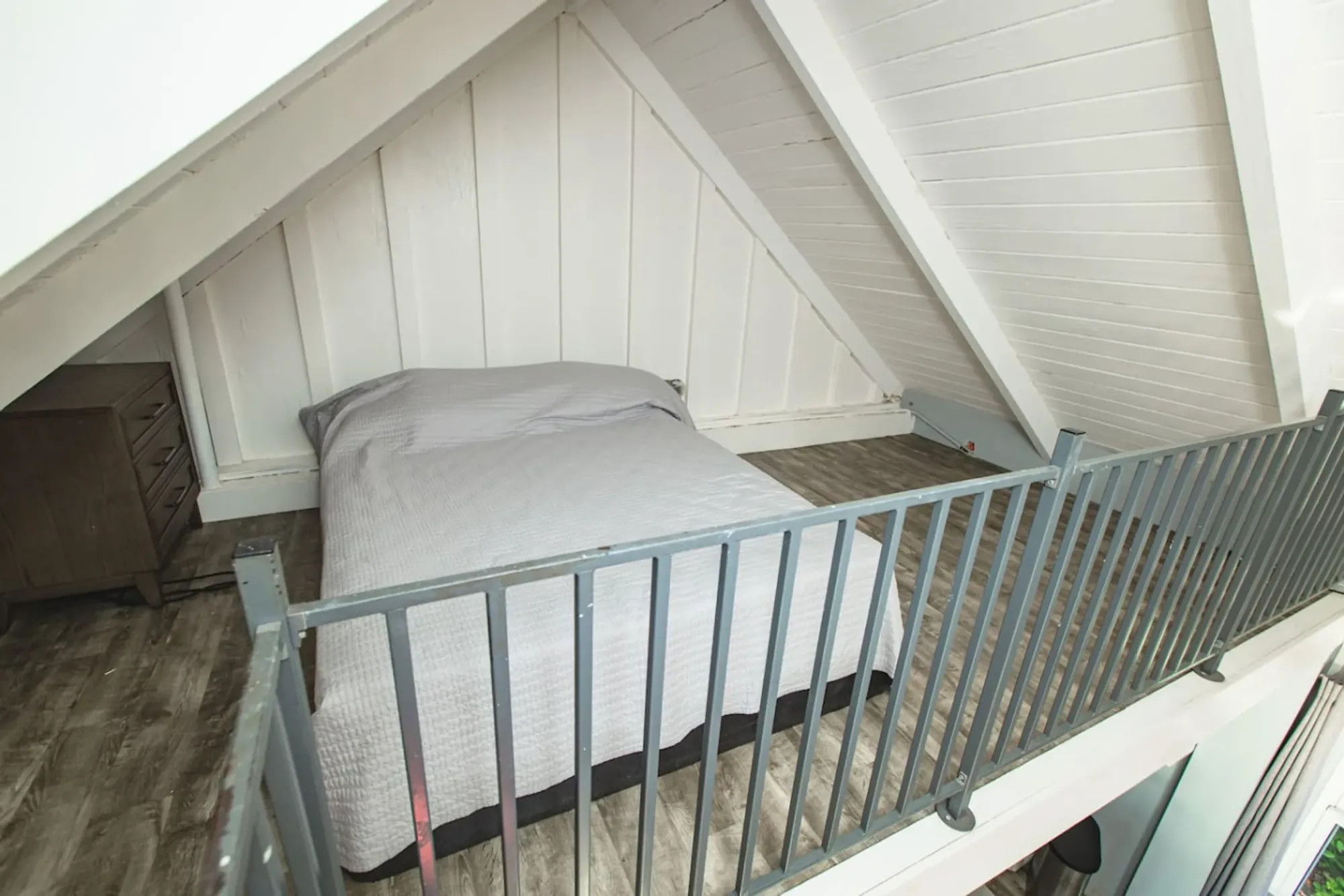
Ages matter more than numbers. Teenagers rarely share a bed with a sibling, so a group with several teenagers should count beds rather than people. The travel crib adds a sleeping place for a baby without taking a bed.
The planner below holds the villa's six beds. Type in names, copy the plan and paste it into the group chat so both families see it.
Room planner
Who sleeps where
Six beds across the main house and the guest cottage, two people to a bed. Type names in, copy the plan, and paste it into the family chat. Nothing leaves this browser.
Fair ways to split the cost
Money is the conversation two families should have first, before the dates are even final. It takes ten minutes. Begin by deciding what goes in the shared pot. The house is the big number: the total on the booking quote for your dates, with whatever taxes and fees the quote shows. Each family pays its own flights, rental car and travel insurance, and groceries, a chef night and a boat day are shared, as the later chapters explain.
The simplest split is half each. It is the right answer when the two families are about the same size, use about the same number of rooms and stay the same nights. When the families differ, there are three fair ways to adjust: by bedroom, by person and by nights. Pick the one that matches whatever feels uneven about your group.
To keep the examples concrete, the next three chapters use the same two sample families. Family A is two parents and three children aged 5, 8 and 12, and sleeps in the main house. Family B is two parents, a 10-year-old and a toddler of 1, and takes the guest cottage. They book seven nights, Saturday to Saturday. The percentages work on any total, so we show each one as a share of every $1,000 of the house cost rather than inventing a rate. The real rate depends on your dates; see live rates on the villa's booking calendar.
A few rules make any method run smoothly. One adult books the villa with Sterling Point, the St. Croix company that manages it, and the other family pays its share to that adult before each payment is due. Keep every receipt in one shared note or a split-the-bill app, with a column for each family, and round to the nearest dollar. Read the booking terms together at the start, so both families know the dates that matter.
Splitting by bedroom
Splitting by bedroom says that each family pays for the rooms it sleeps in. It suits two families who are about the same size but use different amounts of the house, and it is the method that best accounts for the cottage.
The plain version counts sleeping spaces. The villa has six: four main-house bedrooms, the cottage bedroom and the loft. Family A sleeps in three main-house bedrooms. Family B sleeps in the cottage bedroom and the loft. Count only the rooms in use and Family A has 3 of 5, or 60 percent, and Family B has 2 of 5, or 40 percent. If the fourth main-house bedroom sits empty, some families count it as shared, half each, which makes the count 3.5 to 2.5 out of 6: 58.3 percent for Family A and 41.7 percent for Family B.
The weighted version gives the cottage credit for what comes with it. The cottage bedroom comes with a kitchen, a living room and a front door of its own, so a family might count it as one and a half rooms. The loft is open to the living room below, so a family might count it as half a room. Weighted that way, Family B has 1.5 plus 0.5, or 2, and Family A has 3, which brings the split back to 60 and 40. Count the loft as a full room instead and Family B has 2.5 against Family A's 3, which works out to 45.5 percent and 54.5 percent.
| Bedroom version | Family A | Family B | Per $1,000 (A / B) |
|---|---|---|---|
| Rooms in use, counted equally | 60% | 40% | $600 / $400 |
| Spare room shared half each | 58.3% | 41.7% | $583 / $417 |
| Cottage bedroom 1.5, loft 0.5 | 60% | 40% | $600 / $400 |
| Cottage bedroom 1.5, loft 1 | 54.5% | 45.5% | $545 / $455 |
Any of these numbers can be the right one, as long as both families choose the weights before the trip. If the families swap the cottage midweek, the rooms even out and half each is the natural split. Three questions settle it. Does the cottage's privacy count for more than a room? Is the open loft a full room? Who pays for an empty room? Answer them once, and the percentage follows.
The bedroom method fits best when the families are close in size. A family of six in three rooms would pay 60 percent and a couple with one child in two rooms 40 percent, though the bigger family has six people to the smaller family's three. Families of very different sizes do better splitting by person, or using bedrooms for the house and heads for everything else.
Splitting by person
Splitting by person says that every guest is a share. It suits families of different sizes, and it is the natural way to split the costs that grow with each person at the table: groceries, a chef night, a boat day.
The plain head count is the easiest. Our two sample families are nine people: Family A is five and Family B is four. Family A pays 5 of 9, or 55.6 percent, and Family B pays 4 of 9, or 44.4 percent. On every $1,000, that is $556 and $444.
Families with young children often adjust for age. A simple version counts each adult as one share, each child as half a share and babies under two as free. Family A becomes two adults plus three children at a half, or 3.5 shares. Family B becomes two adults, one child at a half and a toddler at zero, or 2.5 shares. Out of 6 shares, Family A pays 58.3 percent and Family B 41.7 percent.
Where you draw the age line matters, so borrow one from the island. The Buck Island boat closest to the villa charges the children's fare for ages 11 and under, lets children under two ride free and charges everyone 12 and older as an adult. Use the same line at the villa and Family A's 12-year-old counts as an adult. Family A becomes 2 plus 1 plus two half shares, or 4, against Family B's 2.5. Out of 6.5 shares, Family A pays 61.5 percent and Family B 38.5 percent.
| Person version | Family A | Family B | Per $1,000 (A / B) |
|---|---|---|---|
| Head count, 5 and 4 | 55.6% | 44.4% | $556 / $444 |
| Children half, under two free | 58.3% | 41.7% | $583 / $417 |
| Same, with 12 and up as adults | 61.5% | 38.5% | $615 / $385 |
| Adults only, 2 and 2 | 50% | 50% | $500 / $500 |
The last row is worth noticing. Counting only adults gives the same answer as splitting evenly by family, which is why two couples with children often settle on half each for the house and adjust for the food. That hybrid works well: split the house evenly, and split the groceries, the chef and the boat by person.
Splitting by person leaves out which rooms each family uses. If the smaller family takes the cottage, with its own kitchen and front door, it may feel fair to nudge its share up a few points. Agree on any nudge in advance.
Splitting by nights
Splitting by nights says that each family pays for the nights it is in the house. If both families stay the whole week, this method gives the same answer as an even split. It matters when school calendars, work or flights put one family on the island longer than the other.
Say Family B's school runs two days longer and it flies in through Miami on Monday instead of Saturday, so Family A has the house to itself for two nights and the families share it for five. The clearest way to count is night by night. Each of the seven nights is one seventh of the house total, about 14.3 percent. Family A pays all of Saturday and Sunday, or 28.6 percent. The five shared nights, 71.4 percent of the total, split in half at 35.7 percent each. Family A's total is 64.3 percent and Family B's is 35.7 percent.
There are two shortcuts. Counting family-nights gives Family A seven and Family B five, so 58.3 percent and 41.7 percent; it is quicker, though it asks the later family to pay toward nights it was not there. Counting person-nights multiplies each family's head count by its nights: Family A's five people for seven nights is 35, Family B's four people for five nights is 20, so 63.6 percent and 36.4 percent. That version folds the person method and the night method into one number.
| Method, same two families | Family A | Family B | Per $1,000 (A / B) |
|---|---|---|---|
| Half each | 50% | 50% | $500 / $500 |
| By rooms in use | 60% | 40% | $600 / $400 |
| By person, children half | 58.3% | 41.7% | $583 / $417 |
| Night by night, B arrives Monday | 64.3% | 35.7% | $643 / $357 |
| Person-nights, B arrives Monday | 63.6% | 36.4% | $636 / $364 |
The table puts the methods side by side for the same two families. The spread runs from an even split to nearly two thirds, which is why it pays to choose before the trip. Families who travel together often settle on a mix: night by night for the house, by person for food and outings, and half each for anything both families enjoy equally, such as a housekeeping visit.
The family that arrives early collects its car and does the first grocery run. The later family can say thank you by taking the first cooking night. Small trades like these keep a careful split feeling generous.
The grocery kitty
Food for two families is the cost that moves every day, and a kitty keeps it simple. On the first day, each family puts the same amount into one pot: cash in a jar, or one adult's card with a shared note of every receipt. One adult is treasurer for the week. Every grocery run, every bag of ice and every roadside fruit stand comes out of the kitty, and when it runs low, both families top it up again. At the end of the week, the treasurer settles it by the split you agreed, for example by person with children at a half.
Decide what goes in. Breakfast basics, lunch makings, snacks, fruit, water, ice and the shared dinners belong in the kitty. Each family's own wine, beer and spirits, baby formula and diapers, and anything for a special diet stay out, bought by the family that uses them. That one rule keeps the kitty fair to both families.
The easiest first shop is the one you do not make. The villa's concierge can provision the house before you land: send a list, and the refrigerators and pantry are stocked when you walk in. For two families arriving on different flights, that first full kitchen takes care of the whole first evening. Put the provisioning bill through the kitty like any other shop.
For the mid-week top-up, Plaza Extra East, mid-island near Sunny Isle, is the biggest supermarket on St. Croix, and Cost-U-Less next door is a warehouse store with no membership fee, the place for cases of water and breakfast in bulk. Pueblo and The Market STX are the other full-size stores, and Seaside Market and Deli in Christiansted is the gourmet market, with a bakery and a deli. Island stores keep shorter hours on Sundays, so do the big shop on a weekday, and carry cash for the roadside fruit stands. Our groceries and provisioning directory lists every store.
Send two adults on each grocery run rather than the whole group, and make the run on the way home from a beach day.
A dinner rotation
Dinner goes best when the cooking is shared, and a rotation settles it before the trip starts. Each family cooks on its nights, the other family cleans up, and one night out and one chef night give everyone a break. Breakfast and lunch stay informal: each family makes its own breakfast in its own kitchen, and lunch is whatever is in the refrigerator, eaten at the pool or packed for the beach.
| Night | Who cooks | An easy plan |
|---|---|---|
| Saturday | Both families | Burgers and corn on the grill, salad, fruit |
| Sunday | Family A | Pasta night, with garlic bread and a big salad |
| Monday | Family B | Fish or chicken on the grill, rice, vegetables |
| Tuesday | Nobody | Dinner out in Christiansted |
| Wednesday | Family A | Tacos, with a toppings bar the children build |
| Thursday | A private chef | Crucian dishes or the families' favorites |
| Friday | Family B | Leftovers, plus the grill and the fire pit |
The house makes cooking for nine or ten easy. The main house has a chef's kitchen with a big island, a full-size range and oven, a dishwasher, an ice maker, a blender and small appliances, and a farmhouse sink under a window on the sea. Service and place settings for twelve or more are already in the cupboards. Outside, the outdoor kitchen on the pool deck has a gas grill, and on a warm evening that is where the cooking happens, with the children in the pool a few feet away. The chef's kitchen page has the full list.
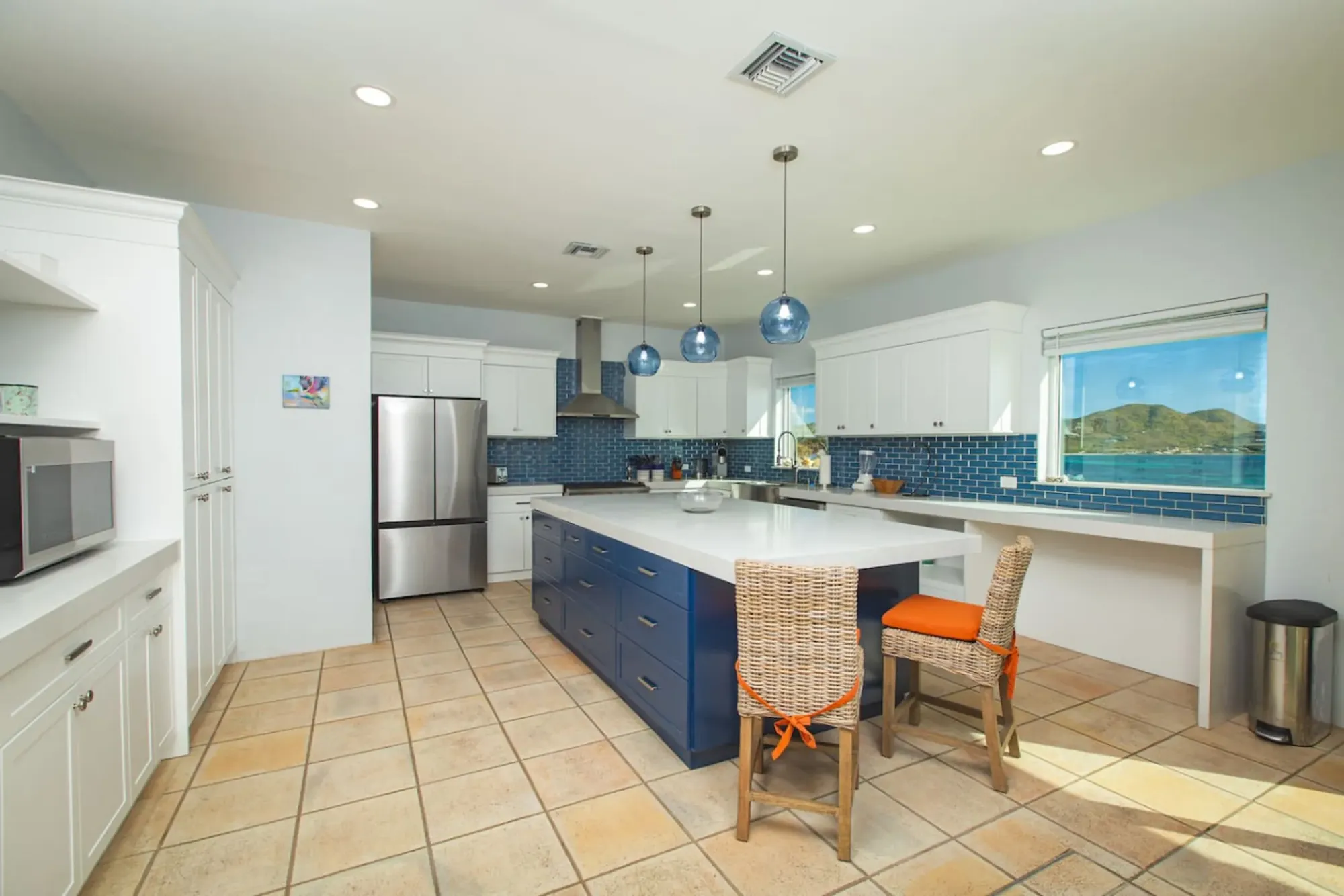
Two rules keep a rotation fair. The cooking family plans its menu, buys anything the kitty lacks and cooks. The other family sets the table, clears and loads the dishwasher. Children take part on both sides: setting the table, carrying platters to the terrace and wiping down the outdoor table after dinner.
Many families feed the children first. Children eat at half past five, and the adults sit down at eight once the youngest are asleep, with the house quiet and the fire pit lit. An early family dinner at six works just as well; agree which it is before the first night.
“Completely renovated inside and out with the best-stocked kitchen we've ever had in a rented house. High point is the pool deck area.”
Timothy Moran, a guest in March 2026
Keep a running list on the refrigerator of what each night needs, so the treasurer can pick it up on the next grocery run.
The chef night
One night a week, let someone else cook for both families. It is the one dinner when no parent works at all. A private chef for a dinner or the whole stay is on the villa's concierge list; tell the concierge the head count, the children's ages, any allergies and the night you want.
You can also book a chef yourself. Zalatina Foods is Chef Jamey Hughson, a graduate of the Seattle Culinary Academy with more than thirty years in kitchens, cooking from Z Cafe in Christiansted. His catering page lists private chef service, appetizer spreads, breakfast and dinner menus, and drop-and-go meals delivered in oven-ready containers with reheating instructions, a good fit for the evening after the boat day. Yaadie In St Croix offers private chef service, event catering and boxed lunches delivered to you. Saveur Catering Company cooks for gatherings as small as two. Our private chef directory lists these and more, including Chef Marshall Bishop and Chef Motta Cuisine.
Ask each chef for a written quote and ask how it is built: per person or per dinner, groceries included or added, and what the children's plates cost. Split the chef night by person, with the same age rule you used for the kitty, so the family with more children pays its share and nobody counts helpings.

Feed the youngest children early, or ask the chef for a simple children's plate at six, and eat at the dining table under the beamed ceiling or out on the covered terrace with the fire table. Ask the chef to include something Crucian, such as johnny cakes, fresh local fish or a dessert made with island fruit; our Crucian food guide explains the island's dishes. If the night marks a birthday or an anniversary, Bleu Chocolàt Workshop in Christiansted makes special-occasion desserts, so order one ahead.
Book the chef early. The best chefs are booked weeks ahead in winter, so ask the concierge for your chef night on the day you book the villa.
Cars for both families
Two families need two cars, one each. With a car apiece, each family keeps its own clock: one heads to the beach at eight, the other after naps, and both meet back at the pool. Each family also keeps its own car seats installed all week.
You will want the cars every day. There is no Uber or Lyft in the U.S. Virgin Islands, and the villa is about 35 to 40 minutes from the airport and 15 to 20 minutes from Christiansted. The counters at Henry E. Rohlsen Airport are Budget, Hertz and the locally owned Centerline Car Rentals, which has served the island since 1990. Olympic Rent-A-Car meets flights with a free airport pickup. Judi of Croix offers free delivery and pickup anywhere on the island, including the villa, so one family can skip the counter, and Skyline delivers free to the airport and seaport on rentals of more than three days. As of 2026 a typical airport rental runs roughly $60 to $100 a day, more for Jeeps and SUVs and in winter. Most agencies require drivers to be at least 25. Book both cars on the day you book the villa, since the best vehicles go first on busy weeks. Our car rental directory has the details.
Traffic on St. Croix keeps to the left, in ordinary American cars with the steering wheel on the left, so the driver sits beside the road's edge. Most drivers are comfortable within ten minutes. Speed limits are 20 mph in town, 35 mph on most roads and 55 mph on the Melvin H. Evans Highway, and a valid U.S. license is all you need. A sedan or minivan reaches every beach, town and trailhead in our guides. Our driving guide covers the roads by name.
The villa has a gated private driveway and free on-site parking, so both cars stay inside the gate. Keep both keys in one agreed spot in the main house, so either family can move a car that blocks the other.
Flying in from different cities
Families who share a villa often live in different cities, and St. Croix's nonstops make it easy to arrive on the same afternoon. As scheduled in October 2026, the nonstops line up well with a Saturday-to-Saturday week. Miami has American flights every day, and several hubs add Saturday nonstops through the winter and spring.
| From | Airline | As scheduled, 2026-27 |
|---|---|---|
| Miami (MIA) | American | Daily all year, usually two flights a day |
| Newark (EWR) | United | Saturdays from Oct 31, 2026 into early September 2027 |
| Charlotte (CLT) | American | Saturdays from Nov 7, daily Dec 17 to Apr 5 except Tuesdays and Wednesdays from Jan 12 to Feb 10, Saturdays again from early April |
| Atlanta (ATL) | Delta | Saturdays from Nov 14, daily Dec 19 to Jan 8, Saturdays again from mid-April |
| Chicago (ORD) | American | Saturdays Dec 19 to Jan 2, and from Feb 13 |
| San Juan (SJU) | JetBlue | Daily from Nov 19, 2026 |
Two families flying from New York and Atlanta, or from Chicago and Charlotte, can land within a few hours of each other on the same Saturday; families farther away connect once. The getting here page keeps the routes current, and the city pages for New York, Chicago, Atlanta, Charlotte and Miami show each family its best way in.
Give the first family in a short job list. It collects its car, meets the villa managers, who greet arriving guests with a guided drive to the villa and a full tour of the house, and checks that the provisioned kitchen has what the second family's children need for dinner. Check-in is at 4 pm, so a family that lands at lunchtime can eat in Christiansted on the way. If the second family lands in the evening, the concierge can arrange an airport pickup.
Paperwork is light. St. Croix is in the U.S. Virgin Islands, a U.S. territory, so U.S. citizens arriving from the mainland or Puerto Rico need no passport. Adults show a REAL ID or another accepted ID, such as a passport, at the airport, and TSA does not require children under 18 to show identification on flights within the United States. The island keeps Atlantic Standard Time all year, the same clock as New York in summer and an hour ahead of it in winter. On the flight home, all food and plants go to a USDA inspector at the airport before you board, and most fresh fruit cannot travel to the mainland, so finish the fruit bowl at the villa. Our no-passport guide has the details.
Kid schedules and quiet hours
Every family runs on its own clock, and a shared week goes best when both clocks are on the table before the trip. A week before you fly, each family writes down its day in five lines: when the children wake, nap, eat and go to bed, and when the adults like to sleep in. Put the two lists side by side and the shared plan almost writes itself.
Naps come first. A toddler who naps from one to three needs a dark, quiet room at that hour, which is one reason the youngest family so often takes the cottage. If the napping child sleeps in the main house, take the older children down to the beach below the house during the nap. The bedrooms have blackout curtains, and every room is air-conditioned, with ceiling fans as well.
Bedtimes come next. The family with the earlier bedtime gets quiet near its rooms from that hour on, and the adults who are still up move out to the terrace or the fire pit.
“Quiet house — all you hear is the surf and ocean breeze.”
Emily, a guest in April 2026
Write the quiet hours into the house agreement. A simple version: no music and no pool games near the bedrooms after eight in the evening, and nothing louder than the coffee machine before seven in the morning. Early risers take their coffee out to the veranda. The villa faces east, so the first light comes straight off the sea, and the hour after sunrise belongs to whoever is up.

Agree on the smaller rules too, because children notice differences. Screen time, treats, staying up for the fire pit: if the two families do these differently at home, pick one house rule for the week and tell the children together on the first evening. Each family handles its own children's behavior, and any adult steps in for safety. The house has smart TVs and high-speed Wi-Fi for a quiet afternoon movie.
Pool and beach rules for a shared house
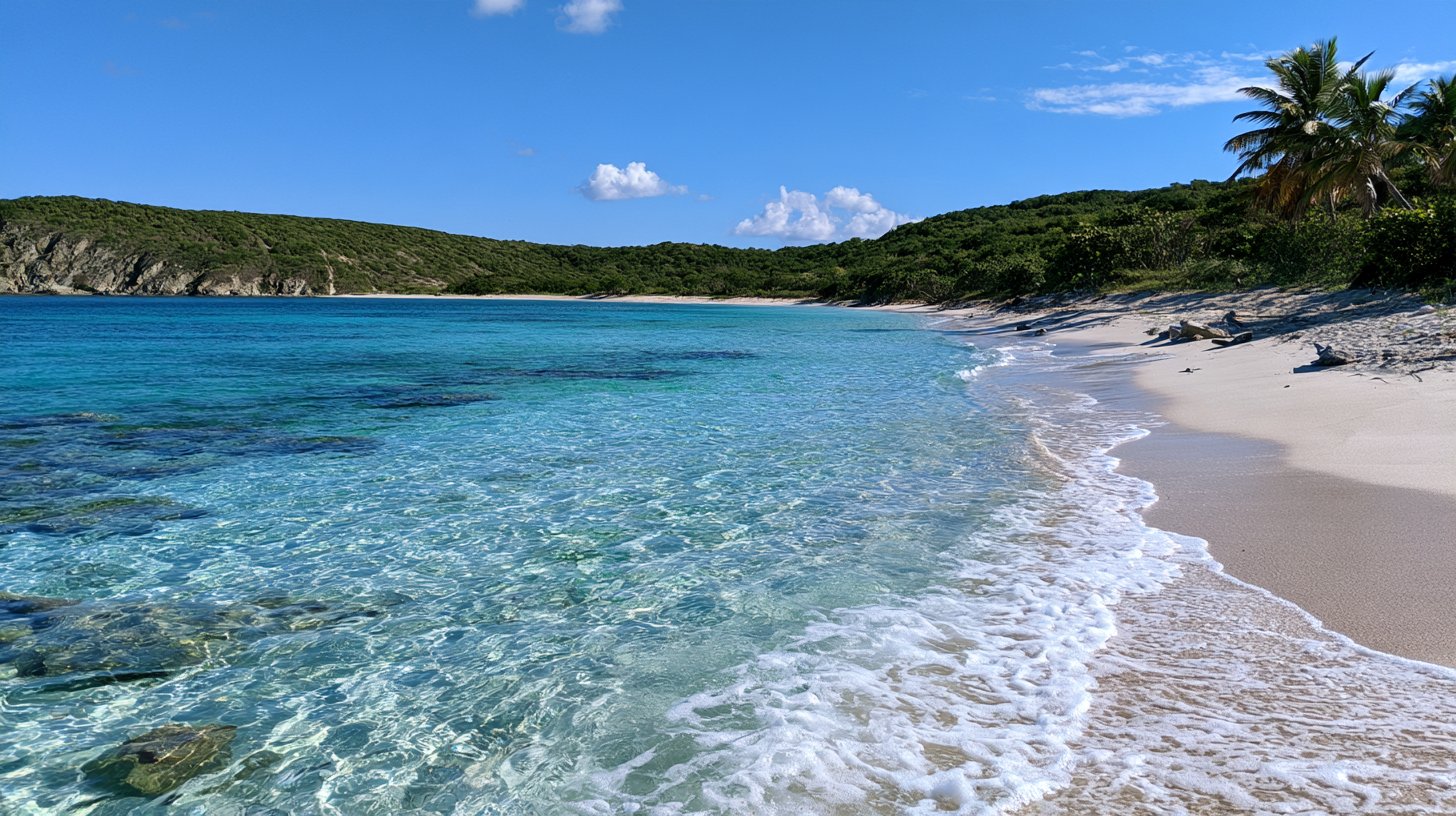
The pool and the beach are where two families spend most of the week, and both work best with a few shared rules. The private pool sits on a large deck with sun loungers and covered seating, and the private beach below it has direct access to shallow, reef-protected water, with snorkeling a few feet out.
The rule that matters most is a named water watcher. Whenever any child is in the pool or the sea, one adult is on duty, watching the water with the phone put away, and everyone knows who it is. Hand the job over out loud: "You have the pool." With two families the job rotates by the hour, so each adult takes a few short shifts a day and has the rest of the time off.
Agree on the rest at the first swim. Children who are still learning wear a swim vest from home or stay within reach of an adult. No running on the deck, and nobody snorkels alone, children or adults. The beach entry is rocky before the sand, so pack water shoes for everyone. The best hour for snorkeling is the first one after sunrise, when the water is at its stillest.
Teach reef manners as part of the game: coral is an animal and grows slowly, so nobody stands on it or touches it, and shells stay on the beach. Sunscreen needs a word, because the law here differs from home. The Virgin Islands bans sunscreens containing oxybenzone, octinoxate and octocrylene, so pack mineral sunscreen with zinc oxide or titanium dioxide, and lean on rash guards and hats so everyone needs less of it.

The covered seating and the pergola take the middle of the day, and the poolside drinks refrigerator keeps water cold. Our private beach page and pool and deck page show both, and the St. Croix with kids guide covers other calm beaches for small children.
Trading off the children
Two families in one house can give each set of parents something rare on a family trip: time on their own. One morning, Family A's adults look after every child in the house while Family B's adults go out. Another morning, they switch.
A free morning on St. Croix has plenty to fill it. The north shore is the island's diving coast, and at Cane Bay the reef drops into a deep wall close to the beach; dive shops run introductory dives for first-timers, and our Cane Bay guide covers the day. The Reef Golf Course, nine holes in the hills above Teague Bay, is close to the villa. Christiansted, 15 to 20 minutes away, has Fort Christiansvaern, the boardwalk and long lunches on the water at places such as Rum Runners and The Mill. Or stay home: in-villa massage and yoga are on the concierge list by appointment.
The evening version is a dinner out for each couple. One night Family A's adults take the car to Christiansted while Family B's adults put every child to bed, and later in the week they switch. The island also has one night trip worth planning around: the bioluminescent bay at Salt River, where the water glows when a paddle stirs it. The glow is easiest to see on the darkest nights around the new moon, guided two-hour kayak trips cost around $50 to $55 a person as of 2026, and one outfitter sets a minimum age of eight for its night tours, so it can be an adults' outing or a treat for the older children. Our bio bay guide explains how to pick the night, and the Christiansted guide covers the town.

Put the trades into the sample week before the trip, so each family knows its morning off is coming.
Days that split up and rejoin
A shared week works best when the families spend part of each day apart. With two cars, the natural rhythm is to split up in the morning, doing whatever suits each age, and meet at the pool by four for the swim, the grill and the sunset light.
The East End suits split mornings. The early risers drive about ten minutes to Point Udall, the easternmost point of the United States, where the Millennium Monument, a large stone sundial built in 2000, stands on the headland. Arrive 30 to 45 minutes before sunrise for a good spot; the road up is narrow and winding and roadside parking is limited, so one car is better than two. The hikers go to Jack and Isaac Bay, a 300-acre preserve held by The Nature Conservancy since 1999, about a five-minute drive from the villa, where trails run from the ridge down to two beaches with no road in. The reefs there hold at least 400 species of fish. Go early and carry water, since the trail and the beaches have little shade.
The families with small children have the easiest morning of all: the private beach below the house, or Chenay Bay, ten to fifteen minutes away, which is shallow and calm and quieter on weekdays. Older children who like history can climb Fort Christiansvaern, the yellow Danish fort on the Christiansted harbor, where adults 16 and older pay $10, children under 16 enter free and the ticket is good for three days. Teenagers who snorkel well can join a parent on the villa's reef or try an introductory dive on the north shore.
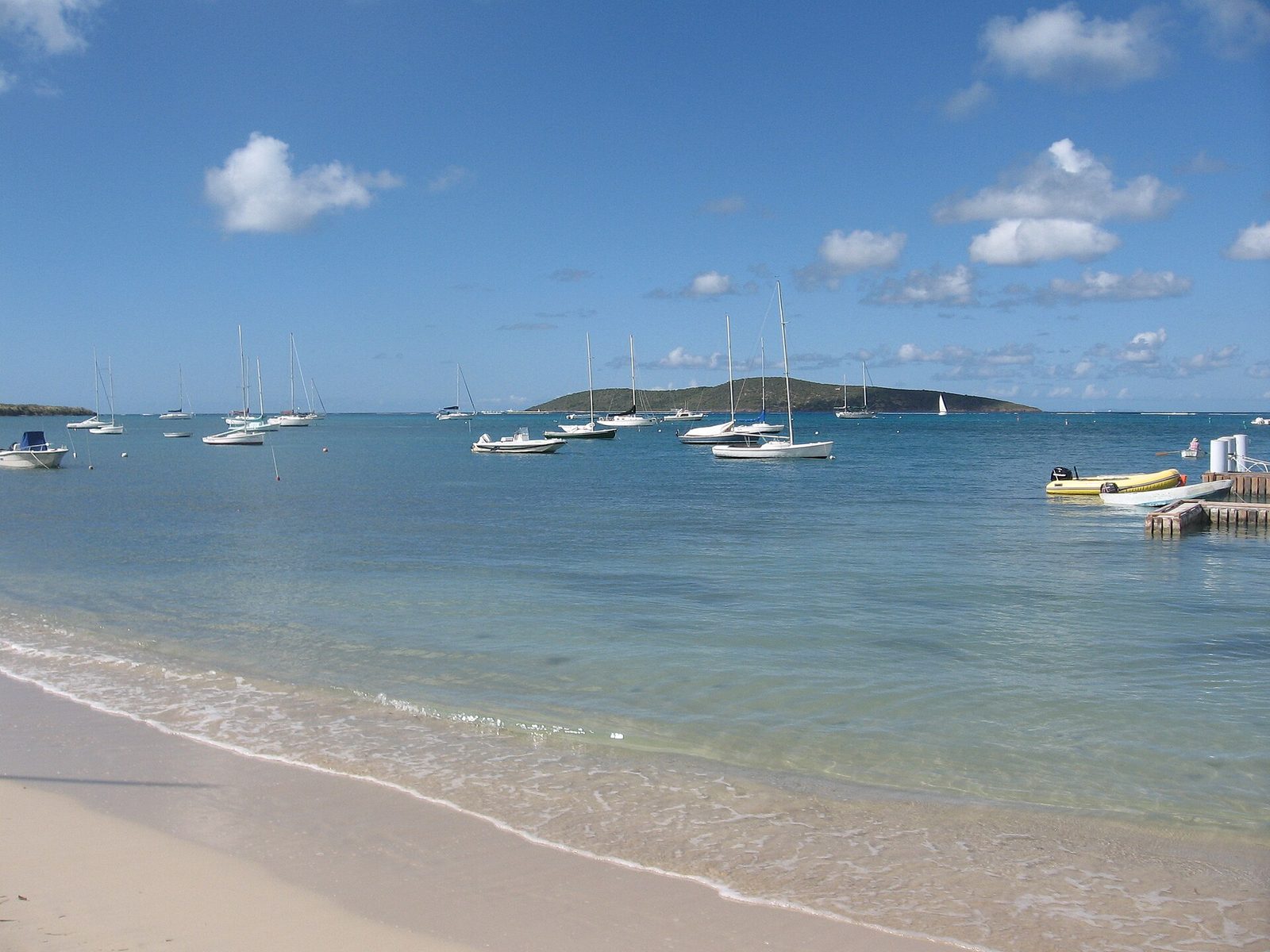
Plan the split the night before, at dinner, and agree on a meeting time rather than a loose "this afternoon." If one family's outing runs long, the other starts the grill. Our guides to Point Udall, the East End beaches and the East End hikes cover each outing in full.
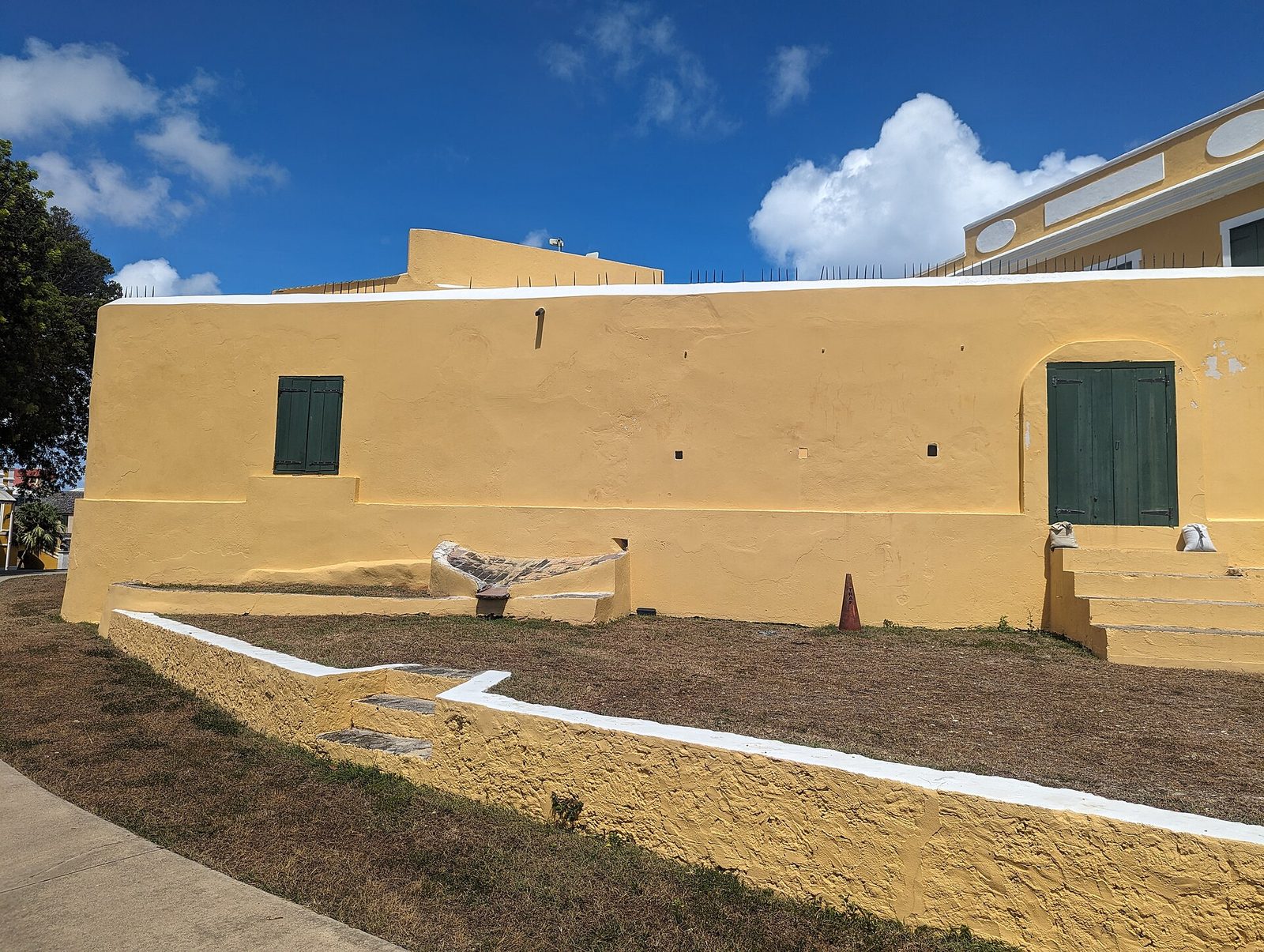
Then everyone comes back together. Children who spent the morning apart have stories to trade at four, the families swim together until the light turns gold, and dinner starts on the terrace with everyone at one table.
A boat day for both families
Plan one outing for everyone together, and make it Buck Island. Buck Island Reef National Monument is a reef island off the northeast coast, with an underwater snorkel trail through its lagoon and a sand beach. You reach it only by boat, with an authorized operator or a private boat, and there is no entrance fee. The island is open from 7 am to 5 pm and has no visitor services, so the boat carries what you need.
The departure closest to the villa is Buck Island Charters at Green Cay Marina, about ten minutes away, from the H dock at Tamarind Reef Resort. Its trimaran, Teroro II, runs the standard trip: check in at 8:45 am, leave at 9 and return by 2 pm at the latest. As listed in October 2026, the trip costs $105 for adults, $85 for children 11 and under, and nothing for children under two. The whole boat can also be chartered for up to 20 people for $1,800, with extra time at $360 an hour, and the smaller Dragonfly charters for groups of up to eight.
For two families, do the math both ways. Our sample families are four adults, a 12-year-old who pays the adult fare, three children 11 and under and a toddler who rides free. On the scheduled trip that is five adult fares, $525, and three children's fares, $255, for $780 in all. Split by fare, Family A pays $485 and Family B $295. The private charter costs more for nine people and gives the two families the boat to themselves, with a schedule set around the children. Either way, split the cost by person, using the fares as the shares.
Book the morning trip. The sea is usually calmest early, and a boat back by two leaves time for naps. Pack mineral sunscreen, rash guards, hats, water and snacks, and a dry bag for phones. Snorkel gear and instruction come with the standard trip, but bring a mask that fits each small face if you have one. The trail suits confident swimmers, and the beach and its shallows suit everyone else.
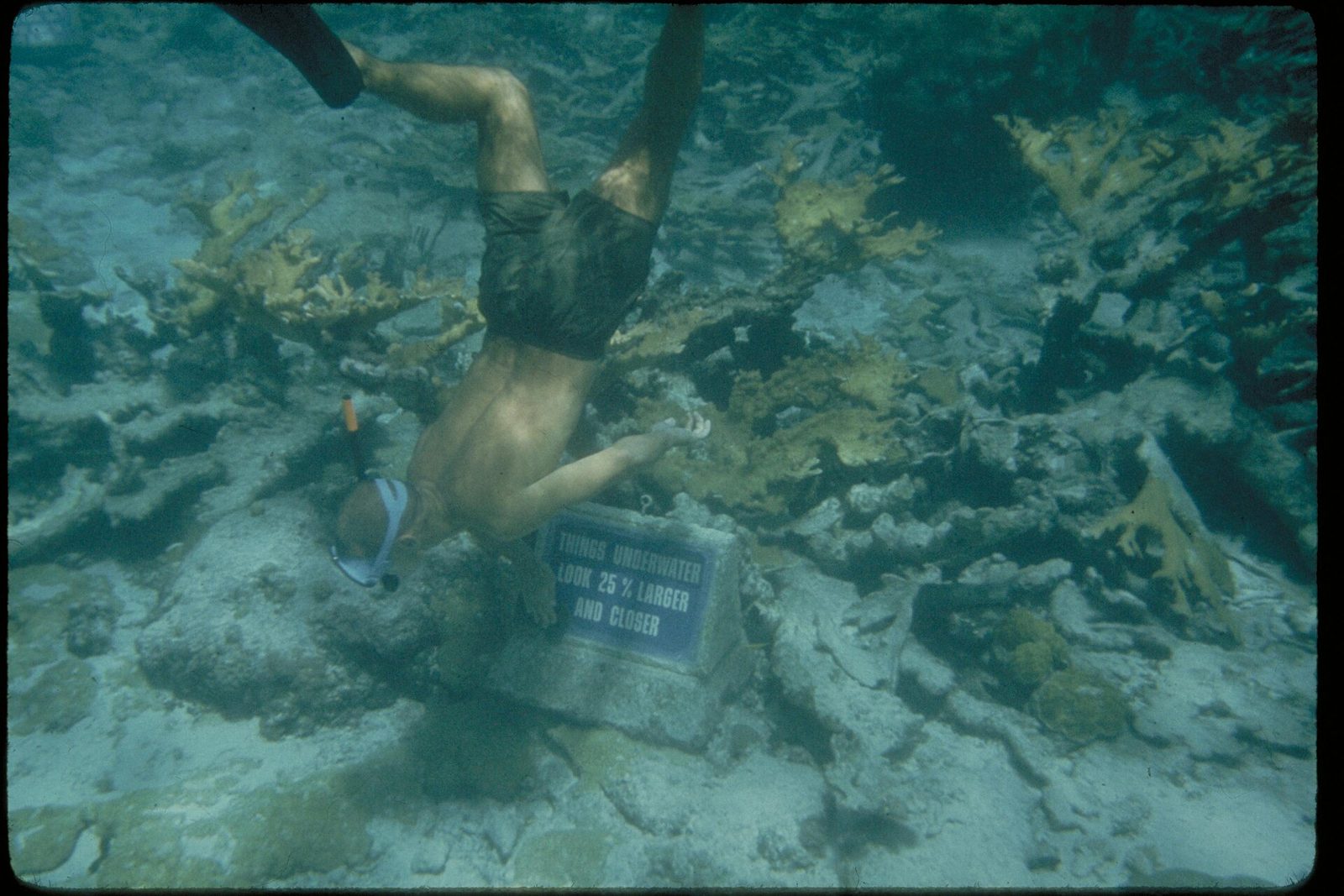
Our Buck Island guide covers the trail and the beach, and the boat charter directory lists the other operators, including the boats from the Christiansted boardwalk. The villa's concierge can book any of them for you.
The house agreement
Two families who travel well together usually have one habit in common: they agreed on the rules before they arrived. A house agreement is a short list, written once, shared with every adult and read again on the first evening. It is less formal than it sounds. Most items take one sentence, and you will agree on most of them in seconds.
Start with the money: the method for the house, the method for food and outings, who holds the booking, when each payment is due and who the treasurer is. Then the house: who sleeps where, whether the families swap the cottage, the quiet hours and the dinner rotation. Then the children: the water watcher rule, screen time, treats, bedtimes and who steps in for what. Then the practical things: which car goes where on which day, who books the chef and the boat, and who does what on the last morning.
Two topics are easy to forget. Agree what happens if one family's plans change before the trip, after reading the booking terms together, and whether each family buys its own travel insurance on the day it pays its first share. And agree on visitors: whether a friend from home who happens to be on the island can come for dinner. The villa's house rules are short, with no pets and no smoking, and for anyone who is not on the booking, check with Sterling Point before you invite them over.
Here is a checklist to copy into the group chat. Tick each item once both families have agreed on it.
The house agreement
15 itemsYour ticks stay in this browser only.
Read it aloud on the first evening, over dinner, with the children listening for the parts that apply to them. Then put it away and enjoy the week.
A sample week for two families
Here is a loose Saturday-to-Saturday week for two families with children of mixed ages, built from the rotation, the trades and the split days above. Move the days around to suit your group; the shape is what matters.
Saturday
The families land on two flights and collect their cars. The first family in meets the villa managers for the welcome drive and tour and checks the provisioned kitchen. Check-in is at 4 pm. Everyone swims, the grill does burgers, and the house agreement gets read aloud over dinner before the children go to bed early after a long travel day.
Sunday
The early risers drive to Point Udall for sunrise. Everyone else has breakfast in their own kitchen and meets on the private beach for the first snorkel, water shoes on. The pool in the afternoon, naps for the little ones, and Family A cooks dinner.
Monday
Boat day. Both families take the morning trip to Buck Island from Green Cay Marina and are back by two. A quiet afternoon of naps and the pool, and Family B cooks on the grill.
Tuesday
A split day. The hikers take one car to Jack and Isaac Bay, the family with the youngest children takes the other to Chenay Bay, and both meet at the pool at four. In the evening, both families drive to Christiansted for dinner out.
Wednesday
Family A's morning off. Family B takes all the children to the villa's beach and the pool while Family A's adults dive, play golf or have a long lunch in Christiansted. The housekeeping visit resets the house, and if the families are swapping the cottage, today is the day. Family A cooks.
Thursday
Family B's morning off, with Family A on duty at the house. In the afternoon, take the older children to Fort Christiansvaern and the Christiansted boardwalk. The private chef cooks dinner, the children eat early, and the adults sit down late on the terrace.
Friday
A slow last full day: the beach in the morning, the pool after lunch and one more snorkel. Family B cooks the leftovers and lights the fire pit. If the moon is dark, one parent from each family takes the children aged eight and up on the bio bay kayak trip, while the other two keep the little ones at the villa. Pack before bed.
Saturday
One last swim, then the last-morning jobs: one family empties the refrigerators and takes out the trash, the other walks every room, the deck and the beach for goggles and chargers. Both are out by the 10 am checkout. Aim to reach the airport two to two and a half hours before your flight, which leaves time for the agriculture check before boarding.
Booking the villa for two families
Book in an order that keeps both families in step. First, agree on the dates against both families' school calendars, and agree on the money method with the percentages written down. Then one adult books the villa with Sterling Point, the St. Croix company that manages The Cerulean, and the other family pays its share of the deposit to that adult. Book the flights the same day, each family from its own city, and the two cars right after. Then send the concierge the requests that need lead time: provisioning for arrival, the chef night, the boat day and any housekeeping or massage appointments.
The house rules are short. Check-in is at 4 pm and checkout at 10 am, and there are no pets and no smoking. The cottage always comes with the booking, so both families have the whole property: the main house, the cottage, the pool, the deck and the private beach. Tell Sterling Point when you book that two families are sharing, with the head count and the children's ages, and ask for the travel crib, high chair and baby gates if you need them.
School holiday weeks go early, because those are the weeks when two families are most likely to be free together. Families who settle their dates months ahead get the first pick of weeks, Saturday flights and cars. See live rates on the villa's booking calendar for your exact dates.
One March guest summed up the house in three sentences.
“A gorgeous home with an amazing view. Each bedroom had its own en-suite bathroom. Combine the large patio, pool, outdoor kitchen and its own beach, and this property will not disappoint.”
Dave, a guest in March 2026
Share the room plan, the split and the house agreement with both families, and by the time the second car pulls through the gate, the only thing left to decide is who gets in the pool first.
Questions people ask
Can two families share The Cerulean?
Yes, and the layout suits it. The main house has four bedrooms, each with its own bathroom, and the guest cottage, about twenty steps away, has its own front door, kitchen, living room, bedroom and full bath, plus a loft bed up a spiral stair. One family usually takes the cottage and the other the main house, and both share the pool, the deck, the private beach and the dinner table.
Which family should take the guest cottage?
Usually the family with the youngest child, because naps and early bedtimes are easier behind a separate front door, or the family that gets up first, because the cottage has its own kitchen for early coffee. A family with a teenager may want it for the loft bed up the spiral stair. If both families want it, swap on the Wednesday of a Saturday-to-Saturday week.
How do two families split the cost of a vacation rental?
Start with half each, which is fair when the families are similar in size, rooms and nights. When they differ, split by bedroom, with each family paying for the rooms it sleeps in, by person, with adults as one share, children as a half and babies free, or by nights, with each night's cost split among the families present. For our two sample families the results ran from 50 to about 64 percent.
Is it fair to split by bedroom when one family has the cottage?
It can be, if you weight the rooms. The cottage bedroom comes with its own kitchen, living room and front door, so some families count it as one and a half rooms, and the open loft as half a room or a full one. For our sample families those choices moved the split between 60 and 40 percent and about 55 and 45 percent. Agree on the weights before the trip.
How do two families handle groceries and meals in a shared villa?
Use a kitty and a rotation. Each family puts the same amount into one pot on the first day, a treasurer pays for every shared shop, and the kitty settles by person at the end. Each family cooks on its nights while the other cleans up, with one dinner out and one private chef night. The concierge can provision the kitchen before you land.
Do two families need two rental cars on St. Croix?
Yes, one per family. There is no Uber or Lyft in the U.S. Virgin Islands, the villa is about 35 to 40 minutes from the airport, and two cars let the families keep their own schedules and car seats. Budget, Hertz and Centerline have airport counters, and Judi of Croix delivers anywhere on the island, including the villa. Book both cars when you book the house.
How many people can The Cerulean sleep?
Twelve, two to a bed, across five bedrooms and five bathrooms. The main house has four bedrooms, each with its own bathroom, and the guest cottage has a bedroom, a full bath and a loft with the sixth bed. A high chair, a travel crib and baby gates are on the amenity list, so two families with a baby and older children fit comfortably.
What should a house agreement between two families cover?
The money first: how you split the house, the food and the outings, who holds the booking and who is treasurer. Then the house: who sleeps where, quiet hours, the dinner rotation and the chef night. Then the children: a water watcher at the pool and the beach, screen time and bedtimes. Finish with the cars, visitors and the last-morning jobs before the 10 am checkout.
Do we need passports to share a villa on St. Croix?
Not if you are U.S. citizens. St. Croix is in the U.S. Virgin Islands, a U.S. territory, so a flight from the mainland or Puerto Rico is domestic. Adults show a REAL ID or another accepted ID, such as a passport, and TSA does not require children under 18 to show identification on flights within the United States. Food and plants go to a USDA inspector before the flight home.
Sources
Facts in this story were checked in October 2026 against the sources below. Event dates, flight schedules, prices and hours change, so confirm anything you plan around.
- The Buccaneer — Nonstop flight schedule to St. Croix (updated Oct 7, 2026)
- Transportation Security Administration — Identification
- Visit USVI — No passport required for U.S. citizens
- USDA APHIS — Traveling from Puerto Rico and the U.S. Virgin Islands with agricultural items
- GoToStCroix — Car rentals on St. Croix
- GoToStCroix — Buck Island Charters, Teroro II and Dragonfly
- National Park Service — Buck Island Reef National Monument, basic information
- National Park Service — Christiansted National Historic Site fees
- The Nature Conservancy — Jack and Isaac Bays, U.S. Virgin Islands
- Visit USVI — Explore Point Udall
- Zalatina Foods — Catering and private chef service
- Yaadie In St Croix — Private chef, event catering and lunch delivery
- GoToStCroix — Catering and chefs on St. Croix