

Aruba and St. Croix are both sunny Caribbean islands with white beaches, an easterly trade wind and a sea near 79°F in January, so the real question is what sort of week you have in mind. Aruba is a Dutch Caribbean island a few miles off the coast of Venezuela, loved for its long west-coast beaches, its dry cactus country, its steady wind for kiteboarding and the lively hotel row at Palm Beach. U.S. citizens fly there with a passport, fill in Aruba's online ED card and pay a $20 fee for arriving by air. St. Croix, biggest island in the American Virgin Islands, is U.S. territory: no passport line for U.S. citizens, dollars at every register, English on every menu. On top of that come green hills, a pair of Danish harbor towns, Buck Island's signed reef trail, and shore diving on a deep north-coast drop-off. It also welcomes only a small share of the visitors Aruba does. For a reunion, a few families or a gang of friends who want a single house on a quiet shore, St. Croix suits beautifully. Ours is The Cerulean, a waterfront villa on the eastern shore with its own cove and a garden cottage.
Choosing between Aruba and St. Croix
Aruba is a wonderful pick for couples and families who want a big, easy beach, a hotel with everything on site and a reliable breeze. St. Croix is the better choice for travelers who would rather skip the passport, rent one house for everyone, swim off their own beach and spend the off-beach days in old towns, on a national monument reef or driving through a rain forest.
The quickest way to see the difference is side by side. Each row below gets its own chapter, with the planning details a group organizer needs.
| Topic | St. Croix | Aruba |
|---|---|---|
| Papers for U.S. citizens | Adults show a REAL ID | Passport plus the online ED card |
| Arrival fee | None | $20 by air, under 8 exempt |
| Money | U.S. dollar | Aruban florin, dollars accepted |
| Official languages | English | Dutch and Papiamento |
| Side of the road | Left | Right |
| Home flight | Domestic | International |
| Visitors in 2024 | 186,400 mainland air arrivals | 1,421,616 overnight visitors |
| Cruise calls in 2024 | 71 | 347 |
| Sea in January | About 79 to 80°F | About 79°F |
A few of those rows decide most trips. If anyone in your group lacks a current passport, St. Croix is the simple answer, because adults board with the REAL ID-compliant license already in their wallet. If your group would rather share one roof, a private pool and a private shoreline than book a block of hotel rooms, St. Croix's East End is villa country. If you want a long, lively beach where kiteboards, beach bars and dinner terraces line the sand, Aruba's Palm Beach is made for exactly that.
For a family flying out of Philadelphia, the St. Croix trip is one change of planes on American. PHL is one of the airline's hubs, and its Charlotte and Miami hubs both fly on to the island; our Philadelphia flights page lays out each routing, including a Saturday PHL departure for St. Thomas with the short hop across.
Both islands are warm and bright all winter. On Aruba the national weather service records a January average high of 86°F at the airport; on St. Croix the NOAA normal for January is about 84°F. In both places the sea is about 79°F in midwinter, warm enough that a rash guard is worn against the sun rather than the chill.
Torn between St. Croix and the other two Virgin Islands under the U.S. flag? Our St. Thomas and St. John comparison lays out how the trio differ.
Why travelers love Aruba
Aruba has earned its loyal fans. Its west and south coasts face away from the trade wind, so the water along the big beaches is usually calm and clear, and the sand is fine and white. Eagle Beach is the one on the postcards, known for its fofoti trees bent sideways by the wind, and its water is clear and gentle for swimming. Palm Beach, a little farther north, is the island's entertainment hub, with jet skis, parasailing, paddleboards, kiteboarding and windsurfing by day and restaurants and nightlife after dark.
Families like Baby Beach at the island's southern tip, a shallow crescent lagoon with sheltered water for wading and snorkeling. Snorkelers head for Boca Catalina, a small beach near the hotel row, and for Mangel Halto on the south coast, with calm, shallow water over coral. Snorkel and dive boats also stop at the wreck of the Antilla, a favorite morning outing for Aruba regulars.
Inland, Aruba turns to desert, and visitors love it for that. Arikok National Park covers nearly a fifth of the island, with caves, old rock drawings, cactus slopes and quiet bays on the rough windward coast. At the island's northwestern tip, the California Lighthouse looks out over dunes and Arashi Beach.
Aruba is also easy to like in small ways. Visitors can pay in U.S. dollars, many Arubans speak English fluently, and the tap water comes from the island's own seawater distillation plant at Balashi, so a refillable bottle does the job. Aloe has been part of the island's life for more than 160 years, and aloe lotions and gels fill shop shelves around Oranjestad.
Above all, Aruba is predictable in the best sense. The weather service's normals show only about 16 inches of rain in a typical year and an easterly breeze nearly every day of the year. For two people after a dependable beach week in a well-run hotel, Aruba is a fine choice, and families who already know their favorite beach there have every reason to love it.
The rest of this guide shows what St. Croix offers the same traveler, and what changes when the trip is for a whole group.
Passports, the ED card and the fee
Paperwork is the biggest practical difference between the two islands, and it is worth settling before anyone books a flight.
Aruba is a country within the Kingdom of the Netherlands, so a trip there is international. The Aruba Tourism Authority says a current passport is required for every passenger, that it must be valid for the entire stay, and that it cannot be more than 10 years old; the authority also recommends at least six months of validity beyond your travel dates in some cases, which is a sensible margin. U.S. nationals need no visa. Travelers should be able to show proof of a return or onward journey, and enough money to cover the stay.
Then comes the ED card, Aruba's online embarkation and disembarkation form, which the tourism authority asks travelers to complete within the 7 days before the trip on the official site it names, edcardaruba.aw. Since July 1, 2024, Aruba has also charged a $20 sustainability fee to visitors arriving by air, collected through the ED card platform, with children under eight exempt. The fee is paid in advance by credit card, with Visa, Mastercard and Discover accepted and cash not taken. Cruise passengers usually need no ED card, so they generally pay no fee either.
Papers for a family flying to Aruba
6 itemsYour ticks stay in this browser only.
St. Croix keeps it short. Because the territory flies the American flag, Visit USVI confirms that Americans flying in from the States or from Puerto Rico need no passport. TSA checks a star-marked REAL ID license, a passport or another document on its list from each traveler aged 18 or older, while kids younger than that clear the domestic checkpoint without one. Landing involves no form, no fee and no immigration desk.
For a party of nine, say two couples, a sister's family and a grandparent, that is a real difference in planning: nine passports to check, nine ED cards and a fee for everyone eight or older on the Aruba side, against the licenses the adults already carry for St. Croix. The full ID rules for the territory sit in our USVI passport guide, and the no-passport Caribbean table sorts twenty warm destinations by the document each one wants.
Coming home from each island
Both islands send you home with a quick U.S. check before you board, which makes the arrival back in the States easy.
Aruba is one of 16 airports, across six countries, where CBP runs preclearance, in company with Nassau, Bermuda, Dublin, Shannon, Abu Dhabi and ten Canadian airports. At Queen Beatrix International, its officers staff a U.S. Departure Terminal, so travelers clear U.S. immigration and customs in Aruba before the flight. On landing in the United States, you skip the CBP and TSA lines and go straight to your connection or out to the curb. Aruba's preclearance also takes part in Global Entry on Arrival, so a traveler with conditional Global Entry approval can finish the interview there. Allow enough time at the airport for check-in, preclearance and security.
Leaving St. Croix needs no passport at all, since Americans never pass through immigration. At Henry E. Rohlsen Airport, an agriculture check looks over checked luggage and CBP asks a question or two before you board, so get there roughly two hours ahead. Parents travel lighter with a photocopy of each child's birth certificate tucked in a carry-on. Shoppers bring home up to $1,600 apiece duty free, and our USVI duty-free guide explains that allowance.
The outbound trip is where the islands differ most. A group bound for Aruba manages passports and ED cards for everyone, then passes through Aruban immigration on arrival. A group bound for St. Croix steps off the plane, collects its bags and rental cars, and drives east, reaching the villa's gate 35 to 40 minutes after leaving the terminal lot.
A small tip for both trips: name a single organizer for papers and flights, and share a single note with every confirmation in it. On an Aruba trip that note holds the passports' expiry dates and the ED card approvals; on a St. Croix trip it holds the flights, the cars and the villa's arrival details.
Florins, dollars and phone plans
Money is simple on both islands, with one small difference.
Aruba's own currency is the Aruban florin, sometimes called the Aruban guilder, written AWG or Afl. It became the official currency in 1986, when Aruba gained its separate status within the Kingdom of the Netherlands, and the Centrale Bank van Aruba keeps it pegged to the U.S. dollar at 1.79 florins per dollar. Because the rate is fixed, prices are easy to convert in your head: divide a florin price by 1.79, or a little under 2. The island's tourism authority notes that U.S. dollars are accepted, so many visitors never handle florins at all.
St. Croix runs on greenbacks, your debit card behaves normally, and prices are posted in dollars. There is nothing to convert and no foreign transaction fee to think about.
Phones follow the same pattern. On Aruba, a U.S. phone is roaming abroad, so pick your carrier's international pass or a local plan before you go. On St. Croix, many U.S. plans work as they do on the mainland; Verizon, to name one carrier, treats the USVI like Puerto Rico and the States for roaming. Plans differ, so check your carrier's coverage map before you go. Across a whole family's phones, that adds up to a week of maps, group chats and photos at home rates.
Shopping for a full house, or hiring someone to cook, is covered in our post on island groceries and private cooks.
Dutch, Papiamento and English
Language is one of the pleasures of Aruba. The island has two official languages, Dutch and Papiamento. Papiamento became official alongside Dutch on March 19, 2003, and the tourism authority gives it a page of its own for curious visitors. Many Arubans also speak English fluently, so visitors get along easily in English at hotels, restaurants and shops.
A few words of Papiamento are fun to learn before you land. Bon bini means welcome, and you will see it on signs from the airport onward. Bon dia is good morning, and danki is thank you.
St. Croix speaks English. Road signs, menus, rental contracts, museum labels and the conversation at the farmers market are all in English, the territory's official tongue. Listen closely in Christiansted and you will hear the island's own Crucian accent and turns of phrase, and the island's Danish past shows up in street names such as Kongens Gade, King Street.
That history is visible in both capitals. Oranjestad, whose name means Orange Town, has pastel Dutch-gabled shopfronts. Christiansted, founded by the Danes in 1734, has arcaded sidewalks and the yellow walls of a Danish fort. The islands passed through different European hands: Aruba is still part of the Dutch kingdom, while Denmark sold St. Croix and its neighbors to Washington in 1917.
For a group with grandparents or young children, language matters in small, practical ways: reading a pharmacy label, asking for directions on a back road or talking with a dive instructor. On St. Croix all of that happens in English.
Which side of the road each island drives on
Behind the wheel, St. Croix asks Americans for a small adjustment that Aruba does not, and most people settle in within a day.
On Aruba, traffic keeps right, just as in the States. The island's tourism authority notes that speed limits are posted in kilometers per hour: 30 km/h in built-up areas, which is about 19 mph, 60 km/h out of town, about 37 mph, and 80 km/h on the faster roads, about 50 mph. Aruba uses roundabouts, and the cars already on the roundabout have the right of way. Cars and jeeps are easy to rent, and the tracks to Conchi in Arikok are reached by off-road vehicle, on horseback or on a guided hike.
On St. Croix traffic flows on the left, yet the rental fleet is the same left-hand-drive American cars you know. Limits stay gentle: 20 in the towns where nothing else is posted, 35 across most of the island, and 55 on the island's one divided highway. The rule of thumb for the first morning is simple: the driver stays toward the center line, and a passenger in the front seat watches the left shoulder.
A party of nine or twelve fits best in a pair of SUVs, or a passenger van plus one sedan, which lets a dawn party slip off to the sunrise while everyone else stays in bed. Parking is free on site, inside the gated drive. For route numbers and local road manners, read our left-side driving primer, and the airport counters are listed in the rental car directory.
Drives stay short. Leaving the villa, count on roughly ten minutes to Point Udall or to the Buck Island boats at Green Cay Marina, a quarter hour or so to Christiansted, three quarters of an hour to Cane Bay, and close to fifty minutes to Frederiksted.
Where each island sits and how you fly there
The two islands sit at opposite corners of the Caribbean. Aruba is in the southern Caribbean, a few miles off the coast of Venezuela. Its airport weather station sits at about 12.5 degrees north. St. Croix lies up in the northeastern corner, east of Puerto Rico, roughly 17.7 degrees north of the equator.
Aruba has a wide flight network. Queen Beatrix International Airport has nonstops or easy one-stop connections from most large U.S. cities, which makes it simple for a family flying from a single hub.
St. Croix's list is shorter, and its Saturday-heavy timetable fits a villa week neatly. The nonstops below were on sale at our November 2026 check; airlines adjust schedules, so confirm yours at booking.
| Gateway | Who flies it, and when | Hours aloft |
|---|---|---|
| Miami | American all year, two a day in winter | Roughly 3 |
| Charlotte | American on Saturdays, every day from December 17 | Under 4 |
| Atlanta | Delta on Saturdays, every day from December 19 | Under 4 |
| Newark | United each Saturday into September 2027 | Roughly 4 and a quarter |
| Chicago O'Hare | American, Saturdays in winter | Close to 5 |
| San Juan | Cape Air through the day, plus JetBlue every day once November 19 arrives | Under 1 |
New Yorkers and New Englanders have United's Saturday nonstop out of Newark, a morning departure that lands in the early afternoon. Our New York page has the details. South Floridians can fly American from Miami in any month, and our Miami page covers it. Families in the Southeast fly from Atlanta or Charlotte, and most other cities connect once through one of those hubs.
Relatives starting from different cities can still converge by Saturday afternoon if they mix hubs: Charlotte for one branch of the family, Atlanta or Miami for the next. Up-to-date routes live on our flights page.
Picture the travel day itself. A family on American's morning departure from Miami is scheduled to touch down on St. Croix a little after 2 pm, walk out without an immigration stop, and reach the villa in time for a late-afternoon swim. On an Aruba day, the same family starts with passports at check-in and Aruban immigration on arrival, then a short ride to the hotel row.
Jet lag is a non-issue. Island clocks keep Atlantic Standard Time in every season, matching New York clocks from March to November and running a single hour ahead the rest of the year.
Cactus country and Arikok National Park
Aruba's interior surprises first-time visitors. Away from the hotel row, the island is dry, rocky and open, with tall cactus, wind-bent trees and great rounded boulders. The meteorological department's long-term normals record only about 16 inches of rain in a typical year, which is why the landscape looks closer to the American Southwest than to a rain forest.
Arikok National Park protects 7,907 acres, nearly 20 percent of the island. Inside are caves, rock drawings left by the island's first people, cactus-covered hills and quiet bays on the windward coast, among them Moro, Boca Prins and Dos Playa. The best known spot is Conchi, the natural pool, a sheltered swimming hole in the rocks of the rugged north coast, reached only by off-road vehicle, on horseback or on a guided hike, which makes the trip there half the fun.
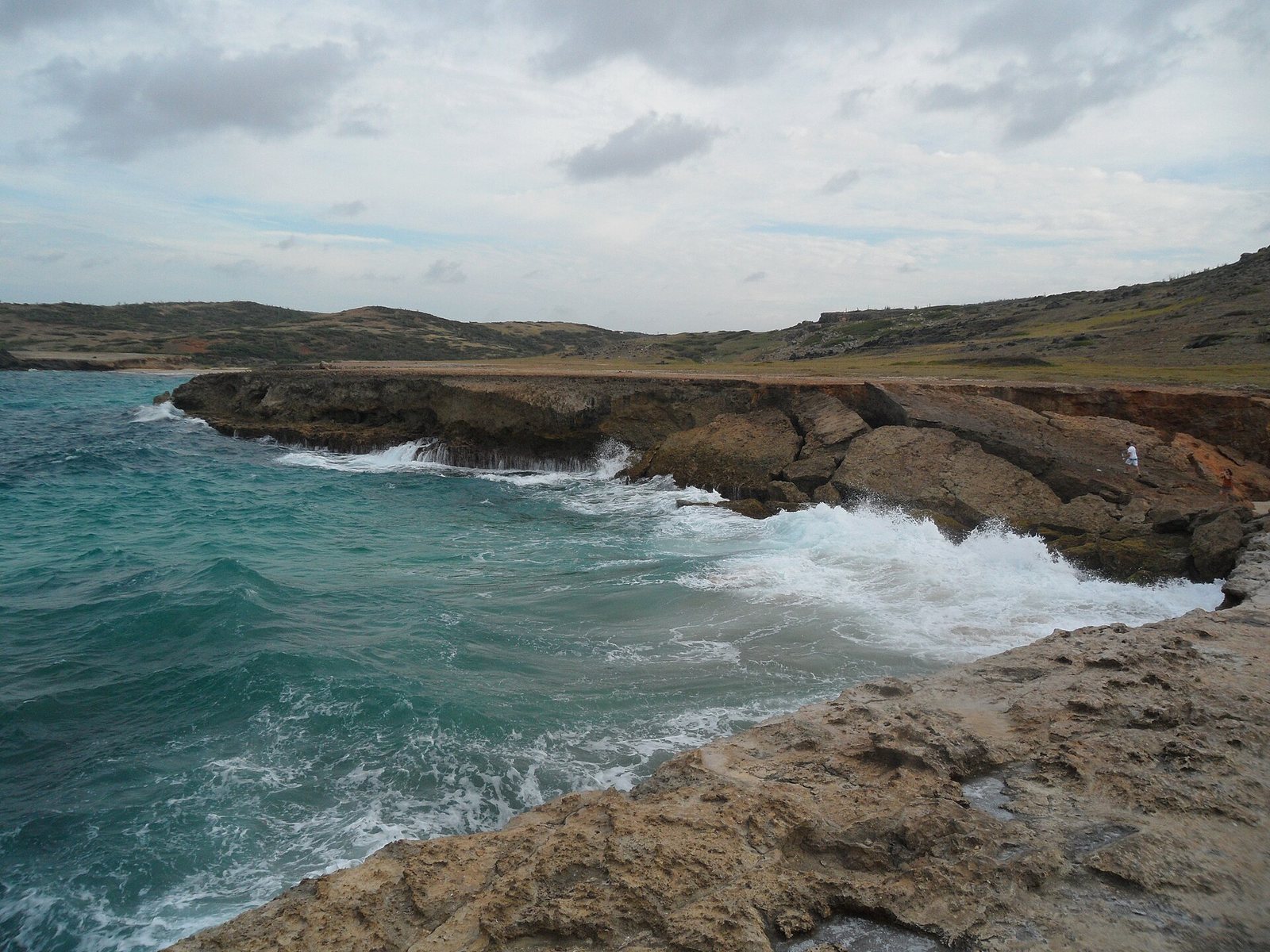
The windward coast is Aruba's wild side. Waves break white against limestone ledges, the land is bare and brown, and the views go a long way. A jeep tour or a guided hike through Arikok makes a fine change from a beach day.
St. Croix's East End has a little of the same dry beauty. The hills around Point Udall and Goat Hill wear dry scrub and sea grape, and the footpath to the preserve's two bays winds through exactly that kind of terrain. Beyond the East End, though, St. Croix turns green, as the next chapter shows.
For hikers on either island, the advice is the same: start early with a full water bottle, a hat and proper walking shoes for the rocky trails. Our East End hiking guide covers the trails near the villa.
Green hills, a rain forest corner and the reef-ringed East End
St. Croix packs several landscapes into its 84 square miles. Our end of the island is dry and breezy, with low hills dropping to coves and reefs. Mid-island, the land rolls gently through farmland and old sugar estates. The northwest is the greenest corner, with forested hills above Frederiksted and the island's high point, Mount Eagle, roughly 1,165 feet up.
The drive through that corner is one of the island's favorite outings. Mahogany Road, Route 76, winds under tall trees through what islanders call the rain forest, past St. Croix LEAP's mahogany workshop and the domino club at Mt. Pellier, and comes out near the west end beaches. Pair it with lunch in Frederiksted and a swim on the sunset coast. Our rain forest guide maps the roads.
Up north the scenery changes again: steep green ridges tumble to Cane Bay and to Salt River Bay, the harbor Columbus's fleet reached in 1493, and the coral falls away into very deep blue just past the swimmers.
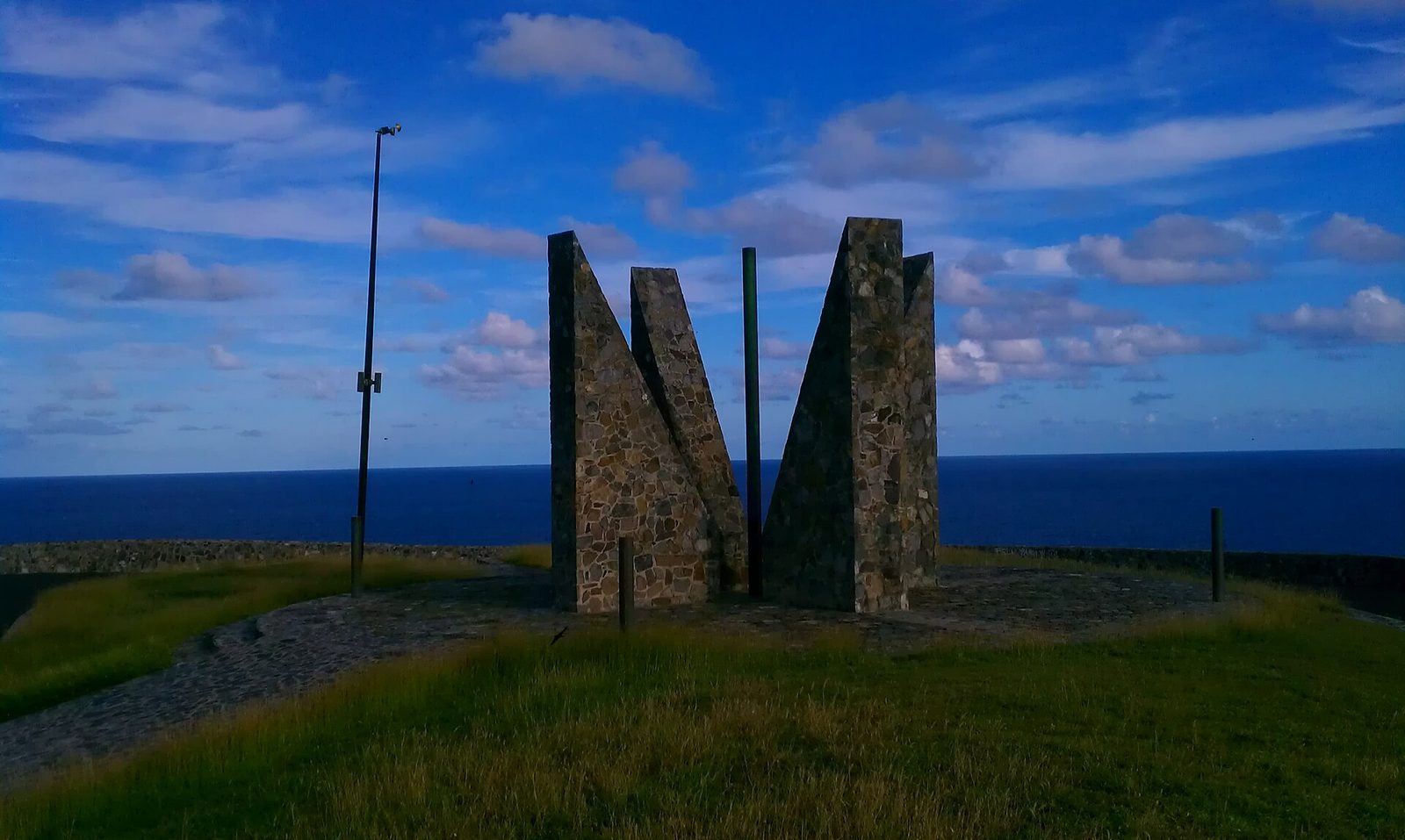
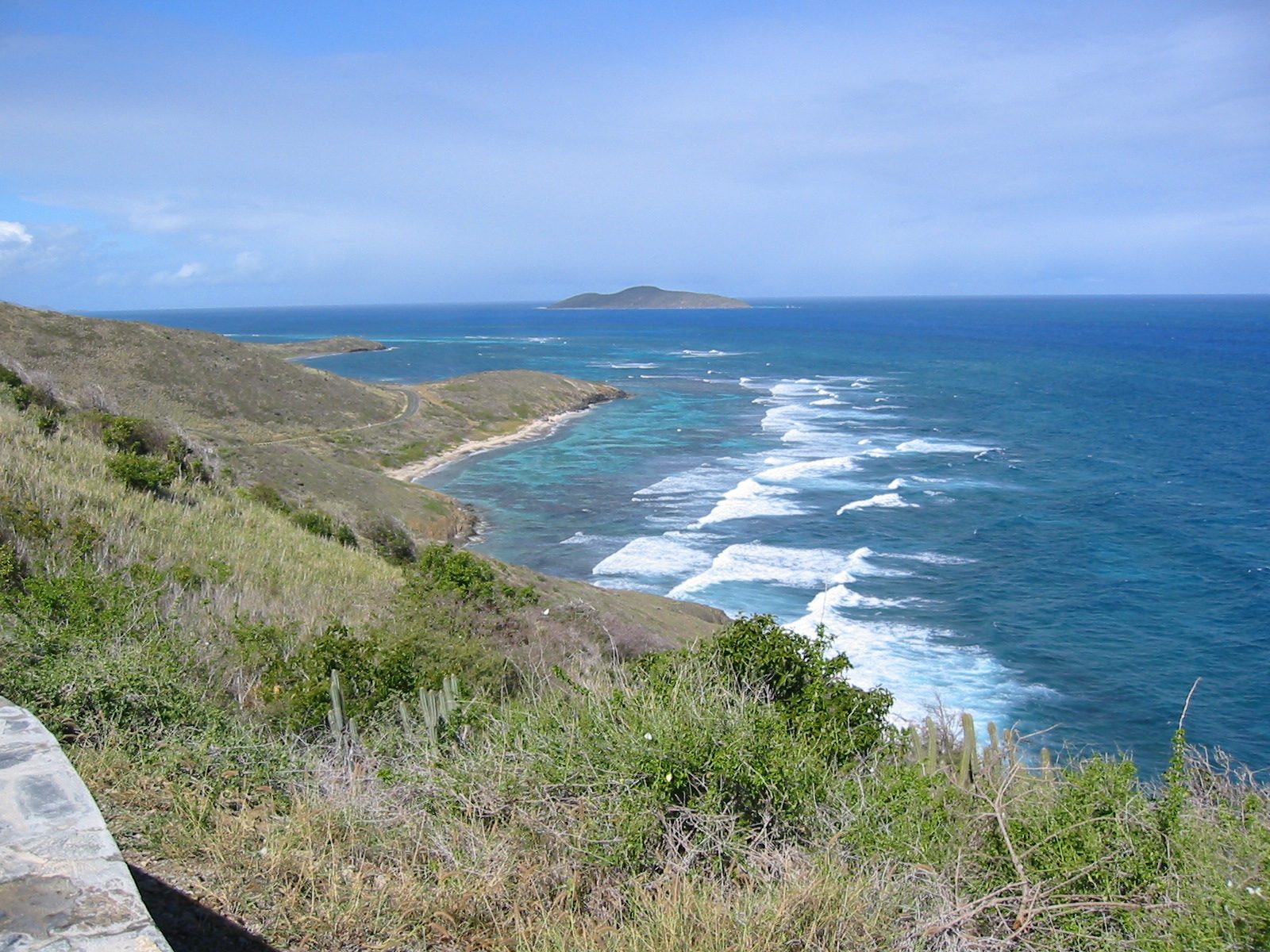
Then comes the villa's own corner. Ten minutes up the road, Point Udall marks the farthest-east ground under the U.S. flag, with a Millennium Monument sundial where early risers gather for first light. The slopes below belong to 300 acres that have been in The Nature Conservancy's care from 1999 on, and two bays are reachable on foot alone. Offshore, every East End bay lies within a 60-square-mile marine park created in 2003.
Aruba's beauty is its white sand and desert light. St. Croix's is variety: in one day a group can watch the sun rise at Point Udall, snorkel a reef, walk a Danish fort and drive home under mahogany trees. For a feel of the neighborhood around the house, browse our island and East End page.
Palm Beach, Eagle Beach and the hotel strip
Aruba's west coast is the island's front porch. The tourism authority describes it in two parts: high-rise hotels along bustling Palm Beach, and low-rise resorts near the quieter Eagle Beach. Both sit right on soft white sand with calm water in front.
Palm Beach is the busier half, a long strip of tall hotels with pools, beach bars, water-sports huts and restaurants side by side, and a walk along the sand at sunset passes one lively terrace after another. Eagle Beach is calmer, with low buildings set back across the road and plenty of room on the sand. Both suit a traveler who likes to step out of a hotel lobby and onto the beach.
For a family that loves to wake up, walk through the lobby and claim two loungers before breakfast, that strip is a joy, and its fans have good reasons for their loyalty.
St. Croix builds lower and smaller. You will find no tower row here; in 2024 the territory's tourism office tallied roughly 1,000 rooms island-wide, spread among small hotels and inns, and the East End shoreline is mostly private homes. That makes a whole house the natural pick for a family group: a single gate code, a shared kitchen, a private pool and a shoreline you rarely share.
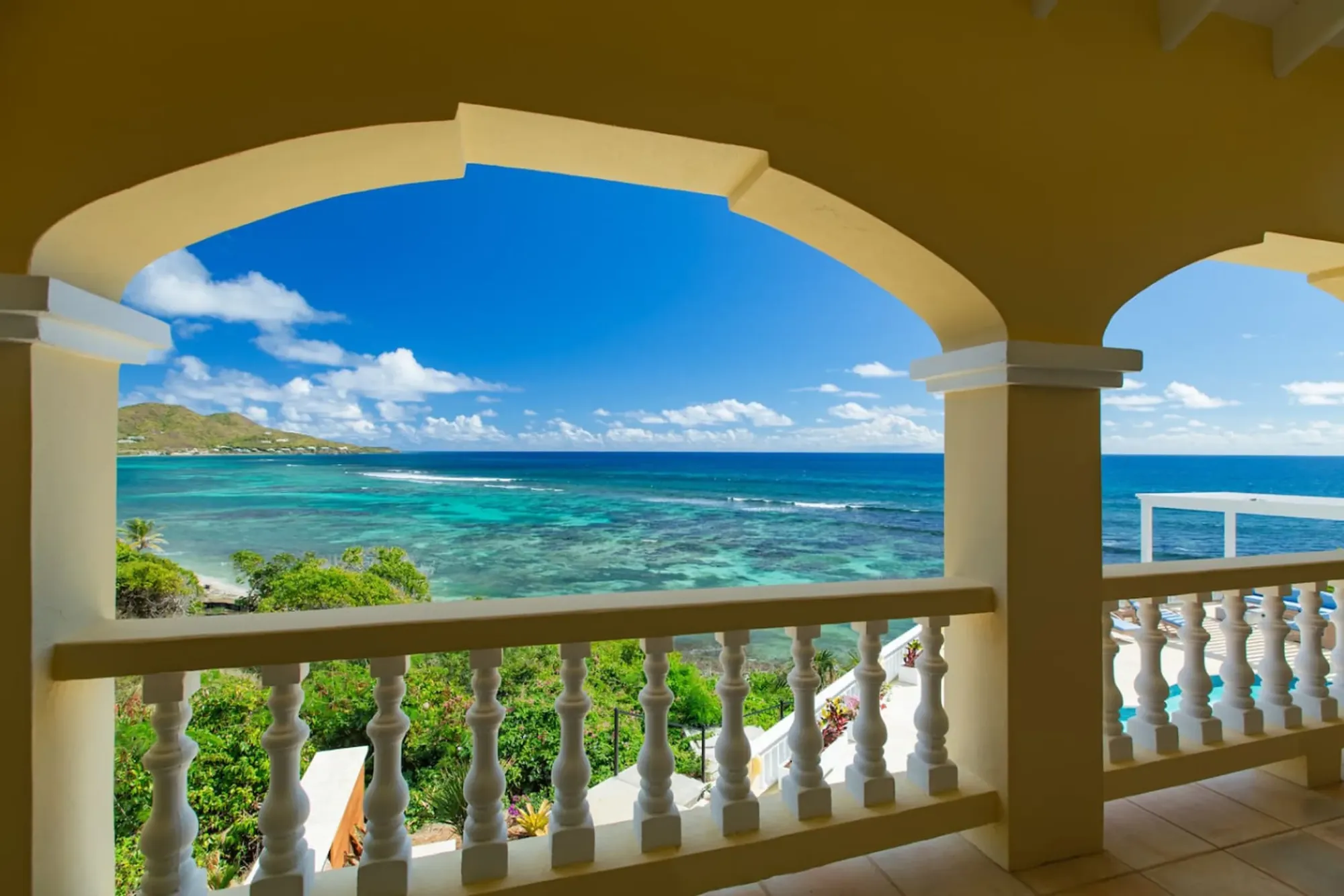
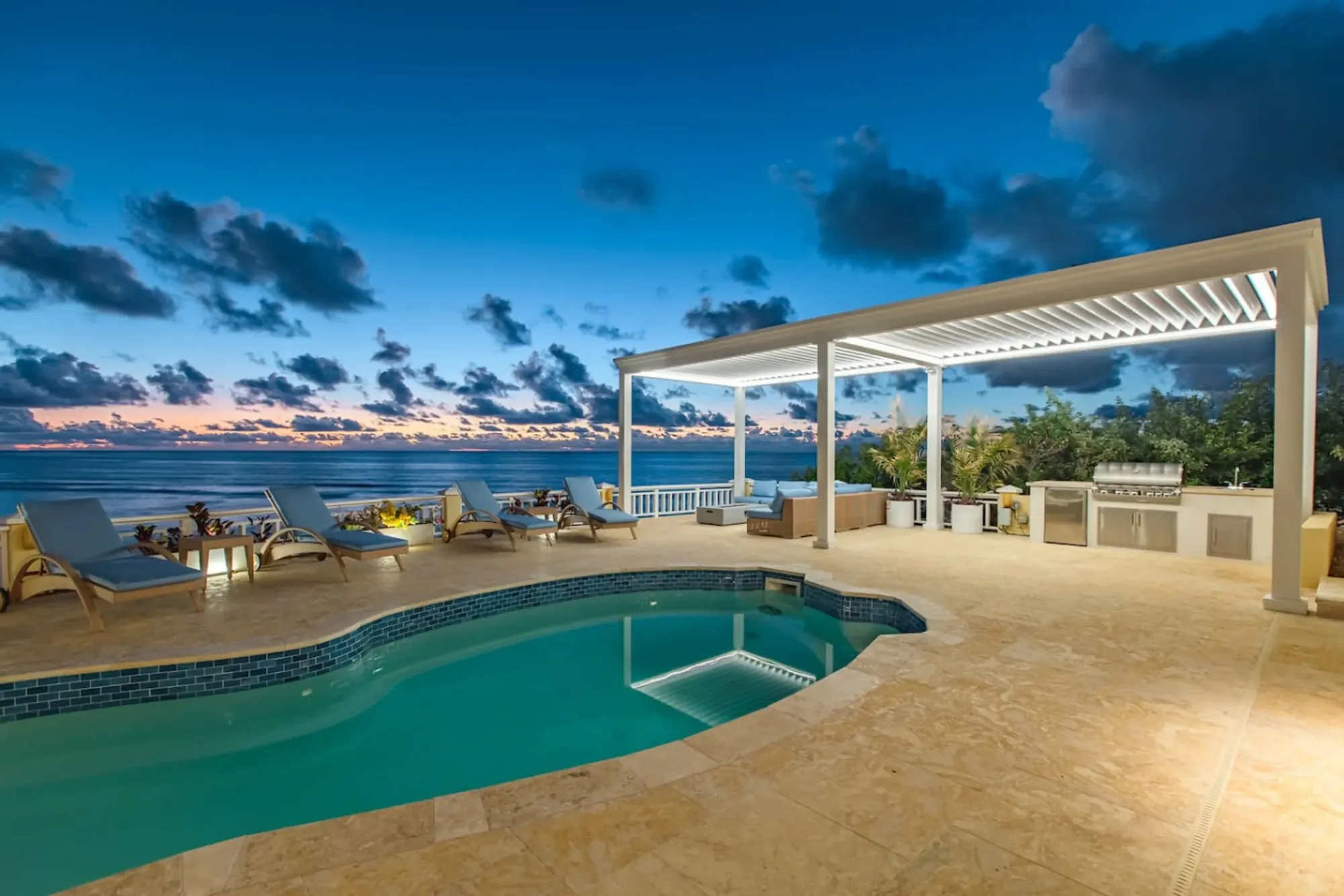
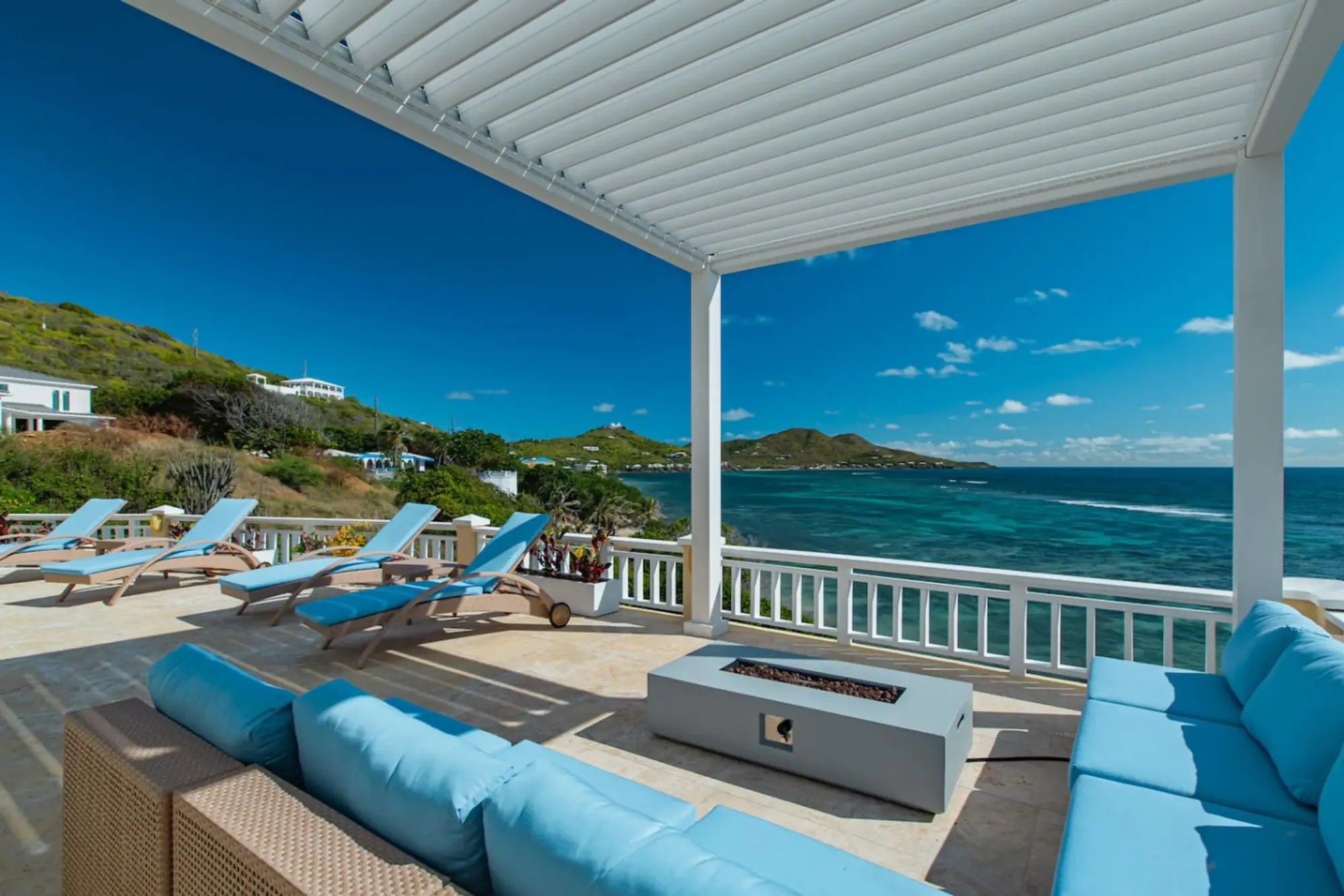
Our villa suits that kind of trip. On arrival day the villa managers guide your cars to the house and give the group a full tour before anyone unpacks. Outdoors there is a travertine pool terrace over the water, pergola shade, a grill station, a fire pit, a roofed patio with its fire table, and stairs down to the beach. Indoors, each room has its own air conditioning plus ceiling fans. See the outdoor spaces from morning to night on our pool deck page.
Visitors and cruise ships on each island
Aruba draws big, loyal numbers, and they keep climbing. The Government of Aruba reported 1,421,616 stay-over guests for 2024, up 12.8 percent on 2023, about four in five of them from North America. The Aruba Tourism Authority counted 1,515,102 in 2025. Cruise ships made 347 calls at Aruba in 2024, carrying 897,273 passengers, and 376 calls in 2025 with 970,803.
St. Croix's figures are smaller. The territory's economic research bureau counted 186,400 air passengers arriving off U.S. mainland flights in 2024, and 71 ship visits at the Frederiksted pier carrying 169,228 cruisers between them.
| Count | St. Croix | Aruba |
|---|---|---|
| Overnight or air visitors 2024 | 186,400 from the mainland | 1,421,616 |
| Cruise calls 2024 | 71 | 347 |
| Cruise passengers 2024 | 169,228 | 897,273 |
Aruba's hospitality is polished by long practice: the airport, the hotel row and the restaurants are set up to welcome visitors by the planeload, and they do it gracefully. St. Croix's smaller numbers simply give a different kind of week. The East End's coves often hold a handful of swimmers on a weekday morning, the preserve beaches are peaceful, and the weekend markets and quarterly street parties feel like local gatherings that visitors are welcome to join.
The quiet carries out to sea. The Park Service tallied 40,079 visits to Buck Island across all of 2025, an average of roughly 110 people a day over a protected area topping 19,000 acres.
For a group, St. Croix's scale shows up in pleasant small ways: an easy parking spot at the beach, elbow room along the snorkel trail, and a cove that feels like the family's own. To see how St. Croix sits beside Aruba, Grand Cayman, Turks and Caicos and St. Thomas on visitors for each islander, read our quieter Caribbean islands ranking.
Wind and water on both islands
Wind is Aruba's signature. Aruba's trade wind comes out of the east almost daily, and the island's meteorological department records an average of about 17 mph at the airport, with the wind holding its direction about 98 percent of the time. That steady breeze keeps afternoons comfortable and makes Aruba one of the Caribbean's great places for windsurfing and kiteboarding. The tourism authority credits the steady trade wind and the calm, shallow water on the leeward side, and names Palm Beach and Fisherman's Huts as the most popular spots.
St. Croix sits in the same easterly trade wind, a little gentler on average, at about 12 to 16 mph, from the east all year. On the East End it keeps the deck pleasant at midday and the bedrooms comfortable at night. Dawn and the first hours after it bring the flattest water, so reef boats sail early.
| In January | St. Croix | Aruba |
|---|---|---|
| Average high at the airport | About 84°F | About 86°F |
| Sea temperature | About 79 to 80°F | About 79°F |
| Trade wind | About 12 to 16 mph, from the east | About 17 mph, from the east |
The water is warm on both islands all year. Aruba's sea runs from about 79°F in late winter to about 83°F in the fall, and St. Croix's from about 79°F to 85°F, so neither island needs a wetsuit for snorkeling. On St. Croix the reef offshore shelters many East End coves, including the beach below the villa, so the water close to shore is often calm even on a breezy day.
On either island, schedule boats and snorkels early, save afternoons for the pool or a siesta, and cover up with a long-sleeved swim shirt to cut the lotion bill. The USVI prohibits sunscreen made with oxybenzone, octinoxate or octocrylene, so bring a zinc or titanium formula. Our St. Croix weather guide lists NOAA's averages month by month.
Snorkeling Buck Island and diving Cane Bay
Aruba's underwater highlights are its wrecks and the calm reefs along the leeward coast, and a snorkel trip to the Antilla and Boca Catalina is a lovely morning. St. Croix brings two reefs with national reputations of their own.
For many groups, the Buck Island boat is the day of the week they talk about longest. The land part is small, 176 acres of scrubby forest ringed by pale sand, anchored 1.5 miles out from the northeast coast; the protected area around it tops 19,000 acres, nearly every one of them ocean. John F. Kennedy signed the proclamation in 1961, and a 2001 expansion closed the entire reef to fishing and collecting. A barrier of elkhorn coral wraps most of the island and shelters a lagoon where underwater signs guide snorkelers along a route no deeper than roughly 12 feet.
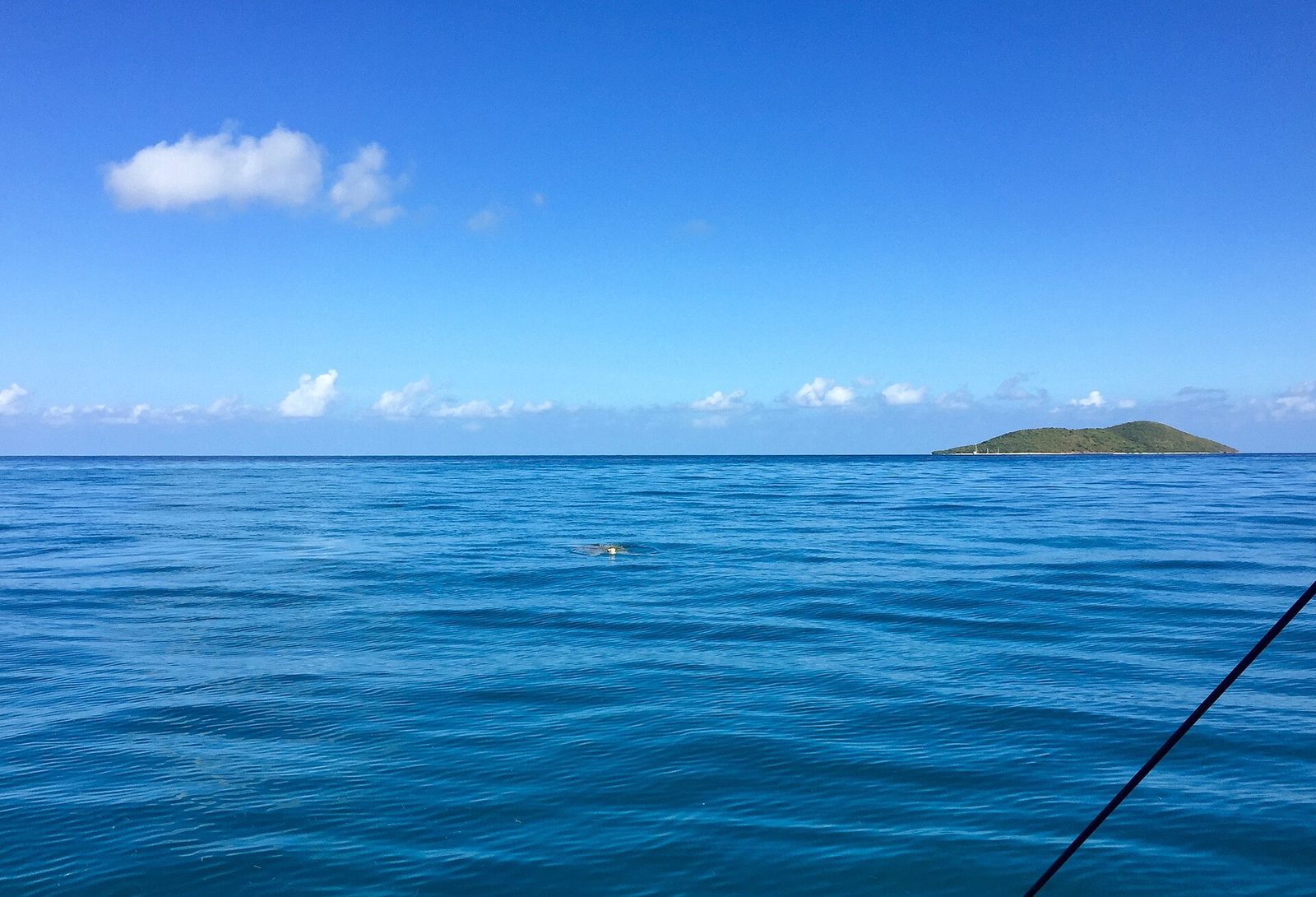
Gates open at 7 am and close at 5 pm daily, and admission is free. Boats from the Christiansted wharf cover about 5.5 miles each way. Getting there means a licensed tour boat out of Christiansted or Green Cay Marina, the latter ten minutes from our driveway, or your own vessel carrying a park permit. Full-day trips usually swim the reef trail first, then drop anchor off Turtle Beach on the west tip for lunch and a lazy hour. Twelve people can charter a boat outright and set their own pace. Boat operators, permits and do's and don'ts fill our Buck Island page.
The second is the north coast wall. From the Cane Bay beach you wade in off the beach, fin out 100 to 200 yards across the reef, and find the lip of a drop-off beginning near 40 feet that plunges beyond 1,000 meters. Next door, Salt River Canyon offers a wall by boat, and seahorse spotters work the posts beneath the Frederiksted pier. Our wall diving guide and Cane Bay page describe every site in depth.
First-timers can dive on either island. On St. Croix, shops in town and on the Cane Bay beach offer try-dive mornings with an instructor alongside.
The East End's coves and the villa's own beach
Aruba's beaches are long and open. On St. Croix's eastern tip the beaches come as small, reef-guarded coves, no two alike.
The yacht club's beach at Teague Bay faces Buck Island across the channel. Cramer's Park, a weekend spot for island families, pairs gentle shallows with shade pavilions, grills and picnic tables under sea grape. Chenay Bay keeps toddler-friendly water close to shore over seagrass that turtles like to graze. And Isaac Bay, a walk down the preserve trail, rewards the effort with clear water and reef to snorkel straight from the beach. Every one is a 5 to 20 minute drive, and our guide to the East End's beaches covers parking, shade and water at each.
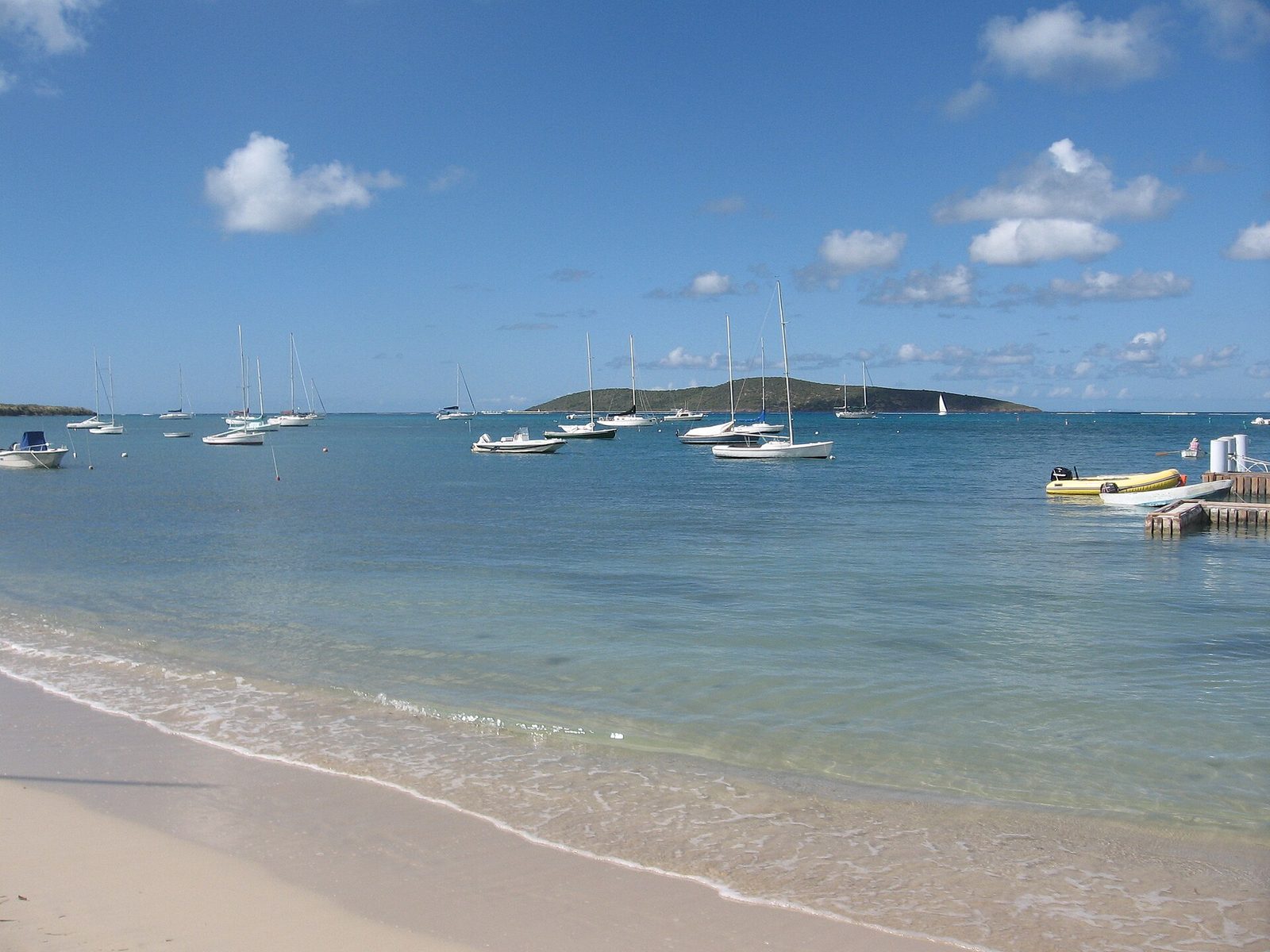
Nearest of all is the villa's private beach. A few stairs below the pool terrace, guests walk straight into shallow water that a reef further out keeps settled, and fish start appearing almost at once. Kids in masks find reef fish without boarding a boat while grown-ups keep watch from the terrace above.
Parents of toddlers often ask which island has the gentlest water. Aruba's answer is Baby Beach, the shallow lagoon at the southern tip. On St. Croix, the calmest family swims are at Chenay Bay and Cramer's Park, and just beneath the villa's terrace stairs, where calm shallows let a small child try a mask with a parent alongside.
The beach faces east, so it catches the sunrise, and the best swim of the day is often the first one, before breakfast. Pelicans dive for breakfast past the breakers, and green and hawksbill turtles graze these waters in every season. Pack a favorite mask from home, or rent gear on the island.
On Aruba, the hotel beach comes with the room. At The Cerulean, the beach comes with the house, and it is usually the group's alone. The beach page has pictures of the steps, the water and the reef.
Keshi yena, johnny cakes and the dinner table
Food is a happy part of both trips. On Aruba, the dish to try is keshi yena, stuffed cheese, a round of cheese filled with a savory stuffing and baked. Pastechi, savory pastries, make an easy snack to pick up around the island. The weekly Bon Bini Festival in downtown Oranjestad, held on Tuesday evenings, brings local food, music and dance together; check the current schedule before you go.
St. Croix answers with Crucian cooking, a cuisine locals are rightly proud of. Order kallaloo and you get a hearty greens-and-okra pot ladled onto fungi, a cornmeal mash. Johnny cakes come out of the fryer golden and are best torn open straight away. Pates, pronounced PAH-tays, are pastry pockets stuffed with saltfish, conch, chicken or beef. Roti wraps a curry in soft flatbread for a takeaway lunch. To drink, sorrel is a holiday brew of hibiscus and spice, and maubi a bittersweet bark tonic. The rest of the island's menu waits in our Crucian food primer.
The biggest difference for a group is the shape of dinner. On Aruba, dinner usually means a restaurant, and the hotel strip has plenty to choose from. At The Cerulean, dinner can happen at home. Its kitchen is a cook's room: a long island for prep and perching, a full-size stove, a dishwasher, an ice machine, and a deep sink beneath a window full of sea. Plates, glasses and cutlery run to a dozen place settings and more, enough to lay a long table indoors or outside.
Two concierge services make that easy. Send a shopping list ahead and the fridges are stocked by arrival, which turns night one into a swim and supper outdoors. Hire a cook for a birthday feast or for the whole week, and ask for island dishes so dinner tastes of St. Croix. Local chefs and caterers are gathered in the private chef listings.
Twelve hungry people settle into a pattern quickly: mornings around the kitchen island, lunch wherever the outing lands, a few home dinners with each household taking a turn at the stove, a chef's night, and one evening out at a harborside restaurant in Christiansted.
Oranjestad, Christiansted and Frederiksted
Aruba's capital, Oranjestad, is a cheerful harbor town of pastel Dutch-gabled buildings. A free tram loops through the center, handy for hopping between the waterfront and the shops, and Caya G.F. Betico Croes is the main shopping street. Cafes and plazas fill the blocks in between, and cruise passengers and hotel guests mix along the waterfront.
St. Croix counters with a pair of towns from its Danish era, each an easy outing from the house.
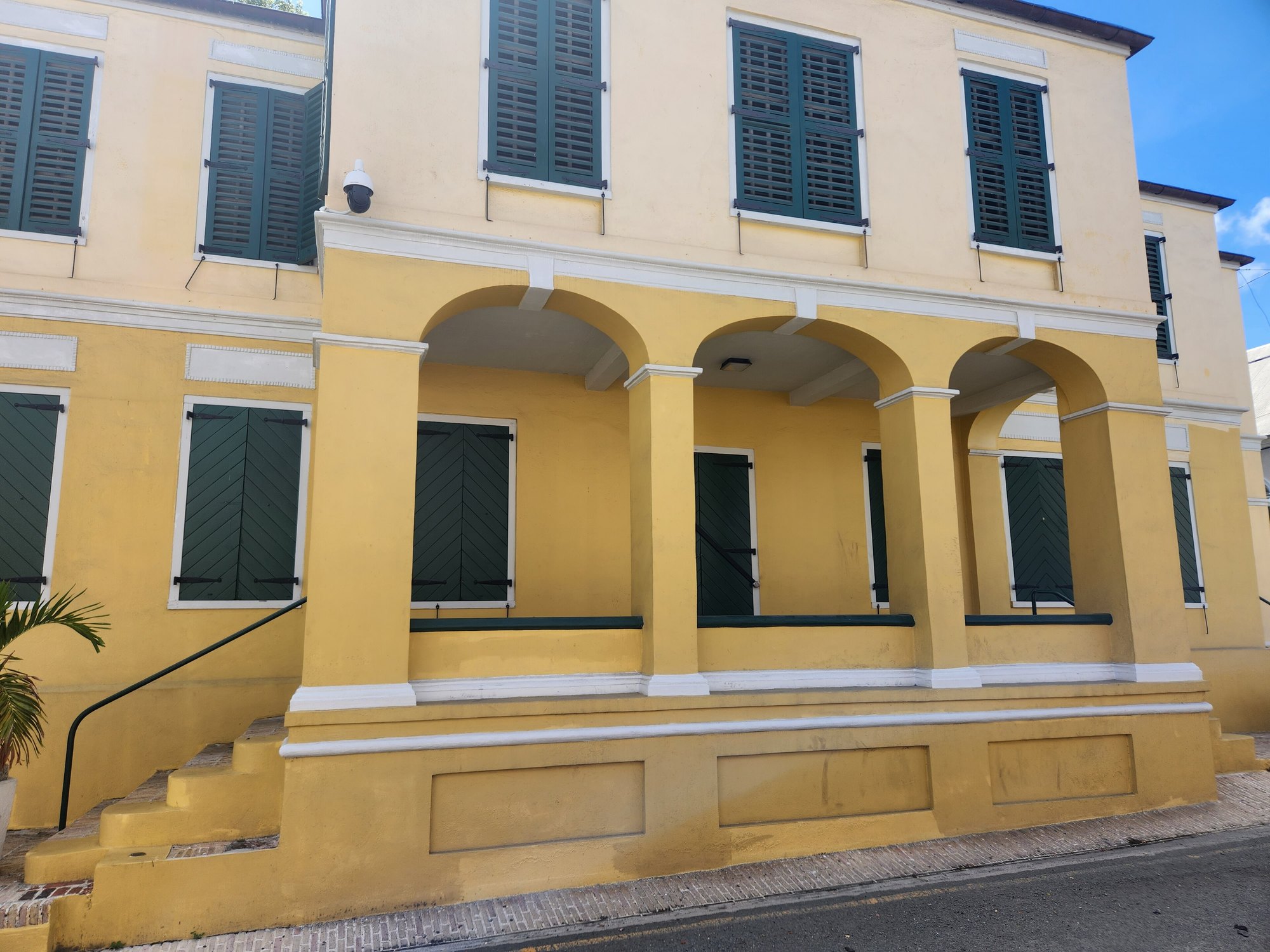
Christiansted sits a quarter hour or so from the villa. The Danes laid it out in 1734 and ran their West Indies colony from it, and the Park Service now looks after its harbor blocks as a historic site. The centerpiece is Fort Christiansvaern, raised between 1738 and 1749, all ochre walls, gun ports and a shady courtyard; an adult ticket was $10 in 2026 and stays valid for three days, and the gates open daily from 8:30 to 4:30, so a morning visit leaves the afternoon free for the sea. On four Fridays through the year, downtown shuts to cars for Jump Up, when music, mocko jumbie stilt dancers and food stalls fill the streets from 6 to 10 pm at no charge. Young Alexander Hamilton worked as a clerk on this waterfront before sailing north to New York. Shaded arcades now shelter galleries and shops, and many restaurants line the streets and the harbor boardwalk.
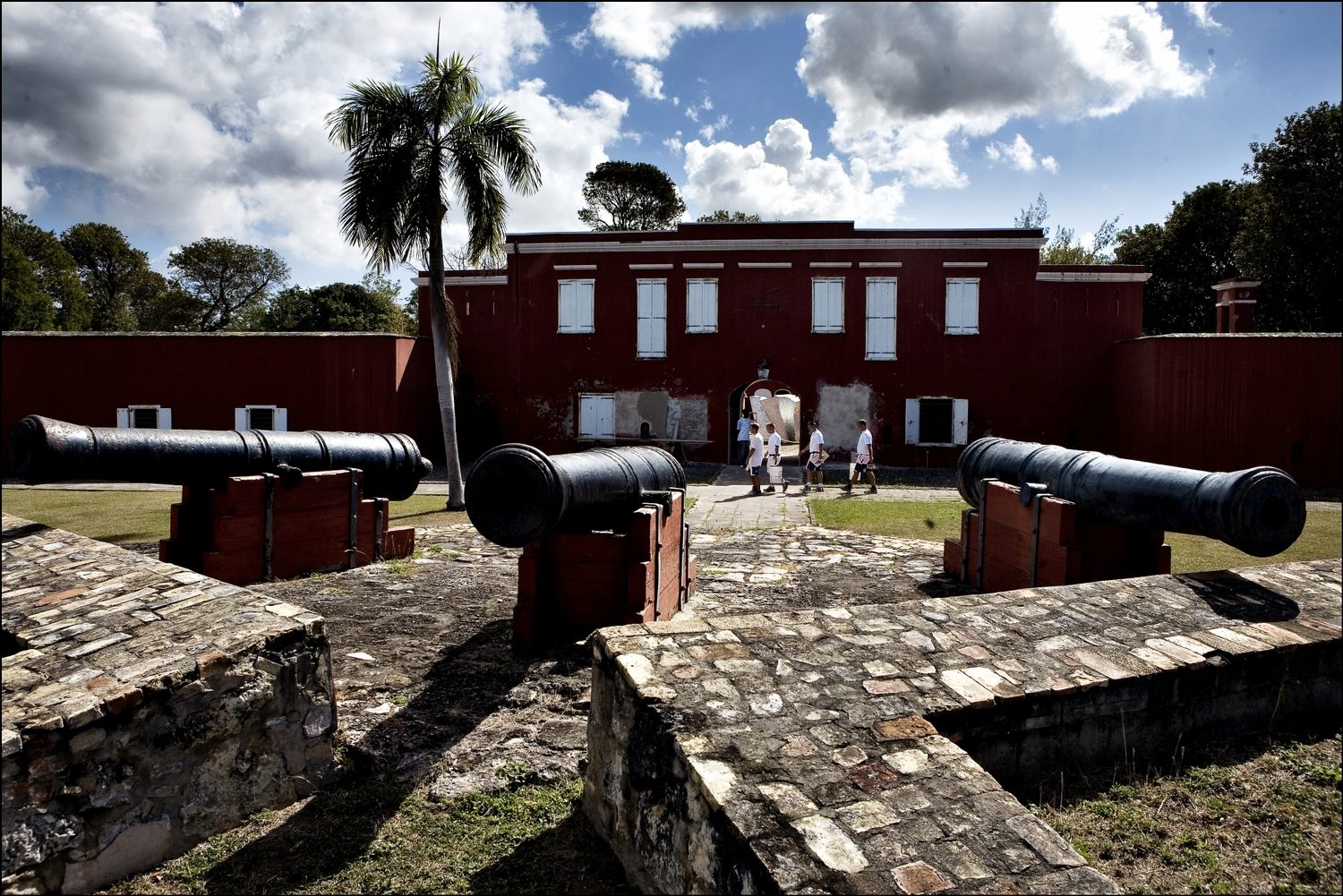
Frederiksted, close to fifty minutes west, is where St. Croix watches the sun go down. Surveyors plotted its grid in 1751, and the dark-red Fort Frederik went up from 1752 to 1760; from its ramparts, the governor declared emancipation across the Danish colony on July 3, 1848. The 1,526-foot pier welcomes cruise ships and doubles as a celebrated dive, and calm west-facing beaches run north from town. Art lovers can drop into CMCArts, the waterfront gallery, which charged no admission and opened Tuesdays to Saturdays when we checked.
Midway between them wait more outings for a break from the sand: the stone windmill at Estate Whim, the gardens planted through old estate ruins at St. George Village, and tours at the Cruzan and Captain Morgan rum distilleries. Block-by-block walks are in our Christiansted town guide and its sister page on Frederiksted.
Islands like Aruba for travelers without a passport
Many people who search for islands like Aruba are really looking for a short list of things: white sand, warm and calm water, a dependable breeze, plenty of sun, easy money and an easy trip home. St. Croix shares most of that list, and it makes the paperwork part easier for Americans.
Start with the beach. Aruba's west coast is famous for long, open sand; St. Croix answers with reef-sheltered coves, the white sand of Turtle Beach on Buck Island and the sunset beaches north of Frederiksted. The water is about the same temperature on both islands in winter, and both are warm enough for long swims every day of the year.
Then the breeze. Aruba's east wind is one of its best features, and St. Croix sits in the same trade wind, from the same direction, at a slightly gentler average. On a villa deck above the water, that breeze is what makes lunch outdoors pleasant in any month.
Then the easy logistics. Aruba takes U.S. dollars and clears you for home through U.S. preclearance before you fly. St. Croix goes one step further: it uses the dollar, Americans need no passport, and U.S. phone plans often work at home rates. If a teenager's passport has run out, or a grandparent never applied for one, that alone can settle where the family goes.
What St. Croix adds is variety within a short drive. It has a national monument reef with a marked underwater trail, a famous wall dive reached from the sand, a rain forest drive, two towns with Danish forts and a national historic site, rum distilleries and a Crucian kitchen of its own. Turtles add to the list: greens and hawksbills graze offshore in every month, giant leatherbacks come ashore at Sandy Point to nest between spring and the first weeks of summer, and hawksbills dig nests on Buck Island. Dates and viewing etiquette are in our turtle guide.
If you are weighing other no-passport options, such as Puerto Rico or St. Thomas, our pages on the Caribbean villa trip without a passport and on St. Croix and Puerto Rico compare them.
A group of twelve under one roof
On a hotel trip, a big party books rooms down a corridor and meets at the pool. At The Cerulean, the same party shares a front gate, a kitchen and a living room.
Under the main roof, with its tall timber beams, are four sleeping rooms, every one with a private bath and three of them facing straight out to sea. Cooking, dining and lounging share a single open space, so the whole group can be together indoors, and a run of arches forms the veranda on the water side.
Twenty paces across the garden stands the cottage: a self-contained little home. It has a kitchen stocked with its own big fridge, a gray sectional in the sitting room, a bedroom where the laundry pair lives, and a full bath. From the sitting room a corkscrew stair rises to an open sleeping loft, bed number six. Nobody else can book the cottage on its own, so the cottage, the house, the pool and the beach stay yours alone. Six beds for two apiece makes room for twelve.
Handing out rooms is usually easy. Couples and parents spread across the main house. A grandparent who wakes at five may prefer the cottage, where a private door and a separate kitchen mean nobody hears the kettle. Teenagers race each other for the loft. Babies are covered too, with a high chair, a portable crib and safety gates on hand.
Where people gather counts as much as where they sleep: the beamed great room, the long dining table, the roofed terrace by the fire table, and the sunny pool terrace, all private. High-speed internet, smart TVs, music through the house, laundry machines and fresh towels and bedding keep a big household running. Try the room planner below to match people with beds, then paste the result into the family chat; photos of each room are on our bedroom page.
The two-building layout is what makes shared trips work. Two families can split cleanly, one in the main house and one with the cottage, and still meet at the pool by mid-morning. A milestone birthday crowd can give the guest of honor the quietest room. And on the last night, everybody ends up around the same fire table no matter where they sleep.
A sample group week at the villa
Below is a sample week for a crowd that might have booked Aruba instead, Saturday to Saturday, with a single plan per day and long, lazy stretches by the pool in between.
A party of nine fits the same plan with room to spare: one household takes the cottage, the others spread through the main house, and the loft becomes the kids' den or a quiet reading nook.
- Day 1Fly in, pick up both cars and head east. The managers lead you to the gate and show you around. First swim, then supper outside.
- Day 2Dawn at Point Udall for anyone awake. Snorkel the reef below the stairs. Grill fish by the pool.
- Day 3Charter boat from Green Cay Marina to Buck Island. Reef trail in the morning, Turtle Beach at noon.
- Day 4Walkers hike to Isaac Bay at dawn. Little ones splash at Cramer's Park or Chenay Bay. Teens book a try-dive.
- Day 5Christiansted before the heat: fort tour, then lunch over the water. Kayak the glowing bay after dark if the moon allows.
- Day 6Mahogany Road through the forest, then Frederiksted and a west end sunset.
- Day 7Stay home. Massage, reef, pool. A hired chef cooks the farewell dinner by the fire pit.
- Day 8Early swim, 10 am checkout, airport two hours before takeoff.
Two scheduling tips. Put the Buck Island charter near the start of the week, leaving room to shift it if the captain suggests another morning. And choose the Salt River kayak night by the lunar calendar, since the plankton glow is brightest on moonless nights; our bioluminescent bay guide explains the timing.
Leave whole afternoons empty on purpose. A house like this rewards idleness: midday belongs to the pool, evening to the fire pit, and the sea is down the stairs whenever someone wanders off.
Compare that with an Aruba week and the shape changes more than the scenery. On Aruba, the beach, the pool and dinner are usually a walk from the room, and the island's best outings are an Arikok jeep tour, a snorkel boat to the Antilla and an evening in Oranjestad. On St. Croix, the group's days start and end at one house, and the outings include a national monument reef, a wall dive, two old towns and a rain forest drive.
For a longer menu of outings, browse the island activities roundup.
Booking the villa
Reservations go through Sterling Point, the island firm that manages the house, and its calendar shows which weeks are free along with current rates. Arrival is from 4 pm, departure by 10 am.
Saturday changeovers line up with the Newark and O'Hare nonstops, which only fly that day, and give everyone a whole weekend at the start. Thanksgiving, the year-end holidays and spring break go quickest, so lock those dates in well ahead.
Sequence matters. Secure the house before anything else, because everything hangs on it. Flights follow, then the vehicles, then whatever needs notice: grocery stocking, the chef, the boat, a restaurant table for twelve. Through the concierge team you can also add mid-stay cleaning, a bartender, sailing days, massage at the house and rides from the airport.
Order of jobs for the organizer
9 itemsYour ticks stay in this browser only.
Aruba is a lovely island and a great pick for a breezy hotel beach week. For a gathering that wants to fly on driver's licenses, share one roof above the water, and split its days among a private cove, a protected reef and two Danish towns, St. Croix's eastern shore is waiting. Have a look at which weeks are still open.
Questions people ask
Is St. Croix or Aruba better for a vacation?
Each wins for a different week. Aruba shines for a hotel stay on a long white beach, with wind for kiteboarding and a lively dining strip along the sand. St. Croix shines when a reunion or a group of friends wants one private house, Americans want to travel without passports, and the days ahead hold quiet coves, Buck Island's marked reef trail, wall dives off the Cane Bay beach and two towns the Danes built.
Is a passport required for Aruba?
Yes. Aruba belongs to the Kingdom of the Netherlands, so every U.S. traveler carries a current passport that stays valid until departure day and was issued within the last 10 years. Americans need no visa. Each person, babies too, completes the online ED card in the week before flying, and arrivals by air from age 8 up pay the $20 sustainability fee on that same form.
Is a passport required for St. Croix?
No, if you hold U.S. citizenship and start in the States or Puerto Rico. The island sits under the American flag, which makes the trip a domestic one. Security asks each grown-up, from age 18, for a star-marked license, a passport or another ID that TSA accepts, while kids go through with nothing. Flying home, allow for a quick look at your bags by agriculture staff and a word with CBP.
What is the Aruba ED card?
ED stands for embarkation and disembarkation. Aruba's tourism authority asks each visitor to complete this online form at edcardaruba.aw, the official site it names, during the 7 days before travel, and babies and children get one too. From July 1, 2024, the same form collects the $20 sustainability fee from air arrivals aged 8 and over, paid ahead by Visa, Mastercard or Discover.
What money do they use in Aruba and St. Croix?
Aruba prints its own florin, which the Centrale Bank van Aruba holds at 1.79 to one U.S. dollar, and American bills are taken at most counters, so many visitors never change money. St. Croix spends U.S. dollars and nothing else, and your home debit card and ATM network behave exactly as they do on the mainland.
Which island drives on the left, Aruba or St. Croix?
St. Croix. Aruba keeps right, posts its limits in kilometers per hour, and gives priority to cars already in a roundabout. On St. Croix you keep left, yet the rentals are the same left-hand-drive models sold in the States, and posted speeds stay low: 20 mph through town, 35 mph out on most routes, 55 mph on the divided highway. Most drivers settle in after a morning or two.
Is the water warm in Aruba and St. Croix in winter?
Very. Aruba's weather service records a January sea of about 79°F, and St. Croix's water sits near 79°F to 80°F in midwinter before warming to around 85°F by fall. Afternoon highs in January average about 86°F on Aruba and about 84°F on St. Croix, and an east wind blows on both. Snorkelers bring a long-sleeved sun shirt and leave the wetsuit at home.
What is a good alternative to Aruba without a passport?
St. Croix, the largest island in the USVI. Americans board with a star-marked license, pay in dollars and often keep their normal phone plan, and they find white-sand coves, a steady easterly breeze and warm winter water. Then come the extras: Buck Island's protected reef, the Cane Bay wall, the mahogany forest road and two Danish-era harbor towns with forts you can walk.
Can a group of 12 stay together on St. Croix?
Yes, and a group of nine fits with space left over. The Cerulean has five bedrooms and six beds. Four en-suite bedrooms fill the main house, and a detached garden cottage adds a kitchen, sitting room, bathroom, bedroom and loft bed. The pool terrace, grill, fire pit and stairs to a reef-calmed beach belong to your party alone, because nobody outside your group can book the cottage.
Sources
Every link below was read in November 2026 for this comparison. Aruba's entry papers and fee, airline timetables and arrival tallies get revised, so reread the official page a week or so before you fly.
- Aruba Tourism Authority — Passports and visas
- Aruba Tourism Authority — Sustainability fee
- Aruba Tourism Authority — Before you travel (ED card)
- U.S. Customs and Border Protection — Preclearance locations
- Centrale Bank van Aruba — The Aruban florin
- Aruba Tourism Authority — Fast facts
- Aruba Tourism Authority — Papiamento
- Aruba Tourism Authority — Driving in Aruba
- Aruba Tourism Authority — Getting to Aruba
- Aruba Tourism Authority — Arikok National Park
- Aruba Tourism Authority — Best things to do in Aruba
- Aruba Tourism Authority — A guide to Aruba's beaches
- Aruba Tourism Authority — Hotels and resorts
- Departamento Meteorologico Aruba — Climatological normals 1971-2000, Beatrix Airport
- Government of Aruba — Strong tourism in 2024
- Tourism Analytics — Aruba stopover and cruise arrivals 2024 and 2025 (Aruba Tourism Authority data)
- USVI Office of Management and Budget — 2025 revenue estimating conference (air arrivals, cruise calls)
- Visit USVI — No passport required for U.S. visitors
- TSA — Acceptable identification at the checkpoint
- National Park Service — Buck Island Reef National Monument, basic information
- Verizon — Domestic roaming FAQs (U.S., Puerto Rico, USVI)
- The Buccaneer — Nonstop flight schedule to St. Croix