

Picking a Caribbean island gets much simpler once you know what each one is good at. Aruba and Grand Cayman are famous for long, gentle beaches. Punta Cana runs on all-inclusive resorts. Willemstad on Curaçao, Old San Juan and Bridgetown on Barbados rank among the region's best old towns. Antigua and the British Virgin Islands belong to sailors, and most of St. John is a national park. St. Croix, the USVI's biggest island, suits a family or a circle of friends after one shared house by the sea, reefs near the sand, two harbor towns the Danes built and a flight that needs no passport. This guide lines up sixteen destinations in short tables covering documents, currency, language, driving, size and visitor numbers, and then gives every kind of trip its own chapter. We write from St. Croix, where our five-bedroom house and its separate cottage face the ocean at the East End, under the name The Cerulean.
Which island fits which trip
Choosing a Caribbean island usually comes down to choosing the week you want to have. Couples tend to want a view and an unhurried dinner. Parents of small children want gentle water, a short travel day and an easy airport. A party of twelve wants one roof over everyone. Divers want reef near the sand, sailors want harbors, and travelers on their fourth resort holiday want an island with a life of its own and smaller crowds. For every one of those weeks, two or three islands stand out, and the chapters below say which.
Some facts narrow the list right away. U.S. citizens can board with a driver's license only for the American islands, which means Puerto Rico and the three islands of the USVI. The rest are foreign countries or their territories, and each one wants a passport from every air traveler, kids too. Currency divides along similar lines with one wrinkle, because the BVI and the Turks and Caicos also use the U.S. dollar, and the Bahamas pegs its own dollar one to one with ours.
Island size changes a trip more than most people guess. The Bahamas, Jamaica and the Dominican Republic are large countries with many regions, so where you land shapes what you get. Aruba, Grand Cayman, St. Thomas and Sint Maarten are compact, and their roads make sense by the end of the first day. St. Croix falls in between at 84 square miles, with two towns, a northwest corner of rain forest and a breezy, sunny East End: plenty for a week, and never a long drive.
The kind of lodging matters too. Certain islands center on large hotels along one long beach. Others, including St. Croix and St. John, are made of small inns and private homes scattered over many bays. A party wanting a kitchen, a pool and all its bedrooms on one property will find the second type easier to book.
The tables below attach numbers to all of this. Jump straight to your trip's chapter if you already know it, and for entry rules covering twenty destinations, one at a time, see our page on passport-free Caribbean trips.
Passports and money
Below are the documents and the currency for each place as of November 2026. Passport entries follow the State Department's country pages for Americans who fly in, and currency entries from the international currency code list as updated in September 2026. Rules shift, so look at the island's own page before buying flights.
| Island | Currency | U.S. passport? |
|---|---|---|
| St. Croix | U.S. dollar | No |
| St. Thomas, St. John | U.S. dollar | No |
| Puerto Rico | U.S. dollar | No |
| The Bahamas | Bahamian dollar, pegged one to one | Yes, valid through the stay |
| Jamaica | Jamaican dollar | Yes, and an online entry card |
| Dominican Republic | Dominican peso | Yes, and the e-Ticket form |
| Aruba | Aruban florin | Yes, and an entry fee |
| Curaçao | Caribbean guilder | Yes, and an arrival card |
| Turks and Caicos | U.S. dollar | Yes, valid three months beyond departure |
| Cayman Islands | Cayman Islands dollar | Yes |
| British Virgin Islands | U.S. dollar | Yes, and a return ticket |
| Sint Maarten and St. Martin | Caribbean guilder (Dutch side), euro (French side) | Yes |
| Antigua and Barbuda | East Caribbean dollar | Yes, and a return ticket |
| St. Lucia | East Caribbean dollar | Yes, and an online form |
| Barbados | Barbados dollar | Yes, and proof of onward travel |
That passport column rests on one federal rule. Customs and Border Protection, the federal border agency, requires a passport, or one of a handful of trusted-traveler cards, from any U.S. citizen flying home from a foreign country, and says children need passports of their own on those flights. A family of five headed to Jamaica therefore has five passports to check and maybe renew. Flying to St. Croix counts as domestic, so a REAL ID or one of the other IDs the TSA lists is all an adult needs, while nobody under 18 who travels with an adult needs ID at the checkpoint. Our no-passport guide explains the territory's rules, including the brief customs and agriculture stop before you fly home.
Currency on the foreign islands is less uniform than the table makes it look. Aruba's tourism board reports wide acceptance of U.S. dollars next to the florin. The Bahamas holds its dollar level with ours, and its tourism board says shops on every island take the two interchangeably. Curaçao and Dutch Sint Maarten have moved to the Caribbean guilder, while St. Martin, the French half of the same island, uses euros. Antigua and St. Lucia both spend the East Caribbean dollar, and Barbados and Cayman each issue a dollar of their own.
St. Croix asks for no conversion at all. Prices are in dollars, the cards and cash machines are familiar, and many phone plans work with no changes; Verizon, for example, treats the USVI as domestic roaming. Medicare.gov considers the territory to be inside the United States, a point that matters when grandparents come along.
Language and driving side
Road side and market language both change from one island to the next, and most villa weeks include a rental car. The table covers the islands whose own tourism board or government spells out the driving side, as of November 2026, with the page to read before you collect the keys.
| Island | Where to check | Side of the road |
|---|---|---|
| St. Croix and the USVI | USVI Department of Tourism | Left |
| Puerto Rico | Discover Puerto Rico | Right |
| The Bahamas | Bahamas Ministry of Tourism | Left |
| Jamaica | Visit Jamaica | Left |
| Turks and Caicos | Visit Turks and Caicos | Left |
| Antigua and Barbuda | Antigua and Barbuda tourism | Left |
| St. Lucia | Saint Lucia Tourism Authority | Left |
| Barbados | Visit Barbados | Left |
| Curaçao | Curaçao Tourist Board | Right |
| Sint Maarten | St. Maarten tourism | Right |
Islands with a British past drive on the left. The Bahamas' tourism board sums it up in a single line: UK rules apply, so stay left and watch the roundabouts. Barbados agrees, adds that seatbelts are required, and has visitors buy a BDS$10 driving permit at the rental desk. Antigua points out that most cars there have the wheel on the right and that visitors pay EC$50 for a permit. Jamaica, St. Lucia and the Turks and Caicos also ask drivers to keep left.
Puerto Rico and the Dutch islands drive on the right. Curaçao's tourism board says traffic keeps right, and Dutch Sint Maarten describes well-marked roads with right-side traffic. Languages there blend: Aruba's tourism board lists Dutch and Papiamento as official and says many residents speak fluent English and Spanish, and on Curaçao most island-born people speak English, Dutch, Spanish and Papiamentu. In the Dominican Republic the official tongue is Spanish, with English common in the tourist zones. Puerto Rico gives official status to both Spanish and English, with Spanish used day to day. Jamaica's official language is English, and Jamaican patois is everywhere you go.
St. Croix has its own blend. English is official and appears on menus, shop signs and road signs, Spanish is heard often, and cars drive on the left, though the cars themselves are standard U.S. models steered from the left seat. It is easier than it sounds. Speed limits sit at 20 mph through town and, on most roads beyond, 35, so nearly everyone is comfortable by the end of the first afternoon. Our driving guide names the roads one by one.
Size and residents
An island's size predicts a lot about the week. On a small one, the roads are familiar by the first evening and the same harbor greets you every sunset. On a large one, you pick a region and save the rest for later. Below are land area and population for each place, rounded, from the World Bank and the island's own census or statistics office.
| Island | Residents | Land area |
|---|---|---|
| St. Croix | 41,004 at the 2020 census | 84 square miles |
| St. Thomas | 42,261 at the 2020 census | 32 square miles |
| St. John | 3,881 at the 2020 census | About 20 square miles |
| Puerto Rico | About 3.2 million | 3,424 square miles |
| The Bahamas | About 401,000 | About 3,860 square miles across many islands |
| Jamaica | About 2.84 million | About 4,180 square miles |
| Dominican Republic | About 11.4 million | About 18,600 square miles |
| Aruba | About 108,000 | About 70 square miles |
| Curaçao | About 156,000 | About 171 square miles |
| Turks and Caicos | About 50,800 | 366 square miles across many islands |
| Cayman Islands | 88,833 | 102 square miles, 76 of them on Grand Cayman |
| British Virgin Islands | About 39,500 | About 58 square miles across many islands |
| Sint Maarten and St. Martin | About 69,500 | About 34 square miles for the whole island |
| Antigua and Barbuda | About 93,800 | About 170 square miles on two islands |
| St. Lucia | About 180,000 | About 235 square miles |
| Barbados | About 282,000 | About 166 square miles |
Some patterns jump out. The Turks and Caicos, like the Bahamas, is a chain of islands: the Bahamas' tourism board counts 16 major islands scattered over roughly 100,000 square miles of sea, so most visitors pick one island or one group, the Exumas for example. Jamaica and the Dominican Republic are the largest places here, each with resort coasts, mountains and cities far apart. Puerto Rico covers roughly forty times as much land as St. Croix.
On the small side, Aruba describes itself as just 70 square miles, Grand Cayman measures 76, St. Thomas 32, and the island Sint Maarten shares with St. Martin about 34. You can drive around any of them in an afternoon. The BVI total about 58 square miles divided among dozens of islands of every size, one reason sailors like them so much.
St. Croix is mid-sized. Its 84 square miles make it bigger than Aruba, Grand Cayman or St. Thomas and smaller than Barbados, Curaçao, Antigua or St. Lucia. Tip to tip it measures about 22 miles, it reaches 7 at its widest, and it counted 41,004 residents in 2020, which leaves room to spread out with no long drives. Frederiksted, the far west coast town, is a drive of about fifty minutes from our corner of the East End.
A medium island works nicely for a villa stay. Seven days fill easily, the beaches are scattered along a long shoreline, and a group can split up after breakfast, hikers to one bay and families to another, then gather again for lunch by the pool. Our East End overview maps the part of the island around the villa.
Visitors and cruise ships
Arrival numbers hint at how crowded a beach or a town will feel. The figures below are full-year 2024 totals from each government or tourism office, or reported from their data, gathered for our uncrowded Caribbean islands post, which digs further into the ratios.
| Island | Cruise passengers in 2024 | Overnight visitors in 2024 |
|---|---|---|
| St. Croix | 169,228 from 71 ship calls | Roughly 186,400 flying in from the mainland |
| Puerto Rico | Over 1.4 million | 6.6 million passengers landing at San Juan's airport |
| The Bahamas | About 9.5 million by ship | Over 1.7 million arriving by air |
| St. Thomas and St. John | 1,530,933 from 495 ship calls | Roughly 722,300 flying in from the mainland |
| Aruba | 897,273 from 347 ship calls | 1,421,616 |
| Turks and Caicos | 1,225,255 from 311 ship calls | 641,767 |
| Cayman Islands | Roughly 1.08 million from 356 ship calls | 437,842 |
The famous cruise ports earn their reputation. Nassau is a classic stop, and the Bahamas set a record in 2024 with 11.22 million visitors, most arriving by ship. On St. Thomas, Charlotte Amalie took in 1,530,933 cruise passengers from 495 calls, roughly nine or ten ships each week, and its shopping streets are designed around the day trip. The Cayman Islands and the Turks and Caicos both passed a million cruise passengers.
Overnight guests spread out differently. Aruba's 1.42 million stay-over visitors share roughly 70 square miles. The Dominican central bank recorded 8,535,701 air arrivals of non-residents in 2024, and around 69 percent of the foreigners among them came through Punta Cana's airport. Those islands handle such volume well, with rows of hotels, restaurants and activities designed for it.
St. Croix runs on smaller numbers. It had 71 cruise calls in 2024, every one at the single cruise pier at Frederiksted, the west end town, plus roughly 186,400 mainland air travelers. On a normal weekday, a few people at most share an East End bay, the Buck Island boats leave from a marina just ten minutes' drive away, and a Christiansted dinner table is simple to book.
Cruising also lets you sample several islands at once, and plenty of villa guests first saw St. Croix or St. Thomas from a ship's deck. If you are using this guide to choose a longer stay, the overnight column is the one that predicts your week.
Flights from the mainland
Flights often settle a tie between two islands, so here is how St. Croix links up. Its nonstops come from large hubs in the Southeast and Northeast, with Chicago added in winter, and most American cities are a single connection away. Travelers from Boston, say, change planes in Miami, Charlotte or Atlanta, and the whole trip, house to house, runs between 7 1/2 and 9 hours; our Boston page lists the best connections.
These are the St. Croix nonstops as scheduled in November 2026. Check with the airline when booking.
| Airline | From | Time in the air |
|---|---|---|
| American, twice daily | Miami | About 3 hours |
| American, daily from Dec 17 | Charlotte | About 3 3/4 hours |
| Delta, Saturdays, then most days | Atlanta | About 3 3/4 hours |
| United, Saturdays | Newark | About 4 1/4 hours |
| American, Saturdays in winter | Chicago O'Hare | About 5 hours |
| Cape Air, plus JetBlue from Nov 19 | San Juan | Between 40 and 50 minutes |
The Saturday departures fit the usual villa week, which runs from one Saturday to the next. Friends in different cities can each pick a hub and land a few hours apart at most, with one household routed through Charlotte, another through Atlanta and a third on the Saturday from Newark. Midwesterners get Chicago's direct winter Saturdays, which take a break in January and come back on February 13. Travelers from Texas or the West Coast usually connect in Miami or Charlotte.
San Juan is the second gateway. Cape Air crosses in small planes several times daily, JetBlue starts a daily flight on November 19, 2026, and the hop lasts 40 to 50 minutes. The St. Thomas hop takes 20 to 25 minutes on Cape Air, which shares the route with Fly The Whale, and a Seaborne seaplane links Charlotte Amalie with Christiansted's harbor.
Time zones work in East Coast travelers' favor. Clocks on St. Croix stay put all year on Atlantic Standard Time, so in winter the time there reads one hour later than in New York, and in summer the two agree. The airport, Henry E. Rohlsen, is on the island's south coast, a 35- to 40-minute ride to the villa. Our getting here page stays current on routes, and we keep separate pages for flights from New York, Chicago and Miami.
A big family or friends group in one house
A group numbering ten or twelve, gathered for a 50th birthday, a reunion or a friends' trip, gains the most from picking the right island, since the lodging an island offers decides whether everyone sleeps under one roof. Some islands are mainly hotel islands and some are full of private homes, and the official counts tell them apart.
The USVI lean toward villas. On the territory's 2024 tally, St. Thomas and St. John had roughly 600 villas plus 4,579 short-term rental units; St. Croix had roughly 300 villas plus 1,190 rental units, against a hotel and resort count of around 1,000 rooms for the whole island. Taking a whole house for a group is a normal way to visit, and with no passports to gather, the organizer mostly handles dates and flights.
Cayman tilts the same direction. When 2024 ended it had 8,323 visitor rooms, 5,518 of them in apartments and guest houses instead of hotels, so most beds for visitors there are outside hotels as well.
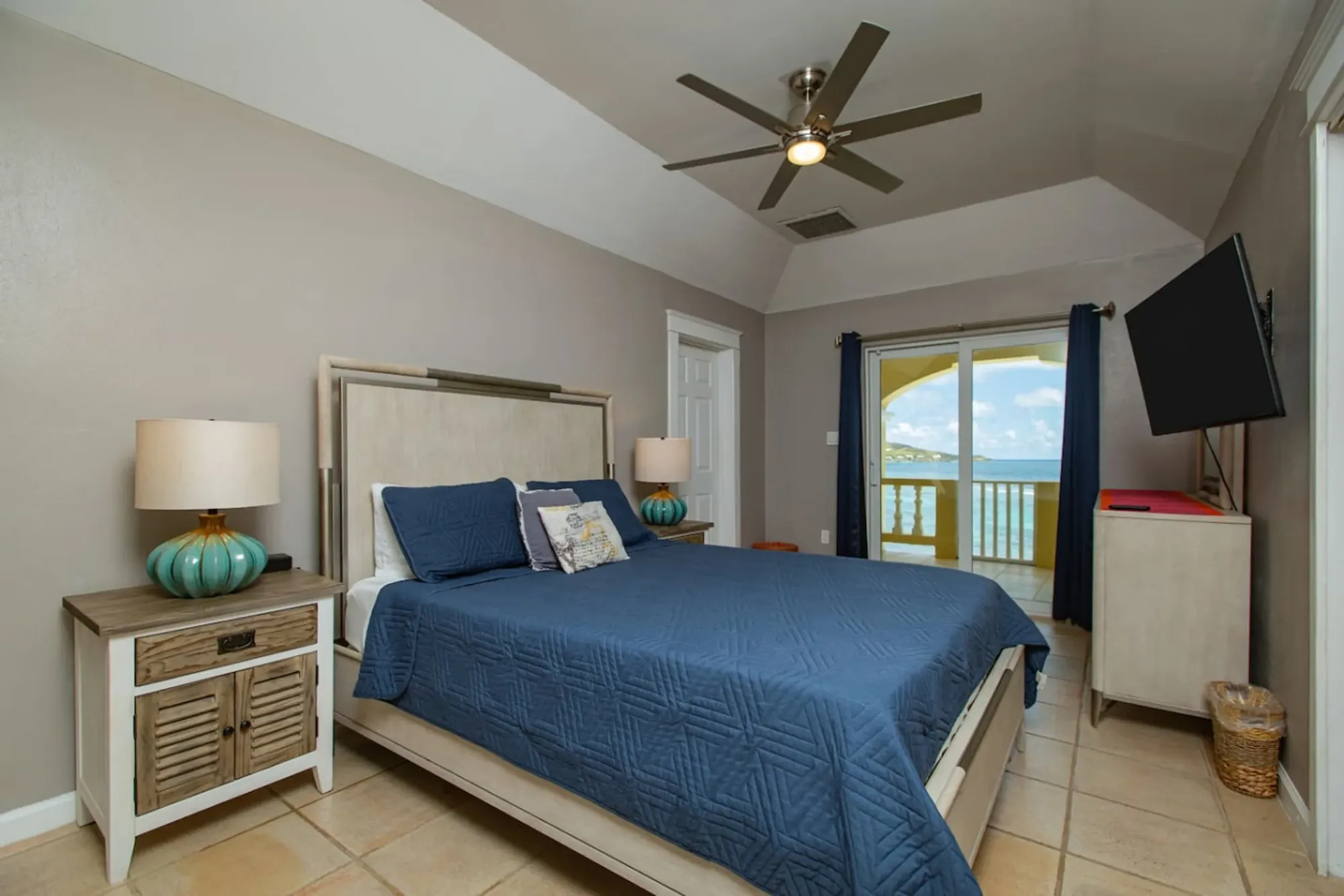
St. Croix's edge is the house. On the East End a group can take an entire property: bedrooms opening to one shared terrace, one kitchen, one pool and a beach down the steps. Twelve guests fit at The Cerulean, which has six beds, five bathrooms and five bedrooms. Four of the bedrooms are in the main house and come with en-suite baths; three of them face straight out to sea. Bedroom five is in a separate guest cottage roughly twenty steps off, which has its own full bathroom, living room and kitchen, and the sixth bed is up a spiral staircase in its loft.
The cottage is what lets a group week run smoothly. Early-rising grandparents can brew coffee in a kitchen of their own. A young family can protect nap time. When two households share the trip, one of them gets its own entrance. The cottage only comes with the house, so nobody outside your group shares the buildings, the pool or the beach.
Common rooms count as much as bedrooms. The great room rises to a vaulted wood-beam ceiling, the kitchen carries enough serveware and place settings to feed twelve or more, and dinner can move out to the pool deck, where a gas grill stands in the outdoor kitchen near a fire pit. Our guide to group trips and celebrations covers birthdays and reunions, and the room-by-room chapter later in this post shows where everyone sleeps.
Grandparents and small children
Traveling with grandparents and little ones narrows the list: a simple journey, gentle shallow water, doctors who accept your insurance and somewhere quiet for an afternoon nap. Three places rise to the top, and all three are American: St. Croix, St. John and Puerto Rico.
Getting there is the first reason. With no passports, a grandparent whose passport ran out years ago skips the renewal and nobody applies for one for a baby. Children under 18 who fly with an adult show no ID at screening, and nobody queues at immigration after landing. Medicare coverage carries over to the USVI and Puerto Rico unchanged, because Medicare.gov places both inside the United States.
St. John is the park island. Two-thirds of the island is national park, the National Park Service says, and Trunk Bay, the beach on countless postcards, is a visitor favorite; the park encourages snorkeling over its coral reefs. A quick ferry ride from St. Thomas gets you there, and its small size fits families after a few beaches and an easy pace.
Puerto Rico is for families wanting a city alongside the beach. Kids love the old forts in San Juan's historic quarter. El Yunque National Forest, with trails and a visitor center, is roughly 45 minutes' drive out of San Juan. More than 20 airlines serve San Juan's airport, and the city beaches of Condado and Isla Verde line the coast east of the old town.
St. Croix is for the family that wants the house to carry the load. The Cerulean's private beach has shallow water sheltered by the reef, so the youngest snorkeler in the family can spot fish a few feet out while a grandparent keeps an eye on things from the deck above. The house keeps a travel crib on hand, plus a high chair; baby gates are there too, and air-conditioning and ceiling fans cool every room. For a public beach, try the north shore, where Chenay Bay stays shallow and calm near the sand, or Cramer's Park, which offers covered pavilions, grills and restrooms.
Families who already have passports get two more good beach options. Eagle Beach on Aruba and Grace Bay on Providenciales, in the Turks and Caicos, are both long, broad beaches with pale water and easy swimming. Every child needs a passport of their own, and the Turks and Caicos wants three months of validity beyond your departure date.
Two routines keep the week easy: a long-sleeved rash guard and a broad hat for every child, and an after-lunch nap back at the house. Our guides to St. Croix with kids and a baby or toddler go beach by beach, and three generations under one roof sorts out the rooms.
Islands for couples
Couples tend to choose on views, dinners and calm evenings, and St. Lucia, Antigua and Aruba handle all three particularly well.
On St. Lucia's west coast, the two sharp green Pitons tower over the bay at Soufriere, and dinner facing them is the scene many couples imagine when they picture the Caribbean. There are two airports, Hewanorra in the south and George F. L. Charles in the north, and the tourism authority mentions helicopter transfers between them for anyone who would rather not drive.
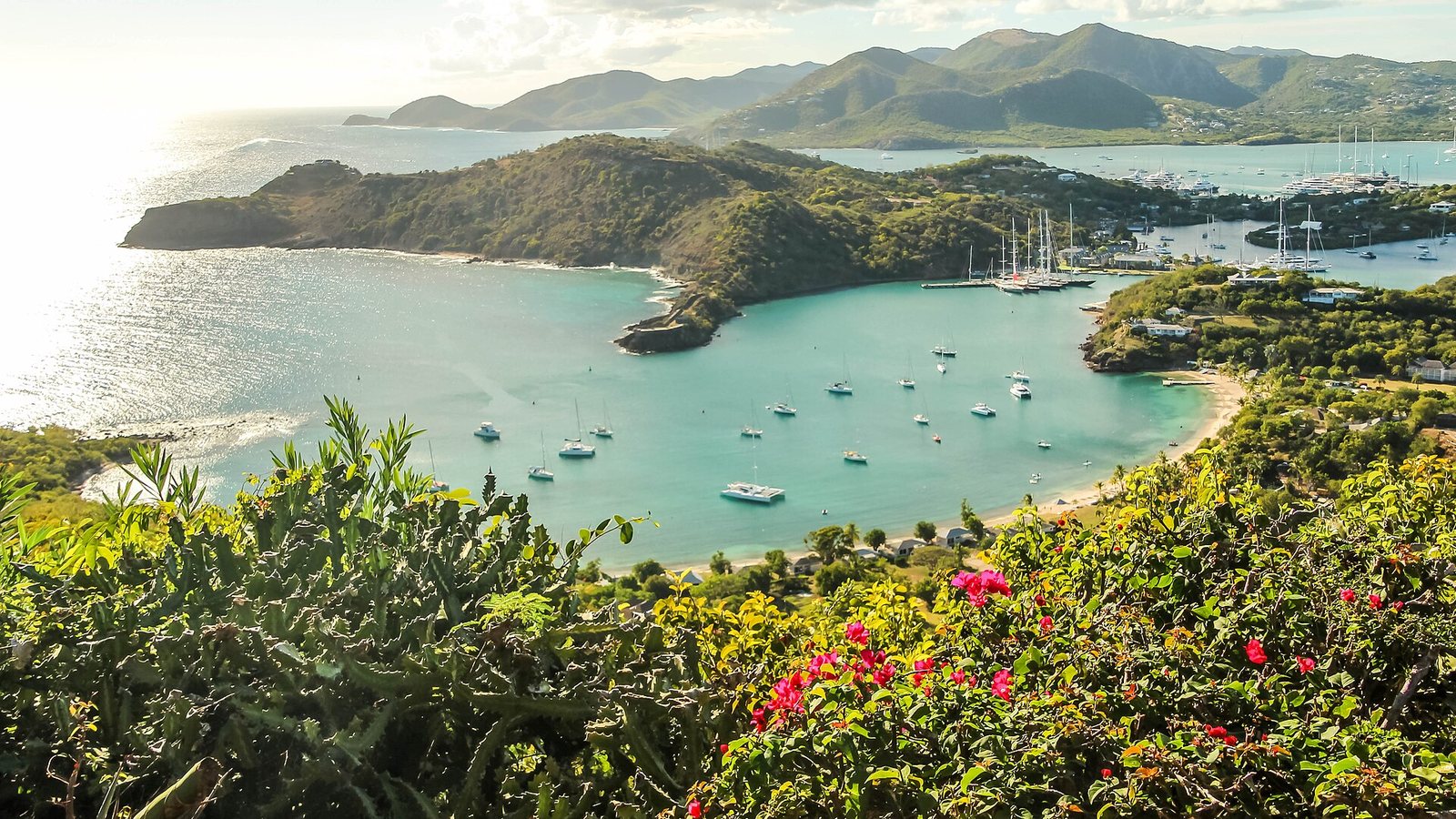
Antigua is all about harbors. From Shirley's Heights, the lookout high above English Harbour, you look down on yachts anchored between green headlands, and the old naval dockyard below makes a pleasant walk before dinner. Aruba is the effortless pick: long, broad beaches down the west coast and Eagle Beach, where a sunset stroll can last as long as you want.
St. Croix works for couples traveling with family or friends and for couples who love a quiet house. On the west end, Frederiksted is the town for sunsets, where the sun drops into open sea and the bars on Strand Street fill up at dusk. Christiansted's boardwalk, fifteen or twenty minutes away by car, sets tables right over the harbor. The East End gets the sunrise: The Cerulean faces east, so the morning light comes off the water and straight onto the veranda.
When a couple is celebrating inside a larger group, say an anniversary or a birthday during a family week, the guest cottage makes the present. With a separate entrance, kitchen and living room, it gives the two of you a private evening twenty steps from the others before you rejoin the big table the following night.
Ask the concierge for an in-villa massage, a chef to cook dinner for two on the terrace, or a day sail. Our concierge page lists everything on offer.
Snorkelers and divers
Snorkelers and divers rate an island by the distance from bed to reef and by how much effort a day in the water takes. Curaçao, St. John and St. Croix make it simple.
Curaçao bills itself as one of the world's top shore diving destinations, and its tourism board gives the reason: the fringing reef starts only feet from the shoreline. More than 35 beaches ring the island, from well-known Playa Kenepa to Playa Lagun, a small sheltered bay good for beginning snorkelers. Divers park at a site, wade in and swim out, with no boat to wait for.
On St. John the reefs lie within Virgin Islands National Park, and snorkeling the coral just off its beaches ranks among the park's great pleasures. A day at the beach there doubles as a day of snorkeling.
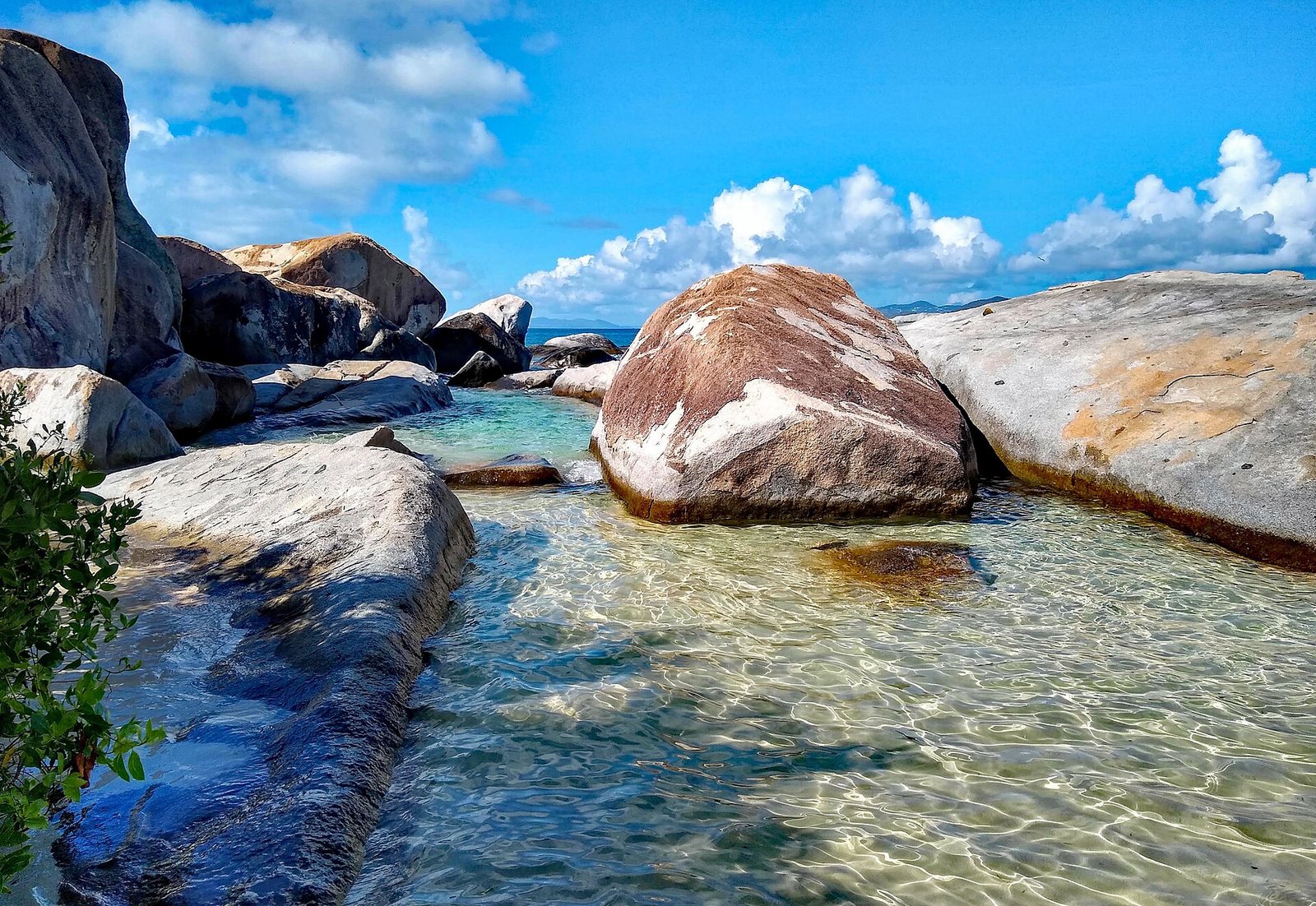
The BVI contribute a beach like no other in this guide: The Baths on Virgin Gorda, where enormous rounded granite boulders enclose clear shallow pools.
St. Croix is above all a diving island. The north shore's Cane Bay is where the reef falls away into a deep wall within a short swim of the sand, so divers wade in from the beach and hang above blue water minutes later. Salt River Canyon, close by, is a second wall, and Frederiksted's pier, out on the west end, is a favorite dive on the island, home to seahorses that cling to the pilings. The dive shops run first-time introductory dives as well as full certification courses.
For snorkelers, Buck Island Reef National Monument steals the show. The island is a 176-acre patch of dry forest and sand, a short boat ride of about 1.5 miles from the northeast coast, set within a monument covering more than 19,000 acres, nearly all of it sea, and protected since President Kennedy's proclamation in 1961. Much of the island is ringed by elkhorn coral, and through the lagoon runs a marked underwater trail for snorkelers, where the water stays under about 12 feet. Boats leave Green Cay Marina, which is ten minutes up the road.
Then there is the reef right off the villa's beach, shallow and sheltered, where good snorkeling begins only a few feet from the waterline. Bring a favorite mask from home if you have one; renting gear on the island is easy. Our Buck Island guide and wall diving guide explain the boats and the dive sites.
St. Croix also offers a night out on the water at Salt River Bay, where Columbus's ships anchored in 1493. The bay is full of microscopic organisms that light up whenever the water is stirred by a hand or paddle, and guides lead kayak tours on the moonless nights of the month. The moon decides the best night, and the timing is covered in our bio bay guide.
Islands for sailors
Sailors want sheltered harbors close together, reliable wind and good spots to tie up for lunch. In this guide, the British Virgin Islands and Antigua are true sailing grounds, and St. Croix gives you an excellent day on the water from its own harbors.
The BVI are made for chartering. The tourism board describes more than 50 islands and lists charter companies under sailing, and the short hops are the whole appeal: sail in the morning, swim at a cay, eat lunch in a bay and pick up a mooring by late afternoon.
Antigua's harbor comes with history. Nelson's Dockyard at English Harbour is, in the words of the National Parks Authority, a working dockyard from the Georgian era; the Royal Navy shut it down in 1889, and it became a World Heritage Site in 2016 as the Antigua Naval Dockyard and Related Archaeological Sites. Yachts still berth in English and Falmouth Harbours, and the dockyard welcomes visitors from 8 am until 5 pm, Monday to Saturday.
St. Croix stands by itself, with St. Thomas about 40 miles to the north, so sailing here is mostly day trips. Boats for Buck Island go out of Green Cay Marina, close to the villa, for a morning over the reef and an afternoon on Turtle Beach. Christiansted harbor, with its boardwalk and small craft, is a nice spot to watch the seaplane arrive from St. Thomas.
For a group, chartering a private boat for the day ranks among the week's highlights: your own crew, your own boat and your own timetable, with the Buck Island snorkel trail first thing, while the water is usually at its flattest. The concierge arranges charters, and our boat charters directory names the captains.
Islands built for all-inclusive stays
An all-inclusive week is a treat for anyone who wants every meal and drink taken care of, a pool and beach steps from the room, and nothing to organize. Certain islands are designed around that sort of stay, and they deliver it well.
The best-known is the Punta Cana coast of the Dominican Republic. Its beaches stretch more than 30 miles, its resorts bundle room, food, drinks and activities into a single price, and its airport, the country's busiest gateway, has flights from across the United States. For couples who want true rest, or children who love a buffet, it is tough to top. Our St. Croix vs. Punta Cana post puts that kind of week next to a villa week.
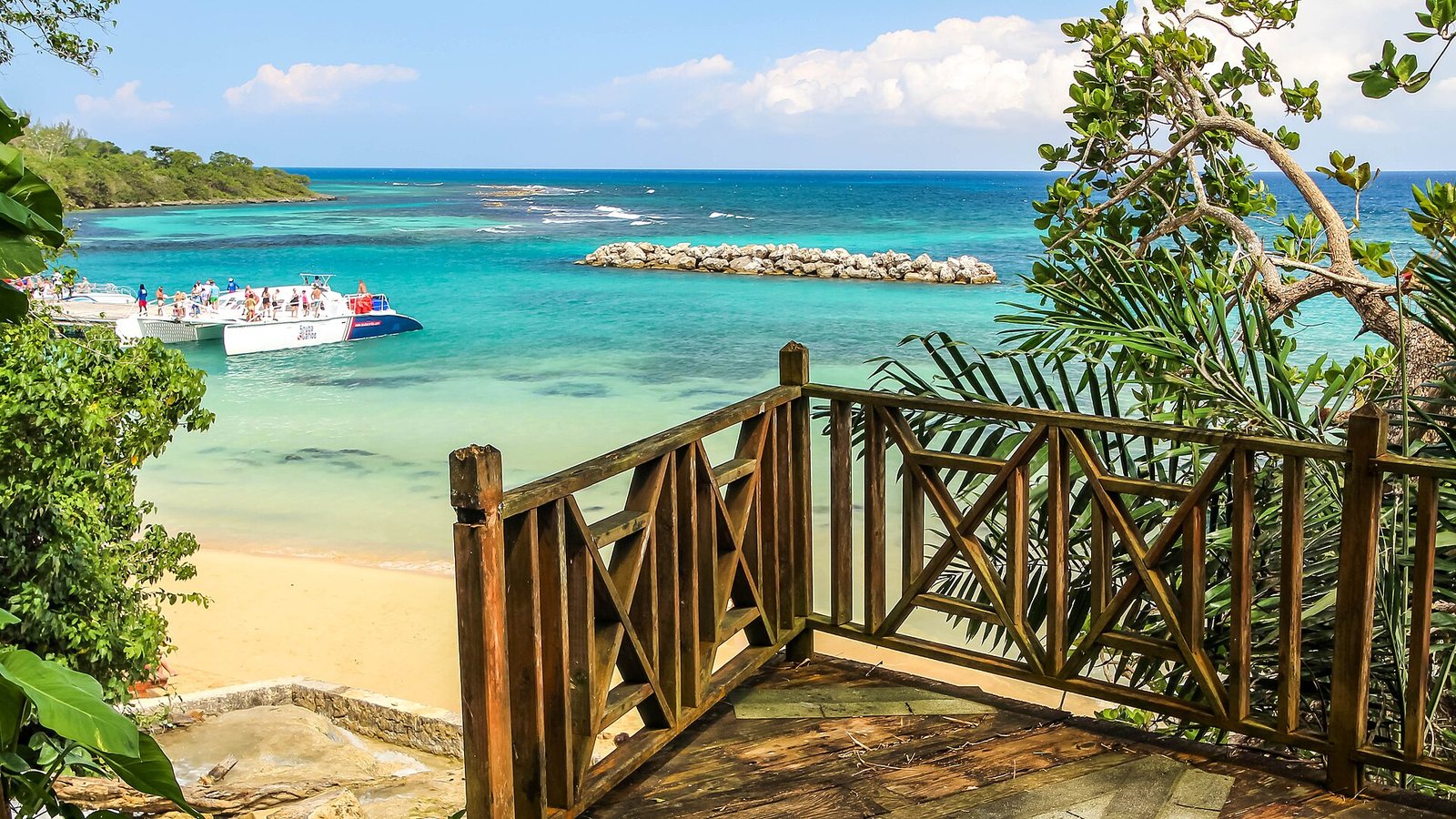
The other classic is Palm Beach on Aruba: tall hotels lined up along the sand, with pools, restaurants and water sports by the water and evenings ending in a sunset over the sea. On Jamaica's north coast close to Ocho Rios, tour catamarans anchor off the beach beneath Dunn's River Falls, where water tumbles down pale limestone steps under the trees.
St. Croix's lodging mix is different. The territory's 2024 figures put St. Croix's hotel and resort rooms near 1,000 in all, next to roughly 300 villas and over a thousand short-term rentals scattered along the coast. For fans of all-inclusive ease, a villa with a concierge gets close in its own way: a kitchen stocked ahead of your arrival, a private chef whenever you want one, housekeeping when asked, and a pool and beach used only by your group.
The Cerulean's chef's kitchen has a big center island and a dishwasher, plus an ice maker and a range and oven, both full size, and the cottage kitchen keeps one more full-size refrigerator. A chef can handle a single party dinner or cook every night, and the gas grill in the pool deck's outdoor kitchen is ready for fish at sunset. Our chef and catering directory lists who cooks on the island.
History and old towns
Some travelers choose an island for its towns: streets for walking, forts for climbing and a harbor to sit by at day's end. The Caribbean holds several of the finest colonial towns in the Americas, and four lead this guide: Old San Juan, Willemstad, Bridgetown and Christiansted.
Old San Juan is a fortified, walled city. El Morro, started in 1539, and San Cristóbal stand guard over the old town, both inside San Juan National Historic Site. Pastel houses with iron balconies line the streets between them. Curaçao's capital, Willemstad, has held World Heritage status for over 25 years. Its two historic quarters, Punda and Otrobanda, look at each other across St. Anna Bay in rows of pastel Dutch facades, linked by the Queen Emma pontoon bridge, known as the Swinging Old Lady, which swings aside to let ships pass.
Barbados's capital was inscribed in 2011 as Historic Bridgetown and its Garrison, with 115 landmark buildings dating from the 17th through 19th centuries. The Garrison, at the southern edge of town, dates to 1780, when it was set up as headquarters for the Imperial Forces. The region's other major Georgian site is Antigua's Nelson's Dockyard, covered in the sailing chapter, and on St. Thomas, Charlotte Amalie climbs green hills above its harbor as a fine Danish town.
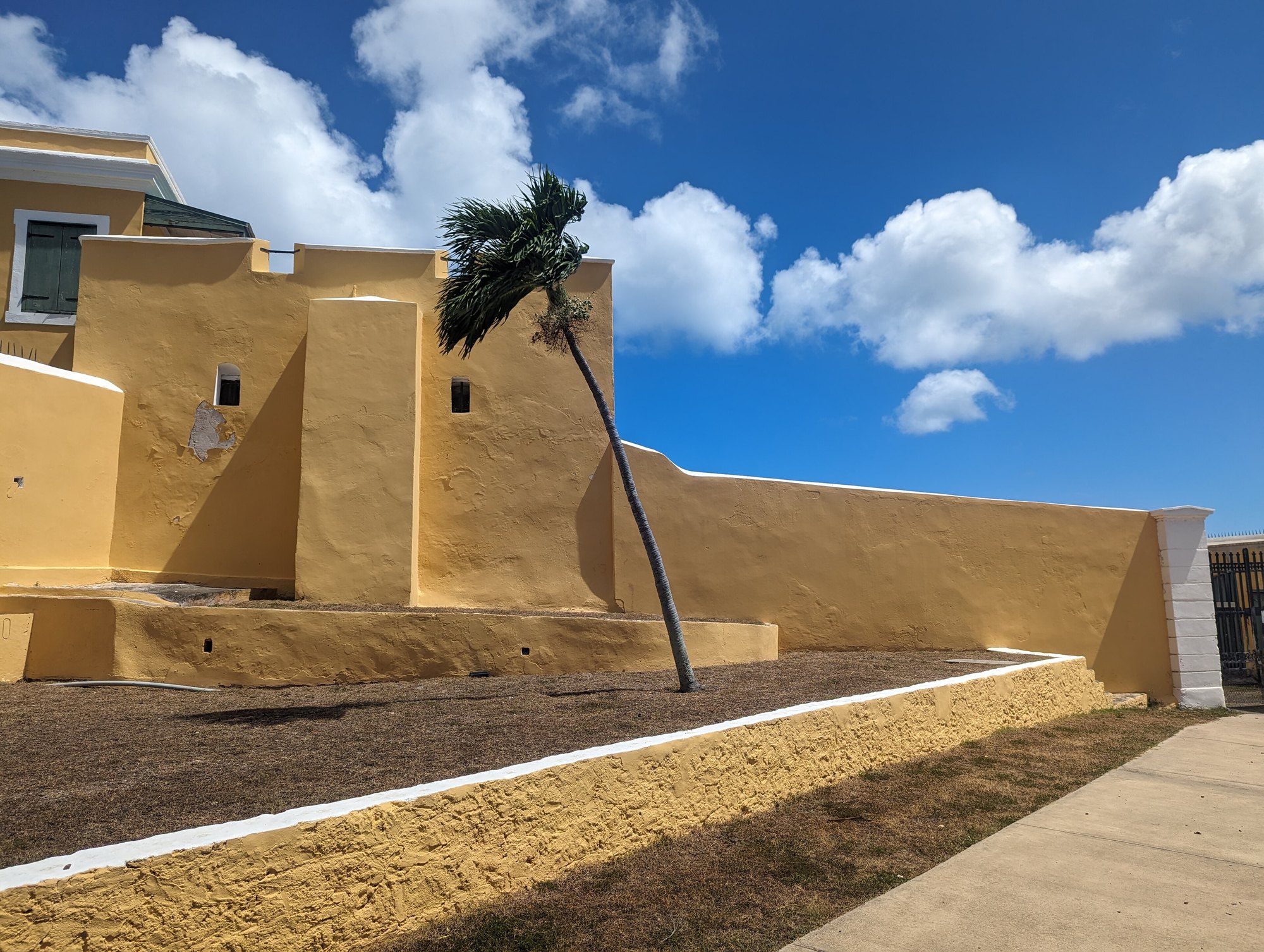
St. Croix has a pair of Danish towns, and a morning is enough to learn either one. The Danish town plan for Christiansted dates from the 1700s, and along its waterfront you still find arcaded merchant houses, the old customs house and Fort Christiansvaern's yellow walls, all within the national historic site the Park Service runs at Christiansted. Alexander Hamilton spent part of his boyhood as a clerk along these docks, and our Hamilton guide traces his island years. At Fort Frederik in Frederiksted, the west end town, the Danish West Indies' emancipation was declared on July 3, 1848.
- 1493Columbus's ships drop anchor in Salt River Bay
- 1539Construction of El Morro starts in San Juan
- 1733St. Croix changes from French to Danish hands
- 1780Bridgetown's Garrison is founded
- 1848Fort Frederik hears emancipation declared
- 1889Nelson's Dockyard is closed by the Royal Navy
- 1917The Danish West Indies turn into the U.S. Virgin Islands
Between the two towns, St. Croix offers the restored sugar estate at Estate Whim with its stone windmill, two rum distilleries, Cruzan and Captain Morgan, and St. George Village's botanical garden, set among old Danish estate ruins. Our guides to Christiansted, Frederiksted and Estate Whim go block by block.
Island food
Eating well is among the strongest reasons to pick an island, and Caribbean cooking shifts from coast to coast. Jamaica, Barbados, Puerto Rico and St. Croix are four of the tastiest.
Jerk comes from Jamaica. The country's Director of Tourism names Port Antonio on the northeast coast as the birthplace of jerk cooking, and the town is known for jerk pork and chicken, especially at Boston Bay. A day there combines lunch at the jerk stands with a swim in the Blue Lagoon or a lazy float down the Rio Grande on the bamboo rafts that used to carry bananas to port.
Barbados is known for its Friday fish fry. At Oistins, in Christ Church on the south coast, the vendors open around 6 pm and stay until just before midnight, and Friday is the big night, with many kinds of fish steak, mahi-mahi, tuna, snapper and barracuda, often served with sides and salads. Curaçao's tourism board says the island is known for fresh seafood, local fish above all, cooked Creole style.
In Puerto Rico, a pork highway winds through the hills south of San Juan, its roadside stands serving lechón, pork roasted slowly, while restaurants in Condado and the old city give you a capital's range for dinner.
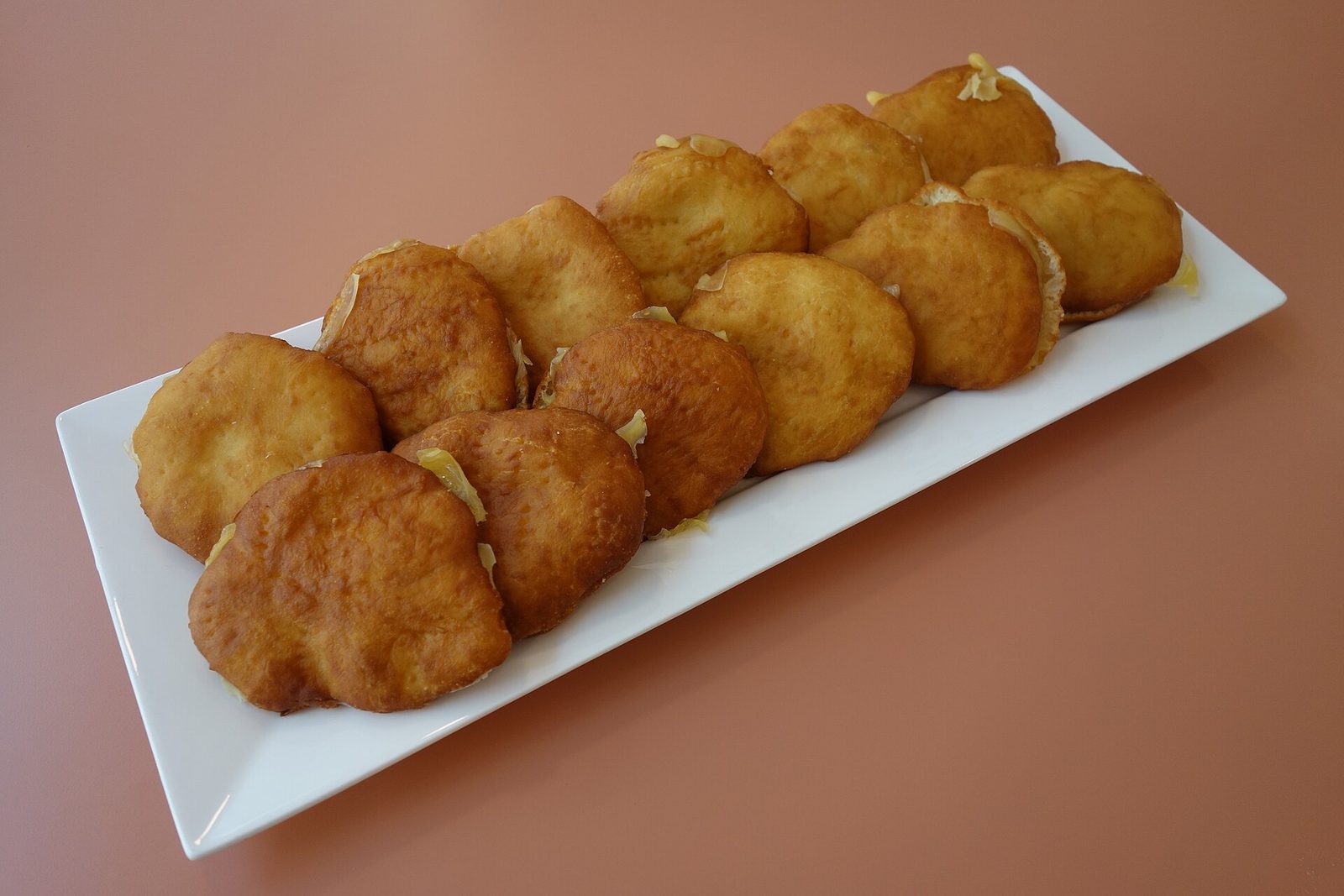
Crucian is the name for St. Croix's cooking, and it draws on West African methods, trade with Denmark, neighbors in Puerto Rico and families who came from around the islands. The dish to try first is kallaloo: okra and leafy greens simmered until thick, ladled over fungi, which is cornmeal and okra cooked together. Johnny cakes, small rounds of fried bread, taste best still hot. Say pates as PAH-tays: they are fried turnovers, and the filling may be saltfish, beef, conch or chicken. For drinks, look for sorrel, a spiced hibiscus drink served at the holidays, and maubi, which is brewed from tree bark.
The Saturday farmers market has island fruit, vegetables, herbs, honey and fish, and Christiansted offers the widest range of restaurants on the island, many with seats over the harbor. Some of the week's best Crucian meals can come out of the villa's kitchen, with a private chef making kallaloo and fish for everyone on the terrace. Our Crucian food guide walks through every dish.
Rum belongs here as well, and St. Croix distills it in two places: Cruzan, at Estate Diamond, and Captain Morgan. A Cruzan tour fits nicely into a west end day, and island rum is among the simplest souvenirs to carry home, since everyone's duty-free limit is $1,600 in purchases. Our Cruzan rum guide describes the tour.
The quietest islands
Some travelers mostly want room to breathe. An empty beach, a road with no traffic, a town you can learn in a day. Three places here deliver that best: the Exumas in the Bahamas, the east coast of Barbados and St. Croix's own East End.
The Exumas are the long Bahamian chain of cays stretching across open water south of Nassau, with clear shallows and little islands on every horizon. The tourism board sends visitors to Big Major Cay, where the famous swimming pigs live. Away from the tour boat stops, plenty of the cays are low, green and silent, places where you hear only water.
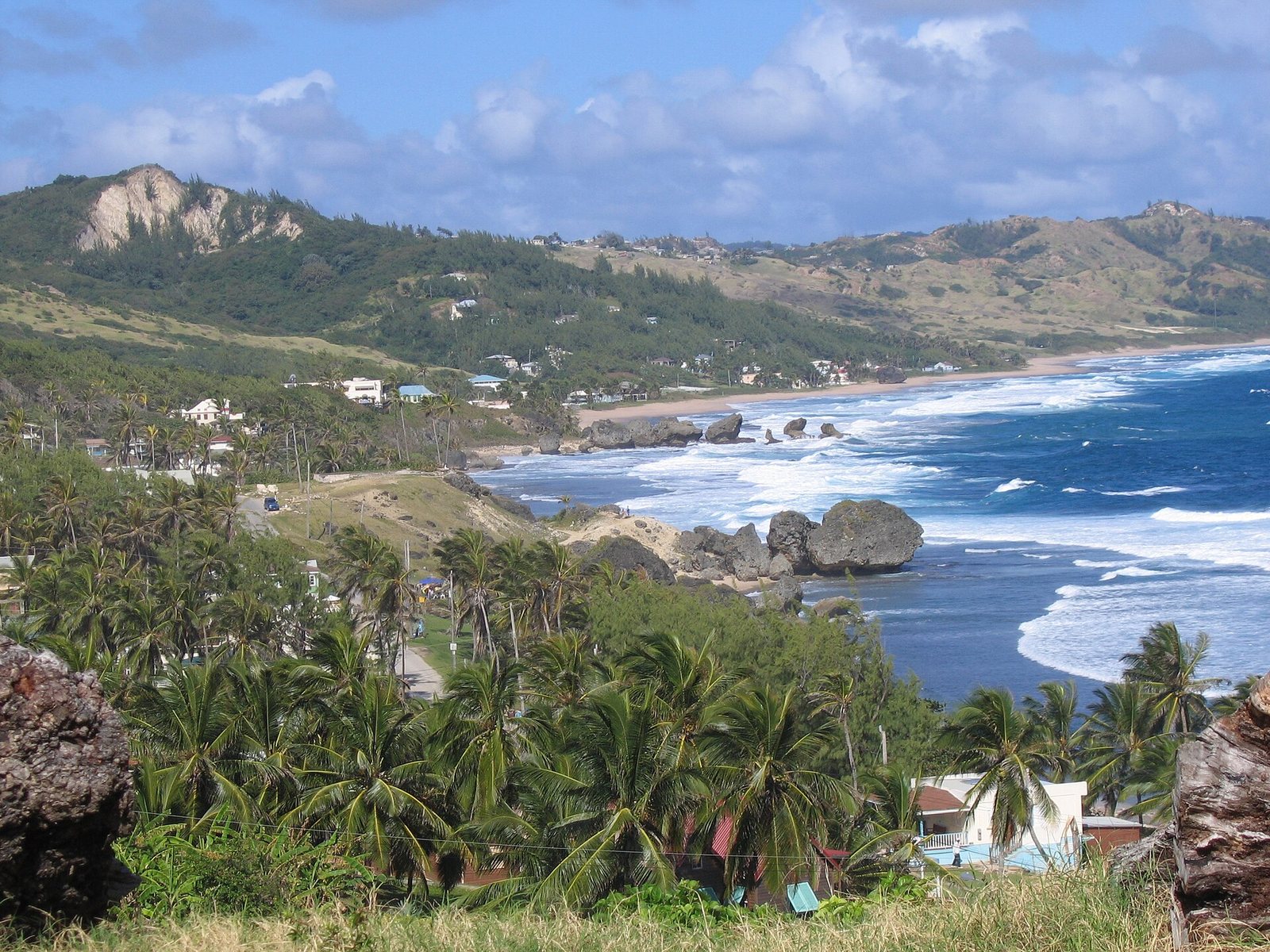
At Bathsheba on Barbados' Atlantic side, white surf rolls across huge boulders in the shallows beneath palms and green hills, a shoreline for long walks and lazy lunches.
St. Croix's calm shows up in the data. Counting overnight and cruise visitors together for 2024, the island saw roughly nine visitors per resident. The same math gives about 21 for Aruba and 37 for the Turks and Caicos, while St. Thomas plus St. John reached 49. Its single cruise pier stands at Frederiksted, roughly fifty minutes' drive west of the house.
Out east, that quiet means bays such as Jack and Isaac, a pair of white-sand beaches within a 300-acre preserve under The Nature Conservancy's protection since 1999. No road reaches either; visitors leave the car at a small lot five minutes from the house and hike in, and that walk keeps the beaches empty. The island's whole eastern tip lies in the East End Marine Park, some 60 square miles of ocean under protection, and Point Udall, the country's farthest point east, is a ten-minute drive away for sunrise.
Perhaps the quietest sand of all lies below the villa's pool deck, where most mornings nobody is on the beach except your own group. Our Jack and Isaac Bay hiking post follows the trail, and every bay gets its turn in our East End beaches guide.
Matching the island to the trip
Here the whole guide fits in one table: each trip, the islands best suited to it and St. Croix's place in it. Use it to start, then read the chapters above for the facts behind every row.
| Kind of trip | Best islands | St. Croix's angle |
|---|---|---|
| A group under one roof | St. Croix and its USVI neighbors, Grand Cayman | Quiet-bay villas and no passports |
| Grandparents with young kids | Puerto Rico, St. John, St. Croix | Medicare coverage, calm water, an easy travel day |
| Couples | Aruba, Antigua, St. Lucia | Frederiksted sunsets and villa sunrises |
| Snorkeling and diving | St. Croix, St. John, Curaçao | The Cane Bay wall and Buck Island |
| Sailing | Antigua, the British Virgin Islands | Buck Island day sails |
| All-inclusive | Aruba's Palm Beach, Punta Cana | Villa provisioning and a private chef |
| Old towns | Barbados, Curaçao, Puerto Rico | Frederiksted and Christiansted |
| Food | Puerto Rico, Barbados, Jamaica | Crucian dishes cooked at the house |
| Quiet | Barbados' east coast, the Exumas | The East End and Jack and Isaac Bay |
Several islands turn up more than once. Puerto Rico is strong on food, old towns and family travel, and it matches St. Croix on easy documents and money; our St. Croix vs. Puerto Rico post weighs the two. Aruba makes an easy first beach trip, Grand Cayman is polished and simple to navigate, and Curaçao pleases divers and town walkers equally. Of the three American Virgin Islands, St. Thomas has the most flights and shopping and St. John has the national park; our comparison of the three USVI islands covers each one.
St. Croix appears wherever a house, a reef and an easy journey count most: a group or family sharing a property, divers and snorkelers, history fans who prefer small towns, and anyone after calm water. It brings together things normally found on separate islands: a domestic flight and U.S. dollars, a coral reef with national monument status, two Danish towns, its own food culture, and bays you can only walk to.
Plenty of travelers reach for a list like this on their second or third Caribbean trip. After a first cruise through Nassau or Charlotte Amalie, the next trip is often a week on a single island. After a first resort week in Punta Cana or on Aruba's Palm Beach, the next is often a house shared with friends. And for those whose first island was St. Thomas, St. Croix offers the same easy trip with more space, a 25-minute hop to the south.
Still deciding? Reread your trip's chapter and tally which island comes up most often. If St. Croix comes out ahead, the next chapters show how the East End and The Cerulean work for a group.
The East End for a group
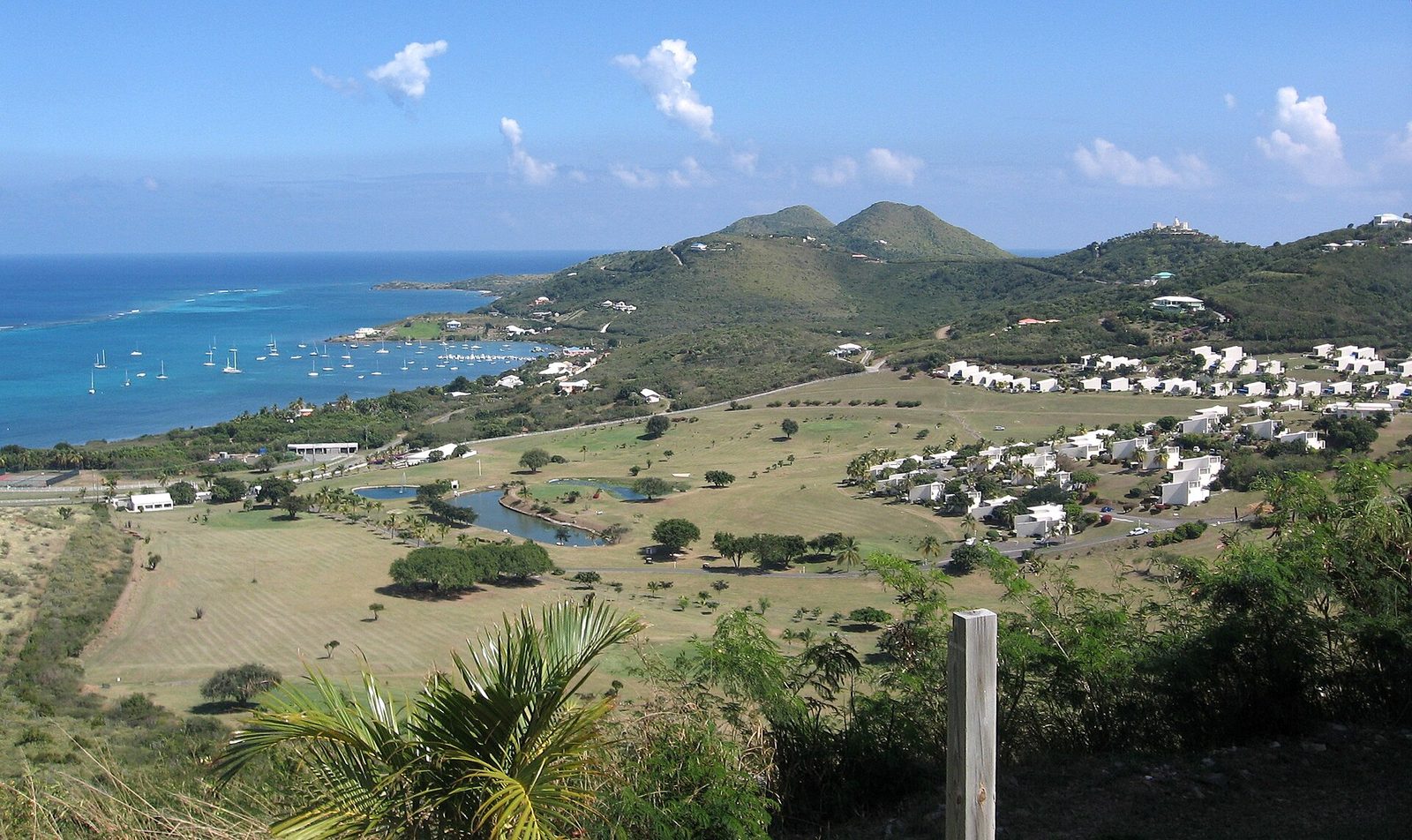
St. Croix's East End catches the sunrise, a coast of reef-sheltered coves backed by sea grape and low hills, and it makes an easy base for a group. Nearly everything a group wants during a week lies within twenty minutes of The Cerulean.
Short drives keep the days flexible. Jack and Isaac Bay's trailhead is around five minutes off, Point Udall around ten, and Green Cay Marina, where the Buck Island boats leave, also about ten, as is The Reef Golf Course with its nine holes above Teague Bay. Cramer's Park and Chenay Bay are each about twenty minutes off, and Christiansted, with its fort, boardwalk and restaurants, takes fifteen to twenty. Across the island on a scenic road lie Cane Bay and Frederiksted, a fine reason to stop for lunch along the way.
Ten to twelve people usually need two vehicles, midsize cars or SUVs, or else one car and a passenger van, so the dawn crowd can chase the sunrise at Point Udall without waking anyone. The villa offers free parking on site behind its gated drive. The concierge can also have a rental waiting and set up a ride from the airport, which solves things neatly when the group arrives on different flights.
The East End also lets a group split up easily. Any morning, the hikers can set off for Isaac Bay, the families can take small children to Cramer's Park, the divers can drive to the north shore, and everyone can reconvene at the house for lunch. That kind of day needs almost no planning on St. Croix, since the bays run along a long coastline and the drives between them stay short.
Island events add to the week. A few times a year Jump Up shuts Christiansted's streets to traffic for vendors, live bands and mocko jumbies dancing on stilts, and the farmers market makes a nice Saturday morning. Our island-wide list of things to do notes how long each drive takes from the villa.
The Cerulean, room by room
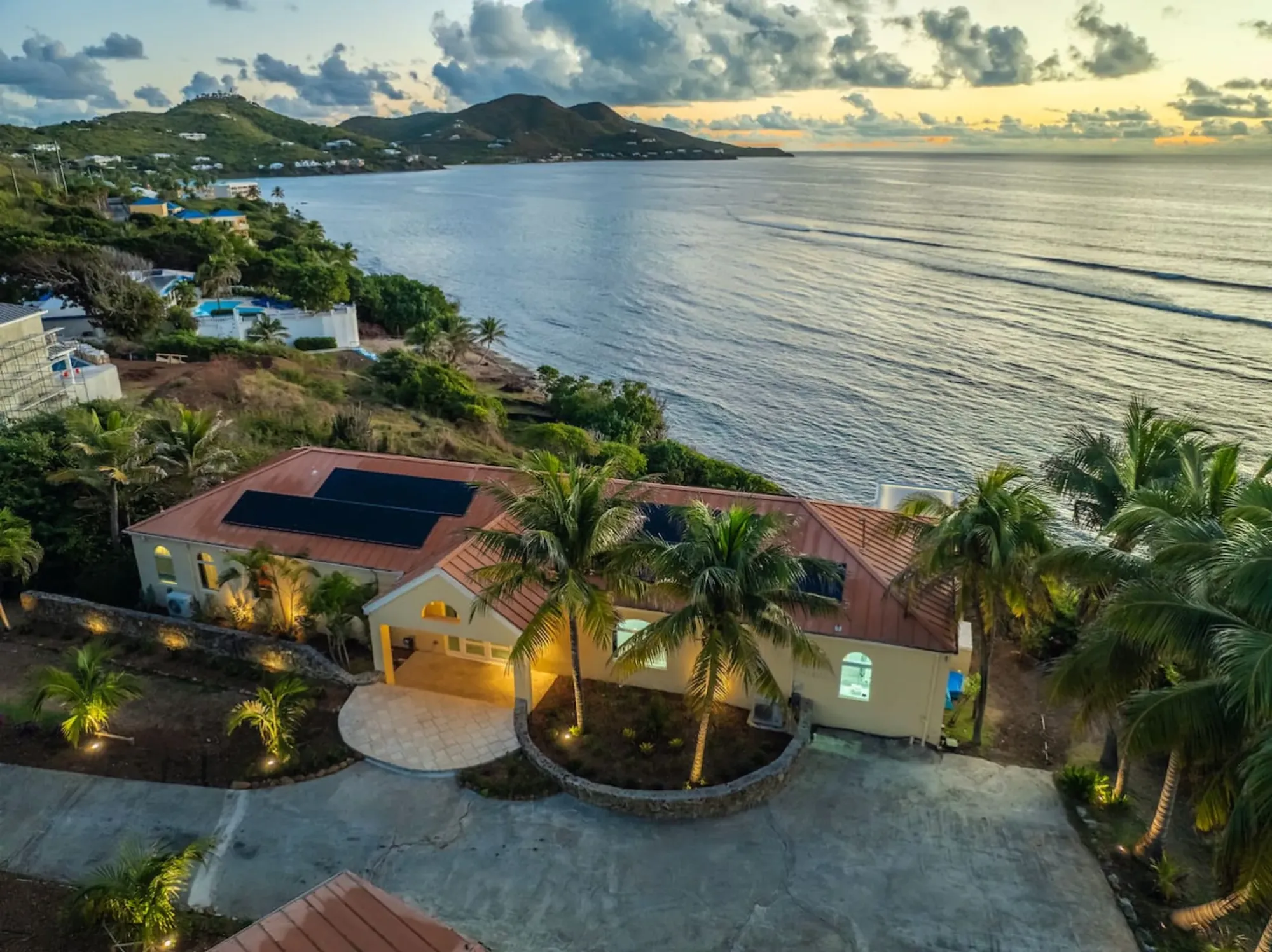
A gated private road leads to The Cerulean, whose five bedrooms and five baths face the ocean on St. Croix's sunrise coast, and it comes with a private beach and a guest cottage apart from the main house. Six beds sleep twelve.
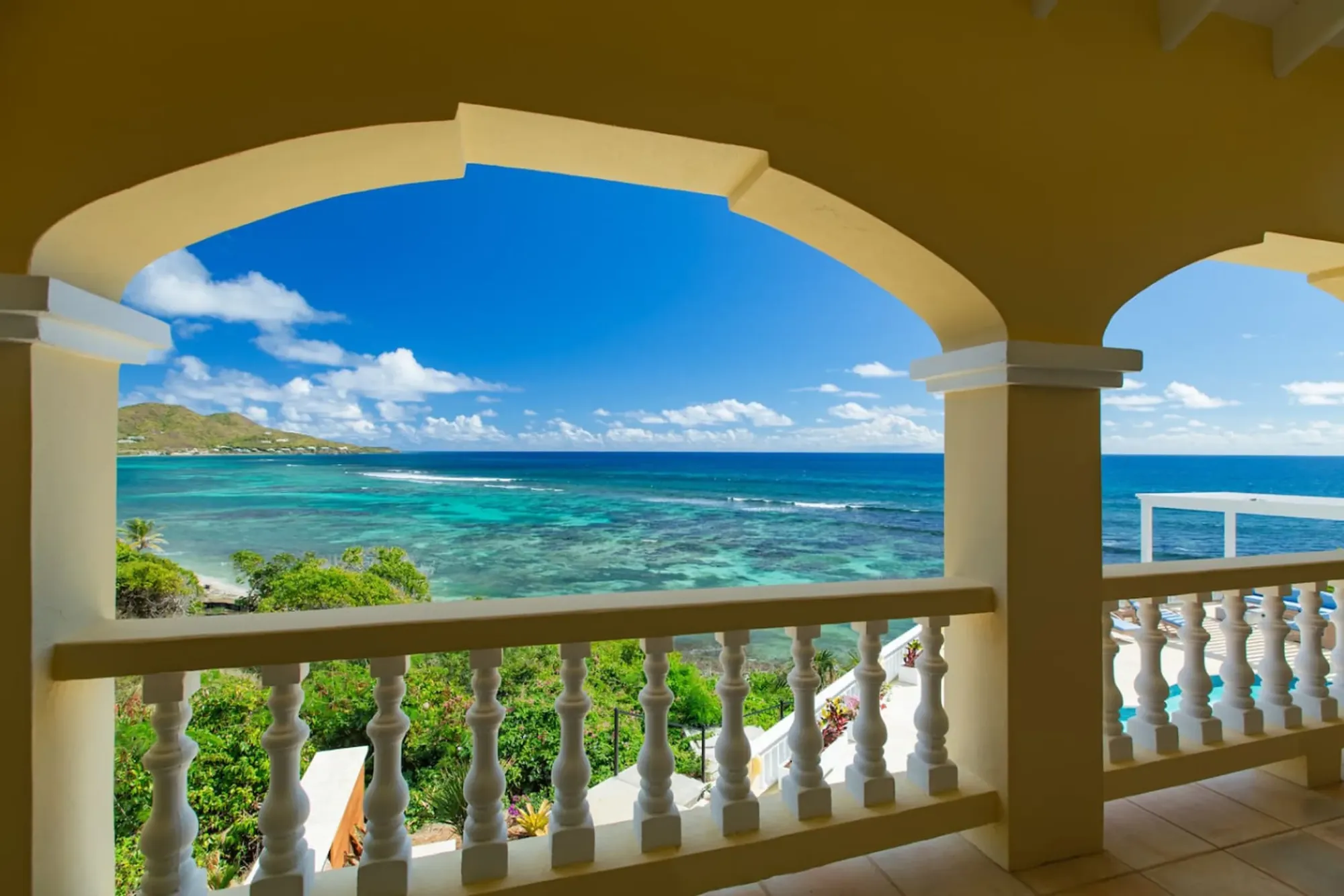
Under the vaulted, beamed roofline of the main house are four bedrooms; all have their own baths, and three look directly at the ocean. Among the baths are a freestanding tub, a walk-in shower with a window on the ocean and another walk-in shower finished in marble. Kitchen, dining and living spaces make one big open room, with the arched veranda running the length of the sea side, where the sunrise lands.
About twenty steps across the garden path is the guest cottage, with a separate front door. Inside are a sectional sofa in the living room, a kitchen with its own full-size fridge, a full bath, and a bedroom that also holds the washer and dryer. Climb the spiral staircase and you reach an open loft with the house's sixth bed, which is how the place sleeps twelve.
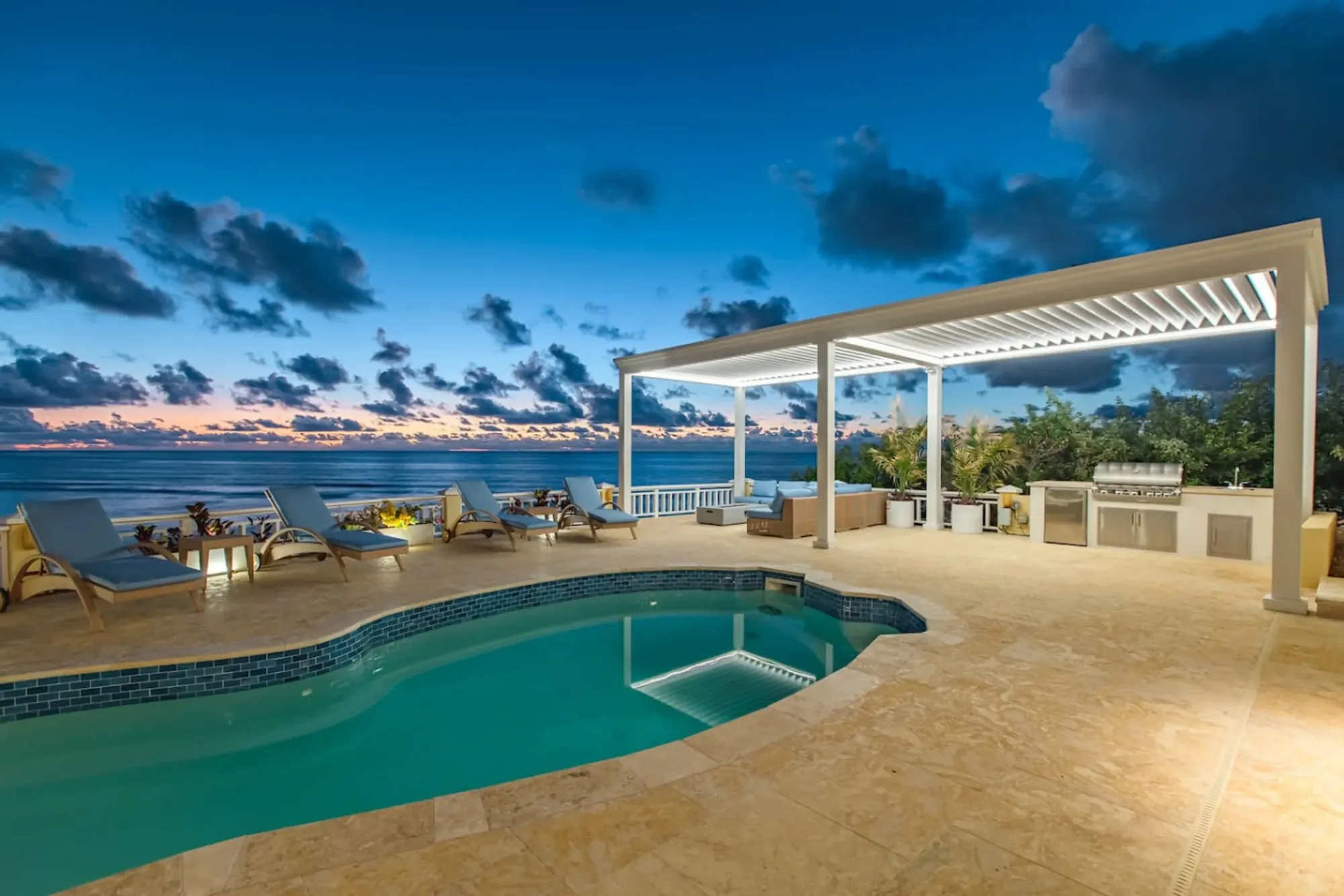
Outside, a big deck over the sea holds the private pool. Around it are loungers, covered seats, a pergola for shade, a fire pit to gather around at night, a drinks fridge poolside and a gas grill set into an outdoor kitchen. Steps lead to the private beach, where you can walk straight into shallow water sheltered by the reef.
Everything a group relies on is in place: fast Wi-Fi, a sound system and smart TVs, fresh linens and towels, laundry machines, and ceiling fans as well as air-conditioning throughout. On request, the concierge handles housekeeping, private chefs, provisioning, snorkel trips, day sails, an evening bartender and in-villa massage, and the managers drive each group to the house and give a full walk-through on arrival. Our guest cottage page and private beach page show each room and the waterfront.
Planning the week
With the island picked, planning goes quickly. Ask each household which dates work, lock in the villa, and get flights booked within a few days of that. Work out the bedroom plan before packing starts, and send your shopping list ahead to the concierge; the kitchen will be stocked by the time you arrive.
During the week, a relaxed rhythm works best: one plan per day, with long stretches at the house. One morning at Buck Island, one in Christiansted, a hike out to Isaac Bay, a west end day for Estate Whim and the sunset in Frederiksted, and otherwise the pool, the sand and the reef below the steps. Keep the private chef for the biggest celebration, and let each household take a turn cooking dinner.
Each season brings something to the East End. Fall brings sea temperatures in the low 80s, quiet beaches and easy restaurant tables in town. December through February brings the full winter flight schedule, and Point Udall's sunrises come later, while summer offers long days at the beach, school-holiday dates and turtle nesting season on the island's beaches. Our month-by-month guide to timing a visit has the details.
Keep packing light: mineral sunscreen, because the territory bans sunscreens made with octocrylene, octinoxate or oxybenzone, plus sun hats and rash guards for everyone, water shoes if you wear them and your own mask if you have a favorite. If the whole group holds U.S. citizenship, the passports can stay home; bring a copy of every child's birth certificate for the check before you fly back.
Group week checklist
10 itemsYour ticks stay in this browser only.
Should someone in the group ask why St. Croix, the island tables near the start will still be waiting. Everyone else can head straight to the calendar.
Questions people ask
Which Caribbean island should I visit?
That depends on the kind of trip. For an easy beach week, look at Aruba or Grand Cayman; for an all-inclusive resort, Punta Cana; for old towns, Curaçao and Barbados; for sailing, Antigua and the British Virgin Islands; for quiet water, the Exumas. Pick St. Croix if your family or friends want one shared house by the water, reefs near the sand, two Danish towns and a domestic flight that U.S. citizens can take without a passport.
Which Caribbean island is best for families?
American families traveling with small children or grandparents have the simplest time on the U.S. islands: St. Croix, St. John and Puerto Rico. Nobody needs a passport, anyone under 18 flying with a grown-up passes the TSA checkpoint without ID, and Medicare applies there exactly as at home. On St. Croix, a villa with a private beach sheltered by the reef, plus the gear little ones need, from baby gates to a travel crib, keeps the week simple.
What is the best Caribbean island for a large group?
Look for an island with private homes as well as hotels, so everyone can stay at one address. The USVI are full of villas, about 300 of them on St. Croix in the territory's 2024 count, and nobody has to gather passports. The Cerulean on St. Croix fits twelve guests between its main house and a cottage beside it, along with a pool and a beach of its own.
Which islands in this guide can U.S. citizens visit without a passport?
Puerto Rico and the three USVI islands, St. Croix among them. Those flights are domestic, so adults just show TSA a REAL ID or any ID from its accepted list. Each of the other islands in this guide, the Bahamas, Jamaica, Aruba, the Cayman Islands and the Turks and Caicos among them, wants a passport from every air traveler, including children.
Where in the Caribbean is the U.S. dollar the local money?
The dollar is the everyday currency in the Turks and Caicos, the British Virgin Islands, the USVI and Puerto Rico. In the Bahamas, the local dollar is kept equal to ours, and people use the two interchangeably. Aruba has the florin, Curaçao and Sint Maarten the Caribbean guilder, Antigua and St. Lucia the East Caribbean dollar, and Jamaica, Barbados and Cayman each have a dollar of their own.
Which Caribbean islands drive on the left?
Each island's tourism board says to keep left in the Bahamas, Jamaica, the Turks and Caicos, Antigua, St. Lucia, Barbados and the USVI, St. Croix included. Puerto Rico, Curaçao and Dutch Sint Maarten keep right. On St. Croix the wheel still sits on the left side, as in any car from the mainland, and limits are low, 35 mph on most roads.
What is the best Caribbean island for snorkeling and diving?
Curaçao has a name for shore diving, because its reef starts just feet off the beach. On St. John the reefs are part of a national park. On St. Croix, snorkelers follow a marked underwater trail at Buck Island, a national monument; divers reach the Cane Bay wall straight from the sand; and the Frederiksted pier makes a fine dive. At The Cerulean, you can snorkel the reef just a few feet off the private beach.
Which Caribbean island has the best old towns?
The best known are Old San Juan in Puerto Rico, Willemstad on Curaçao and Bridgetown on Barbados, and the last two are World Heritage Sites. English Harbour on Antigua holds Nelson's Dockyard. St. Croix has two small Danish towns: Frederiksted, where emancipation was declared in 1848, and Christiansted, where Fort Christiansvaern stands within a national historic site.
Is St. Croix quiet compared with other islands?
Yes. Counting overnight guests and cruise passengers, St. Croix had roughly nine visitors per resident in 2024, and its lone cruise pier is at Frederiksted. On the East End you find the Jack and Isaac Bay beaches, reached only on foot, a marine park around the island's tip and Point Udall, the farthest east point in the United States, with The Cerulean ten minutes away.
What flights go to St. Croix?
St. Croix's airport is Henry E. Rohlsen. On the November 2026 schedules, nonstops come from Miami and Charlotte on American, Atlanta on Delta, Newark on United on Saturdays, and Chicago O'Hare on American on winter Saturdays. From San Juan, Cape Air and JetBlue take 40 to 50 minutes. From the airport, The Cerulean is 35 to 40 minutes by road.
Sources
All of these sources were read in November 2026, and since entry requirements, currencies, timetables and arrival totals keep changing, check with the island's own government or tourism office before you commit.
- World Bank: Population, total, 2024 (Caribbean countries and territories)
- World Bank: Land area (sq. km), 2022
- SIX Group: ISO 4217 currency code list (published September 17, 2026)
- U.S. Customs and Border Protection: Western Hemisphere Travel Initiative
- U.S. Department of State: Country information pages for U.S. travelers
- Transportation Security Administration: Identification
- Visit USVI: No passport required for U.S. visitors
- Visit USVI: Travel tips and FAQs (language, currency, driving)
- Go Dominican Republic (Ministry of Tourism): Entry requirements
- Go Dominican Republic (Ministry of Tourism): Punta Cana
- Discover Puerto Rico: Car rentals (driving side)
- Discover Puerto Rico: Transportation in Puerto Rico
- Discover Puerto Rico: Visit El Yunque National Forest
- Discover Puerto Rico: Exploring the pork highways
- Discover Puerto Rico: Record-breaking 2024 (Jan 29, 2025)
- National Park Service: San Juan National Historic Site history and culture
- National Park Service: Christiansted National Historic Site
- U.S. Census Bureau: 2020 Gazetteer files (Puerto Rico land area)
- Tourism Analytics: Aruba stopover and cruise arrivals (Aruba Tourism Authority data)
- Parliament of the Cayman Islands: Deputy Premier's statement on 2024 tourism performance
- Cayman Islands Economics and Statistics Office: Compendium of Statistics 2024, tourism tables
- Turks and Caicos Islands Statistics Department: Population statistics
- Cruise Industry News: Turks and Caicos cruise arrivals in 2024 (Jan 31, 2025)
- Aruba Tourism Authority: Tips for visitors (currency)
- Aruba Tourism Authority: Languages spoken in Aruba
- Aruba Tourism Authority: Getting around Aruba
- Go Dominican Republic (Ministry of Tourism): Travel tips
- Visit Jamaica: Good things to know (FAQ)
- Visit Jamaica: An insider's guide to Port Antonio
- The Bahamas Ministry of Tourism: Travel tips and FAQ
- Visit Barbados: Vehicle rentals
- Visit Barbados: Historic Bridgetown and its Garrison
- Visit Barbados: Oistins Bay Gardens
- Saint Lucia Tourism Authority: Getting around St. Lucia
- Visit Antigua and Barbuda: Getting around
- National Parks Authority, Antigua: Nelson's Dockyard National Park
- Curaçao Tourist Board: What is Curaçao known for?
- Curaçao Tourist Board: Traffic rules
- Curaçao Tourist Board: Do people speak English in Curaçao?
- Vacation St. Maarten: Transportation
- Turks and Caicos Tourism: Getting around Turks and Caicos
- BVI Tourism: Frequently asked questions
- National Park Service: Virgin Islands National Park
- National Park Service: Buck Island Reef National Monument, basic information
- Government of the U.S. Virgin Islands, Office of Management and Budget: Revenue Estimating Conference, March 2025 (visitor, cruise and lodging counts)
- U.S. Census Bureau: 2020 Census, U.S. Virgin Islands population by island (Table 1)
- Government of Aruba: Strong tourism in 2024
- Cayman Islands Economics and Statistics Office: Compendium of Statistics 2024
- Turks and Caicos Islands Statistics Department: Tourism statistics
- Bahamas Ministry of Tourism: More than 11 million visitors in 2024 (Feb 5, 2025)
- Banco Central de la República Dominicana: Informe del flujo turístico 2024
- Discover Puerto Rico: Facts about Puerto Rico
- Medicare.gov: Travel outside the U.S.
- The Nature Conservancy: Jack and Isaac Bay Preserve
- Verizon: Domestic roaming FAQs (U.S., Puerto Rico, USVI)