

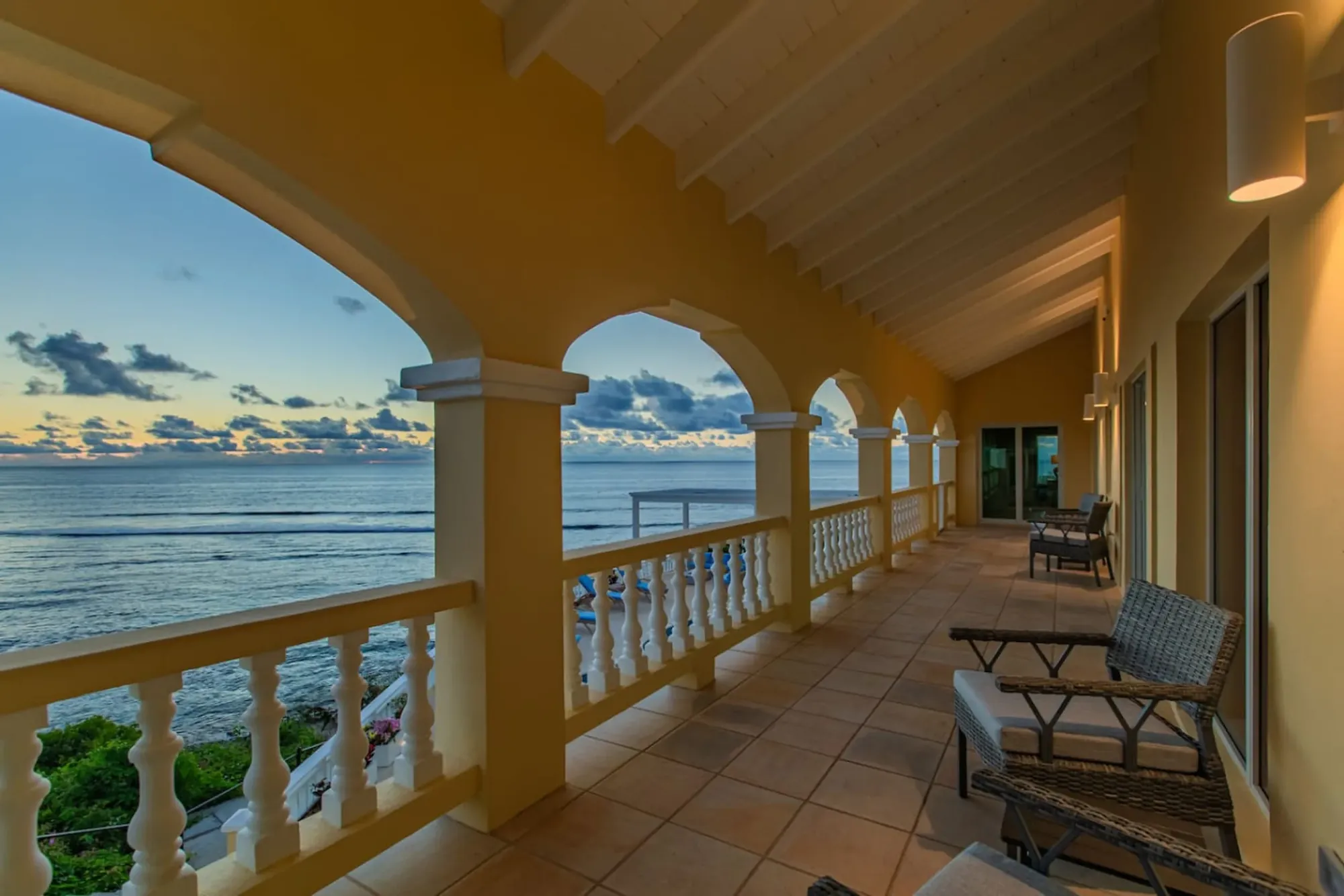
Some trips work best when everyone comes: grandparents, parents and grandchildren in one house for a week. St. Croix makes that kind of trip simple to plan. For U.S. citizens it is a domestic flight with no passport, the money is the dollar, the everyday language is English, and Medicare counts the U.S. Virgin Islands as part of the United States. On the island, the East End is quiet, sunny and close to the sea, with a Danish fort, a botanical garden and the easternmost point of the country all within an hour. This guide is about doing it well at The Cerulean, a five-bedroom oceanfront villa that sleeps twelve, with a separate guest cottage that has its own front door, kitchen, living room, bedroom and full bath. It covers who sleeps where, how the day runs when three generations keep three different clocks, the outings that suit every age, the travel details older guests ask about, and a week, day by day.
Why St. Croix suits three generations
A trip with three generations has a few things to settle first: documents for everyone, flights and care the oldest travelers can count on, a beach for small swimmers, and a house where people can be together at dinner and apart at nap time.
St. Croix settles the first of those before you pack. It is the largest of the U.S. Virgin Islands, a U.S. territory, so a flight from the mainland is a domestic flight, and a grandparent who has never had a passport can come along on a REAL ID driver's license. Prices are in dollars, the everyday language is English, most U.S. phone plans work as they do at home, and the island keeps Atlantic Standard Time all year, which matches the East Coast in summer and runs an hour ahead in winter. Nonstops from Miami take about three hours and the others under five, and Henry E. Rohlsen Airport is small, with ten gates. The chapters below cover the documents, the flights and Medicare in detail.
Then there is the East End itself, the sunny, breezy end of the island, with low hills, unhurried roads and reef-protected water. The places worth seeing are close: Point Udall about ten minutes away, Christiansted fifteen to twenty, and the west end's museum and gardens within an hour, so a morning outing still leaves the afternoon for the pool.
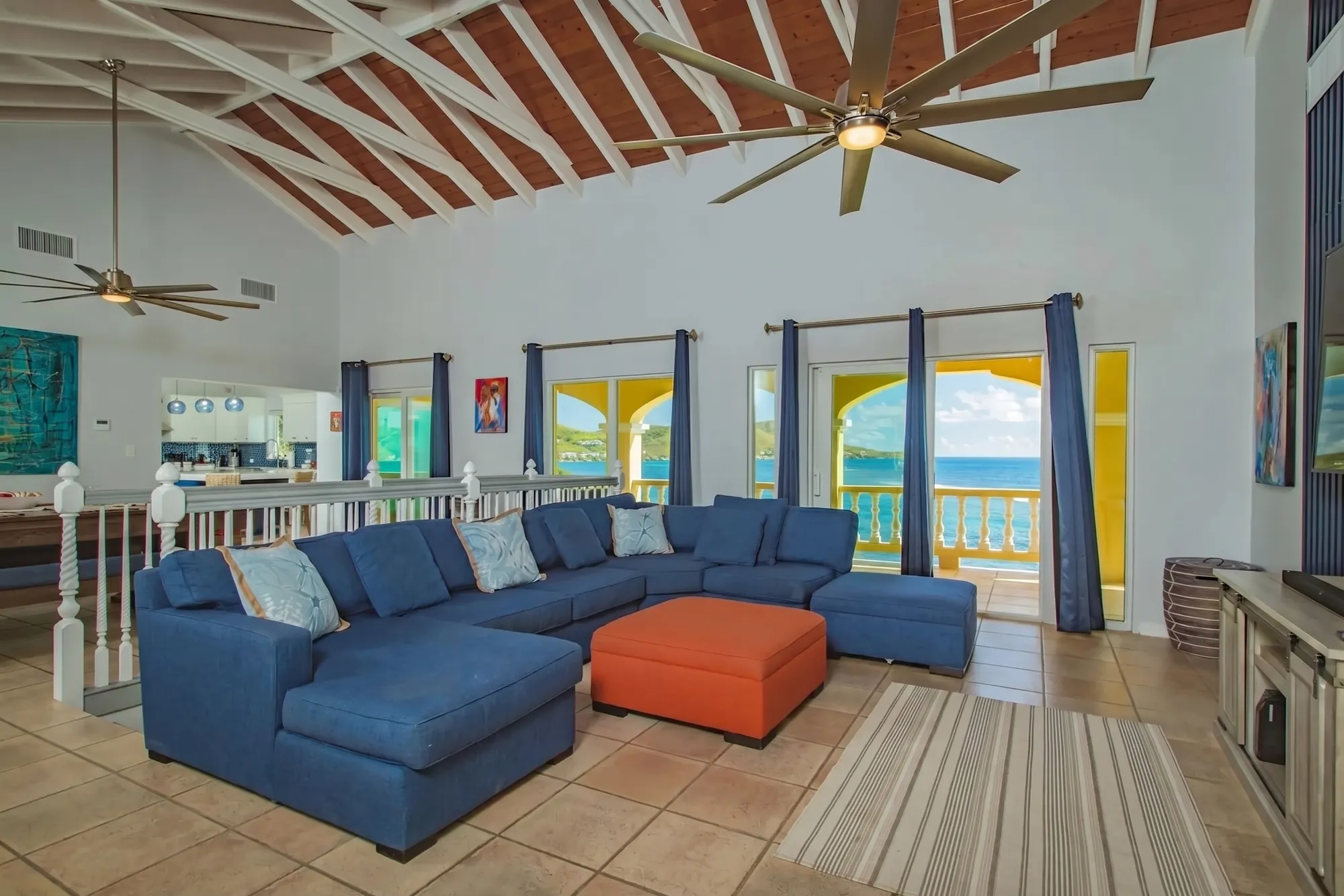
The Cerulean was laid out for this kind of group. The main house has four en-suite bedrooms, and the guest cottage is a small house of its own about twenty paces away, so the family shares the pool, the beach and the table, and each household still has a door to close. Our earlier post on bringing the whole family walks through the layout in brief. One March guest summed it up in a line.
“Four spacious bedrooms in the main house, plus a separate fifth suite. Ideal for groups or multi-generational families.”
Suzanne, a guest in March 2026
The guest cottage as the grandparents' house
For many families the cottage answers the first question on the planning call: the grandparents get a house of their own. It sits along a garden path from the main house, with its own front door, its own kitchen, a living room, a bedroom and a full bathroom, and it is air-conditioned like the rest of the villa. The cottage is never rented separately; it comes with every booking.
What that means in practice is a morning on their own terms. Early risers can make coffee in the cottage kitchen at whatever hour they wake, without tiptoeing through a main house full of sleeping teenagers. The cottage has a full-size refrigerator of its own, so the things grandparents like, the particular yogurt, the decaf, the evening glass of wine, have a home that nobody else raids. The living room gives them somewhere to read or put their feet up in the afternoon, and there is a washer and dryer in the cottage for a week of swimsuits and beach towels.
It also gives them a calm corner without leaving the party. When the pool is full of cousins at four in the afternoon, the cottage is a short walk away. When dinner runs late, the grandparents can say good night and be in their own bed in two minutes, while the rest of the family carries on at the fire pit.
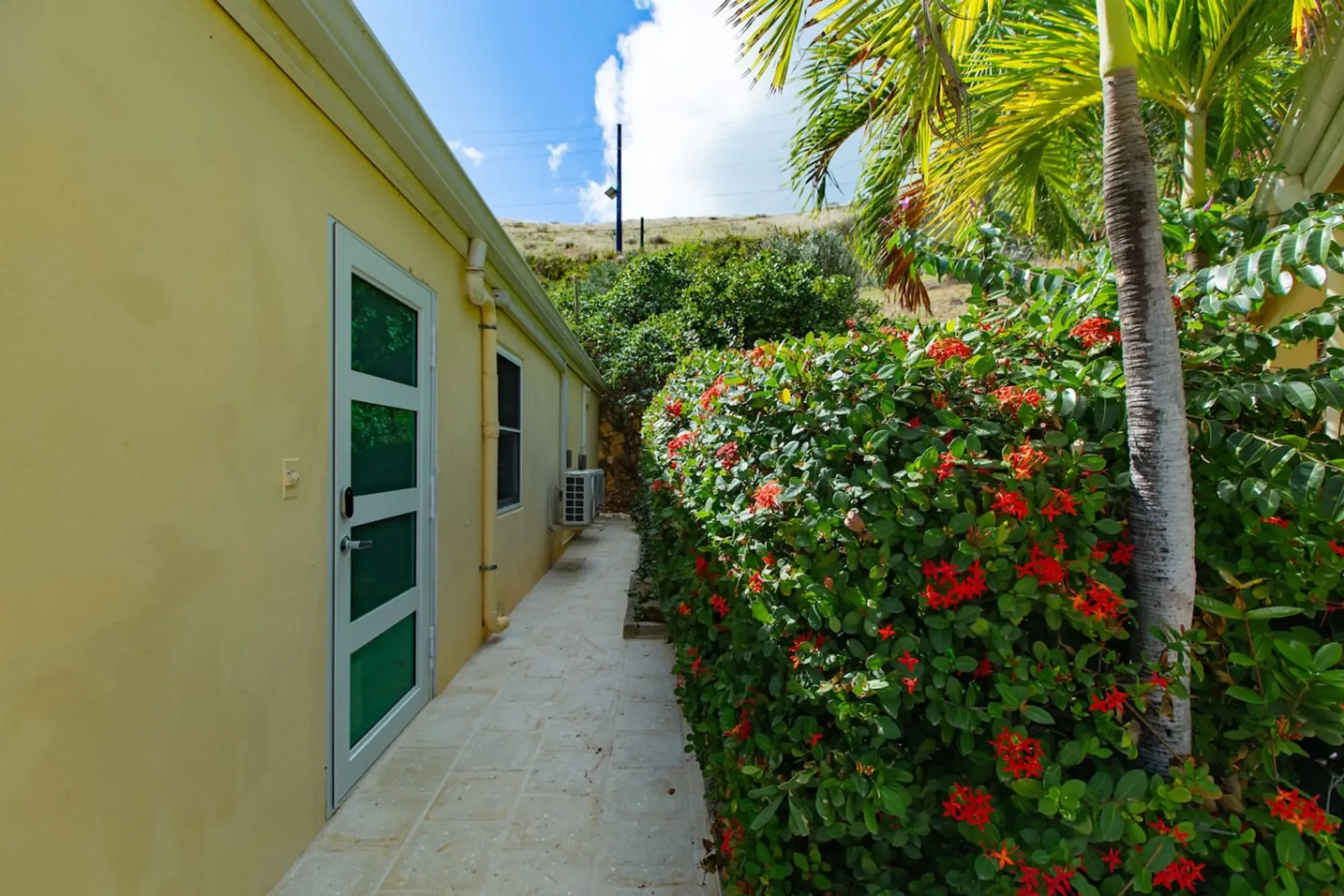
Grandparents who want company can just as easily spend the whole day in the main house and on the pool deck and use the cottage only to sleep. Many like having the option more than they use it.
Above the cottage living room is the loft, with the villa's sixth bed. When the grandparents take the cottage, it usually goes to a teenager or an older grandchild happy to bunk near Grandma and Grandpa. Our guest cottage page has photographs of every room.
“The beachfront area was perfect to sit and listen to the waves, and the house gave everyone their own space and bathrooms.”
Lisa Jeff, a guest in February 2026
The cottage for the young family
Some families flip the plan, and it works just as well. When the youngest grandchild is a baby or a toddler, the cottage can become the young family's house, and the grandparents move into a main-house bedroom with its own bathroom, close to the kitchen and the terrace.
Naps and early bedtimes are why. A baby who sleeps at one and again at seven does best in a room of its own, and the cottage gives the baby a dark room behind its own front door while the parents stay a short walk from the pool deck. The cottage kitchen handles bottles, early breakfasts and the snack that has to happen at a quarter to six in the morning, and the washer and dryer handle the rest.
The villa's amenity list includes a high chair, a travel crib and baby gates. Tell Sterling Point which house the baby will sleep in when you book, and ask to have the crib and high chair placed there. With a toddler in the cottage, give the loft to an older cousin or leave it empty that week.
This version suits grandparents too. A main-house bedroom puts them steps from the coffee, the shaded terrace and the evening conversation, with a private bathroom of their own. Three of the four main-house bedrooms have direct ocean views, so ask for one of those for a grandparent who likes to wake to the sea.
To choose between the two plans, give the cottage to the household with the most fixed schedule, since it is the one place on the property that keeps its own hours. If two households have babies, it goes to the one with the earliest bedtime. Decide before the flights are booked, so every household arrives knowing its room.
Who sleeps where
The Cerulean sleeps twelve in six beds, two to a bed, across two buildings. The main house has four bedrooms under its vaulted, beamed roofline, each with its own bathroom, and three of them with direct ocean views. The cottage has one bedroom with a full bath, and the loft with the sixth bed, which shares the cottage bathroom.
The one bed to assign with care is the loft, which is up a spiral stair from the cottage living room. Give it to teenagers, college students or young adults who climb easily and like a bed of their own up high. Give the bedrooms to grandparents, to anyone who prefers flat ground, and to parents of the youngest children.
If anyone in the group uses a wheelchair, a walker or a cane, ask Sterling Point, the company that manages the villa, to walk you through the paths from each room to the pool deck and the beach before you assign rooms. The 3D virtual tour lets you move through the rooms on screen first, and the bedrooms page shows each one. Every room has air conditioning and ceiling fans, so each household can set its own temperature.
Here are two plans for a family of twelve. In the first, the grandparents take the cottage. In the second, a young family with a baby in the travel crib takes it.
| Room | Grandparents in the cottage | Young family in the cottage |
|---|---|---|
| Cottage bedroom | Grandparents | Parents, baby in the travel crib |
| Cottage loft | Two teenagers | Empty, or an older cousin |
| Main-house bedroom, ocean view | Parents | Grandparents |
| Main-house bedroom, ocean view | Parents | Parents |
| Main-house bedroom, ocean view | Aunt and uncle | Aunt and uncle |
| Main-house bedroom | Two cousins | Two cousins |
Fill in your own names in the planner below and share it in the family chat before anyone books a flight.
Room planner
Who sleeps where
Six beds across the main house and the guest cottage, two people to a bed. Type names in, copy the plan, and paste it into the family chat. Nothing leaves this browser.
A domestic flight for every generation
For U.S. citizens the paperwork is light, and that is a big part of why families with grandparents choose St. Croix. The U.S. Virgin Islands are a domestic destination: no passport, no immigration line when you land, and no money to change.
Adults 18 and older need the same ID they would show for a flight to Denver: a REAL ID-compliant driver's license or state ID card, or another document TSA accepts, such as a U.S. passport, a passport card or a Global Entry card. A grandparent who no longer drives can use a state-issued non-driver ID card, as long as it carries the REAL ID star. TSA does not require children under 18 to show identification when traveling within the United States, so the grandchildren need nothing at the checkpoint.
There is one extra step, and it comes at the end of the trip. Because the territory sits outside the U.S. customs zone, flights from St. Croix to the mainland start with an agriculture check of your bags and a Customs and Border Protection check of identity and citizenship at the airport. It is a brief process at a small airport, and it means you land in Miami or Charlotte like any other domestic passenger. Plan to be at the airport about two hours before a mainland flight, leave fresh fruit and cut flowers in the villa kitchen, and carry a copy of each child's birth certificate in case the officer asks about citizenship. Each traveler, children included, also has a $1,600 duty-free allowance, double the usual amount.
For a big family, the practical habit is one folder. Put a photo of every ID and every birth certificate in one adult's phone and paper copies in one carry-on, and give that adult the job of getting everyone through the airport. Relatives who are not U.S. citizens follow the normal U.S. entry rules for their nationality and should bring their passports. Our no-passport guide covers every case.
Flights and airport help for older travelers
Most families pick their week by the flights, and St. Croix's schedule rewards a Saturday-to-Saturday stay. American flies from Miami every day, and this winter brings daily or Saturday nonstops from Charlotte, Atlanta and Chicago, plus United's Saturday flight from Newark, the first New York-area nonstop to the island in more than thirty years. The table shows the schedule as published when we checked in October 2026; airlines adjust it, so check before you book.
| From | Airline | As scheduled, 2026-27 | Time in the air |
|---|---|---|---|
| Miami (MIA) | American | Twice daily | About 3 hours |
| Charlotte (CLT) | American | Saturdays from Nov 7, daily Dec 17 to early April | About 3 3/4 hours |
| Atlanta (ATL) | Delta | Saturdays from Nov 14, daily Dec 19 to Jan 8 | About 4 hours |
| Chicago (ORD) | American | Saturdays Dec 19 to Jan 2, then from Feb 13 | About 4 3/4 hours |
| Newark (EWR) | United | Saturdays, Oct 31 to Sep 10, 2027 | About 4 1/4 hours |
Most of those flights land in the afternoon, which suits older travelers: no red-eye, no pre-dawn alarm on the way down, and time to settle in before dinner. When the branches of a family live in different cities, each household can take its own nonstop or connection and meet at the villa, or the grandparents can fly to the parents' hub and travel the last leg together. Our getting here page keeps the routes current, with city pages for New York, Chicago, Atlanta, Charlotte and Miami.
Airport help is there for the asking. Federal rules require U.S. airlines to provide the assistance a passenger with a disability asks for in getting on and off the plane, including ground wheelchairs, and help moving between gates to make a connection. Ask for it when you book, confirm it at check-in, and ask again at the gate on each connection. A grandparent who walks well at home may still be glad of a wheelchair through a big hub like Miami or Atlanta.
At the security checkpoint, TSA Cares answers questions about screening with medical devices, mobility aids and medical conditions, and TSA asks travelers who want help to call at least 72 hours before departure. Keep medicines, glasses and hearing aids in the carry-on, never in a checked bag.
On arrival, the drive to the villa is about 35 to 40 minutes, and if nobody wants to drive on the first afternoon, the concierge can arrange an airport pickup and a vehicle for the week. On the way home, allow a little extra time on a busy Saturday so the agriculture and customs checks never feel rushed.
Medicare, prescriptions and care on the island
Peace of mind is part of the trip for older travelers, and here St. Croix has a quiet advantage over most of the Caribbean. Medicare's own travel page lists the places it counts as part of the United States: the 50 states, the District of Columbia, Puerto Rico, the U.S. Virgin Islands, Guam, the Northern Mariana Islands and American Samoa. So Original Medicare works on St. Croix as it does on the mainland, with doctors and hospitals that accept Medicare. Medicare usually does not cover care outside the U.S., which is why this list matters when a family compares islands.
Medicare Advantage plans work their own way, because they use networks and service areas. Anyone on an Advantage plan, or on private insurance through an employer, should call the number on the card before the trip and ask about three things on St. Croix: routine visits, urgent care and emergencies. Plans answer those questions differently, and one call settles all three.
Prescriptions travel easily. Pack every medication in its original labeled container in a carry-on bag, with a written list of medicines and doses, and bring a few extra days' supply in case a flight changes. Bring enough for the whole stay, along with hearing-aid batteries, spare glasses and anything else that is hard to replace on short notice.
The island has the care a family wants close by. Governor Juan F. Luis Hospital and Medical Center in Christiansted runs an emergency department around the clock. Keep the villa's address saved in every adult's phone, and put the managers' number, 340-205-3929, on the refrigerator in both kitchens; the villa managers are the people to call if anything comes up during the week.
How the day runs for three generations
Every multigenerational house runs on three clocks at once. There are the sunrise people, usually the grandparents and the smallest children, who are awake before six and ready for the day by seven. There are the nap people, the babies and toddlers and their parents, whose early afternoon belongs to a dark room. And there are the night owls, the teenagers and young adults, who come alive after dinner and would happily sleep until ten.
Plan one shared event a day, usually a morning outing or a long dinner, and let the rest of the day run on each group's own clock. The villa makes that easier than a hotel would: two houses, two kitchens, a pool deck, a beach, a covered terrace and a fire pit give everyone somewhere to be. A day that suits all three clocks looks something like this.
- 6:00 amSunrise people make coffee in the cottage kitchen and watch the light come up off the sea
- 7:00 amA swim or a snorkel on the villa's reef while the water is at its stillest
- 9:00 amThe one outing of the day, back by lunch
- 12:30 pmLunch on the covered terrace for everyone
- 1:00 pmQuiet hours for naps, books and cards
- 4:00 pmPool time for every age
- 5:30 pmSupper for the youngest children
- 7:30 pmDinner for the grown-ups on the terrace
- 9:00 pmThe fire pit for the night owls
Two cars help keep the clocks apart. A group of ten or twelve needs two cars, or a passenger van and a car, anyway, and with two the early risers can drive to Point Udall at dawn while the rest of the house sleeps, and the teenagers can go to a dive shop in the afternoon without leaving the grandparents without a ride. Reserve both when you book the villa; our car rental directory lists the companies. Traffic keeps to the left in ordinary American cars, so the driver sits next to the road's edge, and most drivers settle in within the first ten minutes. Our driving guide covers the roads by name.
A shared calendar in the family chat does the rest. Post the one outing for each day, who is going and in which car, and leave everything else open. The best moments of a three-generation week are often the unplanned ones: a grandparent teaching a grandchild a card game on the terrace, or a toddler and a grandmother counting pelicans from the veranda.
Mornings for the early risers
The best hour at The Cerulean belongs to whoever is up first. The villa faces east, so the sun comes up over the sea in front of the house, and the veranda and terraces look straight out at it. The sun is up before six in early summer and before seven in midwinter, and the sky starts to color twenty minutes or so before that.
“Great property with a super private location. The sunrises are incredible.”
Suzanne Temple, a guest in March 2026
For grandparents, the early hour is often the favorite part of the day, and it is a fine time to have a grandchild to themselves. Make it a standing date: one grandchild a morning, cocoa or juice from the cottage kitchen, and two chairs on the veranda to watch the light come up and the pelicans start fishing the reef.
The early hour is also the best time for the water. The sea is usually at its stillest just after sunrise, before the trade wind builds, which makes it the easiest time for a first snorkel with a child or a gentle swim for a grandparent. The water off the villa is warm all year, about 80°F in winter and about 84 to 85°F in late summer and fall.
The early risers can also cover the errands, a grocery top-up while the rest of the house sleeps, or the five-minute drive to the Jack and Isaac Bay trailhead for a walk in the first light. Most mornings, though, the veranda is enough, and our post on why the mornings are the point makes the case for staying put.
Midday at the pool and in the shade
After the morning outing and lunch on the covered terrace, the afternoon splits three ways on its own.
The nap people go to their rooms. Every room at the villa is air-conditioned, with ceiling fans as well, so a baby's nap or a grandparent's rest happens in a cool, dark room, and the cottage keeps its own hours while the pool is busy. Set a family quiet time from about one to three, and the whole house slows down together.
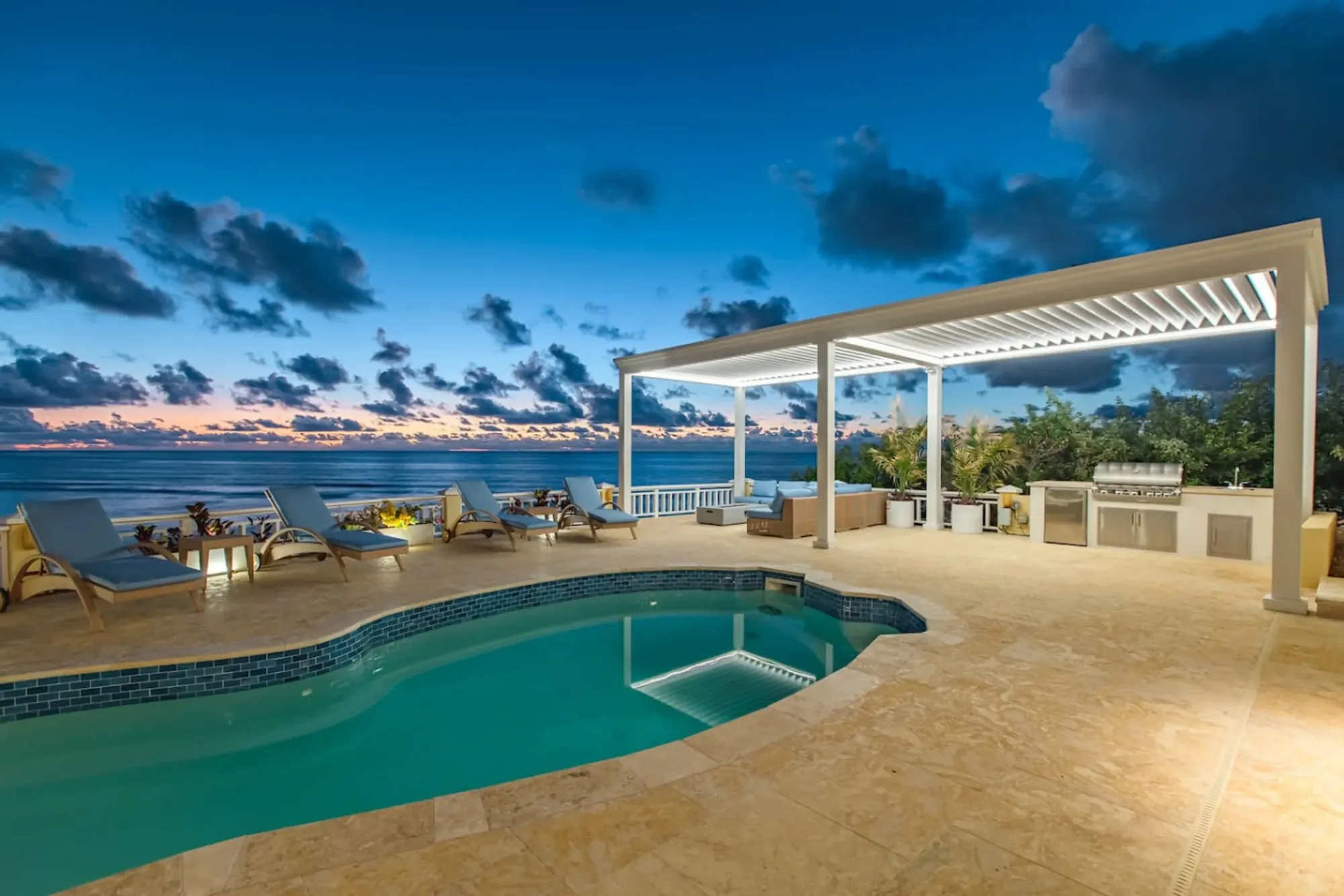
The pool people take the deck. The private pool sits on a large deck above the villa's beach, with sun loungers, a shaded pergola, covered seating and a drinks refrigerator for cold juice without a trip to the kitchen. Grandparents who like the water but prefer the shade can sit under the pergola within arm's reach of the action. Set one simple rule for the week: whenever a child is in the pool, one adult is on the deck and watching, with the job handed over by name, like a relay baton. Grandparents often like that job, and it gives the parents an hour off.
The readers and card players take the covered terrace, which looks over the sea and catches the breeze. Keep a deck of cards, a jigsaw puzzle and a stack of books there for the week. The house has smart TVs, a sound system and high-speed Wi-Fi for the teenager who needs an hour of a screen and the grandfather who wants the ball game.
The afternoon is also the time for the kind of care a busy week rarely makes room for. The concierge can book in-villa massage, yoga and beauty services by appointment, which suits a grandmother's birthday or a parents' afternoon off while the grandparents take the children to the pool. Housekeeping can be arranged daily or mid-stay on request. By four the whole family is back on the deck; our pool and deck page has photographs, and the post on a day by the pool shows how the hours go.
Evenings for the night owls
Evenings at a three-generation house run in two sittings, and that is how most families like it. Feed the youngest children around half past five, get them bathed and down by seven, and let the grown-ups eat at half past seven or eight on the terrace while the light goes. The outdoor kitchen on the pool deck has a gas grill, so whoever is cooking stays in the conversation, and there is dining indoors under the beamed ceiling and outdoors on the terrace, with place settings for twelve or more.
After dinner, the fire pit takes over. The fire-pit terrace sits above the water, and on a clear night with no moon the sky over the sea to the east is dark enough for a good look at the stars. This is the hour for the family stories, and when the oldest guests are ready for bed, the cottage is just across the garden.
The night owls have outings of their own. The bioluminescent bay at Salt River, on the north shore, glows when a paddle or a hand stirs the water, and guided kayak trips of about two hours run on the darkest nights, around the new moon. Prices run about $50 to $55 a person, and at least one outfitter sets a minimum age of eight, which makes it a night for the teenagers and their parents. Our bio bay guide explains how the moon decides the best nights.
Christiansted is fifteen to twenty minutes away for a dinner out, and the island's best tables book ahead, especially in winter. If your week lines up with a Jump Up, Christiansted's Friday-evening street party with music, food vendors and mocko jumbies, the stilt dancers, it runs from about six to ten and is early enough for every age. The dates are set late, so check our Jump Up guide the week before.
For a milestone dinner, a grandparent's eightieth birthday or a fiftieth anniversary, the concierge can arrange a private chef and a bartender for the evening, so nobody in the family spends the night in the kitchen.
Cooking and eating together
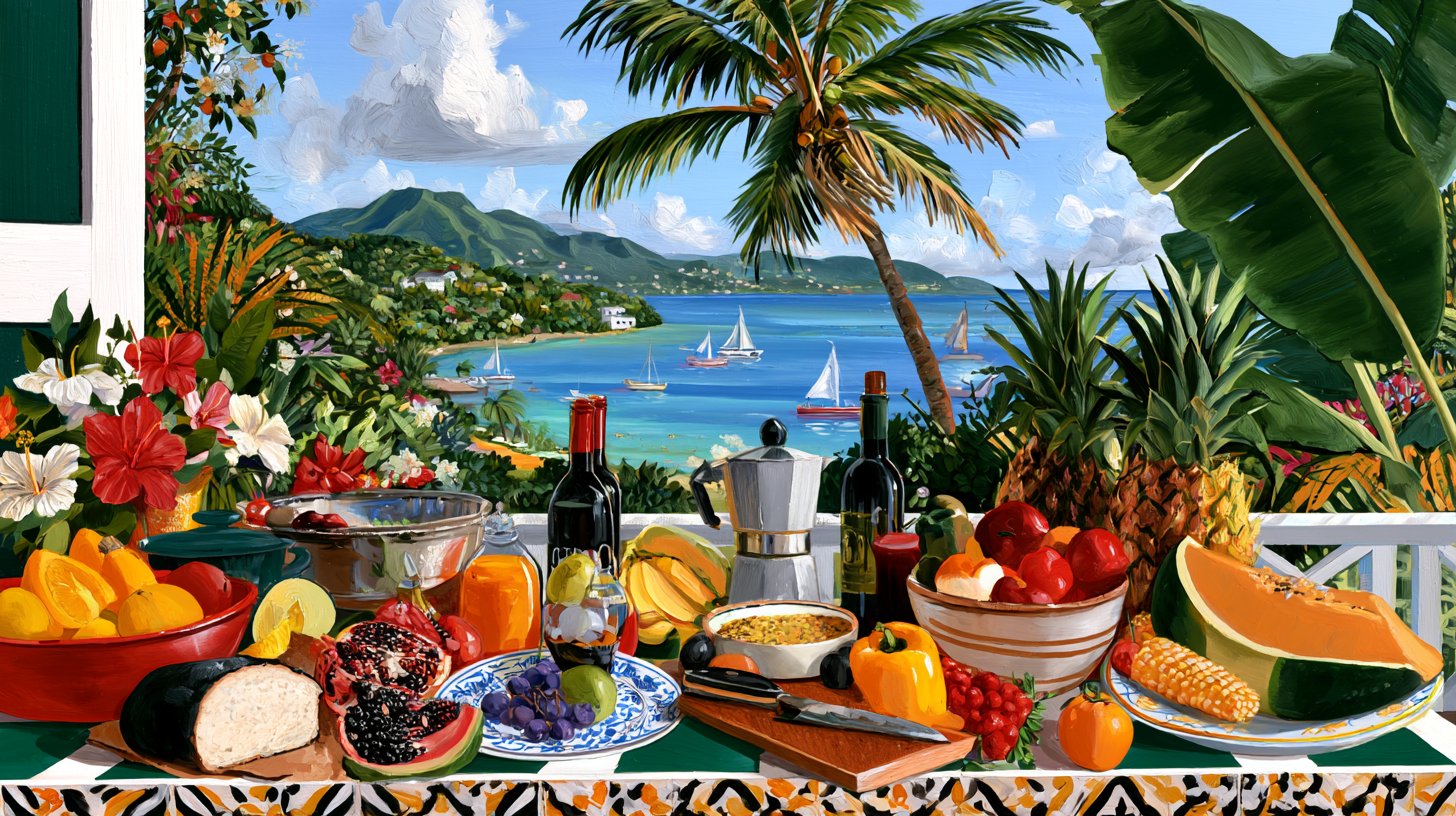
Food holds a family trip together, and The Cerulean has room for every cook in the family. The main house has a chef's kitchen with a big island, a full-size range and oven, a dishwasher, an ice maker and a farmhouse sink under a window over the water. The cottage has its own kitchen with a second full-size refrigerator, and the pool deck has an outdoor kitchen with a gas grill and a drinks refrigerator. The house is stocked with service and place settings for twelve or more, indoors and out.
“Completely renovated inside and out with the best-stocked kitchen we've ever had in a rented house.”
Timothy Moran, a guest in March 2026
Start the week with a full kitchen. The concierge can have the villa provisioned before you land, so the refrigerators are stocked when the family walks in, and topped up as the week goes on. Send one list for the whole group, with each household's must-haves marked: the grandparents' tea, the toddler's milk, the teenagers' cereal. Our post on stocking the kitchen before you land explains how it works, and the groceries directory lists the island's supermarkets.
Then share the cooking. A rotation works well with three generations: one night the grandparents cook the family recipe everyone grew up on, one night the parents grill fish on the deck, one night the teenagers make tacos or pizza with a grandparent supervising. Write the rotation on the first day so every household knows its night, and let the youngest children set the table and fold the napkins.
Leave one night for a private chef, and ask for local dishes. Crucian cooking is the food of St. Croix: kallaloo, a thick greens-and-okra stew served over fungi, a cornmeal-and-okra side; fish in butter sauce; johnny cakes, small golden fried breads; and pates (say PAH-tays), fried turnovers filled with beef, chicken or saltfish. Children who are wary of new food usually make peace with johnny cakes first. The island's chefs are listed in our private chef directory, and the Crucian food guide explains the rest of the menu.
For a morning outing that ends in lunch, the island's Saturday farmers market suits grandparents and grandchildren together: local fruit and vegetables, herbs, honey, baked goods and fresh fish, sold from tables early in the day. Go by seven or eight with small bills, and check the current location before you drive.

The villa's beach and reef for every age
The Cerulean's own beach is the outing that needs no car. Down a short set of steps from the pool deck, it gives direct access to shallow, reef-protected water, and the snorkeling starts a few feet out. For three generations that is the ideal: a grandmother can sit at the water's edge, a grandfather can swim along the reef, and a child in a mask can look for reef fish from the first morning, without a boat.
“A gorgeous home right on the ocean, amazing snorkeling right in front of the house in the shallow water protected by the reef.”
Emily, a guest in April 2026
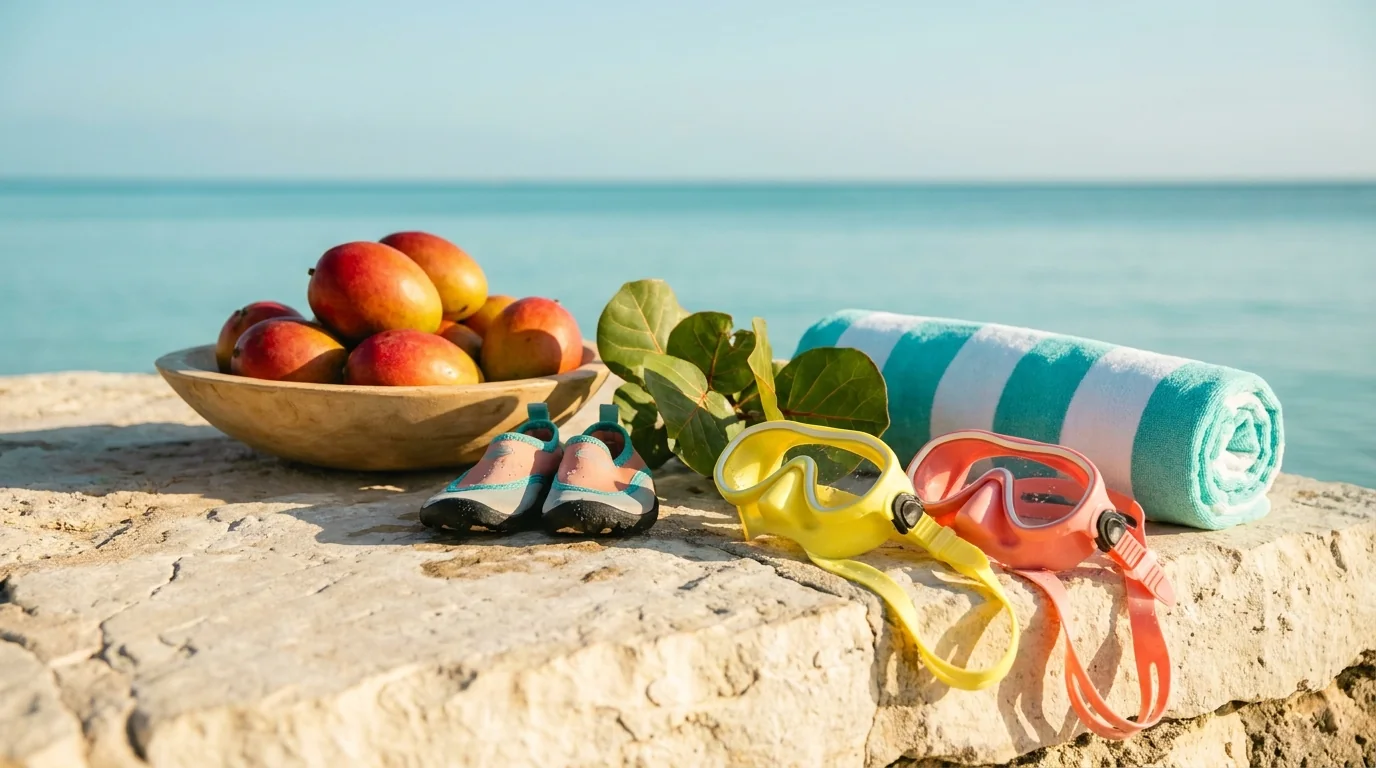
Bring water shoes for everyone, for the rocks at the water's edge; a steady hand on the way in is a nice job for a grandchild. Snorkeling makes a good grandparent-and-grandchild project. Start in the pool, where a patient adult can teach mask-clearing and breathing through the snorkel in fifteen-minute sessions. Then take the lesson to the villa's reef in the first hour after sunrise, when the water is stillest, in a line of three: one adult in front, the child in the middle, one adult behind. Keep the first session short so the second one happens. Pack masks that fit the children's faces from home; adult gear is easy to rent on the island.
Teach reef manners as part of the game. Coral is an animal and grows slowly, so nobody stands on it or touches it, and the reefs off the East End are part of a protected marine park. Shells stay on the beach too, because an empty shell is a house a hermit crab needs.
For a second beach with every age in mind, Chenay Bay is about ten to fifteen minutes from the villa, with shallow, calm water close to shore and plenty of shade, a fine choice for the youngest swimmers and for grandparents who want to sit under a tree with the sea at their feet. Go on a weekday, when it is quietest. Our East End beaches guide covers it and its neighbors, and the beach page has photographs of the villa's own.
The territory allows only mineral sunscreen, zinc oxide or titanium dioxide, so pack it from home or buy it on the island, and lean on rash guards and wide-brim hats so everyone needs less of it.
Christiansted's fort and boardwalk
Christiansted, the island's main town, is fifteen to twenty minutes from the villa, and its waterfront is the best all-ages outing on the island. Begin at Fort Christiansvaern, the yellow Danish fort on the harbor, built between 1738 and 1749 and run today by the National Park Service as part of Christiansted National Historic Site. Grandchildren can climb to the ramparts and the cannon, peer into the old cells and cross the courtyard, while grandparents take in the view over the harbor.
The fort is a bargain for a family, and a grandparent can make it free. The entrance fee is $10 for adults 16 and older, children under 16 enter free with an adult, and the ticket is good for three days. The National Park Service's Senior Pass, sold to U.S. citizens and permanent residents 62 and older for $20 a year or $80 for life, covers the pass holder plus three more people 16 and older at the fort. So one grandparent with a Senior Pass brings in the parents, and the children are free anyway. The free Access Pass, for U.S. citizens and residents with a permanent disability, works the same way. As listed, the fort is open daily from 8:30 am to 4:30 pm; check the park's website before you go.
After the fort, walk the boardwalk along the harbor. Pelicans work the water, boats come and go, and the seaplane to St. Thomas lands and takes off right in front of the town, which no child tires of watching. Lunch tables sit on the water at Rum Runners, Brew STX, The Mill for brick-oven pizza and Shupe's for burgers, so there is something for the grandchild who eats only pizza and the grandparent who wants fresh fish.
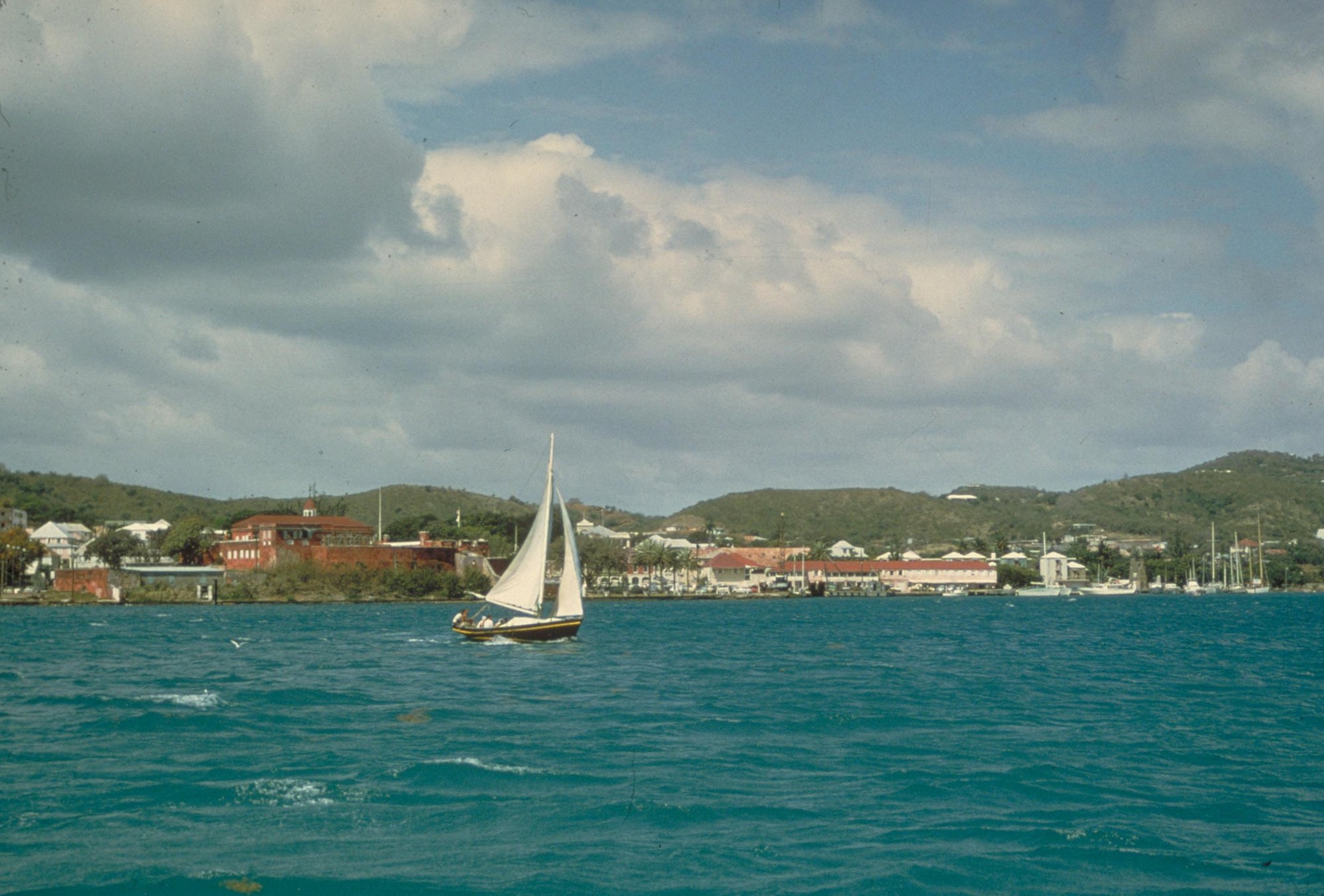
History lovers can follow Alexander Hamilton, who grew up in Christiansted and worked as a clerk on its waterfront as a teenager. For parking, the lot beside the fort carries its own fee, is limited to two hours and must be empty by 4:30 pm, and the government lot near King Cross Street and Strand Street runs about $1 an hour. Our Christiansted guide has a walking route, and the journal post on a morning in Christiansted shows how a few hours there can go.
Estate Whim and the sugar mills
Drive any road on St. Croix and you pass stone towers on the hilltops. They are the old sugar windmills, and a grandchild will ask about them by the second day. Estate Whim, a museum run by the St. Croix Landmarks Society near Frederiksted, is the place to answer the question together.
Whim is a former sugar plantation kept on twelve acres. Its windmill is described as the only reconstructed windmill on the island, and around it stand the ruins of the sugar factory, a cookhouse, workers' houses and exhibit halls. It is an outdoor museum, so children who wilt in galleries usually do fine for an hour of walking around the mill and the ruins, and grandparents can take it at their own pace.
The story it tells is a serious one, and it is the island's own. Under Danish rule St. Croix was a sugar island, and the whole enterprise ran on the labor of enslaved Africans until emancipation in 1848. Seeing a mill up close, and the scale of the work it stood for, gives older children a way into that history and gives grandparents a chance to talk about it with them. Ask at the desk about Living Museum days, when tradition bearers demonstrate Crucian music, food and crafts.
Whim is about fifty minutes to an hour from the villa, so make it part of a west end day. The admission list includes a senior rate and a rate for groups of ten or more, so a big family may qualify; ask when you call to confirm the hours. Go in the morning with hats and water, and pair it with the botanical garden a few minutes along Centerline Road, or with lunch and a swim in Frederiksted.
Our Estate Whim guide covers the museum, the history of the plantations and the other ruins you can see from the road, and our Frederiksted guide has the town for lunch afterward.
St. George Village Botanical Garden
St. George Village Botanical Garden is the gentlest outing on the island and one of the prettiest, and it suits every generation at once. The garden covers sixteen acres off Centerline Road a few minutes east of Frederiksted, laid out among the ruins of an eighteenth-century Danish sugar estate, so the walk passes old factory walls and estate buildings as well as flowering trees.
The plant collection is serious. The garden grows more than a thousand Caribbean and tropical plants and trees, keeps a herbarium of more than 6,000 dried specimens of Virgin Islands plants, and has a small museum in a restored worker's cottage. Grandparents who garden at home tend to love it, and children usually head straight for the ruins.
The visit is easy to plan. As listed in October 2026, the garden is open daily from 9 am to 3 pm, closed on Christmas Day, and general admission is $15 for adults, $10 for seniors and military, and $2 for children under 10. Download one of the two self-guided tour maps from the garden's website before you go: a general tour, and a botanical highlights tour for the plant lovers in the family. Allow about an hour and a half at a walking pace, and go in the morning, since the garden closes at three.
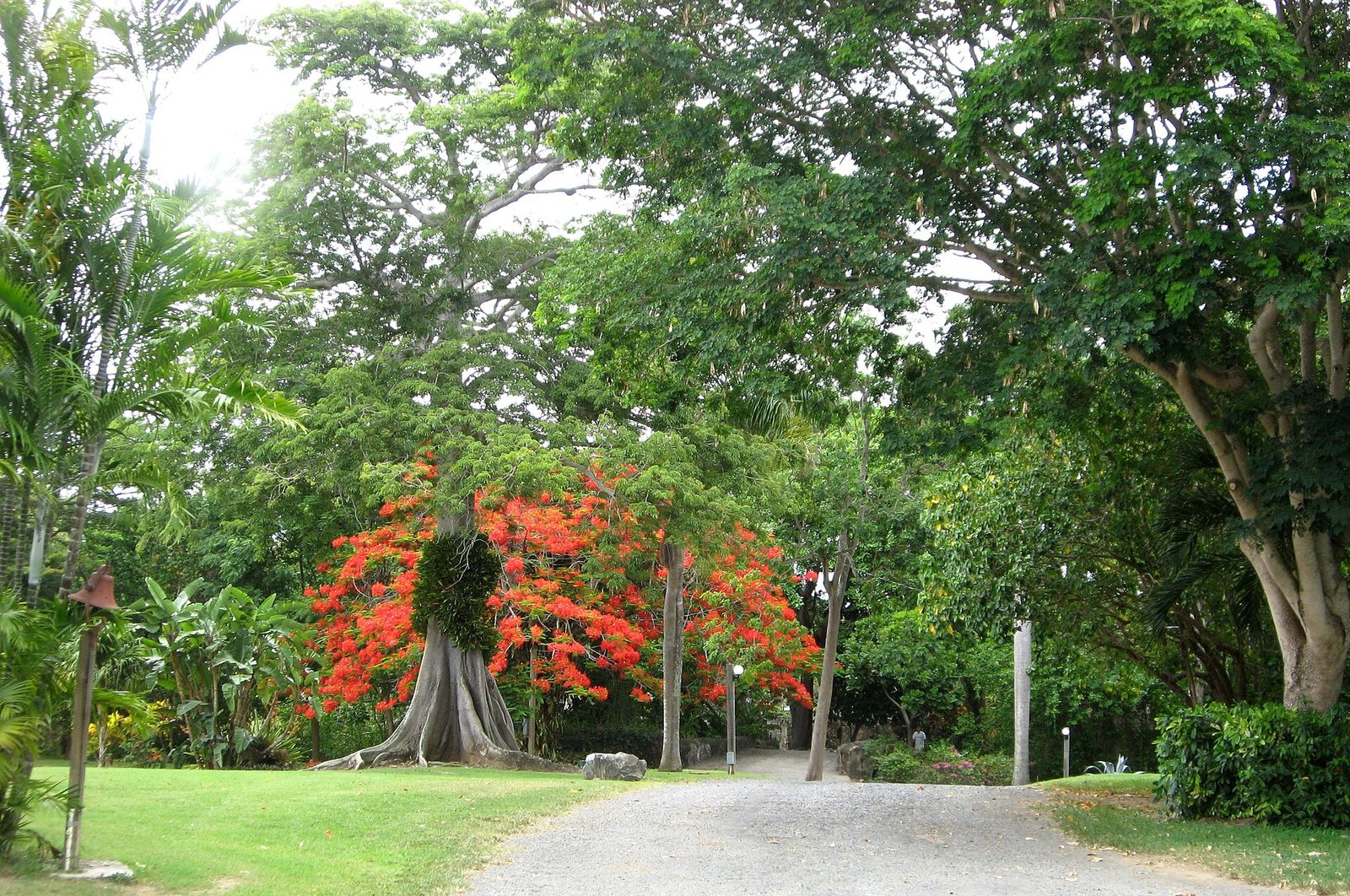
The garden's calendar adds a reason to time your trip. Mango Melee, its mango festival, falls on a Sunday in July, with fruit tastings, a mango-eating contest for adults and children, and more than a hundred food and craft vendors. In December, its Garden of Holiday Lights has lit the paths in the evenings in recent years. Check the garden's own events page for the dates in your year.
Our rainforest and Mahogany Road guide covers the garden and the green northwest beyond it.
Point Udall at sunrise
For one morning of the week, take the whole family to watch the sun come up at the easternmost point of the United States. Point Udall is about ten minutes from the villa by car, at the end of the East End Road, and on the headland stands the Millennium Monument, a large stone sundial built for the New Year's celebration of 2000. Its line points to where the first sunrise of that year came up over U.S. soil.
It is a simple outing to plan. There is a small paved parking lot below the monument, the monument platform is paved too, and the point is free and open to the public. There are no facilities at the point, so make it a short stop before breakfast and bring water and a light layer for the breeze. Arrive thirty to forty-five minutes before sunrise to see the sky color, and check a sunrise table for your date: it moves from about 5:42 am in early June to about 6:52 am in mid-January. On New Year's Day the lot fills early. Keep little ones on the paved platform, which has the view.
This is the place for the family photograph: three generations at the monument with the sea behind them. Bring a small tripod or ask another early riser, and take a second picture of just the grandparents and the grandchildren.
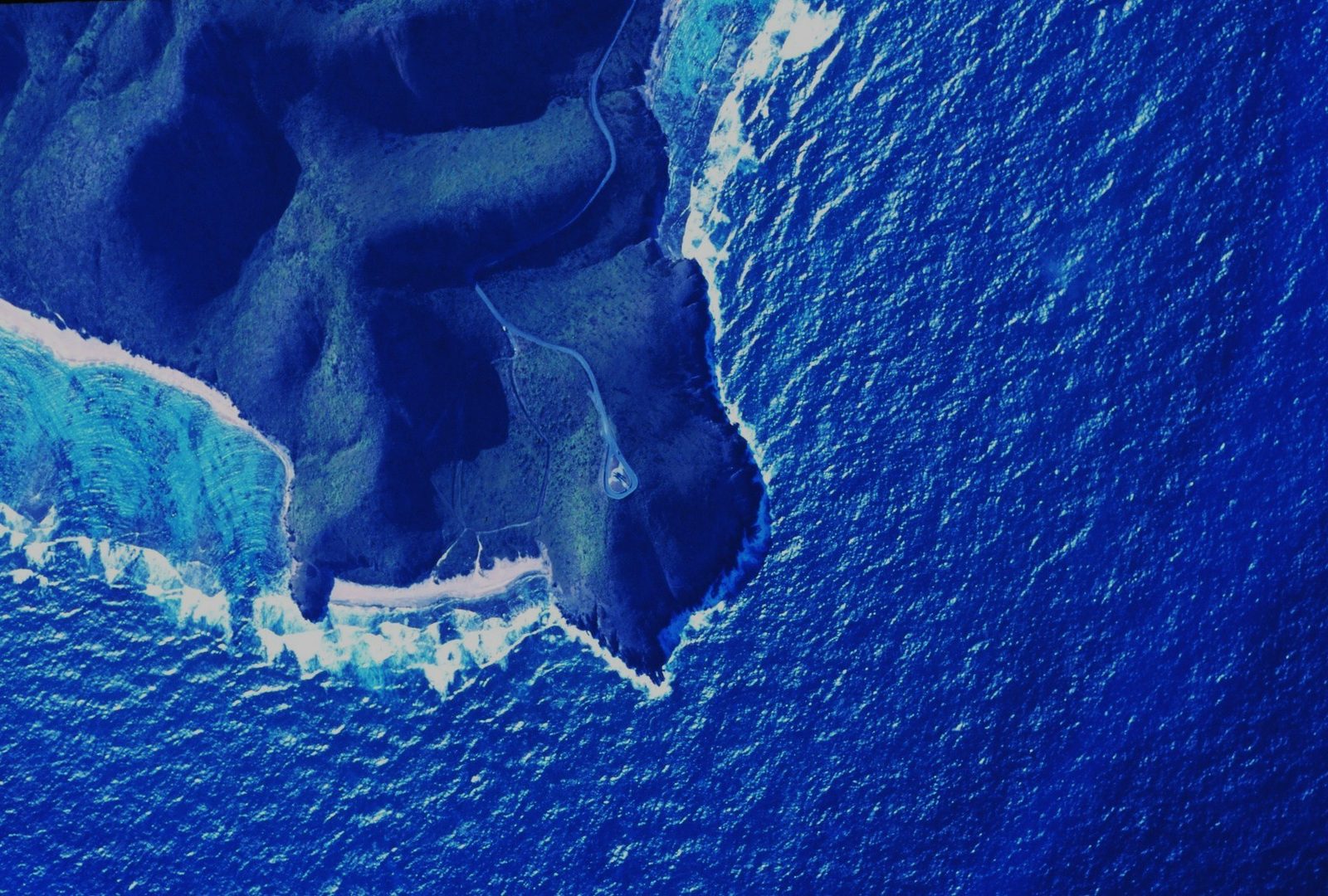
On the drive out you pass the big white dish of the Very Long Baseline Array, a radio telescope that is one of ten identical dishes spread from Hawaii to St. Croix and working together as a single instrument, which is a good question for the curious grandchild. Below the point lies the Jack and Isaac Bay Preserve, protected by The Nature Conservancy, with hike-in beaches for the strong walkers in the family. Our Point Udall guide has the sunrise table, and the journal post on sunrise at Point Udall tells what the morning is like.
A gentle boat day to Buck Island
A day on the water is the outing families talk about afterward, and Buck Island makes it work for every age. The national monument sits about a mile and a half off the northeast coast: a small island ringed by reef, with an underwater snorkel trail through a shallow lagoon and a white-sand beach at its western end. It is open from 7 am to 5 pm with no entrance fee, and you reach it on a boat the park authorizes.
The closest departure to the villa is Green Cay Marina, about ten minutes away, where Buck Island Charters runs the trimaran Teroro II. Check-in is at 8:45 am, the boat leaves at 9 and is back by 2 pm, and snorkel gear and instruction are included. As listed in October 2026, the trip costs $105 for adults and $85 for children 11 and under, and children under two ride free. A family can also charter the whole boat for up to 20 people for $1,800, about $150 a person for a group of twelve, plus a cash tip for the crew. A 50 percent deposit holds the date.
What makes it a gentle day is the beach. The standard trip spends about an hour on the snorkel trail and an hour and a half to two hours at West Beach, which most people call Turtle Beach, where the park keeps picnic tables, charcoal grills and vault toilets. Grandparents who would rather not snorkel can ride along, wade in the shallows and watch the grandchildren come back from the reef with stories. The grottoes on the trail are no deeper than about twelve feet, and the park asks every snorkeler to swim with a buddy, which makes a grandparent and a grandchild a natural pair.
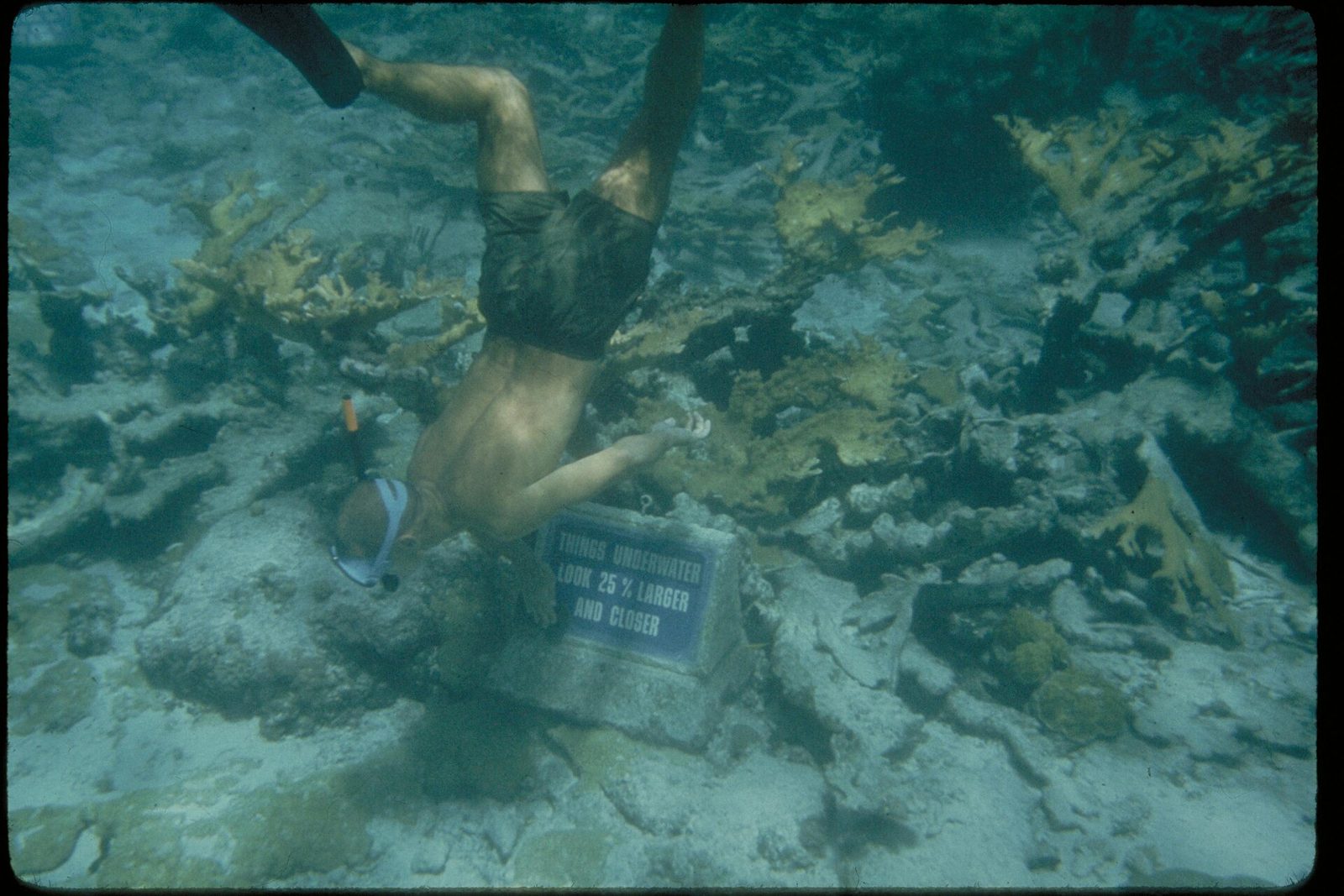
For an even easier time on the water, Big Beard's Adventure Tours runs a two-hour sunset cruise from Christiansted harbor, listed at $45 an adult, with no snorkeling and no long crossing, just the harbor and the coast at the end of the day. Big Beard's full-day Buck Island trip, about six hours on the sailing catamaran Renegade, stops at Turtle Beach first, before the snorkel.
When you book, ask the operator how guests board from the dock and climb back aboard from the water, so each grandparent can decide which parts of the day to join, and take a morning trip, when the sea is usually calmest. Our Buck Island guide covers all the boats, and the boat charter directory lists them.
Wildlife to watch with the grandchildren
A week at the villa doubles as a nature field trip, and it is one of the easiest ways for grandparents and grandchildren to spend time together. No tickets, no driving, just a pair of binoculars and a list.
Start on the veranda with the birds. Brown pelicans fly low along the reef in the mornings, climb, fold their wings and drop into the water. Magnificent frigatebirds, big black birds with forked tails and long angled wings, ride the breeze for hours and almost never flap. In the garden, the bananaquit, the official bird of the U.S. Virgin Islands, small and quick with a yellow breast and a white stripe over the eye, works every flowering shrub. From February into April, keep the binoculars on the sea as well: humpback whales winter in these waters, and on a calm morning a lucky watcher may see a spout. Two hummingbirds feed on the same plantings: the green-throated carib and the tiny Antillean crested hummingbird, whose male wears a small pointed crest. Sit still near a flowering bush in the first hour after sunrise and they come close.
By mid-morning the green iguanas are out on warm walls and branches; a big one can run five feet or more, most of it tail. After dark, a flashlight along the garden paths finds the land hermit crabs, which islanders call soldier crabs, out to scavenge fallen fruit. A grandchild who keeps a list of everything seen in a week, with a grandparent checking the spelling, goes home with something to show the class.
In the water, green turtles and hawksbills feed on the reefs and seagrass of the East End, and a lucky snorkeler may meet one. Green turtles nest at Jack and Isaac Bay, the preserve a few minutes from the villa, from July to December, and hawksbills nest on Buck Island. The rule for all of it is the same, and children take to it quickly: look, photograph, and never touch or feed.
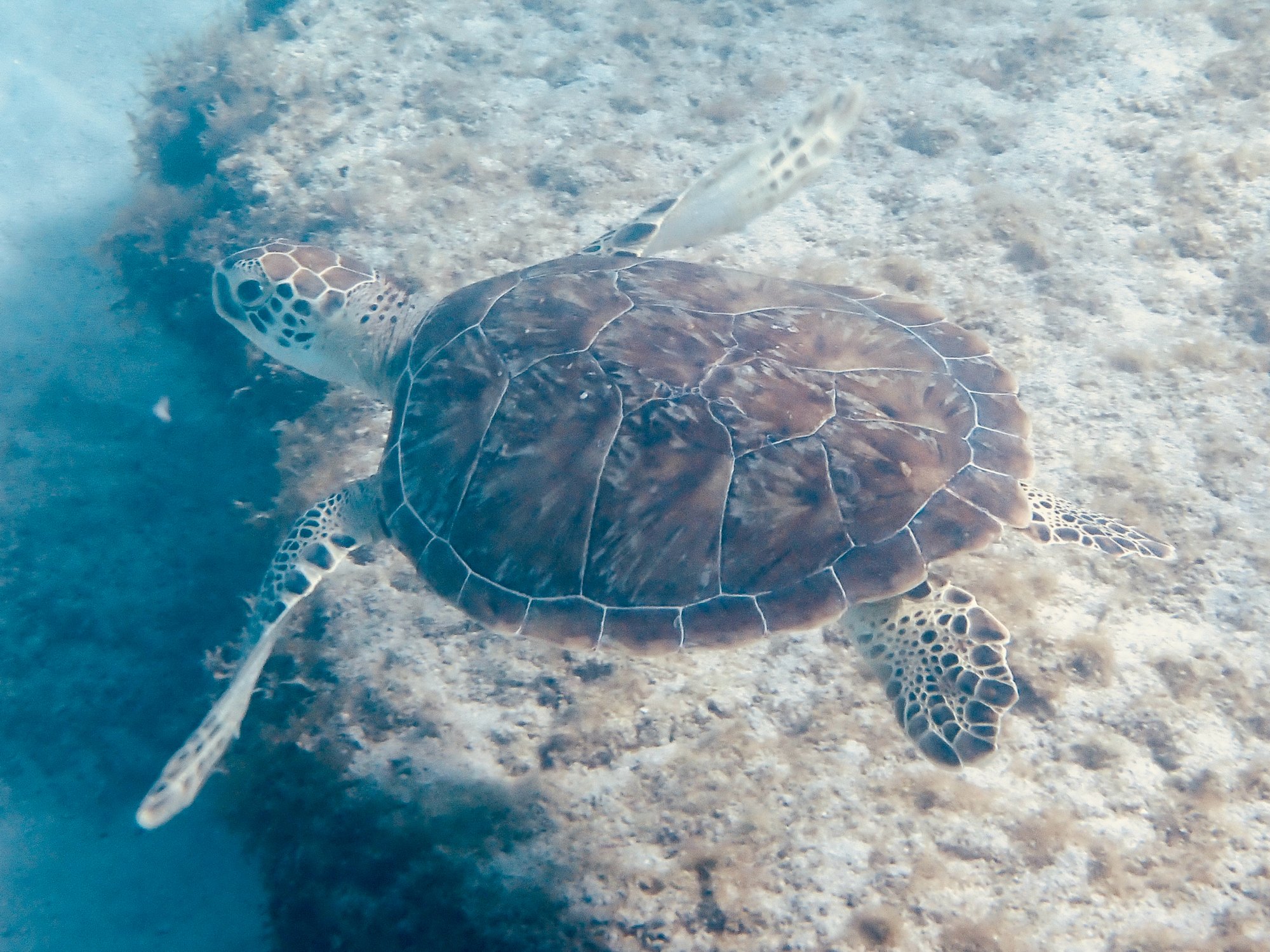
Print the list below, or tick it on a phone, and let the grandchildren keep score. Our wildlife guide has the full cast, from the bats at dusk to the frogs that call after rain.
The grandchildren's wildlife list
10 itemsYour ticks stay in this browser only.
A week for three generations, day by day
Here is a loose Saturday-to-Saturday week with one shared outing a day, built around the three clocks. Swap the days to suit the boat schedule, the museum hours and the grandparents' energy.
Saturday
Land on a Saturday nonstop or through Miami, collect the cars or meet the concierge's pickup, and drive east, about 35 to 40 minutes. Check-in is at 4 pm, and the villa managers meet you with a guided drive and a full tour of the house. Settle the rooms, swim in the pool, eat dinner from the provisioned kitchen, and have an early night all round.
Sunday
Sunrise on the veranda for the early risers. A first snorkel lesson in the pool after breakfast, then the villa's reef with the grandchildren. Lunch at home, quiet hours, the pool at four, the grill at seven.
Monday
Christiansted in the morning: the fort while it is quiet, the boardwalk, lunch on the water. Back for naps, with groceries on the way home.
Tuesday
Buck Island on the Teroro II morning trip from Green Cay Marina, with Turtle Beach for the grandparents and the trail for the snorkelers. A slow afternoon at the house.
Wednesday
A slow day close to the villa. Chenay Bay for the small children in the morning, the covered terrace for everyone else, an in-villa massage for whoever has earned one, and the grandparents' family recipe for dinner.
Thursday
A west end day: Estate Whim and the botanical garden in the morning, lunch in Frederiksted, and the sunset over the sea from the Frederiksted waterfront for those who stay. If the moon is dark, the teenagers and parents can add the bio bay on the way home.
Friday
Point Udall at sunrise for the family photograph, then back for breakfast. A last full day at the beach and the pool. A private chef for the farewell dinner, and the fire pit after dark.
Saturday
One last swim, pack, and check out by 10 am. Leave the East End in time to be at the airport about two hours before the flight.
Planning and packing for every age
A three-generation trip goes best with one organizer and a shared list. Settle the dates first, against the school calendars and the grandparents' commitments, then book the villa, then the flights. Once the house is confirmed, make the requests that need lead time: airport wheelchair assistance on each booking, the provisioning list, a private chef for the milestone dinner, and the Buck Island boat. The concierge can arrange provisioning, a private chef, housekeeping, boat days, in-villa massage and the airport pickup.
The Cerulean books through Sterling Point, the St. Croix company that manages the villa; see live rates on the booking calendar for your exact dates. Check-in is at 4 pm and checkout at 10 am, and the house rules are brief: no pets and no smoking. If the week includes a celebration, mention it when you book.
Packing is mostly light: cotton and linen, swimsuits, hats, one smarter outfit for a dinner out, and a light layer for air-conditioned rooms and the breeze at Point Udall. The list below covers what each generation tends to forget.
The three-generation packing list
13 itemsYour ticks stay in this browser only.
Our packing guide covers the rest, and the guide to reunions and milestones has more on planning a big family week. Share the room plan and this list with every household a month before you fly.
Questions people ask
Is St. Croix a good island for a multigenerational vacation?
Yes. For U.S. citizens it is a domestic trip with no passport, the money is the dollar and the everyday language is English, and Medicare counts the U.S. Virgin Islands as part of the United States. Nonstops from Miami, Charlotte, Atlanta, Chicago and Newark take about three to five hours. On the East End, calm reef-protected water, a Danish fort, gardens and Point Udall are all within an hour of a villa with room for twelve.
Do grandparents need a passport to fly to St. Croix?
Not if they are U.S. citizens. Adults 18 and older board with a REAL ID-compliant driver's license or state ID card, a non-driver ID with the REAL ID star, or another TSA-accepted document such as a passport or passport card. TSA does not require children under 18 to show ID on domestic flights. On the way home there is a short agriculture and customs check before boarding, so carry copies of the children's birth certificates.
Does Medicare cover care in the U.S. Virgin Islands?
Medicare's travel page lists the U.S. Virgin Islands, along with Puerto Rico, Guam, the Northern Mariana Islands and American Samoa, among the places it counts as part of the United States, so Original Medicare applies with providers who accept it. Medicare Advantage plans use networks, so anyone on one should call the plan before the trip and ask about routine, urgent and emergency care on St. Croix.
Where should grandparents stay at The Cerulean?
Many families give the grandparents the guest cottage, about twenty paces from the main house, with its own front door, kitchen, living room, bedroom and full bath, so they can keep their own hours. Families with a baby sometimes give the cottage to the young family instead, and the grandparents take an en-suite bedroom in the main house, close to the kitchen and the terrace.
Who should sleep in the cottage loft?
The loft holds the villa's sixth bed and is reached by a spiral stair from the cottage living room, so it suits teenagers, college students and young adults who climb easily. Give the bedrooms to grandparents, to anyone who prefers flat ground, and to parents of small children. If anyone in the group uses a mobility aid, ask Sterling Point about the steps and paths before assigning rooms.
What can grandparents and grandchildren do together on St. Croix?
Climb Fort Christiansvaern in Christiansted, where children under 16 enter free, walk around the windmill and ruins at Estate Whim, stroll St. George Village Botanical Garden, watch the sunrise at Point Udall, and take a Buck Island boat with time on Turtle Beach. At the villa there are snorkel lessons on the reef in front of the house, pelicans to watch from the veranda and a fire pit for evening stories.
Can a Senior Pass be used at Fort Christiansvaern?
Yes. Christiansted National Historic Site accepts the National Park Service Senior Pass, sold to U.S. citizens and permanent residents 62 and older for $20 a year or $80 for life. It covers the pass holder plus three more people 16 and older, and children under 16 enter free with an adult, so one grandparent's pass can bring in a whole family. The regular fee is $10 per adult, good for three days.
Is there a gentle boat trip for older family members?
Yes. Teroro II leaves Green Cay Marina, about ten minutes from the villa, at 9 am for Buck Island and spends an hour and a half to two hours at Turtle Beach, where non-snorkelers can wade in the shallows; the park keeps picnic tables and vault toilets there. Big Beard's two-hour sunset cruise from Christiansted harbor, listed at $45 an adult, has no snorkeling at all. Ask any operator how guests board from the dock.
How far is The Cerulean from the airport?
About 35 to 40 minutes by car from Henry E. Rohlsen Airport on the south shore. Most families rent two cars, or a passenger van and a car, and reserve them when they book the villa. If nobody wants to drive on arrival day, the concierge can arrange an airport pickup and a vehicle for the week, and the villa managers meet guests with a guided drive and a full tour of the house.
Sources
Facts in this story were checked in October 2026 against the sources below. Event dates, flight schedules, prices and hours change, so confirm anything you plan around.
- Medicare.gov — Travel outside the U.S. (places Medicare counts as part of the U.S.)
- National Park Service — Christiansted National Historic Site fees and passes
- National Park Service — Christiansted National Historic Site operating hours
- National Park Service — Entrance passes (Senior Pass, Access Pass)
- TSA — Acceptable identification at the checkpoint
- TSA — Passenger support and TSA Cares
- Legal Information Institute — 14 CFR 382.95, assistance in boarding and deplaning
- Legal Information Institute — 14 CFR 382.91, assistance moving within the terminal
- Visit USVI — No passport required for U.S. visitors
- U.S. Customs and Border Protection — Types of exemptions ($1,600 insular-possession allowance)
- USDA APHIS — Traveling to the U.S. mainland from Puerto Rico and the USVI
- TSA — TSA ConfirmID rollout, Feb 5, 2026 (via PR Newswire)
- The Buccaneer — Nonstop flight schedule to St. Croix (updated Oct 7, 2026)
- St. Croix Landmarks Society — Estate Whim Museum
- St. George Village Botanical Garden — Hours and admission
- National Park Service — Buck Island Reef National Monument basic information
- National Park Service — Buck Island Reef outdoor activities
- GoToStCroix — Buck Island Charters, Teroro II and Dragonfly
- Big Beard's Adventure Tours — Buck Island trips and sunset cruise
- GoToStCroix — Drive to Point Udall
- NRAO — VLBA St. Croix station
- Governor Juan F. Luis Hospital and Medical Center