

A first trip with a baby or a toddler changes the questions. Where will the crib go, and is the room dark at nap time? Can a three-year-old stand in the water? Does the baby need a passport, and will the formula get through security? St. Croix answers most of them before you pack. It is a U.S. territory, so the flight is domestic, the money is the dollar, and children under 18 need no ID at TSA. The Cerulean, a five-bedroom oceanfront villa on the island's East End, has a travel crib, a high chair and baby gates, a private beach behind a reef, and a separate guest cottage twenty steps from the main house, so naps and early bedtimes get a quiet house of their own. This guide covers the sleeping plan, the water, the sun, the flight, car seats, the first grocery shop, a toddler-paced day and a packing list for the under-fours.
Why St. Croix works for a baby or toddler
Parents of under-fours plan around a short list: the flight, the sleep, the food, the water and the paperwork. St. Croix keeps every item on that list simple. The island is the largest of the U.S. Virgin Islands, a U.S. territory, so for a U.S. citizen the flight is domestic. Nobody in the family needs a passport, TSA does not ask children under 18 for identification on a flight within the United States, and there is no immigration line when you land. The money is the dollar, the outlets take your chargers, and most U.S. phone plans work as they do at home.
The flights suit small travelers too. As scheduled in October 2026, American flies nonstop from Miami every day, United flies from Newark on Saturdays, and the winter season adds nonstops from Charlotte, Atlanta and Chicago O'Hare. A nonstop means one boarding, one landing and, with luck, one long nap in between. Henry E. Rohlsen Airport is small, with a single baggage claim, and the drive to the villa takes about 35 to 40 minutes.
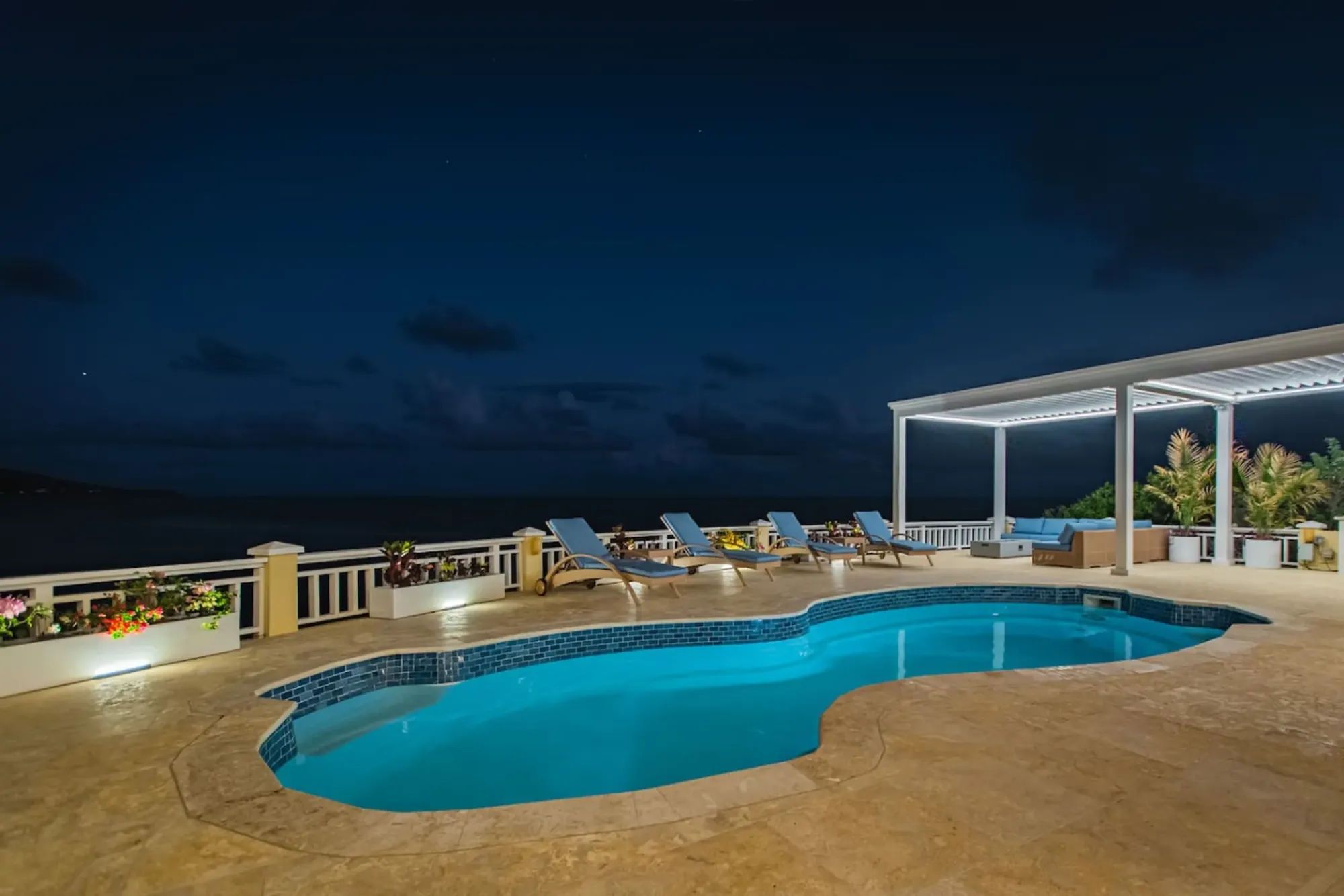
Then there is the house. The Cerulean sleeps twelve across five bedrooms. Its listing includes a travel crib, a high chair and baby gates, a washer and dryer, a dishwasher and air conditioning in every room. A private beach sits down a short set of steps from the pool deck, on shallow water behind a reef. And twenty steps from the main house, a guest cottage with its own kitchen, bedroom and bath gives the family with the baby their own front door, or gives everyone else a place to stay up late.
The island also runs at a pace a toddler can keep. The East End's calm bays are a short drive apart, Christiansted is fifteen to twenty minutes away, and most days need only one outing before lunch. Our no-passport guide covers the ID rules for the whole family, and the chapters below take the rest in order: sleep, water, sun, the flight, the first shop and a week that fits a nap schedule.
The guest cottage and quiet hours
Most large villas put the whole group under one roof, which means the baby's nap and the cousins' cannonballs share the same walls. The Cerulean is laid out differently. The guest cottage is a small house of its own, twenty steps from the main house along a garden path, with its own front door, its own kitchen and full-size refrigerator, a living room, a bedroom with its own washer and dryer, and a full bath. A spiral stair climbs to a loft with the villa's sixth bed. The cottage always comes with the booking; it is never rented separately.
For a family with a baby or toddler, the cottage works in either direction. The first is to give it to the baby's family. Naps happen in a building nobody else walks through, the 2 am bottle is made in the cottage's own kitchen without waking the main house, and once the baby is down at seven, the parents have a living room of their own and the main house is twenty steps away for dinner. The cottage's own washer and dryer take care of the laundry a small child makes in a beach week.
The second is the reverse. If the baby sleeps best near the big kitchen, or the grandparents want the cottage, the main house holds the quiet hours and the cottage becomes the place for the people who stay up: the teenagers, the friends, the couple who want a late movie. Either way, quiet hours stop being a house rule that twelve people have to remember and become a matter of which door you go through.
“The beachfront area was perfect to sit and listen to the waves, and the house gave everyone their own space and bathrooms.”
Lisa Jeff, a guest in February 2026
A few small habits help. Agree on the nap hours in the family chat before anyone lands. Keep the stroller and the beach bag by the cottage door so the baby's parents are not crossing the main house at nap time. And decide which kitchen the early risers use, so the sunrise people never have to tiptoe past a crib. Our guest cottage page has photos of every room.
Who sleeps where with a baby
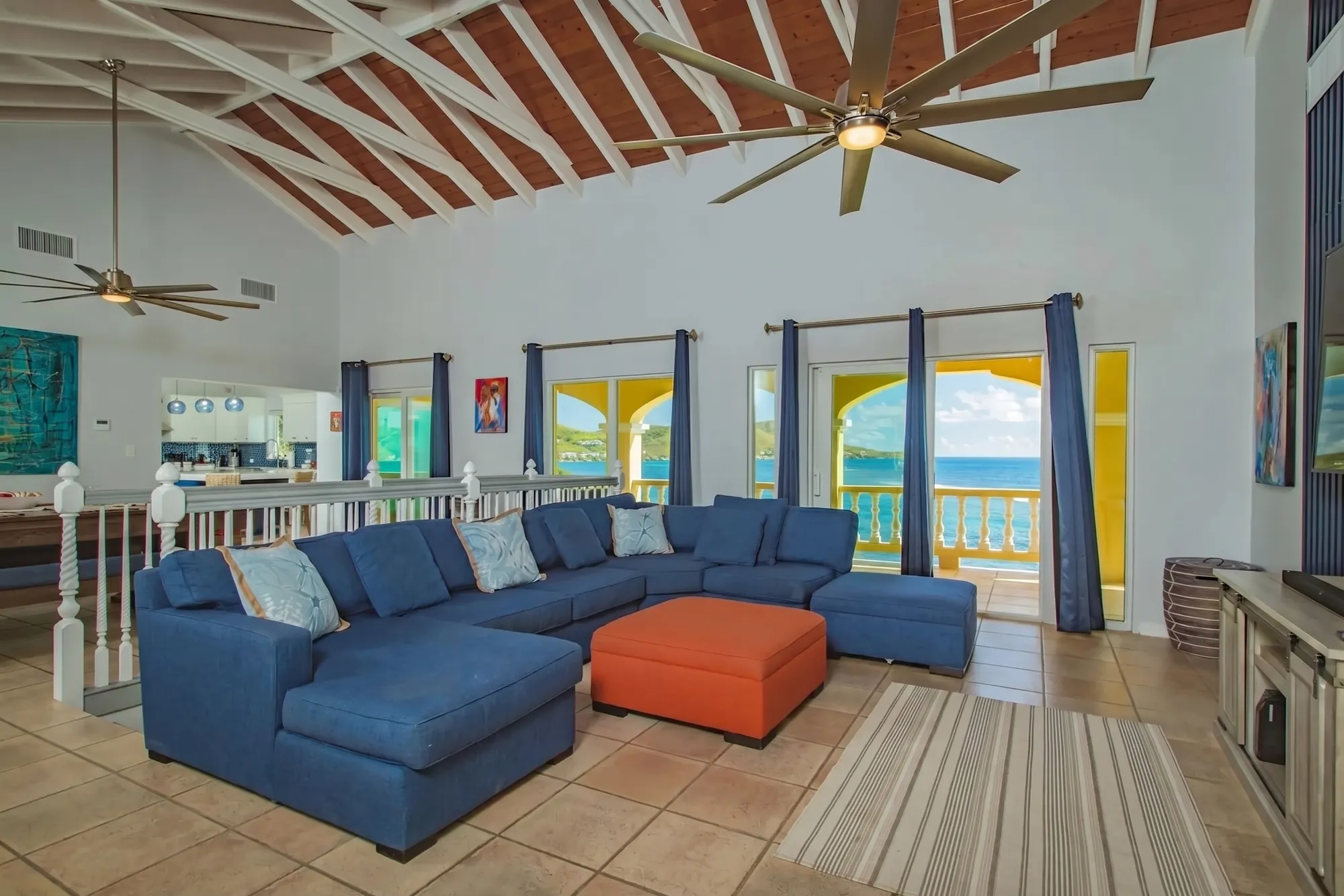
The Cerulean sleeps twelve in six beds. The main house has four bedrooms, each with its own bathroom and three with direct ocean views. The cottage has the fifth bedroom, with its full bath, and the loft bed up the spiral stair. The travel crib can go wherever the baby sleeps best, so the first decision is which building the baby's family wants.
Here are layouts that work well. A couple with a baby and one set of grandparents: the parents and the crib in the cottage bedroom, the grandparents in a main-house bedroom with an ocean view, and three more bedrooms for the rest of the party. Young families traveling together: the family with the youngest child in the cottage, the other in the main house. A three-generation group with one baby: the baby's family in a main-house bedroom near the kitchen, and the grandparents in the cottage for their own quiet mornings.
Keep the loft for an older child or an adult. It is up a spiral stair, a fun climb for a ten-year-old, so the under-fours sleep on the main floor of either building. The villa has baby gates; ask the managers on arrival where they fit best in the building you have chosen.
If two small children both need a crib, BabyQuip, a gear-rental service on St. Croix and St. Thomas, delivers cribs and pack-and-plays to where you stay. Tell the concierge which room you want the villa's crib and high chair in, and fill in the planner below before anyone packs. It keeps the plan in your browser and copies it for the family chat. The bedrooms page shows each room.
Room planner
Who sleeps where
Six beds across the main house and the guest cottage, two people to a bed. Type names in, copy the plan, and paste it into the family chat. Nothing leaves this browser.
The crib, the high chair and the baby gates
The bulkiest things a baby travels with are the things The Cerulean already has. The villa's listing includes a travel crib, a high chair and baby gates, and it describes the house as suitable for children and infants, so the folding crib, the clip-on seat and the gate can stay at home.
The rest of the house helps in quieter ways. The washer and dryer handle the daily laundry. The dishwasher takes the bottles, sippy cups and small spoons after every meal. The blender handles purees and smoothies, the ice maker keeps the beach cooler cold, and the main house and the cottage each have a full-size refrigerator, so the milk and the formula have a home in both buildings. There is also a drinks refrigerator by the pool, a short walk for a cold juice box. Fresh linens and towels are provided, and every room has air conditioning and ceiling fans.
For the smaller extras, such as a stroller, a bath seat, sand toys or a beach umbrella, ask Sterling Point, the villa's managers, what is on hand when you book, then pack around the answer. For anything else, BabyQuip rents strollers, high chairs, beach gear and toys as well as cribs, and delivers them, which can spare a family several checked bags.
Bring the small, personal things a new room needs to feel like home: the crib sheet the baby knows, a sleep sack, the night light, the bath toys and the book that gets read every night. The full amenity list is on the amenities page.
Naps, bedtimes and the sound of the house
Naps shape a day with a baby, and the house is set up for them. Every room is air-conditioned, with ceiling fans as well, and there are blackout curtains for the sunrise, which comes straight off the sea because the villa faces east. A cool, dark room in the middle of the day is easy to arrange in either building.
The house is also quiet in the way a baby's parents care about. The villa is oceanfront on the East End, with a gated private drive, and one April guest summed up the sound of the place in a line.
“Quiet house — all you hear is the surf and ocean breeze.”
Emily, a guest in April 2026
In a big group, a little planning keeps nap time easy. When the baby naps in the main house, keep the pool music low, or move the music to the cottage. When the baby naps in the cottage, the main house can carry on as normal. Pack a small white-noise machine and the baby monitor you use at home, and set both up on the first afternoon so they are ready for the first nap.
In June the sun sets close to seven, and in December a little before six, so a summer baby goes down in daylight and a winter baby after dark. Most families settle into an early rhythm by the second night, with the children down early and the adults' dinner on the terrace afterward.
The villa's beach for little swimmers
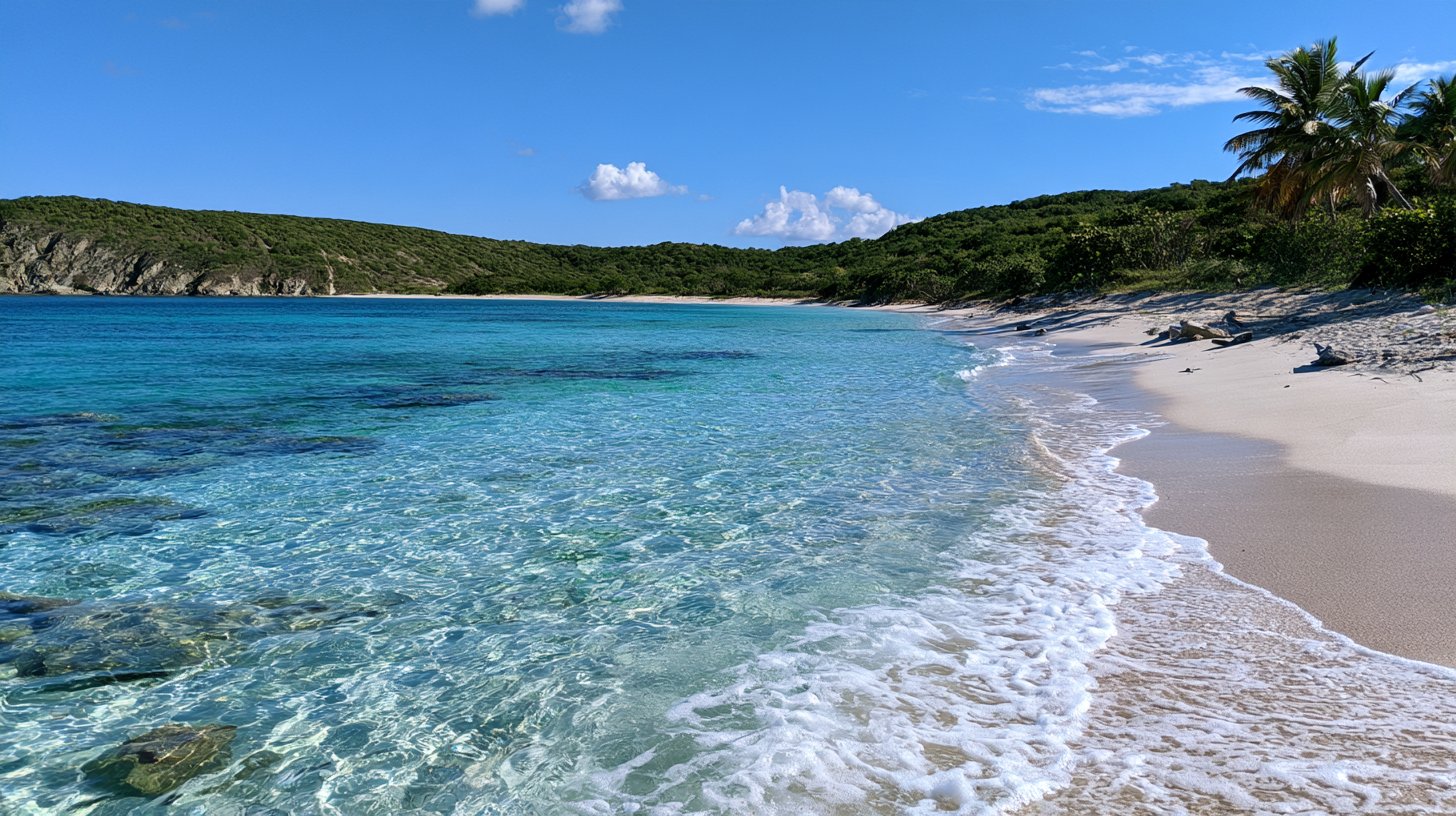
The best beach for a small child on the East End is the villa's own. It has direct access to shallow water protected by the reef offshore, and nobody needs a car to get there. The reef takes the swell, so the water inside it stays calm and warm, around 80 degrees on a winter morning and a few degrees warmer in summer, and the snorkeling starts a few feet out.
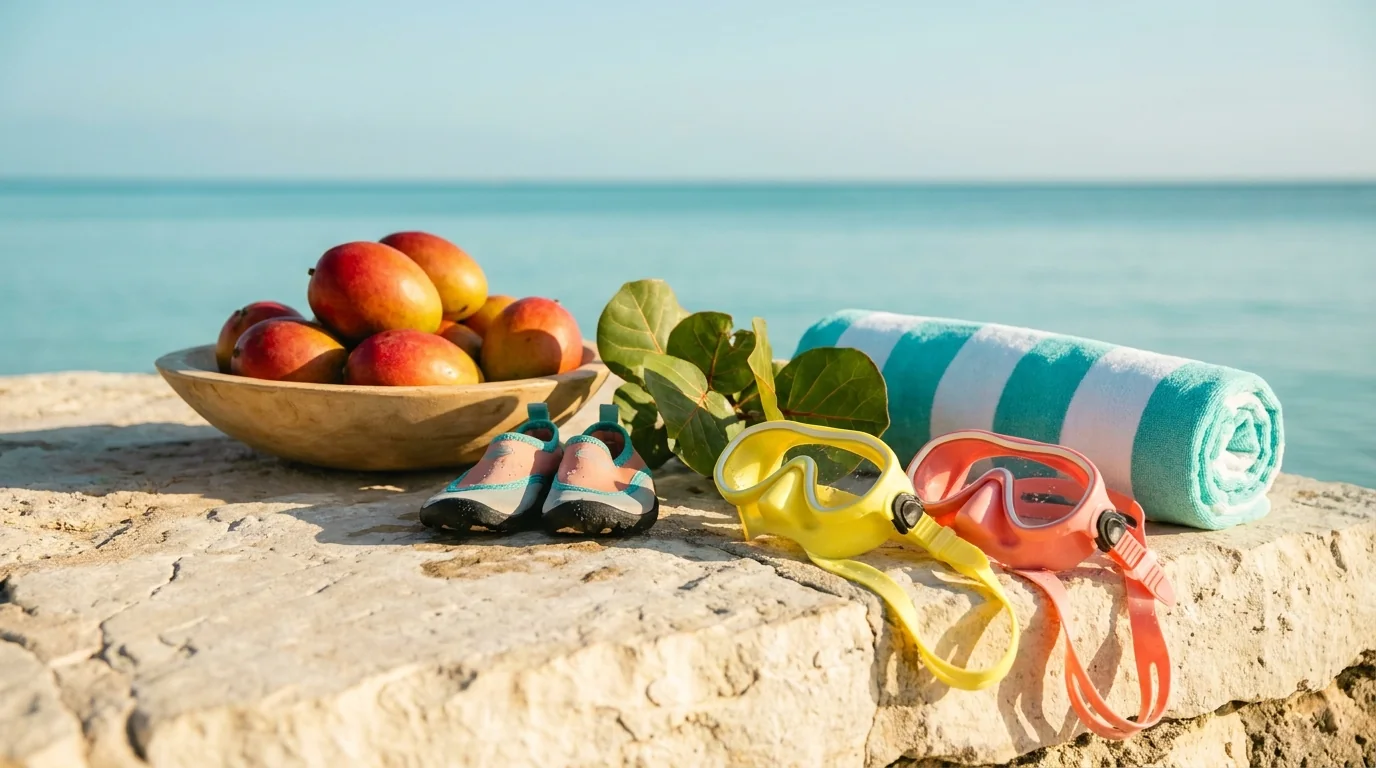
With a toddler, timing is the whole trick. The stillest water comes in the first hours after sunrise, before the trade wind builds, and that is also when small children have the most energy. Go down after breakfast, stay an hour, and come back up for a snack and a nap. Carry the baby down the steps in a carrier rather than a stroller, and put water shoes on everyone, small feet included.
The CDC's advice for children in the sea is a proper life jacket rather than an inflatable toy, with close, constant supervision from an adult, so make it the rule from the first morning: a life jacket on any child who cannot swim, and a grown-up in the water within arm's reach. In the shallows a parent can hold a three-year-old at the surface with a mask on and let the fish come into view. Fifteen minutes is a full first lesson.
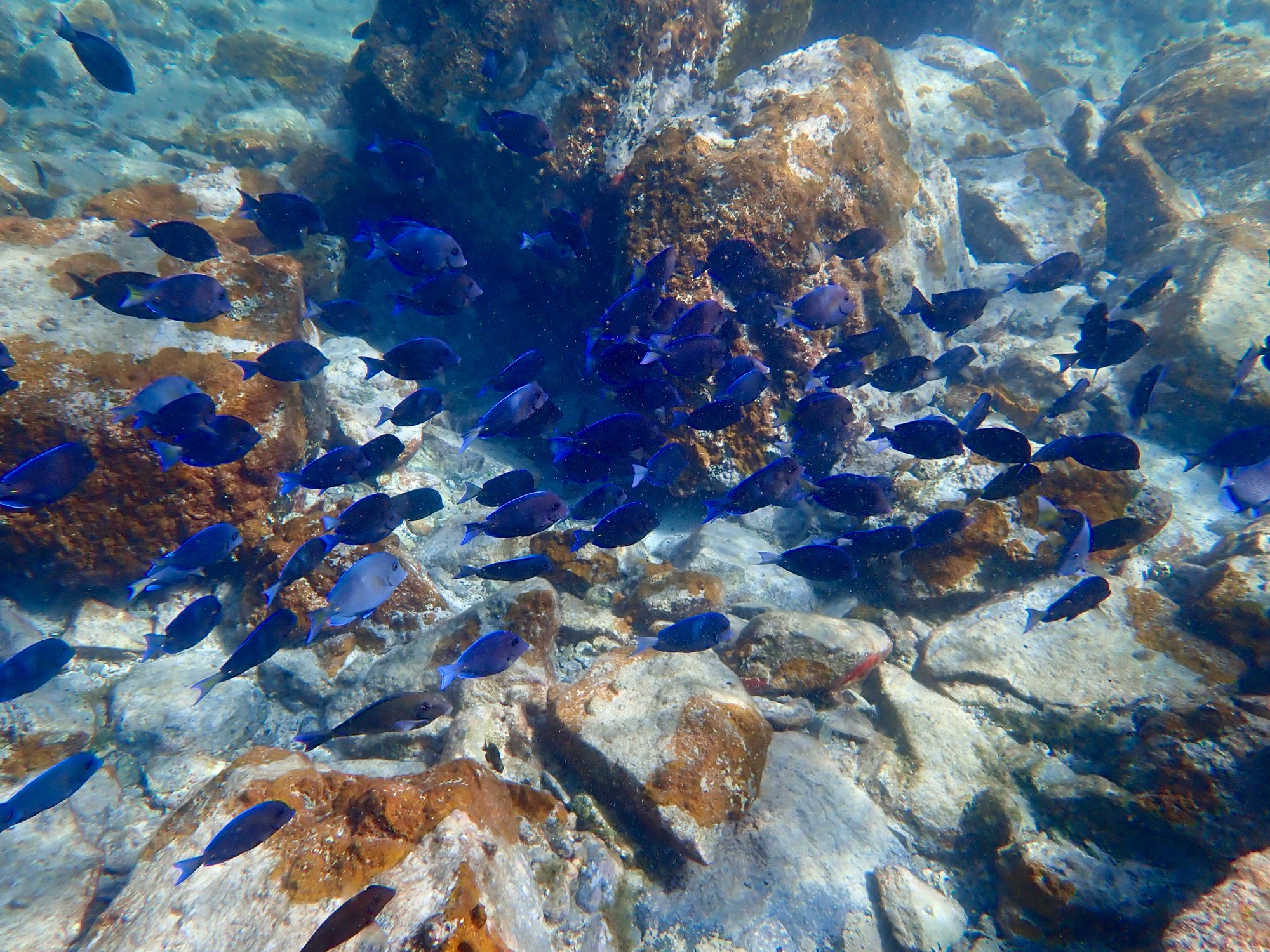
Teach reef manners early, because children learn them faster than adults: coral is an animal, so nobody stands on it or touches it, and shells stay on the beach, because an empty shell is a home a hermit crab needs. The East End's reefs sit inside a marine park. Our private beach page has photos, and snorkeling straight off the beach covers what older children will see farther out.
Pool afternoons with a toddler
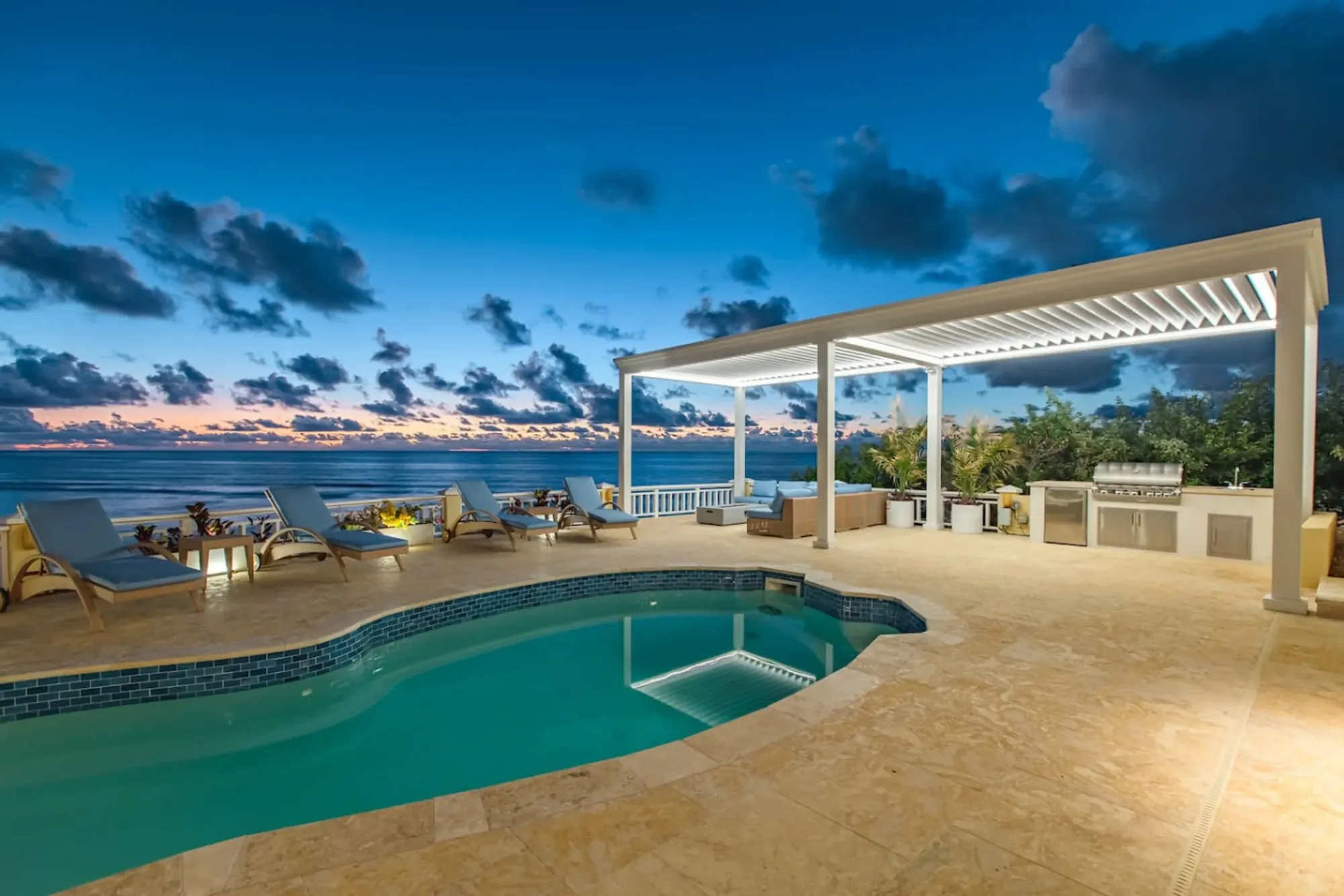
After the nap, the pool takes over. The Cerulean's private pool sits on a wide travertine deck above the shoreline, with a pergola shading the loungers, covered seating out of the sun, and the drinks refrigerator a few steps away for juice boxes and cold milk. A toddler in a swim diaper and a rash guard can splash with a parent while the grown-ups sit in the shade within reach. For babies, a short dip in a parent's arms is often the best part of the day.
The pool deck is the best room in the house for a toddler's afternoon: shade under the pergola, loungers for the grown-ups, the outdoor kitchen and gas grill for an early supper, and the sea in view the whole time. Older siblings can swim while a parent cooks a few steps away, and by late afternoon most of the family ends up out here for the start of the evening. Our pool and deck page shows the layout, and one March guest put the whole outdoor setup in a sentence.
“Combine the large patio, pool, outdoor kitchen and its own beach, and this property will not disappoint.”
Dave, a guest in March 2026
Shade and mineral sunscreen
The Virgin Islands has one packing rule written into law, and it covers the smallest beachgoers too. Act 8185 bans the sale, distribution and import of sunscreens containing oxybenzone, octinoxate and octocrylene, the common chemical filters in many drugstore bottles. It has been in force since March 30, 2020, and the consumer affairs department began enforcing it with fines in 2022. The tourism department's travel tips put it in one line: please only use mineral sunscreen, it's the law. Read the active ingredients and look for zinc oxide or titanium dioxide. The law protects the same reef your toddler will be looking at from the villa's beach.
Babies under six months are a different case. The FDA's advice, shared with the American Academy of Pediatrics, is that the best sun protection for the youngest babies is shade, and that parents should check with their pediatrician before putting sunscreen on a child younger than six months. Dress them in lightweight long sleeves and long pants, choose a hat with a brim that shades the neck, and keep them out of direct sun between 10 am and 2 pm, when the rays are strongest. At the villa that window lines up neatly with lunch and the long nap.
For toddlers, cloth does most of the work. A long-sleeve rash guard, swim shorts to the knee and a hat with a chin strap, because the trade wind that keeps the East End breezy also lifts hats, leave only the face, hands and feet for sunscreen. A mineral stick is easier on a squirming face than lotion. Reapply after every swim.
Shade is easy to find at the house: the pergola over the pool loungers, the covered seating on the deck, the covered terrace and the arched veranda. The FDA also suggests offering breast milk or formula on any outing of more than a few minutes, so pack a small cooler with milk and water for the beach. Our packing guide has the law in full and a list of what to buy.
Calm beaches beyond the villa
The East End is fringed by reef, and the bays behind it are shallow and usually calm in the morning, which makes this corner of St. Croix a good one for small children. When you want a change from the villa's beach, a handful of nearby bays suit a toddler well. Our St. Croix with kids guide sorts the whole island by age; here is the short list for the under-fours.
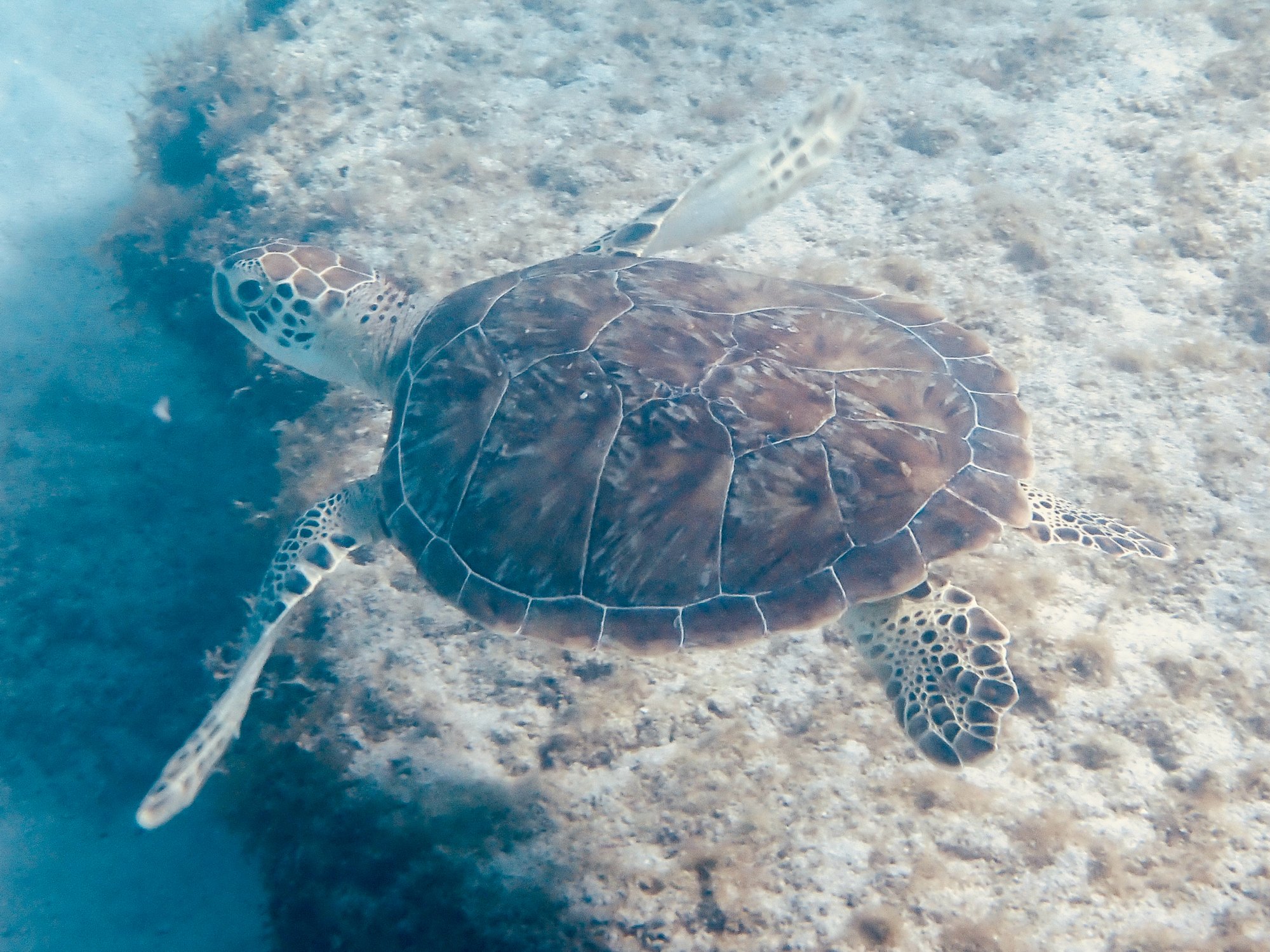
Chenay Bay, about ten to fifteen minutes from the villa, is the classic choice: shallow, calm water over a grassy bottom close to shore, with plenty of shade. Starfish, conch and the occasional sea turtle turn up in the seagrass near the point, in water an adult can stand in. Bring the cooler, the umbrella and the snacks, and go on a weekday, when it is quietest. Cramer's Park, on the road to Point Udall, is the public beach park, with restrooms, covered pavilions, grills and sea grape shade over shallow, typically very calm water. Local families fill it on weekends and holidays, so take small children Monday to Thursday.
Toward Christiansted, fifteen to twenty minutes away, the Shoys is a calm, sandy and grassy crescent with sea grape shade, reached through the Estate Shoys guard gate, where you give your name and say you are going to the beach. The Buccaneer's Grotto and Mermaid beaches are calm and protected, with restaurants and restrooms for patrons, which makes lunch easy. On the west end, about an hour away, Rainbow Beach's water is usually flat with a sandy entry, and West End Water Sports on the same sand rents chairs, which makes it an easy stop on a west end day.
| Beach | From the villa | Good for little ones |
|---|---|---|
| The villa's beach | Down the steps | Reef-protected shallows, no car needed |
| Chenay Bay | 10 to 15 minutes | Calm, grassy shallows and shade |
| Cramer's Park | On the road to Point Udall | Restrooms, pavilions, sea grape shade |
| The Shoys | 15 to 20 minutes | A quiet crescent through a guard gate |
| Buccaneer beaches | 15 to 20 minutes | Lunch and restrooms for patrons |
| Rainbow Beach | About an hour | Flat water and a sandy entry |
With any of them, the pattern is the same: arrive early, find shade, and be home for lunch and a nap. Our East End beaches guide has the parking and the details beach by beach.
Flying with a lap infant or a toddler
The flight is the part of a baby trip that parents think about most, and St. Croix keeps it as simple as a flight to Florida. Because the U.S. Virgin Islands are within the United States, TSA does not require children under 18 to show identification. Adults need a REAL ID-compliant license or another TSA-accepted document, as they have at every U.S. checkpoint since May 7, 2025.
A baby under two can fly as a lap infant on a domestic flight, as long as the child is under two for the whole trip. JetBlue, scheduled to fly San Juan to St. Croix daily from November 19, 2026, is a good example of the rules: it treats a child from three days old until the second birthday as a lap infant, adds the lap infant to the booking at no charge, and asks for proof of age, such as a birth certificate, with copies accepted on domestic trips. Infants between three and fourteen days old need a letter from their doctor. If the second birthday falls between the flight down and the flight home, the return needs a paid seat. Each airline sets its own rules, so check yours when you book.
A seat of the baby's own is the other choice, and the American Academy of Pediatrics says it is the safest one, with the baby in an FAA-approved car seat. Look for the label that says the seat is certified for use in motor vehicles and aircraft, and book the window seat, where a rear-facing seat blocks nobody's way out. The AAP also notes that nursing, a bottle or a pacifier during takeoff and landing can ease the discomfort of changing air pressure in small ears, and that while two to three months is the ideal age for a first flight, flying is generally fine once a newborn is at least seven days old.
Security is easier than most parents expect. TSA allows formula, breast milk, toddler drinks and baby food, puree pouches included, in quantities over 3.4 ounces in the carry-on; tell the officer at the start of screening. Ice packs and gel packs are allowed too. Strollers and car seats go through the X-ray, and a baby is carried through the walk-through metal detector in your arms or in a sling.
The flight home is just as domestic, with one extra stop: a short customs and agriculture check at the St. Croix airport before boarding, covered in the packing chapter below.
Pick the nonstop if you can. As scheduled in October 2026, American flies from Miami year-round, about three hours, and from Charlotte on Saturdays from November 7 and daily from December 17; Delta flies from Atlanta on Saturdays from November 14 and daily over the holidays; United flies from Newark on Saturdays from October 31; and American's O'Hare nonstop runs on winter Saturdays. Our getting here page keeps the routes current, with city pages for New York, Atlanta and Charlotte.
Car seats and the drive to the East End
Henry E. Rohlsen Airport is small and easy: one baggage claim, rental counters in the terminal and taxis outside, and from wheels-down to driving away is typically well under an hour. Plan on a car for the week, with a car seat for every child who needs one.
The territory's rules, as Centerline Car Rentals summarizes them from the Virgin Islands Office of Highway Safety, are close to most states'. Infants up to a year and 20 pounds ride rear-facing in the back seat. Children from one to five and up to 40 pounds ride in a child seat that meets federal standards. Children of 40 to 80 pounds who are under eight and under four feet nine ride in a booster.
Bringing your own seat is the surest plan. Most U.S. airlines check a car seat at no charge (JetBlue's policy says so outright), and a seat the baby already knows makes the drive easier. If you would rather rent, Centerline lets you add up to four car or booster seats when you reserve, and Budget lists infant and toddler seats; reserve them with the car and confirm the week before. Our car rental directory lists the agencies, and the concierge can arrange an airport pickup and a vehicle for the week instead.
The drive is about 20 miles: east on the Melvin H. Evans Highway, around Christiansted and along the East End Road by the coast. Traffic keeps to the left, in ordinary American cars with the steering wheel on the left, and most drivers are comfortable within ten minutes. Speeds are low, 20 mph in town and 35 on most roads. Let one adult drive and the other handle the back seat, take the first drive in daylight, and keep a car charger and a bag of small toys in the car all week. Our driving guide covers the roads by name.
The baby's clock on island time
Time zones matter more to a baby than to anyone else on the plane, and St. Croix is kind to most American families. The island keeps Atlantic Standard Time all year and never changes its clocks. From spring to fall, while the mainland is on daylight saving time, St. Croix is on the same clock as the East Coast; in winter it runs one hour ahead of New York.
| Home time zone | Mid-March to early November | Early November to mid-March |
|---|---|---|
| Eastern | Same time as St. Croix | St. Croix is 1 hour ahead |
| Central | St. Croix is 1 hour ahead | St. Croix is 2 hours ahead |
| Mountain | St. Croix is 2 hours ahead | St. Croix is 3 hours ahead |
| Pacific | St. Croix is 3 hours ahead | St. Croix is 4 hours ahead |
For an East Coast family the easy answer is to change nothing. In summer the baby's 7 pm bedtime is 7 pm on the island too. In winter, the simplest plan is to keep the baby on home time and let the island clock read an hour later: a baby who wakes at 5:45 at home wakes at 6:45 on St. Croix, right around a December sunrise, and a 7 pm bedtime at home becomes 8 pm on the island, which leaves a long, easy evening for everyone. If you would rather match the island clock, shift naps and bedtime by fifteen minutes a day and the baby is there by midweek.
From the Central and Mountain time zones the shift is one to three hours, and an easy approach is to meet it halfway: move bedtime half an hour later each night for the first few nights and let the mornings fall where they fall. West Coast families have the biggest jump, three or four hours, and some keep the baby close to home time, with late mornings and late evenings, since the evenings on the terrace are long and the house is quiet.
The villa faces east, and the sun comes up about a quarter to six in June, around 6:40 in mid-December and close to seven in late January. An early-waking toddler gets the best seat in the house: the veranda, with the light coming straight off the sea.
“Great property with a super private location. The sunrises are incredible.”
Suzanne Temple, a guest in March 2026
Our month-by-month weather guide has the sunrise and sunset times for every month.
Diapers, formula and the first shop
The simplest way to arrive with a baby is to arrive to a stocked kitchen. The Cerulean's concierge offers provisioning: send a list before you travel and the kitchen is stocked before you land, then topped up as you go. For a family with a baby, that list is the diapers in the right size, wipes, formula or milk, the baby food and snacks your child already eats, soft fruit, bottled water and mineral sunscreen. The first evening can then be spent in the pool.
Pack the first two days in your carry-on regardless: enough diapers, wipes, formula and food to cover a late bag or a long travel day. TSA allows formula and baby food over 3.4 ounces in the carry-on, so the bottles and pouches can travel with you. Bring any specialty formula, the brand of diapers your child does well in, and every prescription from home; diapers, wipes, formula and children's medicine are on the island's supermarket shelves, but the exact brand you rely on is the one to carry.
If you shop yourself, the big stores are mid-island, about 25 to 30 minutes from the villa. Plaza Extra East, near Sunny Isle, is the biggest supermarket on the island, and the territory's consumer affairs department measured it as the cheapest family basket. Cost-U-Less next door is a warehouse store with no membership fee, the place for bulk water, juice and snacks. Pueblo and The Market STX are the other full supermarkets, and Seaside Market and Deli in Christiansted is the gourmet stop, with a bakery and party platters. Island stores keep shorter Sunday hours, so make the big shop a weekday.
Pharmacies are mid-island too. Doctors Choice Pharmacy at Sion Farm, beside Plaza Extra East, lists hours of 8 am to 6 pm, Monday to Saturday, and The Medicine Shoppe is in the Sunny Isle Shopping Center nearby; call ahead for hours. Our groceries directory lists every store, and let the kitchen be full when you land explains how provisioning works.
The baby provisioning list
11 itemsYour ticks stay in this browser only.
Bottles, purees and toddler meals
Feeding a baby on vacation is easier in a real kitchen, and The Cerulean's is the room guests single out. The chef's kitchen has a big island, a full-size range and oven, a dishwasher for the bottles and sippy cups, a blender for purees, an ice maker and a farmhouse sink under a window on the sea. The cottage has its own kitchen with a second full-size refrigerator, so the family in the cottage keeps the night bottles, the milk and the morning snacks in the same small house as the crib.
“Completely renovated inside and out with the best-stocked kitchen we've ever had in a rented house.”
Timothy Moran, a guest in March 2026
For mixing formula, put a case of bottled water on the provisioning list, so every bottle on the trip is made the same way and the 2 am bottle takes a minute. A small bottle brush and a drying rack from home are worth their space in the suitcase; the dishwasher does the rest.
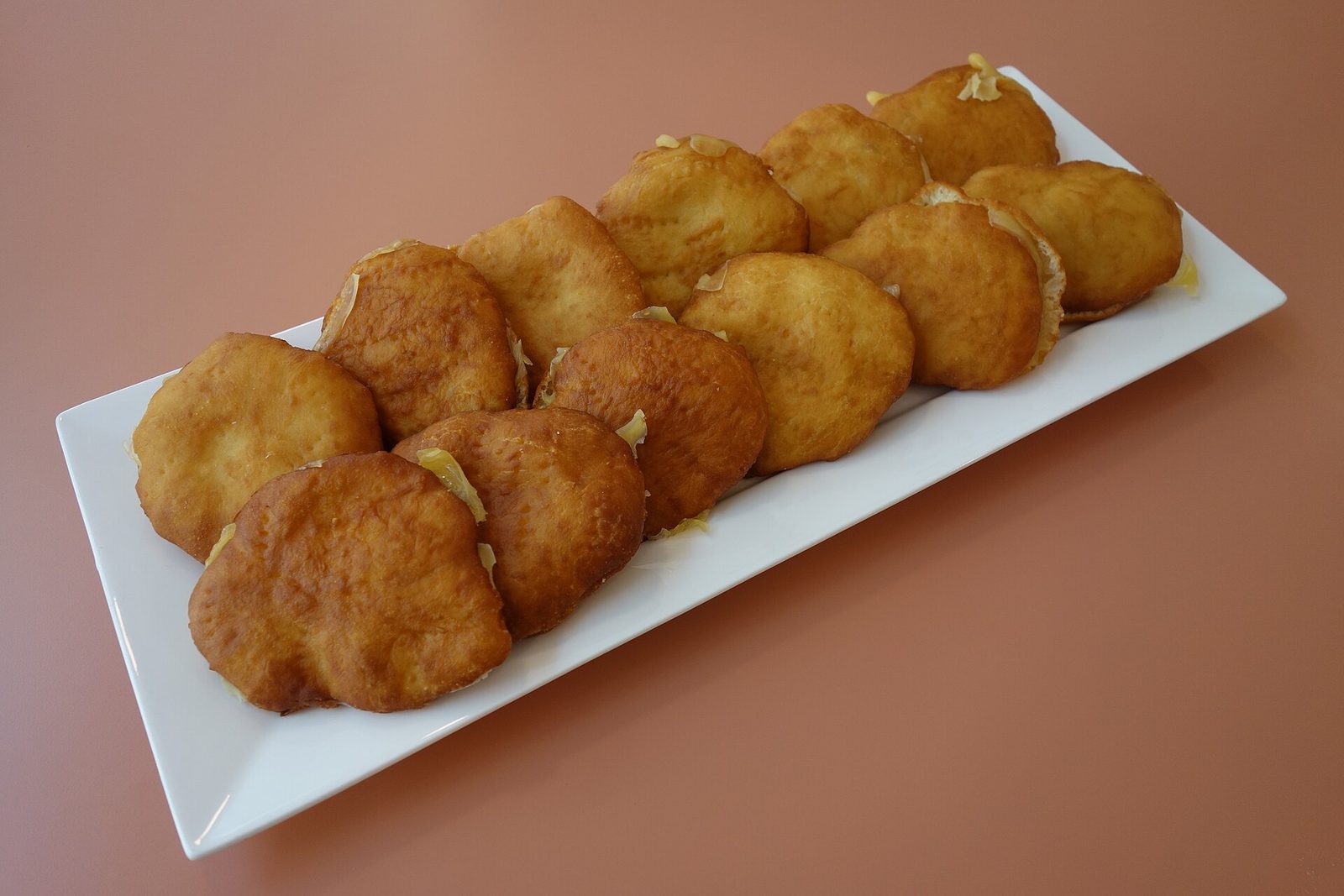
Toddlers who are wary of new food usually make peace with island food quickly. Johnny cakes, small golden fried breads, are best eaten warm, and pates (PAH-tays) are turnovers filled with beef, chicken or saltfish, fried while you wait. Fresh fish from the grill flakes easily for small hands. Early summer is mango season, and the island's Saturday farmers market sells local fruit, vegetables, eggs and baked goods; as of 2026 it is listed at the Agriculture Fairgrounds on Industrial Road on Saturday mornings, so check the location before you go.
On a night when the grown-ups want a real dinner, a private chef can cook in the villa for one evening or the whole stay. Ask the chef for a simple early plate for the children, so they eat first and the adults sit down once the little ones are in bed. Our private chef directory lists the island's chefs, the Crucian food guide explains the island's menu, and the kitchen page shows the room.
A toddler-paced day
Small children do best on St. Croix when the day follows the sun and the nap. The shape is simple: the water early, a nap in a cool room through the middle of the day, the pool in the afternoon, and an early supper. One outing a day is plenty, and the best ones are close to home. Here is how a day at the villa usually runs with an under-four.
- 6:30 amUp with the sunrise on the veranda, milk and fruit while the house is still quiet
- 7:30 amBreakfast at the kitchen island or on the terrace
- 8:30 amThe villa's beach or a nearby bay, in the stillest water of the day
- 9:45 amBack up the steps for a snack, a rinse and a story in the shade
- 11:30 amAn early lunch
- NoonThe long nap in an air-conditioned room
- 3:00 pmPool time under the pergola, with a named water watcher
- 5:00 pmThe children's supper from the outdoor kitchen
- 6:30 pmBath, books and bed by seven
- 8:00 pmThe grown-ups' dinner on the terrace, monitor on the table
The morning outing is the flexible part. On a beach morning it is the villa's own beach or Chenay Bay. On a town morning it is the fort and the boardwalk in Christiansted, done by eleven. On a boat morning it is a half day to Buck Island from Green Cay Marina, about ten minutes from the villa. Leave the afternoons open; the pool and the shade are all a toddler needs.
Keep the plans loose on the first and last days. The first afternoon is for unpacking, finding the crib and the high chair, and a dip in the pool. The last morning is for one more swim and an easy start to the airport.
Christiansted with a stroller
Christiansted, the island's main town, is fifteen to twenty minutes from the villa, and a morning there suits small children because everything is close together. Start at Fort Christiansvaern, the yellow Danish fort on the harbor, run by the National Park Service as part of Christiansted National Historic Site. Toddlers like the cannons on the ramparts, the courtyard and the views of the boats. Adults 16 and older pay $10, children under 16 enter free, and the ticket is good for three days, so a short first visit with a toddler can be followed by a second one later in the week.
Then the boardwalk, which is the part a small child remembers: pelicans diving in the harbor, boats coming and going, the seaplane from St. Thomas landing on the water, and ice cream. Lunch tables sit right on the water at Rum Runners, Brew STX, The Mill and Shupe's. Brew STX has run hermit crab races on Wednesday nights by its recent listing, which makes a cheerful early evening for a three-year-old; check the week's schedule first.
Bring a light stroller and a carrier both: the carrier for the fort and the busy boardwalk, the stroller for the bags and the nap on the walk back to the car. The National Park Service lot beside the fort is limited to two hours and must be empty by 4:30 pm, and the government lot near King Cross Street and Strand Street runs about $1 an hour. Our Christiansted guide has a walking loop that works with a stroller.
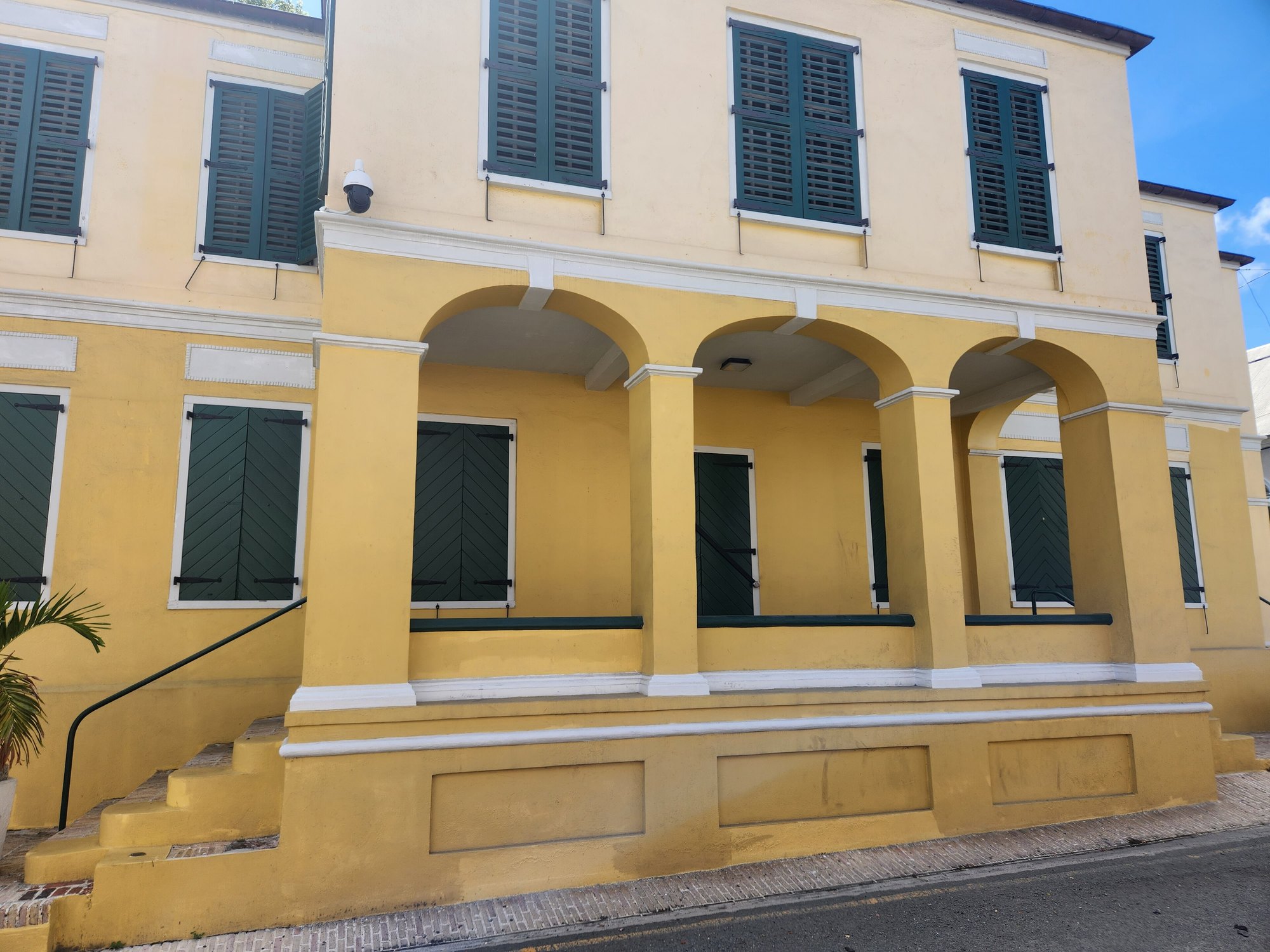
If your week lines up with a Jump Up, Christiansted's Friday-night street party from about 6 to 10 pm, bring the toddler for the first hour. The streets close to cars, bands play on the corners, and mocko jumbies, the stilt dancers, walk above the crowd and bend down to shake small hands. The dates are set late, so check the week before; our Jump Up guide has the plan.
Pelicans, iguanas and hermit crabs
A toddler can see plenty of wildlife on St. Croix without leaving the villa. Start on the veranda in the first hour after sunrise, when brown pelicans fly low along the reef line, climb, fold their wings and drop into the water with a splash you can hear from the terrace. Counting pelican dives is a game that holds a two-year-old's attention through a whole cup of coffee. Higher up, magnificent frigatebirds, big black birds with forked tails, ride the trade wind for hours and almost never flap.
The garden is next. The bananaquit, the official bird of the U.S. Virgin Islands, is small and quick, with a yellow breast and a white stripe over the eye, and it visits the flowering shrubs all day. Two kinds of hummingbird feed on the same flowers. Sit still with a child on your lap near a flowering bush in the early morning and they come close.
By mid-morning the green iguanas are out on warm walls and branches. A big adult can run five feet or more, most of it tail, and spends the day eating leaves, flowers and fruit. After dark, take a flashlight along the garden paths and look for land hermit crabs, called soldier crabs on the island, out to scavenge fallen fruit. A toddler in pajamas on a short flashlight walk is one of the best evenings of the week.
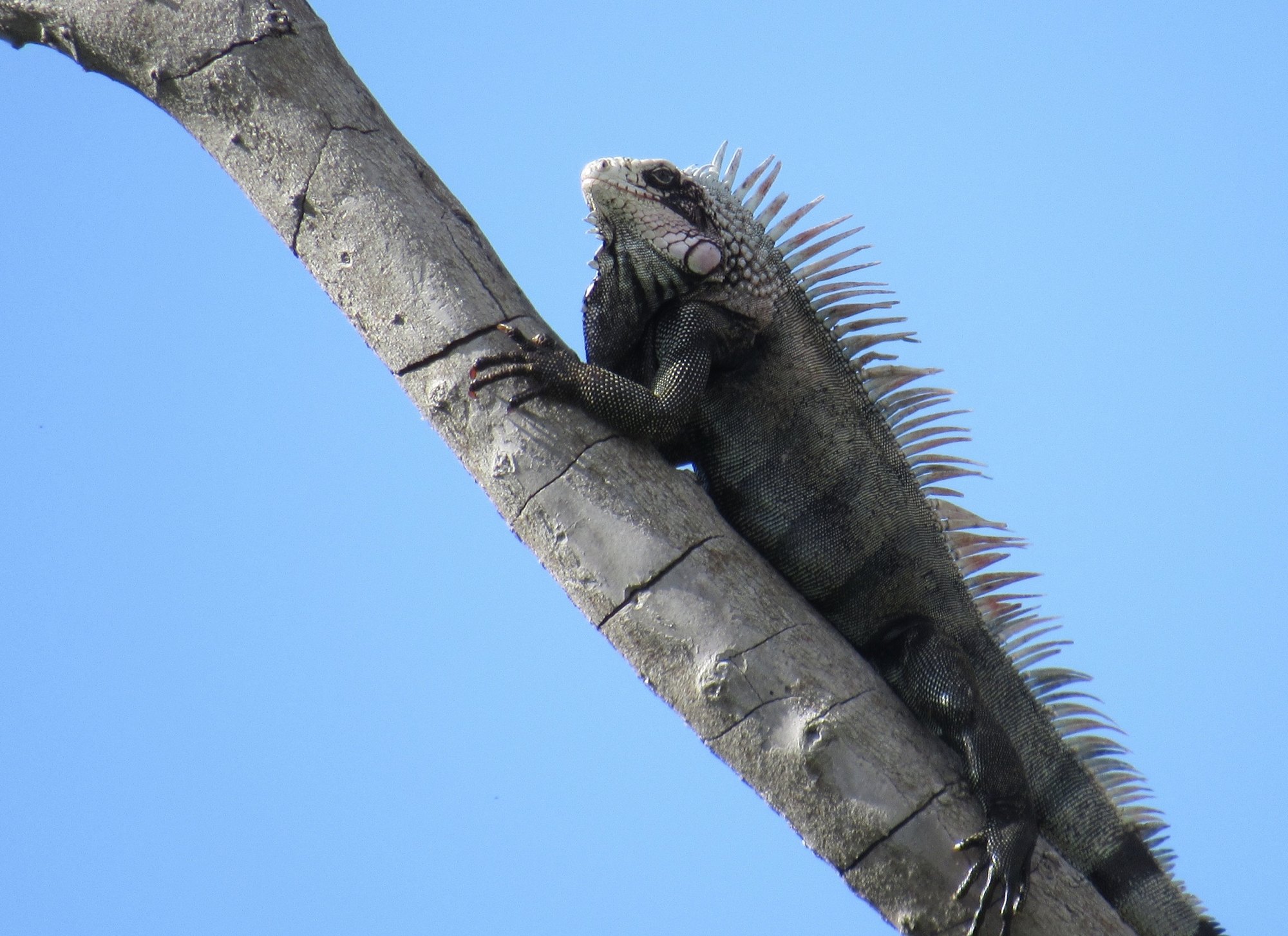
Teach one rule for all of it: look, do not touch. Iguanas and hermit crabs both prefer to be left alone, and animals that are left alone stay close enough to watch. Our wildlife guide has the full cast, from the bats at dusk to the frogs that call after rain.
Buck Island and a boat day with little ones
Buck Island Reef National Monument is the island's big day on the water, and it can include small children when the plan fits the youngest. The island sits a mile and a half off the northeast coast, reached only by authorized boats, and the closest departures are from Green Cay Marina, about ten minutes from the villa. Its underwater snorkel trail suits confident swimmers; the shallow, sandy beach at its west end, Turtle Beach, is the part toddlers love, with picnic tables and vault toilets and clear water to wade in.
Choose the half day. Big Beard's lists a half-day trip of about three to three and a half hours, which brings a toddler home by early afternoon, in time for a late nap. Teroro II and Dragonfly, the Buck Island Charters trimarans out of Green Cay, have listed a children's rate for ages 11 and under and free passage for children under two; prices change, so confirm when you book. The boats list their trips as open to all ages; tell them the baby's age when you book and ask about shade on deck.
Book the morning departure, when the crossing is smoothest, and put a life jacket on every child; the boats carry them. Pack a small cooler with milk and snacks, a sun hat with a strap, a rash guard and a dry change of clothes. With a baby under one, a split day works well: one parent goes out with the older children and the grandparents, and the other keeps the baby at the villa for a beach morning and a nap, then takes a turn on a sunset sail later in the week.
Even shells stay on the island: Buck Island is a no-take monument. Our Buck Island guide covers the boats and the trail, the boat charter directory lists the sails, and the concierge can book the boat for you.
Evenings for the grown-ups
Once the children are asleep, the villa turns into a house for adults, and the evening belongs to the parents. The fire-pit terrace sits above the water, the outdoor kitchen and gas grill are on the pool deck, and the covered seating stays comfortable long after dark. With the monitor on the table and the baby twenty steps away at most, the parents can have the same evening as the rest of the group.
A few evenings are worth planning. Book a private chef for one dinner, so nobody cooks and nobody cleans. The concierge can arrange a bartender and setup for an evening, and in-villa massage, yoga and beauty services by appointment, which makes a parent's afternoon off possible without leaving the house. If you would like a sitter for a night out, ask the concierge what can be arranged. With grandparents in the group, the simplest plan is a night when the baby sleeps in their building and the parents go out.
Dinner out is a short drive: Christiansted's waterfront restaurants are fifteen to twenty minutes away, and a table at seven-thirty means home by ten. Our restaurant directory lists them, and the spas and wellness directory lists massage and yoga.
“Rich and team were very responsive and helpful. We had a great time and would love to stay again.”
Ashleigh, a guest in July 2026
Doctors, pharmacies and the first-aid kit
Most baby trips need nothing more than the first-aid kit, and knowing where the doctor is lets parents relax. On St. Croix, 911 works as it does on the mainland. The island's hospital, the Gov. Juan F. Luis Hospital and Medical Center, sits mid-island at Estate Diamond Ruby, about 25 to 30 minutes from the villa, and runs an emergency department around the clock. For the ear infection or the fever that needs a look, Plessen Healthcare offers pediatric care and sees unscheduled patients for acute problems; call ahead for hours.
The villa keeps a first-aid kit, smoke and carbon monoxide detectors and a fire extinguisher, and the managers can point you to the nearest open pharmacy. Add your own small kit: a children's thermometer, the fever medicine you trust in child doses with its dosing syringe, a children's antihistamine, saline drops, diaper cream, tweezers and bandages. Pack every prescription in its labeled bottle, with a few spare days, in the carry-on.
If your child has a specific condition, bring the specific supplies and a short summary from your pediatrician, and keep a photo of each insurance card on one parent's phone. Carry the children's birth certificates as well; they answer any question about a lap infant's age, and they are handy at the departure check on the way home.
A week with a baby, day by day
Here is a loose Saturday-to-Saturday week for a family with a baby or toddler, with one outing a day and every afternoon free. Move the days around the naps.
Saturday
Fly in on a nonstop, collect the car, fit the seats in the airport lot and drive east, about 35 to 40 minutes. The villa managers meet you with a guided drive and a full tour of the house. Find the crib and the high chair, swim in the pool and eat an early dinner from the provisioned kitchen.
Sunday
Sunrise from the veranda with the early waker. The villa's beach after breakfast, water shoes on, then lunch, a long nap and the pool. Count pelicans at dusk.
Monday
Chenay Bay in the morning with the umbrella and the cooler. Home for lunch and the nap. A flashlight walk for hermit crabs after supper.
Tuesday
A slow day at the villa: the beach, the pool, and an in-villa massage for a parent while the baby naps.
Wednesday
Christiansted: the fort first, then the boardwalk, an early lunch on the water and ice cream. Groceries on the way home, then the nap and the pool.
Thursday
The Buck Island half day from Green Cay Marina, home by early afternoon for a late nap. If the baby is under one, one parent stays at the villa for a beach morning, and the other takes the older children.
Friday
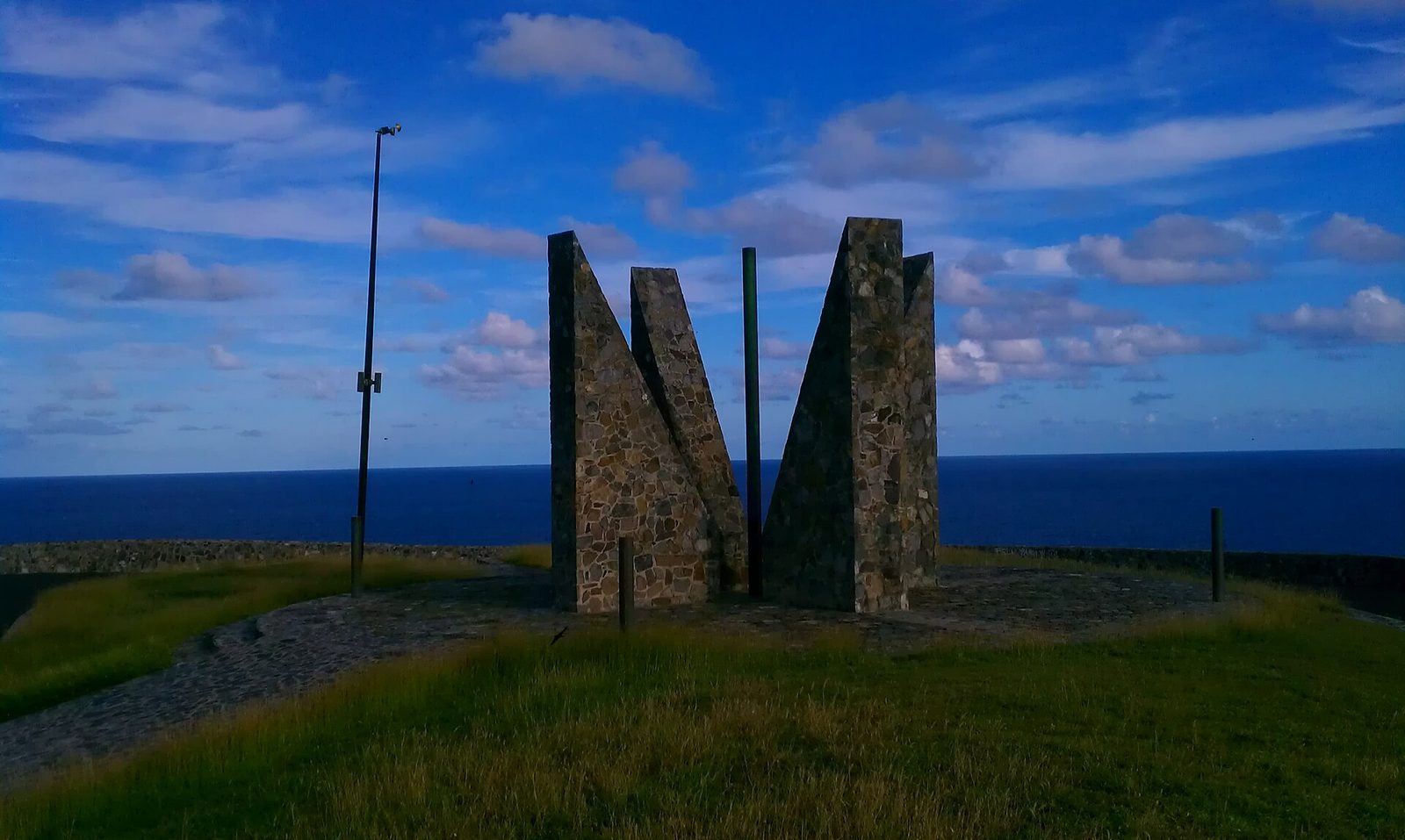
Point Udall at sunrise for anyone awake, the easternmost point of the United States and a few minutes from the villa, then Cramer's Park while the water is still. A private chef for the last dinner, and the fire pit after the children are down.
Saturday
One last swim on the villa's beach, pack, and drive to the airport with packaged snacks for the flight. If a Jump Up falls on your Friday, swap the chef to Thursday and give Friday evening to the street party.
Packing for a baby or toddler
With the big baby gear already in the house, a baby's suitcase can be small, and with a washer and dryer on hand, four days of clothes will cover a week. Pack light, breathable cotton for the day, one warmer layer for the air-conditioned plane, and a couple of spare outfits in the carry-on.
Spend the space on the water and the sun: swim diapers, a rash guard and a hat with a strap for every small child, water shoes for walkers, a life jacket that fits, and mineral sunscreen for anyone over six months. Add the sleep kit: the sleep sack, a crib sheet from home, the white-noise machine, the monitor and a night light. For the plane, the carrier, the car seat if you are bringing it, and the first two days of diapers, wipes, formula and snacks in the carry-on.
Leave room for the trip home. Before boarding a flight to the mainland at St. Croix there is an agriculture check, where fresh fruit and vegetables stay behind, and a Customs and Border Protection check at the gate, so pack packaged snacks for the flight home rather than the last of the bananas. The tourism department says to be ready to show evidence of citizenship when departing the islands, and names a raised-seal birth certificate as an example, so keep each child's birth certificate in the carry-on. Be at the airport about two hours before the flight, two and a half on a busy Saturday.
The baby and toddler packing list
17 itemsYour ticks stay in this browser only.
The Cerulean books through Sterling Point, the St. Croix company that manages the villa. Tell them the children's ages when you book, ask what baby and beach gear is on hand, and send the concierge the provisioning list a week ahead. Long stays are welcome, which suits a parent on leave who would like a month rather than a week. Our post on bringing the whole family has more on traveling as a group.
Questions people ask
Is St. Croix a good Caribbean island for a toddler?
Yes. St. Croix is a U.S. territory, so U.S. citizens fly in on a domestic flight with no passport, and TSA asks no ID of children under 18. The East End's reef-protected bays are shallow and calm in the morning, Christiansted is fifteen to twenty minutes from the villa, and the drive from the airport is about 35 to 40 minutes. The Cerulean adds a travel crib, a high chair, baby gates and a separate cottage for naps.
Does The Cerulean have a crib and a high chair?
Yes. The villa's listing includes a travel crib, a high chair and baby gates, and it describes the house as suitable for children and infants. It also has a washer and dryer, a dishwasher, a blender, air conditioning in every room and a first-aid kit. For a second crib or a stroller, BabyQuip, a gear-rental service on St. Croix and St. Thomas, delivers to where you stay. Ask the managers what else is on hand when you book.
Does a baby need a passport or ID to fly to St. Croix?
No passport is needed for U.S. citizens of any age, because the U.S. Virgin Islands are a U.S. territory. TSA does not require children under 18 to show identification on flights within the United States; adults need a REAL ID or another accepted document. Airlines may ask for proof of age for a lap infant, and the tourism department advises being ready to show evidence of citizenship on departure, so carry each child's birth certificate.
Can a lap infant fly to St. Croix?
Yes. A child under two can fly on a parent's lap on a domestic flight, and must be under two for the whole trip. JetBlue, for example, counts a child from three days old to the second birthday as a lap infant, adds the infant at no charge, accepts a copy of the birth certificate as proof of age on domestic trips and checks a car seat free. The American Academy of Pediatrics says a ticketed seat with an FAA-approved car seat is safest.
What sunscreen can I use on a baby in St. Croix?
Mineral sunscreen only: zinc oxide or titanium dioxide. Act 8185 bans the sale, distribution and import of sunscreens with oxybenzone, octinoxate or octocrylene in the Virgin Islands. For babies under six months, the FDA's advice is shade, light long sleeves and a brimmed hat, and to check with your pediatrician before using any sunscreen. For toddlers, a rash guard and a strapped hat cover most of the skin, and a mineral stick does the face.
Can I buy diapers and formula on St. Croix?
Yes. Diapers, wipes, formula and children's medicine are on the shelves at the island's supermarkets, including Plaza Extra East and Cost-U-Less mid-island, about 25 to 30 minutes from the villa. Bring a specialty formula, your preferred diaper brand and prescriptions from home, with the first two days in your carry-on. Easier still, send the concierge a provisioning list and the kitchen is stocked before you land.
Which beaches on St. Croix are best for toddlers?
Start with The Cerulean's private beach, down a short set of steps from the pool deck, where the water is shallow and protected by the reef. Nearby, Chenay Bay has calm, grassy shallows and shade, and Cramer's Park on the road to Point Udall has restrooms, pavilions and calm, shallow water, and is quietest on weekdays. On the west end, Rainbow Beach has flat water and a sandy entry. Go early, when the water is stillest.
Where does the baby sleep at The Cerulean?
Wherever the family sleeps best. The travel crib can go in the guest cottage, a separate small house twenty steps from the main house with its own kitchen, bedroom, full bath and washer and dryer, so naps and early bedtimes have a quiet building of their own. Or it can go in one of the four en-suite bedrooms in the main house, near the big kitchen. The loft is up a spiral stair, so keep it for an older child or an adult.
Is there a hospital or pediatrician on St. Croix?
Yes. The Gov. Juan F. Luis Hospital and Medical Center in Christiansted, about 25 to 30 minutes from the East End, runs an emergency department around the clock, and 911 works as it does at home. Plessen Healthcare offers pediatric care and sees unscheduled patients for acute problems; call ahead for hours. The villa keeps a first-aid kit, and the managers can point you to the nearest open pharmacy.
Do rental cars on St. Croix come with car seats?
Some agencies offer them. Centerline Car Rentals lets you add up to four car or booster seats when you reserve, and Budget lists infant and toddler seats; reserve them with the car and confirm the week before. Virgin Islands rules call for rear-facing seats to age one, a child seat from one to five, and a booster for children under eight and under four feet nine. Bringing your own seat is the surest plan, and most airlines check it free.
Sources
Facts in this story were checked in October 2026 against the sources below. Event dates, flight schedules, prices and hours change, so confirm anything you plan around.
- TSA — Acceptable identification at the checkpoint (children under 18, REAL ID)
- TSA — Traveling with children (formula, breast milk, baby food, strollers, car seats)
- JetBlue — Traveling with lap infants
- American Academy of Pediatrics, HealthyChildren.org — Flying with baby
- U.S. Food and Drug Administration — Should you put sunscreen on infants? Not usually
- CDC — Preventing drowning
- U.S. Virgin Islands Department of Tourism — Travel tips and FAQs
- VI Consortium — DLCA to enforce the Act 8185 sunscreen ban
- Centerline Car Rentals — Traveling to St. Croix with a baby (car seats, VI rules, BabyQuip)
- USDA APHIS — Traveling to the U.S. mainland from Puerto Rico and the USVI
- Gov. Juan F. Luis Hospital and Medical Center
- Plessen Healthcare (pediatrics, unscheduled patients)
- National Park Service — Christiansted National Historic Site fees
- GoToStCroix — Chenay Bay beach
- GoToStCroix — Buck Island Charters, Teroro II and Dragonfly (children's rates)
- Big Beard's Adventure Tours (half-day Buck Island trips)
- The Buccaneer — Nonstop flight schedule to St. Croix