

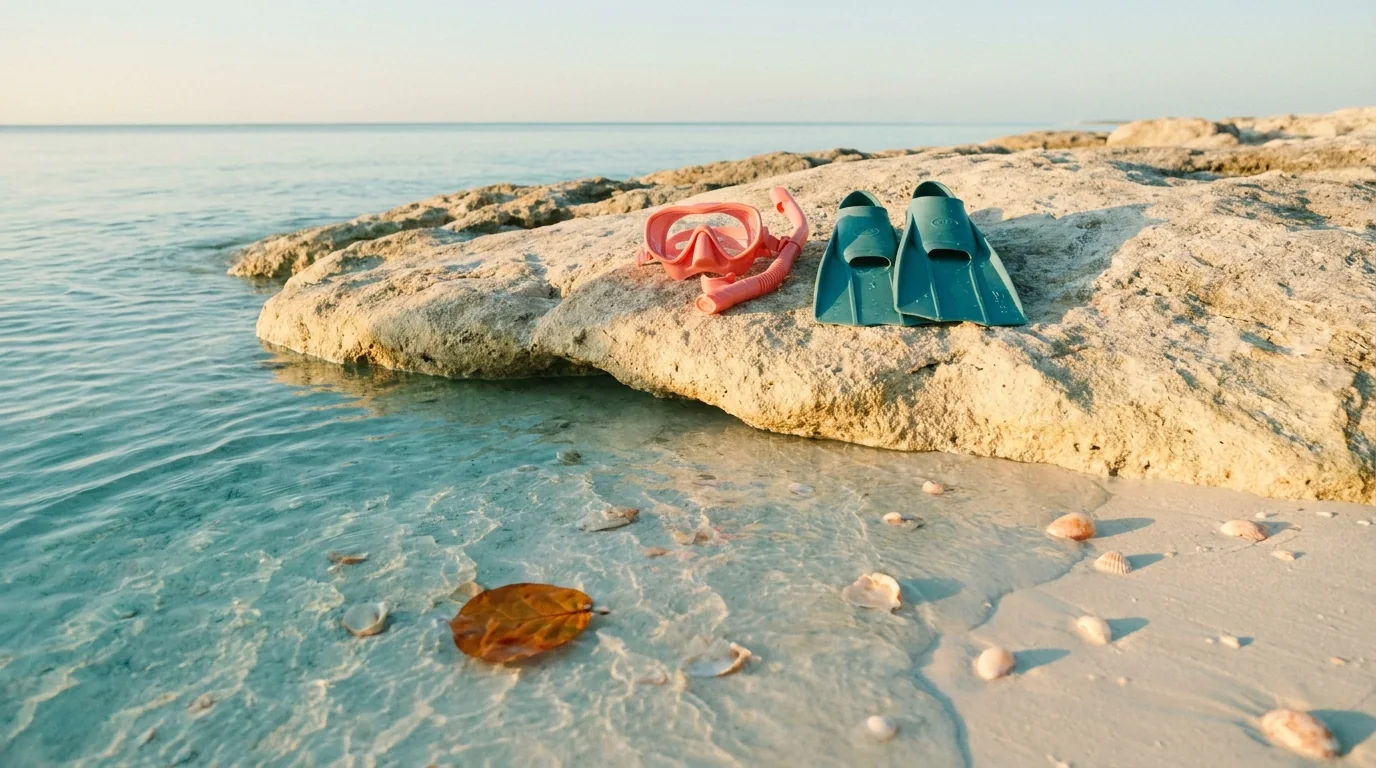
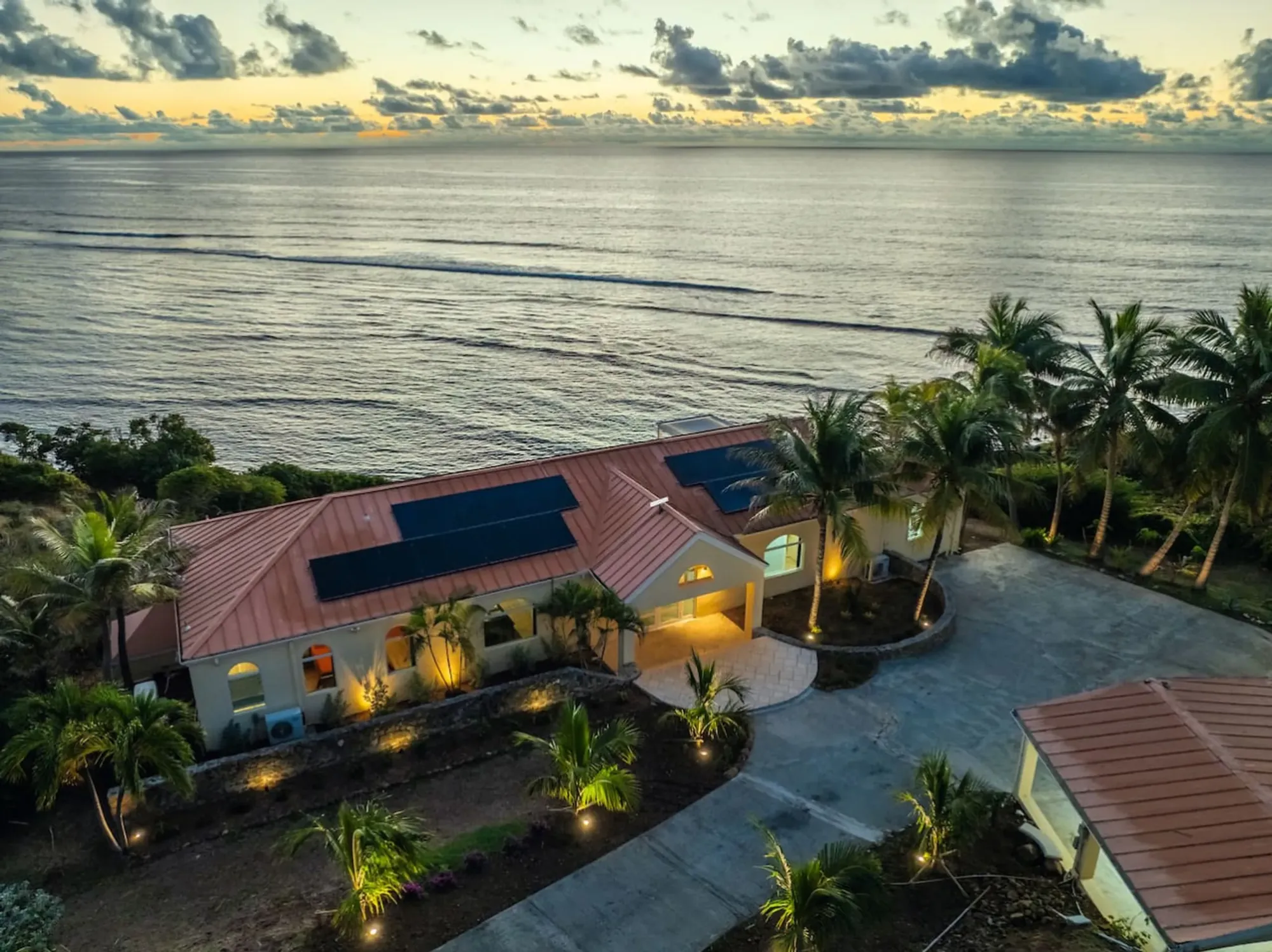
St. Croix is a shore-snorkeling island. In much of the Caribbean the good reef is a boat ride away; here you walk in from a beach or a pier and are over living coral within a few minutes, in water that holds near 80°F all year. The island has three coasts that face three different ways, so one of them is almost always calm, and it has one boat trip that belongs on every list, the underwater trail at Buck Island Reef National Monument. This guide covers every spot worth your morning, from the reef at the bottom of the villa's own steps to the pilings of the Frederiksted Pier, with the boats and what they cost, the gear, the turtles and the rules for watching them, the sunscreen law, and a day-by-day week for a group that wants to see it all. The base is The Cerulean, a five-bedroom oceanfront villa on the East End that sleeps twelve, with shallow, reef-protected water a few feet from its private beach.
Why St. Croix suits a snorkeler
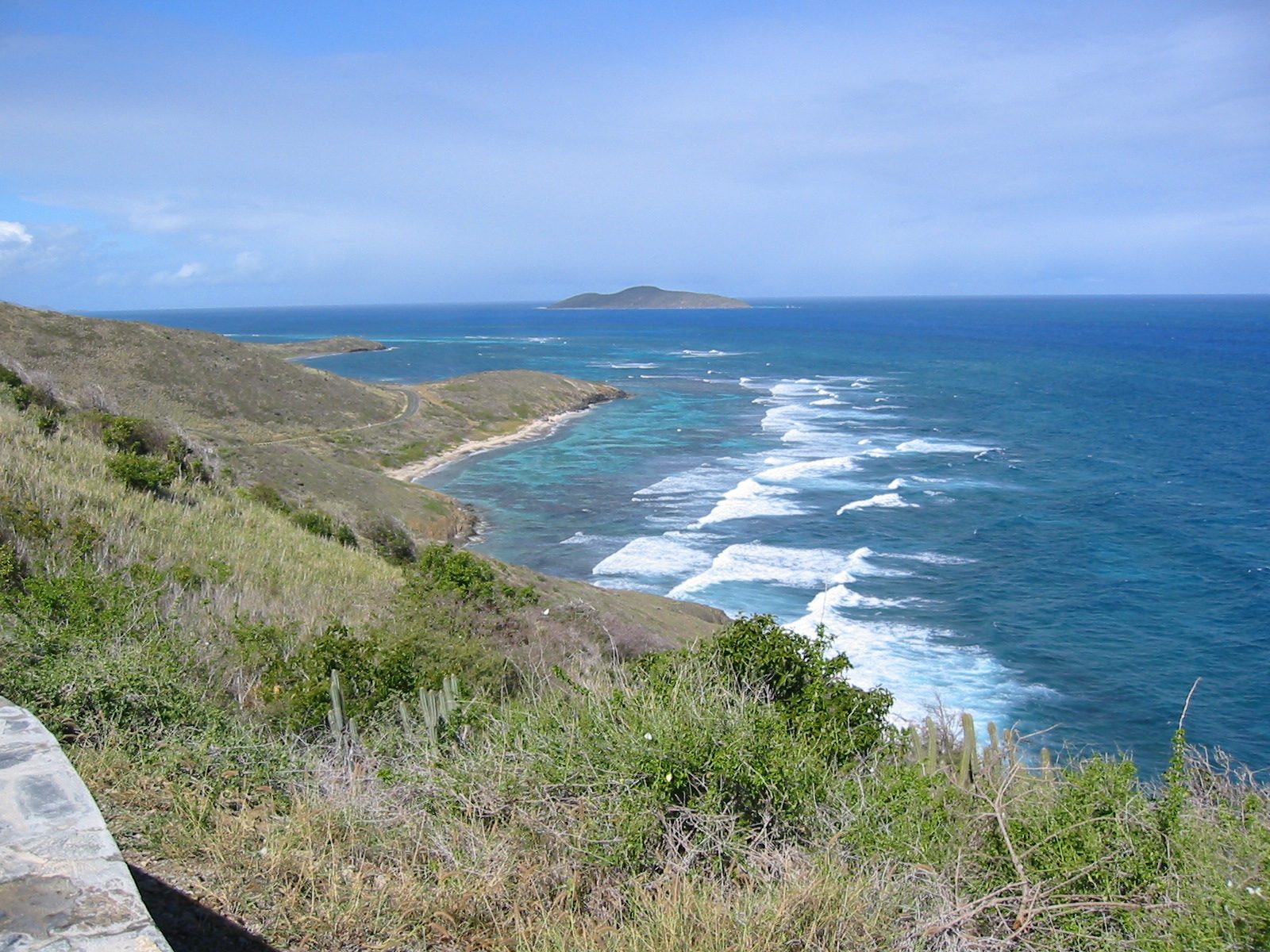
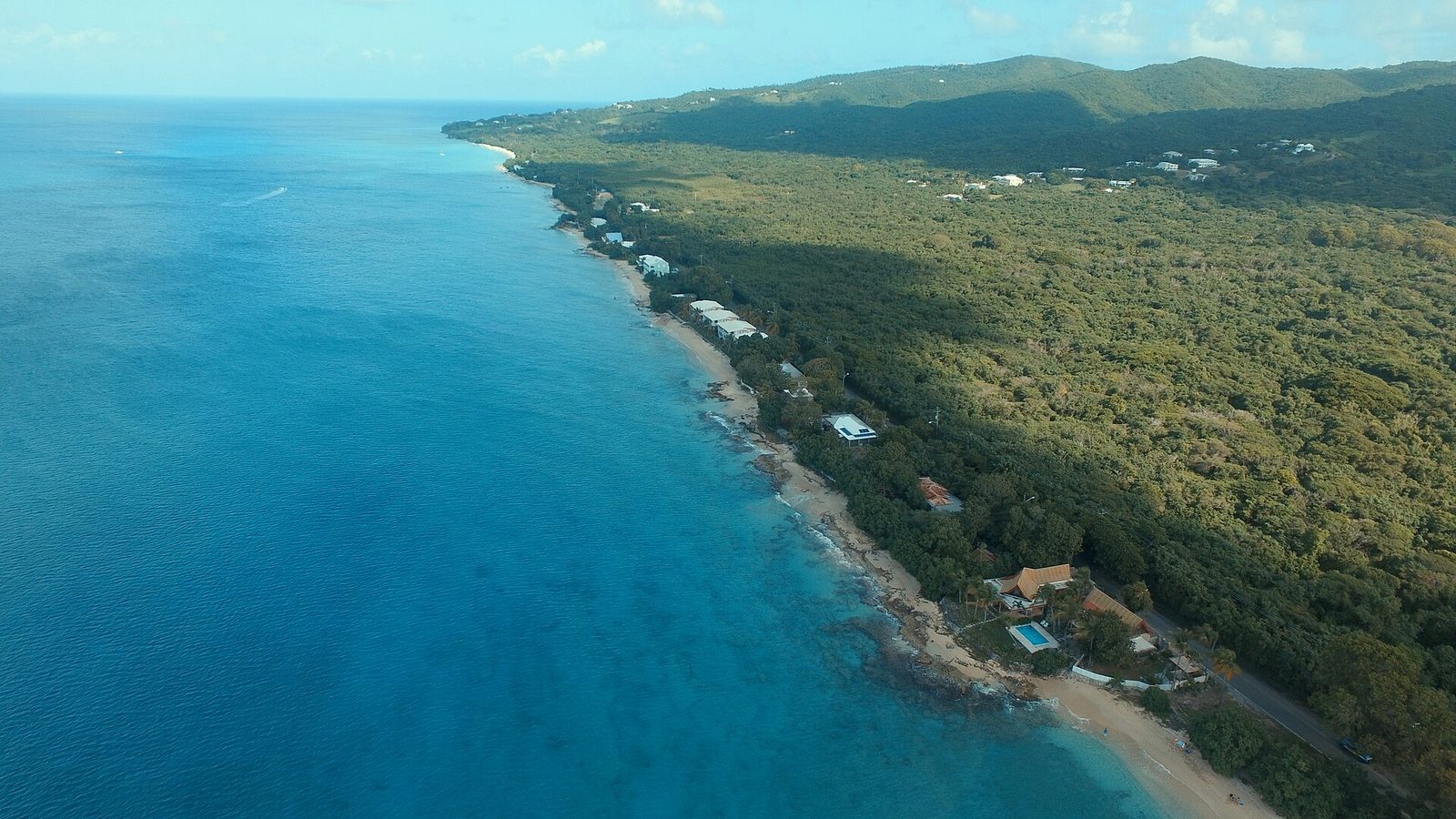
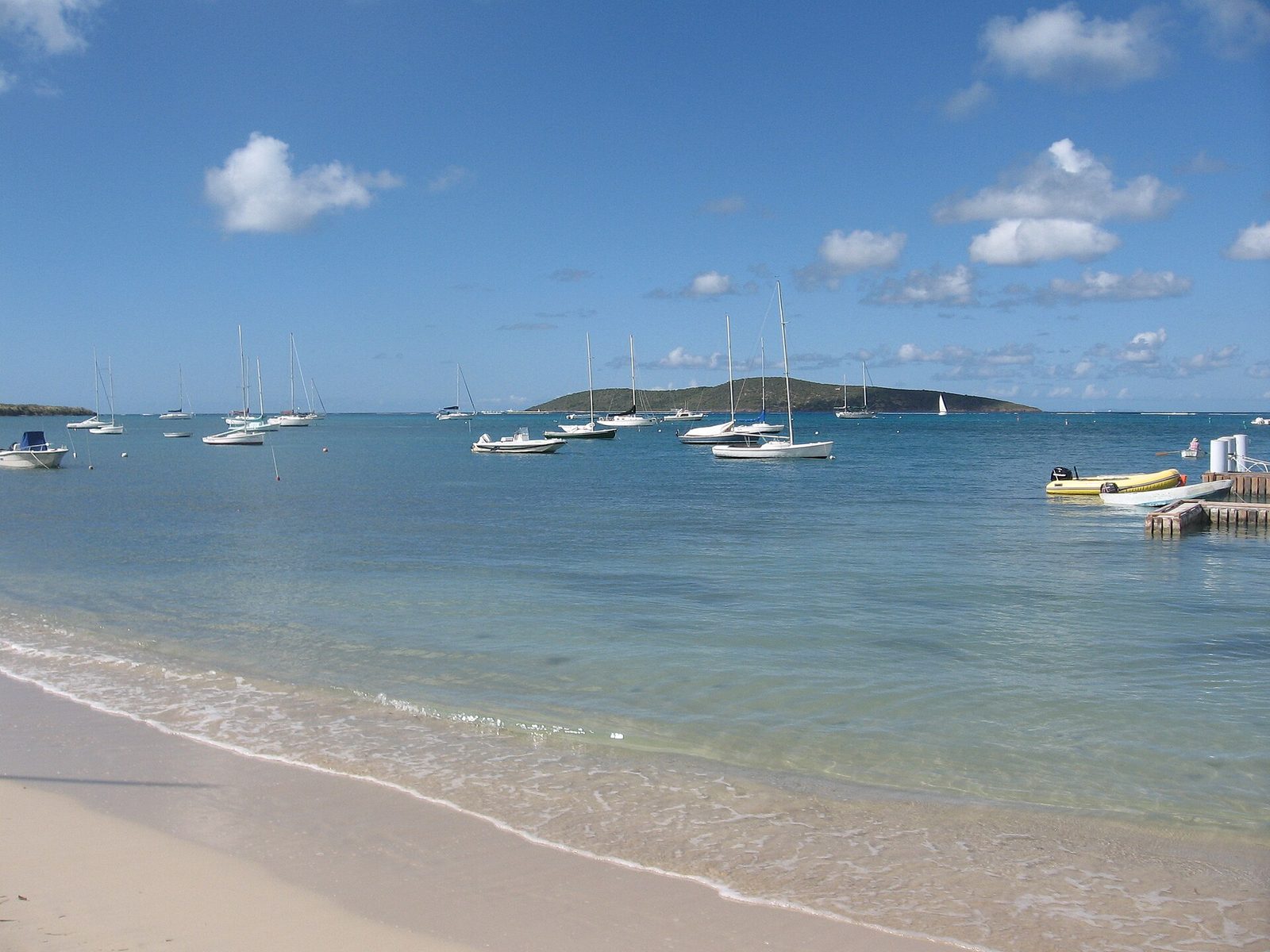
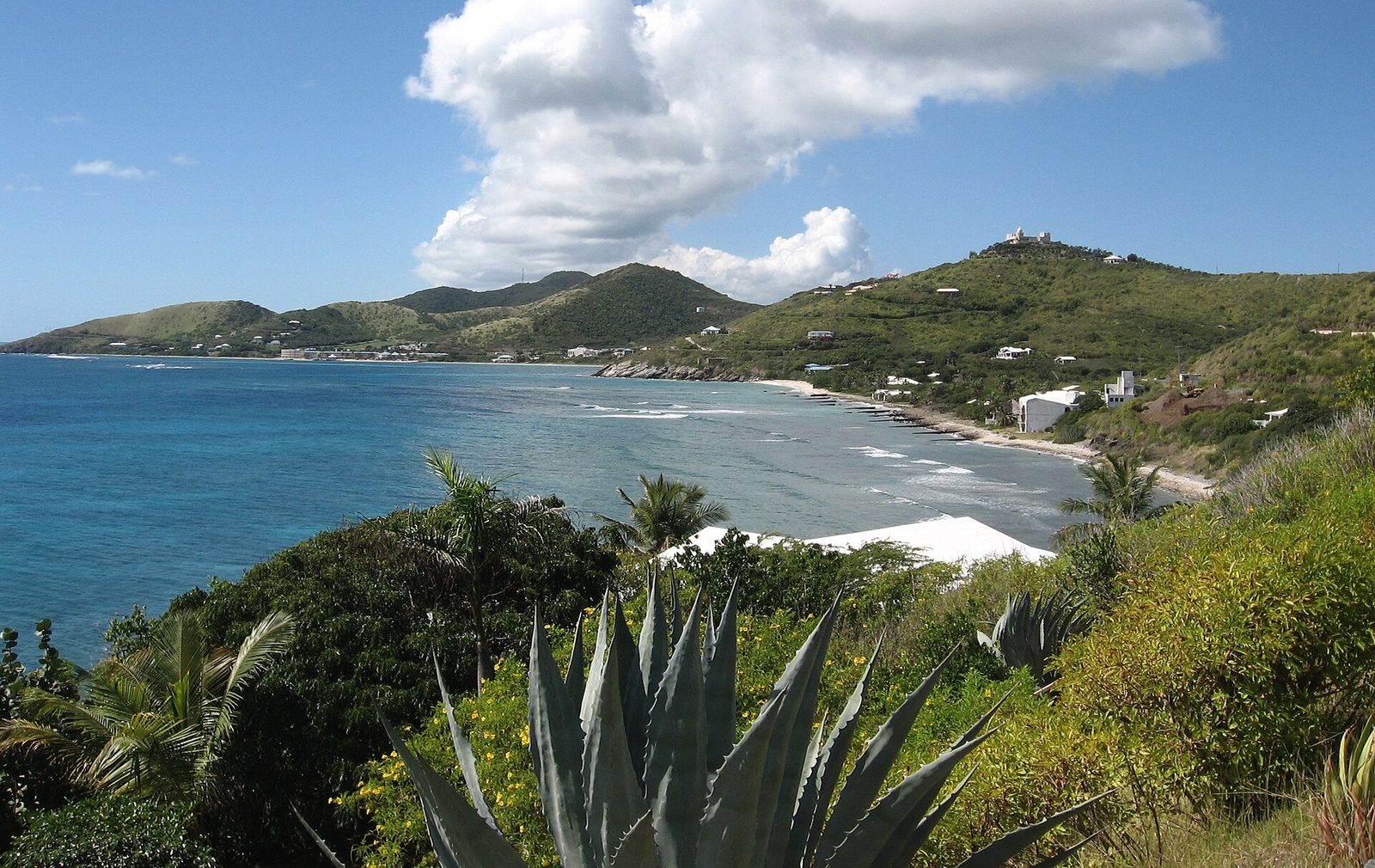
St. Croix has more reef around it than any other island in the U.S. Virgin Islands, and most of it sits close to shore. Along the north coast a shelf of reef runs a few hundred yards wide and then drops away into a wall; at Cane Bay the lip of that wall sits only 100 to 200 yards off the sand. The East End is ringed by fringing reef that breaks the swell and leaves calm, shallow water inside, which is why the bays there are so easy for children and first-timers. The west end faces the lee, with the pier at Frederiksted and a line of beaches where the water lies flat most mornings. And a mile and a half off the northeast coast sits Buck Island, a national monument since 1961 with a marked snorkel trail through its lagoon.
The water helps as much as the geography. Sea temperatures stay in the high 70s to low 80s°F all year, so most people snorkel in a swimsuit and a long-sleeve rash guard rather than a wetsuit, and a child can stay in for an hour without shivering. Visibility on the reefs commonly runs 20 to 60 feet and better on glassy mornings. The island drives on the left and the roads are unhurried, so every spot in this guide is a scenic drive of 10 minutes to about an hour from the East End.
The rest is practical. The U.S. Virgin Islands are American, so U.S. citizens need no passport, the money is the dollar and the phones work as they do at home; our guide to traveling to the USVI without a passport has the details. The villa is about 35 to 40 minutes from the airport and 15 to 20 minutes from the Christiansted boardwalk, where most of the Buck Island boats leave, and Green Cay Marina, with the East End's own Buck Island boats, is minutes away. Our snorkeling directory keeps the short list of spots, and this guide fills in the rest.
The reef at the bottom of the steps
Start where you wake up. Down a short set of steps from the pool deck, The Cerulean has its own private beach on shallow water, and a reef a short way out does two jobs at once: it takes the push out of the swell so the water inside stays calm, and it gives the fish somewhere to live. The snorkeling starts a few feet from the beach. On a normal morning you can have a mask on within five minutes of your first coffee and be looking at parrotfish, sergeant majors and the occasional green turtle grazing before anyone else in the house is awake.
The entry is over rock, so the one thing every guest should bring is a pair of water shoes or reef booties for each person; they turn a careful wade into an easy walk. Go in the morning. The trade wind builds through the day on the East End, and the water out front is at its clearest and flattest before lunch, which also happens to be when the light comes straight down through it. Float rather than stand, keep hands off the coral, and let the fish come to you.
Guests mention this reef more than any other single thing about the house. Children practice here before a boat day, parents take a quiet half hour before breakfast, and the whole group ends up back in it on the afternoons when nobody wants to drive anywhere. The private beach page has the photographs, and the short journal note on snorkeling off the beach has the first impressions.
“Pure perfection. A gorgeous home right on the ocean, amazing snorkeling right in front of the house in the shallow water protected by the reef. Quiet house — all you hear is the surf and ocean breeze.”
Emily, a guest in April 2026
Reading the water before you choose a spot
The single most useful habit on St. Croix is to let the day's sea choose the coast. The island runs east to west, so its north shore, its east end and its west end face different directions, and the wind and swell that make one of them choppy leave another one flat. The trade wind blows mostly from the east and builds through the day, and from mid-December into March it freshens for a few days at a time in the spells islanders call the Christmas Winds, sometimes with a swell onto the north-facing beaches. On those mornings Cane Bay is lumpy and Frederiksted, in the island's lee, is glass.
So the plan is simple. Check the sea from the villa's deck when you wake. If the East End water is calm, snorkel out front or drive five minutes to the bays. If a breeze is up, the west end is the dependable choice: Rainbow Beach, the pier and the beaches north of Frederiksted sit in the lee of the whole island. Cane Bay and Davis Bay on the north shore are best on still mornings, which from about May through November is most of them. The National Weather Service in San Juan publishes a marine and beach forecast for the north coast, and a dive shop will tell you how the water looks if you call first.
Mornings beat afternoons everywhere. The wind is lighter, the surface is flatter, the water is clearer and the light comes down through it instead of across it, so plan the snorkel for the first half of the day and the drive, the lunch and the pool for the second. The one exception is the pier, which is also good in the hour before sunset when the ship has sailed and the town has gone quiet.
| If the morning is | Snorkel here | Why |
|---|---|---|
| Calm everywhere | Cane Bay or Buck Island | The north shore and the lagoon crossing are at their best |
| Breezy from the east | The villa reef, Chenay Bay or the Shoys | The East End reef keeps the inside water flat |
| A north swell is running | Rainbow Beach or the Frederiksted Pier | The west end sits in the island's lee |
| A ship is at the pier | Rainbow Beach, then the pier after 5 pm | Snorkeling under the pier waits until the ship sails |
Snorkeling by season
There is no closed season for snorkeling on St. Croix, only a different coast to favor. From mid-December through March the island is in high season: the skies are at their clearest, the air sits in the low 80s°F by day, and humpback whales pass offshore in February and March. The trade wind is livelier in these months and a north swell arrives on some mornings, so winter snorkeling leans on the East End bays, the villa's reef and the lee-side west end, with Cane Bay and Buck Island on the still days, which are plenty. Book the Buck Island boat early in a winter week, because the morning departures fill.
April, May and June are the months the National Park Service describes as typically the driest at Buck Island, with the winter winds easing. The north shore settles, the crossing to the lagoon is smoother, visibility stretches, and the beaches are quieter once the spring break weeks pass. Leatherbacks are nesting at Sandy Point, so that beach is closed, but the Turtle Watch evenings in April are the one legal way to see a nest, by sign-up through the St. Croix Sea Turtle Project.
Summer and fall bring the warmest sea, in the low to mid 80s°F, and the calmest surface of the year on the north shore, so Cane Bay and Davis Bay are at their best from about May through November and the wall buoy is an easy swim for a confident snorkeler. Green and hawksbill turtles are nesting at Jack and Isaac Bay from July, mango season fills the farm stands, and the East End beaches are at their emptiest. A brief shower passes and the water is clearer an hour later. Our weather by month guide has the sea temperatures and the sunrise times for every month.
Buck Island and the underwater trail
If the group does one organized trip, this is it. Buck Island Reef National Monument protects a 176-acre island and more than 19,000 acres of surrounding sea about a mile and a half off St. Croix's northeast coast. President Kennedy set it aside in 1961 and the monument was expanded in 2001 into a no-take reserve, so nothing comes out of the water and the reef has had decades to grow. Along the island's eastern lagoon the National Park Service maintains an underwater trail: you swim through coral grottoes in water no deeper than about 12 feet, past signs on the sea floor that describe what you are looking at, with elkhorn coral standing over you and the fish of a reef that nobody has fished in a generation.
The trail suits beginners. The crews hand out gear and give a short lesson before anyone gets in, guides take six people at a time, everyone snorkels with a buddy and stays in front of the moored boats, and the lagoon inside the reef is sheltered. Confident swimmers get the most from it, but a child who has practiced off the villa's beach the day before does fine, and the beach at the island's west end gives the rest of the party shallow, clear water to swim in while the snorkelers are out.
That beach is Turtle Beach, which the park calls West Beach, with picnic tables, charcoal grills and vault toilets. A marked trail climbs from it over the island to an overlook and down to Diedrichs Point, about 45 minutes at a walking pace and rated fairly strenuous, so bring closed shoes and water if you want the view. The monument is day-use only, from 7 am to 5 pm, and the trail closes from sunset to sunrise because hawksbill turtles nest here. Our Buck Island guide covers the history, every operator and the rules in full.
A Buck Island morning
- The day before, put every snorkeler in a mask off the villa's beach for fifteen minutes.
- Book the earliest departure your boat offers, when the lagoon is calmest.
- Pack per person: water shoes, a rash guard, a hat, mineral sunscreen already on, a towel and a full water bottle.
- Listen to the crew's briefing, choose a buddy and stay in front of the moored boats on the trail.
- Swim the trail slowly, reading the signs, and look up into the elkhorn as well as down.
- Give the rest of the morning to the beach, and the overlook trail if the group has the legs for it.
Choosing a Buck Island boat
Only operators licensed by the National Park Service may land visitors on Buck Island, and a private boat needs a park permit, so everyone goes with a concessionaire. That is good news for a group: the boats are small, the crews know the trail, and the gear comes with the ticket. Most trips leave from the Christiansted boardwalk, 15 to 20 minutes from the villa, and the East End has its own departures from Green Cay Marina, a few minutes down the road.
The prices are published. As listed on its own site in October 2026, Big Beard's Adventure Tours runs a full day on the 42-foot sailing catamaran Renegade for $135 per adult, about six hours with a sail to Turtle Beach, the snorkel trail and a beach barbecue, and a half day on a power catamaran for $95, about three to three and a half hours with the snorkel as the focus. Caribbean Sea Adventures runs daily trips on the power catamaran Celebration and books private charters; Jolly Roger Charters sails a 42-foot catamaran that keeps its numbers low. From the East End, Buck Island Charters runs the trimaran Teroro II for up to 24 guests and the smaller Dragonfly for up to 8 out of Green Cay Marina, with a children's rate. Private charters for a group start around $1,200.
Which to choose comes down to the group. A sailing boat is quieter and the crossing is part of the day; a power catamaran gets you to the reef sooner and back for lunch at the villa. A half day suits children under about eight and anyone who wants the afternoon by the pool; the full day adds Turtle Beach time and lunch, and families with older children usually prefer it. A party of twelve can charter a boat of its own and set the pace, and the villa's concierge knows every captain. Our boat charter directory lists them all, and the journal's Buck Island day describes the crossing.
| Operator | Leaves from | Boat | Trips |
|---|---|---|---|
| Big Beard's Adventure Tours | Christiansted boardwalk | Sailing cat Renegade and a power cat | Full day about $135 and half day about $95 per adult |
| Caribbean Sea Adventures | King's Wharf, Christiansted | Power cat Celebration and a fleet | Half and full days, private charters, sunset sails |
| Jolly Roger Charters | Christiansted boardwalk | 42-ft catamaran | Half and full days with small numbers |
| Buck Island Charters | Green Cay Marina, East End | Teroro II (24) and Dragonfly (8) | Half and full days, children's rate, minutes from the villa |
The East End bays
The villa's own quarter of the island is the easy one, and most of it lies inside the St. Croix East End Marine Park, 60 square miles of protected water established in 2003. The bays here face the trade wind behind a fringing reef, so the water inside is shallow, calm and grassy, and grassy water means turtles. Green turtles graze the seagrass of the East End, conch move across the sand, and rays and the occasional eel work the edges of the reef.
The best beach snorkel on the East End costs you a walk. Isaac Bay and Jack Bay sit inside The Nature Conservancy's 300-acre Jack and Isaac Bay Preserve, protected since 1999, reached only on foot from a small lot on the right side of the road just before the Millennium Monument at Point Udall, about five minutes' drive from the villa. You reach East End Bay first, then Isaac Bay, then Jack Bay farther west. Isaac Bay has deeper water and fewer rocks than Jack Bay, over reefs the Conservancy says hold at least 400 fish species, and because you have to hike in, you often have it to yourselves. There are no facilities at all, so carry water, shade and everything else in and out. Our journal walk to Jack and Isaac Bay describes the trail.
Without the hike, three bays do the job. Chenay Bay is shallow, calm and grassy close to shore with plenty of shade, the family beach of the East End, with turtles and rays often cruising the grass beds. The Shoys is a calm crescent east of Christiansted with a small reef at its eastern end where rays, eels and conch turn up; you reach it through the Estate Shoys guard gate at The Buccaneer's entrance, give the guard your name and say you are going to the beach. Cramer's Park, the island's beach park, has shallow, typically very calm water, restrooms, pavilions and sea grape shade, busiest on weekends. Grapetree Bay on the south side is grassy too, so expect turtles and conch rather than clouds of reef fish. Our East End beaches guide rates every one of them.
| Bay | From the villa | Water | Snorkel |
|---|---|---|---|
| The villa's beach | Down the steps | Shallow, reef-protected, rocky entry | A few feet out, best before lunch |
| Isaac Bay | About 5 min drive plus a hike | Usually calm, some current | Best beach snorkel on the East End |
| Chenay Bay | About 10 min | Shallow, calm, grassy | Turtles and rays over the grass |
| The Shoys | About 15 min | Calm crescent | Small reef at the eastern end |
| Cramer's Park | About 10 min | Shallow and very calm | Easy swimming, light snorkel, weekday mornings |
Cane Bay and the north shore
Cane Bay is the north shore's headline, about 45 minutes from the villa along Route 80, the North Shore Road, past Salt River and a line of sugar-mill ruins. The beach is soft sand with shade under the trees, two bars on the sand, free roadside parking and a dive shop across the road, and in front of it lies the reason divers fly here: a reef shelf a few hundred yards wide that ends in a wall dropping past a thousand meters. The white mooring buoy where divers descend sits roughly 100 to 200 yards off the boat ramp in about 26 to 40 feet of water.
For a snorkeler, most of the pleasure is between the beach and that buoy: a shallow reef and sand flat with parrotfish, turtles and stands of staghorn coral, in water that on a glassy morning is as clear as anywhere on the island. A confident swimmer can reach the buoy on a calm day and look down at the edge of the wall, where the bottom simply ends and the blue begins. Beginners should stay over the inshore reef or join a guided snorkel tour; Sweet Bottom Dive Center across the road runs them and Cane Bay Dive Shop rents masks, fins and snorkels by the day and guides shore dives here. Lunch is at The Landing Beach Bar on the sand, closed Tuesdays, and AMA at Cane Bay serves dinner. Our Cane Bay guide has the hours and the step-by-step.
Davis Bay, next door at Carambola, is the quieter alternative on a still day. Non-guests park in the upper lot outside the resort's guard gate, ask the guard for the public beach access and follow the signs at the bottom of the steps; the resort's dive shop rents snorkel gear and its bar and restaurant are open to everyone. The bottom is rocky in places and the current can be strong, so treat Davis Bay as a calm-morning spot for good swimmers and keep the children on the sand when the surf is up. The north shore is at its glassiest from about May through November; in the Christmas Winds of midwinter, make it the first thing you check and have the west end as the backup.
The Frederiksted Pier from the town beach
The pier is the island's cult favorite, and you can snorkel it for free. Frederiksted's cruise pier, officially the Ann E. Abramson Marine Facility, runs 1,526 feet into the sea from the west end town, and its rows of concrete pilings have become a reef of their own, coated in sponges in oranges, reds, yellows and lavenders you will not see on the natural reefs, with schools of silvery fish hanging in the shade between the columns. The water along most of the pier is only about 25 feet deep, in the lee of the island, and it is usually calm.
From shore, walk in from the town beach beside the pier, the sand in front of Fort Frederik, and swim to the shore-end pilings, where the sponge growth and the small fish are visible from the surface. The famous residents, longsnout seahorses holding onto the sponges with their tails, along with frogfish and octopus, are mostly a diver's find, but a patient snorkeler over the first pilings sees plenty. Stay clear of the tender pier and any boat traffic, keep away from above working divers, and skip it if a swell is breaking on the beach. Our Frederiksted Pier guide covers the dives, the shops and the seahorse.
Two checks before anyone gets wet. Snorkeling and diving under the pier are not allowed while a cruise ship or a naval vessel is docked, and ships call most often from December through March, typically arriving around 8 am and sailing around 5 pm; the Virgin Islands Port Authority publishes the schedule and the dive shops plan around it. On a ship day, spend the morning at Rainbow Beach a mile north and come back to the pier after 5, when the town has emptied and the light goes gold. It is about 50 minutes from the villa across the island, so pair it with the west end beaches and a sunset dinner in Frederiksted.
Rainbow Beach and the west end
The west coast is the lee side and the sunset side, and it has the easiest snorkeling on the island. Rainbow Beach, just north of Frederiksted, is the social choice: calm water over sand with a modest reef off the beach where blue tang, sergeant majors and wrasses turn up close to shore, Rhythms bar and grill on the sand with hours of about 11 am to 7 pm daily and a live-music calendar, and West End Water Sports next door renting snorkel gear, chairs, umbrellas, paddleboards and kayaks. The sandy entry and the usually flat water make it the right place for a newer snorkeler to build confidence before Cane Bay, and the gentlest public beach for small children on the island.
North of Rainbow the coast gets quieter and rockier. Sprat Hall Beach, about a mile and a half from town, has rocky patches that hold more life than Rainbow's sand. Butler Bay, about 2.7 miles north, is the one for strong swimmers: the beach is rocks rather than sand, and two buoys offshore lead to a shallow shipwreck that snorkelers can reach from the beach on a flat morning with a buddy, about twenty minutes each way. The deeper wrecks of Butler Bay belong to the dive shops; the diving guide covers them. Dorsch Beach, south of town, is sand and swimming rather than coral.
Sandy Point, at the island's western tip, is the long white beach from the last scene of a famous film, and it belongs on a weekend drive, not a snorkel list: the refuge is open only on Saturdays and Sundays from 10 am to 4 pm, closed entirely from April 1 through August 31 for leatherback nesting, and the water is sand and open blue with no reef. Our west end beaches guide and Sandy Point guide have the detail. The west end is about 45 to 55 minutes from the villa; leave the East End by early afternoon, snorkel, and stay for the sunset, which only this coast gets.
Snorkeling to the Butler Bay wreck
- Go on a flat morning with a buddy. This is for strong swimmers only.
- Wear water shoes: the beach is rocks, not sand.
- Find the first buoy from shore and swim to it. The second buoy is tied to the wreck.
- Budget about twenty minutes each way and turn back the moment anyone tires.
- Look and do not touch: the wrecks are dive sites shared with the shops.
Protestant Cay and Salt River Bay
Two more spots reward a morning. Protestant Cay is the small island in Christiansted harbor, the one you see from the boardwalk, and a short ferry crosses to it in a couple of minutes from the waterfront. The protected water around the cay is calm, the reef holds boulder and star coral with yellowtail snapper, grunts and reef squid, and it is the rare snorkel you can pair with errands in town: a swim in the morning, lunch on the boardwalk after. The cay is home to Hotel on the Cay, which was taking bookings in 2026, and a long-term redevelopment of the property has been announced; call ahead to confirm the ferry hours and day-visitor arrangements before you plan a morning around it.
Salt River Bay, about 35 minutes from the villa on the north shore, is a different kind of snorkel. The National Park Service's Salt River Bay National Historical Park and Ecological Preserve protects the island's most important estuary, where mangroves and seagrass nurse the young fish that later fill the reefs, and the bay is the only documented place where a Columbus expedition came ashore on what is now U.S. soil. Snorkeling here is less about big coral and more about watching: juvenile fish in the mangrove roots, rays over the grass, a small shark in the shallows if you are lucky. The guided kayak operators at Salt River Marina run daytime paddles into the mangroves with time in the water, and the same marina is where the night tours of the bioluminescent lagoon leave, best on the dark nights around the new moon. Our Salt River guide explains the moon and the operators, and the Columbus guide tells the story on land.
Both make good second-week outings, once the group has done the big three of Buck Island, Cane Bay and the pier, and both pair naturally with something else: the cay with a Christiansted morning at Fort Christiansvaern and the galleries, Salt River with a bio bay night. The watersports directory lists the kayak and paddleboard outfitters.
What you will see on the reef
St. Croix's reefs are Caribbean reefs at their most varied, and knowing a few names makes every swim better. The corals come first. Elkhorn coral, the tall golden-brown branches that look like antlers, is the star of Buck Island's lagoon; it grows in the shallows where the waves break and once covered the Caribbean, so a healthy stand of it is a sight worth the boat trip. Brain coral grows in rounded mounds with a maze of grooves across the surface. Star and boulder corals build the big heads, staghorn coral throws out thin branching thickets, and sea fans and soft corals sway in the surge along the edges. The pier adds the sponges: tube sponges in purple, encrusting sponges in orange and red, and the lavenders and yellows that make the pilings look painted.
Then the fish. Parrotfish in blues, greens and pinks crunch audibly at the coral and leave the white sand behind them. Blue tang move in loose schools, sergeant majors with their black bars hang in the shallows and guard their purple egg patches, and yellow-striped grunts and yellowtail snapper school in the shade. Trumpetfish hang head-down beside a sea fan, squirrelfish watch from under ledges, and a queen angelfish, blue and yellow with a crown on its forehead, is the one everybody photographs. Over the sand, look for stingrays half buried and the garden eels of the flats off Cane Bay, standing in colonies and sinking as you approach. In the grass of the East End, conch move slowly and green turtles graze.
A few residents reward patience. Caribbean reef squid hover in a line over the sand at Protestant Cay and the East End bays, shimmering green and bronze, and turn to watch you. Octopus hide in the pier's rubble by day and come out toward dusk. Barracuda hang motionless in the open water beyond the reef and are curious, not dangerous, as long as you do not wear anything shiny. Our wildlife guide covers what lives above the water too.
| Look for | Where | What it looks like |
|---|---|---|
| Elkhorn coral | Buck Island lagoon | Tall golden-brown branches like antlers in the shallows |
| Brain coral | Every reef | Rounded mounds with a maze of grooves |
| Parrotfish | Every reef | Blue, green and pink, crunching at the coral |
| Sergeant major | Shallows everywhere | Yellow and silver with five black bars |
| Green turtle | East End grass beds | Olive and amber shell, grazing slowly |
| Reef squid | Sand near reef, Protestant Cay | A line of translucent bodies shimmering green and bronze |
| Sponges | Frederiksted Pier | Orange, red, yellow and lavender on the pilings |
Turtles, rays and the rules for watching them
For many guests the turtles are the point, and St. Croix is one of the better places in the Caribbean to swim near one. Three species use these waters. Green turtles, the ones you are most likely to meet, graze the seagrass of the East End bays, including the water in front of the villa and the shallows at Chenay Bay. Hawksbills, smaller and sharp-beaked, pick at sponges around the coral of Buck Island, where the National Park Service counts 20 to 40 nesting females a season and has tagged about 200 individuals since 1988. Leatherbacks, the giants, do not hang on the reef at all; they come ashore to nest at Sandy Point from about March into July, and the only sanctioned way to watch is the St. Croix Sea Turtle Project's Turtle Watch on Friday and Saturday nights in April.
All three are protected under the Endangered Species Act, so the manners are law as well as courtesy. Keep several body lengths back and let the turtle set the pace. Never swim above one or between it and the surface, because it has to come up to breathe; never corner one under a ledge, and never touch, chase, ride or feed. If the turtle changes course or speeds up because of you, you are already too close. A turtle that is left alone tends to ignore snorkelers entirely and goes on grazing, which is exactly the view you want. Our sea turtle guide has the species, the seasons and the hotline.
The same gentleness applies to everything else. Rays over the sand will lift and glide off if you drift toward them from the side; let them. Squid turn to face you and hold their line if you stay still. Eels in the reef keep their mouths open to breathe, not to threaten, and want to be left in their holes. Nothing on these reefs comes home with you: shells, coral and sand all stay, and inside the East End Marine Park and Buck Island that is the law. If you find a turtle hatchling, a nest or an injured turtle on any beach, call the Sea Turtle Assistance and Rescue hotline at 340-690-0474, answered around the clock, and do not move the animal before you call.
Gear to bring and gear to rent
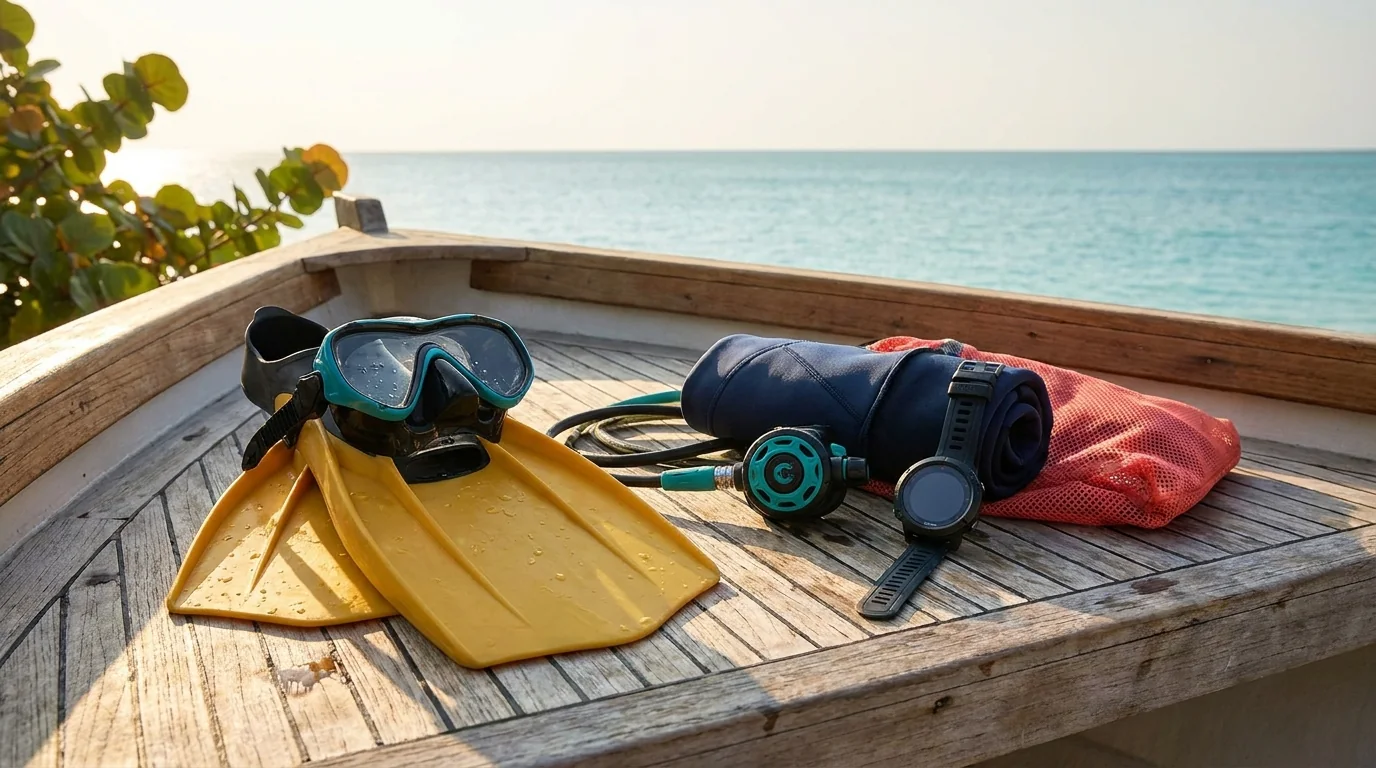
The mask matters more than anything else you pack. A mask that fits your face stays dry and lets you forget it; a rental that leaks ruins a reef. Bring a mask for each person who will snorkel more than once, child-size masks for the children, and a snorkel with a splash guard for anyone new to it. Fins are bulkier and less personal, so they can be rented on island by the day or the week, and the Buck Island boats hand out full sets on the trip. A long-sleeve rash guard does the work of a second coat of sunscreen, keeps the midday sun off your back for an hour of drifting, and dries in minutes on the villa's railing.
On island, Cane Bay Dive Shop in Frederiksted rents complete snorkel sets and kids' equipment by the day, Sweet Bottom Dive Center across from Cane Bay beach rents gear and runs guided snorkel tours, West End Water Sports on the sand at Rainbow Beach rents masks, fins, chairs and paddleboards, and the dive shop at Carambola rents to visitors at Davis Bay. Prices are not always posted online, so ask when you reserve; a week's rental for a group is usually cheaper arranged in advance, and the villa's concierge can have gear waiting at the house. Our packing guide covers the rest of the suitcase.
Three small things make the days easier. Water shoes or reef booties for every person, because nearly every entry on this island crosses rock. A dry bag for the car key, a phone and the cash for a beach bar. And more drinking water than seems reasonable, because only Cramer's Park and the resort beaches have a tap or a restroom. A folding tote or a plastic bin in the back of the car keeps the wet gear off the seats on the drive home, and a tub of fresh water by the villa's outdoor shower rinses the salt out before it stiffens.
The snorkel bag
10 itemsYour ticks stay in this browser only.
Snorkeling with children and first-timers
St. Croix is one of the kindest Caribbean islands for a first snorkel, and the villa makes it kinder. Start in the pool: a child who learns to breathe through a snorkel with a face in calm fresh water, with a parent crouched beside them, carries that confidence to the sea. Then go down the steps to the villa's beach for fifteen minutes in the shallows, water shoes on, where the reef keeps the water flat and the fish are close. By the second morning most children are towing a parent toward the parrotfish.
Pick the water by age. Babies and toddlers belong in the shallows of the villa's beach in the morning, at Chenay Bay with a cooler and shade, or at Cramer's Park on a weekday, where the water is shallow and typically very calm and there are restrooms and pavilions. Children of about five to eight do well over the grassy shallows at Chenay, the villa reef a few feet out, and Buck Island's west beach on a half-day trip, with the trail treated as optional. From about nine up, a confident swimmer manages the Buck Island trail with a buddy, the inshore reef at Cane Bay on a calm day and Rainbow Beach; teenagers add Isaac Bay and, with a strong adult, the Butler Bay wreck. Swim vests for non-swimmers are sold and rented on island, and the Buck Island crews carry flotation.
Adults who have never snorkeled follow the same path and usually need only one tip: breathe slowly, float face down with your arms at your sides, and let the fins do the work. The water does the rest. Rainbow Beach's sandy entry and flat water, the villa's reef and the Buck Island trail with its lesson and its six-person groups are the three best places on the island to learn, and the East End's grass beds offer the easiest first turtle. Our guide to St. Croix with kids has a sample week for three generations.
| Age | Best water | Notes |
|---|---|---|
| Toddlers | The villa's shallows, Chenay Bay, Cramer's Park on a weekday | Water shoes, shade, a cooler, and restrooms at Cramer's |
| About 5 to 8 | Chenay's grass, the villa reef, Buck Island's beach on a half day | First masks in the pool, trail optional, crews carry flotation |
| About 9 and up | The Buck Island trail, Cane Bay inshore, Rainbow Beach | Buddy rule, calm mornings, a rash guard for the long floats |
| Teenagers | Isaac Bay, the pier from shore, the Butler Bay wreck with an adult | Strong swimmers only for the wreck, no ship at the pier |
Sun, sunscreen and reef manners
The reef in front of the villa is why the territory has a sunscreen law. Act 8185 bans the sale, distribution and import for retail of sunscreens containing oxybenzone, octinoxate and octocrylene, with the full ban in force since March 30, 2020, and the consumer-affairs department has enforced it since 2022. The permitted sunscreens are mineral ones, meaning zinc oxide or titanium dioxide. Read the active ingredients rather than the front of the bottle, because the phrase reef-safe is marketing rather than a regulated term, and buy a mineral bottle at an island pharmacy or dive shop if yours is in doubt. Better still, wear fabric: a long-sleeve rash guard, a hat with a strap and swim leggings for the long floats mean you need very little of anything on the reef.
The manners are simple and the same everywhere. Float; do not stand on coral, which is alive and slow-growing, and a single kick can undo decades. Touch nothing, chase nothing, feed nothing. Keep fins up off the bottom in the shallows so you do not stir the sand over the coral. Leave shells, sand and coral where they are; inside Buck Island and the East End Marine Park that is federal and territorial law, and on the rest of the island it is the right thing to do. Rinse sunscreen and bug spray off your hands before a bio bay paddle, because the local guidance is that they can harm the plankton that make the glow.
Look after yourselves too. The sun is strong between about 10 and 2, so the morning snorkel ends before it, and the afternoon one starts late. Snorkel with a buddy, keep an eye on where the current is taking you near drop-offs and piers, and drink more water than you think. Spiny sea urchins live in rock crevices at several shore entries, including the villa's, which is one more reason for the water shoes. None of this is complicated, and a group that follows it leaves the reef exactly as it found it, for the next morning and the next guests.
A snorkel week from the villa
A Saturday-to-Saturday week fits all of this without ever feeling like a checklist. The pattern that works is a reef session off the villa's beach most mornings before the breeze builds, one big outing in the middle of each day or every other day, and the pool and the outdoor kitchen for the afternoons. Keep one day flexible, so the Cane Bay morning lands on the calmest day of the week and the pier on a day with no ship.
Here is a week to copy. Saturday is arrival, car seats and a swim before dinner. Sunday opens with the villa reef at 7 am and masks in the pool for the children, then nothing at all. Monday is Buck Island, a morning departure from Green Cay or Christiansted, back for a late lunch and the pool. Tuesday is the East End: Chenay Bay with a cooler for the family, Isaac Bay for the teenagers and strong swimmers, Point Udall at the end of the day. Wednesday goes west: leave after an early lunch, Rainbow Beach in the afternoon, the pier from the town beach after 5 if no ship is in, sunset and dinner in Frederiksted. Thursday is Cane Bay on a calm morning, lunch at The Landing, the North Shore Road home. Friday is the flexible day, Protestant Cay and a Christiansted morning, or Salt River and a bio bay paddle if the moon is dark, or simply the villa reef again. Saturday is a last early swim before the drive to the airport.
Groups adjust it to their mix. Divers in the party fold the dive week plan into the same days, since the Christiansted boats serve both. A group with small children swaps Isaac Bay for Cramer's Park and takes the Buck Island half day. A longer stay simply repeats the pattern, with a second Buck Island trip on a different boat and a morning at Davis Bay. Our best time to visit guide compares the seasons if the dates are still open.
| Day | Morning | Afternoon |
|---|---|---|
| Saturday | Fly in, collect the cars, drive east | A swim off the villa's beach before dinner |
| Sunday | Villa reef at 7 am, masks in the pool | Nothing at all |
| Monday | Buck Island, earliest departure | Late lunch, pool, the fire pit |
| Tuesday | Chenay Bay and Isaac Bay | Point Udall at the end of the day |
| Wednesday | Slow morning, early lunch | Rainbow Beach, the pier after 5, sunset in Frederiksted |
| Thursday | Cane Bay on a calm morning | Lunch at The Landing, the North Shore Road home |
| Friday | Protestant Cay or Salt River, or the villa reef again | Bio bay paddle if the moon is dark |
| Saturday | A last early swim | The drive to the airport, about 35 to 40 minutes |
Your dates
A snorkeler's year on St. Croix
The sea sits in the low 80s°F and the north shore is at its calmest
The Christmas Winds can freshen from now into March, so lee-side mornings on the west end and East End
New moon, the first dark nights of the year for the Salt River bio bay
New moon, with humpback whales offshore in February and March
Leatherback nesting begins at Sandy Point, open on weekends through March 31
New moon, the darkest nights of March
Sandy Point closes for nesting through August 31
Turtle Watch evenings run Friday and Saturday nights in April, by sign-up
The first leatherback hatchlings of the season, roughly mid-May
Green and hawksbill nesting begins at Jack and Isaac Bay, monitored July to December
Sandy Point reopens for weekend visits on the first weekend of September
Dates as announced or as the pattern of recent years suggests; confirm each one before you plan around it.
Lunch, sunsets and the rest of the day
A snorkel is half a day, and the island fills the other half well. At Cane Bay the beach bars are on the sand: The Landing Beach Bar for lunch and early dinner, with a long list of local beers and a kitchen that handles vegetarians, and AMA at Cane Bay for a seafood dinner Tuesday to Saturday and a Sunday brunch. On the west end, Rhythms at Rainbow Beach pours frozen drinks from about 11 to 7 with live music on its calendar and asks parties of eight or more to call ahead, and Frederiksted's waterfront restaurants take over for sunset, the only coast on the island that gets one over the water. Our restaurant directory lists what is open and the Crucian food guide tells you what to order.
Christiansted pairs with Protestant Cay and with the Buck Island boats. The boardwalk has lunch tables over the harbor, the galleries open late on the third Thursday of the month, and Fort Christiansvaern and the Danish waterfront are a short walk from the boats; our Christiansted guide walks the town block by block. On the East End, the restaurants at Teague Bay and Green Cay Marina are minutes from the villa for the evenings when the group has been in the water all day and nobody wants to drive far.
And some of the best afternoons are at the house. The pool holds the middle of the day, the outdoor kitchen grills the fish somebody bought at the market, the fire pit keeps the group outside after dark, and the reef out front is there again in the morning. Provisioning before you land, a private chef for one or two dinners and a boat day booked ahead are all things the concierge arranges; our provisioning directory lists the stores on the way from the airport.
Snorkeling from The Cerulean
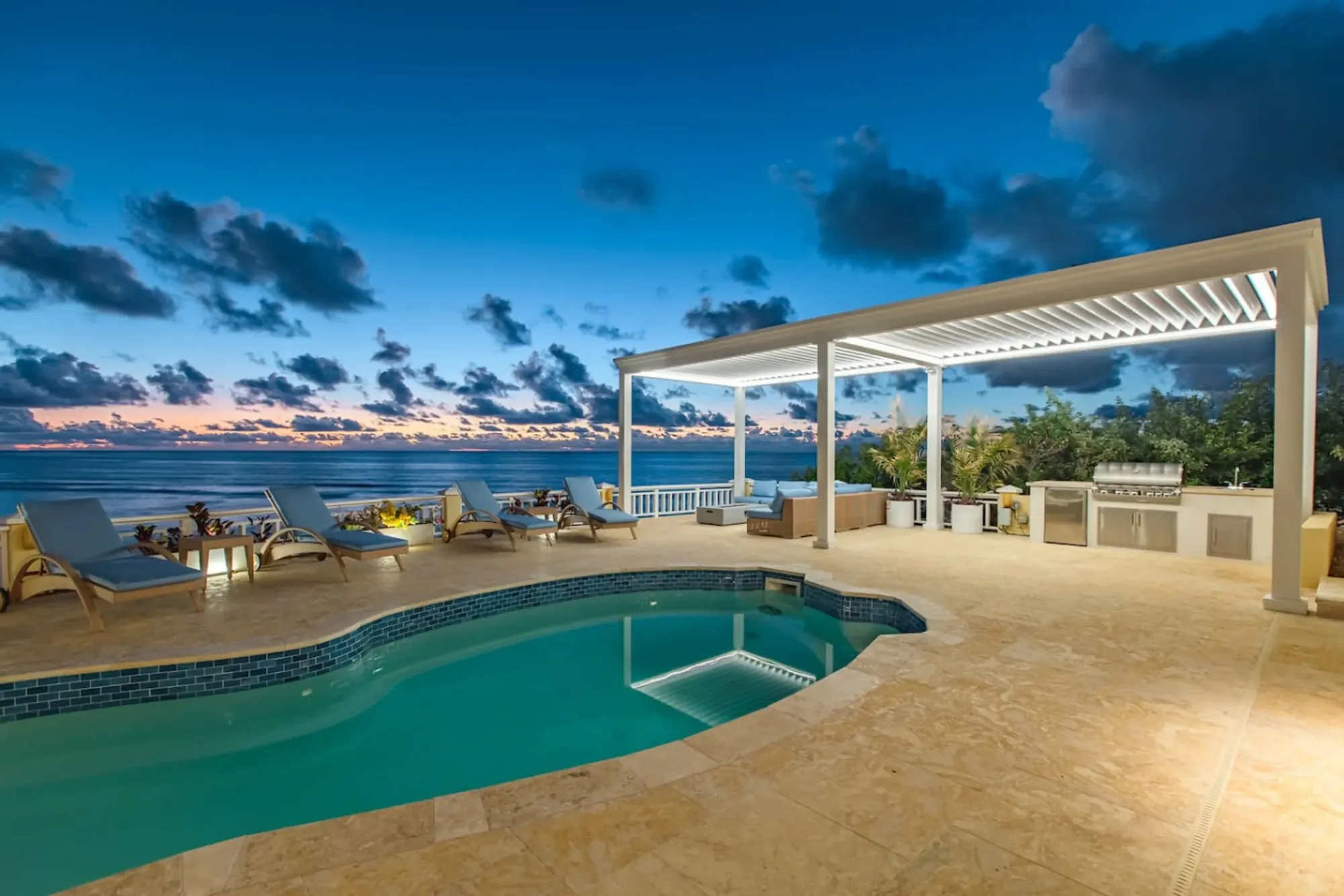
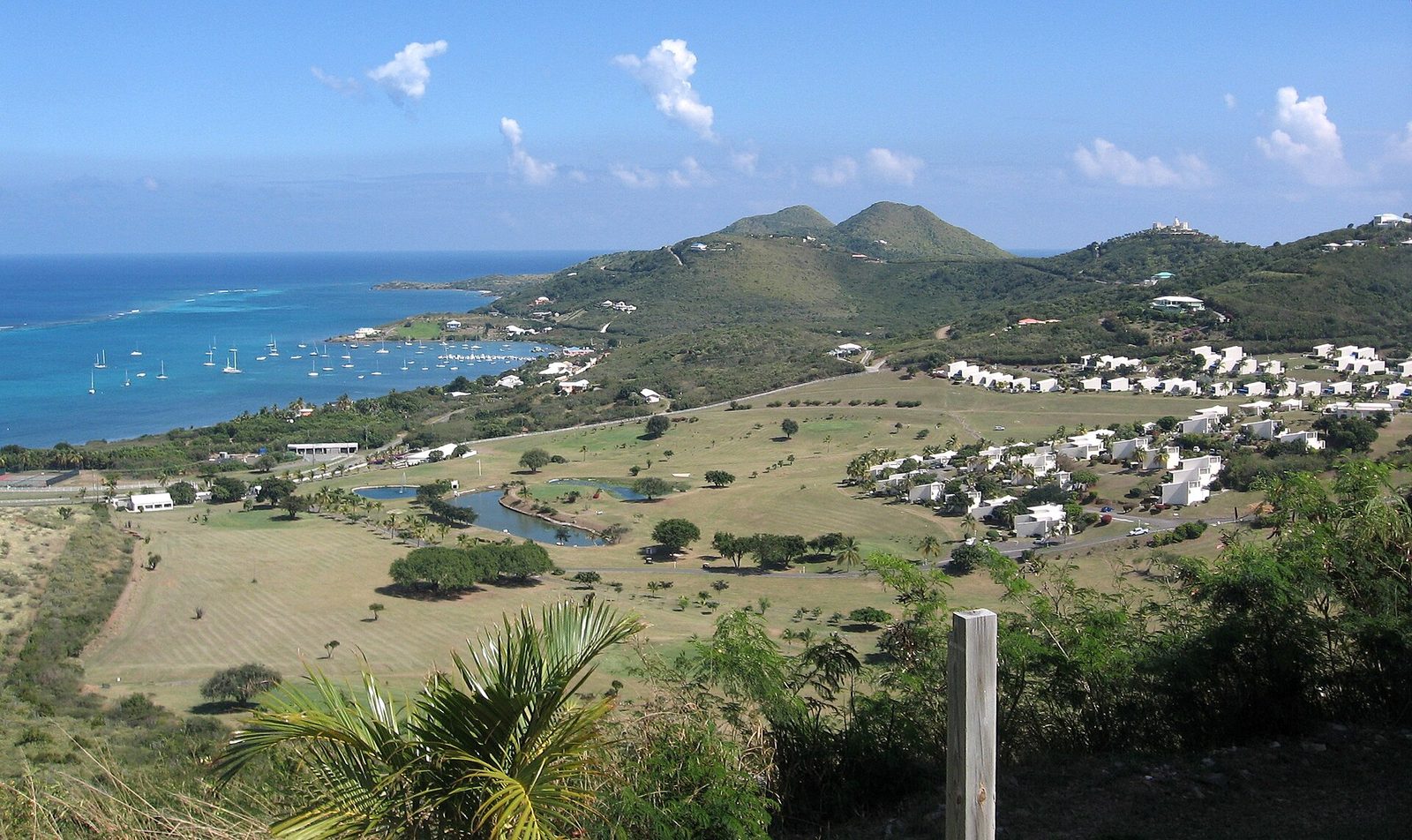
The Cerulean is built for a week like this. The house sleeps twelve across four en-suite bedrooms in the main house and a guest cottage twenty steps away, so a group of three generations or two families has room to spread out between the mornings in the water. The pool sits on a deck above the sea, the outdoor kitchen and the fire pit are a few steps from it, and the private beach is a short set of steps below, with the reef that keeps its water calm a few feet out. A washer and dryer mean two swimsuits and two rash guards a person are enough for the week; rinse the salt out the same evening and they are dry by breakfast.
The geography does the rest. Green Cay Marina and the East End's own Buck Island boats are minutes down the road, the Christiansted boardwalk and the rest of the fleet are 15 to 20 minutes away, the trailhead for Isaac Bay is about five minutes toward Point Udall, and Chenay Bay, the Shoys and Cramer's Park are all inside a quarter of an hour. Cane Bay is a scenic 45 minutes along the north shore, the pier and Rainbow Beach about 50 across the island, and the airport 35 to 40. Two rental cars, or a van and a car, let the divers, the snorkelers and the beach party each keep their own hours; our car rental directory lists the companies that deliver to the villa, and the driving guide covers the roads by name.
The best snorkel of the week is usually the shortest. Walk down the steps at seven with a mask and a coffee still on the deck, put your face in the calm water inside the reef, and watch the parrotfish start their day while the sun comes up out of the sea in front of you. Then climb back up for breakfast, and decide which coast the day belongs to. Hold your week on the calendar, and bring the water shoes.
Questions people ask
Where is the best snorkeling on St. Croix?
Buck Island Reef National Monument for the full show: a marked underwater trail through elkhorn coral in water no deeper than about 12 feet, reached by an authorized boat from Christiansted or the East End. From shore, Cane Bay on the north shore and the Frederiksted Pier on the west end are the two classics, and Isaac Bay on the East End is the best beach snorkel, with a hike to reach it. The reef in front of The Cerulean is the easiest of all, a few feet from the villa's own beach.
Can you snorkel from the beach on St. Croix, or do you need a boat?
From the beach, nearly everywhere. Cane Bay, the Frederiksted Pier, Rainbow Beach, Chenay Bay, the Shoys, Isaac Bay and the villa's own reef are all shore entries, and most of them put you over coral within a few minutes of wading in. Buck Island is the one place that needs a boat, because it is a national monument an island and a half mile offshore and only authorized operators or permitted private boats may land there.
How much does a Buck Island snorkel trip cost?
As listed on the operators' own pages in October 2026, Big Beard's full day on the sailing catamaran Renegade is $135 per adult for about six hours, and its half day on a power catamaran is $95 for three to three and a half hours. Other boats are in the same range, children's rates vary by operator, and private charters for a group start around $1,200. Prices change, so confirm when you book, and expect a deposit.
Is snorkeling on St. Croix good for beginners and children?
Yes. The East End bays are shallow and reef-protected, Chenay Bay and Cramer's Park have grassy, calm water close to shore, and the villa's own beach lets a child practice in a few feet of water before any boat trip. On the Buck Island trail the crews give a short lesson first, guides take six people at a time and everyone snorkels with a buddy. Rainbow Beach on the west end is the gentlest of the public beaches, with a sandy entry and usually flat water.
When is the best time of year to snorkel St. Croix?
Every month works, because the island has three coasts and one of them is almost always calm, and the sea stays near 80°F year-round. Winter brings the clearest skies and the busiest season, and the trade wind and occasional north swell make the lee-side west end and the East End bays the dependable choices on breezy days. From about May through November the north shore at Cane Bay is at its glassiest. Whatever the month, mornings are calmer and clearer than afternoons.
Can you snorkel the Frederiksted Pier?
Yes, from the town beach beside the pier, and it is free. Walk in from the sand in front of Fort Frederik and swim to the shore-end pilings, where sponges in orange, red and lavender and schools of small fish are visible from the surface. Snorkeling and diving under the pier are not allowed while a cruise ship or naval vessel is alongside, so check the ship schedule and go on a quiet day, or after about 5 pm when the ship has sailed.
What sunscreen can I use when snorkeling in the U.S. Virgin Islands?
Mineral sunscreen, meaning zinc oxide or titanium dioxide. The territory's Act 8185 bans the sale and import of sunscreens containing oxybenzone, octinoxate and octocrylene, and the ban has been in force since March 30, 2020. Read the active ingredients rather than the front label, buy a mineral bottle on island if in doubt, and wear a long-sleeve rash guard and a hat so you need less of anything on the reef.
Will I see sea turtles while snorkeling on St. Croix?
Very likely, on a calm morning. Green turtles graze the seagrass of the East End bays, including the water in front of the villa and the shallows at Chenay Bay, and hawksbills pick at the coral around Buck Island, where the National Park Service counts 20 to 40 nesting females a season. Keep several body lengths back, never swim above a turtle or between it and the surface, and let it set the pace. All three species here are federally protected.
Does The Cerulean have its own snorkeling?
Yes. The villa's beach is below the pool deck, the reef keeps the water in front of it shallow and calm, and you can see fish a few strokes from shore. The entry is rocky, so bring water shoes for everyone. Guests mention the snorkeling in front of the house more than anything else. Mornings, before the breeze builds, are the clearest.
Sources
Facts in this story were checked in October 2026 against the sources below. Event dates, flight schedules, prices and hours change, so confirm anything you plan around.
- National Park Service, Buck Island Reef National Monument: outdoor activities (snorkel trail, beach, hike)
- National Park Service, Buck Island Reef National Monument: directions and authorized concessioners
- National Park Service, Buck Island Reef National Monument: basic information (hours, permits)
- Big Beard's Adventure Tours (full day, half day and sunset prices, October 2026)
- The Nature Conservancy: Jack and Isaac Bay Preserve
- GoToStCroix: Cane Bay beach
- GoToStCroix: Davis Bay beach (public access, conditions)
- GoToStCroix: Chenay Bay beach
- GoToStCroix: Shoys beach
- GoToStCroix: St. Croix East End Marine Park
- Virgin Islands Port Authority: Ann E. Abramson Marine Facility (Frederiksted Pier)
- St. Croix Ultimate Bluewater Adventures: pier diving and snorkeling on St. Croix
- Rhythms at Rainbow Beach (hours)
- West End Water Sports, Rainbow Beach (rentals)
- Cane Bay Dive Shop: snorkel and scuba gear rentals
- Sweet Bottom Dive Center, Cane Bay
- U.S. Fish and Wildlife Service: Sandy Point National Wildlife Refuge, visit us
- The St. Croix Sea Turtle Project (nest counts, Turtle Watch, STAR hotline)
- NOAA Fisheries: green turtle
- VI Consortium: DLCA enforcing the Act 8185 sunscreen ban
- National Park Service, Salt River Bay: nature (mangroves, seagrass, reefs)
- Hotel on the Cay, Protestant Cay (ferry from the Christiansted boardwalk)