

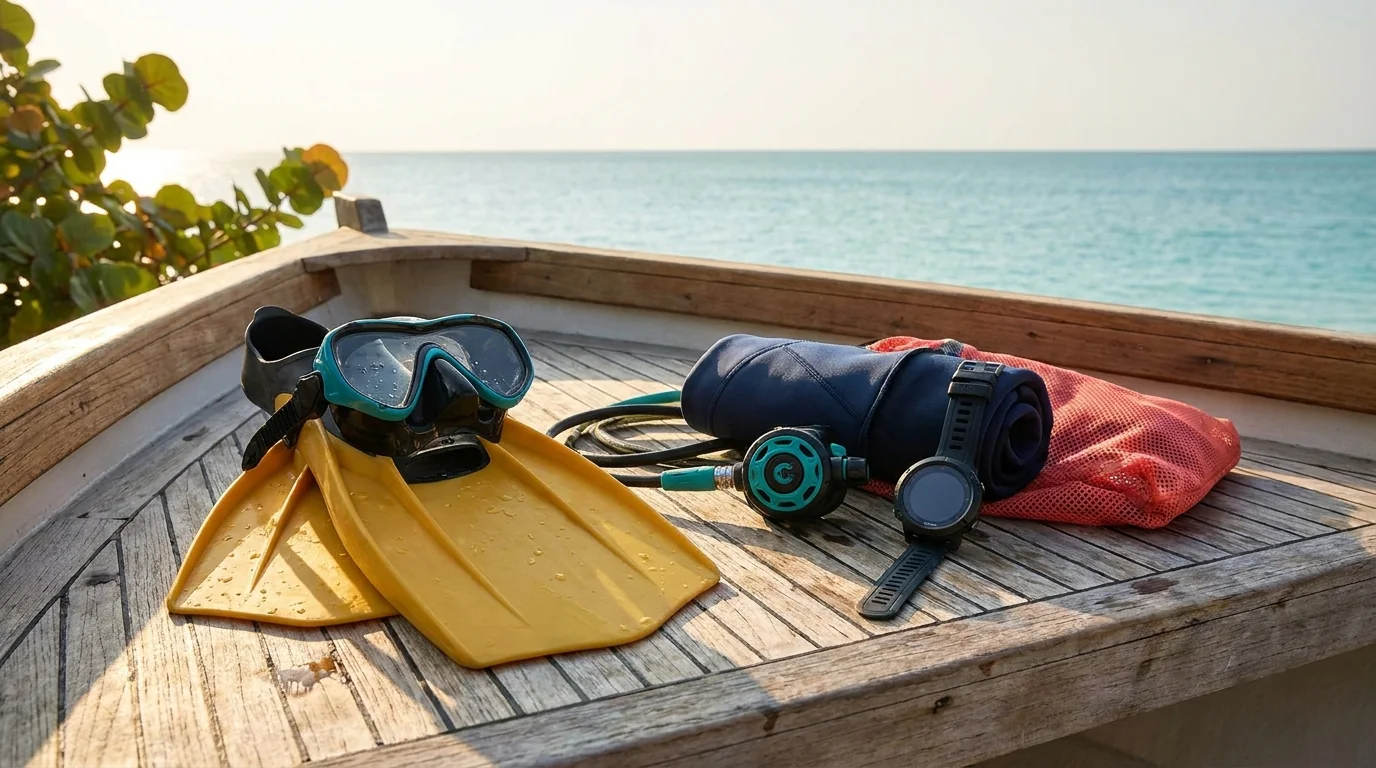
Scuba diving on St. Croix covers two coasts, and a villa on the East End reaches both. The north shore has the wall at Cane Bay, close enough to reach from the beach, and the twin walls of Salt River Canyon by boat. The west end has the Frederiksted Pier, one of the best-known macro and night dives in the Caribbean, and a cluster of wrecks a few minutes up the coast. Most dives start from the sand or after a short boat ride, the shops keep their groups small, and nobody needs a passport to get here. This guide is for a group staying on the East End between January and March 2027 that wants to plan the whole week: which shop to book, which day goes to which coast, how refreshers and first-timers fit in, when to make the last dive before the flight home, and what the non-divers in the party do while the boat is out. The base is The Cerulean, a five-bedroom oceanfront villa that sleeps twelve, with its own reef at the bottom of the steps.
Why St. Croix works for a dive week
St. Croix is the serious dive island of the U.S. Virgin Islands, and the reason is geography. Along the north shore the reef shelf is only a few hundred yards wide, and then it ends in a wall that drops toward a deep ocean basin. At Cane Bay the drop-off starts about 100 yards off the beach at around 40 feet, so a diver can walk in from the sand and be on the lip of a true wall on one tank. A few miles east, at the mouth of Salt River Bay, a submarine canyon gives the island two more walls facing each other across deep water. Our guide to diving the wall explains the geology, the depths and the history.
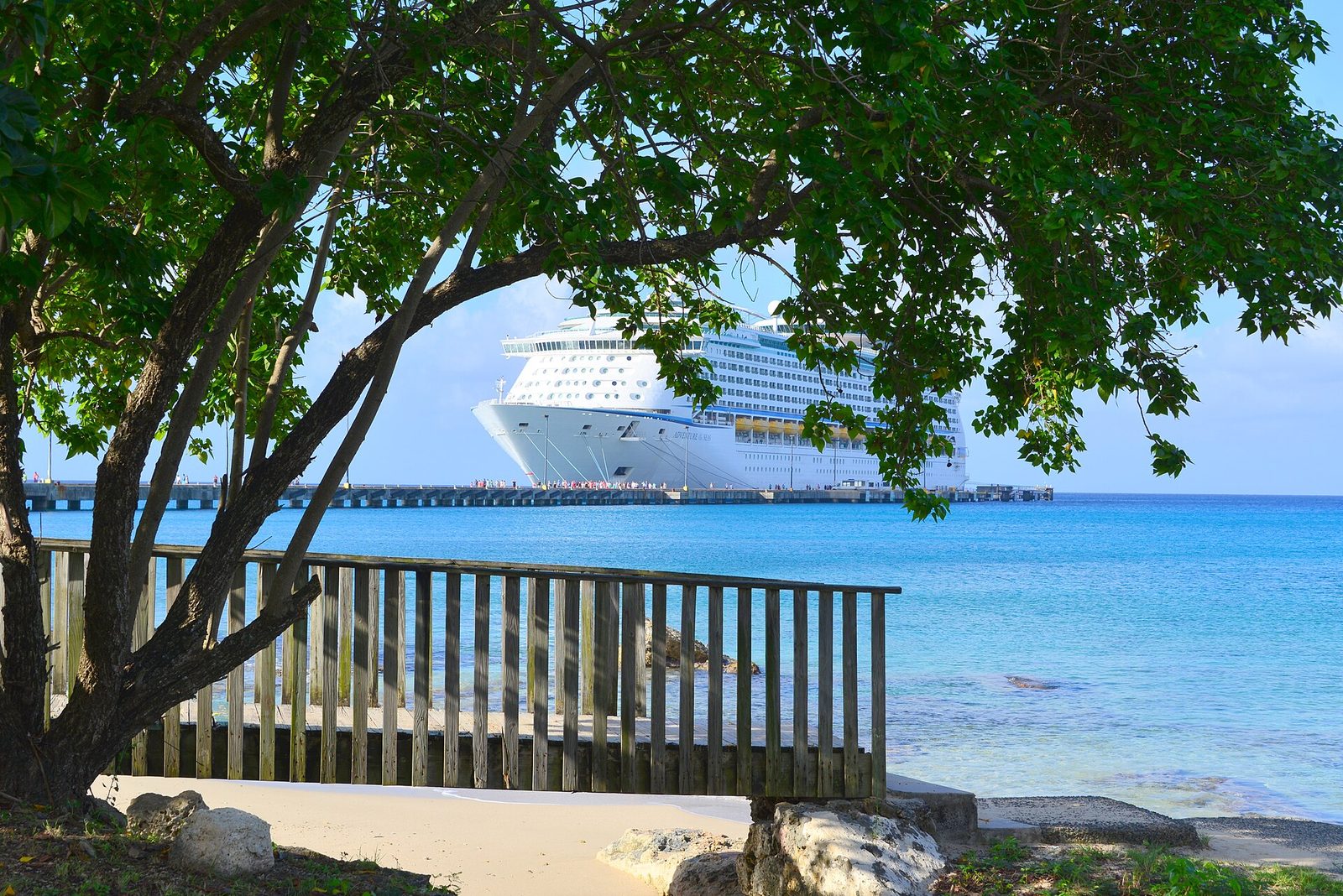
The west end is the other half of the week. Frederiksted's long cruise pier stands on rows of pilings coated in sponge and coral, and on the days without a ship it is a calm, shallow shore dive full of seahorses, frogfish and octopus. North of town sit the Butler Bay wrecks and dozens of west-end reefs, all a short boat ride from Frederiksted.
Two coasts matter for a week of diving. The north shore and the west end face different directions, so on most mornings one of them is calm, and the shops simply take you to that one. A group that books a week rather than a weekend can let each day's water choose the site, and still fit in the wall, the canyon, the pier and the wrecks.
The rest is easy. St. Croix is American soil, so the flight is domestic, U.S. citizens need no passport, and the money and the phones work as they do at home; our guide to traveling to the USVI without a passport covers the details. From the villa, the Christiansted boat shops are about 15 to 20 minutes away, and when the boats come back, the villa's own reef and pool are waiting for the afternoon.
January to March for divers
Winter is high season on St. Croix, and for divers it has a lot going for it. The air runs about 84°F by day in January and 85°F by March, with nights in the low 70s, and February and March are the driest months of the year. The sea stays close to 80°F all winter, about 79°F at its coolest in February, so most visitors dive in a 3 mm shorty or a thin full suit, which every shop rents. Bring a light layer for the boat ride home after a morning in the water.
The season brings two things the rest of the year does not. Humpback whales come south to the waters around the Virgin Islands to mate and calve, with February and March the prime months, and the divers on the north-shore wall sometimes see them pass. Boat crews in February keep an eye on the horizon. The other is the dry, clear weather of late winter, when the water around the island is at its calmest on the west end and the days are long and sunny.
The winter wind shapes the plan in a useful way. From December into March, spells of strong northerly breeze, which islanders call the Christmas Winds, can send a swell onto the north shore. On those mornings Frederiksted and the west end sit calm in the lee of the island, and the shops move the day's dives to the pier and the wrecks. That is the reason to book a week with both coasts in it and to keep one day flexible. A shop that knows you want the wall will put you on it on the calmest morning of your stay.
Night dives fit the winter clock. The sun sets around 6 pm in January and closer to 6:30 by March, so the pier night dive starts early enough for a late dinner. The moon matters more for the non-divers: the bioluminescent bay at Salt River glows best on dark nights, and the new moons fall on January 7, February 6 and March 8, 2027. The calendar below gathers the season's dates; pick your arrival and departure and it marks what falls inside your week. Our weather guide has the month-by-month numbers.
Your dates
Winter 2027 for divers
New moon: dark early nights for the bio bay
American's Charlotte nonstop skips Tuesdays and Wednesdays through February 10
Art Thursday: Christiansted galleries open 5 to 8 pm
Full moon
New moon. Humpback whales offshore in February and March
American's Charlotte nonstop flies daily again through April 5
American's Saturday nonstop from Chicago returns
Art Thursday in Christiansted
Full moon
New moon: the darkest nights of March for the bio bay
Clocks spring forward on the mainland. St. Croix keeps Atlantic time all year, so it now matches New York
The first mainland school spring breaks begin
Art Thursday in Christiansted
Full moon
Easter Sunday
Dates as announced or as the pattern of recent years suggests; confirm each one before you plan around it.
Flights for a Saturday-to-Saturday week
Villa weeks run Saturday to Saturday, and the winter schedule suits them. As scheduled when we checked in October 2026, United flies nonstop from Newark every Saturday from October 31, 2026, through September 10, 2027, and American flies from Miami and Charlotte through the week. American's Saturday nonstop from Chicago returns on February 13, 2027. Delta flies from Atlanta; confirm its January and February days with the airline. JetBlue adds a daily flight from San Juan from November 19, 2026.
| From | Airline | January to March 2027 | Time in the air |
|---|---|---|---|
| Newark (EWR) | United | Saturdays all winter | About 4 1/4 hours |
| Miami (MIA) | American | Twice daily to Feb 10, then twice on most days | About 3 hours |
| Charlotte (CLT) | American | Daily except Tue and Wed Jan 12 to Feb 10, daily Feb 11 to Apr 5 | About 3 3/4 hours |
| Chicago O'Hare (ORD) | American | Saturdays from Feb 13 | About 4 3/4 hours |
| Atlanta (ATL) | Delta | Check January and February days with Delta | About 3 1/2 hours |
| San Juan (SJU) | JetBlue and Cape Air | Daily | Under an hour |
For divers, the flights decide two things. The first is the bags. A dive bag usually travels as checked luggage on the Saturday flight; keep the regulator, the dive computer, the mask and your certification card in the carry-on, so a delayed suitcase never costs you a dive day. The shops rent everything else.
The second is the last dive. Because the flight home is on Saturday, the week's diving ends on Thursday or Friday, and the chapter on flying after diving below sets out the timing. A good plan runs the dives from Sunday or Monday through Thursday and gives Friday to Buck Island, which everyone can enjoy with a snorkel.
A group from several cities can meet at one hub, usually Miami or Charlotte, and fly the last leg together. The getting here page keeps the routes current, and there are city pages for flying from New York, Chicago, Atlanta, Charlotte and Miami. For friends who know St. Thomas already, our guide to St. Croix and St. Thomas shows what each island offers.
Rental cars for divers and non-divers
A car gives a dive group the whole island: the Christiansted boats are 15 to 20 minutes from the villa, Salt River about half an hour, and Cane Bay and Frederiksted make scenic drives along the North Shore Road and across the island. Two cars work best for a mixed group, so the divers can be at the dock at 7:30 while everyone else has a slow breakfast and heads out later.
Reserve the cars when you book the villa, so the vans and larger SUVs are yours for the week. Centerline Car Rentals meets every flight at the airport and rents cars, Jeeps, SUVs, trucks and vans. Judi of Croix delivers cars anywhere on the island, the villa included. Olympic Rent-A-Car offers free pickup and drop-off at the airport, Budget has counters at the airport and across from the Frederiksted pier, and Hertz and Skyline round out the list. The villa's concierge can also arrange an airport pickup and a vehicle for the week. Our car rental directory lists every company we verified.
Traffic keeps to the left, in ordinary American cars, at an easy 35 mph on most roads. Our driving guide covers the routes by name, including the North Shore Road to Cane Bay and the highway west to Frederiksted.
Choosing a St. Croix dive shop
Once the villa and flights are set, the next decision is the St. Croix dive shop, and the island has a good handful. Five were running trips in October 2026, from Christiansted to Cane Bay to Frederiksted. Blue Salt Divers on the Christiansted boardwalk carries on Dive Experience, the island's oldest dive operation, founded in 1983, and Nep2une Scuba Diving by the Frederiksted pier is the shop older guidebooks call N2theBlue.
| Shop | Base | From the villa | Good for |
|---|---|---|---|
| Blue Salt Divers | Christiansted boardwalk | About 15 to 20 minutes | Morning and afternoon two-tank boat dives on the Lil' Salty, night dives, PADI courses |
| St. Croix Ultimate Bluewater (SCUBA) | Christiansted and Frederiksted | About 15 to 20 minutes to Christiansted | North-shore wall boats from Christiansted, west-end wreck boats from the pier, courses |
| Sweet Bottom Dive Center | Cane Bay, north shore | A scenic drive along the north shore | Guided Cane Bay shore dives daily, night dives at the pier or the Davis Bay wall |
| Cane Bay Dive Shop | Frederiksted, boat from Salt River | About 30 minutes to the Salt River boat | The boat Ibis, shore dives at Cane Bay and the pier, refreshers and courses |
| Nep2une Scuba Diving | Frederiksted, by the pier | Across the island on the west end | Pier dives by day and night, west-end boat dives, SSI and SDI/TDI training |
For a group based on the East End, the simplest plan is one home shop for most of the week and a west-end shop for the pier. The Christiansted shops are the closest, and their boats reach the Salt River walls and the north shore, so a two-tank morning has you back at the villa by early afternoon. SCUBA has a second store in Frederiksted and runs west-end boats from the pier, so a group can book the whole week with one shop if it likes. Sweet Bottom sits across the road from Cane Bay beach and is the natural choice for the wall from shore. Cane Bay Dive Shop has its storefront in Frederiksted and launches its boat from Salt River, and Nep2une, steps from the pier, knows the resident animals under it.
Choose by group size and by what you want to see as much as by distance. Ask how many divers go out per guide, whether the guide can split a mixed group by experience, and how the shop decides between the north shore and the west end each morning. Several shops run small boats, and every one of them teaches, so a group with a first-timer, a rusty diver and a pair of experienced wall divers can book one shop for all of them. Our scuba diving directory lists each shop with its location.
Booking dives, packages and prices
Book the dives before you fly, so the whole group is on the same boat each morning. Send the shop the list in the note beside this chapter in one email, and ask for a week's plan with a flexible day built in, so the wall lands on the calmest morning of your stay.
Prices on the shops' own pages give a good idea of the budget. In October 2026 SCUBA listed its four standard boat trips at $155 each for certified divers: a north-shore morning on the wall or reef from Christiansted, a west-shore morning on a wreck and a reef from the Frederiksted pier, and afternoon reef trips on both coasts. Its guided pier night dive was about $125 with all gear. Ask your shop for one price for the whole week, with gear rental, nitrox and any refresher included.
Packages reward a full week. Most shops offer a multi-dive rate in some form, so tell them you are diving four or five days and ask what that brings. Add-ons such as a dive computer, a light for the night dive, a larger tank or nitrox are priced separately.
Bring the paperwork. Every shop asks to see a certification card, so bring the physical card or the digital one from your agency's app, plus a logbook if you have one. Each shop also has a short release and medical questionnaire to fill in, and many divers download and complete them at home. The shops confirm the next day's meeting time and place the evening before.
Refreshers, Discover Scuba and certification
A group of friends rarely has the same dive history, and St. Croix's shops are set up for that. The three cases are the diver who has been out of the water for a while, the person who has never tried, and the student who wants to finish a certification on the trip.
For the rusty diver, a refresher on the first morning makes the whole week better. PADI's ReActivate program reviews the knowledge online at home, then covers the in-water skills with a dive professional, and SCUBA lists it; Cane Bay Dive Shop offers a scuba refresher too. A calm, shallow first dive, at the pier or on a reef rather than the wall, is the right place to remember how to clear a mask and settle your weights. Book the refresher for Sunday or Monday so the wall comes later in the week.
For first-timers, the answer is Discover Scuba Diving. PADI sets the minimum age at 10, with no upper limit; the experience starts in confined water no deeper than 20 feet and can continue with an open water dive to a maximum of 40 feet, with an instructor beside you. SCUBA lists it at $160 with one dive, with a second tank the same day for $35, as of October 2026. The Frederiksted Pier is one of the gentlest places on the island for it, shallow and full of small animals, and Nep2une runs its own Try Scuba there. Tell the shop in advance if the experience might lead to a course: PADI credits a Discover Scuba session toward Open Water if the full course begins within 12 months.
For students, the faster route is a referral. Do the online learning and the pool sessions at home, bring the referral paperwork, and spend your St. Croix days on the open water dives. SCUBA lists a PADI referral at $385, a referral from another agency at $425 and the full Open Water course at $775, effective April 2026; Sweet Bottom teaches Open Water too. Certified divers who want more time on the wall can take Advanced Open Water during the week, which SCUBA lists at $625 with five dives, including a deep dive.
A wall day at Cane Bay
The Cane Bay wall dive is the one St. Croix is known for, and it deserves a full morning. Cane Bay is the beach on the North Shore Road, a scenic drive from the villa, where the wall comes closest to the sand. From the sandy entry in front of the boat ramp, a mooring buoy sits roughly 100 to 200 yards out in about 25 to 40 feet of water. You swim out on the surface, descend at the buoy, cross a short stretch of reef and sand, and reach the lip of the wall at around 40 feet. Then the bottom drops away into blue.
Plan the first wall dive with a guide, whatever your experience. Sweet Bottom Dive Center, across the road from the beach, guides shore dives daily in small groups, and Cane Bay Dive Shop guides them too when booked ahead. The guide knows which sand channel leads to the wall and what the water is doing that morning. Divers who would rather skip the surface swim can do the wall by boat: the boats moor on the same wall and drop you near the lip. Once the group knows the site, certified divers can rent tanks and weights from the north-shore shops and dive it on their own schedule.
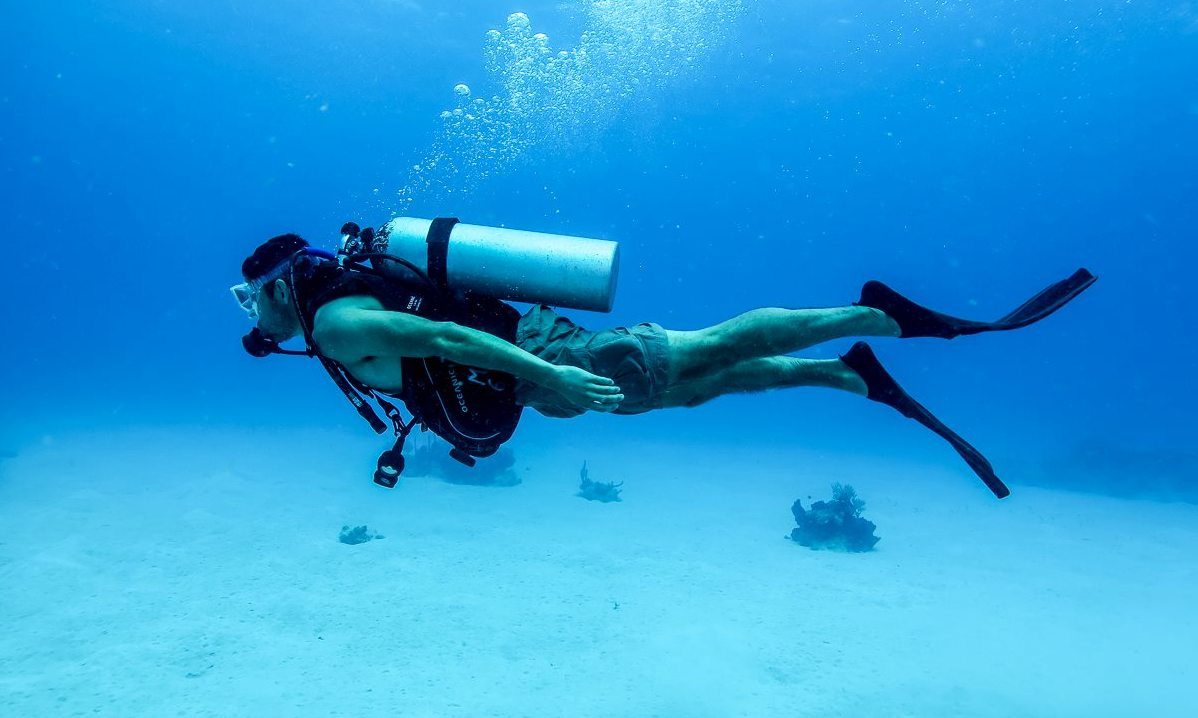
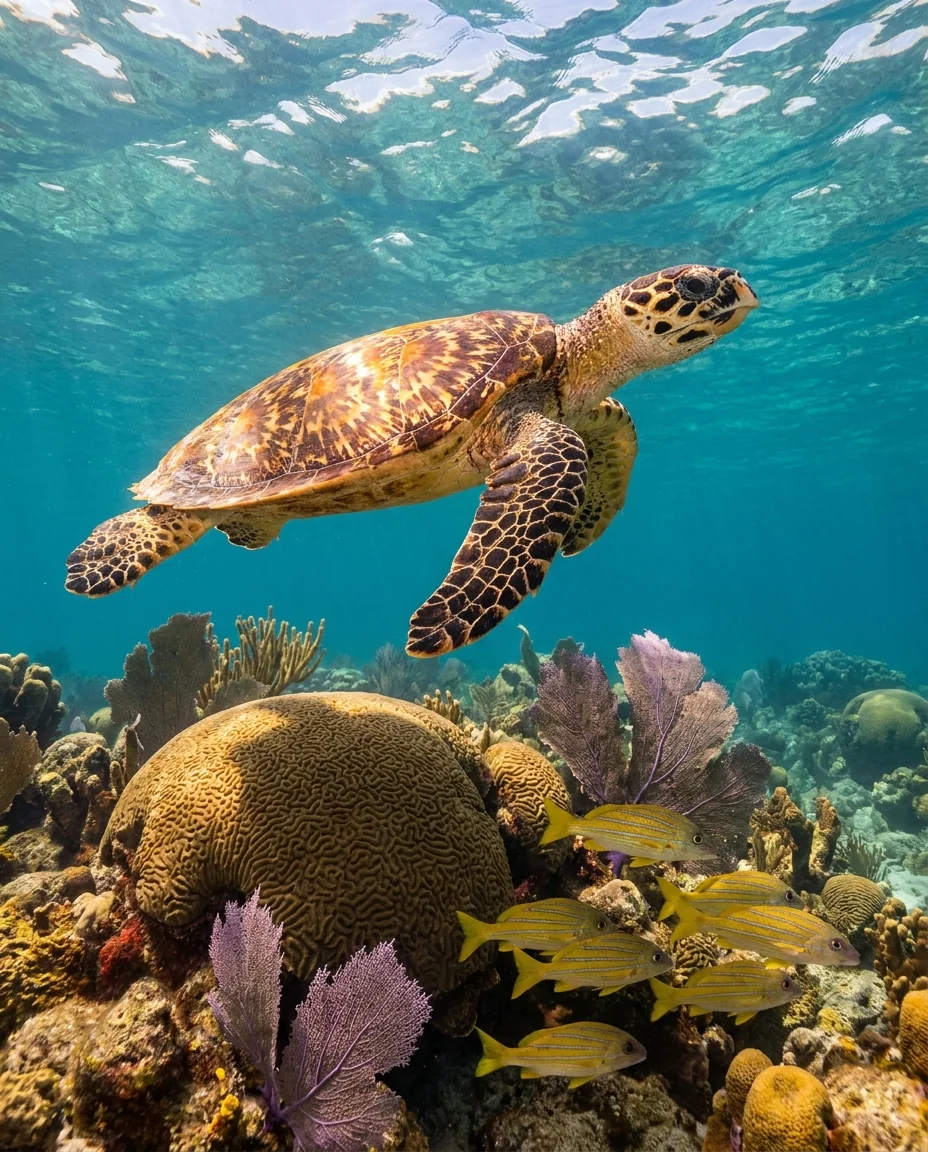
On the wall itself, the one rule is depth. There is no bottom below you to tell you how deep you have gone, so agree a maximum depth with your buddy before you go in, keep the wall on one shoulder and watch your gauge. Most recreational divers follow the face to somewhere between 60 and 100 feet, depending on training and gas, and look down into blue. Turtles are the animal everyone hopes for, and they show up often; reef sharks and rays are regulars too. Come back up over the sand flat on the way in, where the garden eels stand in colonies.
Cane Bay works for the whole group. While the divers are under water, the others snorkel the shallow inshore reef, sit under the trees on the beach, and everyone meets for lunch at The Landing, a barefoot walk from the water. Our Cane Bay guide covers the beach, the food and the shore dive step by step.
A boat morning at Salt River Canyon
A few miles east of Cane Bay, at the mouth of Salt River Bay, a submarine canyon cuts back into the shelf and gives St. Croix its most requested boat dives. The canyon has two walls about a quarter of a mile apart, and the shops moor on both. It is boat-only diving, so this is the day for the home shop's two-tank morning out of Christiansted, or Cane Bay Dive Shop's boat, the Ibis, from Salt River.
The East Wall, which the shops call Barracuda Bank, moors in about 40 feet and slopes to 80 feet before it drops off, with large formations of hard coral covered in sponges and hundreds of coral pinnacles. It has a reputation as the fishiest dive on the north shore: barracuda, black durgon, yellowtail snapper, angelfish, turtles and eagle rays. The West Wall, Grouper Grotto, is the one divers ask for by name. It moors in about 20 feet and then drops steeply, with swim-throughs, ledges and overhangs that keep underwater photographers busy.
The canyon is the best site on the island for a group of mixed experience. The Inner West Wall tops out around 20 feet and reaches a sand floor at about 85 feet, so a careful Open Water diver can stay at 50 or 60 feet while an Advanced pair works deeper on the same dive, with the guide keeping track of both. Visibility on good days is 60 to 80 feet. Tell the shop the full range of the group when you book, and let the divemaster plan the split.
There is history under the boat too. From 1977 to 1985 the head of the canyon held Hydrolab, NOAA's undersea laboratory, where teams of scientists lived on the sea floor for up to two weeks at a time; our wall guide tells the story. And the bay behind the canyon has a second life after dark. Salt River Bay holds the bioluminescent lagoon, and a guided kayak tour from Salt River Marina, about 35 to 40 minutes from the villa, makes a good evening for the whole group after a canyon morning. Sea Thru Kayaks VI lists its clear-kayak tour at $70 for adults and $40 for children, ages eight and up; our bio bay guide explains the moon and the timing.
The Frederiksted Pier by day
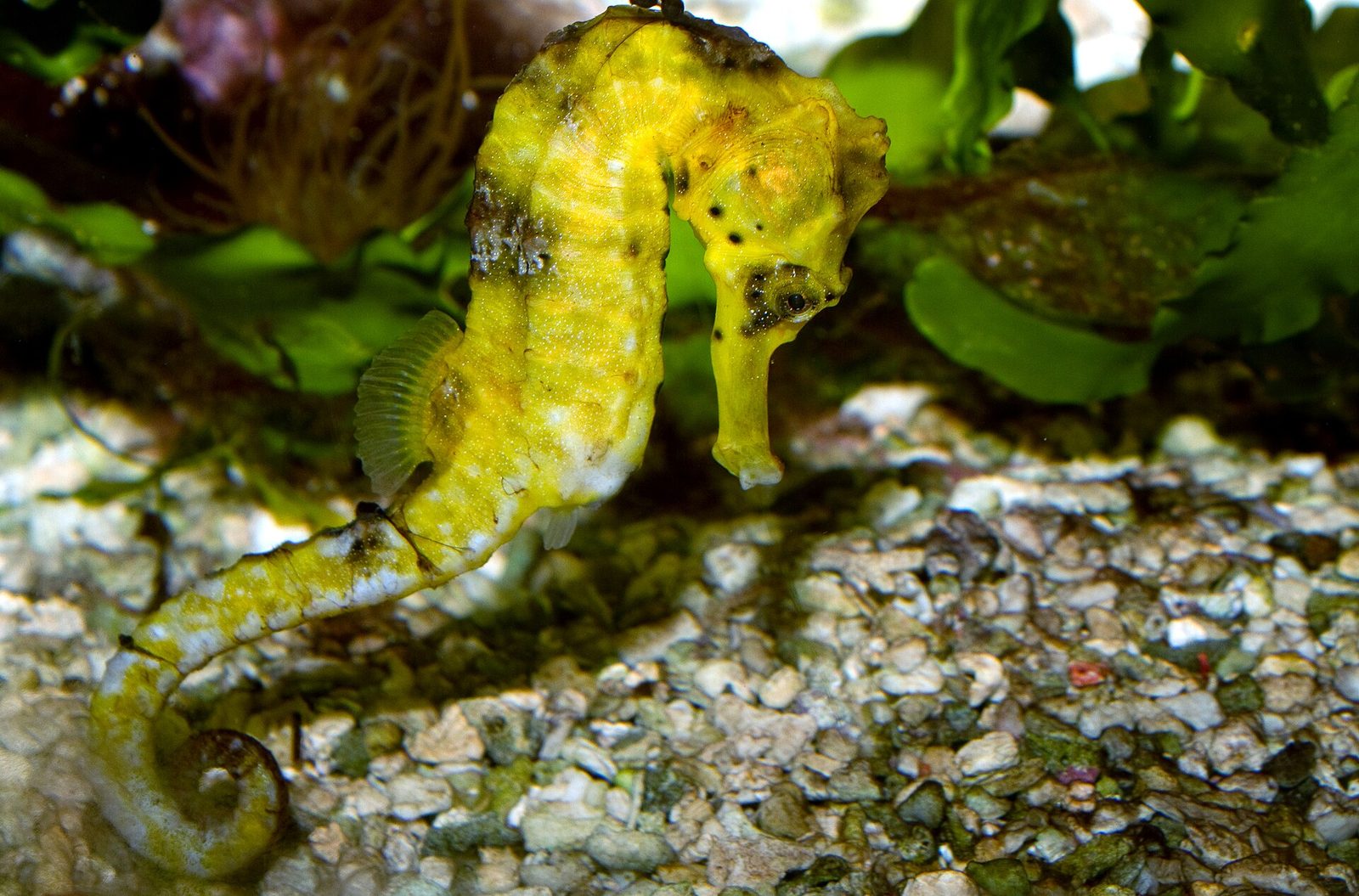
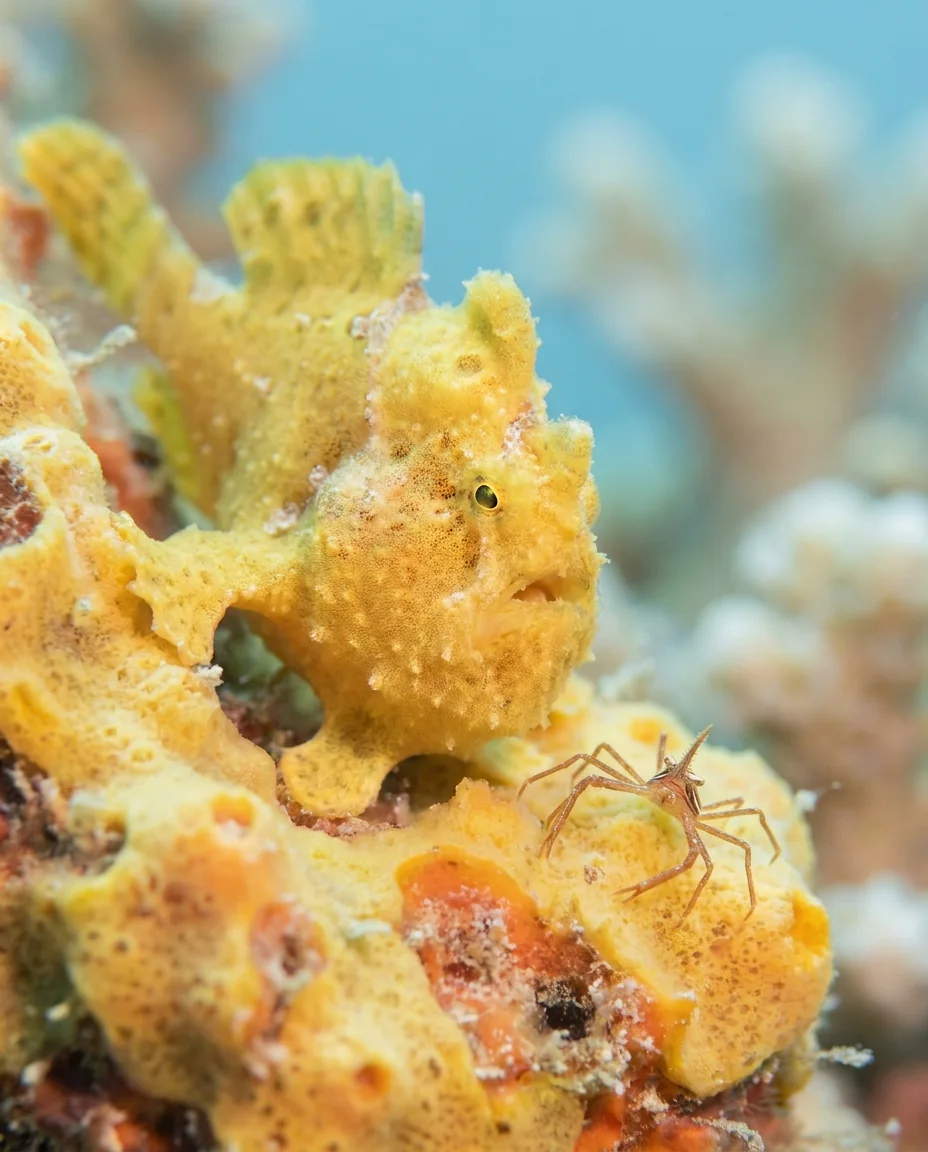
The Frederiksted Pier dive is the opposite of the wall in every way, and that is why a dive week needs both. The pier runs 1,526 feet out from the waterfront, and the seabed under it averages about 25 feet along most of its length, about 50 feet at the end and 90 at a spot the shops call Tres Amigos. Every piling is covered in sponge and coral, and the animals are small: seahorses, frogfish, batfish, octopus, arrow crabs and shrimp, with schools of spadefish and the odd turtle. Nep2une points to the middle pillars as one of the best spots for eagle rays. Dives run long, often an hour or more on a single tank, because the depth is so friendly.
It is a shore dive, and an easy one. You gear up at a shop in Frederiksted, walk to the waterfront, and enter from the beach beside the pier or by a giant stride off the pier itself, then work out along one row of pilings and back along the other. The site sits in the lee of the island, out of the trade wind, which is why it stays calm on so many winter mornings when the north shore has a swell.
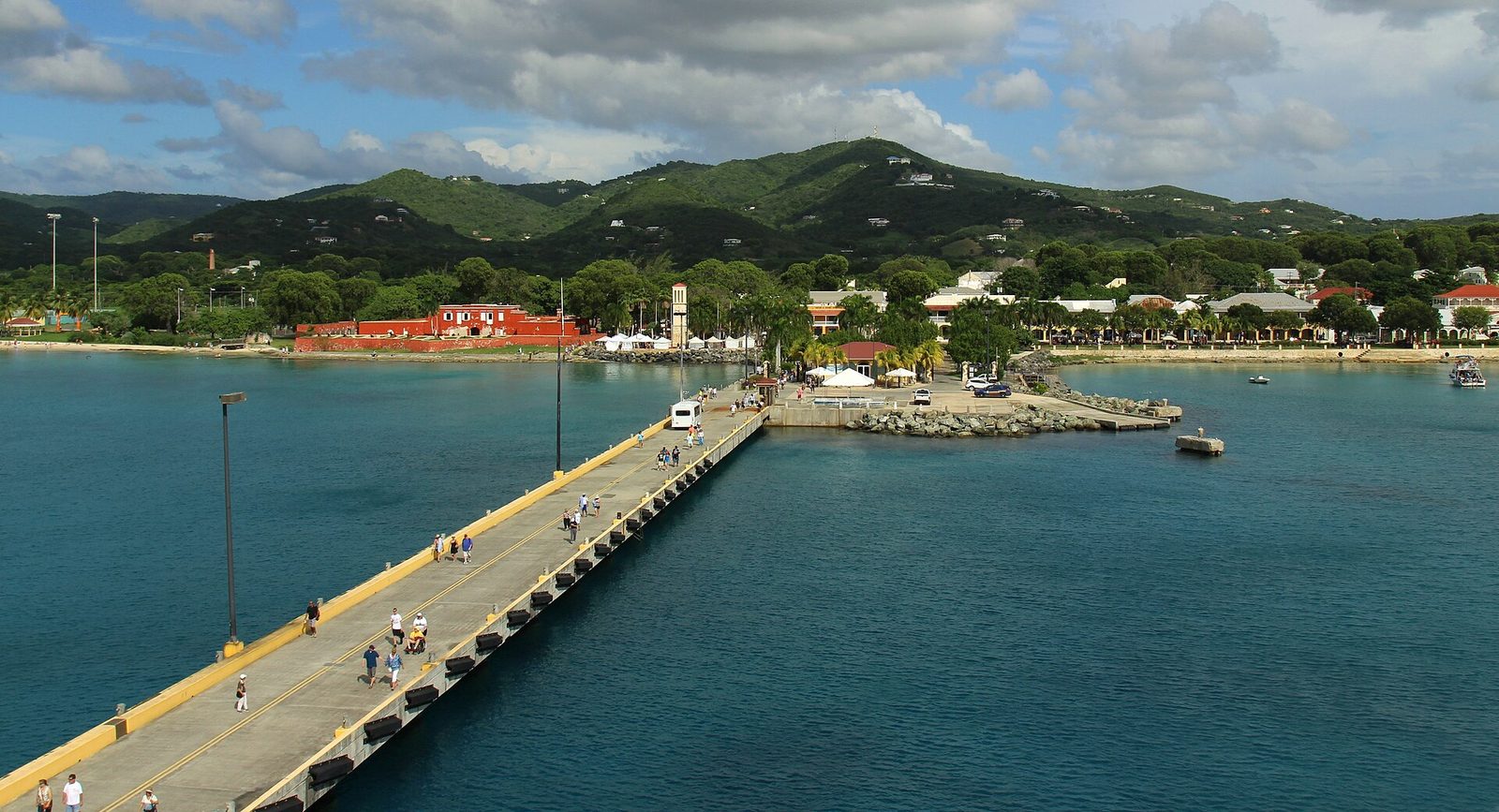
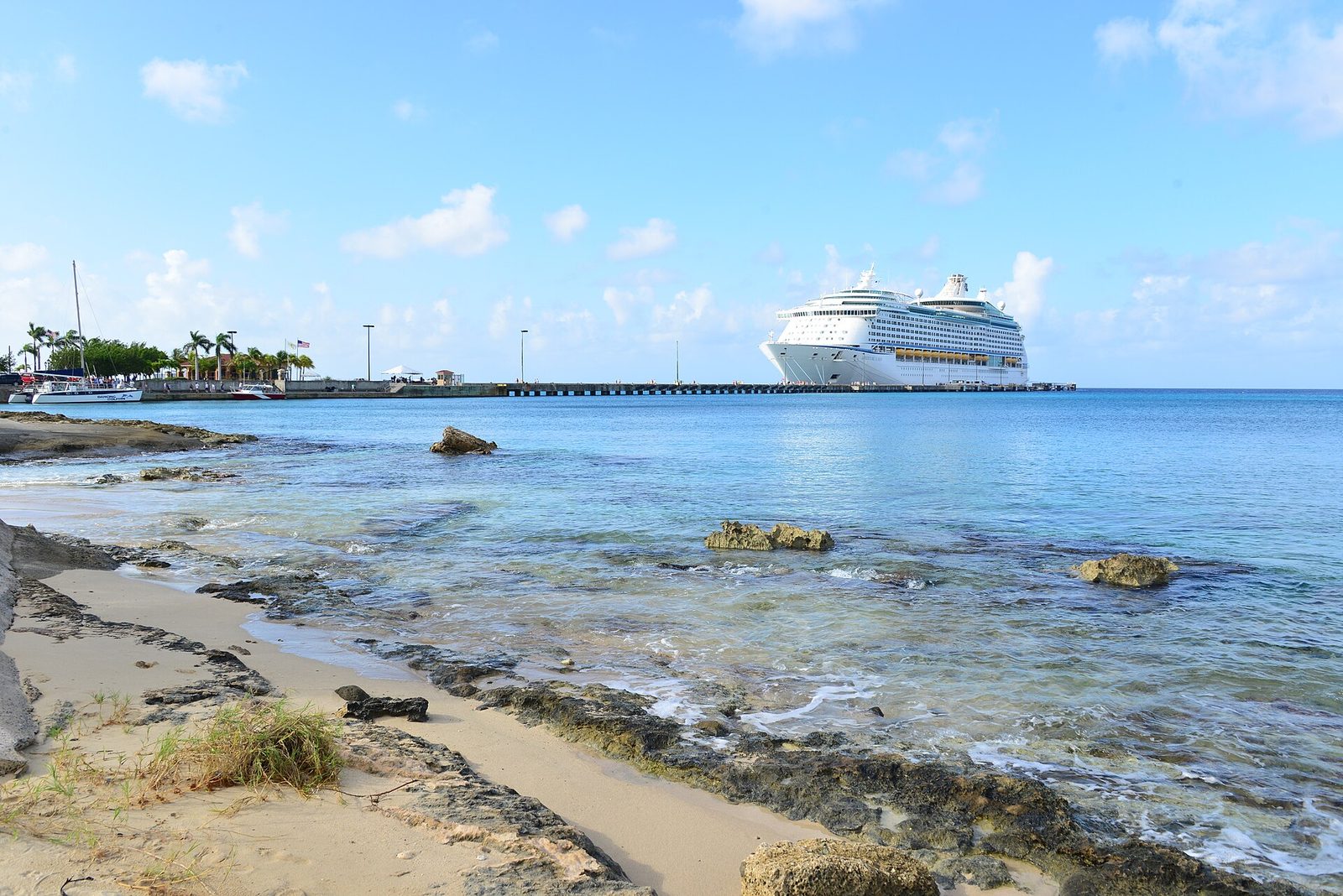
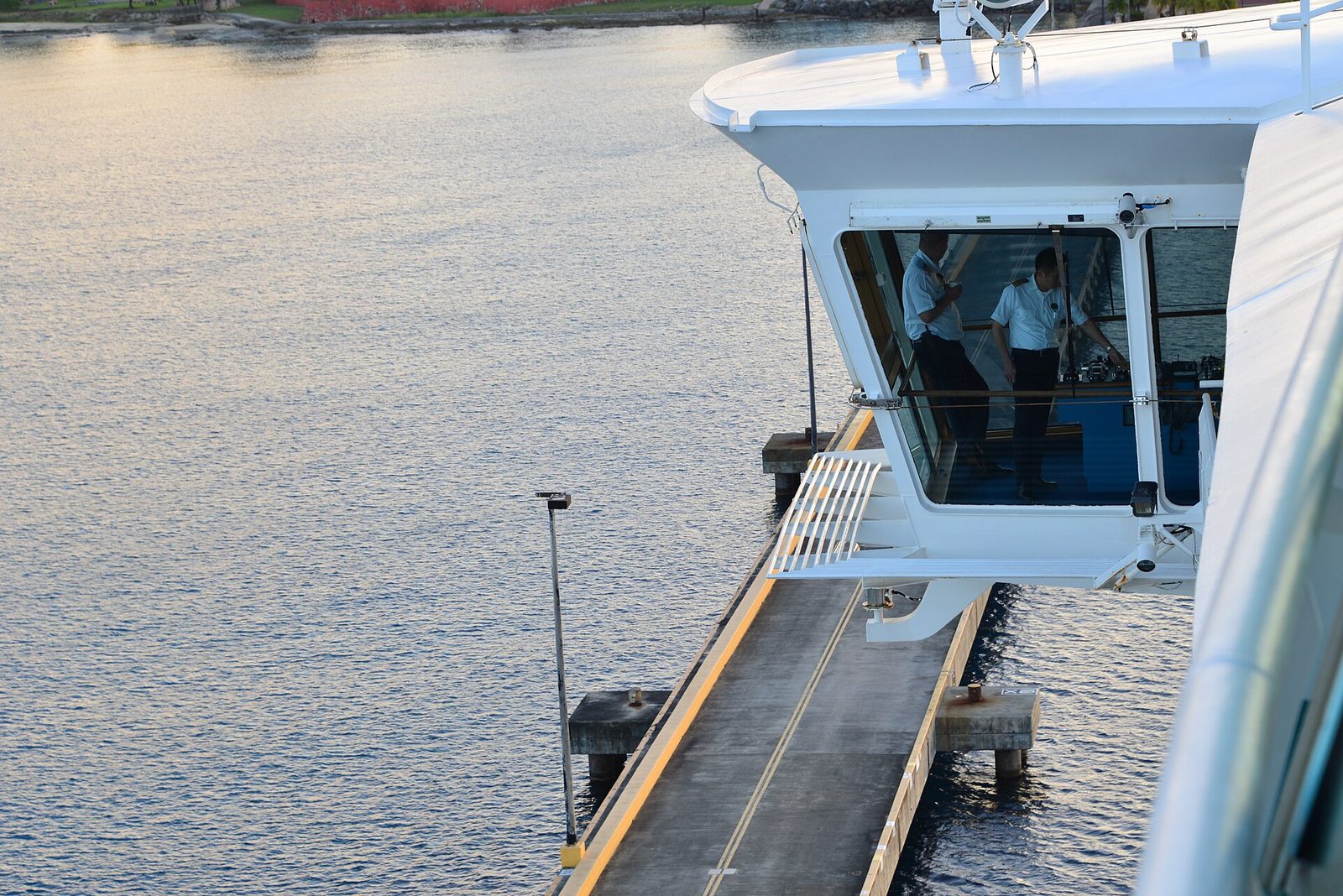
The pier has one rule that shapes the day. It is also St. Croix's cruise dock, and nobody dives or snorkels under it while a cruise ship or a military vessel is alongside. Ships typically arrive around 8 am and sail around 5 pm, and the Virgin Islands Port Authority publishes the schedule, which Nep2une links from its site. Your shop or the concierge will steer the daytime pier dive to an empty day; on a ship day the shops run boat dives up the coast instead, and the pier is free again by the time the night dive starts.
Make a day of the west end. Frederiksted is a small, walkable town, with Fort Frederik next to the pier, coffee and lunch a few steps from the dive shops, and the island's sunset side. Non-divers can snorkel the shore-end pilings from the fort beach on a quiet day while the divers are under the deck. Our Frederiksted Pier guide has the full story of the pier, and the town guide covers the rest.
The pier night dive
The night dive at the pier is the signature dive of St. Croix, and it is the dive to plan the week around. Every shop in Frederiksted runs it, starting at sunset, and in winter that means a start a little after 6 pm. SCUBA will run a pier night dive on almost any night two or more divers want to go, and its boat night dives run on full and new moons or whenever four or more divers sign up.
After dark the pier changes. The octopus come out of their holes to hunt, lobsters walk the sand, eels swim free, tarpon work the edge of your light and turtles sleep among the pilings. The depth is 20 to 30 feet, the exit is the beach you can see from the water, and the town's lights are behind you, which makes it a gentle first night dive for anyone who has never tried one. Cover your light for a minute and wave a hand through the water; the plankton often glow.
A few habits make it a better dive. Do the pier by day first, earlier in the week, so you know the layout when the light goes. Bring or rent a main light and a backup, and clip a small marker light to your tank so your buddy can find you. Move slowly, and point the light at the piling rather than into an animal's eyes. A thin full suit is worth renting even in a warm month, because an hour of slow looking cools you down.
The timing works well for the whole group. The non-divers watch the sunset from the sea wall or the fort beach, eat in town, and meet the divers back at the shop around 8. Then it is the highway home to a late supper the chef left in the kitchen, or a plate from the grill by the pool. On a ship day the night dive still runs, since the ship has sailed by then.
Wrecks and reefs on the west end
The west end gives a dive week its wreck days. North of Frederiksted, around Butler Bay, a cluster of wrecks sits close together: the trawler Suffolk Maid, the tug Northwind and the barge Virgin Islander in the shallower range, about 50 to 80 feet, with the Aegir, a retired underwater habitat, nearby, and the deeper Rosaomaira freighter at about 100 feet for advanced divers. The site was voted USA Today's top Caribbean dive site of 2018. The Coakley Bay tug, at about 70 feet, is another of the west end's wrecks.
These are boat dives, and the boats are close. SCUBA's west-shore morning trip, a wreck and a reef, leaves from the Frederiksted pier, and Nep2une's base is less than ten minutes by boat from more than 30 west-end sites. Cane Bay Dive Shop's boat dives the wrecks as well. Between the wrecks are the west end's reefs and ledges, such as Butler Ledge, a 20- to 40-foot site that holds a coral-covered movie prop from a Mel Fisher film. On a wreck morning the second tank is usually one of these reefs, at a shallower depth.
The west end is also the calm coast. It sits in the lee of the island, out of the trade wind and the winter swell from the north, so on a morning when the north shore is choppy the west end is usually smooth. That makes it the home of the flexible day in your week. If the wall has to move, the wrecks are where the shop takes you instead, and they are a fine dive in their own right.
A full west-end day for a group of divers can run like this: the wreck-and-reef boat in the morning, a long lunch in Frederiksted, a nap on the beach, and the pier night dive at sunset as the day's third dive. That is a full day of diving, so it suits experienced divers who are comfortable with three dives in one day; others can skip the morning boat and do the pier by day and by night instead. Either way, follow your computer and give yourself a long surface interval over lunch.
Buck Island for the whole group
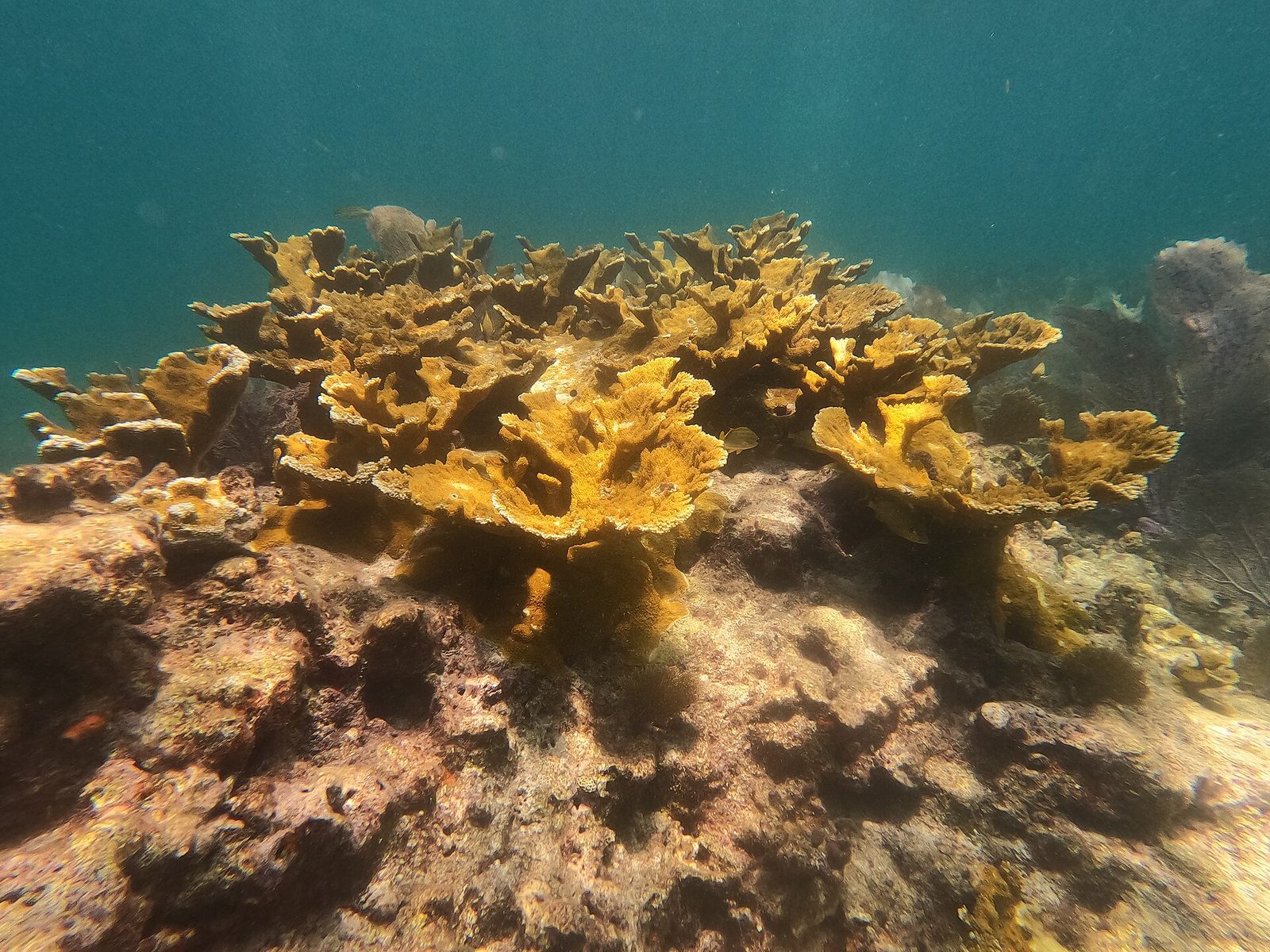
Buck Island Reef National Monument is the day the whole group spends together. The island sits about a mile and a half off the northeast coast, close to the villa, and its underwater trail runs through a shallow lagoon behind a barrier reef of elkhorn coral. The grottoes on the trail are no deeper than 12 feet, so everyone from a first-time snorkeler to the most experienced diver in the house sees the same reef, from the surface, with a mask and fins.
Divers ask whether they can scuba Buck Island. The National Park Service keeps scuba to two designated moorings in the north lagoon, where shallow 30- to 40-foot dives pass through haystack formations of elkhorn coral, and the island's dive shops focus their trips on the north shore and the west end. So Buck Island is the group's snorkel day, and it makes an easy last full day of the week: everyone is in the water together, at the surface, the day before the flight home.
You reach the island only on an authorized boat, and the departures closest to the villa leave from Green Cay Marina, about ten minutes away. Buck Island Charters' trimaran Teroro II checks in at 8:45 am at the marina's H Dock, sails at 9 and is back by 2 pm, at $105 for adults and $85 for children 11 and under. Big Beard's runs a half day from Christiansted at $95 and a full day at $135 an adult, and Caribbean Sea Adventures is adding full days from Green Cay Marina from November 1, 2026. The monument is open from 7 am to 5 pm, with no entrance fee.
A group of twelve can charter a boat of its own and set the pace. Our Buck Island guide covers every operator, the snorkeling directory lists the best shore spots on the island, and our journal post on snorkeling spots in St. Croix describes each one, for the days the non-divers want a reef of their own.
Surface intervals and the order of dives
A dive week is a series of days, and the order of the dives matters as much as the sites. A few habits taught in every certification course turn into a simple plan for St. Croix. Do the deepest dive of the day first and the shallower one second. Put the deepest dives of the week, the wall days, early in the week rather than at the end. Leave a real surface interval between dives, and let your computer, not the schedule, decide when you are ready to go back in.
The shops build this into their trips. A two-tank boat morning usually puts the wall or the wreck first and a shallower reef second, with a surface interval on the boat in between, so the day's profile is already sensible when you sign up. On a shore day at Cane Bay, do the wall first and make the second dive a shallow reef or a long, easy swim over the sand flat. The pier, shallow as it is, makes a good second or third dive on any day.
A light breakfast before the boat, plenty of water on the drive and between dives, and a rash guard and a hat for the surface interval are all a diver needs. Save the rum punch for the terrace after the last dive of the day.
Most of all, build in rest. Two tanks a day is a good rhythm for a vacation diver, and a rest day in the middle of the week, on the villa's beach or by the pool, keeps the second half of the week as fresh as the first. The villa makes it easy, because the afternoons after a two-tank morning are for the pool deck, a nap and the reef in front of the house.
A dive morning from the villa
- Check the next day's plan and meeting place with the shop the evening before.
- Eat a light breakfast and fill water bottles before you leave the villa.
- Leave early enough to arrive 30 to 45 minutes before the boat or the shore dive.
- Agree a maximum depth and a turn pressure with your buddy and the guide.
- Make the deeper dive first and the shallower one second.
- Rinse the gear at the shop and drive home for lunch and the pool.
The dive week, day by day
Here is how a seven-night dive week from the villa can run for a group with four to six divers and a few non-divers. Treat it as a shape to bend around the shop's boats, the cruise ships and the water each morning.
Saturday
Fly in, collect the cars and drive east, about half an hour from the airport, keeping left. The villa managers meet you with a guided drive and a tour of the house. Unpack the dive gear, check the masks and computers, and snorkel the villa's reef before dinner.
Sunday
An easy start. Refreshers and any Discover Scuba session with the home shop in Christiansted, and an afternoon reef dive for the divers who are ready. The non-divers take the villa's beach and the pool, and everyone drives ten minutes to Point Udall, the island's eastern tip.
Monday
Salt River Canyon on the two-tank boat morning from Christiansted, back to the villa for lunch. If the moon is dark, the bioluminescent bay at Salt River after nightfall, for the whole group.
Tuesday
The Cane Bay wall. A guided shore dive, or the wall by boat, while the non-divers snorkel the inshore reef; lunch together at The Landing, and a slow drive home along the north shore.
Wednesday
The rest day. The hike to Jack and Isaac Bay at first light, a long morning at the villa, Christiansted's fort and boardwalk in the afternoon, and a private chef on the terrace in the evening.
Thursday
The west end. The wreck-and-reef boat in the morning, lunch in Frederiksted, the fort and the beach, sunset on the sea wall, and the pier night dive as the week's last dive. Late supper at the villa.
Friday
Buck Island for everyone, from Green Cay Marina ten minutes away: the snorkel trail, a picnic on the beach and back by 2 pm. Rinse and dry the gear in the afternoon, so it packs dry, and spend the last evening at the fire table.
Saturday
A last swim in the pool, then the drive to the airport, with the last dive comfortably more than a day and a half behind you.
- SaturdayArrive, villa tour, snorkel the villa reef
- SundayRefreshers, Discover Scuba, an easy reef dive
- MondaySalt River Canyon boat morning, bio bay at night
- TuesdayThe Cane Bay wall, lunch at The Landing
- WednesdayRest day, Jack and Isaac Bay, a chef at the villa
- ThursdayWest-end wrecks, sunset, the pier night dive
- FridayBuck Island snorkel day for the whole group
- SaturdayCheckout at 10 am and the flight home
The last dive and the flight home
Every dive week ends with the same arithmetic: the hours between your last dive and your flight. Divers Alert Network, the dive-safety organization most divers know as DAN, recommends a minimum surface interval of 12 hours before flying after a single no-decompression dive, and 18 hours after multiple dives in a day or multiple days of diving, which describes any dive week. Many divers simply take a full day as their rule.
The plan above makes it simple. The last dive is the pier night dive on Thursday, which ends around 8 pm. A Saturday flight home leaves well over a day and a half later, with Friday's Buck Island snorkel day in between. Count the hours from the time you surface to your flight's departure time, and if the airline changes your flight to an earlier one, count again.
If your group flies home on a Friday or a Sunday, move the plan to match: make the last dive two days before the flight, and give the final full day to snorkeling, the beach and the pool. Any flight counts, so a seaplane hop to St. Thomas or a charter to another island belongs before the dive days, not between the last dive and the trip home. Our getting around page covers the seaplane and the island charters.
The last morning is an easy one. The gear dried in the shade on Friday, so it packs light, and checkout is at 10 am. The airport is about half an hour from the villa, and the airlines ask you to arrive about two hours before a flight to the mainland, which leaves time for the quick agriculture and customs check of your bags on the way out; no passport is needed.
What the non-divers do
When not everyone in the house dives, St. Croix gives the rest of the group plenty to do while the boat is out. It starts at the bottom of the steps: the villa's own beach has a reef offshore that keeps the water in front of the house calm and shallow, and the snorkeling begins a few kicks from the shore. Water shoes make the entry easy.
“Pure perfection. A gorgeous home right on the ocean, amazing snorkeling right in front of the house in the shallow water protected by the reef.”
Emily, a guest in April 2026
The East End is full of easy mornings. Point Udall, ten minutes from the villa, is the easternmost point of the United States and the island's sunrise spot. The hike to the empty beaches of the Jack and Isaac Bay Preserve starts from a trailhead about five minutes away. The Reef golf course has nine holes above Teague Bay. Christiansted, about 15 minutes away, has the yellow walls of Fort Christiansvaern, the boardwalk, the shops and lunch on the water. The concierge can arrange an in-villa massage or a yoga session for the afternoon, and our Point Udall guide and East End beaches guide cover the rest of this corner of the island.
On the dive days, the non-divers can come along and make their own day nearby. At Cane Bay they snorkel the inshore reef and keep a table at The Landing. On a west-end day they walk Frederiksted and Fort Frederik, swim at Rainbow Beach a mile north of the pier, visit Estate Whim or the St. George Village Botanical Garden, and meet the divers for the sunset. On a canyon morning they kayak Salt River Bay, and the whole group comes back for the bio bay at night. Our west end beaches guide lists the beaches near the pier.
Children have their own track. Under ten, the villa's reef, the pool and a calm beach such as Chenay Bay are the place to practice with a mask. From age ten, a Discover Scuba dive with an instructor at the pier is a real first breath under water, and the Buck Island snorkel trail suits every age that can swim. Our St. Croix with kids guide goes age by age, and the boat charter directory has day sails for anyone who wants to be on the water without a mask at all.
Keeping a mixed group on one schedule
A dive week goes best when divers, snorkelers, children and the people who want a book and a lounger share one simple plan, so nobody waits on anyone. A few habits make it work.
The shops confirm the next day's meeting time and place the evening before, so make that the moment the group decides the day: who is diving, who is coming along to snorkel, who stays at the villa, which car goes where, and the meeting place for lunch or sunset. Post it in the group chat with the meeting addresses and leave times.
Give each crew its own car and its own rhythm. The divers leave first, around 7:30, and are back by early afternoon after a two-tank morning; the rest of the group can leave at 10 and meet them at Cane Bay or in Frederiksted for lunch. On the west-end day the divers stay on for the night dive, and the second car lets everyone else head home when they like. Keep one shared note with the shop's phone number, the confirmation numbers and the week's plan.
The house helps. The villa sleeps twelve across two buildings: four bedrooms in the main house, each with its own bathroom, and a guest cottage with its own kitchen, living room, bedroom and a loft up a spiral stair. Divers with 6:30 alarms can take the cottage, so the early starts never wake the main house, and the cottage kitchen means coffee without a trip across the garden. The fire table and the pool deck are where the group comes back together in the evening. Fill in the planner below and send it to the group chat; the bedrooms page and the guest cottage page show each room.
Room planner
Who sleeps where
Six beds across the main house and the guest cottage, two people to a bed. Type names in, copy the plan, and paste it into the family chat. Nothing leaves this browser.
Gear to bring, rent and rinse
Pack the things that fit you and rent the heavy things. A mask that seals on your face, your own dive computer and, if you own them, your regulator and a pair of fins are worth the suitcase space; the shops rent buoyancy compensators, regulators, wetsuits, tanks and weights. A 3 mm shorty or a thin full suit is enough for winter water close to 80°F, and a rash guard under it adds warmth and keeps the sun off on the boat.
For the night dive, bring or rent a main light, a backup and a small marker light for your tank. A save-a-dive kit, with a spare mask strap, a fin strap and a few O-rings, rescues a dive for very little space. Bring your certification card, a logbook and a mesh bag for the wet gear, and a small dry bag for phones and car keys on the boat.
Sun protection follows the island's rules. To protect the reef, Virgin Islands law bans sunscreens containing oxybenzone, octinoxate and octocrylene, so pack a mineral sunscreen with zinc oxide or titanium dioxide, and lean on long-sleeve rash guards and hats with chin straps on the boat.
Rinse everything in fresh water at the shop after each dive, then hang it in the shade at the villa, out of the strong afternoon sun, which is hard on neoprene and silicone. The washer and dryer handle the towels and rash guards, and the villa provides bed linens and towels, which leaves more room in the suitcase for the dive bag. Our packing guide covers everything else.
The dive week packing list
13 itemsYour ticks stay in this browser only.
Breakfasts, dinners and early boats
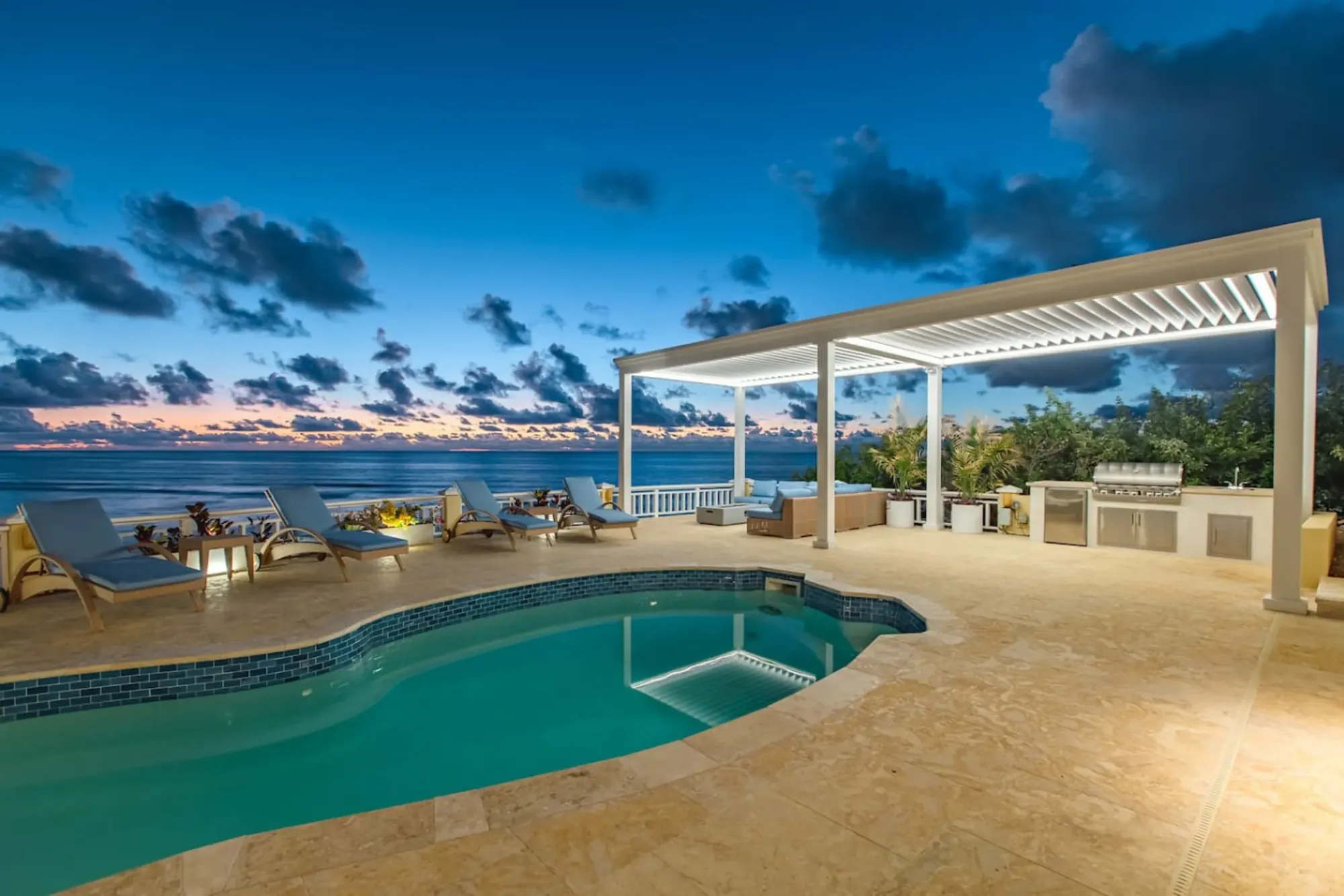
A dive week runs on early breakfasts and hungry afternoons, and the villa's kitchen is set up for both: a big island, a full-size range and oven, a dishwasher, an ice maker and a farmhouse sink under a window that looks at the water, with a second refrigerator in the cottage kitchen and an outdoor kitchen with a built-in gas grill on the pool deck.
“Completely renovated inside and out with the best-stocked kitchen we've ever had in a rented house. High point is the pool deck area. Unbelievable views.”
Timothy Moran, a guest in March 2026
The easiest start is to have the villa provisioned before you land. Send the concierge a grocery list, and the refrigerators are stocked when you walk in, with the dive-week staples on it: fruit, yogurt, eggs, bread, peanut butter, sports drinks, cases of water and snacks for the boat. A light breakfast before the 7:30 departure and a cooler of water in the car keep the divers going until lunch. After that, the island's supermarkets are listed in our groceries directory.
Lunch follows the dive site. The divers coming home from a Christiansted boat are back at the villa for lunch by the pool; on a Cane Bay day everyone eats at The Landing on the beach, and on a west-end day lunch is in Frederiksted, a few steps from the dive shops. The grill on the pool deck takes care of most dinners, with each family or each pair of friends taking a night.
Two evenings deserve a chef. The rest day in the middle of the week is the night for a long dinner on the terrace, and the pier night dive is the night the divers come home at 9:30 to a late supper someone else has cooked. The concierge can arrange a private chef for one meal or the whole week, and the island's villa chefs are listed in our private chef directory. Book the chef along with the dives.
Booking the dive week
A winter dive week books in a simple order. Start with the house. The Cerulean books through Sterling Point, the St. Croix company that manages the villa, and live availability and rates are on the booking calendar linked from every page of this site. Check-in is at 4 pm and checkout at 10 am.
Then the flights, as soon as the house is confirmed, with the Saturday nonstops first. Then two cars, or a van and a car. Then the dive shop: send the group's certification levels, last-dive dates, rental sizes and the days you want the wall, the canyon, the wrecks and the pier, and ask for a week's plan and a package price. Then the things with limited places: the Buck Island boat for Friday, the bio bay on a dark-moon night, and a private chef for the rest day and the night-dive supper. The concierge can book most of it, and can line the dive days up against the forecast so the wall lands on the calmest morning.
Guests often mention the team that looks after the house. One wrote in July 2026 that Rich and his team at Sterling Point were very responsive and helpful, and another in February noted how fast the host answered.
“A gorgeous home with an amazing view. Each bedroom had its own en-suite bathroom. Combine the large patio, pool, outdoor kitchen and its own beach, and this property will not disappoint.”
Dave, a guest in March 2026
Share the room plan, the dive plan and the packing list with everyone early, and the week is ready.
The dive week booking order
12 itemsYour ticks stay in this browser only.
Questions people ask
Which St. Croix dive shop is best for a group staying on the East End?
The Christiansted shops are closest, about 15 to 20 minutes from The Cerulean: Blue Salt Divers on the boardwalk and St. Croix Ultimate Bluewater Adventures, called SCUBA, whose boats reach the north-shore wall and Salt River Canyon. For the Frederiksted Pier, add a west-end shop such as Nep2une or Cane Bay Dive Shop, or use SCUBA's Frederiksted store. Sweet Bottom Dive Center guides shore dives at Cane Bay. All five were running trips in October 2026.
Can you dive the Cane Bay wall from shore?
Yes. From the sandy entry in front of the boat ramp at Cane Bay, you swim out on the surface about 100 to 200 yards to a mooring buoy in 25 to 40 feet of water, descend, cross a short reef and sand flat, and reach the lip of the wall at around 40 feet. Make the first dive with a guide from Sweet Bottom Dive Center or Cane Bay Dive Shop. The boats also moor on the wall for divers who prefer a boat entry.
When can you dive the Frederiksted Pier?
On any day without a cruise ship or a military vessel alongside, by day, and on almost any evening for the night dive, which starts around sunset after the ships have sailed. Ships typically arrive around 8 am and leave around 5 pm. The Virgin Islands Port Authority publishes the schedule, which Nep2une links from its site, and your dive shop will pick an empty day for the daytime pier dive.
Can you scuba dive at Buck Island?
The National Park Service allows scuba only at two designated moorings in Buck Island's north lagoon, with 30- to 40-foot dives through elkhorn coral, and never on the snorkel trail. The island's dive shops focus on the north shore and the west end, so Buck Island is the group's snorkel day, on a boat from Green Cay Marina or Christiansted, and an easy last full day before the flight home.
How long should you wait to fly after diving on St. Croix?
Divers Alert Network recommends at least 12 hours after a single no-decompression dive and at least 18 hours after multiple dives in a day or multiple days of diving, which covers a dive week. Many divers and shops use a full day as their rule. For a Saturday flight home, make Thursday your last dive day and spend Friday snorkeling at Buck Island or the villa's reef.
Can people in our group who are not certified try scuba?
Yes. PADI's Discover Scuba Diving experience is open to anyone 10 or older, with no upper age limit. It starts in shallow confined water and can continue with an open water dive to a maximum of 40 feet beside an instructor. SCUBA lists it at $160 with one dive, and the calm, shallow Frederiksted Pier is one of the gentlest places on the island to try it.
How much does scuba diving on St. Croix cost?
As a guide, SCUBA lists its standard boat trips for certified divers at $155 each and its guided pier night dive at about $125 with gear. Gear rental, nitrox and lights are usually extra. Most shops offer multi-dive packages for a week, so send your shop the group's plan and ask for one price for the whole week.
Do we need a rental car for a dive week on St. Croix?
Yes, and two cars work best for a mixed group, so the divers can leave early for the boat while everyone else starts the day later. Ride-share apps do not operate in the U.S. Virgin Islands, and a car opens up the whole island, from Cane Bay to Frederiksted. Reserve the cars when you book the villa. Traffic keeps to the left, in ordinary American cars.
What is the water temperature for diving St. Croix in winter?
Close to 80°F from January to March, at about 79°F at its coolest in February. Most visitors dive in a 3 mm shorty or a thin full suit, which every shop rents, and a rash guard underneath adds a little warmth. For the pier night dive, when you spend an hour moving slowly, a thin full suit is the comfortable choice.
Sources
Facts in this story were checked in October 2026 against the sources below. Event dates, flight schedules, prices and hours change, so confirm anything you plan around.
- St. Croix Ultimate Bluewater Adventures (SCUBA) — boat trips, shops and hours (updated Oct 8, 2026)
- St. Croix Ultimate Bluewater Adventures — certified diver pricing and packages
- St. Croix Ultimate Bluewater Adventures — dive training prices (effective Apr 1, 2026)
- St. Croix Ultimate Bluewater Adventures — night dives on St. Croix
- St. Croix Ultimate Bluewater Adventures — Buck Island Reef National Monument
- Blue Salt Divers — official site
- Sweet Bottom Dive Center — official site
- Cane Bay Dive Shop — official site
- Nep2une Scuba Diving — official site
- Nep2une Scuba Diving — west-end dive sites and the Frederiksted Pier
- GoToStCroix — scuba diving listings (2026)
- National Park Service — Buck Island Reef National Monument brochure (scuba moorings and the underwater trail)
- Divers Alert Network — Flying after diving
- PADI — Discover Scuba Diving FAQs
- PADI — ReActivate refresher
- The Buccaneer — St. Croix flight schedule (updated Oct 7, 2026)
- U.S. Naval Observatory — Moon phases, 2027
- Big Beard's Adventure Tours — Buck Island trips
- GoToStCroix — Buck Island Charters, Teroro II
- Caribbean Sea Adventures — Buck Island trips
- Sea Thru Kayaks VI — Bioluminescent bay kayak tour