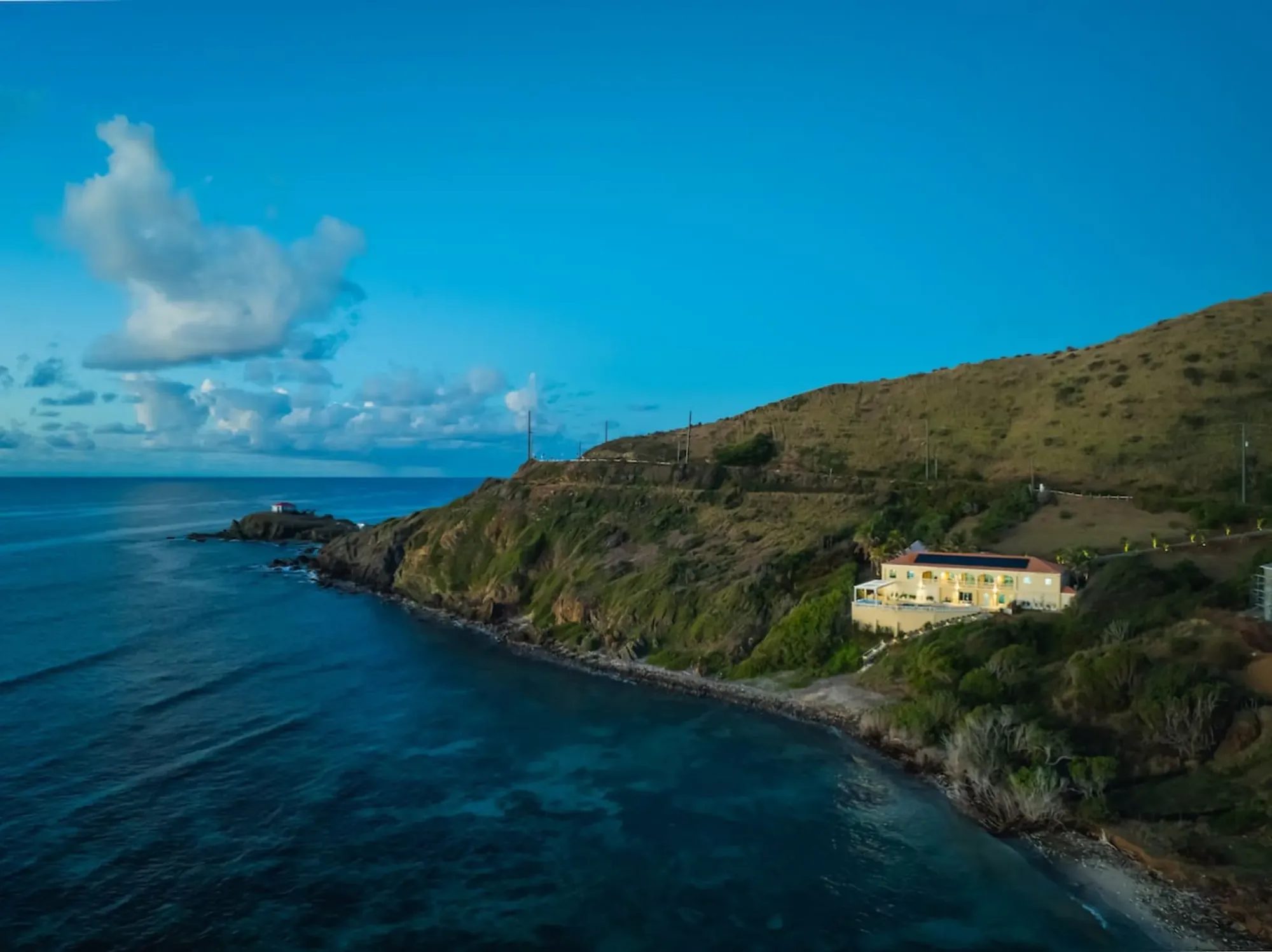


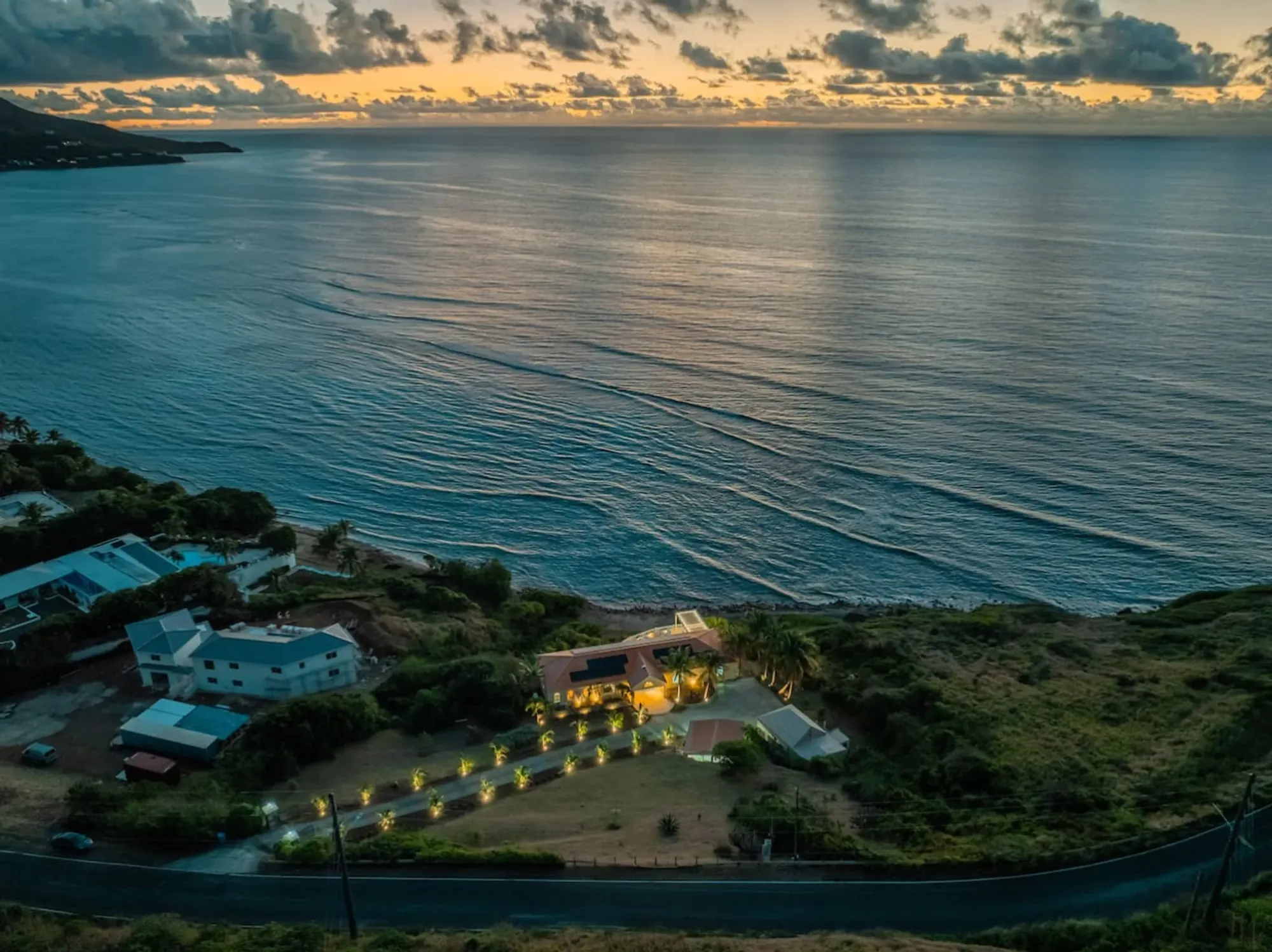
Plenty of warm, palm-lined places sit inside U.S. borders, which means an American can reach them with nothing more than a driver's license. The full roster: Hawaii; the Florida Keys; Puerto Rico plus its two little offshore islands, Vieques and Culebra; St. Thomas, St. Croix and St. John, which make up the USVI; and, far out in the Pacific, Guam and the Northern Marianas. Each adult gets through the checkpoint on a REAL ID card or any other identification on the TSA's accepted list, and kids under 18 can skip the ID step entirely on domestic flights. American Samoa, a territory with a stricter entry rule, is the single outlier. The chapters below line these destinations up as vacations: hours of clock shift, flight times from five large cities, January water temperatures, the local language and the side of the road traffic uses. Toward the end we turn to St. Croix, home to The Cerulean, the twelve-guest house we look after on the island's East End.
Warm places you can fly to on a driver's license
USA.gov lists four territories where a U.S. citizen comes and goes with no passport at all: Puerto Rico, the USVI, Guam and the Northern Marianas, which are formally a commonwealth. Put Hawaii and the Florida Keys beside them and you have every tropical island trip that begins at an ordinary domestic gate. American Samoa belongs to the United States too, yet it keeps a document rule of its own (a passport, or else a certified American birth certificate), so we give it a separate chapter further down.
Since the paperwork matches across that whole list, the real decision is which trip fits your crowd, and these trips differ a lot. Hawaii means six visitor islands in mid-Pacific, five hours earlier than New York during winter. The Keys form a coral chain you reach by car. Puerto Rico combines a capital city with a large main island, plus a pair of little islands off its eastern shore. The Virgin Islands are three small islands whose winter clocks run sixty minutes past New York. Guam lies so far west that its calendar already shows tomorrow.
Families usually ask first about two things: how far the clock moves in January and how warm the water is. The water readings below are January averages from NOAA's guide to coastal water temperatures, taken at whichever station sits closest.
| Place | January sea (NOAA) | Clock compared with New York |
|---|---|---|
| Honolulu, Hawaii | Near 77°F | Five hours earlier |
| Key West, Florida Keys | Near 72.5°F | No change |
| Culebra, Puerto Rico | Near 81°F | One hour later |
| Esperanza on Vieques | Near 80°F | One hour later |
| Charlotte Amalie, St. Thomas | Near 80°F | One hour later |
| Lameshur Bay, St. John | Near 80°F | One hour later |
| Christiansted, St. Croix | Near 81°F | One hour later |
| Apra Harbor, Guam | Near 80°F | Already the next date |
For the document rules on every island in the Caribbean, foreign ones included, see our no-passport Caribbean page; the Virgin Islands' own ID and customs routine is in the USVI no-passport guide. Here we stick to the vacations themselves.
What a REAL ID license covers
Enforcement of REAL ID started May 7, 2025. At the checkpoint the TSA wants valid identification from every passenger 18 or older, and its accepted list includes a REAL ID driver's license or ID card issued by a state, a state Enhanced Driver's License, and a passport. Because every trip here is a domestic flight, one of those cards is all an adult needs. Look on the card's face for the star, sometimes set in a flag, or for the word Enhanced. Families who already hold passports can just show those.
From February 1, 2026 onward, a traveler who turns up without acceptable ID can use TSA ConfirmID, the agency's identity check, for a $45 fee. Treat it as insurance for a lost wallet. Checking every card a week out is simpler, and a small habit helps: have each adult photograph the front of their license and drop it in the group chat. Anyone missing the star then has days, not minutes, to dig out a passport.
One line on the TSA's list deserves a household-wide look: temporary driver's licenses are not accepted. Anyone renewing close to departure should travel with the new card in hand, or pack a passport.
This is where a group saves the most hassle. Nobody sits waiting on a renewal, and no toddler needs a first passport photo. A cousin who signs on late can grab the same week, provided the license shows the star. Grandparents who have stopped driving can board on a starred state ID card.
Two destinations add a small step. Leaving Puerto Rico or the Virgin Islands for the mainland, luggage passes a quick agriculture inspection before departure, and the Virgin Islands add a brief customs stop too, since those islands lie beyond the U.S. customs zone. No passport is involved in any of it; our USVI ID guide walks through the St. Croix version.
Guests without U.S. citizenship enter under the normal U.S. rules everywhere on this list, so a friend from overseas carries a passport plus whatever their status calls for. Confirm each person's case before booking.
Hawaii for a winter week
Hawaii is the best-known license-only tropical trip, and it earns that fame. Its tourism office names six islands for visitors: Kauai, Oahu, Molokai, Lanai, Maui and the Island of Hawaii. Every one has its own feel, from the city sand at Waikiki below Diamond Head to west Maui's long beaches and the Big Island's high country. English and Hawaiian are the official languages, everyone spends U.S. dollars, and daytime highs average 75 to 85°F.
People love it. Hawaii's economic office tallied 9,642,991 visitors for 2025, almost all of them arriving by plane, and over 2.4 million came from the eastern U.S. Their average stay ran 8.68 days, a sign of the trip's shape: once people make that flight, they settle in. The 2020 census put the state's population at 1,455,271.
The split between sky and sea is lopsided. Of that 2025 total, 9,493,213 people came by plane and 149,778 by cruise ship, so for nearly every visitor the trip starts at an airport gate. Minnesotans gain a new option this winter as well: a new Delta nonstop linking Minneapolis with Maui begins December 19, 2026, the same day its Boston to Honolulu service comes back.
Reaching it takes a serious flight. The main gateway is Daniel K. Inouye International Airport in Honolulu. Delta has run a daily New York-JFK to Honolulu flight since April 1, 2026; it adds daily Detroit service from November 9, 2026, a second Atlanta departure from January 4, 2027, and its winter Boston flights again on December 19, 2026. West Coast flyers have a much shorter hop, and in 2025 the western states sent roughly twice as many visitors as the eastern ones: 5.0 million against 2.4 million.
Then there is the time difference. Hawaii stays on Hawaii-Aleutian Standard Time year-round and never shifts for daylight saving, so it runs five hours behind New York in winter and six in summer. East Coast families land in the afternoon with their bodies saying evening, and the first mornings begin very early. Plenty of them lean into it, because a sunrise hike or a dawn swim feels easy when your internal clock reads late morning.
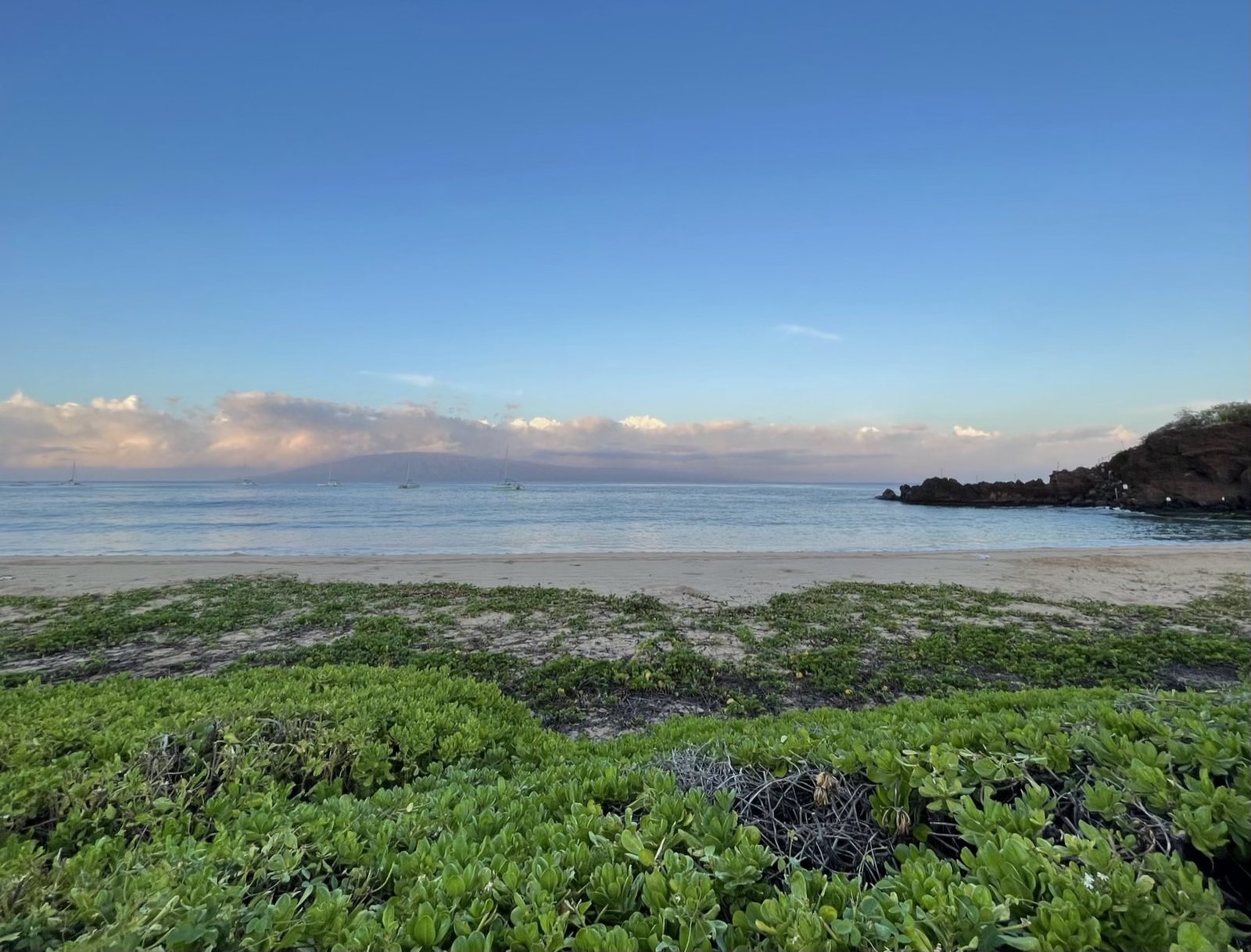
For families on the West Coast, Hawaii is the obvious warm-weather pick and tough to beat. Families in New York, Chicago or Atlanta will love it too, though they pay for it with more hours aloft and a bigger clock jump. The next few chapters weigh exactly that.
Hawaii's beaches, reefs and summits
Beaches are why most visitors go, and Hawaii has every kind: Waikiki's city strand with Diamond Head behind, the long sand of west Maui, and Oahu's Hanauma Bay, a curving beach tucked in an old crater with reef flats right near shore. By NOAA's coastal guide, January water averages around 77°F at Honolulu, 76°F at Kahului on Maui and 78°F at Kawaihae on the Big Island: brisk on the first plunge and pleasant for lengthy swims.
The islands also climb high, which gives Hawaii something none of the Caribbean islands here can match: summits you can reach by car. At Maui's Haleakala National Park, sunrise slots from 3 to 7 a.m. are reserved through recreation.gov as much as 60 days out, and the Park Service figures about 30 minutes of driving from the entrance gate up to the top. Before dawn the summit is windy, wet and below freezing, so families pack coats and blankets for that single cold morning of a beach vacation.
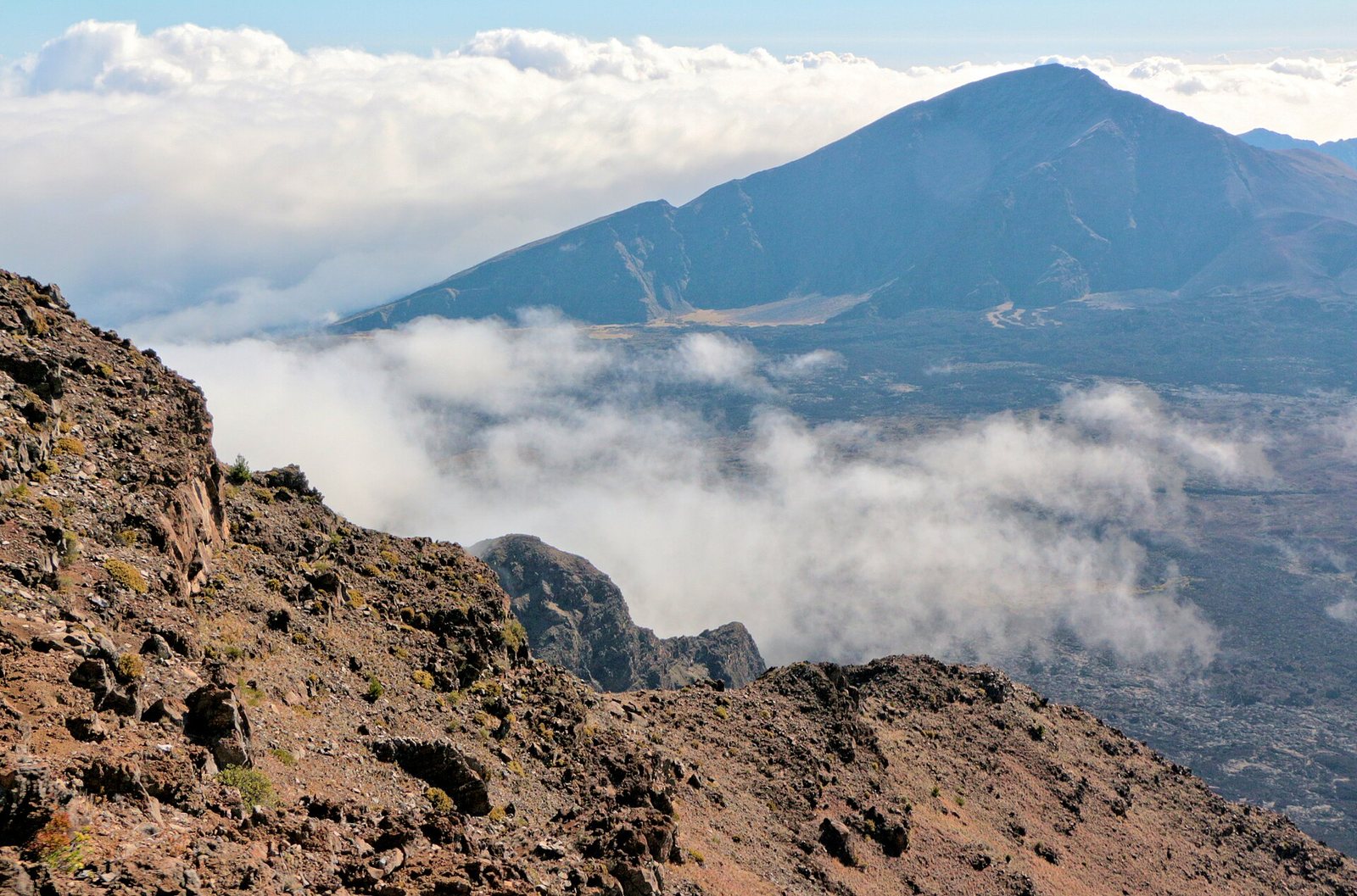
Many Hawaii trips divide the week between two islands, linked by a quick inter-island flight, so beach, city and summit all fit. That makes a lovely ten days, and the state's figures suggest visitors stay about that long.
St. Croix has its own sunrise tradition, at the far eastern edge of the nation. Out at Point Udall, the easternmost spot in the United States and roughly ten minutes from our door, there is no booking and no gate; the sun simply lifts out of the ocean straight ahead. Sunrise times are listed in the Point Udall guide we keep, while the Guam chapter below has a fun Pacific twist.
Snorkelers will find both oceans worth a long morning in a mask. On the Virgin Islands side, the reefs sit beside seagrass meadows where green turtles graze year-round, and two marked snorkel trails run underwater, one at St. John's Trunk Bay and one at Buck Island off St. Croix.
Hawaii or the Caribbean for an East Coast or Midwest family
Many families searching for a no-passport tropical trip are really weighing this, so here it is in hard numbers. Start with time. Hawaii's clock sits ten hours behind Coordinated Universal Time. St. Croix and Puerto Rico run on Atlantic Standard Time, four hours behind it, every month of the year. Here is January from five home cities.
| Home city | St. Croix in January | Honolulu in January |
|---|---|---|
| New York | One hour later | Five hours earlier |
| Atlanta | One hour later | Five hours earlier |
| Chicago | Two hours later | Four hours earlier |
| Dallas | Two hours later | Four hours earlier |
| Los Angeles | Four hours later | Two hours earlier |
From the East Coast or the Midwest, the Caribbean barely nudges the clock. Bedtimes hold, day one starts like any morning, and nobody burns the final two days adjusting right before the flight home. With little kids, that clock can count as much as the flight itself. In summer, once the mainland switches to daylight time and St. Croix stays put, the East Coast and St. Croix read the same hour.
Number two is the flight. From the East Coast, Hawaii lies across the whole continent and then most of an ocean, a long day of travel. St. Croix's scheduled nonstops take roughly 4¼ hours from Newark, 3¾ hours from Atlanta or Charlotte, 3 hours from Miami and 5 hours from O'Hare on Saturdays in winter. Leave the Northeast after breakfast and you can be in the water before dinner.
Third comes trip length. Hawaii pays off over a long stay, and its visitors average close to nine days. The Caribbean works for a long weekend or a full week, so it slots into Thanksgiving break, Presidents' Day weekend or spring break without draining anyone's vacation days.
Hawaii is the stronger pick if you live on the West Coast, want a mountaintop sunrise along with the beach, or have two weeks for two islands. The Caribbean wins if you live east of the Rockies, have young kids, are traveling for a week, or are bringing a big group that wants to keep its own schedule. For that group, the house counts as much as the island, and we get to ours further on.
St. Croix flights from five big cities
St. Croix's airport is small and easygoing, on the south shore, with nonstops to several large mainland hubs, which puts most Americans one flight or one connection away. Below is the trip from the five cities families ask about most, as the airlines listed it when we looked in November 2026. Timetables shift, so confirm with the carrier at booking.
| Leaving from | Hours in the air | Route |
|---|---|---|
| New York area | Near 4¼ | Nonstop on United out of Newark, Saturdays |
| Atlanta | Near 3¾ | Nonstop on Delta, daily on most winter dates |
| Chicago | Near 5 | Nonstop on American out of O'Hare, Saturdays in winter |
| Dallas | 7 to 9 in total | American with one stop, Miami or Charlotte |
| Los Angeles | 11 to 14 in total | One stop, in Miami or Charlotte |
From New York, United's Saturday nonstop departs Newark in the morning and touches down on St. Croix early in the afternoon; other days you connect once, in Atlanta, Charlotte or Miami. Each routing is on our New York page. From Atlanta, Delta brings its nonstop back on Saturdays starting November 14 and flies it every day from December 19, with more on the Atlanta page.
From Chicago, American runs a Saturday O'Hare nonstop from December 19 through January 2, then again starting February 13, 2027. Any other day, one connection in Miami or Charlotte gets you there. That calendar matters for a February trip: the nonstop takes January 3 through February 12 off, so early-February travelers connect once, and from February 13 the Saturday flight resumes. Our Chicago page has it. Dallas travelers do best with a single American connection in Miami or Charlotte, each with a nonstop onward, as our Dallas page shows. Los Angeles is a full day with one change, and an overnight flight east lands you on St. Croix by afternoon; the Los Angeles page lays out the choices.
Miami serves St. Croix all year, with two departures a day this winter and about three hours of flying. Charlotte switches to daily on December 17. San Juan adds quick hops: Cape Air two or three times daily, and from November 19, 2026, a daily JetBlue flight of roughly 40 to 50 minutes. Our getting here page keeps all of this up to date.
The Florida Keys by car
The Keys are the one tropical trip on this list you can reach by car: a string of coral islands running more than 100 miles out to sea, stitched together by the 113-mile Overseas Highway and its 42 bridges. Best known is the Seven Mile Bridge near Marathon, where the restored older span alongside is open to people on foot and on bicycles.
You begin on the mainland. Out of Miami, the Florida Turnpike heads south to U.S. 1 at Florida City, and Key Largo, the gateway to the Keys, comes about 22 miles later. The highway then hops island to island all the way to Key West at the end of the road, where the evening custom is gathering to watch the sun sink below the sea. Allegiant, American, Breeze, Delta, JetBlue and United all serve Key West's airport, so another option is flying to the far end and driving north.
One planning note for the middle of the chain: Marathon has no airline service, so travelers headed for that stretch land in Key West or Miami and cover the rest by car. Coming from Miami, remember that Key Largo is the first stop, about 22 miles past Florida City, and everything else unrolls south of it.
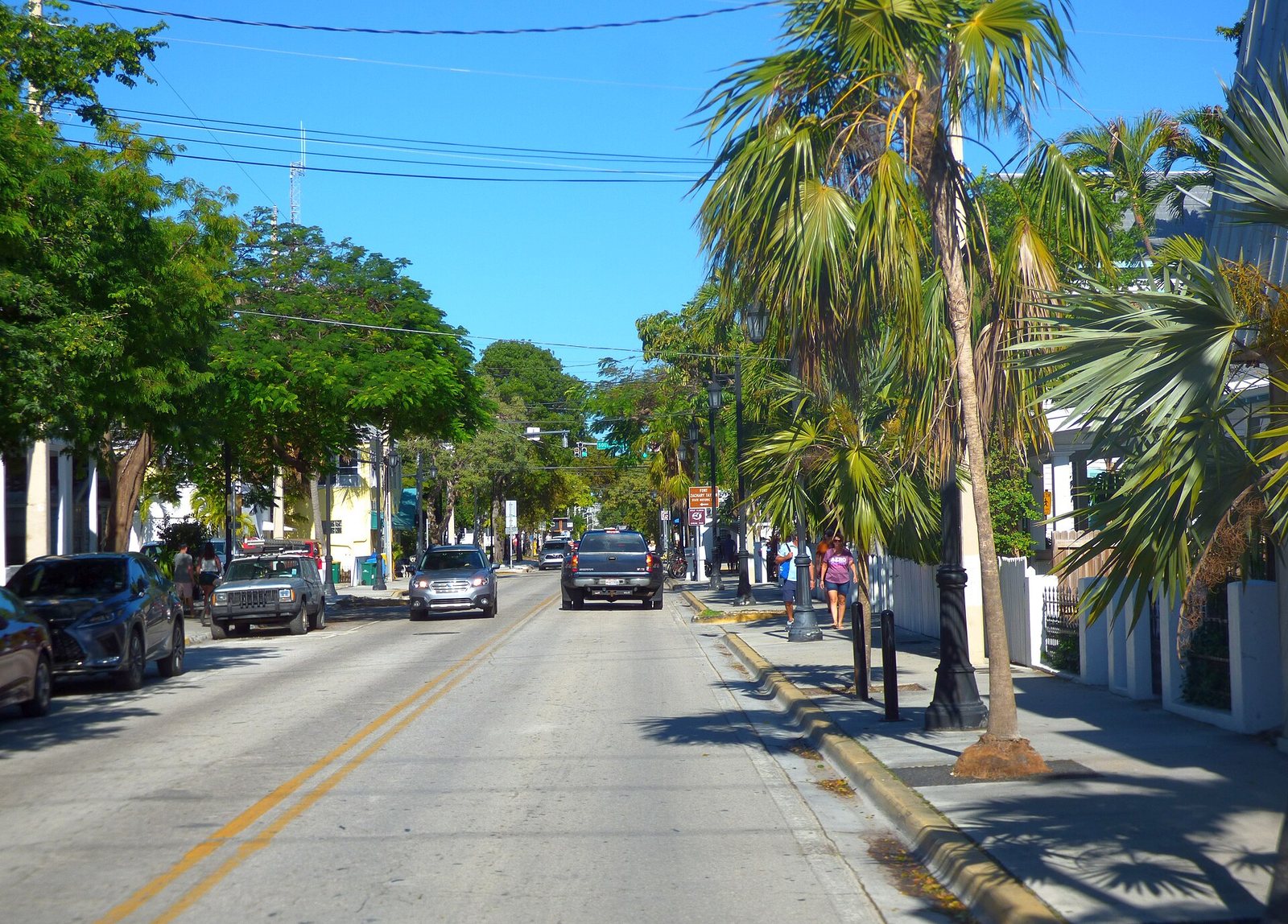
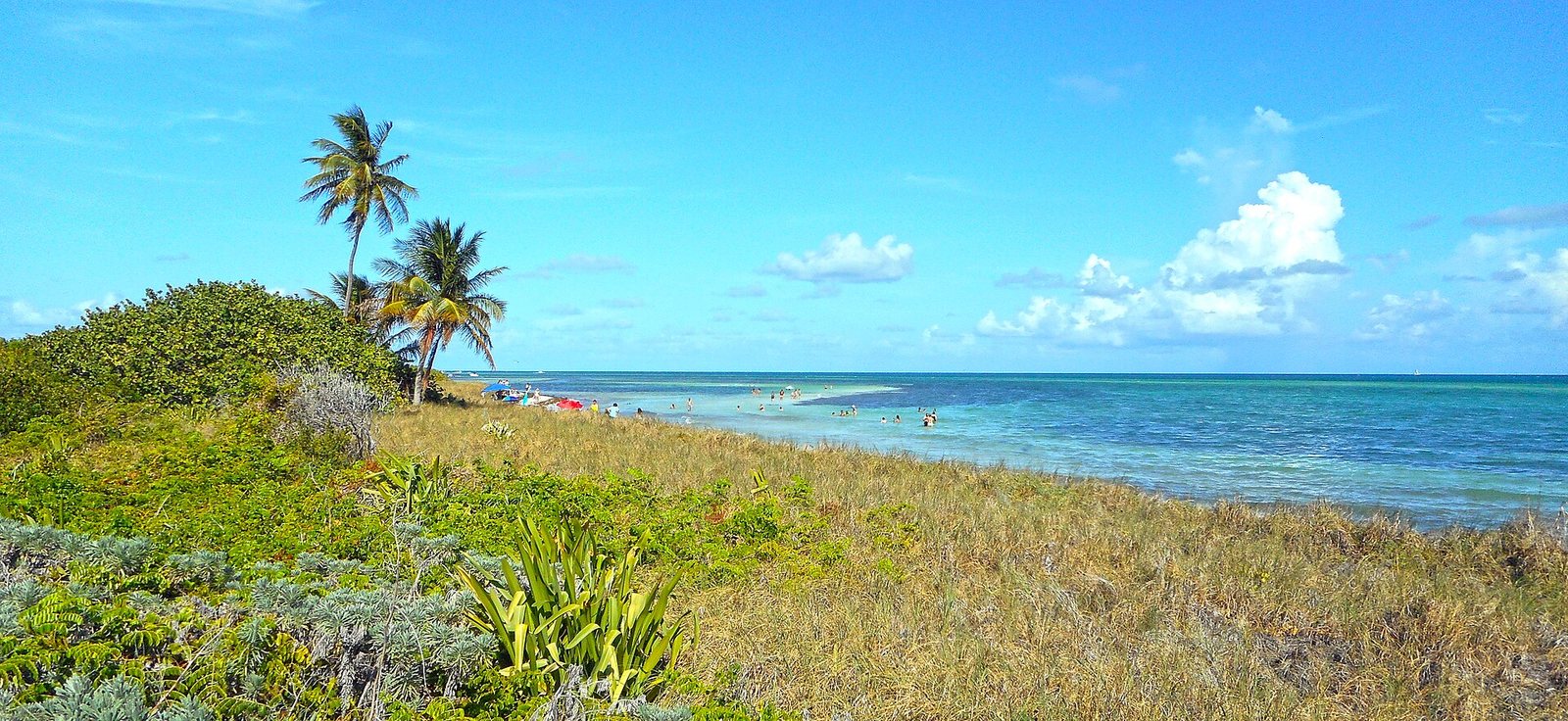
The Keys excel at road-trip variety: reef snorkeling and diving off Key Largo inside the Florida Keys National Marine Sanctuary, a stroll or bike ride on Marathon's old Seven Mile Bridge, then Key West's streets and sunsets to finish. At Bahia Honda State Park, sandy beaches sit framed by the highway and by Flagler's old railway.
Winter swimmers will find the water a touch fresher than further south. NOAA's guide shows January near 72.5°F at Key West and near 71°F at Vaca Key, and February runs a degree or so warmer. Lots of families swim in that quite happily, and it feels refreshing under the strong Florida sun.
The Keys fit a family that enjoys driving, wants to stay on Eastern time, and will give up a few degrees of sea temperature to have a car and skip flying altogether from South Florida. Being part of Florida, they raise no ID question beyond the driver's license already in your pocket.
Puerto Rico and Old San Juan
Puerto Rico is the large island here, offering a city, a rain forest and long beaches in a single trip. The 2020 census found 3,285,874 residents, roughly 80 times St. Croix's count. Both Spanish and English are official; most residents speak Spanish day to day, and English is widely understood where visitors go. Dollars are the currency, and traffic keeps right, as on the mainland.
Nonstops reach San Juan's airport from many mainland cities, so Puerto Rico is often the simplest flight in this post. Old San Juan's two forts, El Morro and San Cristóbal, are cared for by the Park Service, while El Yunque National Forest, up in the hills east of the capital, makes a green day trip beneath the rain forest canopy.
Our full side-by-side of these two islands, St. Croix vs. Puerto Rico, covers size, beaches, food and towns, so we add only what bears on this question. Both are U.S. territories on Atlantic time, and they are close neighbors. Verizon, for example, treats both as domestic roaming, so phones work much like they do at home; look up your own carrier's policy before the trip.
Getting between them is easy. From November 19, 2026, JetBlue runs a daily San Juan flight over to St. Croix, and Cape Air makes the run two or three times a day, so a family that lands a cheap fare into San Juan can reach St. Croix within the hour on the same ID. That turns San Juan into a convenient doorway to the Virgin Islands as well as a destination in its own right.
Puerto Rico is at its best for a city break with excellent restaurants, a long weekend on a nonstop, forest hikes and a bio bay. For a group, St. Croix brings English everywhere, a calmer island of 84 square miles, and a waterfront house with space for all.
Vieques and Culebra
East of the main island, Vieques and Culebra make up Puerto Rico's quiet corner, and lots of travelers fall hard for them. Culebra lies about 17 miles east of Puerto Rico proper, and Flamenco, its most famous beach, wraps around a bay on the north side. The Culebra National Wildlife Refuge, which the Fish and Wildlife Service manages, covers 1,510 acres across 21 cays around the island, and upward of 30,000 pairs of sooty terns nest out on the Flamenco Peninsula. Public parts of the refuge open every day, 6 a.m. to 6 p.m.
Vieques is the bigger island. Its refuge, says the Fish and Wildlife Service, is the largest anywhere in the Caribbean, free to enter and open year-round, with beaches and lagoons for paddling, snorkeling and diving. Most visitors know Esperanza, the fishing village on the south coast, and the island's bio bay is famous for lighting up when a paddle stirs it on a moonless night.
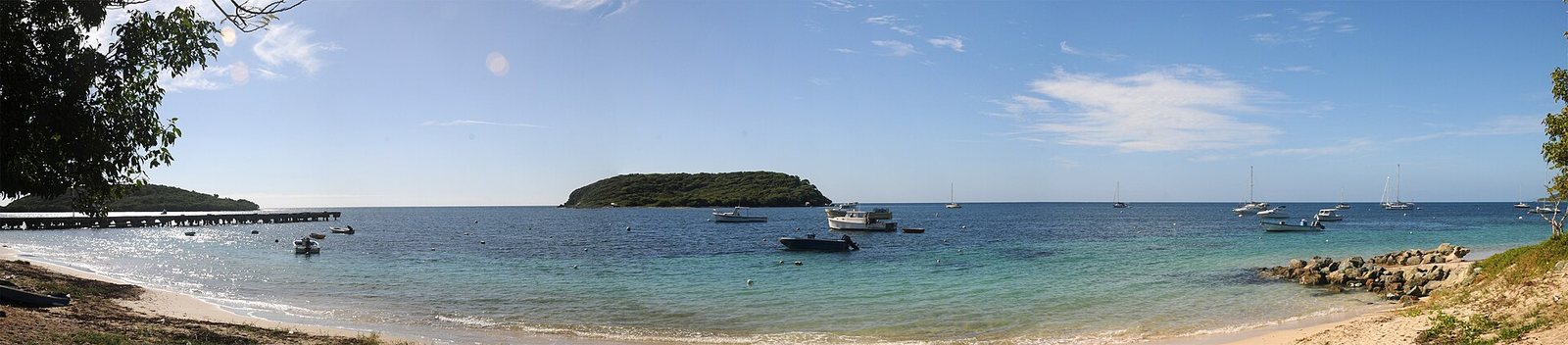
Winter water here stays warm. NOAA's guide shows January near 81°F at Culebra and near 80°F at Esperanza, close to the top of every reading in this post. Small airlines fly to both islands from the San Juan area, and ferries run over from the main island's east coast.
These two suit couples or small families after a few slow days who don't mind a two-leg journey. St. Croix gives that same small-island feeling on one flight from the mainland, and Salt River Bay, up north, has its own bio bay that glows just as brightly on dark nights. Use the bio bay guide for Salt River to choose a night by the moon's phase.
Vieques and St. Croix also share history. Beginning in the 1920s, many of the Puerto Rican families who moved to St. Croix to cut cane came from Vieques, and their dishes, from rice and pigeon peas to coquito at Christmas, are part of Crucian cooking now.
St. Thomas and St. John
Both of St. Croix's sister islands make lovely license-only trips. St. Thomas is the busy one, about 32 square miles, home to Charlotte Amalie, which is both the capital of the territory and a big cruise port, with plenty of shops, restaurants and flights. On the north shore, Magens Bay is a long arc of sand with lifeguards and a modest entry fee, and many visitors call it the best beach in the islands.
St. John is mostly park. Virgin Islands National Park covers about 60 percent of its 20 square miles, and you get there on the ferry from Red Hook on St. Thomas. Trunk Bay, with its marked snorkel trail, is the beach pictured on so many of the territory's postcards, while the park's trails and bays make relaxed days with kids.
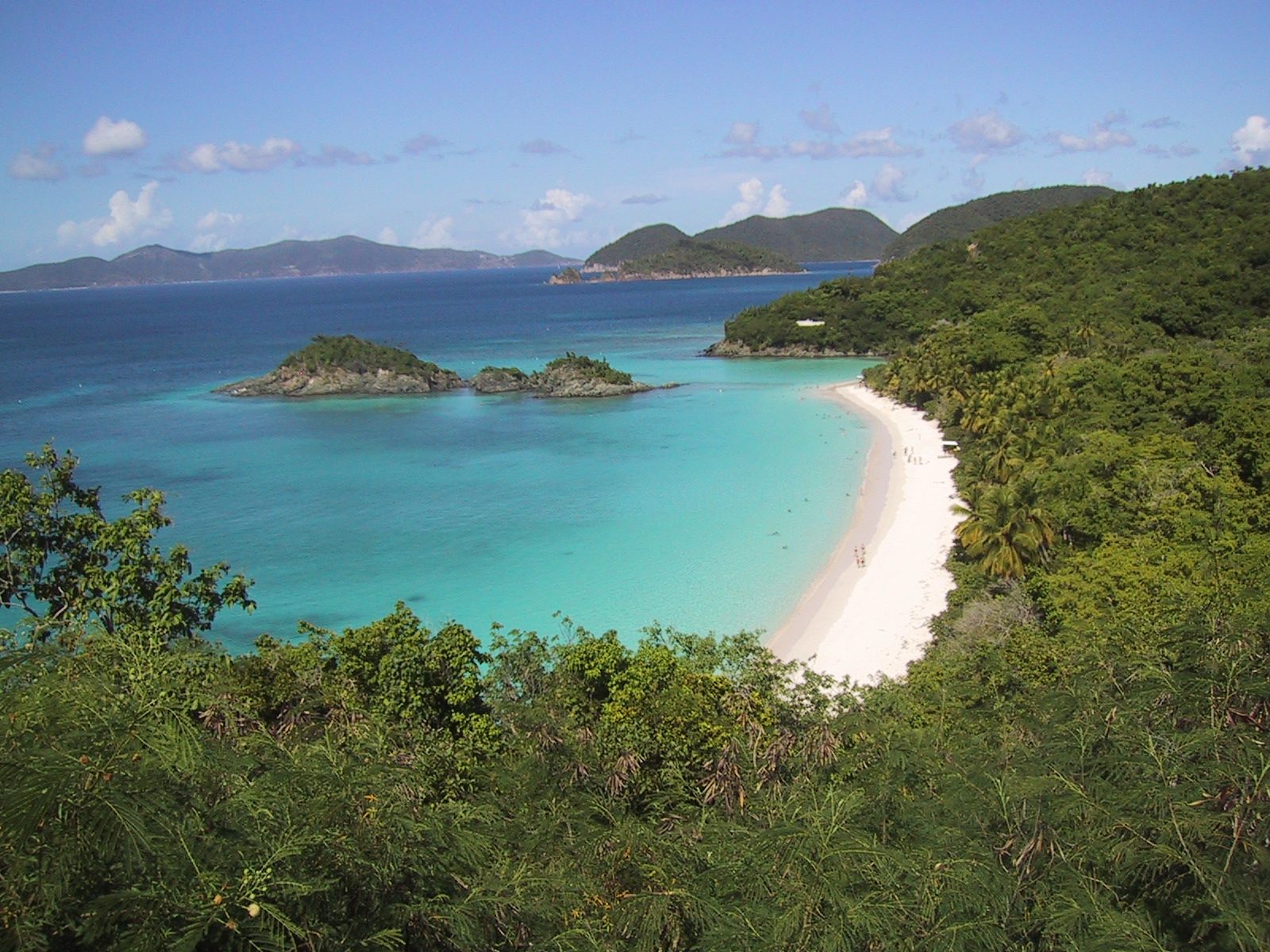
Water around both islands hovers near 80°F in January, going by NOAA's stations at Charlotte Amalie and Lameshur Bay. Language, currency, phones and road side all match St. Croix: English, dollars, U.S. phone plans and driving on the left. The 2020 census counted 87,146 people across the whole territory, and nearly half of them, 41,004, live on St. Croix.
Travel between the three counts as domestic. Seaborne's seaplane connects the Christiansted and Charlotte Amalie harbors in roughly 25 minutes, while Fly The Whale and Cape Air link the airports, so a shopping day on St. Thomas or a Trunk Bay swim slots into a St. Croix week on the same ID you arrived with.
Which of the three suits you depends on the week you have in mind. Our comparison of the three Virgin Islands lines them up by flights, beaches, towns and space. Briefly: St. Thomas for flights, shops and dining, the national park on St. John, and St. Croix, at 84 square miles, for the most elbow room, two Danish towns, Buck Island and quiet beaches.
Guam and the Northern Mariana Islands
The most distant tropical trip open to Americans without a passport lies in the western Pacific. Guam measures about 32 miles in length and 4 to 8 miles across, roughly 900 miles north of the equator. Its 2020 census count was 153,836. Chamorro and English are the official languages, and the visitors bureau cites an average temperature near 85°F.
Visitor life on Guam centers on Tumon Bay, a marine preserve home to more than 200 species of coral and 500 marine species, beneath the cliff at Two Lovers Point, named for a Chamorro legend. In Hagåtña, Chamorro Village hosts a well-loved Wednesday night market with food, music and dancing. NOAA's guide puts January water near 80°F at Apra Harbor, similar to the Virgin Islands.
North of Guam, the Northern Mariana Islands form a separate commonwealth, with Saipan as the main island, and counted 47,329 people in 2020. Guam and the Northern Marianas both run on Chamorro Standard Time across the International Date Line, which means Guam and Saipan start each new date many hours ahead of the mainland. It also makes calls home a small puzzle: while Saturday morning breaks over Hagåtña, people across the mainland are still finishing their Friday.
Here's a nice tie to St. Croix. Guam's far western tip, the westernmost spot in the country by travel, also carries the name Point Udall, after Congressman Morris Udall. Ours, the easternmost, honors his brother Stewart. Between them the two brothers bookend the country, and our house is a ten-minute drive from the eastern end.
From the mainland, Guam is a long haul. Its visitors bureau says the flight from Hawaii runs a little more than seven hours, and Hawaii is already far from the East Coast; from many Asian cities it is about three and a half hours. Guam fits travelers already in Asia or the Pacific, and anyone drawn to the far edge of the map. For a sunny week from the East or Midwest, the Caribbean is the short hop.
American Samoa's own entry rule
American Samoa sits in the south-central Pacific, a U.S. territory with 49,710 people at the 2020 census. Of all the territories, it is the only one where a driver's license by itself won't get you in.
USA.gov notes that even though American Samoa is a U.S. territory, entering takes a passport or else a certified American birth certificate. The Interior Department's Office of Insular Affairs spells out the rest: a U.S. citizen or national needs either a valid U.S. passport or a certified birth certificate proving U.S. nationality, and also a ticket for onward passage out of American Samoa, or else proof of employment there. For U.S. citizens who don't live in the territory, the visitors bureau lists a valid U.S. passport, travel document or certified birth certificate; a round-trip ticket back to where you started, or proof of onward travel elsewhere; and proof of a job or official assignment in American Samoa. Read that page carefully, or phone the bureau, before booking.
In short, going by the Interior Department's wording, a citizen with no passport brings a certified birth certificate showing U.S. nationality plus an onward ticket, along with the usual REAL ID or other accepted ID for the flights. A U.S. passport stands in for the birth certificate. Rules can change, so look at the territory's official pages before committing.
For most mainland families, American Samoa is a once-in-a-lifetime trip, often one leg of a longer Pacific journey. We include it because it keeps appearing on no-passport lists, and the birth certificate step is easy to overlook while packing for a whole family. The Caribbean territories (the USVI and Puerto Rico) have nothing like it: you board on the same license that gets you on a plane to Denver.
Nearby foreign islands are another matter. Despite the shared name, the British Virgin Islands require a passport, and so do St. Maarten, St. Lucia and the other foreign islands around them. Our Caribbean passport list sorts every one.
Cruises that start and end at a U.S. port
Cruising is the other common way Americans see the Caribbean without a passport, and the rule is narrow. Customs and Border Protection calls these closed-loop cruises, meaning the ship returns to the very port it left. Citizens aboard one can reenter on a birth certificate along with official photo ID from a government agency. For land and sea crossings generally, the agency says children under 16 who are citizens can show just a birth certificate, or another proof of citizenship.
The agency also warns that the countries a ship visits may still demand a passport at their own borders. A closed-loop sailing that stops at Nassau, Cozumel or St. Maarten is calling at foreign countries, so CBP suggests confirming your documents with the cruise line.
A ship day on St. Croix is very different from staying a week. Cruise ships dock at Frederiksted's pier, on the west end, and made 71 calls there in 2024, so most days see no ship at all. Passengers get a few hours for a west end beach or a walk through town. A week opens up the East End, the reefs, Buck Island and Christiansted's restaurants, with a house to return to each evening.
If your family liked a Caribbean cruise and wants more time on one island, flying to St. Croix is the easy route: no ship schedule, the same ID, and a whole week in one place.
The sea in winter, place by place
Warm water is the whole point, so here is a fuller look from NOAA's coastal water temperature guide, which averages long records from harbor and buoy stations. These are the nearest stations to each place, for December and January, the months most winter trips fall in.
| Station | January | December |
|---|---|---|
| Key West, Florida | Near 72.5°F | Near 75°F |
| Kahului, Maui | Near 76°F | Near 77°F |
| Honolulu, Oahu | Near 77°F | Near 78°F |
| Kawaihae, Island of Hawaii | Near 78°F | Near 78°F |
| Esperanza, Vieques | Near 80°F | Near 81°F |
| Charlotte Amalie, St. Thomas | Near 80°F | Near 82°F |
| Apra Harbor, Guam | Near 80°F | Near 81°F |
| Christiansted Harbor, St. Croix | Near 81°F | Near 82°F |
Each place on this list is swimmable all winter. The Keys run coolest, and Hawaii stays in the middle to upper 70s. Puerto Rico, the Virgin Islands and Guam land between about 80 and 82°F, the warmest figures in the table. Christiansted Harbor, the closest station to our house, averages about 82°F in December and 81°F in January. Set against Key West in January, that is roughly eight degrees warmer, about the gap between a brisk dip and an easy hour-long swim.
For a group, that means kids stay in until somebody shouts for lunch, grandparents swim slowly for as long as they please, and snorkelers drift over the coral for an hour in a rash guard worn for sun protection, since nobody needs it for warmth.
Air temperatures follow suit. January afternoons on St. Croix average about 83°F, and evenings stay mild enough to eat outside under the pergola. NOAA's airport normals for each month, plus sunrise times for early swimmers, are in our St. Croix weather by month guide.
Language, money, phones and driving
All the places in this post run on U.S. dollars, so there's no currency to swap and your cards behave just like at home. What changes is the language, the phone coverage and the driving side.
Start with language. Hawaii's official tongues are English and Hawaiian, and Hawaiian place names and words appear everywhere. Puerto Rico's official pair is Spanish and English, and on the street you'll mostly hear Spanish. Guam uses Chamorro and English. Throughout the USVI, daily life happens in English, with a Crucian lilt on St. Croix.
Phones are simple across most of the list. Hawaii and Florida sit inside your carrier's home network. Verizon classes Puerto Rico and the USVI as domestic roaming, so a Verizon plan works there about as it does stateside. For the Pacific territories, or any other carrier, check the coverage page before you go, and do that for each phone in the group.
The Virgin Islands surprise people at the wheel. On all three Virgin Islands, traffic keeps left, yet the cars are normal American models with the steering column on the usual side. Drivers stay in their usual seat and keep the center line by your shoulder. Speeds are slow, the roads are relaxed, and most visitors feel at ease by day two. Hawaii, Florida and Puerto Rico drive on the right like the mainland. Our St. Croix driving guide covers roads and local habits.
Power across the Virgin Islands is standard U.S. 120 volts, so chargers and hair dryers plug straight in. Mail goes through the U.S. Postal Service. Shoppers get an allowance of $1,600 per U.S. traveler, duty free, on the trip home from the Virgin Islands; the rules are in our duty-free guide.
Choosing by the kind of trip
Once the facts sit side by side, the decision mostly turns on who's traveling and for how long. Here is how we'd pair the places above with the trips families tell us about.
| Trip | Why | Good fits |
|---|---|---|
| A long weekend from the Northeast | Nonstops near 4 hours, one hour of clock change | St. Croix, Puerto Rico |
| A road trip from South Florida, no flight | 42 bridges along 113 miles of highway | The Florida Keys |
| Two weeks from the West Coast | Shorter flight, time for two islands | Hawaii |
| Young kids from the East or Midwest | Bedtimes hardly move | St. Croix, Puerto Rico, St. Thomas |
| A beach day in a national park | Park land fills roughly 60 percent of St. John | St. John |
| Ten or twelve people under one roof | Room, quiet beaches, our twelve-guest house | St. Croix |
| The far edge of the map | A calendar day ahead of the mainland | Guam, the Northern Marianas |
Long weekends are where the Caribbean territories shine for eastern families. Catch a Saturday morning nonstop, swim that afternoon, and fly back Tuesday or Wednesday with just one hour of clock shift each way. That pattern fits Thanksgiving break, Presidents' Day or an anniversary getaway for two.
Road trips are the Keys' specialty. You decide how far down the chain to drive each day, stop wherever you like, and end with a Key West sunset. For families who'd rather drive than fly, or who already live in South Florida, the easiest tropical trip in the country is right on the doorstep.
For a longer trip from the western half of the country, Hawaii is the natural choice, and six visitor islands give a two-week stay room to roam. For an eastern family with little ones, the clock decides it: the Caribbean leaves naps, meals and bedtimes right where they are at home.
Count hours as well as dollars. A family flying from Atlanta spends close to four hours aloft on the way to St. Croix; reaching Honolulu means a far longer day, and the Guam visitors bureau adds more than seven hours past Hawaii for the Pacific's far side. Every hour in a seat is an hour out of the water, and with children those hours add up fast.
For a big group, the house tips the scales. Hotel room blocks suit many trips. A gathering of ten to twelve people, though, usually wants a single kitchen, one pool, one long table and bedrooms that each have a bathroom, and that's the kind of trip we know best. The following chapters look at St. Croix and our house with that in mind.
Why St. Croix fits a group
St. Croix, at 84 square miles, outsizes both of its sister islands, with green hills, farms and beaches, plus Christiansted and Frederiksted, two harbor towns built in the Danish era. The 2020 count found 41,004 people on the island. During 2024, the USVI Bureau of Economic Research logged 186,400 mainland air arrivals to St. Croix, and cruise ships made 71 calls at the Frederiksted pier. Hawaii, by comparison, drew more than 9.6 million visitors in 2025.
Those figures shape what guests find. East End beaches are often near-empty on weekday mornings. A long dinner in Christiansted is a quarter hour from the house. At sunrise the Point Udall road is almost deserted. Visitors per resident around the region are compared in uncrowded Caribbean islands, and St. Croix sits toward the calm end.
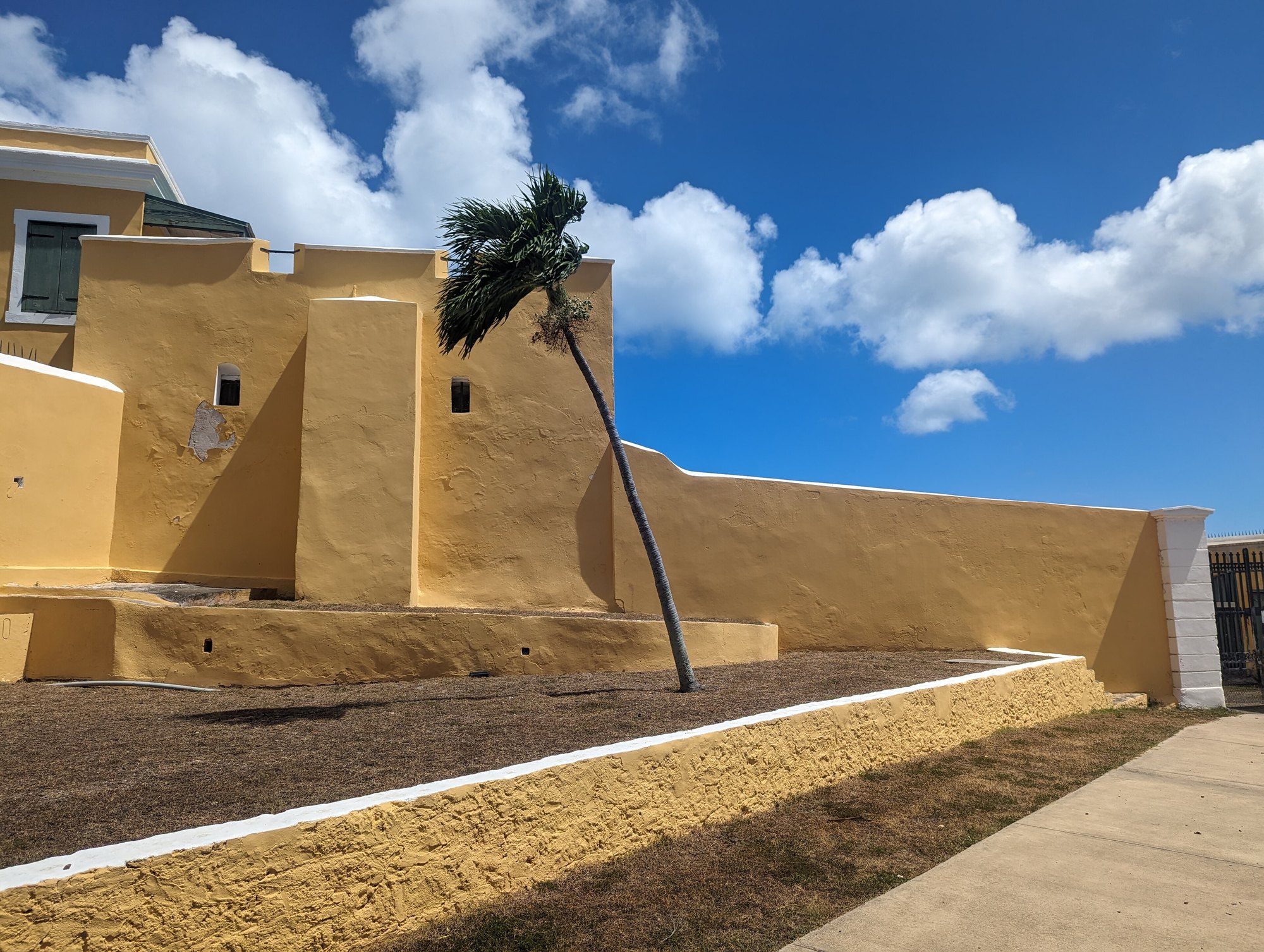
There's plenty to fill a week. Fort Christiansvaern, painted yellow, stands inside Christiansted National Historic Site on the harbor where a young Alexander Hamilton clerked. Frederiksted, out west, is where people go for sunsets, and its long pier ranks among the island's favorite dive sites. On the north shore, Cane Bay's reef wall drops off just past the beach, and Salt River Bay lights up at night. A shady drive winds through the northwest rain forest, and rum distilleries and a sugar estate offer tours.
For a group, the practical side stacks up. The flight is domestic, with nonstops from five mainland hubs this winter. Everybody pays in dollars and speaks English. The clock is East Coast time plus one hour in winter. And the island is large enough for a group to scatter for a morning, divers at Cane Bay and strollers in Christiansted, then regroup back home for lunch. Our Christiansted guide takes you through the town street by street.
The East End and Buck Island
The East End, where our house stands, is St. Croix's sunniest and breeziest corner. Think sea grape, low hills and coves ringed by reef, with the coastal waters protected by the East End's marine park. Below Point Udall, Jack Bay and Isaac Bay lie within a Nature Conservancy preserve that no road reaches; you hike down to them from a trailhead a five-minute drive away.
The headline outing is a boat ride to Buck Island, a national monument just off the northeast coast. Its 176 acres, mostly dry forest, are edged with white sand and ringed by elkhorn coral, and the lagoon holds a marked snorkel trail where the depth tops out near 12 feet. It has held national monument status since President Kennedy's 1961 proclamation. Boats depart Green Cay Marina, ten minutes or so from the villa. A typical full-day trip swims the trail before lunch, then picnics at Turtle Beach. Boats and park rules are covered in our Buck Island guide.
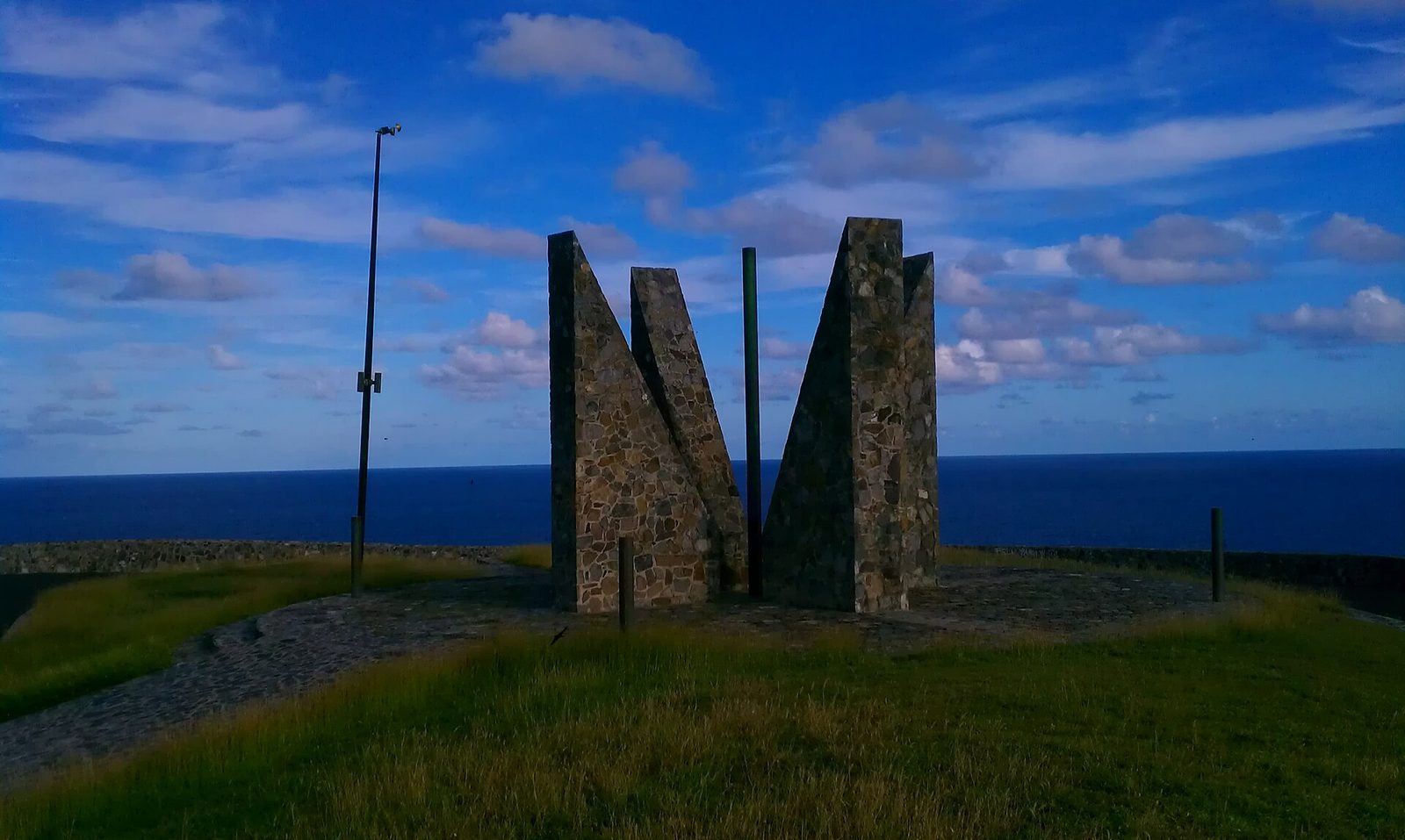
Even closer, the beach below the house comes with its own reef. Our private beach gives straight access into shallow water sheltered by reef, and you can snorkel just a few feet out, letting a masked child spot fish the very first morning with no boat needed. The beach faces east, so each sunrise climbs out of the sea right before the house.
For families comparing islands, that's the East End's advantage: reef and beach below the house, with Point Udall and the Buck Island boats each around ten minutes away. Each cove's parking, shade and snorkeling are listed in the East End beach guide we maintain.
The Cerulean, room by room
The Cerulean is the home we care for, and it was designed with groups in mind. Twelve guests fit in five bedrooms holding six beds, served by five bathrooms. The main house has four of the bedrooms; all four have their own bathroom, and three look out directly over the ocean, beneath a vaulted, beamed roofline, and the kitchen, dining and living area, all open plan, serves as the group's common room.
Some twenty steps over the garden path sits the guest cottage, a little house with its own bedroom, full bath, living room and kitchen, and a spiral staircase up to the loft, home to bed number six. No one rents the cottage on its own; it is part of every stay, so your group gets both buildings plus the pool and beach for the whole week.
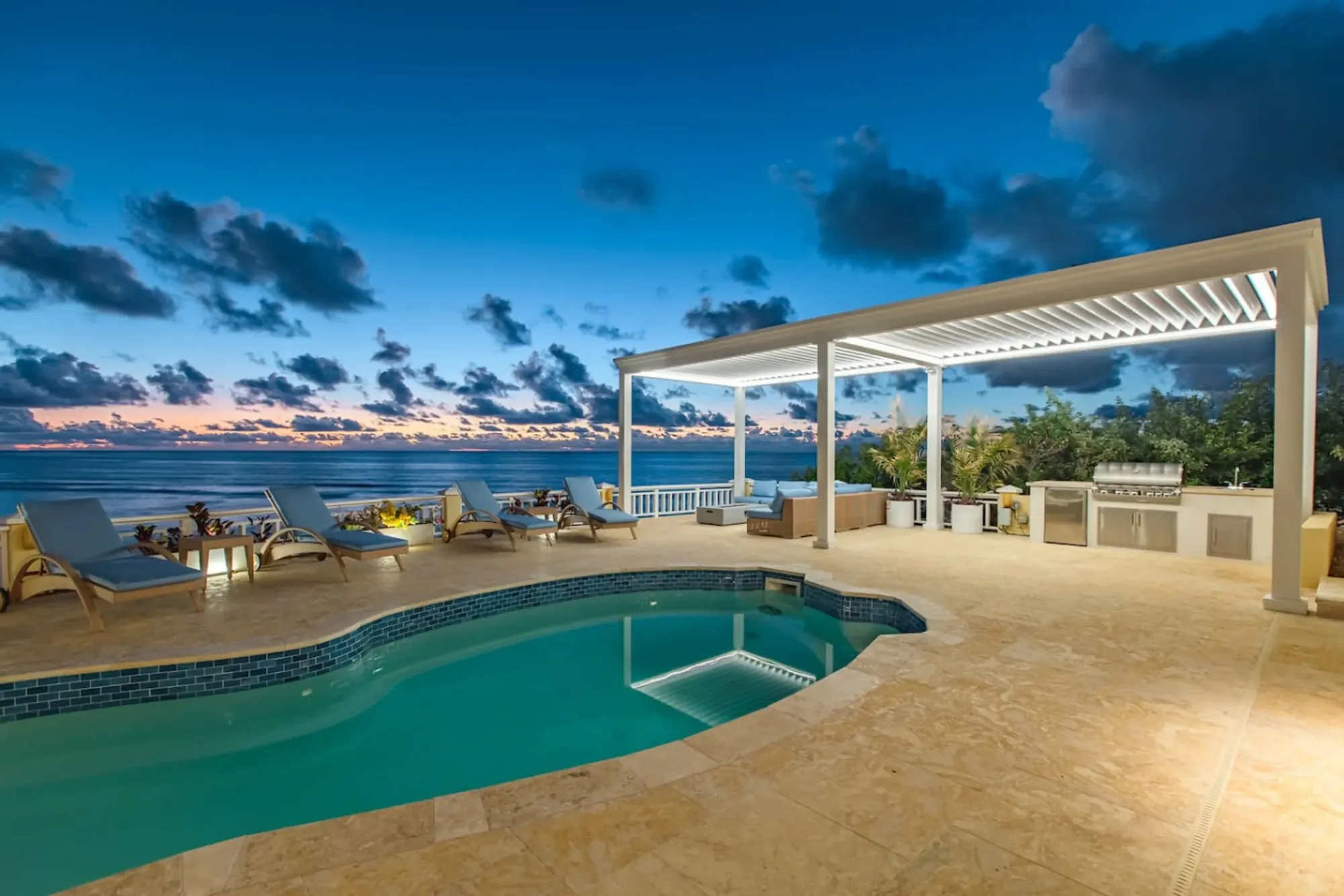
Outdoors, a broad travertine deck holds the private pool above the sea. Around it you'll find sun loungers, a fire pit, a covered pergola, a waterside drinks fridge and an outdoor kitchen, gas grill included. Steps go down to the beach. Air conditioning cools every room, ceiling fans turn overhead too, and the house adds fast Wi-Fi, laundry machines, and, for babies and toddlers, a high chair, baby gates and a travel crib.
The concierge handles what groups need: groceries stocked before arrival, a private chef for one night or all week, boat days to Buck Island, housekeeping, in-villa massage, and an airport pickup plus a car for the stay. When you arrive, the villa managers guide you on the drive in and then walk you through the whole house. See the concierge page for everything on offer.
An easy room plan: couples and parents in the main house; grandparents or one household in the cottage, with its own door and kitchen; teenagers in the loft, which they tend to claim first. Post the plan in the group chat once everyone agrees.
Crucian food and the villa kitchen
Each destination here has its own food, and St. Croix's goes by Crucian. It mixes West African roots with Danish-era trade goods, plus the cooking of Puerto Rican neighbors and of families who came from all over the Caribbean, and a week is a fine way to taste it. Kallaloo comes first: greens and okra cooked down into a thick stew and served on fungi, which is cornmeal worked with okra. Next come johnny cakes, little fried breads you want while they are still hot, and pates, fried pastries with conch, beef, saltfish or chicken inside. Roti, curry rolled in flatbread, is a Christiansted lunch favorite. To drink, try sorrel, a holiday hibiscus brew, or maubi, made from tree bark.
Our kitchen is made for a crowd: a big island, full-size range and oven, dishwasher, a farmhouse sink below a window facing the water, and an ice maker, plus enough dishes and place settings to serve twelve or more. A second full-size fridge sits in the cottage's own kitchen, while a built-in gas grill in the poolside outdoor kitchen handles fish as the sun goes down.
Two services make group meals easy. With provisioning, the concierge fills the kitchen before you arrive, so night one is a swim and supper instead of a grocery run. A private chef can handle a single celebration dinner or every evening, cooking indoors or over the grill outside. Request island dishes and the group eats Crucian without leaving the terrace.
A rhythm groups like: breakfast at home, lunch wherever the day leads, a couple of dinners the group cooks in shifts, one from the chef, and one long night out in Christiansted, a quarter hour's drive. Every dish has an entry in our Crucian food guide; for where to eat, use the restaurant directory, which covers the whole island.
Food can even swing the island decision. When a group cooks for itself, U.S. groceries, dollars and English-speaking shops keep things simple, and the Saturday farmers market brings local fruit, vegetables and fresh fish into the mix. Get there early, and confirm the location before driving over.
Planning the first week on the island
Here's an easygoing first week for a family or group landing on a winter Saturday: one outing per day and lots of downtime at the house. Shuffle the days around the weather and the boat schedule.
- Day 1Afternoon landing, collect the cars, 35 to 40 minutes east, then swim and eat on the deck
- Day 2Point Udall at dawn, then snorkel the reef below the house
- Day 3Boat to Buck Island from Green Cay Marina for the trail and Turtle Beach
- Day 4Hikers walk down to Isaac Bay while small children paddle in a calm cove
- Day 5Morning in Christiansted at the fort and boardwalk, then harbor lunch
- Day 6Frederiksted on the west end, and the bio bay that evening if the moon is dark
- Day 7Lazy pool day and a chef's dinner on the terrace
Nearly all of the week unfolds a few minutes from the house, which is why the clock and the flight weigh so heavily on picking an island. Night one is a swim instead of a jet-lag nap, and the final morning leaves time for one last look at the reef before heading to the airport. Going home, get to the airport roughly two hours ahead of departure for the brief agriculture and customs checks.
A few items to sort out before flying. Make sure every adult license shows the REAL ID star, or bring a passport. Photocopy the kids' birth certificates for a carry-on bag. Pack mineral sunscreen, because the Virgin Islands ban sunscreen containing oxybenzone, octinoxate or octocrylene. The rest is in our packing guide.
Before the group flies
8 itemsYour ticks stay in this browser only.
If you're still torn between Hawaii, the Keys, the Virgin Islands and Puerto Rico, four short questions settle it. Where is home, how long is the trip, how young are the kids, and how many are coming? For a family or group living east of the Rockies and planning a week, St. Croix answers all four nicely. Our Caribbean villa with no passport page shows the house at a glance, and the booking calendar lists the free weeks.
Questions people ask
What tropical places can I go to without a passport?
With a REAL ID license, U.S. citizens can fly to Hawaii, the Florida Keys, Puerto Rico (Vieques and Culebra included), the USVI's St. Thomas, St. Croix and St. John, Guam and the Northern Mariana Islands. Each is a U.S. state or territory, which makes the flight domestic. American Samoa is the exception, asking for a U.S. passport or a certified birth certificate and an onward ticket.
What Caribbean islands can I visit without a passport?
Two U.S. territories: Puerto Rico, with Culebra and Vieques offshore, plus the USVI, meaning St. Thomas, St. Croix and St. John. Citizens fly in on a REAL ID license, and travelers younger than 18 need no ID for the TSA. Every other island in the Caribbean, the British Virgin Islands and St. Maarten among them, requires a passport.
Is Hawaii or the Caribbean better for an East Coast family?
For a one-week trip from east of the Rockies, the Caribbean is usually simpler. In January Hawaii sits five hours behind New York while St. Croix is an hour ahead, and St. Croix's nonstops run roughly three to five hours from Newark, Atlanta, Charlotte, Miami and, on winter Saturdays, Chicago. Hawaii is better suited to West Coast families and to trips of ten days or longer.
Is a passport needed for Hawaii or the USVI?
No. Hawaii is a state, and the USVI belongs to the U.S. as a territory, so citizens board with a REAL ID license or another TSA-approved ID. Flying home from the Virgin Islands, agriculture and customs checks happen before you reach the gate, and carrying a photocopy of each kid's birth certificate keeps it smooth. Non-citizens follow standard U.S. entry rules.
Is a passport required for American Samoa?
USA.gov says entry takes a passport or else a certified American birth certificate. The Interior Department adds detail: a valid U.S. passport or a certified birth certificate that shows U.S. nationality, together with an onward ticket out of American Samoa or proof of a job there. Flying there still calls for each adult to carry REAL ID or a similar approved card. Rules change, so confirm before booking.
Can I cruise the Caribbean with no passport?
Often. Under CBP rules, citizens on a closed-loop sailing, out of and back into the same American port, can come home with two documents: a birth certificate and a photo ID from a government. The agency cautions that the countries on the itinerary may still require passports, and it recommends confirming your documents with the cruise line.
How warm is the ocean in January in Hawaii, Florida and the Virgin Islands?
NOAA's coastal water temperature guide gives January averages near 72.5°F at Key West, 77°F at Honolulu, 80°F at Charlotte Amalie on St. Thomas and 81°F at Christiansted Harbor on St. Croix. Culebra in Puerto Rico and Apra Harbor on Guam also read around 80 to 81°F, among the warmest January figures for the places covered here.
What is the closest tropical island to the U.S. without a passport?
You can drive to the Florida Keys from Miami on the Overseas Highway, since they belong to Florida. If you want to fly to an island, the nearest tropical options with no passport required are Puerto Rico and the USVI. American's Miami nonstop reaches St. Croix in roughly three hours, and Delta's from Atlanta takes close to three and three quarter hours.
Which time zone does St. Croix use?
Atlantic Standard Time, every month, with no clock changes. During winter the island runs sixty minutes past New York and two hours past Chicago and Dallas. In summer, after the mainland shifts to daylight time, St. Croix matches the East Coast clock, which makes the trip especially easy for East Coast families.
Sources
Read in November 2026. Park reservations, flight timetables and entry rules all change, so confirm with each official page ahead of booking.
- USA.gov — Travel to U.S. territories (passport rules)
- U.S. Department of the Interior, Office of Insular Affairs — American Samoa (entry requirements)
- American Samoa Visitors Bureau — Visitor entry requirements
- TSA — REAL ID
- TSA — Identification (accepted IDs, children under 18, TSA ConfirmID)
- U.S. Customs and Border Protection — Western Hemisphere Travel Initiative (closed-loop cruises)
- NOAA NCEI — Coastal Water Temperature Guide, all stations table
- Hawaii Tourism Authority — Frequently asked questions (islands, time zone)
- Hawaii Tourism Authority — Hawaii fact sheet
- Hawaii DBEDT — Visitor statistics news release for December and calendar year 2025 (Jan 29, 2026)
- Delta News Hub — Delta's largest Hawaii schedule (Feb 13, 2026)
- National Park Service — Haleakala National Park, sunrise reservations
- U.S. Census Bureau — 2020 Census apportionment, resident population table 2
- U.S. Census Bureau — 2020 population of U.S. Island Areas (Oct 2021)
- Visit Florida Keys — The Florida Keys and the Overseas Highway
- Visit Florida Keys — How to get here
- U.S. Fish and Wildlife Service — Culebra National Wildlife Refuge
- U.S. Fish and Wildlife Service — Vieques National Wildlife Refuge
- Guam Visitors Bureau — About Guam
- Code of Federal Regulations, 49 CFR 71.14 — Chamorro standard time zone
- Verizon — Domestic roaming FAQs (U.S., Puerto Rico, USVI)