St. Croix guides · Plan your trip26 min readUpdated Aug 2026
June through November on paper, late August through early October in practice. The odds, the history, the warning time, the insurance, and how to decide.
Every Caribbean rental site handles hurricane season the same way: a line about "the off-season" and a photo of a calm bay. Here is the version we would want if we were booking. The season runs June 1 to November 30. The risk is real but concentrated in the weeks either side of September 10. St. Croix has taken two direct hits in the last forty years, Hugo in 1989 and Maria in 2017, and most Septembers it takes none. This guide gives you the calendar, the history, the warning time, the insurance rules, the villa's actual policy, and a plain way to decide.
183 daysSeason length
Sep 10Statistical peak
7Average hurricanes per season
3Average major hurricanes
84 hNHC major-hurricane forecast lead on Maria
The season on paper and the season in practice
The official Atlantic hurricane season is June 1 through November 30, 183 days, and that date range is what most people mean when they say "hurricane season." It is a useful administrative box and a poor guide to risk. The National Hurricane Center's own climatology page puts it more precisely: "The peak of the Atlantic hurricane season is September 10, with most activity occurring between mid-August and mid-October." In the 1991–2020 record an average season across the whole basin, Texas to the Cape Verde islands, produced 14 named storms, 7 hurricanes and 3 major hurricanes.
The same page gives the typical arrival dates that matter for a St. Croix booking. The first named storm of a season usually forms in mid to late June. The first hurricane usually arrives in early to mid-August. The first major hurricane, Category 3 or stronger, usually forms in late August or early September. Read those three dates together and the shape of the season appears: a slow start, a steep climb through the second half of August, a crest around September 10, and a long slide through October into a November that is, statistically, nearly quiet.
That shape is why we keep saying "August 20 to October 10" rather than "June to November." It is a rough working window, not an official one, and storms have formed outside it, but it is where the great majority of the island's serious weather has come from: Hugo, Marilyn and Maria all came in September, and Omar, the exception, came in mid-October 2008 and still fell inside the window.
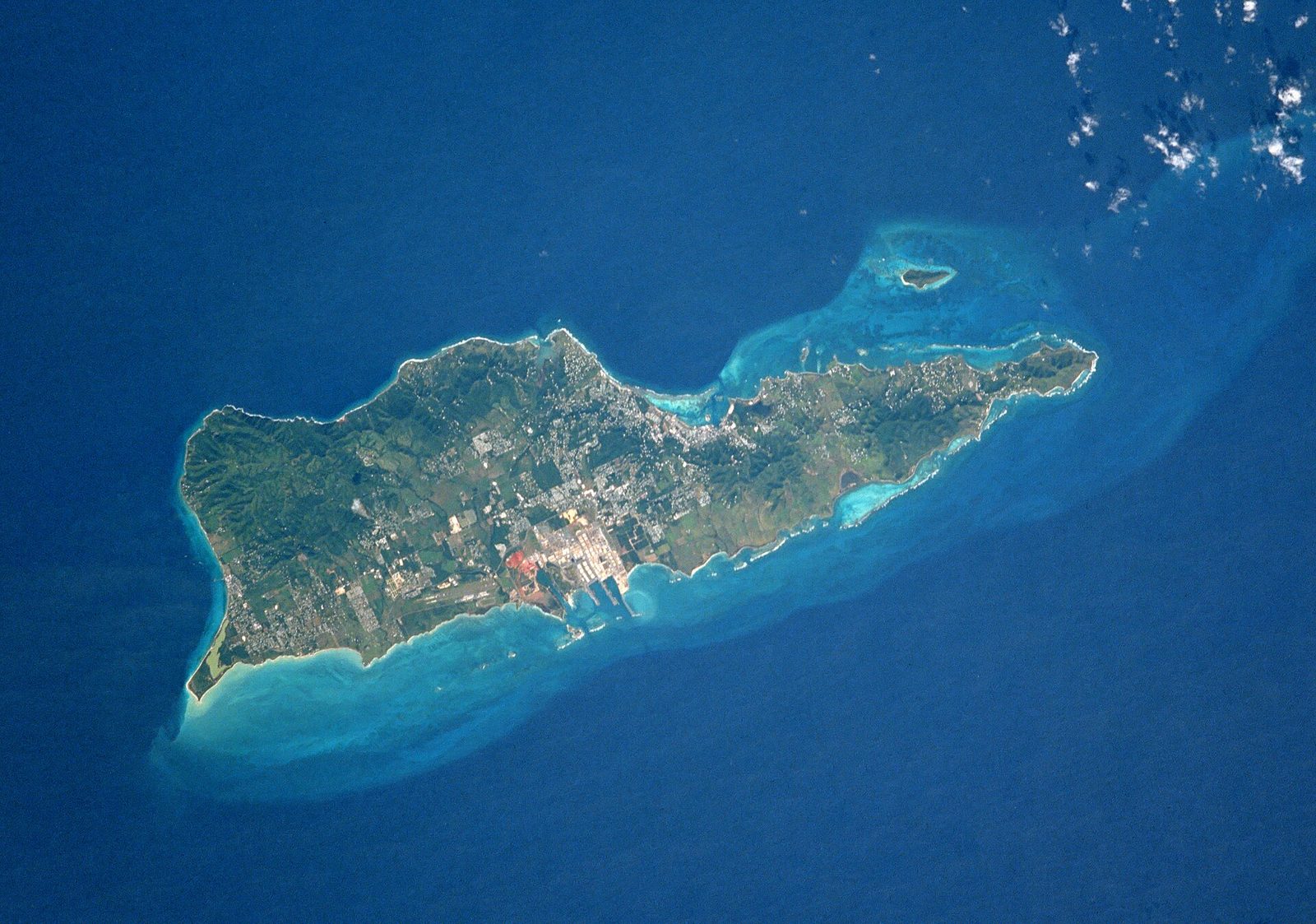
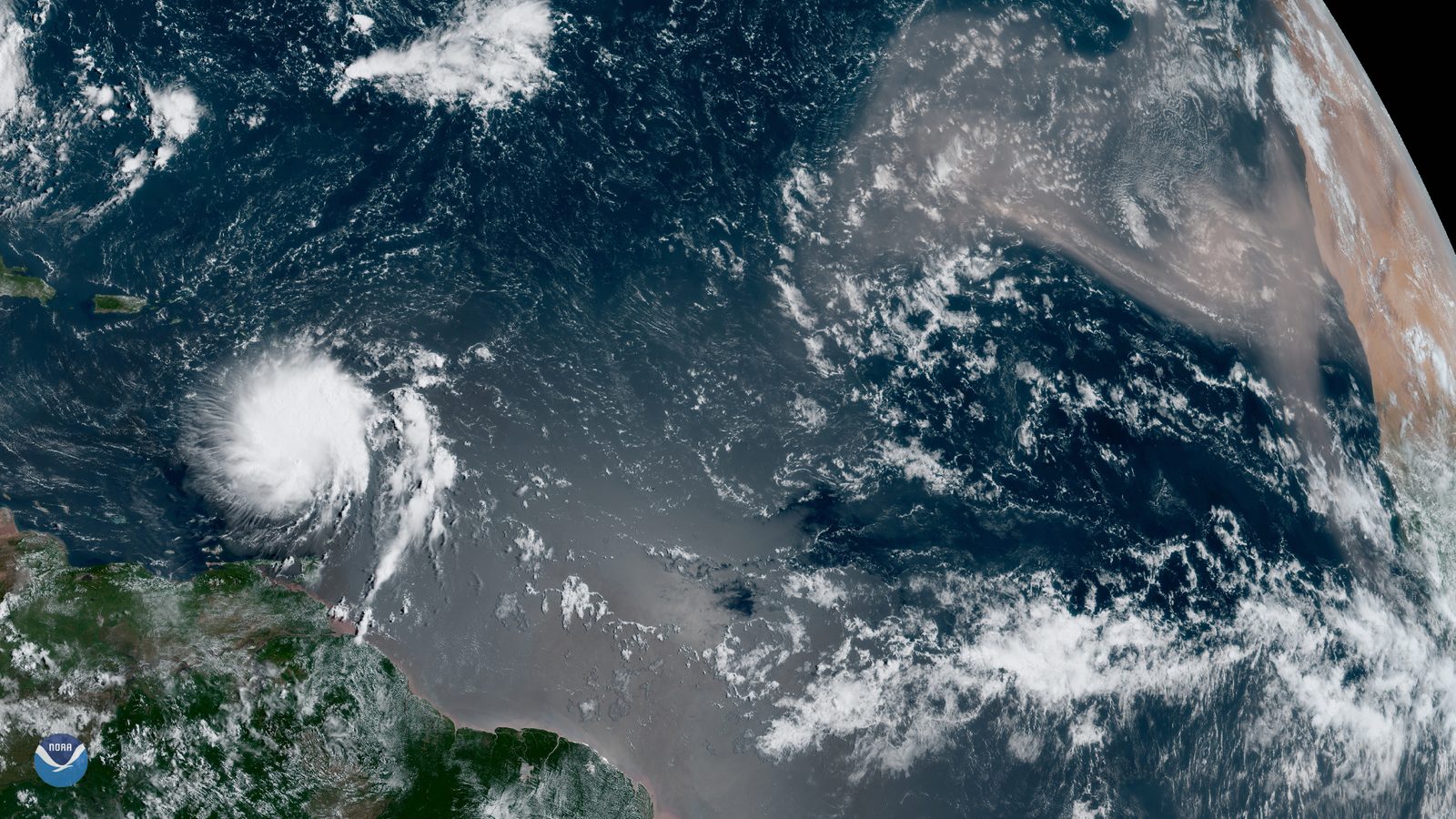
St. Croix seen from above in NASA and NOAA imagery. From June to November, this is the part of the map that forecasters and residents watch.Photo: NASA (Public domain)
How often St. Croix actually gets hit
Here is the number everyone wants and nobody states plainly. St. Croix sits at roughly 17.7 degrees north in the northeastern Caribbean, in the path of storms that cross the Atlantic from Africa in the heart of the season, and it has a long record of them. The most-quoted tally counts storms affecting the island since 1871: about 21 hurricanes passing within 60 miles, roughly one every seven years, and 9 direct hurricane hits, roughly one every seventeen years. Treat those figures as ballpark, and note what they include: "within 60 miles" counts a great many storms that gave St. Croix a windy day and a canceled boat trip and nothing else.
The counting also hides the clustering. Hurricanes come in active seasons and skip quiet ones, so "one every seven years" does not mean a seven-year rhythm. The island went from Hugo in 1989 to Marilyn in 1995 to a run of near passes in the late 1990s, then a long stretch of glancing blows and none of the worst kind until 2017, when two came in two weeks. That is the pattern to expect: long quiet, then a bad year.
Now do the arithmetic per week rather than per decade. Even inside the peak, the number of weeks in a given year when a hurricane actually affects St. Croix is usually zero, and when it is not zero it is usually one. The odds that your particular week is the one are low in most years, never nothing, and fall fast on either side of the crest. That is the honest picture: a small, real, insurable risk with a lot of warning attached.
One more thing about the geography. St. Croix lies some 30 to 40 miles south of St. Thomas and St. John, and the difference has mattered: Irma's core crossed the northern islands in 2017 and largely missed St. Croix; Maria's core passed south of St. Croix two weeks later and largely spared them; Marilyn's eyewall in 1995 crossed St. Thomas, not St. Croix. The islands share a forecast and often have different storms. What happens "in the Virgin Islands" on the news is not always what happens on the East End.
June and July: the quiet stretch
June and July are inside the official season and outside its real one. In the historical record they carry the lowest storm odds of the six months, the first named storm of a season typically shows up only in the second half of June, and the first hurricane of a season, on average, waits until August. Locals treat early summer as summer, not storm season, and it is the stretch we would send friends to for the island at its warmest and cheapest with the least weather anxiety.
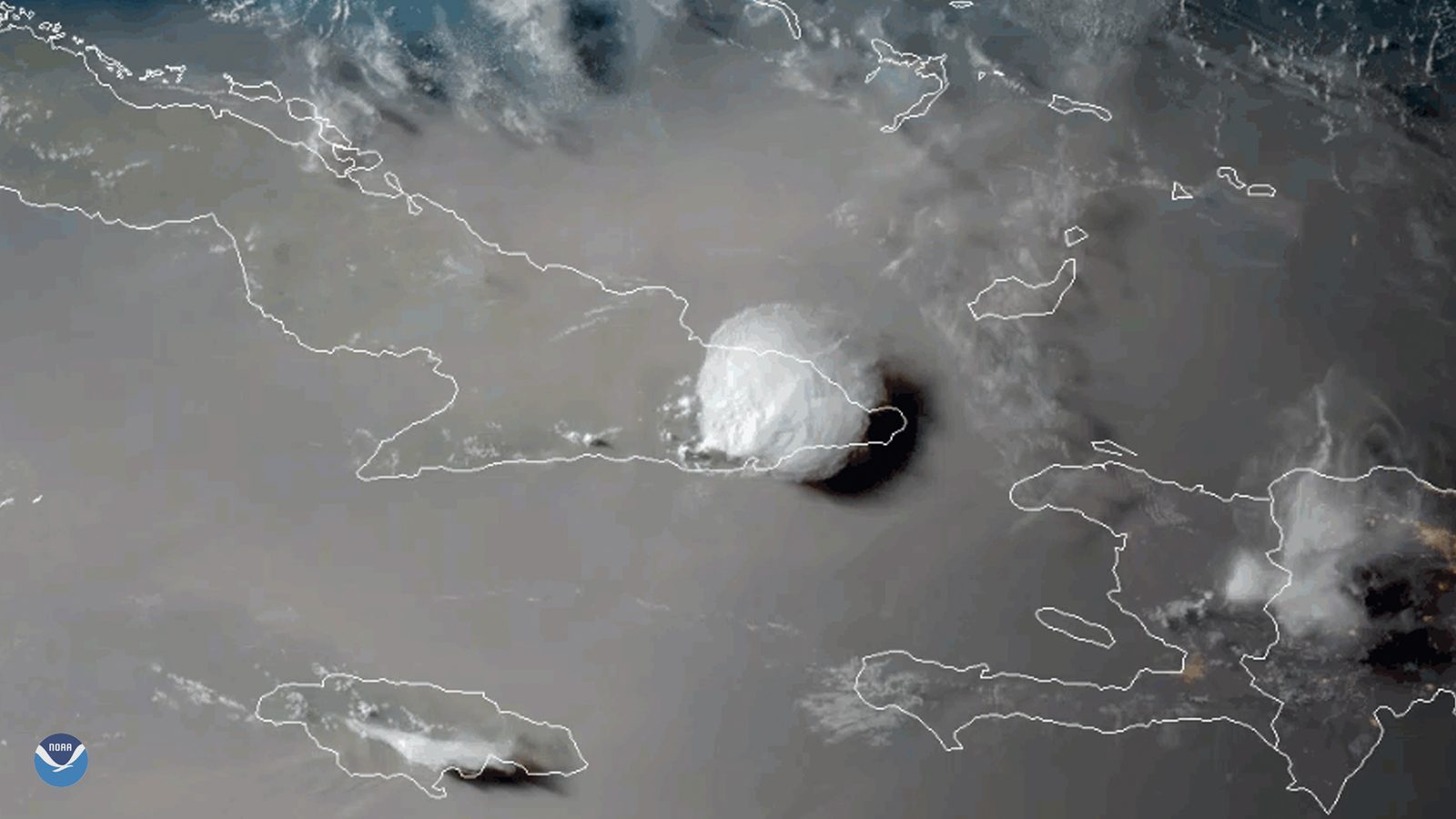
The reason is partly the calendar and partly the air. From mid-June into August, plumes of dry, dusty air blow off the Sahara and cross the Atlantic. NOAA calls it the Saharan Air Layer, and its satellite team's own description is that this "dry and sometimes dust-laden layer of the troposphere" "often stabilizes the environment around tropical systems." In plain terms, when the dust is thick, storms have a harder time getting going. On the ground it looks like a white, hazy sky, softer horizons and orange-gold sunsets, and on the worst days it bothers people with asthma. Our weather guide has the month-by-month version.
What early summer feels like from the villa: the trade wind is at its steadiest, since June through August is the breezier part of the year, so mornings are the still hours, and first light is when the water inside the reef off the private beach is easiest for children and nervous swimmers. Afternoons are hot, high 80s at the airport, and mornings are the good hours for everything. Mangoes are in season, and the botanical garden's Mango Melee lands in July. The two summer trade-offs are heat and sargassum, the drifting brown seaweed that piles up on windward, east- and south-facing shores some mornings and is gone the next; the best-time guide covers both.
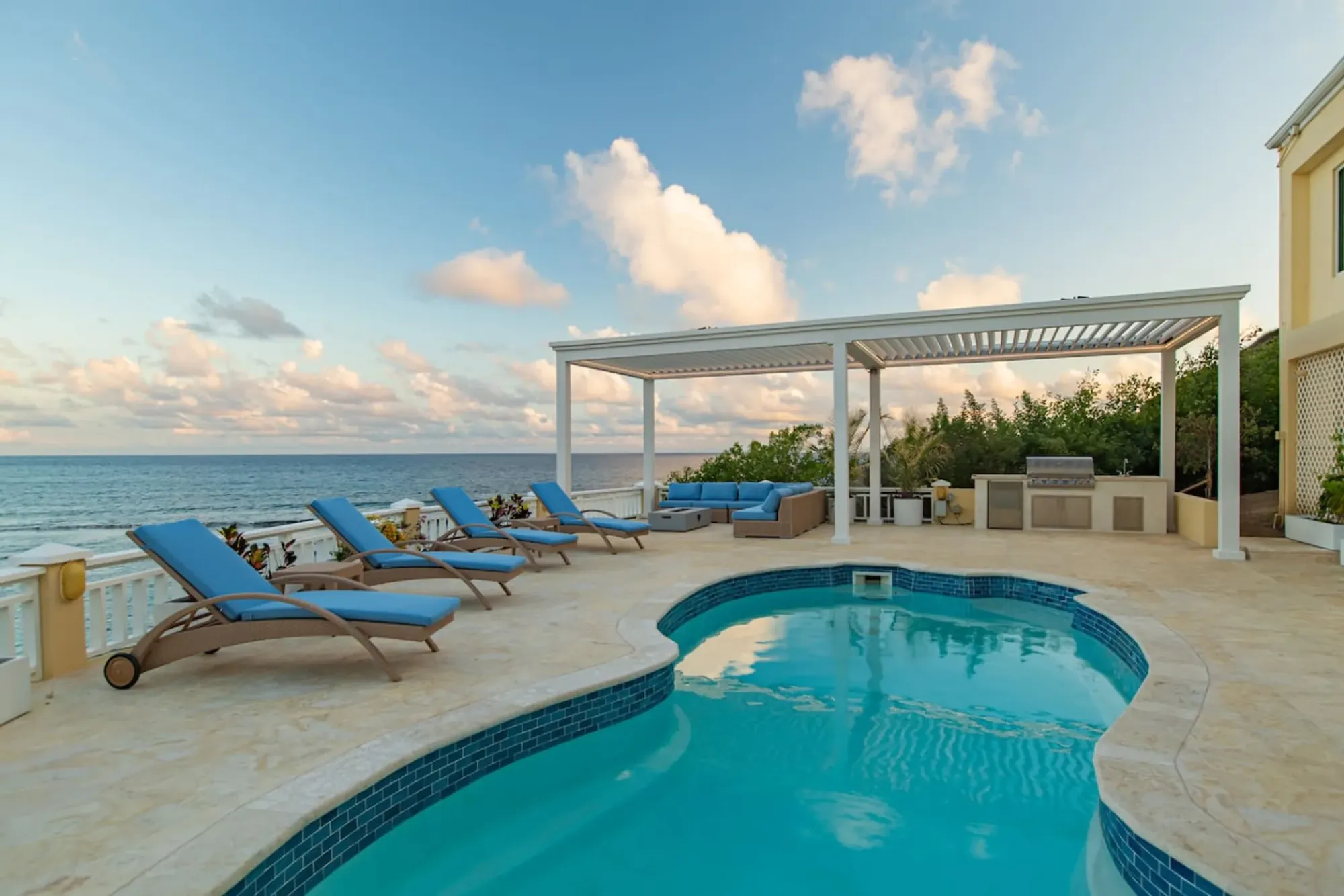
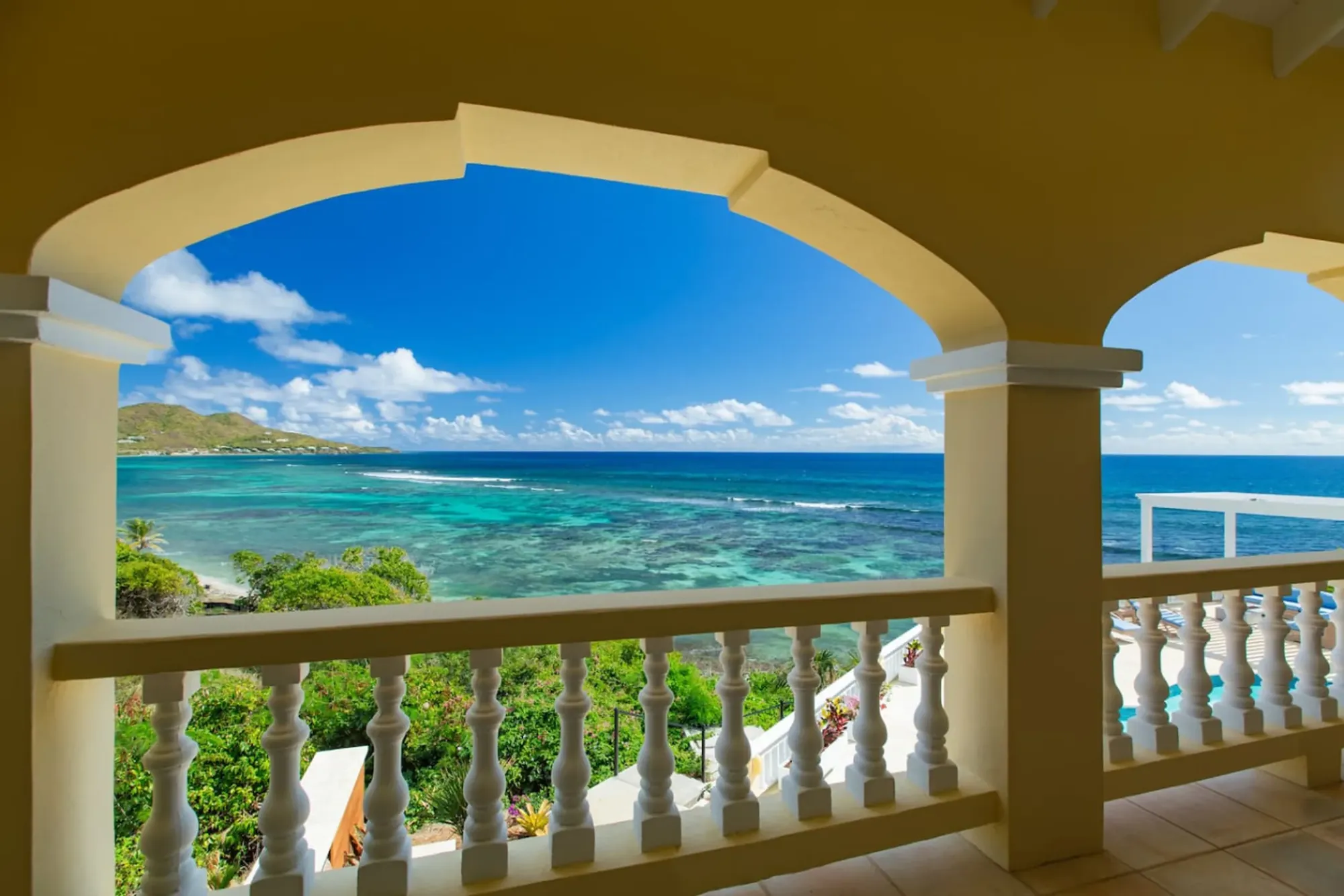
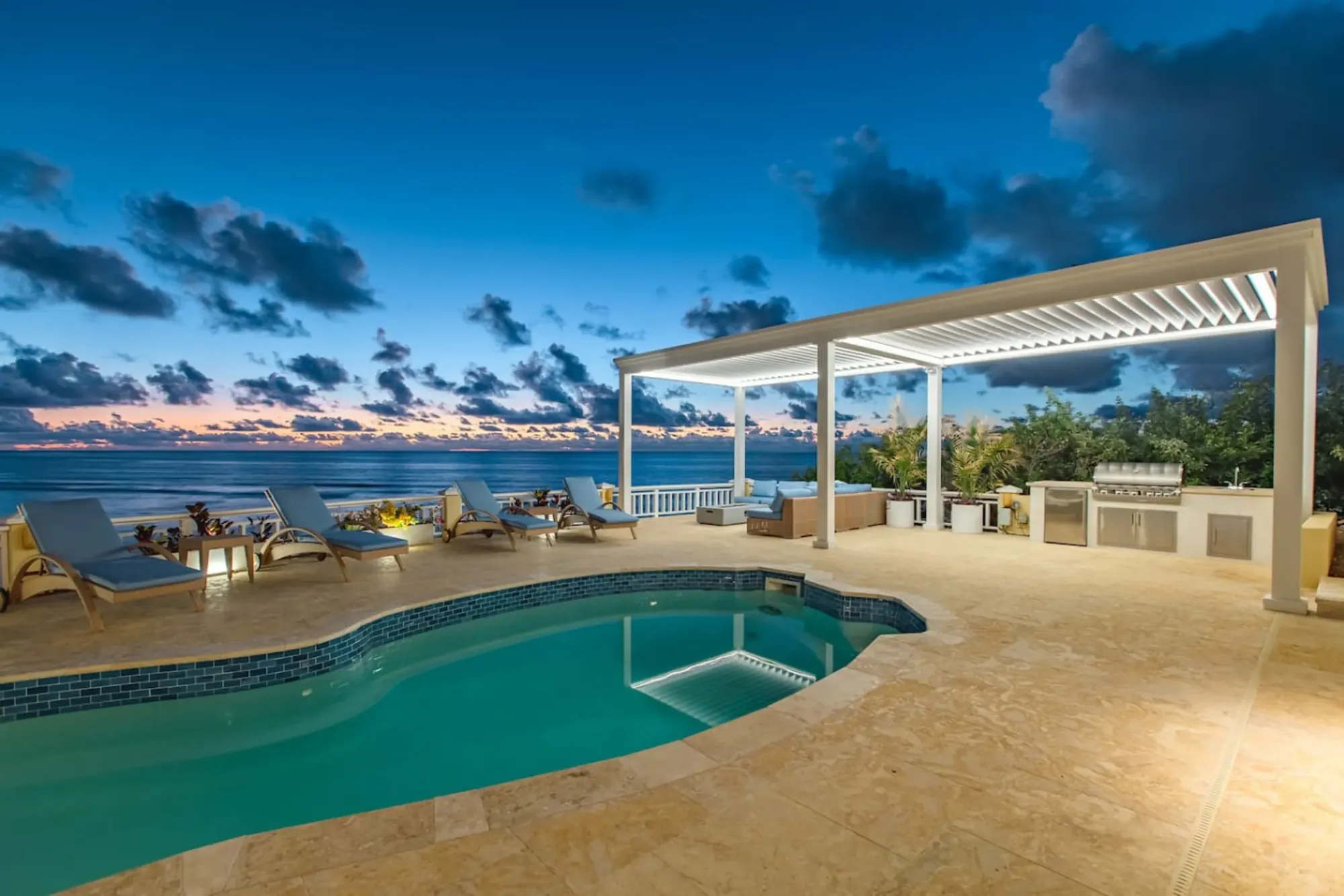
The pool deck sits above the villa's own beach and the reef guests snorkel from the steps. In every month, mornings are the still hours.Photo: The Cerulean
Late August to early October: where the risk lives
This is the window the rest of the guide is really about. From roughly August 20 to October 10 the season is at full strength: the Saharan dust fades in the second half of August, the Atlantic is at its warmest, and the long-track storms that form off Africa, the Cape Verde type, have the whole ocean to organize before they reach the islands. September 10, the NHC's statistical peak, sits at the window's center.
What a typical week in this window feels like on St. Croix is important to say plainly, because the word "peak" makes people picture gray skies. Most days are hot, bright and humid, with a shower or a squall that arrives, dumps rain for twenty minutes and moves on. The sea is at its warmest of the year. Beaches are the emptiest they will be. Some restaurants keep shorter hours or close for a few weeks, so call before driving across the island for a Tuesday lunch. This is also the wettest stretch, September through November, so a rainy-day plan is not optional; ours is in the rainy-day guide.
What a bad week looks like is what the history sections below describe, and they are worth reading for a reason that has nothing to do with fear: they show how much time there was. Nobody on the island was surprised by Maria's arrival. They were surprised, afterward, by how long the lights stayed off.
The table below is our month-by-month read of the season, built from the NHC's climatology and the island's record. The "our take" column is opinion; "odds" means the shape of the historical curve, not a percentage for your dates.
Month
Climatology and record
What it usually feels like
Our take
June
Season opens Jun 1. First named storm typically mid to late June, usually elsewhere in the basin. Lowest odds of the six months in the historical record.
Hot, sea warming into the low 80s, first Saharan dust and sargassum, brief showers.
Book it. Insure it out of habit, not worry.
July
Still low on the curve. Dust plumes peak late June to mid-August and tend to hold storms down.
Hazy white skies some days, calm mornings, mango season, hottest afternoons of the year.
Book it. Best value on the island for a family in school holidays.
August 1 to 20
The climb begins. First hurricane of an average season forms in early to mid-August, usually far east.
Hot, humid, the odd gray day. Beaches emptying out.
Fine, with insurance bought when you book and a loose itinerary.
August 20 to 31
Inside the peak window. First major hurricane of an average season forms late August or early September.
Same weather most days. Watch the outlook from a week out.
Go in with eyes open. Read the cancellation policy and ask about storms.
September
Peak of the season on Sep 10. Hugo (1989), Marilyn (1995) and Maria (2017) all came in September.
Hot, wet in bursts, warmest sea of the year, emptiest beaches, some restaurants closed.
Lowest rates for a reason. Insure, stay flexible, know the exit.
October
Still high through about the 10th, then falling. Omar came Oct 15 to 16, 2008. Often the wettest month.
Green hills, more rain days than any other month, then clearing toward the end.
Early October is September. Late October is a good bet.
November
Odds fall fast. Wet season tapering, trade winds settling in.
A few rainy days, then the winter pattern arrives.
A quiet, well-priced shoulder month. Thanksgiving week is popular for a reason.
Hugo, September 1989
Ask anyone who has lived on St. Croix for a while and they will date things "before Hugo" and "after Hugo." Hurricane Hugo formed on September 10, 1989, reached a peak of 160 mph on the 15th, and came at the Virgin Islands as a Category 4. Its eye passed over St. Croix at 06:00 UTC on September 18, 2 in the morning local time, which is why islanders remember it as the night of the 17th. Sustained winds at the time were estimated at 140 mph. Navy workboats in the area recorded peak gusts of 161 and 168 mph, numbers still quoted here as the local benchmark for what a storm can do.
The damage was close to total. More than 90 percent of buildings on the island were damaged; one account puts 70 percent destroyed and as many as 75 percent of homes without roofs. Coastal water levels ran 3 to 4 feet above normal tides, with higher surge in places. Three people were killed on St. Croix and about 3,500 were left homeless. Property damage in the territory exceeded $500 million in 1989 dollars. Power took about three months to restore across most of the island. Telephone service was slower still: businesses got limited service back in December, and some homes had no phone until March 1990.
What made Hugo different from other Caribbean hurricanes was what happened in the days after. Looting broke out on St. Croix, the governor asked for federal help, and President George H. W. Bush sent roughly 1,100 troops, mostly military police, along with federal marshals and FBI agents. The first contingent arrived on the morning of September 21 under the name Operation Hawkeye; by the accounts we read, it was the first deployment of American troops for a domestic civil disturbance since the 1968 Baltimore riot. The Navy's USS Pensacola came in with relief, and military police patrolled for about two months under a curfew. Roughly 10 percent of the island's population did not return within a year.
We tell that story in full because it is the worst thing that has happened here in living memory, and because it explains the island you visit: why "post-Hugo" is a phrase, why people who were children in 1989 keep water and a radio in the house every August. It is also 37 years ago, and the island rebuilt. It is history worth knowing, not a forecast.
168 mphHugo peak gust measured
90 percentBuildings damaged
3,500Left homeless
3Months to restore power
1,100Troops sent
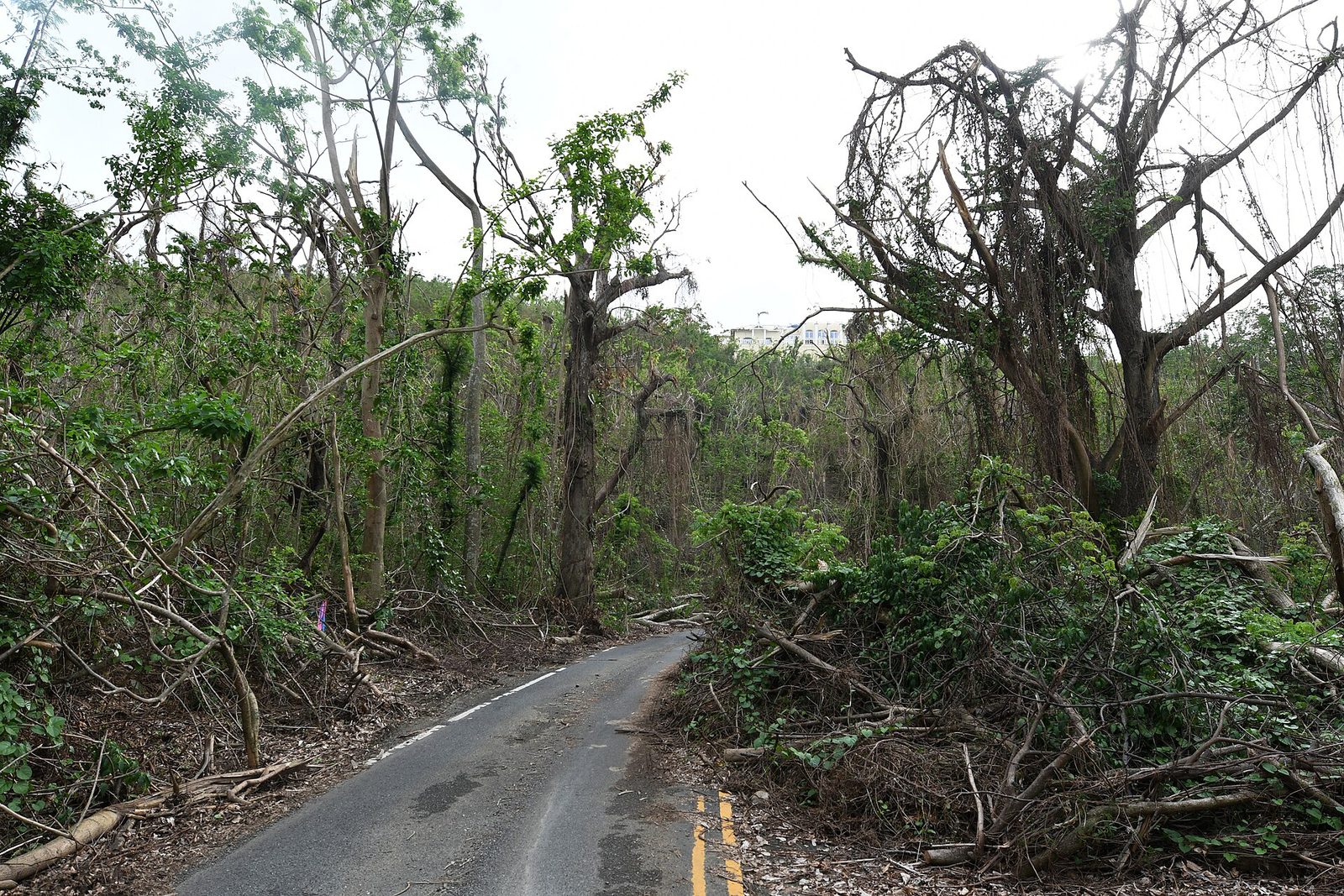
Relief work in the U.S. Virgin Islands after a major hurricane. The federal response, from FEMA to the National Guard to the Navy, has followed every big storm here, in 1989 and again in 2017.Photo: Jocelyn Augustino (Public domain)
Marilyn and Omar: the storms in between
Hurricane Marilyn came six years after Hugo, on September 15 and 16, 1995, and it is remembered mostly on St. Thomas, where its eyewall crossed overnight and, by the usual accounts, damaged or destroyed about 80 percent of homes and businesses. It reached the islands as a strong Category 2 with winds around 110 mph, ten days after Hurricane Luis, a more powerful Category 4, had gone by. St. Croix was on the storm's edge rather than under its eye: reports put winds around 100 mph on the island and damage in the hundreds of millions, and early news accounts counted two of the storm's deaths in the territory here. If you want the difference between "hit" and "brushed" in one storm, Marilyn is it: the same night, two islands, two very different mornings.
Hurricane Omar, in October 2008, is the odd one out in every way. It formed in the eastern Caribbean on October 13 and moved the wrong direction, southwest to northeast, passing close to St. Croix and reaching its peak of 130 mph early on October 16 as it went by. Because the storm's core stayed offshore, St. Croix's measured winds were modest by hurricane standards, sustained around 53 mph with gusts to 72, but the sea was not. Waves reported up to 15 feet sank about 47 boats around the island, and around 7 inches of rain fell in 24 hours. Territory-wide damage was in the low millions, and more than 100 power poles came down.
Omar is worth knowing for two lessons. First, "not a direct hit" is not "nothing": a hurricane passing offshore can put a season's worth of swell into a harbor and take the boats with it, which is why a Buck Island day can be canceled under a blue sky. Second, the season's tail is real: mid-October storms happen, and our "August 20 to October 10" window is a working guide, not a wall.
Between and after those two came the storms that mostly missed: Georges in 1998 and Lenny in 1999 both affected the territory without repeating Hugo, and the years since have brought the ordinary weather of a Caribbean season. From the East End those look the same every time: a name on the map, a day or two of watching, a few hours of wind and rain, then leaves to sweep off the pool deck. That is what "hurricane season" mostly consists of.
Aug 31, 1772A hurricane strikes St. Croix. A teenage clerk named Alexander Hamilton writes it up in a letter that gets him sent to America
1928The San Felipe hurricane, a Category 5, reportedly passes just south of the island
Sep 17–18, 1989Hurricane Hugo, Category 4, eye over St. Croix at 2 am. More than 90 percent of buildings damaged
Sep 21, 1989Federal troops land under Operation Hawkeye after looting
Sep 15–16, 1995Hurricane Marilyn, a strong Category 2, brushes St. Croix and crosses St. Thomas
Oct 15–16, 2008Hurricane Omar passes close on an unusual southwest-to-northeast track, sinking about 47 boats
Sep 6, 2017Hurricane Irma, Category 5, crosses St. Thomas and St. John. St. Croix is largely spared
Sep 19–20, 2017Hurricane Maria's outer eyewall crosses St. Croix at Category 5 intensity
The Cerulean
Plan it from the villa.
Five bedrooms, a private swimmable beach, and all of this within a day trip.
September 2017: Irma passes north, Maria's eyewall crosses
The 2017 season is the one every current resident carries, and it came in two parts. On September 6, Hurricane Irma, a Category 5, crossed St. Thomas and St. John and did catastrophic damage there. St. Croix, some 30-odd miles south of the core, had a strange day: contemporary reports describe most of the island as quiet, with some wind, very little rain, and residents waiting in shelters and homes to hear how the northern islands had fared. Within days St. Croix's airport, Henry E. Rohlsen, was open again for commercial flights. For about two weeks it looked as if the big island had been spared the year.
Then Maria. The National Hurricane Center began briefing emergency managers on September 14, when Maria was still a tropical wave in the central Atlantic. It struck Dominica as a Category 5 around 1 am UTC on September 19 and crossed into the northeastern Caribbean. Its peak intensity, 150 knots (about 175 mph) and a central pressure of 908 millibars, came around 3 am UTC on September 20, roughly 11 pm local time on the 19th, "while centered about 25 n mi south of St. Croix." The storm was replacing its eyewall at that moment, its eye growing from about 9 nautical miles across to about 28, and St. Croix, in the NHC's words, was "the most severely affected" of the U.S. Virgin Islands, "having experienced the northern portion of the outer eyewall."
The numbers from the island's instruments: a station on the west end recorded sustained winds of 93 knots, about 107 mph, with a gust to 119 knots, about 137 mph, a little after 2 am local time. The Christiansted Harbor sensor recorded 43 knots sustained and a 65-knot gust, a reminder of how much a few miles and the shape of an island change what a storm delivers. A tide gauge at Lime Tree Bay on the south shore reached 2.8 feet above mean higher high water before it went offline; simulations suggest 3 to 5 feet of inundation on parts of the island; stations across the territory measured 10 to 20 inches of rain. The report's damage summary for St. Croix is plain: wind damage across the entire island, fallen trees, roof damage, "complete destruction of many wooden houses," and flooding and mudslides. Frederiksted and the southern shore, other accounts say, took the worst of it; the hospital lost part of its roof and flooded but kept operating.
The aftermath was long. Two deaths in the territory were recorded on St. Thomas, one drowning and one mudslide, with a third from a heart attack in other accounts; that the toll on St. Croix was so low, under a Category 5 eyewall, is the building stock and the warning time at work. Power took months, and some accounts put it at close to a year before most residents had it back. Maria went on to Puerto Rico as a Category 4, and NOAA's damage estimate for Puerto Rico and the U.S. Virgin Islands together, $90 billion, made it the third-costliest hurricane in United States history. The relief photos in this guide come from those weeks in 2017 and from Hugo's aftermath in 1989; we use them sparingly, because they are what the season's worst looks like here, so that the rest of this guide can be honest about how rare that is.
How much warning you get, and what "a system in the Atlantic" means
The single most useful fact about modern hurricanes is that they do not arrive unannounced. Forecasting has turned the season from a thing that happened to you into a thing you watch coming for the better part of a week. Maria is the clearest recent example on this island. The NHC was briefing emergency managers on September 14, five days before the eyewall reached St. Croix. From its second official forecast onward, every NHC forecast called for Maria to be a major hurricane by the time it reached Puerto Rico, which the report notes was "a remarkable 84 h of lead time." A hurricane warning went up a little over 34 hours before the Dominica landfall and a little over 37 hours before the Puerto Rico landfall.
The NHC's routine, as of 2026, works like this. Its tropical weather outlooks flag areas of interest with a percentage chance of forming into a storm over the next two days and the next seven. When a system organizes, advisories start every six hours with a forecast track and the familiar cone, which shows where the center is likely to go, not how wide the storm is. Watches and warnings for the Virgin Islands come from the NHC with the National Weather Service office in San Juan; a hurricane watch means hurricane conditions are possible within roughly two days, a warning that they are expected within roughly a day and a half. Airlines move in step: when a storm threatens, the carriers flying to St. Croix, American from Miami year-round and the seasonal nonstops listed in Getting Here, typically post travel alerts a few days out that waive change fees, and they pull the last flights before the airport closes. Watch the airline's alerts page as well as the weather; the waiver is what lets you leave early at no cost.
Now the phrase that turns up in every August group chat: "there's a system in the Atlantic." It sounds like a verdict. It is closer to a weather forecast for a place two thousand miles from the villa. In the heart of the season, tropical waves leave the African coast every few days and the NHC watches each one. Most never become anything; a minority get names; a minority of those become hurricanes, and only some of those track toward the northeastern Caribbean at all. A wave with a 20 percent seven-day formation chance is background noise. A system at 70 or 90 percent with a projected track through the Lesser Antilles is worth a daily look. Once a storm has a name and a cone, the questions get concrete: is the cone over the Virgin Islands, how strong is the forecast at that point, and when would conditions arrive?
The Saharan dust of early summer tilts all of this in a helpful direction: when the layer is thick over the Atlantic, the waves crossing under it struggle to organize, which is why a "system" in early July worries meteorologists less than the same wave in early September, when the dust has thinned and the sea is warmest. The habit that serves you best is a five-minute routine, not a running anxiety: look at the outlook map once a day from a week out, accept that the decision to change plans usually has to be made while the storm is still a probability, and treat a named storm with the islands inside its cone as the signal to call the villa manager and the airline. Then go to the beach.
A satellite view of Saharan dust crossing the Atlantic. NOAA tracks this dry, dusty layer through midsummer because, when it is thick, it tends to hold tropical systems down.Photo: NOAA Satellites (Public domain)
Travel insurance, plainly
Buy travel insurance for any trip inside the season, and buy it the day you book. That is the whole rule, and the reason is a single word: "named." Standard trip-cancellation policies cover hurricane disruption only for storms that did not yet exist when you bought the policy. Once the National Hurricane Center gives a system a name, which happens when it reaches tropical-storm strength, sustained winds of 39 mph, insurers treat it as a known event and exclude it from new policies. Every insurance site we read says the same: a policy bought after the storm is named will not pay for that storm.
What a standard policy covers varies by insurer, so read the certificate rather than the marketing page. Common triggers for a hurricane claim include your destination being made uninhabitable, a mandatory evacuation, or your flights being canceled or delayed beyond a set number of hours; a forecast alone, or your own nervousness, is generally not a trigger. Trip interruption, if you have to leave early, and travel delay, if you are stuck, are usually part of the same policy, which also covers a broken wrist on the reef or a canceled connection in Charlotte, far more likely uses.
If you want the freedom to cancel because a forecast worries you, the product is a Cancel For Any Reason upgrade, usually shortened to CFAR. The general terms, as the major comparison sites describe them as of 2026: you must add it within 14 to 21 days of your first trip deposit, it typically reimburses 50 to 75 percent of prepaid, nonrefundable costs, and you must cancel at least 48 hours before departure. It costs more than a standard policy. For a peak-September week at a villa this size, it turns "should we go" from a bet into a decision you can change your mind about.
The villa's cancellation policy, and what to ask Sterling Point
Here is what The Cerulean's listing terms say, as of 2026, and nothing more: cancellations made more than 60 days before arrival receive a full refund, and cancellations made more than 30 days before arrival receive a 50 percent refund. Inside 30 days, the listing's own terms apply; read them when you book. Check-in is 4 pm, checkout is 10 am, and bookings run through Sterling Point Real Estate, the company that manages the property. Those are the terms we can verify. We are not going to describe a hurricane clause, because we have not seen one written down, and a rental guide that invents refund policy is worse than useless.
What we will do is tell you what to ask, because Sterling Point can answer and we cannot. Ask what happens if a hurricane warning is issued for St. Croix during your dates; if the airport closes and you cannot get in; if you choose to leave early ahead of a storm. Ask whether they will move your dates, and on what terms. Ask how they communicate during a storm threat, and what the house's own storm preparation looks like: shutters, water supply, backup power, and who secures the property if guests leave. Get the answers in writing, and read them next to your insurance certificate so you know which one covers which gap.
The 60-day and 30-day marks are the useful ones for planning. If you book a September week in March, you have until roughly early July, well before any storm exists, to cancel for a full refund, and until roughly early August for half. Those windows close before the peak opens, which is exactly why insurance is the tool for the last month and the villa's policy is the tool for the months before it. Put the two dates in your calendar when you book.
The contact page reaches Sterling Point for general questions, and the booking itself runs through their engine. If you are booking inside the season, say so in your first message and ask the storm question up front. In our experience, and this is opinion, managers who have lived through a season answer it quickly and specifically, and the answer tells you a great deal about how the house is run.
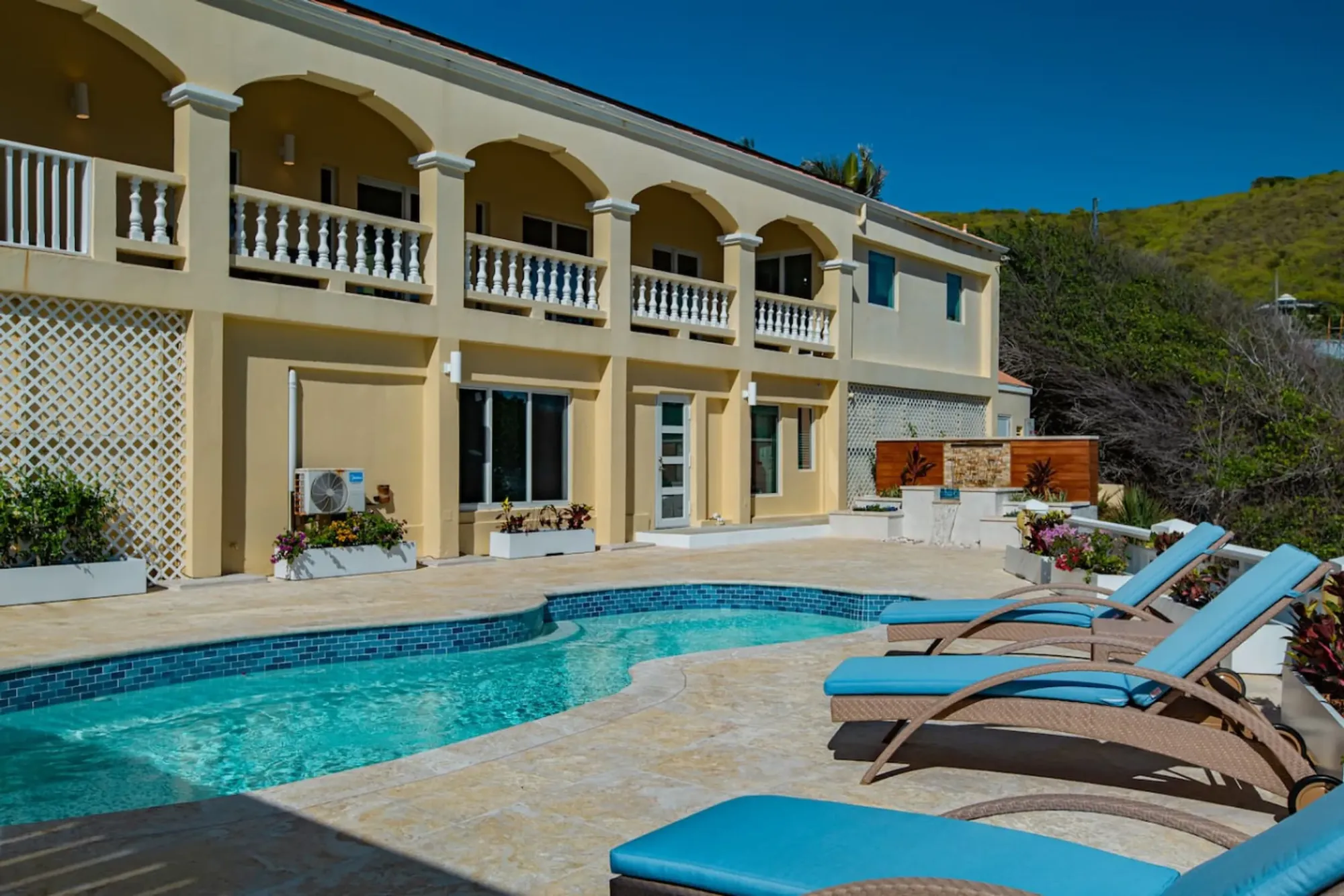
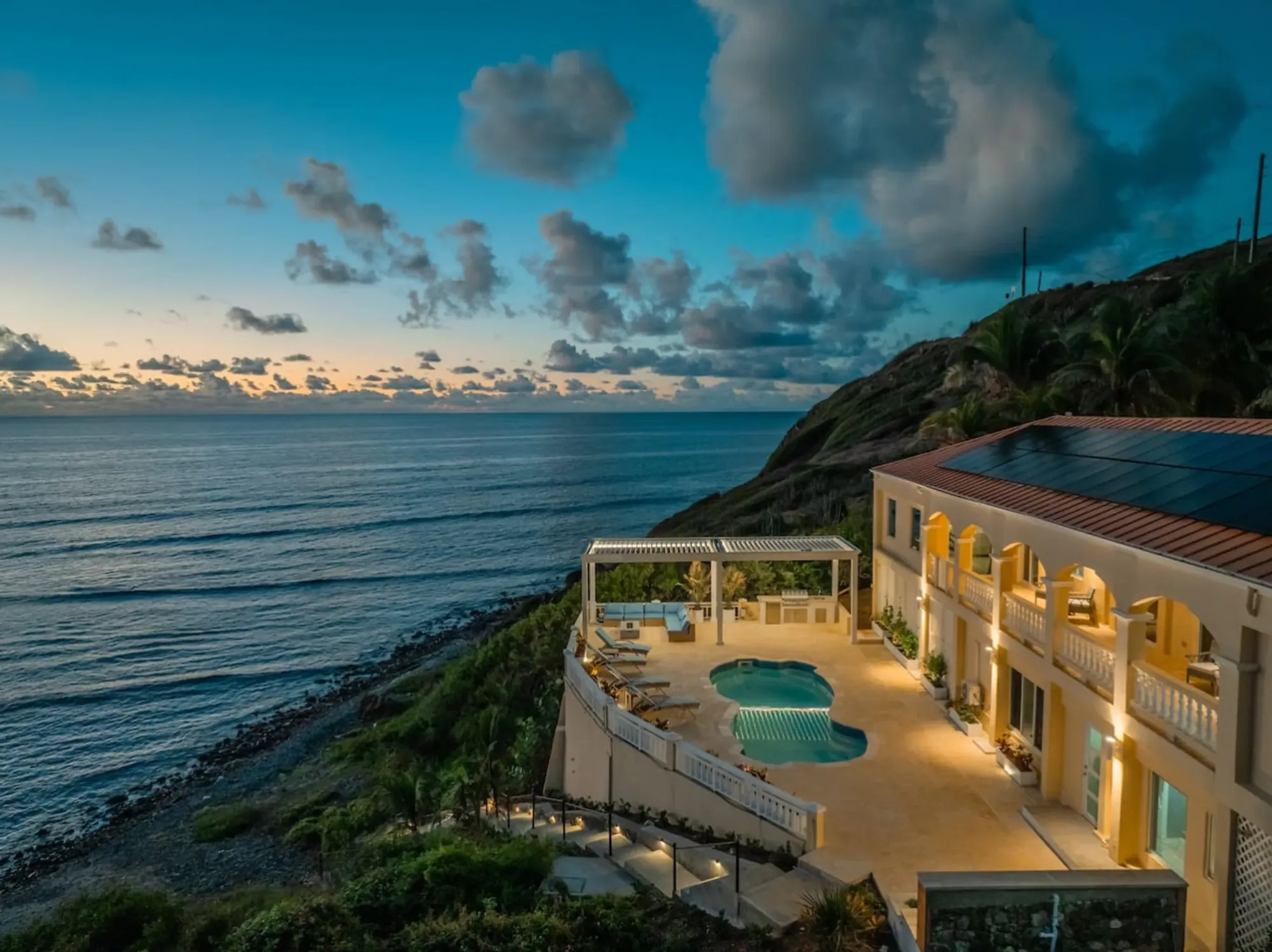
The Cerulean's main house and pool. Sterling Point Real Estate manages and books the property; ask them directly how they handle a named storm during your dates.Photo: The Cerulean
Houses, roofs and the lessons since Hugo
Hurricane damage on St. Croix has always sorted buildings by how they were built. The NHC's Maria report singles out "complete destruction of many wooden houses" on the island alongside roof damage elsewhere; the Hugo record puts three-quarters of homes without roofs. What "post-Hugo" means when a Crucian uses it about a building is that a house intended to be lived in through a season is built and roofed for wind, shuttered, and supplied with its own water and, often, its own power. Ask about a house's age and you will often be told whether it was built, or rebuilt, after 1989.
What we can say about The Cerulean is only what our own facts support. The house has been completely renovated; that is a guest's description from March 2026, quoted below. It is a main house of four bedrooms with a separate guest cottage, on the East End above its own beach, with a gated drive. It is not "hurricane-proof," and no house on this island is, and we would not trust anyone who told you theirs was. What matters in a storm is preparation and the decision to leave or stay, which is the next section, not a word on a website.
The location deserves one honest sentence. An oceanfront villa is oceanfront in every kind of weather: on an ordinary September day that means the sound of the reef and a sunrise from the veranda; in a hurricane it means the sea is close, and surge and waves are part of the picture along with wind. Maria's report notes wave and surge damage along the south coast of St. Croix; Omar sank boats with swell alone. This is not a reason to avoid September. It is a reason to take the leave-early option seriously if a real storm is forecast.
“Completely renovated inside and out with the best-stocked kitchen we've ever had in a rented house. High point is the pool deck area. Unbelievable views.”
Timothy Moran, guest review, March 2026
If a storm forms while you are here
The territory's emergency agency is VITEMA, the Virgin Islands Territorial Emergency Management Agency, which describes itself as the agency "with the primary responsibility for ensuring the territory's resilience to disasters." It runs the public alert system through Everbridge; the sign-up on its site, vitema.vi.gov, promises to "get alerts sent to your smartphone (or email)"; enroll before a September trip. VITEMA's St. Croix office number is (340) 773-2244; emergencies are 911. When a storm threatens, VITEMA announces which public shelters are open and when, along with any curfews or road closures, and the National Weather Service office in San Juan issues the watches and warnings for the islands.
The decision, when a named storm has the Virgin Islands inside its cone, is binary and best made early: leave before the storm, or stay through it in a sound building. Leaving means flying out on the last day the airport is operating, typically a day or so before conditions arrive, using the airline's waiver, and deciding while the forecast is still uncertain. Staying means the house or a shelter, with water, food, a charged phone, cash, a full tank in the rental car, and the understanding that power, water and cell service can be out for days afterward and roads can be blocked. One FEMA photograph taken in Christiansted on October 18, 2017, a month after Maria, shows roadways still cluttered with debris. That is what "afterward" can look like.
Our advice, and it is advice: if you have the choice, leave. A vacation is not a reason to sit through a hurricane, and a house on the sea is not where we would choose to do it. The airport closes and then reopens; the airlines add flights; the island puts itself back together as it has before. Talk to Sterling Point as soon as a storm is a possibility, not once it is a certainty. They know the house and the road and will have a plan for securing the property; your job is to give them time to help you, and to be on a plane while there still are planes.
If you stay, listen to the people who have done this before. Follow VITEMA's instructions, keep off the roads during and right after the storm, stay away from the shore, and expect a hot, quiet, disconnected few days once it has passed. It is not why you came, and it is not what a September week usually is. But it is what the island has lived through, and you should know it before you book.
If a named storm has the islands in its cone
Check the NHC forecast twice a day and read the actual watch or warning text for the U.S. Virgin Islands.
Call Sterling Point that day. Ask what they recommend and what the house's plan is.
Check your airline's travel alerts page for a waiver and change your outbound flight if you can leave a day or two early.
Enroll in VITEMA's Everbridge alerts and save (340) 773-2244 and 911.
If you stay: water, food, cash, fuel, medications, chargers, and a plan for the sturdiest interior room.
Tell someone at home your plan and check in once the storm has passed.
The upside of the season
None of the above would be worth writing if the season had no other side, and it has a good one. Rates first: across the island, late summer and early fall are usually the lowest-priced weeks of the year, because they carry the storm peak and the wettest weather. Villa rates vary by season and by exact dates, so check the calendar rather than assuming. May, June and November give most of that value with far lower storm odds.
Then the beaches. Winter fills the island's known beaches; September empties them. Jack and Isaac Bay, the two beaches inside The Nature Conservancy's 300-acre preserve at the island's eastern tip, are a five-minute drive and a walk from the villa, and on a September morning you may have both to yourself. The East End beaches guide covers the rest of the shore. The villa's own beach is private in every month; the difference in September is the roads, the restaurants and the boats, all quieter.
The sea itself is at its best late in the year. September and October bring the warmest water, about 85 degrees at the surface, and the calmest wind of the year, with October the lightest month; they often have the flattest water and the fewest other boats. The trade-off is that a boat day may be canceled for weather with a day's notice, a nuisance and not a tragedy. Snorkeling off the villa's beach at first light in October, with the reef clear and no wind, is a strong argument for the season by itself.
And the small things: mango season in June and July, when the fruit is on the trees and at the roadside; the Saharan-dust sunsets of midsummer, when the haze turns the western sky orange and gold; the green of the hills in October after the rains; and the September mornings, more than ten degrees cooler than the afternoons and the point of the villa in every month. If you can hold the risk sections and this one in your head at the same time, you understand the season the way residents do.
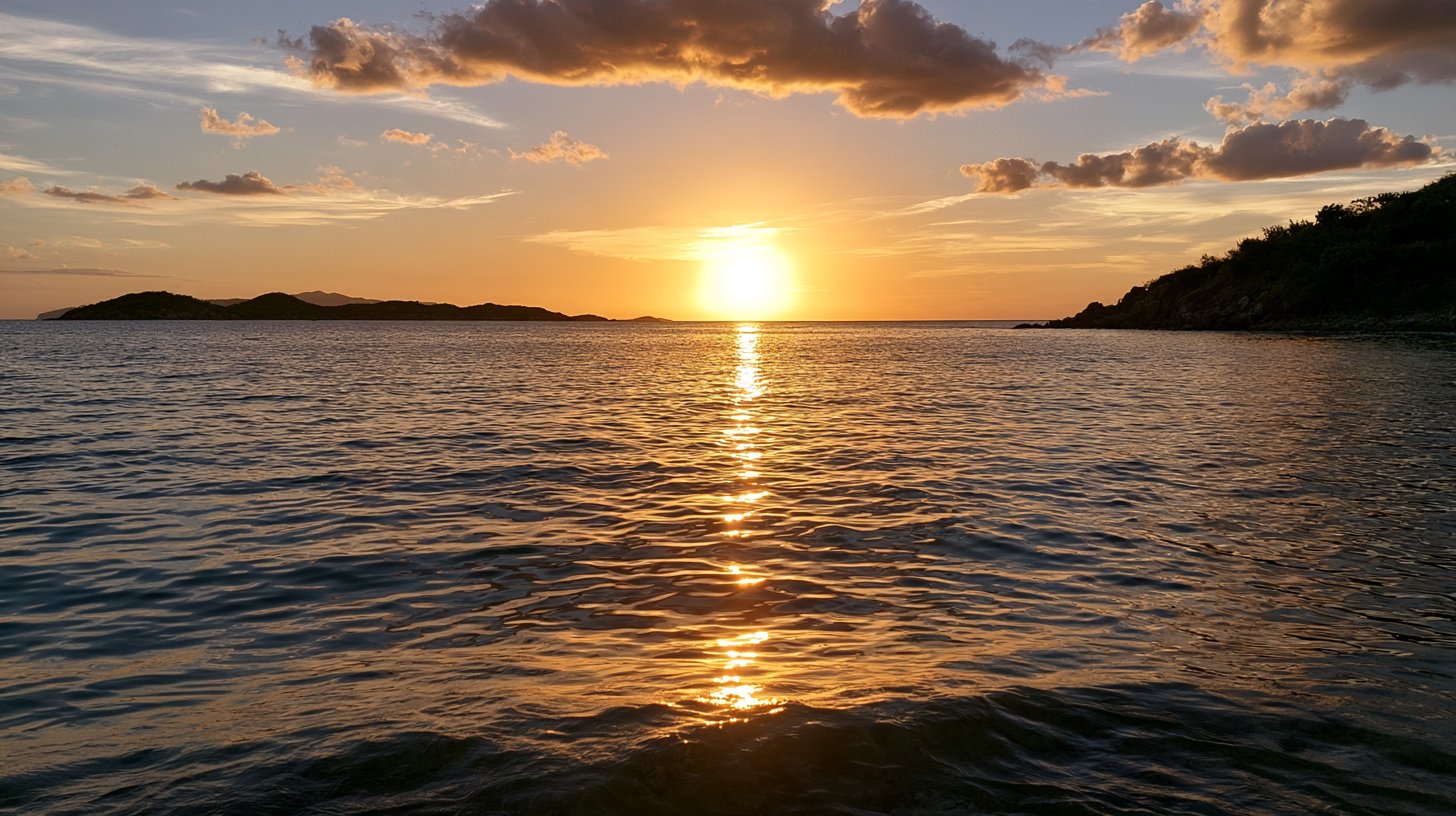
The pool at dusk. Late-summer sunsets on the East End are often gold and amber, and on Saharan-dust days the western sky goes orange.Photo: The Cerulean
A plain decision guide, and the mistakes to skip
If you want certainty above everything, book December through April; hurricane season is a non-issue and you pay for that in rates and crowds. If you want value and a warm sea with the least weather worry, book May, June or the first three weeks of July, insure it as a matter of routine, and enjoy the island's quietest good weather. If your dates are fixed to a school calendar and fall in the second half of August, go, but go with insurance bought at booking, a loose itinerary and a look at the outlook from a week out.
If you are considering September or the first half of October, ask yourself three questions. Can you absorb a canceled or moved trip financially, with insurance and the villa's terms doing their part? Can you leave early on two days' notice without wrecking something at home? Can you watch a forecast for a few days without letting it eat the holiday? Three yeses and the peak is a fine time to be here, at the lowest rates and with the emptiest beaches of the year. One firm no and you should shift the dates rather than gamble. If you are looking at late October or November, relax: the odds fall fast after the second week of October, the sea is still warm, and Thanksgiving week on the East End is popular for a reason.
The mistakes are the mirror of that advice. Treating six months as one thing, and writing off June and July because the calendar says "hurricane season," gives up the island's best value for nothing; booking the third week of September as if it were February, uninsured and with a wedding on the Saturday, is the same error in the other direction. Buying insurance after a storm is on the map buys nothing for that storm. Waiting for certainty means full flights and an expired waiver. Canceling a June week because a wave has come off Africa ignores that most waves go nowhere. And arriving in September as if the island were closed misses that the beaches, the reef, the trails and Christiansted's waterfront are all there, and quieter; the concierge can tell you which boats and tables are running in a given week.
Whatever you choose, do the three things that cost nothing: diary the 60-day and 30-day dates, buy the insurance the day you book, and, inside the season, ask Sterling Point how they handle a named storm and keep the answer. That is the whole method. It is less exciting than the brochures and less frightening than the news, which is roughly where the truth of the season sits.
Deciding on a hurricane-season week
Place your dates on the curve: June to mid-July low, late August to early October peak, November falling.
Read the villa's cancellation terms and diary the 60-day and 30-day marks.
Buy comprehensive travel insurance the day you book, and price a Cancel For Any Reason upgrade if you want the option to bail on a forecast.
Ask Sterling Point in writing how a named storm during your dates is handled.
From a week out, check the NHC outlook once a day. Quiet outlook, quiet week.
If a storm is forecast, decide early: leave on the waiver, or shelter properly.
The Cerulean
Twelve of you, one private beach.
The Cerulean sleeps twelve on St. Croix's quiet East End — check your dates.
The Atlantic season runs June 1 to November 30 every year. The National Hurricane Center puts the statistical peak on September 10, with most activity between mid-August and mid-October. June and July are quiet months in the historical record, and by mid-November the odds have fallen a long way. Treat the season as a curve that rises through late August and falls through October, not as six months of equal risk.
How often does St. Croix actually get hit by a hurricane?
Rarely, in the sense that matters for a one-week trip. The most-quoted tally, which counts storms since 1871, puts hurricanes passing within 60 miles at roughly one every seven years and direct hits at about one every seventeen. The last direct hit was Maria in September 2017, and before that Hugo in September 1989. Most seasons pass with watches, a few gray days and no hurricane.
What happened to St. Croix in Hurricane Maria?
Maria's eye passed about 25 nautical miles south of the island around 11 pm on September 19, 2017, at its peak intensity of 150 knots. St. Croix caught the northern part of the outer eyewall, and a station on the west end measured sustained winds of 93 knots (about 107 mph) with a gust to 119 knots. The National Hurricane Center's report describes wind damage across the whole island, many wooden houses destroyed, flooding and mudslides. Power took months to come back.
How much warning would I get if a storm were coming?
Days, not hours. The National Hurricane Center flags areas of possible development up to a week out and issues forecast tracks once a storm forms. For Maria, the NHC forecast a major hurricane reaching Puerto Rico 84 hours ahead, and hurricane warnings went up 34 to 37 hours before landfall. In practice you will know a storm is a real possibility for your dates several days before it arrives, which is time to change a flight or leave early.
Does travel insurance cover hurricanes?
Standard trip-cancellation policies generally cover hurricane disruption only if you bought the policy before the storm was named. Once a storm has a name, insurers treat it as a known event and exclude it. Buy the day you book. If you want the option to cancel simply because a forecast worries you, a Cancel For Any Reason upgrade, usually bought within 14 to 21 days of your first deposit, typically refunds 50 to 75 percent of prepaid costs if you cancel at least 48 hours before departure.
What is The Cerulean's cancellation policy?
As stated in the villa's listing terms as of 2026: a full refund for cancellations more than 60 days before arrival and a 50 percent refund more than 30 days before arrival. The listing does not spell out a separate hurricane clause, and we are not going to invent one here. If you are booking inside the season, ask Sterling Point Real Estate directly how they handle a named storm affecting your dates, and get the answer in writing before you pay.
Is June or July a bad time to visit because of hurricane season?
No. Both months sit inside the official season but well below the peak in the historical record, and the Saharan dust that hazes the sky in midsummer tends to hold tropical systems down while it lingers. The trade-offs in early summer are heat, sargassum on windward beaches, and dust haze some days, not storms. The sea is warm, mornings are calm, rates are lower than winter, and mangoes are in season.
What should I do if a hurricane forms while I am staying on St. Croix?
Follow VITEMA, the territory's emergency management agency, which sends alerts through the Everbridge system and posts shelter openings when a storm threatens. Talk to Sterling Point the same day. Decide early: either fly out before the airport closes, which is usually a day or so ahead of the storm, or shelter in a sound building with water, food and a charged phone. Do not wait to see how it looks tomorrow.
Are the villa's rates lower during hurricane season?
Villa rates vary by season and by the exact dates, so check the calendar rather than assuming. Across the island, late summer and early fall are usually the lowest-priced weeks of the year, because they carry the storm peak and the wettest weather. If your dates are flexible, May, June and November give most of the value with a fraction of the storm odds.
Doing it from The Cerulean
The Cerulean sits on the East End, facing sunrise, with Christiansted about 15 to 20 minutes down the road and the airport farther west. Sunrise from the veranda is the coolest part of a September day, and the hour to swim, snorkel and drive the few minutes to Point Udall before the heat and the afternoon squall. The house sleeps twelve across the main house and the guest cottage, which matters in the off-season because a group can share the villa's rate in the cheapest weeks of the year, with room to spread out on a rainy afternoon.
The kitchen matters more in September than in February. Some restaurants take their break in the deep off-season and hours are shorter, so the chef's kitchen, the outdoor kitchen and grill, and a provisioning run turn quiet nights into a strength. The concierge can arrange a private chef and tell you which boats are running in a given week, and if a storm is a possibility it is the same team, Sterling Point, you would be talking to about the house.
Pack for the season rather than for a brochure: a light rain shell, mineral sunscreen, a rash guard for the reef, and a small dry bag, all covered in the packing guide. Bring a book for the afternoon rain and a plan for a gray day. If you are here in June or July, come to the mangoes and the dust sunsets; if you are here in September, come to the warmest, stillest, emptiest version of the island there is, and keep the outlook on your phone.
And keep the long view the island keeps. A hurricane on the night of August 31, 1772, was written up by a teenage clerk in Christiansted, and the letter changed his life and, in its way, the country; the story is in our Hamilton guide. Hugo in 1989 and Maria in 2017 are the modern chapters. Between them lie thousands of ordinary September days, hot and bright, with the trade wind on the veranda and the reef in front of the house. Respect the season, plan for it, and take the island as it is, which, even in the peak, is almost always this.
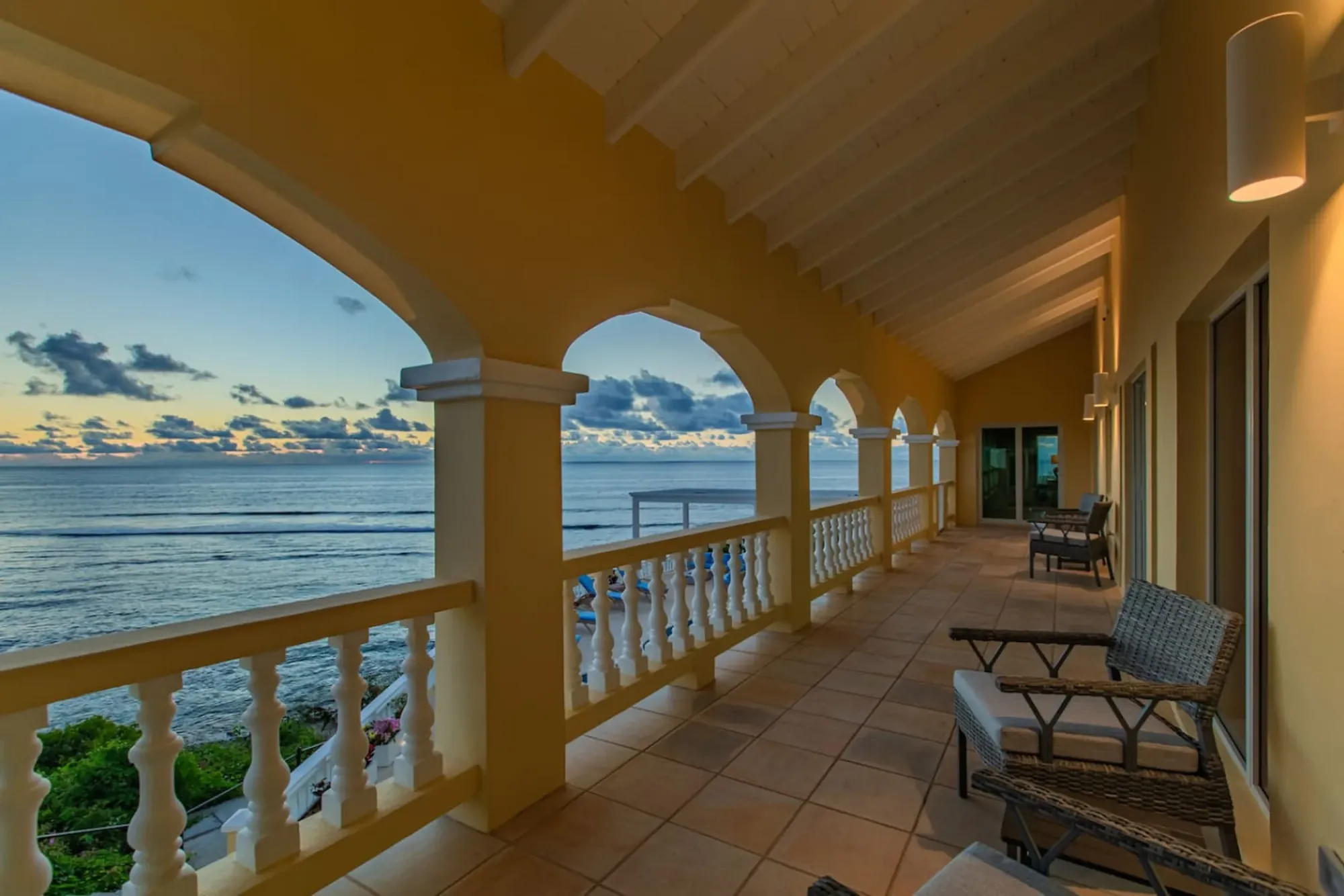
Sunrise from the veranda. In September the first hour of the day is the cool, still one, and the reason to be on the East End.Photo: The Cerulean
Sources
Facts in this guide were checked against these primary sources in 2026. Hours, prices and schedules change — confirm before you go.