Annaly Bay Tide Pools: The Hike, the Jeep Road & When to Stay Away
St. Croix guides · Nature & outdoors26 min readUpdated Aug 2026
The most photographed swim on St. Croix sits at the end of a hot, rocky hike or a rough jeep road, and it is only safe on a calm day. Here is how to do it right, and when not to.
The Annaly Bay tide pools are the picture everyone brings home from St. Croix: clear pools set into dark rock at the foot of the northwest hills, with the open sea breaking on the ledge just beyond them. Getting there is a real hike from the Carambola Beach Resort, about two miles each way over a ridge, or a rough jeep ride down a dirt road. On a calm day it is one of the best half-days on the island. On a swell day it is dangerous, and people have been hurt. This guide tells you both halves.
What the tide pools are, and where they really are
Start with the name, because it is slightly wrong and it matters. What everybody calls the Annaly Bay tide pools, or on the tourist maps the Carambola tide pools, are natural basins in the rock at the west end of a pebble beach on St. Croix's northwest coast, west of Davis Bay and the Carambola resort. GoToStCroix describes them plainly as a series of large, naturally formed pools on the west end of the North Shore. The St. Croix Hiking Association, which has been walking this coast for years, titles its own route notes "Hike from Carambola Beach Resort to Wills Bay" and treats Annaly Bay as the next, more difficult stretch of shore beyond.
Locals use both names. We say "Annaly Bay tide pools" because that is what you will type into a search bar and what the guides sell, but if a hiker tells you the pools are at Wills Bay, they are not wrong.
How they formed is simple to describe and hard to appreciate until you are standing on the ledge. Waves and tide push seawater over and through gaps in the rock and trap it in basins behind; the pools refill with each surge and drain slowly, which is why they are clear, a little warmer than the open sea, and full of small life. GoToStCroix's trail description puts their depth at about four to five feet, deep enough to swim; BushTribe, which guides the trail, quotes a maximum of about six feet. There is more than one pool. The first you reach is the one in the photographs; others sit beyond it, and one has a blowhole, a channel the sea forces through, which is not a scenic detail but the reason for the safety section further down.
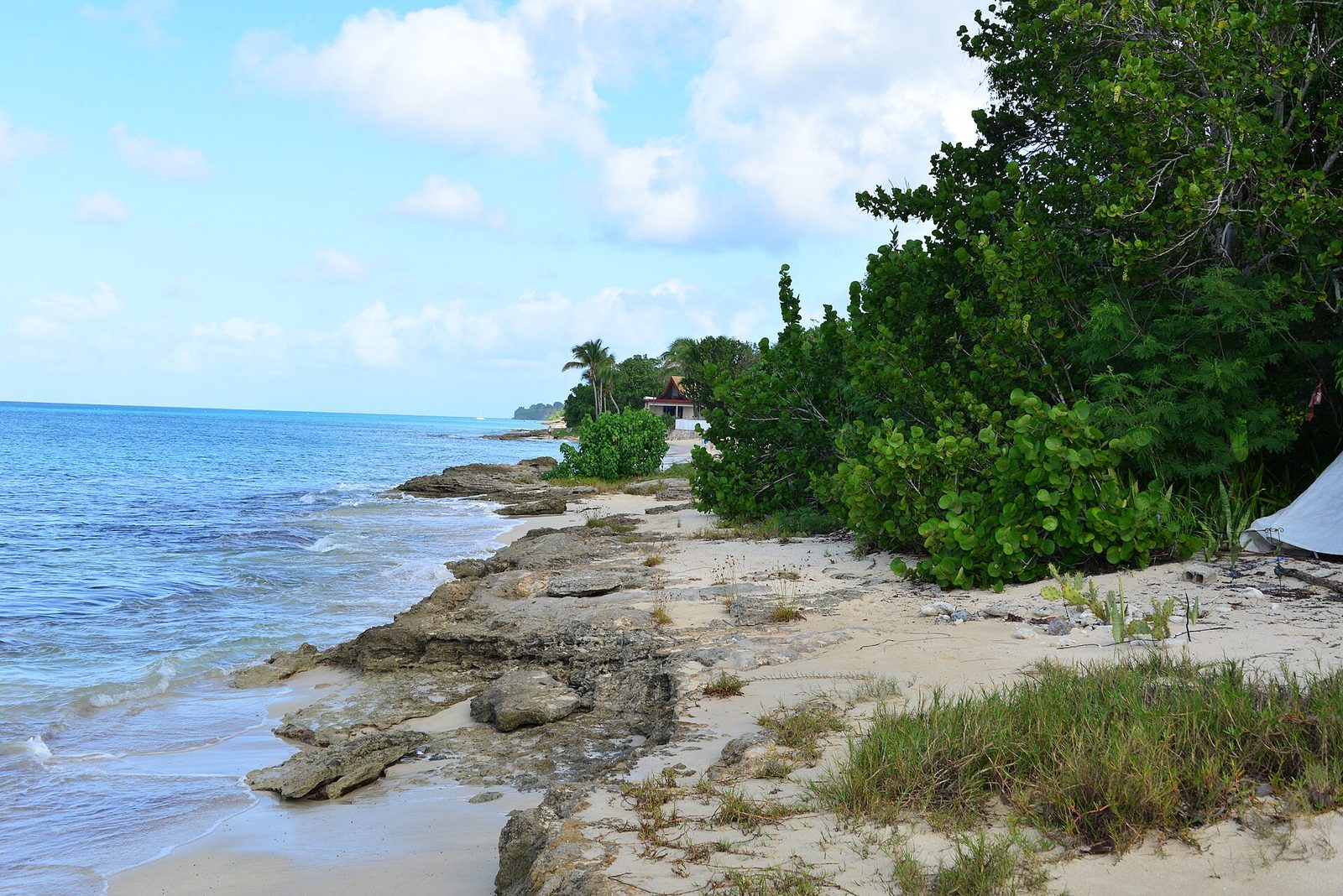
The rock itself is dark, rough and sharp: volcanic rock that does not forgive bare feet or a slip. The pools are not a beach: there is no sand at the water's edge, only pebbles behind you and ledge in front. That is the whole character of the place, a wild coast with no facilities, no lifeguard and no shade at the water, and it is why the tide pools stay beautiful and why they can hurt you.
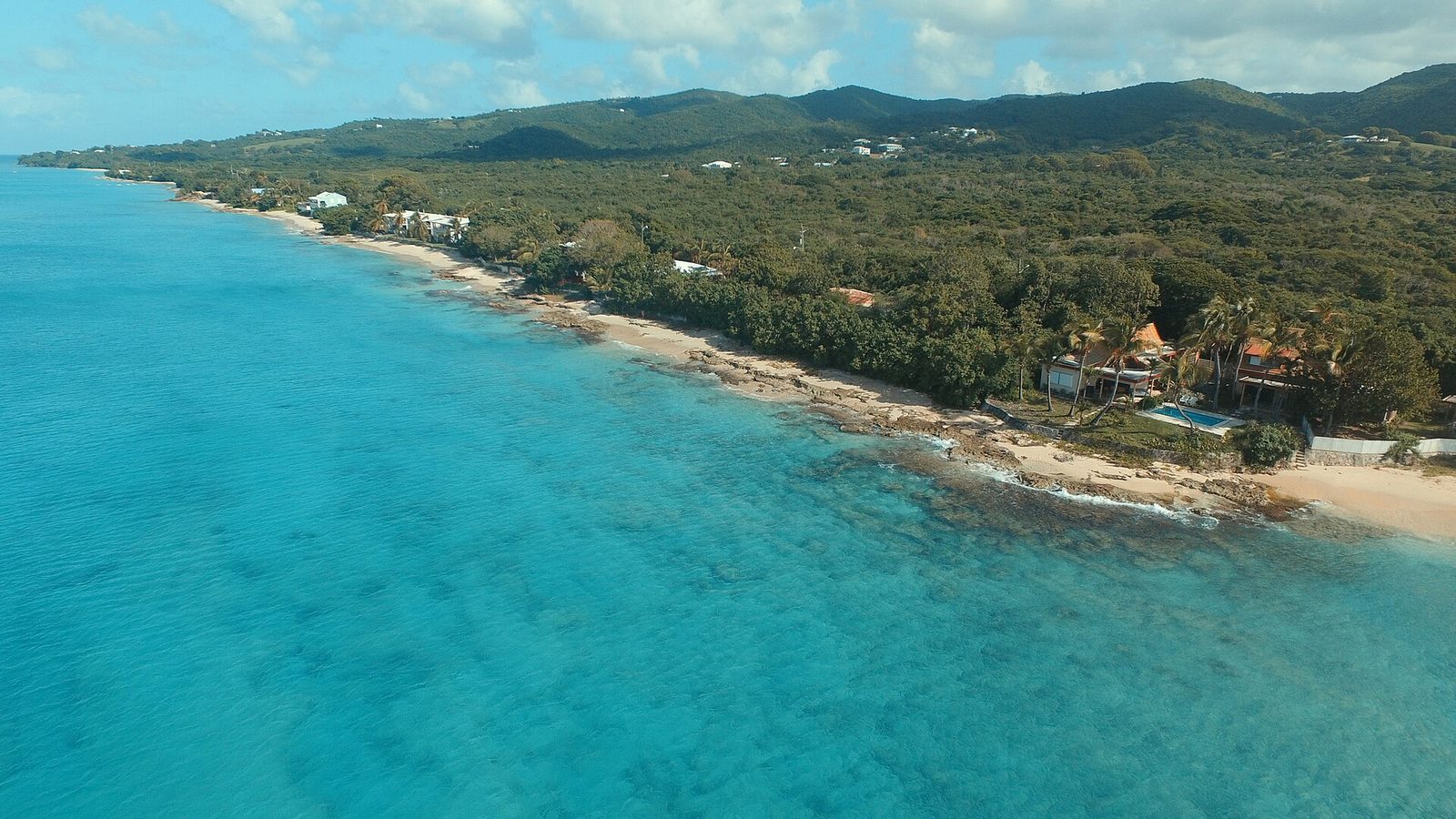
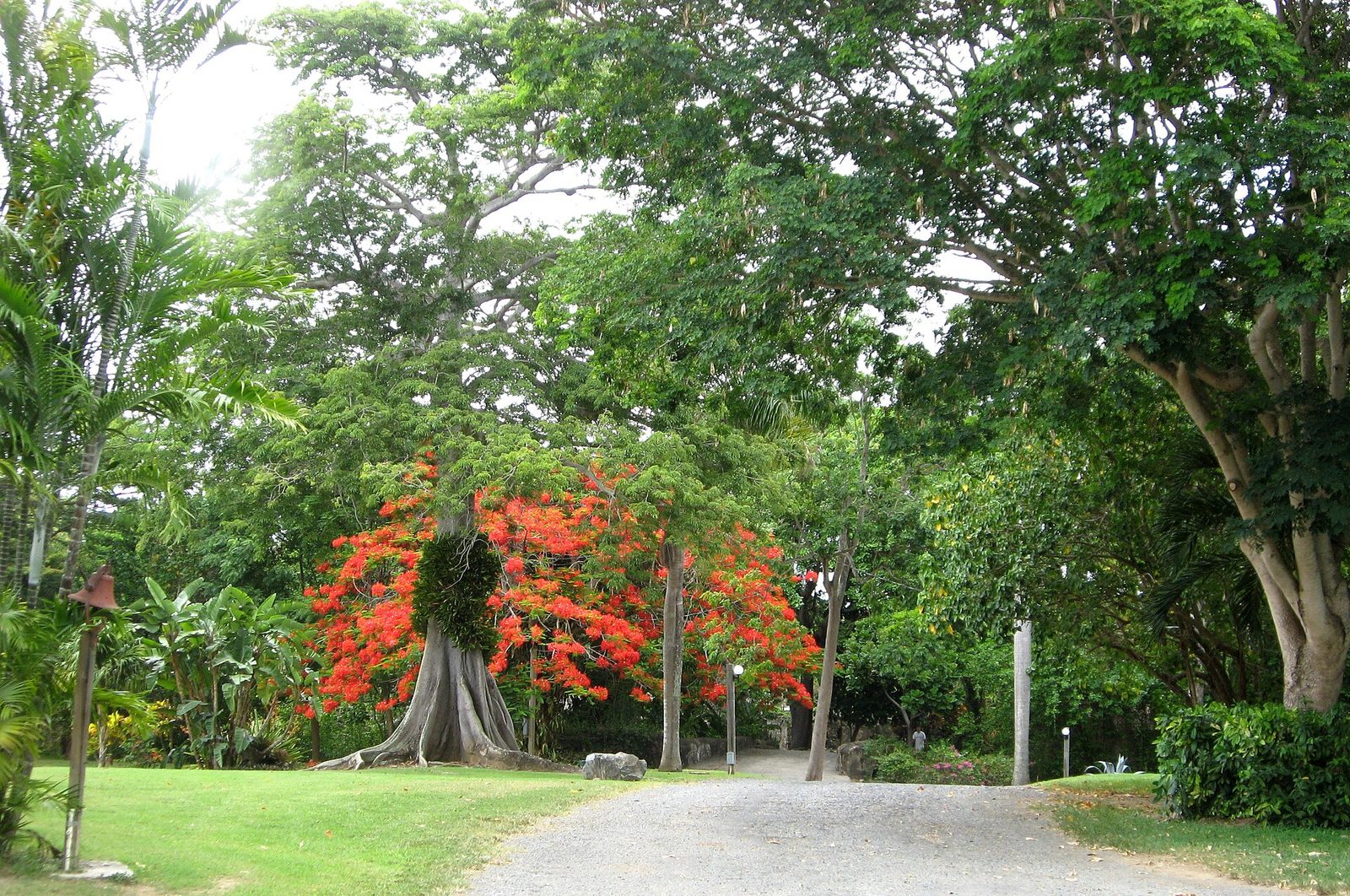
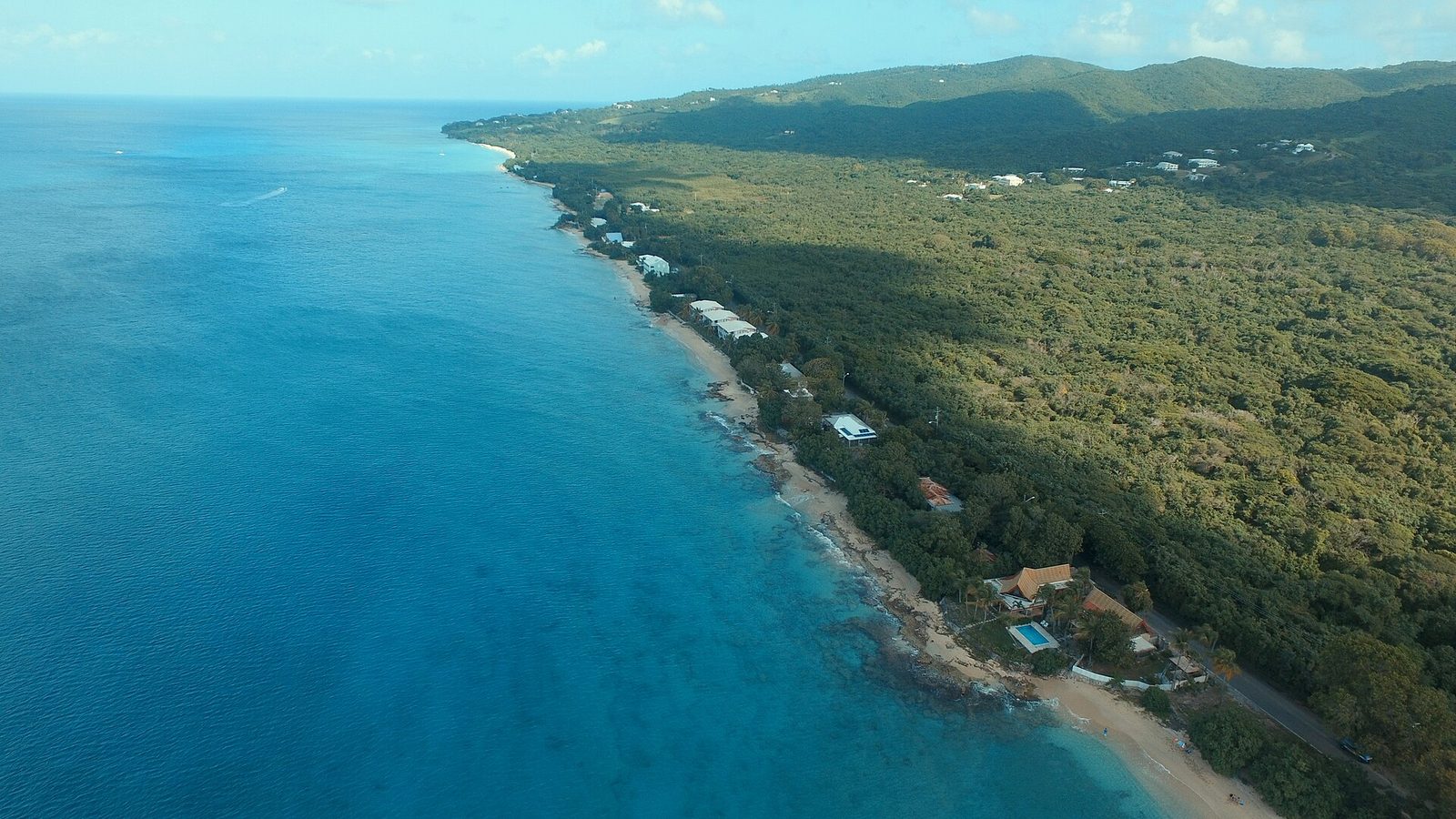
St. Croix's north shore country: the ridges, roads and coast of the island's northwest, where the Annaly Bay hike begins and ends.Photo: Андрей Бобровский (CC BY 3.0)
Where you start: the Carambola trailhead
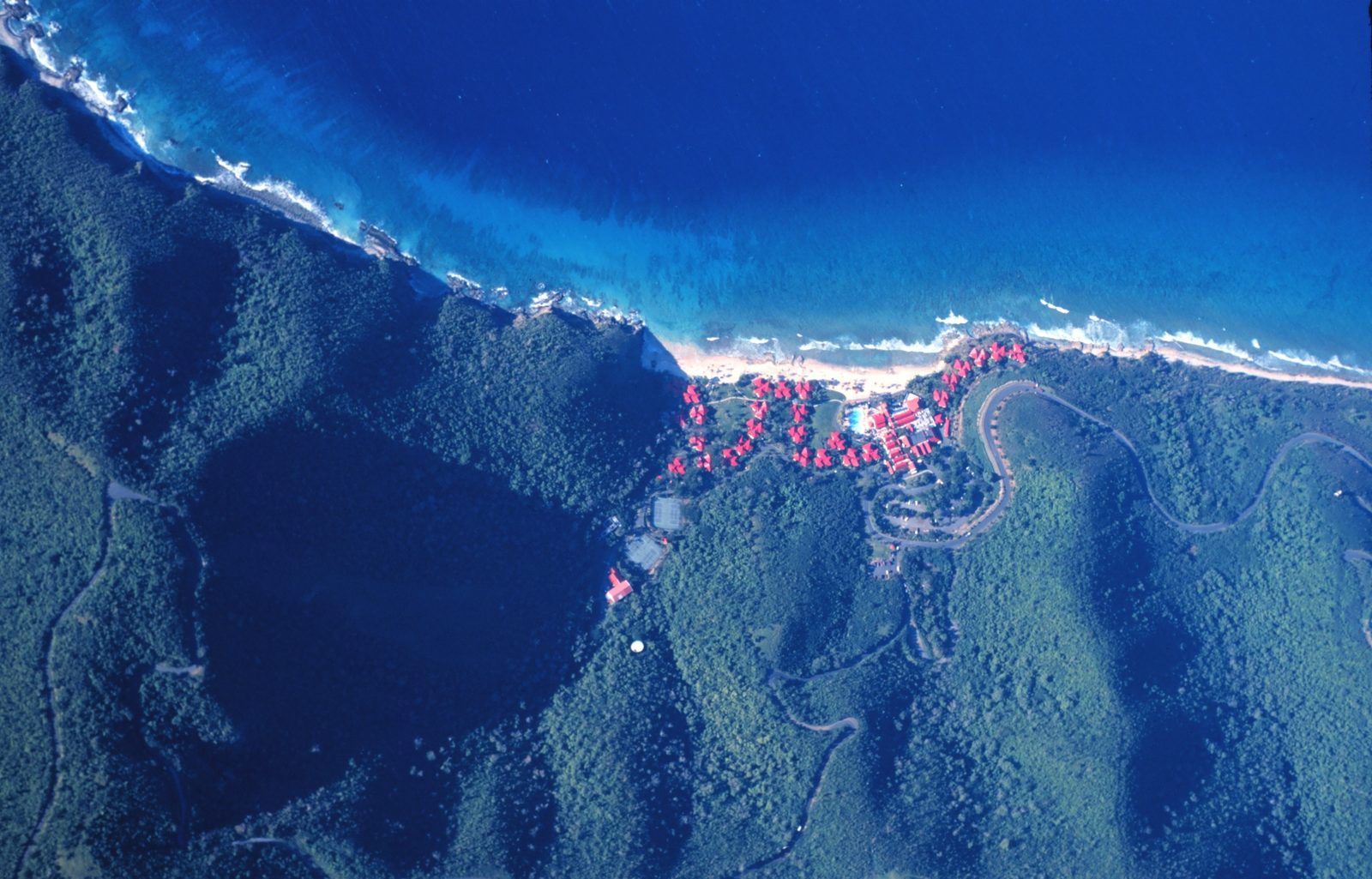
The walk starts at the Carambola Beach Resort on Davis Bay, the Marriott-affiliated resort long known as the Renaissance St. Croix Carambola Beach Resort & Spa, on the North Shore Road about a mile west of the junction with Routes 80 and 69. Its branding has shifted in recent years; the guardhouse and the trail sign have not. The resort is open and taking bookings in 2026, and it remains the trailhead simply because the Trumbull Trail begins beside its entrance road.
Parking is a courtesy, not a right, and every description we read says the same thing about how to do it politely. Turn left before the guardhouse: there are two lots there, and the nearer one is for employees, so use the visitor lot beyond it, the grassy one. Tell the guard you are hiking to the tide pools; the guard will point you to the trailhead and to where to leave the car. Do not drive through the gate looking for the trail, and do not cut through the resort grounds on foot to reach the beach: the Hiking Association notes that management would rather you did not unless you are a guest. If the policy changes, the guard is the person who will tell you, and the polite thing is to accept it.
The trailhead is on the right, up the hill from the employee parking, near the guard gate: a sign reading "Trumbull Trail" on a small embankment above the road. It is easy to miss and easy to find once someone has pointed at it. There is nothing at the trailhead, no water, no toilet, no map board, so arrive with everything you need already in the pack, and use the resort's facilities only if you are a guest or have asked.
One more practical thing before you set off: this is the last place your phone reliably works. Once you are past the resort, coverage drops to little or none, and it stays that way at the beach and the pools. Send your plan to someone before you leave the lot: who is going, when you expect to be back, and that you will call when you are.
Ask five sources how long the hike is and you get five answers, which tells you something about the trail. AllTrails calls the Carambola Trumbull Trail a 3.6-mile out-and-back with 547 feet of elevation gain and rates it moderate. GoToStCroix says roughly 2.5 miles each way in one article and 5.2 miles round trip from the Trumbull trailhead in another. St. Croix Tourism says roughly two miles each way; BushTribe sells five miles of jungle trail with about 350 feet of climb; the Hiking Association skips distance altogether and says 45 minutes one way over easy-to-moderate terrain. Some of the difference is where you start counting (the lot, the sign, the road) and whether you measure to the beach or to the last pool.
The realistic summary: about two miles each way, four to five miles round trip, somewhere between 350 and 550 feet of climbing, and no water and no shade for the last stretch.
Time is the better measure. Fit hikers reach the beach in 45 minutes to an hour; most people take an hour to an hour and a quarter, and the walk back is uphill first, so budget the same again. Add the rock scramble to the pools, time in the water and a lunch, and a sensible round trip is three to four hours from car to car. Guided groups meet at 8 am and are back at the lot around noon, which is a fair template for the whole thing.
Difficulty is the part every source hedges and every visitor argues about afterward. The trail is a real trail: the first climb is steep, the surface is roots and rock and, after rain, mud, and it is uneven for long stretches. It is shaded for much of its length, which helps enormously, but the beach and the pools are open sun. Then there is the ending, which is not hiking at all but scrambling over wet ledge with waves breaking where your feet are. Nobody who is unsteady on their feet, unwell, or wearing flip-flops should attempt the last hundred yards. The Hiking Association puts it without ornament: people can be seriously injured from waves and from falling on the rocks. Treat that sentence as the trail's rating.
4-5 milesRound trip
350-550 ftClimb
3-4 hoursCar to car
4-6 ftPool depth
$50Guided hike
9 inchesTide range
The trail, stretch by stretch
From the sign, the trail goes up. The first section is the steepest of the day, a climb through forest on a narrow path with roots for steps, and it is where most people find out how fit they are. Take it slowly; the reward is quick, because the ridge levels out and the trees close over you. Look back east from the high ground and you get the view that makes the climb worth it on its own: the resort's roofs and Davis Bay below, then the whole north shore running toward Cane Bay and the open sea beyond. It is the only real view of the walk, so stop for it.
After roughly half an hour, the forest gives way to an open, grassy area, and this is the junction to watch for. A marked side trail leaves to the left and drops to a dirt road; that road is the jeep track from the Scenic Road above, and it takes you the rest of the way down to the coast. Take the marked side trail. The Hiking Association warns of a very steep downhill section that is unsafe for most people, and there is no reason to go looking for it when the road route exists. The trail here is often waist-high grass, then rough, rocky or muddy road, and the shade thins as you lose height. This is the hot part.
The road ends at the beach: smooth rocks and pebbles rather than sand, a rough shore break, and no swimming from the beach itself. It is a beautiful, empty place, and worth a minute even on a day when the pools are off. The tide pools are at the west end. To reach them you leave the beach and climb over the ledge, where the rocks are wet, sharp and slippery and waves break against them where your feet rest, until the first pool opens in front of you. In calm conditions the crossing is a few careful minutes. In anything else it is the most dangerous ground on the island, and the next sections are about that.
Along the way, the trail is busier than it looks; the section on its residents below has the crabs, lizards and termite nests. Watch where you put your hands on the rock and your feet on the trail: ant nests are a real thing here, and the standing advice is to keep moving through them.
The hike, step by step
Check the sea the night before: read the NWS San Juan marine and beach forecast for the north coast, and if a swell or high-surf advisory is running, the pools are off. Go somewhere else and come back another morning.
Park at Carambola: turn left before the guardhouse into the visitor lot (not the employee lot), tell the guard you are hiking, and find the Trumbull Trail sign up the embankment near the gate. Phones stop working soon after.
Climb: the first stretch is the steepest. It levels out along the ridge under shade, with one look-back view over Davis Bay, and reaches an open grassy clearing after about half an hour.
Descend: take the marked side trail on the left down to the dirt jeep road (skip any steep shortcut) and follow the road to the pebble beach, 45 minutes to an hour and a quarter from the car.
Cross the rock: at the west end of the beach, pick your way over wet, sharp ledge to the first pool. Watch the sea for a full few minutes before you commit, and never turn your back on it.
Swim in the sheltered inner pools only, keep the group together, and be off the rocks by early afternoon so you climb out with daylight, water and energy to spare.
The pools on a calm day
On the right day the pools are everything the photographs promise. You come over the ledge and the first basin is there: clear water in a bowl of dark rock, three to five feet deep, a few strides across, with the sea a few yards beyond throwing spray over the outer rim and sliding in through the gaps to refill it. You float. Small fish move around your legs; urchins sit in the crevices, which is one more reason for shoes; if you brought a mask, put it on, because a pool this clear rewards it. Where the water pours in over a lip, people sit under it. St. Croix Tourism's writer describes having your shoulders massaged under a waterfall the waves make, and that is a fair description of a calm morning here.
Beyond the first pool are others, reached by more scrambling, and the further you go the wilder it gets: bigger surge, more exposure, less margin. Most people are content with the first two, and the guides tend to keep groups there. That is not timidity; the pools closest to the beach are the ones best sheltered by the ledge, and the sheltered ones are the point.
What the pools are not: a swimming beach with a lifeguard, a place to leave children unwatched, or somewhere to open a beer on the outer rocks with your back to the sea. There is no shade at the water, so a hat and a long-sleeve rash guard do more than sunscreen. Everything you carry in you carry out; there are no bins and no staff. And there is no rush: the walk out is uphill and hot, so the tempo that works is a long swim, a lunch on the pebbles, and a start back before the early-afternoon heat and before the sea has a chance to change its mind.
When it is dangerous, and it is
The rule is simple, and it is a rule: calm seas only. The pools sit behind a rock rim that the ocean overtops in swell, and on a day with a north swell running, waves sweep the very rocks you must cross and fill the pools with surge strong enough to move a grown adult. There is no lifeguard, no railing, no phone signal and no quick way out; the nearest help arrives in a jeep down a rutted road, or by air.
That is not a hypothetical. In late November 2022, a 65-year-old visitor swimming in the pools was pulled under by a wave and did not come up; his wife could not see him resurface and called 911. The Coast Guard's own bulletin records what followed. St. Croix Rescue and DPNR officers found him trapped in the tide pool's blowhole and pulled him out; first aid was given on the rocks; and because of his condition, the terrain and the remoteness, a Coast Guard MH-60T Jayhawk helicopter hoisted him off the ledge in a rescue litter and flew him to the airport for the ambulance.
St. Croix Rescue's commander told the VI Consortium that the terrain and the sea conditions made the rescue very challenging. He lived. The lesson is that the pools can go from bath to hazard within one set of waves, and that a rescue here is a multi-agency operation, not a lifeguard with a float.
Six years earlier, in January 2016, St. Croix Rescue drove down in jeeps, one of them belonging to Wave Phillips of Tan Tan Tours, to reach a visiting hiker who had fallen and injured an ankle near the trail down to the beach, as the St. Croix Source reported at the time. Nothing dramatic, and exactly the kind of thing that happens on wet roots and loose rock; it still took a jeep evacuation, because there is no other way out for someone who cannot walk. Both stories are why every local guide says the same things: do not go alone, do not go in swell, wear real shoes, and turn back if the sea says so.
How to read the sea from the ledge: watch for a full few minutes before you step onto the rocks. Sets come in groups, and the biggest wave in ten minutes is the one that matters, not the average. If you cannot see the ledge dry between waves, do not cross it. Save the pools for another morning; they will keep.
“The crew did a great job managing a challenging hoist environment to the rocky reef in high winds.”
Lt. j.g. William Boardman, U.S. Coast Guard co-pilot, on the November 2022 rescue at the tide pools
The Cerulean
Plan it from the villa.
Five bedrooms, a private swimmable beach, and all of this within a day trip.
Most guides tell you to go at low tide, and it is not bad advice, but it hides the real variable. St. Croix's tides are tiny: at NOAA's Christiansted Harbor station the mean higher high water sits about 0.23 meters, roughly nine inches, above mean lower low water. A tide chart will not turn a rough day into a calm one; the ocean swell will. What fills or empties the pools, and what sweeps the ledge, is the size and period of the waves arriving from the north, and that is a weather question, not a tide question.
The pattern by season is well known to anyone who lives on the north shore. From roughly late October through March, long-period northerly swells generated by North Atlantic storms and cold fronts moving off the U.S. East Coast reach the Virgin Islands and produce hazardous surf and rip currents on north-facing coasts; the National Weather Service in San Juan issues High Surf Advisories and rip current statements for exactly these events, and local reporting in February 2026 described dangerous surf across Puerto Rico and the USVI for days at a time. Winter is high season on St. Croix, and it is also the season with the most no-go days at the pools. Summer and early fall are generally calmer on the north shore but hotter on the trail, and it is hurricane season, with its own forecasts to watch.
So the night before, do two things. Read the NWS San Juan beach and marine forecast for the north coast of St. Croix: the office publishes a beach page with a rip current risk (moderate means life-threatening rips are possible; high means they are likely), and it warns, in its own words, that dangerous conditions can develop even when the weather looks good. And look at the sea. If Cane Bay or Davis Bay has waves breaking well offshore and a shore break you would not swim in, the pools are worse. A guide is worth paying for on this question alone: BushTribe's and Tan Tan's people run this coast weekly and will call the day off or move it.
Time of day matters too. Trade winds build through the day, so mornings are usually calmer, cooler and emptier, which is why the guided hike leaves at 8 am. Aim to be on the rock by mid-morning and off it by early afternoon.
The jeep road and the Tan Tan Tours option
There is a second way in: a rough dirt road that drops from the Scenic Road in the hills to the pebble beach. It is the road the trail's side path joins, the road St. Croix Rescue uses, and the road one commercial operator drives every week. That operator is Tan Tan Tours, based at 33 Queen Cross Street in downtown Christiansted; it was Wave Phillips of Tan Tan Tours whose jeep helped St. Croix Rescue reach the injured hiker in 2016.
Their site, current for 2026, lists three tours: a Jeep Tour to the Tide Pools of about 2.5 hours; a Half Day tour of about 4.5 hours; and a Full Day tour of about 7.5 hours. Prices as published are $200 per person for the tide pools run, $280 for the half day and $350 for the full day, with a three-person minimum per jeep and an extra $100 if two people want a jeep to themselves. Departures are from the Christiansted base or from the Domino Club on Mahogany Road, and the longer tours add stops: the Domino Club's beer-drinking pigs, Cane Bay, viewpoints across the island. Prices and formats change, so take those as a snapshot rather than a quote, and confirm when you book.
What the jeep buys you is legs. The tour drives to the beach and then, in the operator's words, involves a short climb up and over the rocks with your guides to reach the pools. It does not buy safety from the sea, because a jeep changes how you arrive, not what the waves do, but it does put an experienced local next to you on the ledge. It also opens the pools to people who should not do the hike: grandparents, small children, anyone with a bad knee. If your group is a mix of hikers and non-hikers, the walkers can hike from Carambola while the rest arrive by jeep and meet them at the pools; the timing works if both leave early.
Driving the road yourself is technically possible and mostly a bad idea. A 2021 first-hand account describes paved giving way to semi-paved to rough dirt after a rusted-car landmark, four-wheel-drive low gear on a steep hill with deep rain ruts, and parking on the rocky beach at the bottom, all of it in dry weather. Rental contracts commonly forbid roads like this, so read yours before you try, and a stuck car down there is a very expensive afternoon. If you want to ride, buy the ride.
If you want to walk it but not guess, BushTribe Eco Adventures runs a guided Annaly Bay Tide Pools Hike. Their adventures page, live in 2026, lists it at $50 per person, three-plus hours, starting at 8 am, and describes it as five miles of jungle trail to swimming tide pools; their longer description rates it moderately strenuous, with rock scrambling, a water crossing and about 350 feet of climb, and quotes the pools' maximum depth at about six feet. Groups meet at the Carambola resort on the North Shore and are typically back at the lot around noon. Their number is (340) 277-2503; the villa's concierge can also book it for you.
What you are paying for is judgment and narration. A guide makes the sea call for you and has already looked at the swell that morning; a guide knows which pool is the safe one and where the blowhole is; and a guide will stop and tell you what the trees, the crabs and the termite mounds are, which turns a hot walk into something you remember. For a first visit, and for anyone with children, we would go guided without hesitation. GoToStCroix says the same: take a guided tour for your first excursion.
One more name to know. VI Eco Tours guides the west end's rainforest and Creque Dam walks; ask them directly whether they are running the pools when you visit, and check our trails and hiking directory, which lists the outfits we have verified.
Your options, side by side
There are really four ways to see the pools and one honest alternative, and the table below compares them. The costs are as published in 2026 and will move; the times are car-to-car estimates that assume an early start and a calm sea; the difficulty column is about legs and nerve, not about the water, which is the same for everyone. Whichever you choose, the sea decides whether you swim, and the person best placed to make that decision is a guide who was on this coast yesterday.
Option
Time
Cost
Difficulty
Hike on your own from Carambola
3-4 hr round trip with a swim
Free (a rental car and a polite word at the gate)
Moderate to hard: steep start, rocky finish, hot last mile
Guided hike with BushTribe
About 3-4 hr, 8 am meet, back around noon
About $50 per person (2026 listing)
Same trail, less guesswork, guide makes the sea call
Tan Tan Tours jeep to the pools
About 2.5 hr from Christiansted
Listed at $200 per person, 3-person minimum (2026)
Easy on the legs, rough ride, short rock climb
Tan Tan half-day or full-day jeep tour
About 4.5 or 7.5 hr
About $280 or $350 per person (2026)
Easy, long day, extra stops like the Domino Club
Drive your own 4x4 down the jeep road
Varies, dry weather only
Rental 4x4 and whatever the contract says
Rutted, steep, low-gear, easy to wreck a car
Skip the pools, hike Ham's Bluff instead
About 1-1.5 hr
Free
Steady half-hour climb, big views, no surf risk
A note on value. Two hundred dollars a head for a two-and-a-half-hour jeep ride sounds steep next to a fifty-dollar guided walk, and it is; what you are buying is access for people who cannot make the hike. For a fit party of adults on a calm morning, the guided walk is the better day and the better price. For a family with a grandmother and a six-year-old, the jeep is the only sensible way to put everyone in the same pool. And the lighthouse row at the bottom of the table is not a consolation prize; on a north-swell day it is simply the right answer, and our Ham's Bluff guide explains why.
What to bring, and what to leave behind
Shoes first, because they decide the day. You want closed shoes with grip that you do not mind soaking: trail runners or sturdy water shoes, not flip-flops, not new white sneakers. You will walk two miles on roots and rock, then cross wet ledge, then step on urchins if you go barefoot in the pools. GoToStCroix's advice is sturdy, non-slip shoes or water socks. Water: more than you think, at least a liter and a half per person for a morning, because there is no tap after the resort and the last mile is in the sun. A snack or a packed lunch, since the tempo works best with a proper break at the pools.
Sun: a hat, a long-sleeve rash guard for the water, and mineral sunscreen; the U.S. Virgin Islands ban sunscreens containing oxybenzone, octinoxate and octocrylene, so bring zinc or titanium from home, and our packing guide has the details. A dry bag for the phone, keys and car fob, because everything gets wet on the ledge; leave the wallet and passport at the villa. A small first-aid kit with something for scrapes, because the rock cuts. A mask and snorkel if you like, since the pools are clear and the fish are small but plentiful. Bug repellent for the forest half. And a downloaded trail map, since phones lose signal here.
What to leave: valuables, drones (ask before you fly anywhere near a resort or a rescue), and the assumption that you will find anything at the beach. There is no toilet, no bin, no shade structure, no vendor. Pack the villa's cooler for the car afterward; a cold drink at the lot after the climb out is worth planning for. If you are going with children, add their swim shoes and a spare shirt; if you are going with anyone over about sixty, add a walking pole for the descent.
One last item, and it is the most important: a plan. Tell someone at the villa where you are going and when you will be back. If you are hiking unguided, go as a group of at least three; the guides say do not hike alone, and the reason is the exit. If someone turns an ankle, one person stays and one goes for help, and there is no phone signal to shortcut that.
Forest, crabs and lizards: the trail's other residents
For its first mile the trail runs under trees, and the shade is the reason a hot island hike is bearable. St. Croix's northwest hills catch more rain than the East End, and the vegetation is closer to the moist forest that locals call the Rain Forest around Mahogany Road than to the sunny, open hills around Point Udall. Our rainforest guide covers those trees properly, mahogany and kapok and turpentine among them, and explains how the western forest works; the Trumbull Trail gives you a working sample of it without leaving the coast, and then, as you drop toward the sea, shows you the change to grass and scrub that comes with less rain and more salt.
The animals are small and everywhere. GoToStCroix's walkers list millipedes, butterflies, hermit crabs, lizards and huge termite nests, and that is a fair inventory. Land hermit crabs cross the path in numbers, dragging borrowed shells; lizards sun on the warm rock, anoles on the trunks and, quite possibly, a green iguana or two, since the introduced iguana is common across the island; big millipedes and butterflies work the trail edges; and the termite nests in the trees, which visitors sometimes mistake for beehives, are one of the trail's landmarks. In the pools you will see small tropical fish, crabs and sea urchins in the crevices, plus what BushTribe calls juvenile marine creatures. The pools are a nursery, which is one more reason not to stand on things or take anything home.
Birds are the part most walkers hear rather than see; the forest is loud in the morning and quieter by noon. Our wildlife guide names what lives here and what was introduced, from the mongoose, which you may well see cross the road on the way in, to the endangered St. Croix ground lizard, which survives only on offshore cays; read it before you go if you like knowing what you are looking at. Do not feed anything, do not collect shells or urchins from the pools, and give the ant nests the respect the trail notes suggest: keep moving.
Davis Bay, Ham's Bluff and the north shore afterward
You finish the walk where you started, next to one of the island's better beaches, and it would be a waste to drive straight home. Davis Bay is the beach in front of the Carambola resort, and non-guests reach it by asking at the gate rather than cutting through the grounds. It has calm water on the days the pools are safe, plus two reefs, one shallow and one deeper, that reward a snorkel; the resort's beach bar and restaurants are there if you want a proper lunch after the hike, and current hours are worth a call. Cane Bay, a few miles east along the North Shore Road, is the other obvious stop: the ramp, the beach bars, the wall and its dive shops. Our Cane Bay guide has the whole afternoon.
Westward, the same coast climbs to Ham's Bluff, where a Danish cast-iron lighthouse from 1913-15 stands on a bluff 360 feet above the sea at the top of a steady half-hour climb, and where Maroon Ridge carries the history of enslaved people who escaped to these hills. St. Croix Tourism's page on the tide pools notes the same thing: this remote corner mattered to the Maroons. If the pools are off because of swell, Ham's Bluff is the honest substitute: the same wild coast seen from above, no surf risk, and a walk you can do in an hour and a half. Read the Ham's Bluff guide for the trailhead and the history; do not try to link the two on foot in a day unless you know the ridge.
Inland from either, the Scenic Road and Mahogany Road run through the western forest to the Domino Club and the Creque Dam. That is a car afternoon rather than a hike, and it pairs naturally with the pools if you came by Tan Tan jeep, since their longer tours already thread it. On your own, treat the unpaved Scenic Road as a dry-weather, high-clearance road and read the rainforest guide first.
The drive home along the north shore is the quiet reward. Salt River Bay is on the way, Columbus's 1493 landing and the island's bioluminescent bay, and Christiansted's boardwalk is the natural place for an early dinner before the last fifteen to twenty minutes east to the villa.
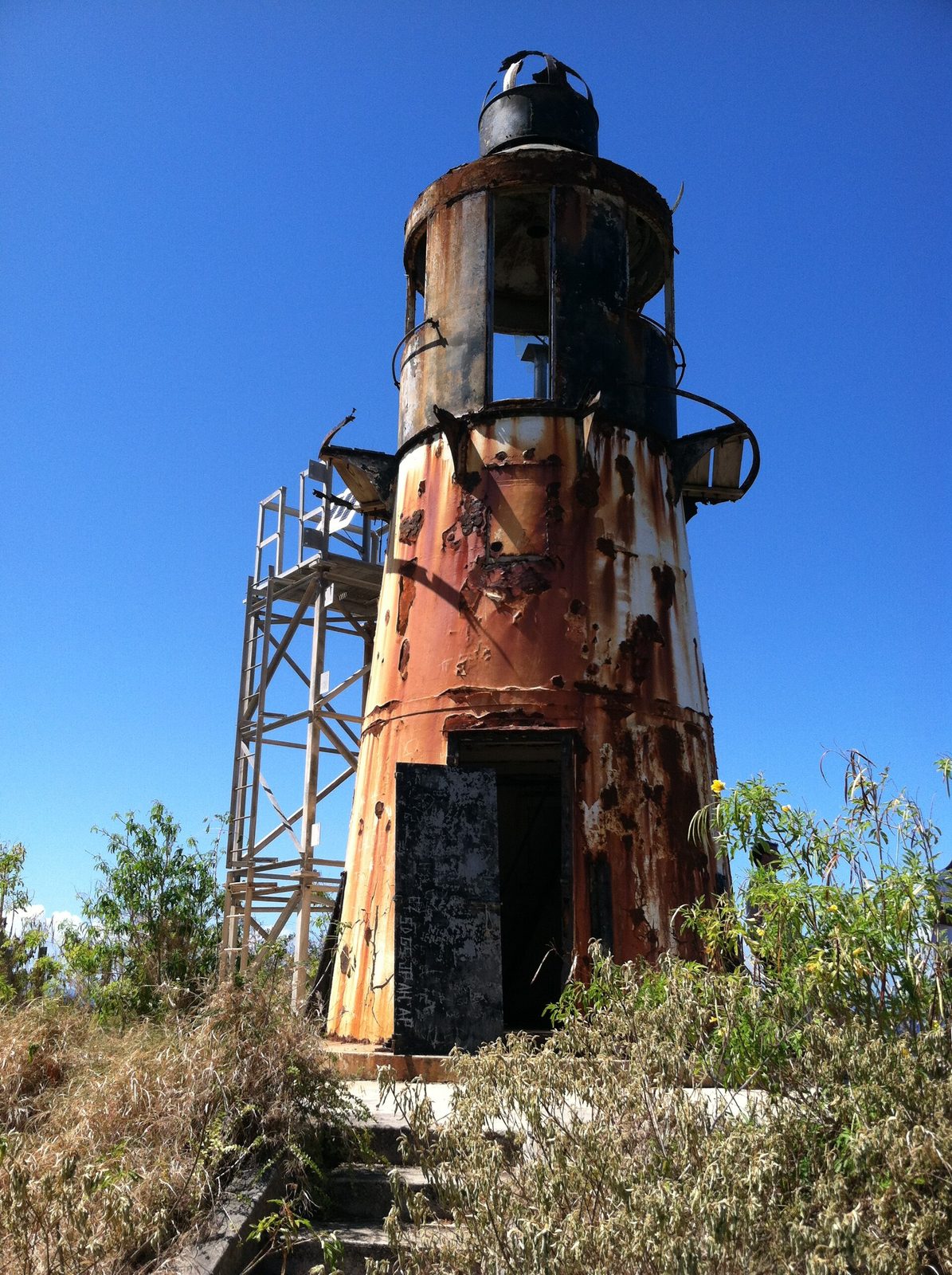
Ham's Bluff Light on St. Croix's northwest corner: the same wild coast as the tide pools, a few bays west, and the honest substitute on a swell day.Photo: Eoghanacht (CC0)
With kids, with a group, and who should skip it
Children do this hike, and the guides take them; the question is which children and which day. A fit ten-year-old who has hiked before will manage the trail and love the pools; a five-year-old will manage the trail with a parent's shoulders for the steep bits and will need a hand, a literal one, across the ledge. The pools are three to six feet deep, so non-swimmers need a life jacket and an adult within reach, and the outer rim is no place for a child at any time.
Family reviews of the jeep tours describe kids of five to ten enjoying the ride and the swim, and the jeep is the kinder route for a family with a spread of ages; it lets one parent stay on the pebbles with the youngest while the other swims. Our St. Croix with kids guide has the rest of the family logic.
Groups of mixed fitness, which is what a five-bedroom villa usually holds, should split. Send the walkers over the ridge and the rest by jeep, or send the walkers alone and give the others Davis Bay or Cane Bay with a lunch reservation and a meeting time. Do not make the least fit person in the party do the scramble to keep the group together; that is how ankles get turned. Twelve people on the ledge at once is also more people than the safe pool holds comfortably, so go across in twos and threes and take turns.
Who should skip the pools entirely: anyone unsteady on uneven ground, anyone recovering from surgery, anyone who cannot swim confidently in moving water, and anyone whose day would be ruined by turning back at the beach, because that is a real possible outcome, and the people who enjoy this place are the ones who accept it. Pregnant guests, in our view, should choose the jeep or the lighthouse. Dogs are not part of the picture: it is a resort trailhead and a rock scramble.
And a word to the strong swimmers who read the safety section and think it does not apply to them: the 2022 rescue was of a swimmer inside a pool, not a hiker on the ledge. Surge does not care how fit you are, and a blowhole does not care how well you swim.
Mistakes to avoid
The first mistake is going on the wrong day, and it is the one that hurts people; everything above is about avoiding it. The rest are smaller and easier. Starting late: an 11 am start puts you on the hottest stretch at the hottest hour and back on the trail as the afternoon wind builds; the guided hike leaves at 8 for a reason. Wearing sandals: the ledge, the urchins and the roots will each punish them. Under-carrying water: two miles in shade feels easy on the way in and is a slog on the way out, uphill, at noon. Trusting the phone: there is no signal at the beach or the pools, so agree a plan before you lose the bars.
Then the etiquette mistakes. Driving through the resort gate uninvited or parking in the employee lot; cutting through the grounds to the beach; leaving trash at the pools, where nobody will collect it; taking shells or urchins; flying a drone over other people's swim. And the judgment mistakes: pushing past the first pools to the outer ones on a marginal day; sitting on the outer rim with your back to the sea; going alone; and, the classic, deciding that because you have come all this way you will get in the water regardless of what it is doing. Wait for the calm day; the calm day is the whole point.
Finally, a mistake of expectation. This is not the Buck Island snorkel or a lounge-chair beach; it is a hot, rough half-day with a fine reward at the end and a fair chance of turning back. Book it into a week as an adventure day, with the villa's pool at the far end of it, and it delivers. Book it as a beach day and it disappoints. The East End's own headland walks are the warm-up: shorter, closer to home, and a fair test of whether the party is ready for the ridge to the west.
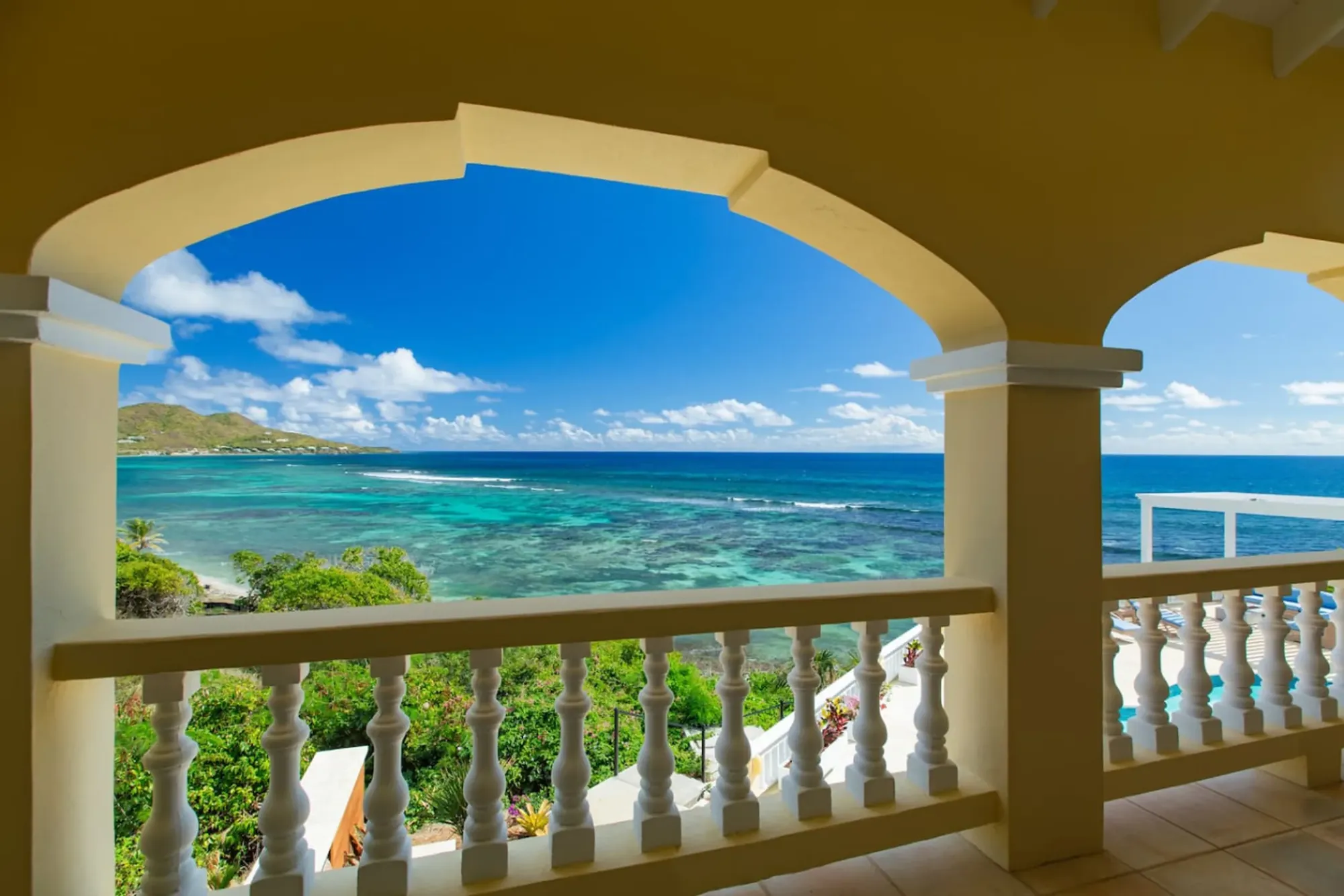
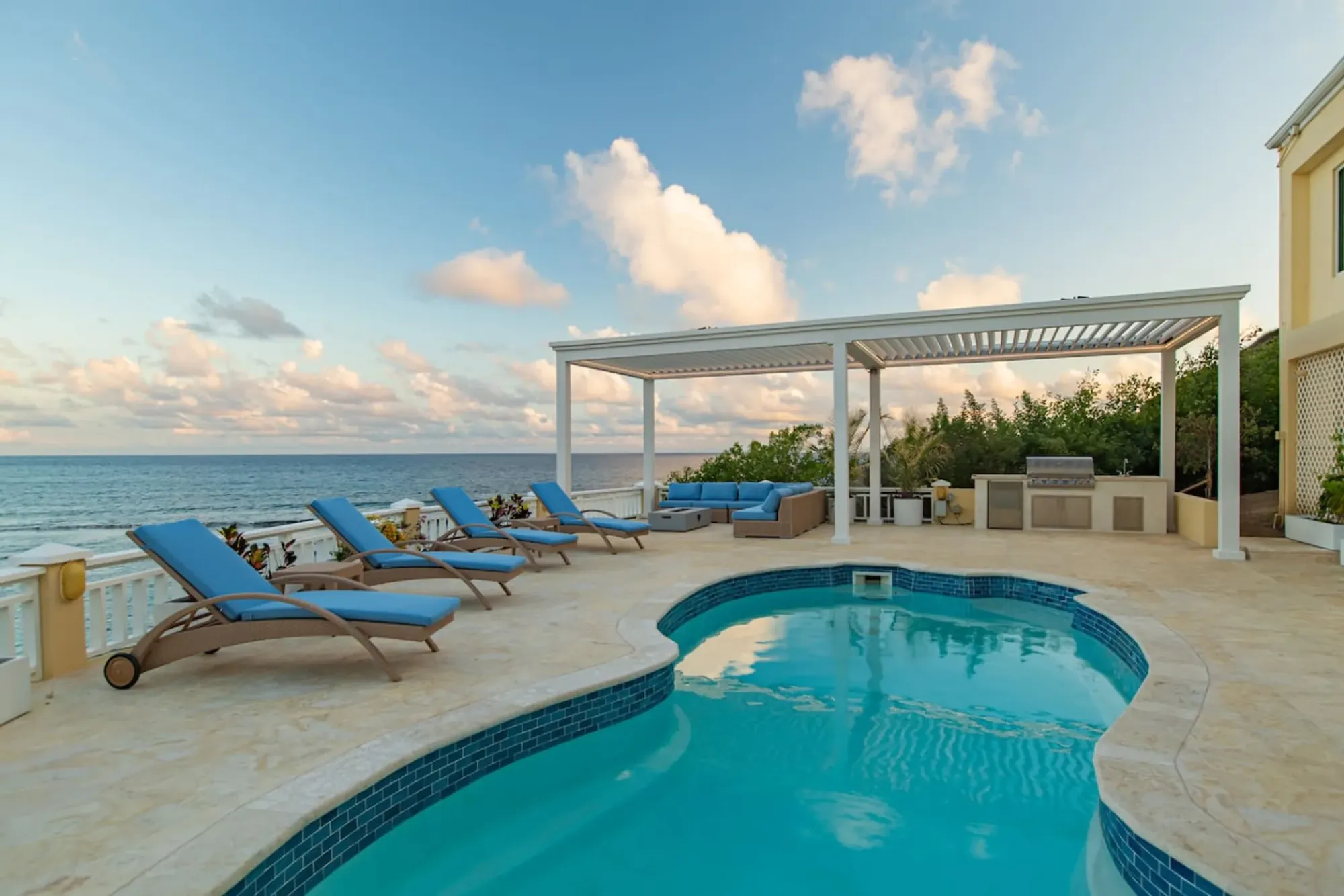
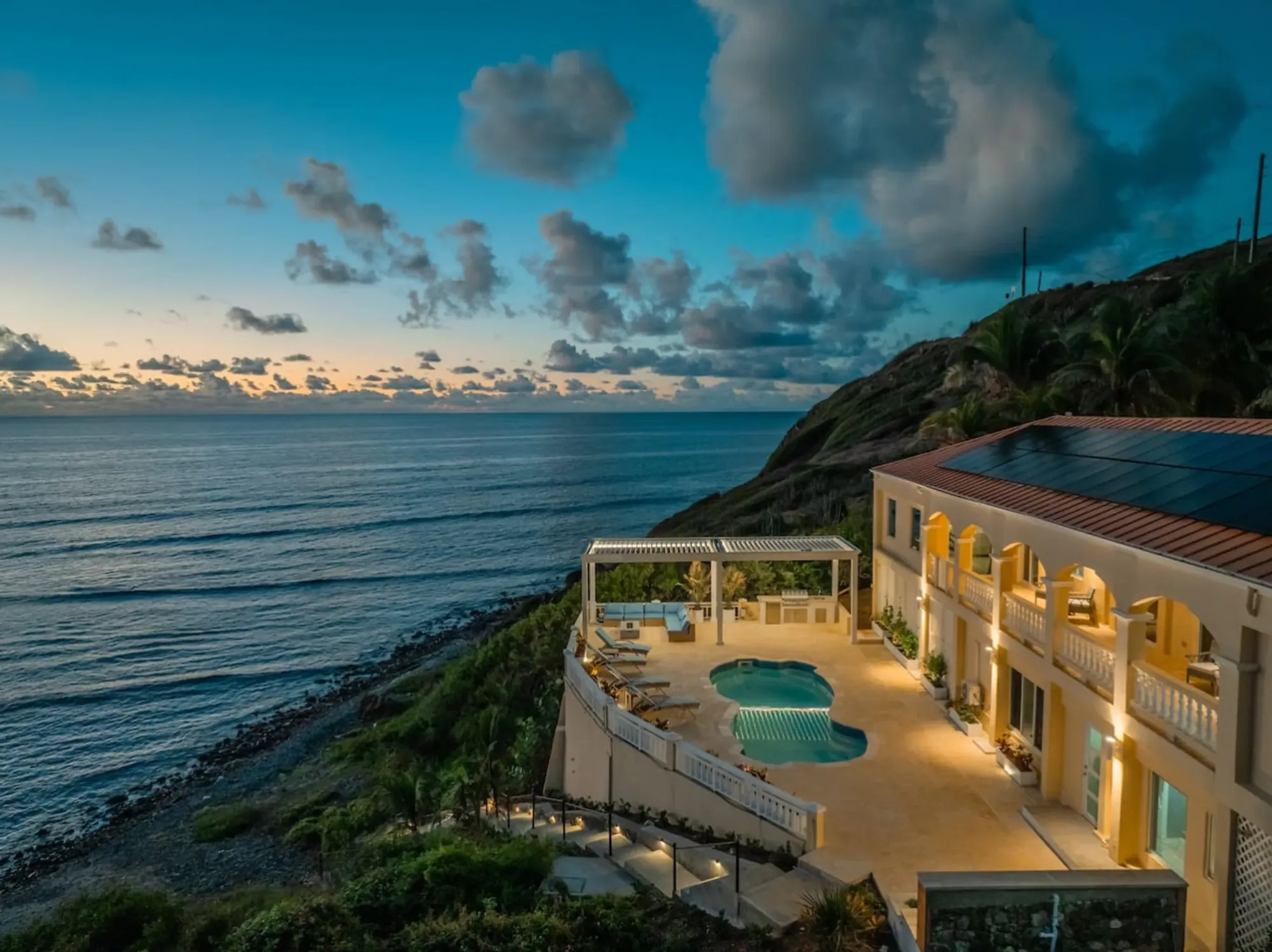
The Cerulean's pool deck above the sea on the East End: the recovery at the far end of a tide-pool day, and often the calmer swim on a north-swell morning.Photo: The Cerulean
Questions people ask
How long is the hike to the Annaly Bay tide pools?
About two miles each way from the Carambola Beach Resort, though published figures range from 1.8 to 2.6 miles depending on where the measuring started. Expect 350 to 550 feet of climbing, 45 minutes to an hour and a quarter each way, and three to four hours car to car once you add the rock scramble, a swim and lunch. The trail is shaded for its first half; the beach and pools are open sun.
Can you drive to the tide pools instead of hiking?
Yes, by a rough dirt road that drops from the Scenic Road to the pebble beach. Tan Tan Tours in Christiansted runs a jeep tour to the pools of about two and a half hours, listed in 2026 at around $200 per person with a three-person minimum per jeep, plus longer half-day and full-day tours; confirm prices when you book. Driving it yourself needs four-wheel drive, dry weather and a rental contract that allows it, and most do not.
Are the Annaly Bay tide pools dangerous?
They can be. The pools sit behind a rock rim the sea overtops in swell, the rocks you cross are wet and sharp, there is no lifeguard and little or no phone signal. In November 2022 a 65-year-old visitor was pulled under by a wave, trapped in a blowhole, and had to be hoisted out by a Coast Guard helicopter; in 2016 a hiker with an injured ankle needed a jeep evacuation. On a calm morning the pools are a delight. In swell, stay off the rocks.
Do you have to go at low tide?
Low tide helps a little, but swell matters far more. St. Croix's tides are tiny: at NOAA's Christiansted Harbor station the higher high water averages only about nine inches above the lower low. What fills the pools and sweeps the ledge is the size of the waves arriving from the north, so check the National Weather Service San Juan marine and beach forecast for the north coast the night before, and go in the morning, when the sea is usually calmest.
Can non-guests park at Carambola Beach Resort for the trail?
As of the most recent descriptions we found, yes, as a courtesy: turn left before the guardhouse, use the visitor lot rather than the employee lot, tell the guard you are hiking to the tide pools, and the guard will point you to the Trumbull Trail sign up the embankment. Do not drive through the gate to look for the trail or cut through the resort grounds to the beach. Policies change; the guard is the person who will tell you.
Is there a guided hike to the tide pools?
Yes. BushTribe Eco Adventures lists an Annaly Bay Tide Pools Hike at about $50 per person as of 2026, three-plus hours, meeting at 8 am at the Carambola trailhead and back around noon. A guide makes the sea call for you, knows which pool is the safe one, and explains the forest on the way. For a first visit, or with children, we would go guided. The villa concierge can book it, and the trails directory lists other outfits.
Is the hike suitable for children?
Fit children of about eight and up who have hiked before manage the trail; the ledge crossing needs a hand held, and the pools are three to six feet deep, so non-swimmers need a life jacket and an adult within reach. Families with younger children or a spread of ages usually do better on the Tan Tan jeep, which skips the walk. Keep every child off the outer rim, whatever the sea is doing, and go on a calm morning or not at all.
What time of year is best for the tide pools?
The trail is fine year-round; the pools are a day-by-day call. From roughly late October through March, long-period swells from North Atlantic storms hit north-facing coasts of the Virgin Islands and bring high-surf and rip-current advisories, so winter has the most no-go days. Summer and early fall are usually calmer on the north shore but hotter on the trail, and it is hurricane season. Whatever the month, start early and check the forecast.
Is it Annaly Bay or Wills Bay?
Both names are used. The pools sit at the west end of a pebble beach on the northwest coast, west of Davis Bay; most guides, maps and tour operators call them the Annaly Bay or Carambola tide pools, while the St. Croix Hiking Association titles its route notes Carambola to Wills Bay and treats Annaly Bay as a separate, harder stretch of shore beyond. Ask for the tide pools by either name and every guide on the island will know what you mean.
Doing it from The Cerulean
From the villa on the East End, the Carambola trailhead is about an hour's drive: fifteen to twenty minutes into Christiansted, then west along the North Shore Road past Salt River and Cane Bay to Davis Bay, a road most of the island's visitors never drive and one of its best, with the sea on your right the whole way. Leave by 6:45 to be walking by 8; the villa faces sunrise, so coffee on the veranda comes first anyway.
Ask the concierge the day before to book BushTribe or Tan Tan, or a driver if nobody wants the road twice, and to check the forecast with them; a good concierge will tell you when the north shore is up and steer you to Ham's Bluff or Buck Island instead. You will need a car, and the rental listings are in the directory; something with clearance helps if you plan any of the west's unpaved roads on the same day.
The villa's kitchen is where the day starts: fill bottles, pack the cooler with lunch for the pebbles and cold drinks for the car, and put a set of dry clothes and the towels from the house in the trunk. Wear the shoes you will hike in. Leave the passports.
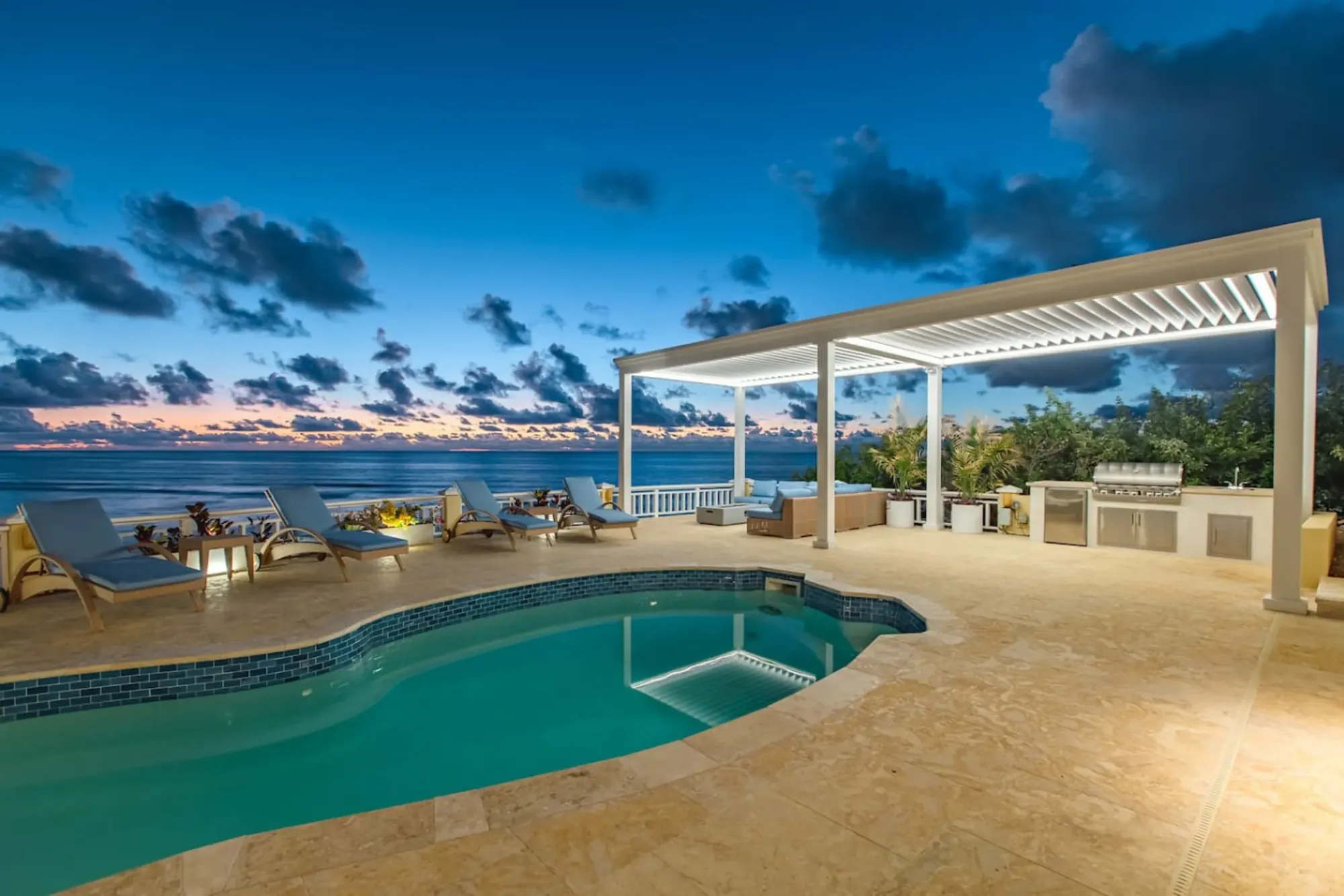
The shape of a good day, then: coffee at sunrise on the terrace, on the road before seven, walking by eight, at the pools by nine or nine-thirty, an hour in the water, lunch on the pebbles, back at the car by one; a swim and a late lunch at Davis Bay or Cane Bay; the coast road home in the mid-afternoon; and by five, the part of this plan we would not trade, the pool deck above the villa's own reef, with tired legs and the sea, for once, perfectly calm in front of you. If you go by jeep instead, the day is shorter and the recovery is the same.
And if the day is off, a swell running or an advisory posted, do not sulk. The private beach at the villa is on the East End, and on a north-swell morning it is often the calmer swim on the island; snorkel the reef in front of the house, do Ham's Bluff or the rainforest drive on the north side another day, and put the pools back on the list for the first calm morning. They will keep. So will your ankles.
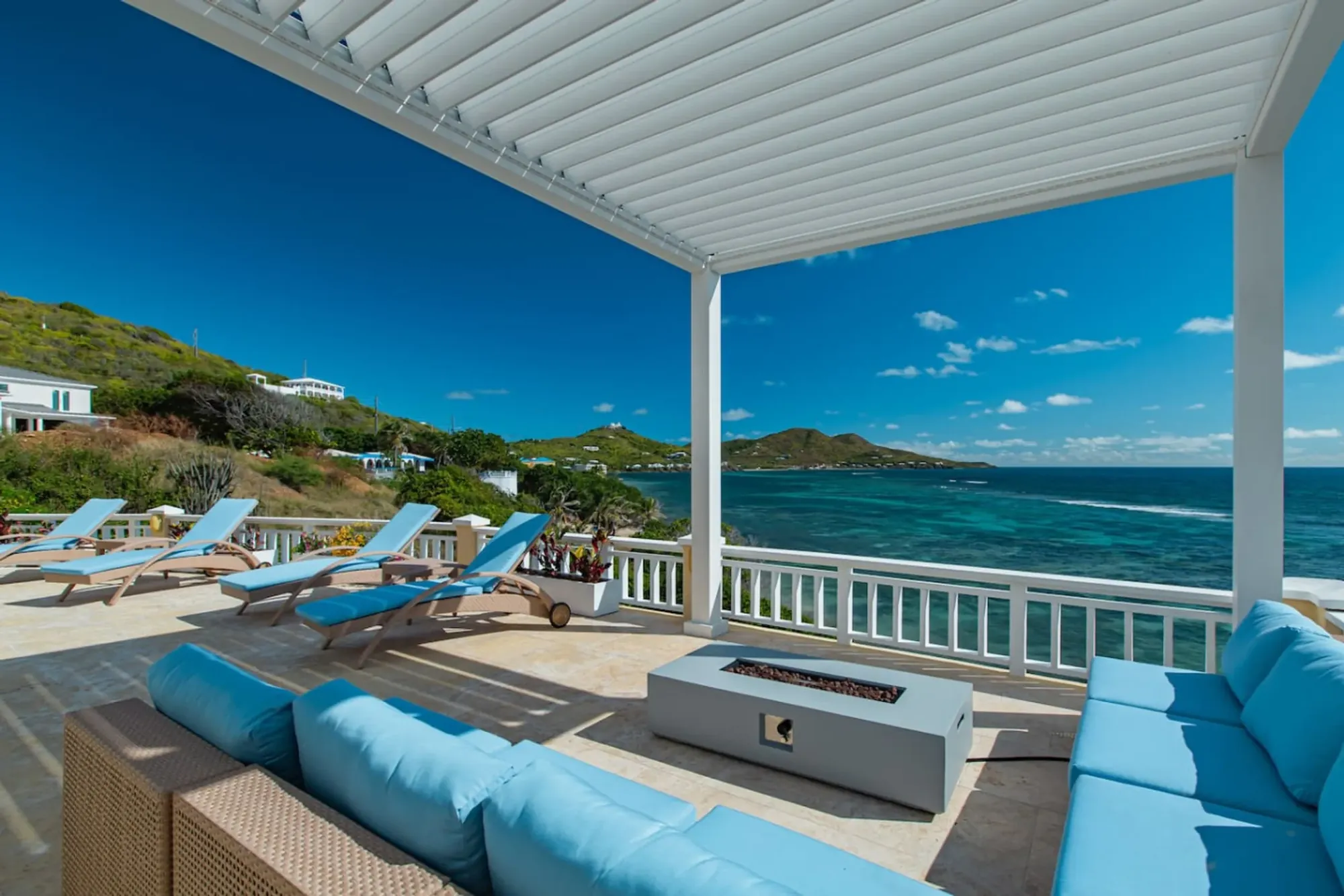
The fire-table terrace above the water at The Cerulean, where a north-shore day ends: dry clothes, dinner from the outdoor kitchen, and nothing left to climb.Photo: The Cerulean
The Cerulean
Twelve of you, one private beach.
The Cerulean sleeps twelve on St. Croix's quiet East End — check your dates.